“They have all heard things since you’ve been married.”, Andy mentions. What better place to ask the questions they may not get to ask otherwise, than at the reunion?
Bethenny, who received a text message with photos of Tom and another woman last year, appears most vocal. She speaks about her disgust of Tom and how he treated Luann. “Any one of ten things that he’s ever said to you, I’d be crying in the bathroom.”, Frankel says. To which Luann replies, “Why do you think I stayed at the hotel last night?”
Luann may have stayed at a hotel during filming of the show. But she isn’t now. She is having a grand time with family in Switzerland. With so many things taking place in such a short time, it was best the Countess be with family. Rumor is, that’s not all she’s with. She could be with an ex-lover! Maybe that’s why, giving everything, she’s all smiles in her photos lately.
Get ready, Andy Cohen? This will probably be one for the records (or WWHL Vault).
Share this article. And watch the season 9 reunion of “The Real Housewives of New York City,” Wednesday, August 16 at 9 p.m.
False Reports Claim Queen Elizabeth Passed Down Crown To Grandson
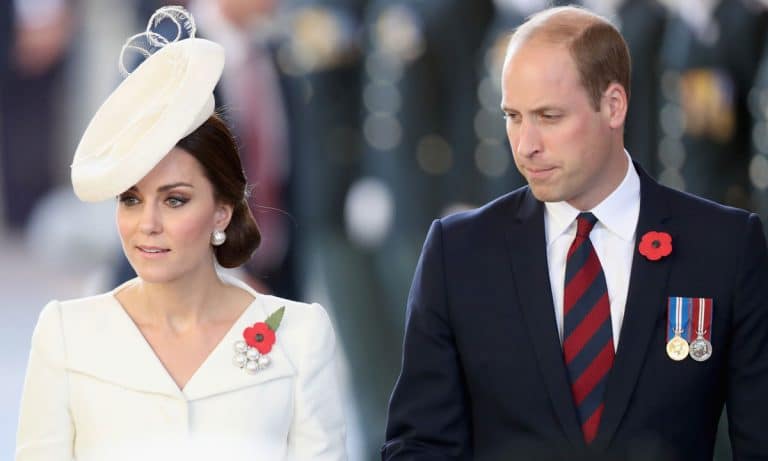
It’s not official. The Queen of England has not passed down her crown to Prince William and his wife, Kate Middleton, despite sources claiming she had.
As the U.S. opioid addiction epidemic continues to spiral out of of control, a federal agency will fork over nearly $4 million to a team of researchers to study if cannabis reduces opioid use.
The National Institutes of Health (NIH) has awarded researchers at Albert Einstein College of Medicine and Montefiore Health System a five-year, $3.8 million grant for the first long-term study to test whether medical marijuana reduces opioid use among adults with chronic pain, including those with HIV.
According to the CDC, most drug overdose deaths (more than 60 percent) involve an opioid with 91 Americans dying every day from an opioid overdose, including prescription opioids and heroin. According to a June report in the New York Times, the number of overdose deaths in 2016 would surpass 60,000.
“There is a lack of information about the impact of medical marijuana on opioid use in those with chronic pain,” says Dr. Chinazo Cunningham, associate chief of general internal medicine at Einstein and Montefiore and principal investigator on the grant. “We hope this study will fill in the gaps and provide doctors and patients with some much needed guidance.”
Some studies have already demonstrated that cannabis is an effective treatment for chronic pain. Last month, HelloMD, one of the nation’s largest community of medical cannabis patients, partnered with researchers from the University of California, Berkeley, to examine how cannabis has affected Americans consumption of opioids. The results of the landmark study show that patients, given a choice, would overwhelmingly choose cannabis over opioid medication, saying the herb works just as well and with fewer side effects.
Compared to the general population, chronic pain and opioid use is even more common in people with HIV. Between 25 and 90 percent of adults with HIV suffer from chronic pain. Previous studies have reported that despite the high risk for misuse of opioid pain relievers, adults with HIV are likely to receive opioids to help manage their pain. In recent years, medical marijuana has gained recognition as a treatment option. Twenty-nine states, plus the District of Columbia, have legalized its use; in those states, chronic pain and/or HIV/AIDS are qualifying conditions for medical marijuana use.
Researchers have never studied — in any population — if the use of medical marijuana over time reduces the use of opioids. Additionally, there are no studies on how the specific chemical compounds of marijuana, tetrahydrocannabinol (THC) and cannabidiol (CBD), affect health outcomes, like pain, function, and quality of life. Most studies that have reported negative effects of long-term marijuana use have focused on illicit, rather than medical, marijuana.
“As state and federal governments grapple with the complex issues surrounding opioids and medical marijuana, we hope to provide evidence-based recommendations that will help shape responsible and effective healthcare practices and public policies,” notes Dr. Cunningham.
Sickle cell anemia is a genetically transmitted physical ailment that is the result of restricted blood flow within the human body. To elaborate, studies report that sickle cell anemia manifests due to irregularly shaped red blood cells—the name “sickle” is literally derived from their “crescent moon” shapes. In turn, these misshapen red blood vessels easily get stuck within veins and resultantly trap smaller, healthy blood vessels. These blockages of healthy blood flow express in extremely painful episodes for sickle cell patients known as “pain crises”. These pain crises are the primary symptom of sickle cell anemia and can be life-long debilitating disorders. Moreover, once an individual contracts the disease, the only possible cure is “a hematopoietic stem cell transplant, which requires a well-matched donor”. Donor lists are often extremely long, to the point of being beyond individual’s reaches within a lifetime. As a result, virtually all treatments for sickle cell anemia, medical marijuana included, exist to better the lives of those who have contracted the disease.
There are various theoretical as well as tested applications for medical cannabis in relations to sickle cell anemia. To begin with, pain crises, also characterized under the umbrella term of “chronic pain,” are reportedly quelled through use of the herb— physical issues causing these pain crises include “vascular inclusion, tissue infraction, and inflammation”. To elaborate, a 2005 questionnaire presented to sickle cell anemia patients medicating with cannabis in the U.S. revealed that 52% of them reported pain reduction and 39% reported helped with anxiety and depression. Even more, medical marijuana acts as an inflammatory medication for those patients experiencing tissue swelling from the disease. Resultantly, with more research it is conceivable that medical marijuana use could be beneficial for sickle cell patients concerning both chronic pain and inflammatory issues. This notion ads to the already expansive medical uses for this profound natural medicine.
Case Study
In a fascinating story from the Jamaica, a middle-aged man with sickle cell anemia reported that he had not had a pain crises since he was 15 yrs. old—a 30 year time span. This notion is relevant to medical marijuana because this sickle cell patient reportedly smoked 5 cannabis joints a day for this entire pain crises free timespan. Interestingly enough, a majority of medical marijuana doctors rarely promote the smoking of cannabis, as edibles and vaporizers are far less obtrusive on the human airways. However, at least in regards to this case study from Jamaica, even extremely heavy, daily cannabis smoking is still beneficial in bettering the lives of sickle cell anemia patients. Nonetheless, every persons’ body reacts differently to experiences with cannabis and should be treated as such: in case-by-case scenarios.
Kent Gruetzmacher M.F.A. is a Colorado based freelance writer and the Director of Business Development at Mac & Fulton Talent Partners (www.mandfconsultants.com), a recruiting firm dedicated to the indoor gardening and cannabis space. He is interested in utilizing his M.A. in the Humanities to critically explore the many cultural and business facets of this youthful, emergent industry by way of his entrepreneurial projects.
Oprah is expanding her brand into grocery stores. She’s partnering with Kraft Heinz for a line of soups and side dishes called O, That’s Good!
While some grocery stores are already carrying the label, the official ad campaign launches in October. And if Miss O isn’t a good enough reason to buy this new line of veg-heavy comfort food (think cheddar broccoli soup with butternut squash, mashed potatoes with added mashed cauliflower, and creamy parmesan pasta with added white beans), 10 percent of proceeds go directly to charities helping to reduce hunger.
I’ve been asked over the years to do anything you can imagine to attach my name to it to. I have always just wanted to stay in my lane and to do what was organic for me, authentic and natural. Food would be it.
The whole idea started with cauliflower mashed potatoes. “I was sitting at my table in my own home and had whipped up some cauliflower, trying to make myself think I was eating mashed potatoes, but it was not working,” she tells USA Today. “So I thought, ‘What if I used a portion of the mashed potatoes and added the cauliflower? Then, I would have a substantive mashed potato-cauli dish.”
If we’ve learned anything, it’s that if Oprah’s name is on it, people will buy it.
A couple in Durango, Colorado woke up to a wild car theft: Someone had tried to take their SUV for a joyride, but crashed it into a mailbox not far from the driveway. The thief, it turned out, was a confused bear.
The bear somehow got into the SUV and ripped apart the inside, destroying the steering column, radio and back windows. In all of that effort, it knocked the parking brake loose, beginning a short ride down the driveway.
According to the Durango Herald, officers have responded to more than 200 bear-related calls so far this year, compared to 56 total bear calls last year. This summer has been hard on the bear population, as a late frost cut down on the natural food supplies they rely on in the mountains—driving them toward humans’ garbage cans and anything that seems like a potential food source. In May, another “huge (expletive) bear” was trapped in a woman’s SUV in Durango, but that one didn’t manage to take the vehicle anywhere—it just trashed the interior trying to get out.
The owners of the car were at least in good spirits about the ordeal, joking, “Usually, I don’t get up at 5 o’clock unless there is a bear driving a car down the street.”
I understand people cannot be expected to know what they don’t know. However, in light of your recent discovery of the depth of the opioid epidemic, I do hope you, as well as the members of your team, are committed to learning and having an open-minded approach to finding solutions. After all, rule number one of brainstorming is there are no “dumb-ideas.” I implore you, please, listen to all options and leave no stone unturned … 142 people today were counting on you, along with another 142 tomorrow, and 142 the day after that.
Mr. Christie, simply attempting to understand something foreign to you is a step in the right direction. So today, on behalf of 60,000 or more people who will die this year, I am begging you … put everything you think you know aside for just a few minutes and read our story.
The Story Of An Opiate Survivor
I met my husband, Gary, in the summer of 2012. We were both hard-working, Midwesterners; I had been climbing the corporate ladder for the better part of two decades, and he had spent 15 years doing grueling, physical labor at a factory in Iowa.
Over the course of that 15 years, the job took a toll on Gary’s health. Repetitive factory labor wore down the discs in his neck, and eventually he had to have surgery. Unfortunately, just a couple of weeks out of surgery, Gary slipped and fell, and his neck will never be the same. He was always in constant pain, but the doctors had no problem keeping him readily supplied with plenty of opiates. In fact, I attended several appointments with him before we were even married where the doctor simply told him, “You’ll probably have to take these the rest of your life.”
We were married in the spring of 2013, just a few days after we moved to the state of Minnesota for a promotion in my career; I was going to manage the IT department for a large, affluent suburb of Minneapolis. This was a huge break in my career and a big step for us. However, what should’ve been the best years of our life together, ended in nightmare.
Moving to Minnesota meant finding a new doctor for Gary. He couldn’t function without opiates, and a lapse in his prescriptions would most certainly result in withdrawal sickness – pain, nausea, vomiting, tremors, mood swings, muscle spasms, and insomnia. Getting a new doctor, in a new state, meant we had to go through several medical procedures to “prove” Gary’s need. Costly MRI’s and several x-rays later, the doctors told us he would have to be seen at a pain clinic to get the medication he needs.
We spent two years and several thousand dollars out-of-pocket, only to have Minnesota doctors nearly kill him with prescriptions.
At one point in time he was prescribed 4 hydrocodone, 4 Percocet, and 2 fentanyl patches EVERY DAY. The drugs were killing him, but the side effects were killing me. Under the influence of this number of opiates, my husband couldn’t work, he couldn’t legally drive, and the mind-altering effects of the drug often turned him into a monster. I was married to Dr. Jekyll and Mr. Hyde and after a long, stressful day at the office, I rarely knew which I was going to face when I got home.
By January of 2016, I couldn’t continue to live the way were living. I left my husband, my home, my career, and everything I had. I couldn’t break the pattern without drastic measures … so I paid Gary’s bills ahead, packed what I could carry in my car, and left. I had no idea where I was going, or what I was going to do. I just knew I had to get out.
Go West, My Dear, Go West
My only goal when I left the house was to drive south until there was no snow, and then head west. I had no particular destination in mind.
My brakes went out just north of Denver.
Homeless and alone in a city where I knew no one at all, my only priority was getting a job. Any job, I didn’t care if I was washing dishes, I had to eat. On day six, I met a woman over lunch who offered me the opportunity to interview for a job in a new cannabis dispensary. Long story short … I got the job … and what I would learn over the course of the next several weeks would save my marriage and my husband’s life.
‘We Have Hope’
After landing in the cannabis industry, as any good employee would do at a new job, I was reading and researching everything I could get my hands on. I was reading psychology reviews, scientific studies, and anecdotal stories. I wanted to learn as much as I could.
By week six, I reached out to Gary, and told him… “We have hope.”
I told him what I had learned and said, “Come to Colorado, leave the opiates in Minnesota, and let’s give this a try.”
No Withdrawal
On March 18th, 2016, Gary took his last opiate painkiller he will ever take. According to science, quitting a 10-year opiate addiction cold-turkey could’ve killed him and it certainly wasn’t supposed to be easy. Although he had managed to stop taking everything except the hydrocodone, he should’ve gone through at least some symptoms of withdrawal, but with the use of responsible cannabis therapy, not only did my husband survive opiate withdrawal, he thrived. I have pictures of him on day 10 of no opiates hiking the Garden of the Gods.
Today, Gary is healthy, happy, and doesn’t rely on any prescription medications, including high blood pressure, cholesterol, and anxiety medications his doctors have had him on. He has lost 85 pounds. He has type 2 diabetes under control; and he hasn’t had the need to see a doctor in 18 months. He is active, alert, and engaged in his life, which is something that was missing when he was STONED on opiates all day long.
He still has episodes of pain, don’t get me wrong, nothing will ever completely heal Gary’s problems with his neck and spine. However, instead of taking a myriad of pills that interact with each other, cause issues with organs, and could potentially cause his death … today he uses cannabis, responsibly. A bite or two of a brownie here and there is all it takes. He’s not getting “high” from his medicine anymore and the assurance we get with knowing he can never overdose and die from his medicine helps put us both at ease.
Mr. Christie, I am not saying that cannabis is the answer for everyone, although I do believe it has a wide-range of benefits for a plethora of ailments. However, my question is this… why can it not be the right solution for some? Why do we have to FORCE people to use pharmaceuticals when cannabis clearly works better in some circumstances?
Of the 60,000 people who died in 2016, how many of them COULD’VE been saved had they had the same opportunity my husband did? If it worked for him, it will clearly work for someone else.
What will you tell their families now that we have spoken, you have heard my husband’s story, and you have seen evidence that cannabis MAY have been the solution that their loved one needed before they died?
Can you face someone who has lost a son, a daughter, a sister, a brother, or any other close family or friend to overdose … look them in the eye, and tell them, beyond the shadow of a doubt, there’s no way cannabis would’ve helped?
The Invitation
As I stated at the beginning of my letter, there is no way for someone to know what they don’t know or aren’t willing to learn, so Mr. Christie, my letter now becomes an invitation.
My husband and I own a beautiful ranch in the Rocky Mountains, just west of Pikes Peak. We would love to host you and your entire committee on our ranch. I want to introduce ourselves to you as human beings, as Americans, and as forthright cannabis users. I want you to see the story the papers in front of you don’t tell. I want you to put a face to the issue at hand, I want you to see that not all people who use cannabis are bad people.
More than anything, Mr. Christie, I want you to show me that we – hard-working, American citizens, matter to you. I want YOU, Mr. Christie, to have the opportunity to show the nation that you can hear us. Right now, you and your team, as well as, the entire federal government is being chastised for not listening to your constituents.
I urge you, take me up on this offer, Mr. Christie. Come to our ranch, enjoy the peace and quiet of being nestled away from it all in the Rocky Mountains, watch the mule deer wander through our yard, or wake up early enough to see the sunrise over Pikes Peak.
Send your security out, let them do their thing … you can keep this very private or you can make it a media spectacle to show voters you are at least considering all options and trying to learn from the very people that the opioid epidemic has impacted. We really just want the opportunity to show you another side to responsible cannabis therapy than you may be considering.
Come to Colorado, Mr. Christie … you still have something to learn.
Kristina Etter is a Colorado-based writer focusing on cannabis and mindfulness. Her writing helps dispel the stereotypes and stigmas associated with cannabis consumption.
What happens when the government grants a tier-3 cannabis grow license to an illicit marijuana dealer? What happens when a bon vivant like Kevin suddenly becomes a ‘legitimate’ businessman? What will this process look like?
Grow Op is a web series for those who are winging it:
Crispin says that he does NOT want to be involved in Charles’ project. He grabs him by the shoulders and passionately tells him “You can’t do this to me.” He kisses his cheek and gets on a conference call as Charles sadly looks on from the outside.
Episode 5: I Get To Be Proud Of My Work
Kevin gets ready for his first interview. He’s feeling good because he just won the marijuana lottery. Even though he doesn’t have much of a plan, he knows he’s going to build something to be proud of. Maybe.
This episode gets awkward. Kevin need money, but when he starts to explain fact that the government has granted him permission to grow weed that can fill up half of a football stadium, everyone gets weird.
Sacramento Kings forward Zach Randolph was one of two people arrested by the Los Angeles County Sherriff’s Office late Wednesday night. Randolph is facing a felony charge of marijuana possession with intent to sell, according to police reports.
LAPD officers reported to a disturbance call in the Nickerson Garden Housing Project in the LA Watts neighborhood around 10 p.m. They discovered a group of individuals blocking off a street while drinking alcohol, smoking marijuana, and playing loud music. When cops attempted to disperse the crowd, the action escalated.
“[A] mob formed and began to destroy police cruisers and throw objects at officers, prompting them to call for backup,” according to CBS Los Angeles.
Nickerson Gardens 112th & Zamora officer needs help call floods the area with LAPD & Sheriffs no arrests @CBSLApic.twitter.com/MQGvOMNfP6
Two people were arrested, including Randolph. According to TMZ Sports, Randolph had “roughly 2 pounds of weed on him” in a “large backpack.” This is what, TMZ reports, caused Randolph to be charged with a felony of intent to sell.
Randolph was released on a $20,000 bail Thursday morning.
Randolph’s felony charge deserves an explanation in California, a state that legalized recreational marijuana. California’s Prop 64 designates individuals can have up to an ounce of marijuana on them (28.5 grams to be exact). Randolph’s reported possession of two pound of weed is obviously more than the state allows.
However, Prop 64 designates that possession with intent to sale is generally punishable as a misdemeanor. Felony enhancement is allowed under “special circumstances and three-time offenders.”
While Randolph was arrested under an investigation of drunk driving in 2009 within the Los Angeles area, he is not a three-time offender. The felony charge, one can speculate, stems from the amount of weed in Randolph’s possession coupled with the damage inflicted on police and police cruisers.
Randolph signed a two-year contract with the Sacramento Kings in July worth $24 million. He is yet to make a public comment on the incident.
As Taylor Swift gears up to return to music with a brand new album, insiders say she’s changing her image. A source says her infamous “girl squad” is DONE! The insider says that Taylor “realizes that came off as elitist” and wants a “more grown-up persona”
Jessica Biel Was Never An NSYNC Fan
The 35-year-old actress spilled that she never listened to her hubby’s former band during a recent Reddit AMA session. When a fan asked if she was a Team Backstreet Boysor Team *NSYNC, she made the big reveal.
“I was such a theater nerd at that time that I literally wasn’t listening to either of those groups,” she confessed. Jessica added, “I was listening to soundtracks, like Rent and old 50’s, 60’s music. I can be a little off on my timing. But if I had been cool, DUH, *NSYNC all the way, baby!
Love the fresh dirt we bring over daily from Naughty Gossip? Let us know in the comments!
The Wine Industry Network (WIN) hosted nearly 500 people to the first Wine & Weed Symposium on August 3rd at the Hyatt Vineyard Creek in Santa Rosa, CA. The one-day business focused conference was intended to create a dialogue between the wine and cannabis industries and examine the impact that the legalization of recreational cannabis use in California will have on the wine industry.
Of the day’s registered attendees, 45 percent were wine industry professionals, 26 percent were cannabis industry professionals, 18 percent have ties to both industries, and the remaining people in attendance were from other industries altogether. Polling the audience during the show, 77 percent of attendees predicted more collaboration than competition between the two industries.
Featuring experts from both categories, the day began with opening remarks from California Senator Mike McGuire who provided an overview of two of the state’s major agricultural crops, cannabis and wine, and how these industries will coexist. He also discussed the work that our leaders are doing to quickly provide legislation as the prohibition on cannabis ends.
In addition to the Senator, other notable cannabis leaders Hezekiah Allen, executive director of the California Growers Association, Aaron Smith, co-founder and executive director of the National Cannabis Industry Association, and Tawnie Logan, chairwoman of the Sonoma County Growers Alliance and California Growers Association weighed in on a wide range of topics including regulations around licensing, hospitality, and mixed-use farming.
Attendees were also introduced to new economic opportunities not only from the varied line up of speakers, but also from the 40+ exhibiting companies from the wine and cannabis industries who displayed their products and services.
“Our goals were to educate the wine industry on the current state of legalization of cannabis and to establish a dialogue between the two industries,” said George Christie, President of Wine Industry Network. “We were successful on both fronts. Our wine industry attendees left with a greater understanding of the emerging cannabis industry and everyone that attended saw the opportunities that collaboration could mean to both.”