Tuesday, May 5, 2026
Home Blog Page 1181

Here’s The Latest On Pregnancy And Marijuana Use

Every so often another scary piece about marijuana damaging the brains of babies and children crops up, just as it did on the front page of last week’s New York Times: “Pregnant Women Turn to Marijuana, Perhaps Harming Infants” the headline read and the piece cited several preliminary studies indicating that pregnant women who partake of the herb risk having babies that are underweight and possibly cognitively impaired.


Having spent the last three years writing Brave New Weed, I read many such studies on the “perhaps harmful” effects, many of which are suspect.

But the topic of in utero development is not to be taken lightly, so it’s crucial to parse myth from fact.

Of course, a pregnant woman should exercise caution when using any medication or substance that might affect the health of her baby as her blood is coming led with that of her fetus. But cannabinoids don’t function like other molecules and at this point there’s a small, but growing amount of evidence that they might actually might further a baby’s development, or at least do no harm.

It’s not the commonly expressed point of view, but it’s crucial to remember that most of the science in the US has been carried out by the National Institute of Drug Abuse, which has a mission to only investigate the harmful effects of the plant while ignoring the benefits. Twenty years ago, science assured us that the concept of medical marijuana was a joke. So, yes, science, too, can change its mind.

Here’s What We Know

The most prevalent cannabinoids found in cannabis, THC and CBD, are bioidentical to two chemicals produced by the human brain, anandamide and 2AG. This was discovered in 1992. The next question is: Why does the brain produce these chemicals? What is their function?

The answer, in part, was discovered by the late Dr. Ester Fride, an Israeli neuroscientist who was investigating the ways cannabinoids influence a newborn’s development. Her science showed that without a functioning endocannabinoid system newborn rats failed to suckle or begin maternal bonding. They died much sooner than babies with functioning endocannabinoid systems and Fride concluded that endocannabinoids are essential to a baby’s ability to thrive.

Equally compelling is the work Dr. Melanie Dreher, the Dean of Nursing at Rush Medical Center in Chicago. In the early 1990s Dreher traveled to Jamaica to investigate a group of rural and impoverished Rastafarian women and their infants. These “Roots Daughters” smoke ganja as a daily health ritual; they rely on it to maintain appetite, rest and allay nausea during pregnancy. They also serve a mild ganja tea to their families as a health tonic — when you’re poor it’s less expensive to forestall illness than to treat it once it hits.

Dreher followed 30 Roots Daughters and their babies for five years until the children entered school. She found that infants whose moms smoked ganja socialized more quickly, made eye contact more quickly, and were easier to engage than the babies of non-smokers. There were no developmental differences between the groups. In fact, on tests for verbal ability, motor, perceptual and quantitative skills, memory and mood, the kids of smokers scored higher.

“Given what everyone else was finding at the same time, we thought [our findings] were pretty darned interesting and a little counterintuitive,” said Dreher.

Though her findings were unprecedented they were published in 1994 to resounding silence. In the wake of that silence Dreher applied to NIDA for additional funding to return to Jamaica to follow the same children at age 10 but her request was denied. Instead, NIDA continued to commission more studies from which researchers concluded that exposure to (extraordinary quantities of) cannabis in the womb might harm the brain, lower IQ, and damage “executive function.” Different variations on these dire warnings are still being trumpeted today, which brings us to last week’s New York Times.

Life Not Matching Research

Women throughout the world have been using cannabis as a natural medicine for centuries with no apparent harm so for an alternate interpretation of the findings cited in the Times I spoke to Dr. Stacey Kerr, a family physician and cannabis educator in Santa Rosa, Calif.

Dr. Kerr is one of the rare physicians who openly discusses use of cannabis (probably because she works in a state that has had an operational medical marijuana program for 21 years).

“I grew up in the 1960s and we used cannabis when we were pregnant, and we were pregnant a lot,” Kerr, a mother of two, now in their 40s, tells me. “I delivered kids who were exposed in utero and watched them through childhood and into adulthood and I’m not seeing the results of these studies play out. I’m a physician and I want to believe these studies, but real life outcomes weren’t matching the research predictions.”

With the assistance of other researchers and a statistician, she examined the research most frequently quoted and found some notable discrepancies with the ways the samples were put together and the extrapolations of the findings.

In the study babies being born at lower weights, she discovered that all the women surveyed were asked if they had used any and all illicit substances (not specifically cannabis) and were also all from lower socio economic backgrounds at a public hospital. There were no long term followups. Kerr also points out, crucially, that there was no difference in the Apgar Scores the 5 key indicators of a baby’s health just after birth.

The other frequently quoted study by claims that kids of cannabist moms do less well in life and are slower in school. But this research, according to Kerr, was skewed by factors other than prenatal exposure. In addition to prenatal exposure, those kids had to have one of the following conditions: IQ problems by age 6; depression or inattention by age 10; or they had to be using cannabis themselves before age 14. “Clearly it wasn’t just cannabis exposure that led to these results,” says Kerr.

Are Cannabinoids The Same As Other Molecules?

The final claim is that prenatal exposure to THC somehow “miswires” the brain and impairs cognitive development. Indeed, endocannabinoids are active in the fetal brain. They help neurons grow in the correct direction and yes, using cannabis does add additional cannabinoids into to the equation, perhaps displacing those that occur naturally in the body. But there is no research to date showing that displacing those naturally occurring endocannabinoids could be problematic.


In fact there is another study hinting that additional cannabinoids seem to somehow protect neural functioning. Those researchers looked a complex neural process called “global motion perception” that is damaged in kids with abnormal brain developments, such as autism or fetal alcohol syndrome. (Kids with impaired GMP are characterized as “seeing the trees but not the forest.” They see individual details in their field of vision but not the entire frame.) This study found that kids exposed to alcohol during pregnancy had impaired GMP, but kids exposed to cannabis alone in absence of alcohol are have 50% more functionality than the general population. What’s more, exposure to both cannabis and alcohol seemed to cancel each other out.

Kerr’s conclusion: “It’s not ‘Drink alcohol and use cannabis and your baby will be just fine,’ but it is interesting that exposure to THC in brain made this indicator of neural development better.”

A Question Of Intent

Clearly, the mystery of cannabinoids and pregnancy is yet to be solved. In the meantime, I asked Kerr if she were pregnant again if she’d use cannabis? To my surprise she hesitated before answering.

“I hesitated because pregnant women today are going crazy — there’s always another article with more we can’t do, so for me it comes back to intent and how you use cannabis as a medicine. If I can’t eat or I’m nauseated or in pain, or if I have a two-year old who’s going crazy and making me so irritable that I’m yelling at the kids and my husband and if taking a puff relaxes me and makes me nicer then, sure, I’d use it.

“That said, there is also such a thing as cannabis abuse disorder so if a patient is using too much and the kids aren’t being fed or the house isn’t getting cleaned I’d think about it differently and advise them to stop.

“But making women afraid that something drastic is going to happen if they take a vapor hit or a puff on a joint based on the current science isn’t beneficial.”
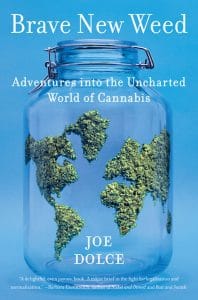
Book Cover courtesy Harper Wave

Joe Dolce is the author of Brave New Weed. He is the former editor-in-chief of Details and Star. His book follows his adventures into the fascinating “brave new world” of cannabis, tracing its history and possible future as he investigates the social, medical, legal, and cultural ramifications of this surprisingly versatile plant. Rolling Stone magazine called it “one of the most fascinating accounts of the state of marijuana. A charming, honest look into pot’s past—and what that says about its future.”



There Could Soon Be Video Games That Plug Directly Into Your Brain

There’s this super impactful moment in The Matrix, where Keanu Reeve’s character realizes that there’s a hole in the back of his head and that the world he thought he knew is not real. His entire reality has been fabricated and it doesn’t exist, it’s just brain stimulus. More than 18 years later, researchers at the University of Washington are taking this mind bending idea and applying it to the real world though video games, having test subjects experience alternate realities through direct brain stimulation, in less invasive ways, of course.

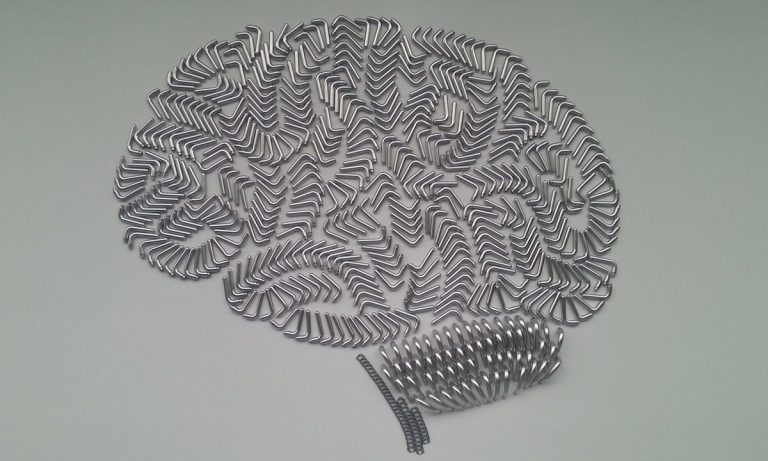
In this research, test subjects play a simple two-dimensional computer game where the objective is to navigate through different mazes. Players only rely on brain stimuli without using their other senses. They have two choices to navigate these mazes, allowing them to move up or down. These decisions are represented to them as phosphenes, articles that subjects perceive as little balls of light. The decision that subjects make – to move up or down – is done thanks to a magnetic coil that’s placed near their skull that non-invasively stimulates their brain. 

This research is pushing the boundaries of humans and their limits in ways that have never been done before. Virtual and Augmented reality stimulate you in much more simple ways, taking advantage of your senses to deliver a different experience. This new research develops a reality through direct brain stimulation, without relying on your eyes, your ears, or any of your senses. Researchers explained why they were spending time and money on this and Darby Losey, an University of Washington graduate, explained that they’re trying to develop a “sixth sense” in humans. 

“So much effort in this field of neural engineering has focused on decoding information from the brain. We’re interested in how you can encode information into the brain.”

The experiment is still in its initial stages and the mazes they’ve developed are very simple, but we can expect much more complexity in the coming years due to the success of the early trials. In the near future, there might be a tool or an app for everyday use that’ll be able to stimulate our brains in crazy ways, helping people who have deficits in their senses and also providing a cool experiences for virtual reality enthusiasts. Hopefully, we’ll become super humans and prevent machines from taking over the world.

How To Prevent A Shark Attack Before You Jump In The Water

Summer’s almost over but sharks can pop out at any time, especially if you’re someone who spends a lot of time on the ocean, like a surfer or diver. While death by shark attack is not all that common, there has been a recent surge of sightings and attacks along the west coast and on certain areas of South Florida, so it always pays to be prepared and informed. This recent increase in the shark population can be explained by the federal rules and guidelines that are trying to protect the species, which is a really good thing if only a little scary.

We all want to avoid a painful shark induced injury or death, so here are a few simple rules you should follow if you want to avoid a bite by a large and scary fish. Yikes: 

When Swimming

https://giphy.com/gifs/nemo-goals-just-keep-swimming-3UNLb4abwB93G

Avoid swimming alone, at dusk, at night or at areas where there are a lot of fish around. Sharks like to go after isolated prey, so be sure to be with someone who can get help and keep you company. Sharks have also notoriously bad eyesight, and when it’s dark out they might think your leg is a seal or a really large fish. Stay away from areas where you see a lot of fish swimming around, because these are usually the prime spots where sharks find their meals.

What To Do If You See A Shark

https://giphy.com/gifs/shark-awareness-day-national-happy-3o72FkreWNH9OlTtPq

Here’s when things get complicated. You can’t act like food around the shark, so swimming away in a panic is not an option. You also can’t treat it like a simple animal, trying to corner or shoo it. Keep your distance from the shark and maintain eye contact. This sounds weird, but if the shark starts to circle you, you should circle it back from a safe distance. This will let the shark know that you’re not harmless like the fish he normally eats. You’re also no match for a shark, so try to escape slowly, moving backwards and never taking your eyes off of it. 

What To Do If A Shark Bites You

https://giphy.com/gifs/trolli-TFXoCcEemsS1G

Try not to panic. Most sharks will bite and release you, and most of their bites are minor and not lethal. Try to strike the shark on its gills and nose so that he leaves you alone, and get to safety as soon as possible. Having a swimming buddy in this instance could save your life. 

Tortoise Saved Because Owner Gave Mouth-To-Snout

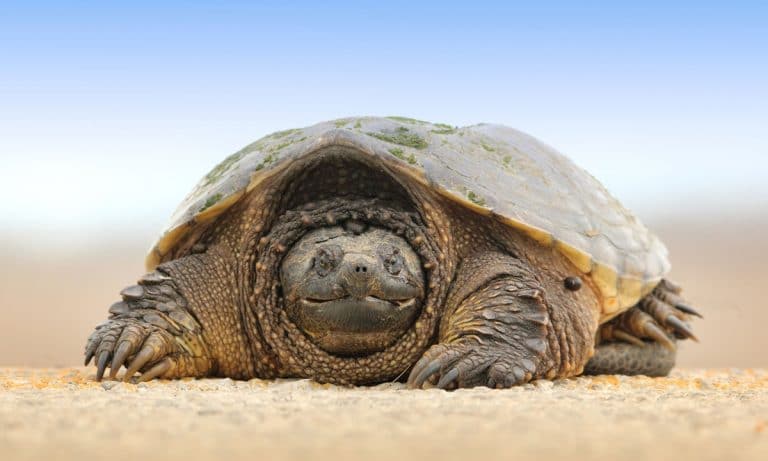
To what length would you go to save your pet? One British man answered that question resolutely this week by giving Freda, his 45-year-old pet tortoise, CPR and mouth-to-snout resuscitation for over an hour after discovering her limp body at the bottom of his garden pond.

Freda normally has free rein over the back garden of John Fletcher, her owner. But when Freda was nowhere to be found Saturday afternoon, Fletcher didn’t know where she had gone. That was, until he looked in the pond.

“It must have been in there for at least an hour. I took it out and it was looking quite dead and limp,” Fletcher told The Telegraph. “I decided to put my own mouth around the head and give a few short blows having stretched its head out a little.

“A small half teaspoonful of water came out of its mouth which I had opened.”

But Fletcher, a retired postman, had to continue his life-saving efforts for the next hour. He called his daughter, “very upset,” and decided to push on. He massaged the tortoise’s body and attempted to warm her with a blow dryer.

As he relayed to The Telegraph:

“I first did it and about a teaspoon of water came out. I didn’t think much of it, I thought it was just pushed out by my air, but then her leg twitched. I thought it was just a nerve or something but I decided to try again and its head went in like a tortoise does when it’s scared.

“I then massaged her chest for about an hour and the legs kept moving and finally she came back to life.”

Fletcher is happy to report that Freda has eaten two lettuce leaves and some tomato since recovering, and doesn’t seem to have suffered any brain damage. To prevent any future pond dives, Fletcher has installed a small fence around the pond.

But as Loz Bogaert, a herpetologist of 26 years, told The Telegraph, “It was certainly very lucky and a borderline miracle, definitely.”

Gossip: Mel B’s New Cop Boyfriend Is Married; Laverne Cox Announces Mystery Collaboration With Beyoncé

Just as her divorce from Stephen Belafonte gets uglier, Melanie “Mel B” Brown has found love again with a Beverly Hills cop — and In Touch magazine has learned that his “marital status is complicated and messy.”

“He’s married,” the former Spice Girl’s close friend tells In Touch exclusively. “He’s a cop with the Beverly Hills Police Department. He’s also younger than her.”

Though they haven’t been dating long, “She already seems to be in love with her new guy,” says the friend, explaining that the America’s Got Talent judge met her beau while dealing with law enforcement in the aftermath of her divorce.

“This guy is giving Mel a huge ego boost. He worships the ground that she walks on, and she loves it,” the friend tells In Touch.

However, friends are wary of him because of his marital status, but Mel has been assuring everyone that “he was unhappily married for a while,” adds the friend. “He had planned to separate from his wife prior to meeting Mel.”

Now she has to worry about Stephen using her new romance against her. “Her divorce from Stephen is still not finalized. He could absolutely use [her relationship with this married man] against her in court,” adds a source.

“Mel’s life is complicated enough right now,” says the source. “The last thing she needs is the over-the-top drama of dating a married man.”

Laverne Cox Announces Mystery Collaboration With Beyoncé

When Laverne Cox met Beyoncé at the Grammys earlier this year, she had an understandably hard time keeping it together around one of her biggest idols. But just a few months later, the Orange is the New Black star revealed she’s now working with the music superstar on a secret project.

Cox first broke the news of the collaboration on Access Hollywood Live, before confirming it for fans on Twitter.

The trans actress said more details won’t be available until September 6, but says she still can’t believe it’s even happening at all.

“I have no idea [how this came about] to be perfectly honest,” she said. “I’m like, ‘Does she pick out her biggest fans ever and let them work with her?’”

“A sense of calm comes over you when you meet the queen,” she added about her run-in with Bey at the Grammys.

Love the fresh dirt we bring over daily from Naughty Gossip? Let us know in the comments!

What Those Colored Plastic Tags On Your Bread Mean

0

It seems like a no brainer and it sort of is. Those colored tags and twist ties on your bags of bread? There’s meaning behind them.

Tasting Table did a little detective work and found out the colors correspond to certain days of the week, specifically which days the loaf was delivered to the store.

The alphabetical color code  (Monday – blue, Tuesday – green, Thursday – red, Friday– white and Saturday – yellow) allows employee to quickly identify loaves that are stale and need to be taken off store shelfs.

“But what about Wednesday and Sunday” you ask? Bread is not delivered on those days.

As Snopes points out, there is no industry wide standard, so this color coding system doesn’t apply to every bread manufacturer:

Placing blind reliance on the BGRWY code could well result in your consistently fetching home the older bread instead of the fresher stuff. Also, the schedule … (fresh bread delivered every day except Wednesday and Sunday) doesn’t hold true in every area. Different stores can be on different rotations, and even within the same store some brands will be coming in five times a week, while others arrive seven days a week.

There you have it. If you’re really into fresh bread, you should contact the manufacturer of your favorite brand and ask what color system they use. Or, just go to your local bakery and pick up a loaf.

Meme Alert: Silly Outfits For The First Day Of School

Oh, teens. Memes and social media challenges have become the norm of the internet, especially for younger and more malleable generations who’ll do almost anything to get a video to go viral. We all remember the ice bucket challenge, the one-finger selfie challenge, the mannequin challenge, the list is endless.

The latest internet meme is limited to high schoolers, because they’re the only ones who can get away with making a fool of themselves publicly. The challenge  consists of wearing the wackiest and ugliest outfit to school, be that ’70s inspired, or just finding and wearing the mom-iest mom jeans you can find. Depending on the popularity of the image, how many likes and retweets it gets, the kid will have to wear that outfit for their first day of school, a day that’s kind of a big deal for all school goers. 

After pairing their craziest combinations, kids will set a goal that their image will have to break. If the picture gets, say 30 retweets and 12 likes, then they’ll proudly wear the outfit and make a fool out of themselves on their first day of school.

While this first day of school challenge may be a little silly and very dumb, it’s also safe and sort of harmless. That’s kind of great considering our record for 2017. 

Here Is A Cannabis Policy That Can Legalize Weed Safely

Twenty-nine states have already legalized medical marijuana and eight (plus the District of Columbia) have legalized it for recreational purposes as well. All suffer from Congressional inaction on marijuana policy. So long as marijuana remains prohibited under federal law, participants in legal marijuana markets are at risk of federal prosecution, states are unable to regulate effectively, and businesses are forced to operate on a dangerous all-cash basis.

Until recently, Congress appeared to have only two choices: continue to do nothing about the conflict as marijuana laws change across the country, or cede all federal control to the states, crossing its fingers that states do a good job of regulating a newly-legal vice without any authority to step in if they don’t. But a reintroduced bill offers a more responsible path forward. The State Marihuana And Regulatory Tolerance (SMART) Enforcement Act (H.R. 3534), sponsored by Congresswoman Suzan DelBene (D-WA), would establish safe havens to protect states without giving up all federal control.

What The Bill Does

The SMART Enforcement Act grants states the ability to apply for a waiver from the marijuana prohibition in the Controlled Substances Act for a set period of time — but only if they have strict regulatory systems in place. In order to qualify, a state that has legalized medical and/or recreational marijuana will have to show it can protect federal interests, including by:

  • Preventing the distribution of marijuana to minors;
  • Making sure criminal enterprises, gangs, and cartels don’t get their hands on marijuana markets or revenues;
  • Blocking the diversion of marijuana from a state where it is legal to other states;
  • Ensuring legal marijuana activity is not used as a cover for other illegal activity or trafficking in illicit drugs;
  • Preventing the use of violence or firearms in marijuana cultivation and distribution;
  • Stopping drugged driving and other possible negative public health consequences of marijuana use;
  • Prohibiting the growing of marijuana on public lands;
  • Keeping marijuana off of federal property; and,
  • Protecting consumers and patients from tainted marijuana.

Additionally, before receiving a waiver to get a safe haven from federal marijuana laws, a state would have to agree to track data on youth use, drugged driving, diversion to other states, and drug-related crime activity. That data would then be submitted in a report on the effects of legalization annually to the federal government. Each waiver would be good for three years and could be renewed indefinitely.

Why We Need It

The SMART Enforcement Act addresses the consequence of the current legal conflict, without abandoning the ability to step in if states make bad decisions around marijuana legalization.

  • The SMART Enforcement Act resolves the conflict between state legalization and federal prohibition by creating a safe haven for states with robust regulatory systems. Patients, consumers, and dispensary owners won’t have to live in fear of prosecution, now or in the future. States will be better able to regulate their markets effectively because they won’t be hamstrung by concerns that prevent state employees from being ordered to interact with marijuana — even for safety purposes like testing and labeling — for fear of being targeted by federal officials. And banks will be able to serve legal marijuana businesses, ending their need to rely on all-cash systems that are a magnet for violent crime and put communities at risk.
  • Not all state marijuana legalization laws are created equal. By maintaining a role in the waiver process, this bill gives the federal government a tool to incentivize states to establish strict and effective systems that protect federal interests. The other proposed solutions to the current legal conflict would leave the federal government unable to step in to prevent drugged driving, youth access, or gang violence. That could create a wild west of marijuana, where states establish wildly differing regulatory schemes that don’t take into account federal interests or public safety, and the government’s hands would be tied.
  • Because waivers need to be re-authorized every three years, this bill establishes a process for ongoing oversight, to make sure states are doing a good job of regulating marijuana responsibly, and to review the data on the longer-term effects of legalization — and course correct if necessary.
  • The safe haven policy in the SMART Enforcement Act is overwhelmingly supported by the American public. Our polling found that 67% of voters supported Congress passing a law to give states with strong regulatory systems a safe haven, including 78% of Democrats, 54% of Republicans, and 74% of Independents; 71% of men and 64% of women; and nearly a quarter (21%) of voters who oppose legalizing recreational marijuana.

Conclusion

Congress must act on marijuana — the political headwinds, the realities on the ground, and public opinion are clear. But it is also crucial to act in a smart way, not simply creating a national free-for-all. That means passing the SMART Enforcement Act to establish a safe haven for states with strong regulatory systems. Doing so would be both good policy and good politics.

This story was originally published by ThirdWay.org.

One Vet’s Opinion On Marijuana As Medicine For Your Pet

Any animal with a backbone (classified as a chordate) has an endocannabinoid system. The Kingdom of Chordata includes amphibians, reptiles, birds, fish, and mammals, including house pets. Many animal-owners treat their beloved pets like family members. When a dog or a cat gets sick and conventional options don’t work, people seek alternatives. In the realm of natural healing, cannabis for animals seems like a logical botanical pathway to explore.

When it comes to CBD, or cannabis in general, little research has been done on cats and dogs. Are cannabis preparations safe for use in animals? Does marijuana affect pets the same way as humans? Many pet-owners are looking for something to support their animal’s health, but there is little quality control with respect to the numerous pet-focused CBD products that are available in the medical marijuana sector and the hemp CBD grey market. And there aren’t many trusted, educated individuals who can provide professional guidance on cannabinoid therapies for pets.

To help pet-owners become better informed about the use of cannabis for their four-legged companions, Sarah Russo of Project CBD spoke with Gary Richter, DVM, an integrative medicine veterinarian based in Oakland, Calif. Richter considers cannabis to be part of a holistic approach to animal medicine. Due to marijuana’s Schedule I status, veterinarians are not allowed to write letters of recommendation for their clients or tell them where to obtain cannabis medicine. But Richter is able to speak about the benefits of CBD and cannabis therapeutics for pets.

Project CBDCan you tell us about your work? Based on what you’ve seen in your practice, what types of conditions may cannabis medicine alleviate in pets?

Richter: My practice applies western, complementary, and alternative approaches. That could include acupuncture, chiropractic, Chinese and western herbs, nutritional supplementation, and more. Animals can benefit from medical cannabis for many of the same reasons it helps people—for pain, seizure control, gastrointestinal disorders, anxiety-related issues. We‘ve also seen positive results with cancer.

Project CBD: Why is there a lack of research studies on cannabis in dogs and cats? What areas of cannabinoid medicine in animals would you like to see investigated more deeply?

Richter: I think ultimately the reason for the lack of therapeutic-oriented research is because cannabis is federally illegal and there’s no funding. Generally, it’s pharmaceutical companies that are putting most of the money into medical research. Once there’s a legal pathway and money to be made in veterinary products, that research will happen. I would like to see more general research on the use of cannabis in animals, focusing on some of the ailments that it seems be the most effective for—especially gastrointestinal issues, pain, and inflammation. Many veterinary patients see dramatic effects with cannabis for these ailments. Cancer studies would be a much longer road and more challenging to put together.

Project CBDWhat is your response when veterinarians say: “There isn’t enough scientific data to show cannabis is safe and effective for treating animals. 

Richter: In a perfect world, we would benefit from more scientific information. However, the case reports and anecdotal evidence about the efficacy of cannabis medicine are already overwhelming. In veterinary medicine, practitioners typically have no problem using off-label medications—those not explicitly approved for use in dogs or cats. But mention medical cannabis, which has a mountain of evidence for efficacy in humans, and they suddenly say, “You can’t do that, there’s been no research on dogs!” It’s disingenuous.

Project CBDIs there a difference between the endocannabinoid system in a dog or a cat as compared to a human?

Richter: In the big picture, they’re very similar. One striking difference is there appears to be a greater concentration of cannabinoid receptors in the dog’s brain than there are in most other animals. This is significant because it makes dogs more susceptible to THC overdose, potentially giving them a certain amount of neurologic impairment in the short-term. This phenomenon is known as static ataxia. Otherwise, when cannabis medicine is used effectively, their endocannabinoid system will act in the same way it would for a human.

Project CBD: Is THC combined with CBD beneficial for pets? If so, what CBD:THC ratios do you suggest for your clients?

Richter: It depends on both the condition that’s being treated as well as the individual animal. Many people in the cannabis community have heard about the entourage effect. The ratio of THC to CBD is an important part of that. There are conditions that respond better to medicine with a certain amount of THC in it. The ratios that I have used include hemp-based CBD with very little THC, as well as CBD-rich marijuana with a 20:1 CBD:THC ratio and THC-dominant medicine with little CBD. The research suggests that patients with cancer and chronic pain benefit from products that have CBD and THC, rather than CBD alone. It really depends.

Project CBD: Do you see animals coming into the veterinary hospital after having too much THC? How much of a problem is that?

Richter: Obviously whenever we’re talking about THC and pets, dosing becomes very important. At no point is the goal for the pet to get stoned. If that happens, then it means they’ve gotten too much. The aim is to give them enough cannabis to be effective, but not so much that they’re going to be negatively compromised. It is extremely uncommon to see an animal show negative signs when they have been properly dosed with cannabis as medicine. The worst effect would be drowsiness. If that’s that case, the owner may have to decrease the dose. It’s not uncommon for a dog, or sometimes a cat, to show up at a veterinary hospital having eaten a cannabis-infused edible that belonged to the owner. The good news is that cannabis toxicity is nonfatal and does not cause long-term effects. However, those animals that get into their owner’s stash may require immediate medical care. I have seen and heard of a couple of cases where pets did not survive.

Project CBDBut you just said that cannabis toxicity in nonfatal. You’ve seen cases where an animal ate too much cannabis and actually died?

Richter: One case that I have personally seen was a dog that got into a bunch of cannabis edibles and the owner didn’t bring his dog to the veterinarian immediately. They called us the following day. Unfortunately, the dog had vomited and aspirated while at home, his lungs filled with fluid, and he wound up dying from a systemic infection related to that. To be honest, if this dog had received medical treatment the day he ate cannabis, he almost certainly would have been fine. It was only because the owner waited, and by that time it was too late. It was very sad. But this type of event is really quite rare.

Project CBD: What’s your preferred way to administer cannabis medicine to animals?

Richter: I prefer a liquid preparation, usually an oil. With liquids, it’s very easy to adjust the dosage. If you’re giving something like a pill or an edible, it can be difficult to figure out how to titrate the right amount. Furthermore, there’s every reason to believe that CBD and THC are going to be partially absorbed directly into the bloodstream through the tissues of the mouth, sublingually. If we put a liquid in an animal’s mouth, some of the medication will be absorbed directly and has a chance to be more effective.

Project CBD: A lot of people say they want to start giving cannabis or CBD medicine to their pet, but they’re not quite sure about the right dose. Is there a good way to calculate the ideal amount for your animal?

Richter: There’s a dosing range that you could start at. It’s best to begin at the low end. Every few days, slowly increase the dose. If you’ve achieved the desired effect for whatever is being treated, then you’re probably done. Just like people, animals will develop a tolerance for the psychoactive effects of the THC. Over time they will be able to take more medicine without any demonstrable side effects. Medical cannabis is not the answer for all pets. Some animals do better on it than others, just like people.

Project CBD: In general, how knowledgeable are veterinarians about cannabis therapeutics?

Richter: This is a big problem—the lack of education. The California Veterinary Medical Board is very much against the use of medical cannabis for pets. They don’t want veterinarians speaking with pet owners about it at all, except to say that it is bad and not to use it.

Project CBD: What is the legal status of CBD as a medicine for animals?

Richter: Cannabis is federally illegal across the board, including CBD from hemp. Even in California, a trailblazing medical marijuana state, as a veterinarian I’m not able to provide people with a medical marijuana recommendation for their pet. Nor am I able to provide them with cannabis products. But I can talk with people about how medical cannabis might benefit their animals. Unless something dramatic changes on the legal front, there’s still going to be access problems for people looking to get medicinal cannabis for their pets.

Project CBD: Any words of advice for someone who wants to treat their pet with cannabis or CBD?

Richter: If at all possible talk to a veterinarian. Cannabis is medicine and its dosing should be carefully calculated. It’s important to know the concentration of THC and CBD in milligrams for one’s pet. Once you have that information, you can look for a product that suits your pet’s needs. When in doubt, err on the side of under-dosing because you can always slowly increase the dose and monitor the effect. And make sure the medicine is free of mold, pesticides, and other contaminants.

Project CBD: There are many hemp-based CBD products on the market for pets. How do you feel about the quality of these products in general? What are your thoughts about hemp-derived CBD?

Richter: I don’t want to disparage hemp-based CBD products because I think they do have a positive medical effect. Many people start with hemp products because of their relative ease of accessibility. But in many cases, we don’t know the source of the CBD in these products. I recommend that people do their due diligence as they should with any vitamin or supplement. Call the company and ask where the product is coming from and how it’s being produced. There is no government oversight to make sure that these companies are selling authentic and safe products. A pet owner’s only other option is to get a card and go to a medical marijuana dispensary if they want something that may be more effective than hemp-derived CBD. Ideally, you would look for a product that is organic and produced locally. You want to know how the CBD was extracted and the full spectrum of cannabinoids that are present.

Project CBD: Are there any guidelines or recommendations you have for people who want to make their own cannabis preparations for their pets?

Richter: That’s tricky. You won’t know the concentration of cannabinoids in what you make at home, unless you have it analyzed. If you do use your own preparation, start with extremely minute dosing and slowly work your way up. You’d much rather under-dose than overdose.

Project CBDSometimes people who don’t have medical complaints like to take cannabis as preventative medicine to maintain good health and well-being. Would you recommend something like that for an animal?

Richter: That’s an excellent question I have often asked myself. The purpose of the endocannabinoid system is to maintain homeostasis within the body. It’s logical to consider using cannabis as preventative medicine much in the same way that a person would take a multivitamin. If that’s the case, I would consider keeping the dosage toward the very low end. We need to see more research on the use of cannabis as preventative medicine in people as well as animals.

Project CBD: Are there any resources for people to educate themselves about cannabis medicine for pets or to find a cannabis friendly veterinarian in their area?

Richter: Firstly, I would say talk to your regular veterinarian about cannabis. Even if they can’t give you the information, they may know someone in the area that can. Additionally, there is a national organization called the American Holistic Veterinary Medical Association (AHVMA). It isn’t a given that a member of the AHVMA incorporates medical cannabis into their practice, but most people who are open to it are also holistically minded. That would be a good place to find a veterinarian and to begin a conversation. For resources, a colleague of mine and I taught an online course for Greenflower Media. The class provides a comprehensive description of how medical cannabis works in pets, ways to dose, and how to find a good product. And I have a book coming out later this year. It’s called Integrative Health Care for Dogs and Cats. It has a whole section on medical cannabis, with dosing guidelines. A colleague of mine, Rob Silver, released a book last year called Medical Marijuana and Your Pet.

Project CBD: Thank you for your time and information.

Take-Home Message: If you decide to give your pet cannabis medicine, get informed. The medicine you give your animal should have the same standards for anything you would put in your own body. Make sure the product is safe and tested for cannabinoid content, quality, and is free from any contaminants or additives. Seek guidance from a vet, if at all possible. Start your furry friend off on a low dose of cannabis medicine. And monitor the effects that cannabis has on their experience because, as George Eliot wrote, “Animals are such agreeable friends―they ask no questions, they pass no criticisms.” 

This story was originally published by Project CBD, a California-based nonprofit dedicated to promoting and publicizing research into the medical uses of cannabidiol (CBD) and other components of the cannabis plant. 

An 11-Year Old Girl Is Suing Jeff Sessions Over Marijuana Legalization

Alexis Bortell may only be 11 years old, but she’s already involved in the ongoing struggle to legalize marijuana nationally – and in one of its most auspicious arenas, the fight to get cannabis out of its Schedule I status. In order to do this, she’s suing Jeff Sessions, the Department of Justice and the Drug Enforcement Agency.

Bortell has major reasons for the lawsuit she’s joined, reasons that are difficult to argue against. Mainly, she has suffered from a recurring seizure disorder since she was a very little girl. After trying medication after medication and doctor after doctor, her parents finally moved them from Texas to Colorado to try medical marijuana almost three years ago.

Cannabis was the first thing to work and now Bortell has gone nearly two and a half years without a single seizure.

Another formidable activist has been born in Bortell and now she’s doing everything she can to help other people in her situation. Not to simply be able to utilize cannabis at home, but to also be able to live a full life and still medicate. As an example, the whole family can visit Bortell’s grandparents in Texas, but only for a day trip, not overnight, as Alexis Bortell needs her medication. She misses her grandparents greatly.

Bartell told ABC News, “I just want kids like me to be able to do what normal kids are able to do.”

While this isn’t the first lawsuit to challenge cannabis’ Schedule I status, meaning that it is a drug that causes harm and has no medicinal value, the suit is being uniquely argued. They are going after the 5th Amendment’s due process clause, they’re arguing under the commerce clause and are also utilizing the 10th amendment, which states that government power only has reach as far as the U.S. Constitution, with all remaining power reserved for the people.

Bortell is ahead of her time; she is a girl who got well after a harrowing battle and she is a warrior. We can all take example from her courage and fierceness in the faces of illness and government opposition.

Don't Miss Your Weekly Dose of The Fresh Toast.

Stay informed with exclusive news briefs delivered directly to your inbox every Friday.

We respect your privacy. Unsubscribe anytime.