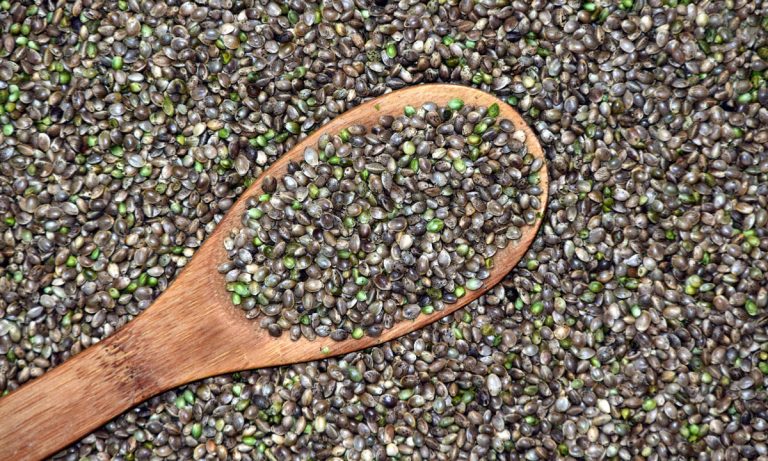
The immediate future is bright for the hemp marketplace.
The data company Brightfield Group estimated that companies selling hemp-derived cannabidiol (CBD) generated $170 million in revenue in 2016. But in a new study published by Brightfield, the group estimates the hemp CBD market could become a billion-dollar marketplace within the next three years.
Though the data is located behind a paywall, a Forbes article revealed many of the compelling statistics. For example, the report states that 64.5% of hemp CBD sales stemmed from online sales while 17.8% of products were bought in smoke shops. Coming in third were dispensaries with 9% of sales, as health stores and doctor’s offices rounded out the top five.
The top 20 brands averaged sales of $2.1 million per year per company for 2016. However, some brands are much more successful with sales of $9-12 million. CW Hemp, made by CW Botanicals owns 7% of the market, followed by PlusCBD Oil made by CV Sciences with 5% of the market. The next three names are tied with 2% market share and they are Elixinol, HempMeds by Medical Marijuana Inc. and CannazALL by Hemp Life Today. An indication of the fragmentation of this market is that 79% of the market is made up of companies with very low sales comparatively.
“Essentially everyone is trying to do hemp, but only a handful are doing it well,” Bethany Gomez, the Director of Research at Brightfield Group, told Forbes. “It’s seen as easy because it can be sold online but, with restrictions on traditional marketing, it is very difficult to connect with your core consumer and even communicate why they need your product.”
Hemp-derived CBD is an approachable product for many users. However, as consumers become more familiar and comfortable within the cannabis marketplace, they sometimes will opt for cannabis-derived CBD. This is especially true in states that have legalized recreational marijuana.
So the immediate future is bright for the hemp marketplace. But Brightfield noted that hemp makers will have to fight in maintaining their place with consumers as more states legalize recreational marijuana.
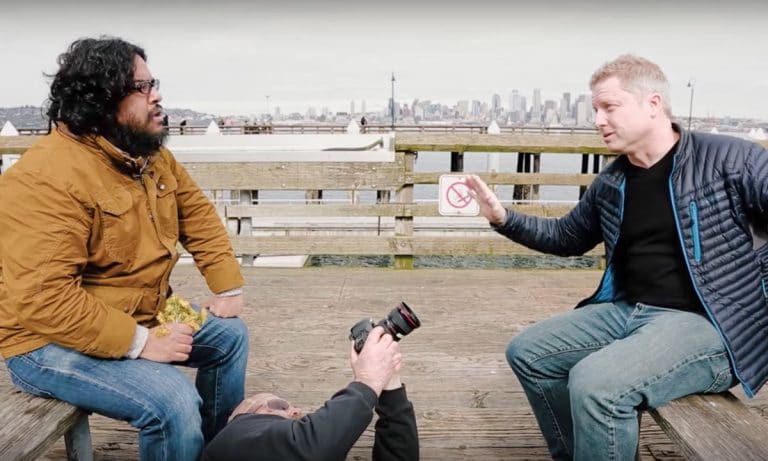
What happens when the government grants a Tier-3 cannabis grow license to an illicit marijuana dealer? What happens when a bon vivant like Kevin suddenly becomes a ‘legitimate’ businessman? What will this process look like? Well, luckily for you, one dealer is filming the whole thing and making it into a show. “Grow Op” is a Web Series for those who are winging it:
We pick up right where we awkwardly left off, with Kevin asking for 400,000 dollars from his friend and sponsor. We cut to all of the faces of the possible investors, who decline with varying types of reactions and overreactions (are my kids being exposed to DRUGS?!). One of the guys asks for some Blue Dream, right after saying that he won’t invest in the marijuana business, which is like the cherry on top of this embarrassing disaster. Also, Kevin can’t find his car.
Episode 8: It’s a Pothole
Kevin is heartbroken over the fact that nobody wants to invest on his new business. He explains how terrible it is that with legal marijuana you have to invest thousands of dollars so you can try to sell it. Before it was legalized, the business was simple and accessible. One of the camera guys tells Kevin that he should just sell his license, which costs around 250,000 dollars. This news make Kevin very happy.
Episode 9: You only get what you can handle
Kevin gets super high and his Ex texts him, throwing him into a crazy paranoid spiral. She then threatens him with limiting when he gets to see his child and basically demands that he figures his shit out. Somehow God – in the form of the great Tom Skerritt – shows up and tells Kevin that you only get what you can handle.
The lesson here is simple: Don’t stare down your rival, because they’ll burn your damn eye balls out.
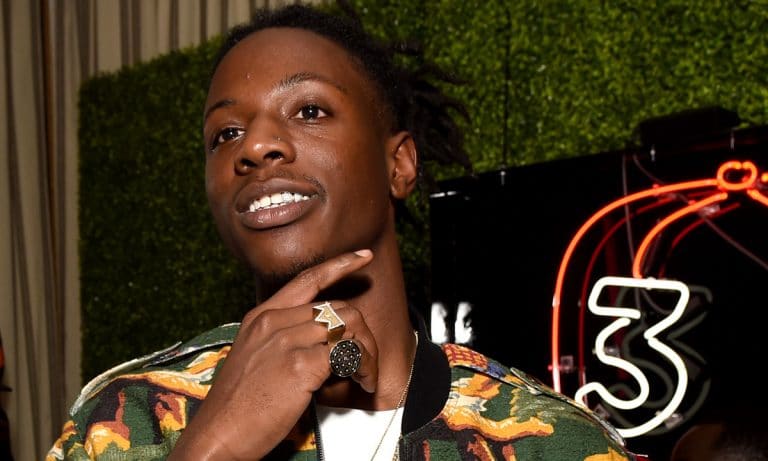
Rapper Joey Badass is known for his thought-provoking, defiant music, willing to make a stand where others aren’t. But that attitude, while great when applied to human interaction and hip hop, is commendable, maybe don’t use the same logic when looking into the sun.
Joey announced on Twitter this week that he had to cancel some shows, due to “unforeseen circumstances.” Now, for most musical acts, multiple issues could cause them to cancel. Justin Bieber just canceled his Purpose World with the same reasoning: “unforeseen circumstances.” Other major performers, even Frank Ocean, use the same language when explaining show cancellations to cover all their bases.
But those “unforeseen circumstances” aren’t so unforeseen in discussing Mr. Badass. In fact, these circumstances were highly foreseen! Earlier on Monday, the Brooklyn native asked his followers if he was “crazy” for watching the eclipse without specialized glasses that every national scientific institution ensured you should use. Joey added that he’s “sungazed” before and “saw colors for a whole day” but didn’t die.
“This ain’t the first solar eclipse and I’m pretty sure our ancestors ain’t have no fancy eyewear. Also pretty sure they ain’t all go blind,” Joey also tweeted.
You can be the judge on those “unforeseen circumstances.” Remember Joey cancelled his tour dates the day following these tweets and the solar eclipse. The “Everybody” tour, where Joey is the opening act and these are the tour dates he canceled, will continue as planned. So it isn’t a tour issue, just a Joey Badass one.
In addition, Joey retweeted the below meme. In it, the user poked fun at Joey ignoring “scientific evidence” to instead stare into the sun. He’s also retweeted a few other mention that looking into the eclipse was the reason for his canceling the tour dates.
Look, I understand thinking you’re better than the sun, the sole reason for all human existence and the massive energy source which powers all life on earth. But the lesson here is simple: Don’t stare down your rival, because they’ll burn your damn eye balls out.
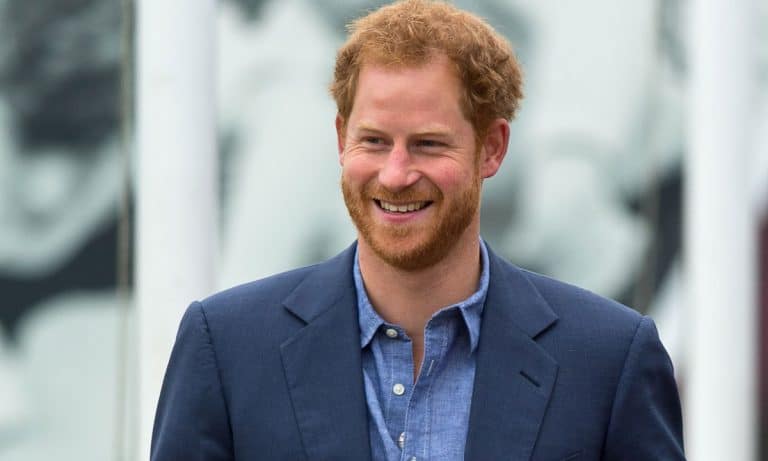
Every detail had been meticulously planned. Ahead of their August 4 arrival in Botswana, Prince Harry arranged “a small, surprise celebration” for girlfriend Meghan Markle’s 36th birthday, reveals a Harry pal. And since it was the first time the “Suits” actress would be meeting his friends in the African nation, the besotted royal went all out. “He was thrilled to bits that he could introduce her to them,” says the pal. “The celebration began almost the minute they touched down.” With a barbecue set up at his friend’s house (“Lots of local foods were prepared,” says the friend) and music playing, everyone partied into the night, says the pal: “Meghan was speechless and so touched.”
And that was only the opening act. Two sources reveal in the new issue of Us Weekly that the 32-year-old intended to ask Markle for her hand in marriage during their three-week stay. While a royal insider says Harry refused to share the details with pals, both the timing — a friend notes he wanted to propose near the anniversary of his mom Princess Diana’s death “so he can associate August with something joyful” — and the location are dear to his heart.
So for months, says the royal insider, Harry’s known this is the trip on which he’d ask his love of more than a year to be his bride. To craft a ring worthy of a princess, Harry worked closely with a jeweler, notes the royal insider, and took a cue from big brother, Prince William. While William used their late mother’s 18-carat sapphire engagement ring to pop the question to Duchess Kate, Harry, says the insider, “had diamonds taken from a brooch he inherited from Diana.” But a source predicts Markle will keep the sparkler under wraps for awhile. “Harry said he would want to enjoy the news between the two of them before word starts spreading out,” says the source. They have plenty of memories to bask in. Adds the source, “This has really been the trip of a lifetime.” [From Us Weekly]
Prince George’s New School Emphasizes Sports & Drama
When Prince George heads out to class for the first time in early September, he will get some of the best education “money can buy” from a “slightly chaotic” school for cosmopolitan families. That’s the view of Thomas’s Battersea in London by a recently published review of schools in England.
The $23,000-a-year establishment, which is about four miles south of the family’s Kensington Palace home, is “a big, busy, slightly chaotic school for cosmopolitan parents who want their children to have the best English education money can buy,” the latest The Good Schools Guide says. “That is what they want and, to a large degree, that is what they get.”
There are “plenty of opportunities for pupils to excel but withdrawn types might find it all somewhat overwhelming,” the review adds. George, 4, will be among a wide variety of international families as “19 different foreign languages spoken at home,” the guide adds.
Like George, the school’s headmaster is also starting fresh next month. The new headmaster is Simon O’Malley, who the guide describes as “ambitious and enthusiastic.” He “generated an energy and buzz about his previous school. Much-liked and respected by parents,” the reviewers at The Good Schools Guide, which calls itself the leading, independent source of information on schools in the U.K., add.
Sporty parents like William and Princess Kate may have been partly attracted to the school by the amount of physical activity – sport takes up 20 per cent of the curriculum time. And there is a lot of emphasis placed on drama too. It “is outstanding with huge productions by each year group being put on over the year,” the review reports. ” ‘Only drawback’, said one parent, ‘is that they are always musicals. Not much use if your child can’t sing’. School assures us there’s always something for everyone.” There’s a new music center, an orchestra, bands and choirs while “two great art studios and two pottery rooms with their own kiln” add to the creative mix.
George’s parents have vowed to take him to school whenever they can. But, the guide notes, that the school owns a “fleet of buses,” some of which bring pupils from Kensington. [From People]
Love the fresh dirt we bring over daily from Naughty Gossip? Let us know in the comments!
News regarding the release of the iPhone 8 are varied. While some analysts claim that the phone will be released in September 2017 along with the iPhone 7s and the iPhone 7s Plus, others claim that this won’t be the case considering that this iPhone will be the most high-end phone ever developed by Apple, and that it will change the course of the iPhones forever.
Experts that believe that the iPhone 8 will be released soon think that supplies will be very limited (more so than usual), consisting of only 2 or 4 million devices available for purchase.
While there’s not a lot of information available, there have been several leaks that have people talking. If these bits of information turn out to be true, fans of Apple will finally get something they’ve been looking for in the previous versions of the phone; innovation.
3D Face Scanning Technology
A piece of code published on Twitter has people believing that the new iPhone will recognize your face, which can mean several things. If your phone is ringing or has any notifications, it will stop as soon as you look at it, because it’ll know that it has your attention.
This technology is accompanied with the rumored infrared face unlock, which is the next form of biometric security where you won’t even have to interact with the screen to unlock the phone. This technology allows you to unlock your device just by looking at it, like those banks from Charlie’s Angels and Mission Impossible. Due to these new security measures, it’s believed that the iPhone 8 will have two frontal cameras and an infrared sensor.
A Sleeker Look & Design
Other leaks claim that the phone will have a back glass plate, which aside from looking very cool and fancy, can also mean that the phone will be able to charge wirelessly.
The home button is another feature that is rumored to change. Always subject to a lot of controversy, leaks and experts believe that it will be removed completely from the iPhone 8, which leaves us with a highly interactive, very expensive piece of black or white glass. Is it the future yet?
How do businesses run smoothly and legally when conducting operations permissible by state law, but are federally criminal? No this isn’t an introduction to a Martin Scorsese film. This is the reality of the cannabis industry.
Legalized in some form across 29 states, marijuana requires counsel in abiding by state business laws like any other industry. But there’s a small problem for lawyers, like the ones in Pennsylvania—they could face imprisonment, disbarment, or other harsh penalties for involving themselves with marijuana.
Still that hasn’t stopped many big-name Philadelphia firms from entering the cannabis space, despite the uncertainty. Firms like Duane Morris, Fox Rothschild, and Cozen O’Connor have recently set up marijuana practices, as Pennsylvania prepares to make medical marijuana available by early 2018.
Joseph C. Bedwick, partner at Cozen O’Connor, discussed the worry of the Trump administration, who has openly opposed marijuana. He told the Philadelphia Inquirer, “At any moment, theoretically, they can say, ‘We’re going to crack down on this.’”
The dilemma has initiated a cautious approach by Philadelphia lawyers. The Associated Press summarized the compromise made between counsel and state as such:
[A]lthough Democratic Gov. Tom Wolf signed the law legalizing medical marijuana in April 2016, attorneys had also been technically barred from offering advice to cannabis businesses under state law. After being petitioned, the Disciplinary Board of the state Supreme Court issued an opinion that state attorneys could counsel clients about the Pennsylvania law, but only if they made clear the consequences they might face for violating federal laws.
State attorneys are optimistic federal authorities won’t be busting down doors anytime soon. They’re also hedging their bets that marijuana will become federally legal within the coming years.
As Steven Schain of the Hoban Law Group told the Inquirer, “Sizzle aside, marijuana remains 100 percent illegal under federal law. Any real cannabis lawyer is exposed to massive federal and civil prosecution. But we’re willing to take the risk.”
The FDA and the American government have a long history of denying some cannabis-related facts, especially when it comes to the positive medical side effects that marijuana offers. The recent growth and popularity of marijuana’s CBD has caused the FDA to reconsider and to be a little more understanding of the herb. CBD is a non psychoactive plant that has proved to be beneficial for patients that struggle with different illnesses and symptoms, including those of epilepsy and seizures.
The FDA has recently put out a call for comments on the Federal Register, trying to find more information on CBD and wondering how it fits on the Convention of Psychotropic Substances that was developed in 1971. In doing this, the FDA recognizes some of the benefits that CBD has provided for different patients over the years; demonstrating that the organization is willing to gather more information on the matter and maybe opening the door for conducting some much needed research in the future.
Although the fact that they FDA is reconsidering CBD may not sound like a big deal, it is, especially considering the fact that last year the DEA tried to classify CDB as a Schedule I type of drug, which are those substances that, according to the government, provide no medical benefits in the US.
If you have some information you’d like to provide on CBD, you can do so on this website. The FDA will be accepting comments and research until September 17th.
Recreational pot sanctions and medical marijuana have been hot topics in the NFL the last six years. Finally, on July 6th, the NFL reached out to the NFL Players Association to consider spending part of their “joint contribution amount” to study cannabis and its role in pain management.
Four terse letters were exchanged between the two entities. Two were from NFL general counsel Jeff Pash and the other two were from NFLPA’s union lawyer Ned Ehrlich.
The elephant in the room wasn’t pot politics, however, it was how prescription painkillers are affecting the NFL players.
In said letters, the NFLPA requested extensive data on how players are being distributed prescription painkillers. The NFL refused the request and the next battle began. The NFLPA responded that the union was “disappointed” and planned to pursue “all avenues to obtain this information.”
Sports Illustrated interviewed union chief DeMaurice Smith and provided takeaways on the matter. The most tantalizing of these started with the fact that the union will only consider medical cannabis as a form of pain management. They see all of this as the larger issue of dealing with chronic pain.
There’ve been rumors that the NFL has been “dangling” marijuana to get something back, but Smith put the kibosh on that assumption. “There’s not going to be a horse trade,” he insisted. “The minute you go down that road? You’re horse trading the health and safety of our players.”
This also implied that recreational cannabis is not a priority for the union.
Smith circled back several times during the interview to the threat of litigation to find out the information on pain pills. He explained further, “Dr. Brown, who is our joint administrator of the drug program, so far has refused our request to turn that information to us, and we believe that since we pay him and he’s our employee, he doesn’t have the right to turn to the NFL and ask their permission to abide by his contract with us. If that doesn’t get resolved, are we going to sue him over that issue? Most likely.”
The union hasn’t depended solely on the NFL for their information. They want to know what toradol does to one’s liver, if it exacerbates brain bleeds, what the impact is of taking multiple shots over multiple seasons or even weeks, and they’ve been doing their homework.
One thing is for certain, they aren’t going to find liver damage or brain bleeds with cannabis and this is just another example of where medical marijuana could potentially step in and help relieve another arena of the opioid crisis.
Emma Stone and Andrew Garfield—beautiful couple turned beautiful, amicable exes—really aren’t back together yet, despite Stone’s rumored visits to see Garfield in London. And although some sources say the duo are just friends, two others close to Stone tell People that “the feeling between them is still romantic” and that “they never stopped caring about each other.” They would date again only “if the timing is right,” one source said.
During a break from filming The Favourite in the U.K. back in May, Stone did see Garfield perform in his play Angels in America in London, an eyewitness tells People. She “left backstage with him,” the source said.
Romance aside, Stone and Garfield are definitely mutually supportive of one another: “They care about each other and encourage the other’s career,” a source close to Stone says. “They’re great friends.”
Garfield expressed a similar sentiment about Stone to Vanity Fair in January:
I’ll speak for myself: You know, I’m her biggest fan as an artist. I’m constantly inspired by her work. I’m constantly inspired by how she handles and holds herself. So for me, I’ve—it’s been bliss to be able to watch her success and watch her bloom into the actress that she is. And it’s also been wonderful to have that kind of support for each other. It’s nothing but a beautiful thing.
How Much Money The Game of Thrones Cast Make Per Episode
“Game of Thrones” is the biggest show on television by a lot of measures, and certainly the biggest hit in HBO’s history, so it’s no surprise that its actors—the ones who have managed to survive into the seventh season—are making bank. If you’ve ever wondered exactly how much a starring role in Westeros pays, Variety now has the answers for you.
In its 2017 salary survey, a “sampling of estimates” for the paychecks of TV’s most notable stars, the outlet revealed that Emilia Clarke, Nikolaj Coster-Waldau, Peter Dinklage, Kit Harington, and Lena Headey all make the same amount per episode: $500,000. Yes, that is per episode, meaning a full 13-episode season would bring in well over $6 million. Per their list, that’s the same as Kevin Spacey brings in for an episode of “House of Cards,” and slightly more than Claire Danes makes for an episode of “Homeland.”
Love the fresh dirt we bring over daily from Naughty Gossip? Let us know in the comments!
I have to imagine cannabis presents a tricky dilemma for the entertainment industry. As the modern cannabis consumer is rapidly changing, how to accurately portray that shift on-screen? Because the long-term cultural image of a cannabis user has been the stoner—usually a schlubby white male who “likes getting baked, man.” Think of Cheech and Chong or Seth Rogen comedies or The Big Lebowski. Sometimes the stoner character isn’t white, but still definitively male, like Half-Baked or How High or Friday.
But that lazy, hijinks-riddled stoner isn’t so prevalent anymore. The stoner has grown up, to a degree, and certainly evolved into something more diverse, as seen through recent TV shows like High Maintenance and Weeds. Storytellers shifted their focus from smokers to dealers, those navigating the underground to make an honest buck. Stoners were entrepreneurs, in other words, capitalizing on their favorite pastime.
Weed became a means to circumvent the system holding them back. Even a show like Trailer Park Boys, where each season the boys concoct plans to sell enough weed to escape their traditional trailer park lives, follows this conceit. This of course reached its apex with Breaking Bad, a show about selling crystal meth sure, but followed the same principle: To beat the system, sometimes you must work outside that system.
That was the direction cannabis-related entertainment mostly tracked, though other examples abound of cannabis’ shifting media perception. Broad City and Bored to Death and Workaholics showcased weed’s ability to connect individuals and groups. Marijuana wasn’t front and center, but a part of their lives. This, I imagine, symbolizes the relationship most users have to cannabis nowadays. The cannabis brand, like its users, matured.
All of which leaves Netflix’s Disjointed at an odd place. The show’s first trailer debuted this week and it’s unclear who this show might be for. Co-created by David Javerbaum (previously a writer at The Daily Show and the Colbert Report) and Chuck Lorre, it wants to strike the intersection between these two ideas of stoners and cannabis consumers. Early indications demonstrate a show out of touch and tonally confused.
For those unaware: The premise is strikingly 2017, as “cannabis legend” Ruth Whitefeather Feldman opens a Los Angeles marijuana dispensary and tries to go legit with her recently graduated son and fellow budtenders. It’s a diverse show, too: Kathy Bates stars as Ruth and also features Tone Bell, Elizabeth Ho, and Aaron Moten in lead roles. For a multi-cam traditional sitcom, Disjointed is commendably diverse.
That diversity, however, is about as evolutionary the show might be, as Disjointed‘s trailer is full of cliché one-liners and outdated hippie humor. When one character puffs some cannabis, he announces the strain’s name as, “Skywalker OG.” Then, in a boringly average Yoda impression, he says, “Stoned, I am getting.” Elsewhere, the show includes supporting characters with names like Dank and Dabby. Let me repeat: Dank and Dabby. Reading those names, you too might secretly pray they die in the first episode. They do not. A total of 12 episodes will incorporate Dank and Dabby.
Considering Lorre is on board, this shouldn’t be surprising. After all, he is the showrunner behind the hyper-successful Big Bang Theory and Two and A Half Men, which explains the cheap humor and goofy names. Lorre is an opportunist, more than anything, pilfering subcultures to present to a larger mainstream audience. Unfortunately a lot of necessary and interesting context get lost in that process, and Disjointed appears headed down that same road.
Perhaps I’m too quickly dampening expectations. But in its previews, it appears this show isn’t for stoners or the modern cannabis community. As the trailer showcase, it will likely appeal to the lowest common denominator, regurgitating old stereotypes and low-hanging fruit about cannabis for a quick laugh. I suspect those who love the show most won’t be cannabis consumers. Disjointed almost seems like an incubated alien, descending from a previous time and out of conversation with modern weed-related entertainment. The show lands Aug. 25 and could surprise. It could also just go up in smoke.