Sunday, December 28, 2025
Home Blog Page 1249

How The Weed Industry Is Fighting The New War On Drugs

A recent Wired feature showcases companies that support the cannabis industry in crucial ways against the new war on drugs. Crucial might seem a dramatic word choice here, but without these ancillary companies provided tight payroll services and regulatory standard testing, it could open the cannabis industry to a very different type of drug war with Attorney General Jeff Sessions. And we don’t need to remind you just how much Sessions distastes marijuana.

Just like a negative and misguided stigma remains associated with marijuana, a stigma permeates the cannabis industry, though on a much different scale. When someone says they work in the cannabis industry, those on the outside usually interpret that to mean the growing, selling, and distributing the plant itself. But that isn’t true.

As there is any other industry, working with cannabis includes secondary or ancillary businesses to the product itself. Technically speaking, The Fresh Toast falls within this category. We are a website whose workers don’t touch the plant in our professional capacities, but would fall under the broad category of being within the cannabis industry regardless.

Via Wired:

What worries cannabis entrepreneurs […] most isn’t some blatant crackdown on dispensaries, but a more surreptitious war on drugs, in which government overseers like the Department of Labor or the Internal Revenue Service catch cannabis companies slipping up on the more mundane details of complying with laws around safety, environmental standards, and taxes. In other words, to stop pot, the Trump administration may find the answer in what it ostensibly despises most: government regulation.

As any small business owner could tell you, complying with state and local regulations are burdensome enough on their own. Now just imagine the federal government deems your business’ product illegal and doesn’t want you profiting from such an endeavor.

That has, as Wired wrote, weirdly created a business opportunity for companies willing to help guide those in the cannabis industry to maintain standards and regulations. A company like Adistry helps companies legally advertise their products while Front Range Biosciences will track cannabis quality across various growers. There are also companies to assist with payroll and run public relations and devise supply chains.

“There’s been a sea change when you look at the kind of support resources available to a legal cannabis business today,” as Steve DeAngelo, who opened one of California’s first medical marijuana dispensaries in 2006, told Wired.

To continue to thrive, the cannabis industry will need each other ensuring everyone is playing by the rules. Because if you make just one mistake, you might be hearing from Sessions.

7 Practical Snack Hacks For The Ultimate Beach Day

The sun is out, the weather is warm, and you can basically hear the waves screaming your name for a visit. This all makes it nearly impossible to get any work done. The brain gets fuzzy during nice weather, which makes dealing with trivial things whilst heeding the call of the ocean is nearly impossible. Here are 5 easy snack hacks, that utilize every day items, to make your trip to the beach a comfortable one. Hardly any brain work at all, promise.

1. Make Sneaky Beach Cocktails

Grab yourself a jug of juice from the grocery store (strawberry lemonade or pink lemonade work best), add some fruit-flavored vodka (like berry or watermelon),  perhaps a splash of Malibu Rum (memories!), Triple Sec and some fresh berries and you’ve got yourself a stealth back of beach cocktails. Or, if you’re drinking solo, just put a bunch of cocktail ingredients into an empty water bottle and shake.

https://www.instagram.com/p/BL4bJL_lvwz

2. Repurpose Those Empty Snack Containers

Whether they used to house Pringles or coffee creamer, rinse them out and fill them up with things like pretzels, Goldfish crackers, M&Ms, peanuts, etc. to create an instant no-spill snack container.

3. Use That Solo Cup As A Speaker

Stick your phone inside to amplify the music. Make sure it’s empty first. And maybe leave the Taylor Swift for another occasion.

https://www.instagram.com/p/5QylZFgqcP

4. Put A Sock On It

Placing your bottled bevy into a wet sock will keep it cooler longer.

https://www.instagram.com/p/48o1QWAdf5

5. Frisbees Make Great Trays

https://www.instagram.com/p/BSqYZJ5hEbK

6. DIY “Adult Capri Suns”

Mix some vodka and lemonade together, pour into ziplock bags, add a slice of lemon and a straw and freeze. Take the frozen pouches to the beach, let thaw a bit, and drink up!

https://www.instagram.com/p/BSj8DtGA6tz

7. Make Vegetable “Pots”

Because vegetables are sturdy suckers, they make great snacks for the beach. For instance, you can hollow out the innards of a red, orange, or yellow pepper (we all agree green peppers suck, right?), fill half way with hummus, then stick some sliced veggies in there.

You can dip the veggies into the hummus and since you can eat the serving container, you’ll leave the beach waste-free. Same goes for cucumbers. Hollow ’em out, fill with something yummy (hummus, dip, potato salad) and place the other half on top. Better than a hot dog and way less messy to eat.

https://www.instagram.com/p/BUZ6DFilz2l

See It: Naked People In Nature Is The Best New Instagram Trend

Donald Trump and Beyoncé probably don’t share a lot of similar characteristic or life perspectives, but they’re linked by one irrefutable fact: they both have butts. And one Instagram trend is dedicated to showing off of everyone’s wonderful booties in all genders, shapes, and sizes. The account is called @cheekyexploits and it’s a new travel social media trend. It goes something like this: Journey to a remote part of the world, or a hike in nature, and pose with your butts to the camera and your eyes locked on the pretty view.

https://www.instagram.com/p/BUO6K2ulJJB/

The account was started by a 31-year-old London woman who prefers to be known only as “Cheeky.” She had followed an account of one man’s posed butt around the world and became inspired to start her own.

https://www.instagram.com/p/BTxCOUulSde/

https://www.instagram.com/p/BTlx0s5FjGb/

“I thought this was such a fun idea and my friends, husband and I already had a small collection of photos similar to this,” Cheeky told HuffPost. “So I started the account as a fun way to share them amongst our friend group.”

https://www.instagram.com/p/BTeNMDNFEHp/

https://www.instagram.com/p/BTcACY9lHVZ/

“I never meant for the account to necessarily be about travel and certainly never intended to start a trend,” she also said. “It was just a bit of fun and, also, I enjoyed encouraging people to be comfortable with their bodies and participate for the thrill and confidence boost.”

https://www.instagram.com/p/BT7Ej-xlDiP/

https://www.instagram.com/p/BUOeNUslV7e/

So next time you see a pretty view, you know what to do: Drop chow and let the world see that booty.

Here’s How Banks Are Screwing Marijuana Consumers Every Day

This spring, Senator Jeff Merkley (D-OR) and Representative Ed Perlmutter (D-CO) introduced the Secure and Fair Enforcement (SAFE) Banking Act — offering a much-needed solution to the conflict between state and federal laws that discourages banks from working with marijuana-related businesses and a great cost to marijuana consumers, even in states where those businesses are legal.

Because marijuana use or sale for any purpose is illegal under federal law, any bank or credit union that provides banking services to a marijuana-related business could potentially be prosecuted for money laundering, aiding and abetting, or conspiracy, even if that business is legal under the laws of the state in which it operates. That means any marijuana-related businesses — be they recreational or medical — are largely left without access to banking services in the eight states (and D.C.) where recreational use and 29 states (and D.C.) where medical use have been legalized. Businesses at every stage of the distribution process (from growers to producers to dispensaries) are often forced to operate on an all-cash basis, a situation which invites both violent and financial crimes.

Though two years ago the Obama Administration took steps to alleviate this conflict through guidance issued by the Department of Justice and Financial Crimes Enforcement Network (FinCEN), it could not change the underlying federal laws that open banks up to risk of prosecution. And how long this guidance will continue to stay in effect under the new Trump Administration is unknown, given that Attorney General Jeff Sessions has made no secret of his opposition to marijuana reform and has launched a task force to review the current policies.

That’s why the SAFE Banking Act is necessary. It would provide banks with the permanent protections from criminal and civil liability that they need to serve marijuana-related businesses that are legal in their states, ensure that banks that choose to do so won’t be punished by federal regulators, and allow states that are moving in this direction to tax and regulate legal marijuana effectively — regardless of the fate of the current guidance. Congress should act now to pass the SAFE Banking Act for three reasons: it would improve public safety, establish responsible rules for marijuana-related businesses, and because Americans overwhelmingly support it.

1. Public Safety

All-cash businesses are bad for public safety. When a marijuana dispensary is forced to operate in only cash, that means it not only conducts sales strictly in cash, but it pays its employee salaries, rent, and taxes in cash — bags and bags of it. No bank account means more than no checks — it means nowhere to deposit and store profits or the money that will pay the electric bill.

When marijuana dispensaries are doing more than a billion dollars in business annually, like they did in Colorado in 2016, all that cash adds up — and becomes a magnet for crime. The fact that marijuana-related businesses are so flush with cash and have nowhere to put it is not lost on criminals, and that puts employees, customers, and neighbors of marijuana-related businesses at risk of being targeted for violent crime every single day. Just last summer, a 24-year-old security guard tragically lost his life when he was shot and killed during an attempted robbery at a dispensary in Aurora, Colorado.

And not only are these businesses and their communities targets for crime, but the lack of oversight could also attract a criminal element looking to traffic drugs or launder money. So long as marijuana-related businesses are forced to operate outside of traditional banking and without financial oversight or any eyes on their books, criminal syndicates and gangs have the opportunity and incentive to use them for their own purposes, increasing the risk of both violent and financial crimes.

The SAFE Banking Act would improve public safety by radically transforming the relationship between banks and marijuana-related businesses in legal states. The bill grants banks in states where marijuana is legal a safe harbor from criminal and civil prosecution for transacting with legitimate marijuana-related businesses. That means if a marijuana-related business is legal in the state in which it operates, it will be able to open and use a bank account like any other legal, taxpaying business.

Federal banking regulators will not be able to threaten or terminate a banking institution’s deposit insurance, penalize or prohibit banks from opening accounts or offering loans, or force accounts to be closed. Banks and their employees will be protected from federal investigation or prosecution for doing their jobs. And no bank will be required to work with marijuana-related businesses if it doesn’t want to do so.

Access to banking services doesn’t just make it easier to run a business—it means less cash, and therefore less crime, on our streets and in our neighborhoods.

2. Marijuana-Related Businesses In A Headlock

Under the bill, legitimate marijuana-related businesses adhering to the laws in their states will be treated like every other business — if they follow the rules, they get to operate in the light of day without penalty. They’ll be able to open bank accounts, accept credit card transactions, pay taxes, rent, and salaries with checks, and have access to loans. But the SAFE Banking Act is not a blank check or a free-for-all — instead, it establishes responsible rules for marijuana-related businesses.

Banks will still have to abide by rules for handling marijuana-related businesses’ account laid out in the 2014 FinCEN guidance. That guidance requires banks to file Marijuana Limited Suspicious Activity Reports identifying the accounts of marijuana-related businesses, and to flag any suspect activity so the federal government can know where those businesses are operating and how they’re handling their money. Some institutions are already following this guidance now, despite the potential risk in doing so, because they feel a responsibility to protect the public safety of their communities. This bill would give all banks in states where marijuana is legal the security they need to do the same, should they choose to do so. In return for access to banking, marijuana-related businesses will be subject to the same sort of financial oversight that other businesses are—making it easier to ensure they are following the laws and paying their taxes.

The current system only works for the wrong types of business owners — those willing to lie to their bankers to open or maintain accounts or eager for a way to manipulate the system to avoid regulation, oversight, and taxes. After all, no bank account means no verifiable record of profits. By passing the SAFE Banking Act, Congress can set in place responsible rules that close these loopholes, provide an additional layer of oversight, and make sure legitimate business owners — and only legitimate business owners—have an incentive to be in the legal marijuana market.

3. Ignoring The Views Of Most Americans

The safe harbor from federal prohibition provided by the SAFE Banking Act is a policy our public opinion research shows the vast majority of Americans support. Our national poll found 67 percent of voters — including 54 percent of Republicans, 74 percent of Independents, 64 percent of women, and 75 percent of millennials — support Congress passing legislation to establish a safe haven from the federal prohibition on marijuana that would allow banks, states, and market participants to act without fear of prosecution in states where marijuana is legal.

Americans realize that public safety and financial oversight are both put at risk under the current policy — even those who live in states where marijuana has not yet been made legal. As one piece of a multi-part public opinion research project, Third Way conducted a three-day intensive online focus group, whose participants identified the banking prohibition as one of the most concerning aspects of the conflict between state and federal laws. Not only did they describe the current situation as “scary,” “a joke,” “ridiculous,” and “ludicrous,” but they highlighted public safety and financial oversight as two major areas of concern immediately upon having the situation explained to them.

In reference to the public safety risk the current situation creates, they said:

  • “I have concerns about the vendors being safe from theft. The feds are creating conditions that can lead to criminal activity due to the differences in laws.”
  • “That policy is just crazy and sets up the business to be robbed having all that cash on hand.”
  • “This seems very unsecure and unsafe. Thieves know this then and these businesses seem likely targets for burglaries and robberies.”
  • “It offers criminals a foothold for many opportunities.”

And they also recognized the invitation to commit financial crimes:

  • “Paying in cash has always been a way for people not to pay taxes. If it was regulated then they would issue checks and employees and vendors would have to pay their fair amount of taxes which goes to improvements for our state. I feel that too many people take advantage of not paying their taxes and this situation would be one that employees and vendors would take advantage of.”
  • “The taxes and payroll involved seem like they would not be as accurate.”
  • “Who is to say how much money dispensaries are making since it’s cash and can go unreported to the state?”
  • “That to me seems like a way to cheat the government. When everything is in cash much ends up under the table.”

One focus group participant summed up the problem and the solution quite succinctly: “It’s stupid really. Why not change this? If you accept the tax money, you should make it easier for these business[es] to function financially.” That’s exactly what the SAFE Banking Act would do — make sure that legitimate marijuana-related businesses that are legal in their state have the access to depository institutions and financial services that they need to run their businesses safely. And when they do, the community will benefit—from both safer streets and better oversight.

Conclusion

The SAFE Banking Act doesn’t resolve every facet of the conflict between state laws legalizing marijuana and the federal laws prohibiting it. But it does address one of the most pressing and dangerous problems created by this persistent conflict: the inability of marijuana-related businesses that are legal under state law to access banking services. By doing so, it prioritizes public safety by allowing those businesses to come out of the shadows and operate in the light of day like any other legal business, and it establishes responsible rules to ensure appropriate oversight. That’s why Americans support this solution by a wide margin.

The playing field on marijuana policy is changing rapidly nationwide, and Congress has a responsibility to act now to pass the SAFE Banking Act to ensure that change can happen in the safest and most responsible way for our communities.

This article was created by Sarah Trumble for Third Way.  

Gossip: Aaron Hernandez Requested To Bunk With Cellmate He Called ‘His Heart,’; Sean Hannity Begs For Help

Five handwritten letters written by Aaron Hernandez to prison guards at the Souza-Baranowski Correctional Center in Massachusetts were turned over to CNN in a response to a Freedom of Information Act request.

In the letters, Aaron made several requests to be moved to another part of the lockup and be bunked with other inmates — including one he called his “heart.”

via CNN:

Hernandez implored authorities to move him to a section of the prison called P2, which he said was “where I belong.”

“I’m just trying to be placed with people I’m close with and the place my time in here will go the smoothest, which is best for me and yall,” he said in one letter to Inner Perimeter Security. “I am even requesting to (bunk up/celly up) with my brother (name redacted).”

In the same letter, he said that most inmates “go where they fit in most as long as they have no enemies” and P2 would be most fitting and “comfortable” as he got ready to settle in for a “life bid.”

“So, please make this happen,” he wrote. “I even prefer to move in with (name redacted); me and him are very close and have been since the streets and that’s FACT, not bullshit. He’s my heart and like a real brother to me that’s why I want and am requesting to go upstairs and live with him.”

In two letters, he also requests to be moved to a section called N1 after he finishes time in an orientation block.

“I know a few people over there and I’m cool with (redacted) and knew him for a while,” he said in a letter to a deputy.

Several news outlets have reported that Aaron was bisexual. An attorney for 22-year-old inmate Kyle Kennedy has filed a new petition with the judge to receive a copy of a suicide note he strongly believes Aaron wrote for his client.

Aaron’s fiancée, Shayanna Jenkins-Hernandez, has strongly denied those claims.

Sean Hannity Begs For Help: Thinks He’s Next To Be Fired

Yesterday Fox News formally retracted their insane claims about the murder of DNC staffer Seth Rich after the Rich family essentially threatened to sue them into oblivion. The retraction came just as Media Matters, with no overt call to action, simply posted a list of the advertisers on Sean Hannity’s show. And oh boy, is Hannity ever freaking out.

Love the fresh dirt we bring over daily from Naughty Gossip? Let us know in the comments!

Why Is John Morgan Investing $100M In The Weed Industry?

Florida attorney John Morgan, the activist who sunk millions of dollars of his own money into campaigns to legalize medical marijuana in the Sunshine State, is on the verge of investing around $100 million to get a piece of the state’s newfound cannabis trade.

According to a report from the Miami Herald, although Morgan has not yet invested in the medical marijuana industry, he is fully prepared to throw millions of dollars into “the right opportunities,” which may include taking ownership in Chestnut Hill Tree Farm, one of the nurseries the state has licensed to cultivate and sell cannabis products.

“I am prepared to invest significant monies in this industry and I plan to,” he told the news source. “I have learned a great deal about the miracles of marijuana over the last five years. And what better person than me to be involved?”

For years, Morgan has been accused of agenda driven activism in an effort to get in on the ground floor of the marijuana business.

In 2014, Roger Stone, one of President Trump’s longtime advisors, suggested that Morgan was only interested in legalizing a medical marijuana program to cash in a potentially lucrative market.

“Morgan tells us his only motivation is mercy for sick people, a darker motive is included in his constitutional amendment,” Stone wrote in a column for Sunshine State News. “For the people, my ass.”

However, Morgan has maintained that his desire to provide cannabis medicine for the sick people of Florida and his willingness to get involved with the cannabis industry are completely separate of each other. In fact, Morgan recently ousted Ben Pollara, his right hand man in the United for Care campaigns, because he felt that Pollara’s secret business interests prevented the passing of medical marijuana regulations in the state legislature.

Morgan insists that if he were waxing political simply to generate profits from the cannabis industry, he would simply set back and watch the details of the program be hashed out by the Department of Health. Instead, he is calling for the issue to be addressed in a special session.

“I don’t care how it is implemented. I don’t care how many licenses there are,” he told the Herald. “I would prefer that the amendment is implemented first. If I had an interest in one of the existing [licensed operators] it would be in my best interest to have no special session.”

4 US States That Have The Most Affordable Legal Marijuana

Reporter Kevin Drum used data from the crowdsource information website Priceofweed.com to find out where weed was cheapest. His work parses out the west from the east, and focuses on what lies west of the Rocky Mountains.

Out there, Oregon, Washington, Colorado and California boast the cheapest greenery. That should come as no surprise, as they’re among the states leading the charge for legal weed. Drum writes:

Sure enough, marijuana is noticeably cheaper in the four states that legalized recreational use more than a year ago. (Nevada has also legalized recreational use, but the law has been in effect for only a few months.) I’m really glad this turned out to be the case since it would have been damn strange if it hadn’t.

But there are a few exceptions, geographically speaking. Florida, Maine, and Michigan all report competitively-priced weed.

The most expensive marijuana is found in Washington, D.C., where an ounce of high-quality stuff is said to set you back $600. “Why is pot so expensive in the bustling and competitive markets of New Jersey, Pennsylvania, Massachusetts, New York, and other populous states? And does it really cost $500 per ounce in Washington D.C., the highest priced market in the nation?” Since the data is crowdsourced, it’s hard to say whether these numbers are accurate, but it does make some common sense that if you’re looking for quality, affordable weed, you’ll have to head westward—for now.

Difficult Menstruation Can Now Score You Medical Marijuana In New York

Women of New York: It’s time to rejoice. A bill allowing cannabis as a qualifying condition for difficult menstruation and menstrual cramps passed the New York Assembly Health Committee on Tuesday.

That’s right. If you suffer from dysmenorrhea — painful abdominal cramping during menstruation — you can legally consume marijuana under the state’s medical marijuana program.

For many women, cannabis relieves the often debilitating pain. Legend has it that Great Britain’s Queen Victoria suffered from dysmenorrhea and her doctor prescribed cannabis to help her.

Assembly Bill 582, sponsored by Assemblymember Linda Rosenthal (D-Manhattan),  fought for the measure after state lawmakers approved chronic pain and PTSD as qualifying conditions.

“Not only will this improve women’s wellness and productivity during menstruation, but it will also advance New York State in one of the country’s fastest-growing industries,” Rosenthal said before Tuesday’s vote.

Last year, Rosenthal led the campaign to exempt feminine hygiene products from state and local taxes.

Research shows that the two major cannabinoids found marijuana —tetrahydrocannabinol (THC) and cannabidiol (CBD) — can reduce cramps and control pain. Some doctors suggest that the cannabinoids can also help manage the symptoms of premenstrual syndrome, including insomnia and anxiety.

Although studies have not conclusively discovered how cannabis works to combat dysmenorrhea, researchers suggest that THC positively affects the nerves and assists in blocking out pain while also allowing for more pleasant signals to be received by the brain. CBD works in the immune system by suppressing the mechanisms responsible for inflammation. CBD also slows down electrical signaling to muscles and allows them to relax, thereby reducing cramping.

There are products currently on the market that help women with the monthly suffering.

Foria Relief makes a medicated tampon that the company promises will “maximize the muscle relaxing and pain relieving properties of cannabis without inducing a psychotropic high.”

And Whoopi Goldberg entered the cannabis industry with business partner Maya Elisabeth to create Whoopi & Maya, a company dedicated to women’s health.

Goldberg, who has openly discussed her experience with debilitating cramps, credits cannabis for easing the pain.

“This was all inspired by my own experience from a lifetime of difficult periods and the fact that cannabis was literally the only thing that gave me relief,” Goldberg said. “The only products available to us were filled with ingredients we couldn’t even pronounce and I discovered that I was not alone in this. When I looked further, I learned that this area was considered a ‘niche’ … a ‘niche’ that includes half of the population!”

Gossip: Inside The Freaky New Instagram Fitness Trend ‘Alien Yoga’ And Ben Affleck’s Single Life

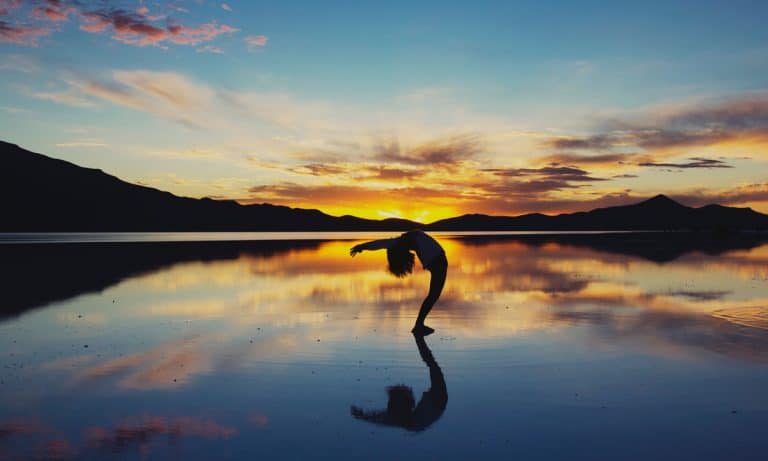
It’s called Nauli, but it’s apparently gotten the nickname “Alien Yoga.”

The position supposedly helps massage internal organs, strengthen the core and aid in digestion, but it also looks like simply a fun way to scare people!

To accomplish, you first exhale, pushing your stomach out, according to Yoga Journal. While holding your breath, you then pull your abs up toward the chest. Then you isolate your abs and roll them from side to side. “This Nauli is the crown of Hatha practices,” says a translation of The Hatha Yoga Pradipika. “It kindles a weak gastric fire, restores the digestion, always brings happiness, and dries up all defects and diseases.”

How’s Ben Affleck’s New Single Life In His New Home?

MISERABLE.

Not great! A source says, “Ben seems lonely and miserable in his new house. His friends are hoping he’ll find a new normal soon”

Love the fresh dirt we bring over daily from Naughty Gossip? Let us know in the comments!

How The Planet Benefits When You Drink Whiskey

Have you ever, while swirling your favorite  whiskey dram, looked at it lovingly and wondered, “to what extent is this stuff contributing to the slow destruction of the planet we live on, and by extension, modern civilization as we know it?”

You wouldn’t be the first to ask that question, but unfortunately, there’s not a huge amount of research on the subject. The most comprehensive study of whiskey’s environmental impact to date is a 2007 working paper on carbon emissions related to alcohol production and consumption produced for the Food Climate Research Network. Unfortunately, that study was limited to the U.K., but we still get some interesting takeaways from it.

clear drinking glass with water

Breaking down the greenhouse gas emissions associated with Scotch whisky by stages of production gives us the following: The biggest energy expenditure is associated with the actual distilling process, followed by the farms where grain for whisky is grown. Malting and bottle production each contribute somewhat less.


On the whole, for drinkers in the U.K., scotch is a relatively green alcoholic drink. Between beer, wine, and spirits, beer is associated with the highest greenhouse gas emissions, followed by wine. Spirits, as a whole, make up approximately .1% of all U.K. greenhouse gas emissions, and just 7.12% of all alcohol-related emissions. For whisky, the number is even lower, since that figure includes imported spirits—and in the U.K., Scotch is a local product.

That last point is probably the biggest takeaway: beer is associated with higher emissions largely because of the energy it takes to refrigerate it. Wine, in the U.K., outranks spirits mostly because it’s almost all imported. If you subtract the transportation and refrigeration parts, the three categories are close to equal. For someone on, say, the west coast of the United States, a Napa Valley cabernet is obviously greener than an Islay scotch.

What about bourbon?

There’s no comparable study for bourbon or other American whiskeys, but we can make some guesses. Obviously, malting is less of a factor for most American whiskeys than it is for Scotch, and if you live in the U.S., domestic whiskeys don’t have to be shipped as far. But we also have to consider that bourbon is aged in new barrels, and those barrels are made of wood. However, according to an article by hardwood forestry expert Tom Kimmerer, the impact of barrel production for whiskey on the white oak supply isn’t huge, and current harvest levels should be sustainable for the foreseeable future.

As far as which whiskeys are greener than others, any whiskey that uses local materials will, of course, have a smaller carbon footprint. Also, column stills are more energy-efficient than pot stills. Maker’s Mark, according to Forbes, “is possibly the most environmentally friendly” alcoholic beverage producer in the world: they use local grain, recycle waste into energy, and have a wastewater treatment facility and a nature preserve on the property that houses their headquarters and distillery.

This article originally appeared on The Whiskey Wash.


Don't Miss Your Weekly Dose of The Fresh Toast.

Stay informed with exclusive news briefs delivered directly to your inbox every Friday.

We respect your privacy. Unsubscribe anytime.