Social media doesn’t tend to be super helpful after a breakup, but there are some ways in which these sites can help you.
Breaking up in the modern era sucks. While before we used to be able to break up and cut off that person from our lives, now we’re forced to live with their presence in our pockets. Thanks to your cellphone, you now have 24/7 access to your ex, allowing you to reread texts, stalk their profiles and more.
Nowadays breakups need to be handled with care. While it sucks to have to block people, sometimes it’s what you need and that’s okay. There are also Instagram accounts that can help you feel better and provide some perspective and much needed advice from a totally unbiased point of view.
Check out 5 Instagram accounts you should follow after a painful breakup:
If you’re feeling angry and disappointed the best thing you can do is laugh about it. Awards for good boys is an account made by comedian Shelby Lorman. Her posts are basically awards for mediocre men who expect a medal every time they do even the most basic of things. It’s great.
Another hilarious account you can follow is Reductress, which parodies all kinds of women websites and the ridiculous headlines that accompany them. The fake headlines resonate really well with all sorts of people, especially those who’ve recently gone through break ups.
Elephant Journal is a very positive Instagram account for people going through all sorts of things. The account provides quotes that range from funny to introspective, always resonating and providing some perspective.
Probably the most famous poet to come out of Instagram, Rupi Kaur has over 3.8 million followers. Most of her content centers on self care, which is a nice thing to be reminded of when going through hard times.
Cleo Wade is another famous author with a large platform on Instagram, having over 539k followers. She publishes great quotes, inspiring thoughts and beautifully minimalistic artwork that is good to have even when you’re not going through a break up or a rough time.
Cannabis companies seem to be sensitive to the issue and it looks as if small steps are being taken to be inclusive as the industry continues to build and grow.
Diversity is the word of the day when it comes to the cannabis industry. It’s the word that sunk the attempt to legalize adult use cannabis in the state of New York and it’s also the issue that torpedoed New Jersey’s march to full legalization.
In the early days of the legal medical marijuana market, the demographics of industry insiders skewed to outliers, risk-takers and women who were tired of banging their heads on the glass ceilings of other industries. People of color with past incarcerations were largely shut out of the industry. The advocates pushing for legalization basically had to agree to a strict no criminals rule in order for the states to gain a level of comfort. The unintended consequence of that bargaining tool was that people of color got pushed aside in the early days of the cannabis industry.
As more data was released it was realized that black and brown people were arrested and jailed far more often than their white cannabis counterparts. Thus, legalization laws that required no executives with a criminal past meant that population was excluded from the party. Those statistics have been used as reason for arrest record expungements so that people with prior marijuana arrests can start over with a clean slate and enter the industry. States now realize that expungement needs to be a part of the social equity formula so that this demographic isn’t cut out of the legal community altogether.
Women in Cannabis
Women had a much better shot at grabbing a seat at the executive cannabis table than people of color, but it seems they are fighting to keep those gains. Women jumped into the cannabis industry in the early days as they accepted the risk of working in cannabis. According to Debra Borchardt, the CEO and Co-founder of the cannabis financial news website Green Market Report, “The general attitude from the early cannabis pioneers was ‘what have I got lose?’ We weren’t moving up in traditional sectors the way we felt we should be and weren’t getting equal pay. So why not take charge of our careers in cannabis? The opportunities were there for the taking because men, as breadwinners, weren’t willing to take that risk.”
Photo by danielzgombic/Getty Images
The number of female employees in the cannabis industry has fluctuated between 26% and 36% according to statistics from Marijuana Business Daily. According to a report by cannabis employment firm Vangst and MJ Biz Daily, 38.5% of total surveyed employees identified as female. The report reviewed 166 cannabis companies in 17 states. Responses from companies with fewer than 2 employees weren’t included.
The top three states for hiring female workers in the cannabis industry were Kentucky, Pennsylvania, and New York. Only 17.6% of these women said they held a director or executive role. One company though had 15 women in either a director role or executive role. At least 41.2% have at least one female at the director or executive level position. Sadly, 12.6% of the surveyed cannabis companies had zero women in a director or executive level position.
Seven companies noted that they only have women working for them, but those companies were small, totaling seven or fewer employees. Compared to other industries only education and real estate hire more women. Education is 68% women, while real estate is 49.9% women.
“Women started out strong in the industry, then we saw those gains slip as many owners were bought out or left due to founder fatigue,” said Borchardt. “We’ve also seen the stigma of cannabis work lessen and that is drawing many more men to the industry. The key now is for women to fight to get on company boards and keep the pressure on companies to hire more women.”
It does seem that the issue is getting more attention. A recent Arcview event held in New York was notable in that Troy Dayton said, “We welcomed more female speakers on stage In New York than ever before, and we couldn’t have been more pleased with the results. We continued our commitment to honoring women’s indispensable contribution to our industry by hosting the Arcview Women’s Investor Network (A-WIN) retreat after our event.” Another panelist at the event said, “Frankly I’m tired of just seeing the same type of men pitch. I welcome the new faces and want to see more women pitching.”
Women Grow sponsored a study on women in cannabis in 2017 in a joint project with New Frontier Data that showed an overwhelming number of cannabis companies with women leaders. However, over a third of the people contributing to the report were from the Women Grow organization, so it was already heavily skewed towards women responding. This report found 50% of the cannabis companies were owned by women. These were mostly small businesses with revenue under $100,000 and not publicly traded entities.
That could be interpreted as women are still starting businesses and becoming entrepreneurs, but not making the jump to the big time. This hurdle seems to have been identified as female investing groups are popping up like Treehouse Global Ventures. It’s run by women with the intention to invest in women. Amy Margolis also started a group in Oregon called The Initiative. It’s an accelerator program designed to help female cannabis businesses navigate the cozy world of raising capital.
Ultimately, as women are becoming a fast growing category for cannabis consumption, companies are taking notice. It makes sense to have more women employees if the companies customers are increasingly more women.
Photo by rez-art/Getty Images
People of Color
The discussion surrounding women in the cannabis industry is aided by the surveys and studies asking employers about their gender hiring statistics. Unfortunately for minorities or people of color, the question becomes very awkward and so it isn’t asked. The Women Grow survey did ask about minority representation, something few in the cannabis industry have tried to determine. Within this specific study, over half of the employees in ownership or management roles were minority. Still, one has to consider the group that responded to the survey was skewed towards women and minorities.
According to the U.S. Census Bureau, 39.4% of the population identifies as nonwhite, but only account for 27.4% of all startup businesses. The highest percentage of minority owned startups are in California, followed by San Antonio Texas, the Washington metro area, St. Louis and then the New York metro area. Yet, no such figures exist within the cannabis community.
Roz McMarthy, the founder of Minorities for Medical Marijuana, said the issue was less awkwardness and more of an EEOC (Equal Employment Opportunity Commission) issue. “We need to get that data retrieved,” she said. However, she believes that fear of breaking EEOC rules keeps employers from asking about an employee’s race. “You have an industry that is being built in the shadows because some of that information is not being asked or being shared,” she added.
Indeed, the Minority Cannabis Business Association determined that the city of Los Angeles fell short of expectations with regards to the cities social equity program, even though California rates the highest for minority owned startups. The group noted applicants were being exploited for their equity from shareholders. Educational services were minimal and incubators were inconsistent or abused their position. The group said that government officials appeared more interested in promoting their personal agendas than the future of the social equity program.
States are trying to address the social equity dilemma by requiring that a certain amount of licenses get awarded to applicants. For example, in Illinois the program says it “provides benefits directly to those who have suffered because of the war on cannabis. Not only does HB 1438 remove convictions through expungement, it specifically provides additional points for business applicants, access to financial resources for start-up costs, and resources to communities that were hardest hit from the war on cannabis.” Such a business must be owned by 51% or more of those who qualify, or for businesses with 10 or more staff, 51% of the workers must qualify. Yet so far, the only licenses awarded for adult-use sales in the state have been to Cresco Labs, which has a mostly while male c-suite.
A prime example of how things can go wrong as companies attempt to earn a minority license is the situation with Harvest Health & Recreation’s Ohio license application. Ms. Ariane Kirkpatrick, an African America, was listed on the company’s license application. She contributed no capital, but instead brought expertise and sweat equity. Harvest received one of the 12 grow licenses by claiming it was 51% owned by a member of an “economically disadvantaged group.” Kirkpatrick was listed as a President, but had no one listed as reporting to her. The CEO of Harvest, Steve White was listed as an owner , but with 0% interest. In Pennsylvania, the company was accused not using the minority or women-owned businesses as contractors as the company had promised. Harvest is in the process of rectifying these situations, but it demonstrates the way good intentions can go wrong.
While social engineering can be an almost impossible task to get right, McCarthy did have suggestions on ways to improve the cannabis industry’s efforts.
Hire an actual diversity officer. She stressed that a social responsibility officer is not the same thing as these executives mostly focus renewable resources and sustainability. A diversity officer would actively work to create a welcoming environment for people of color.
Market towards the African American community. McCarthy noted that this is a very loyal customer base, that is all but being ignored by cannabis marketers. There are products marketed towards women and stoner bro’s, so why not people of color?
Create more opportunities for people of color at cannabis conferences. These events are predominantly panels of white men and a better effort could be made to be more inclusive.
“Imagine if you had someone at the executive level making decisions,” asked McCarthy. “You would be sending them to specific events and capitalizing on an underserved customer base. That’s the benefit of having someone that’s culturally different.”
Both of these groups are keeping up the pressure on cannabis companies to have a seat at the table. Luckily, cannabis companies seem to be sensitive to the issue and it looks as if small steps are being taken to be inclusive as the industry continues to build and grow.
The former First Lady promotes self-care on Instagram by posting a photo of herself working up a sweat; Miley Cyrus tells her Instagram followers ‘There are good men out there,’ referring to her new BF and not he ex-husband.
The former First Lady of the United States took to Instagram on Sunday to give her followers peek into her fitness routine and encouraged all 33 million of them to practice self-care.
“It doesn’t always feel good in the moment. But after the fact, I’m always glad I hit the gym,” Obama captioned a photo of herself wearing a two-piece black workout set and hat while lifting a medicine ball over her head. “How did you all take care of yourself on this #SelfCareSunday?”
Her followers flooded the comments with words of encouragement and told her that she inspired them to also get moving.
“That’s what a woman should look like, nothing fake and inflated!” one person declared, while others told her to “keep up the good work” and deemed her a “beautiful example” for all.
https://www.instagram.com/p/B32b2d6gxLA
Obama has long been an advocate for living healthy and staying fit, launching the Let’s Move campaign, an initiative aimed at raising a “healthier generation of kids” during her husband, Barack’s, two terms as president.
During her time living in the White House and traveling on campaign trails with her husband, the 55-year-old “Becoming” author also became a style icon, with her toned arms generating envy across the country and inspiring women to try to emulate her physique.
“THE arms have taken on a life of their own. They have provoked controversy, envy, a bit of backlash, even bad puns about the right to bare them,” the New York Times wrote in 2009. “In recent months, the first lady has bared her toned biceps, triceps and shoulders at the Inaugural Ball, on the covers of Vogue and People, at her husband’s first televised address to Congress and in her official White House photograph. She does not have Madonna’s sinewy muscles popping out of paper-thin skin. Nor, with her solid 5-foot-11 frame, does Mrs. Obama, who is 45, have a typical runway model body. That makes her image even more admirable to many women, and perhaps even attainable.”
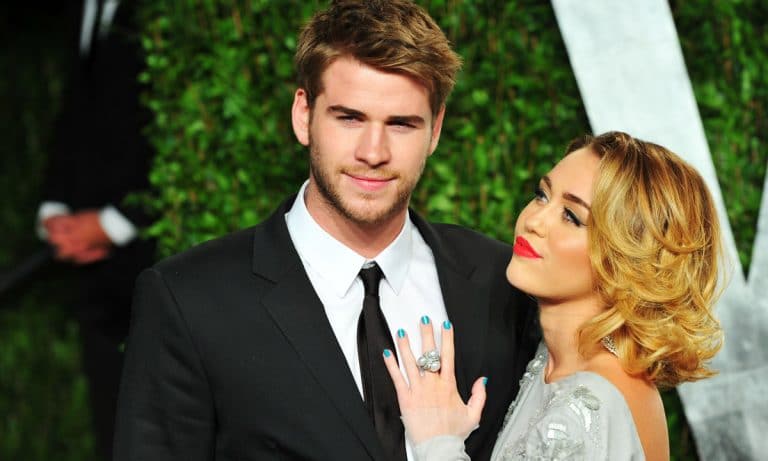
It doesn’t seem like Miley Cyrus and Liam Hemsworth parted on good terms after all.
The “Malibu” musician held a Q&A with fans on her Instagram Stories Sunday night (October 20) with new “boo thing” Cody Simpson, and she had some interesting things to say about her experiences with men and how it influenced her sexuality. In the clip, she tells Smilers: “There are good men out there, guys, don’t give up. You don’t have to be gay, there are good people with d—ks out there, you’ve just got to find them. You’ve got to find a d—k that’s not a d—k, you know.”
Cyrus, who openly identifies as pansexual, then added: “I always thought I had to be gay, because I thought all guys were evil, but it’s not true. There are good people out there that just happen to have d—ks. I’ve only ever met one, and he’s on this live.”
While the “Don’t Call Me Angel” songbird doesn’t name-drop anybody specific, it was evident to most fans that she was implying, in so many words, estranged husband Hemsworth wasn’t really a good person.
As fans know, Cyrus and Hemsworth are currently going through a divorce, as the Australian actor filed paperwork to end his marriage shortly after the couple separated in August. The pair had been together for 10 years before tying the knot in December 2018, and lasted only eight months before deciding to pull the plug on their union over “irreconcilable differences.”
Cyrus quickly rebounded with reality star Kaitlynn Carter for a little over a month before they stars split in September. These days, the recording artist has casually claimed Simpson as her new boyfriend. Hemsworth, on the other hand, has been seeing actress Maddison Brown, with whom the Hunger Games alum was spotted holding hands a few weeks ago.
The internet can be a time consuming and stressful place. Here are some tips that can help you make it better.
There’s a lot of bad stuff going on in the world, which makes the internet less escapist and fun than it used to. Stressful politics, global warming, fake news and having constant access to other people’s lives can make the whole experience a bit stressful and sad.
Although the internet and the development of technology is constantly changing and reshaping the way we see the world, there’s still a lot of great stuff online, it’s just much harder to find nowadays. Here are four things you can do to make your internet experience a more positive one:
Leave a comment when you like something
Developers invented the like feature as a nice way to tell someone that you liked their post without having to actually type it down. This is good. The bad part is that liking something is now the standard. Since it’s so easy to do, we tend to like everything, and only take the time to write down our thoughts when we’re annoyed at something or actively dislike it. The next time you’re scrolling through social media and want to like something, do it, and then type down a brief comment. This will make you feel better with yourself and will also make someone else feel good.
Most of our social media profiles have been around for years now, evolving in look and software, but kind of staying the same in how we use it. If you’re not the type of person who regularly checks who they follow, this means that you could still follow accounts that no longer matter or provide you with anything important. Go through the accounts you follow and get rid of any that don’t inform you or make you happy.
Have a local POV
The internet is completely global, something that is amazing and makes the world feel smaller, like we’re all closer together. Still, sometimes it’s cool to focus on the area you live in. This local point of view is also helpful if you’re feeling overwhelmed. While it’s great to remain informed about the happenings of the world, sometimes we just need a break. Go take a photo of that neighborhood bistro you love so much. Promoting your local businesses helps them in the long run, too!
As with everything, the internet is best enjoyed in moderation. Give yourself time to disconnect and to avoid your email and social media notifications. Gaining some distance and perspective might reboot your relationship with the internet and allow you to enjoy everything more.
Given the prevalence of alcohol in both Russia and Ukraine, marijuana is still taboo and very illegal in both countries. Here’s why.
Russians, along with other Eastern Europeans such as Ukrainians, have a global reputation for being heavy drinkers. Russia is also known as the birthplace of a flesh-eating drug known as krokodil (“crocodile), or desomorphine, a synthetic opiate more powerful than heroin. Given the prevalence of alcohol and opiates, it may be surprising that marijuana still remains taboo and illegal in Mother Russia.
Ukraine was poised to begin a medical marijuana program, but the process now appears to have hit a wall, with the newly elected president and former comedian Volodymyr Zelenskyy now suggesting the cannabis plant be studied further and implementation delayed.
Cannabis possession of under 6 grams of cannabis is a minor infraction in Russia, while penalties for distribution or for possession of amounts greater than 6 grams carry prison terms. Marijuana is more difficult to find than in nearby Western Europe, but “spice,” or synthetic cannabis, is more widespread in the country, and it’s cheaper. Anecdotal stories of dealers selling shake laced with spice exist online, but the veracity is difficult to confirm, and marijuana consumption continues to be a taboo subject of discussion.
Photo by MmeEmil/Getty Images
Small personal amounts of cannabis, up to 5 grams, is a minor offense subject to a small fine in Ukraine. Cannabis is generally seen as a bad drug, but its popularity is growing among young people. Cannabis users caught by the police with cannabis frequently bribe officers an amount similar to the fine to avoid the legal system, according to personal accounts from locals, ex-pats, and tourists.
Ukraine had appeared to be ready to legalize cannabis for medicinal purposes, with support from Parliament and Ukrainian President Zelenskyy as recently as this summer. However, Zelenskyy has stated that the country has other priorities, the risks need to be better understood, and that supporters of medical cannabis “will put up with waiting.”
Among former members of the Soviet Union, Georgia is the only nation that has legalized marijuana consumption, although cultivation and distribution remain illegal. Former Soviet Republics adjacent to Western Europe, such as Estonia and Latvia, have relaxed penalties for possession in small amounts. Cannabis remains illegal throughout most of Central Asia. In nations such as Kazakhstan and Kyrgyzstan cannabis grows wild, and has long ties in the region’s cultures, often used for medicine or hemp fiber, and marijuana laws are largely unenforced.
New study continues to support medical marijuana as a healthier option over other types of addictive medications.
A new study found that nearly half of patients using benzodiazepines stopped once they started taking medical marijuana. Benzodiazepines are commonly prescribed to treat anxiety, epilepsy and other diseases, and are known for producing some long term side effects and increasing the risk of addiction.
These findings were conducted by researchers in Canada and published in the journal of Cannabis and Cannabinoid Research. These scientists conducted a thorough retrospective analysis of data from patients from the Canabo Medical Clinic. Here they found records of 146 patients who regularly consumed benzodiazepines prior to their cannabis treatment.
“Within a cohort of 146 patients initiated on medical cannabis therapy, 45.2% patients successfully discontinued their pre-existing benzodiazepine therapy,” the study found. “This observation merits further investigation into the risks and benefits of the therapeutic use of medical cannabis and its role relating to benzodiazepine use.”
Photo by David Trood/Getty Images
The study reveals that 30% of patients stopped using benzodiazepines after their first follow-up visit with their medical cannabis provider. More followed until, by the end of the review, 66 patients had stopped taking benzodiazepines, replacing the medication with a medical form of cannabis.
While the study continues to add more support for the marijuana plant as a possible replacement for other drugs, there are a lot of questions that remain unanswered. The findings make no distinction between CBD, THC, or the strain that was used in patients, making it tough for people to apply these findings in a real world setting.
“We are advising the public to observe caution,” said lead author Chad Purcell. “The results do not suggest that cannabis should be used an alternative to conventional therapies. Our purpose is inspiring others to advance current cannabis understanding as we collect stronger efficacy and safety data that will lead to responsible policy and recommended practices for use.”
For the first time in more than eight decades, farmers in most parts of the country have the freedom to make hemp part of their plow and pick repertoire.
It has been said for years that the legalization of industrial hemp production in the United States would breathe new life into agriculture, giving the American farmer the benefit of a genuine cash crop. Well, the 2018 Farm Bill, which was signed late last year by President Trump, came out of nowhere to do just that.
Now, for the first time in more than eight decades, farmers in most parts of the country have the freedom to make hemp part of their plow and pick repertoire. It is a business sector that is predicted to reach well over $2 billion within the next two years. However, there is a learning curve involved that is making it difficult for hemp growers to find profitability right out of the gate.
In the Midwest, where hemp farmers are harvesting this crop for the first time since World War II, delayed planting efforts and heavy spring rain has created a situation where the harvest is a bit lackluster, to say the least. Indiana farmer Mark Boyer, who planted 50 acres of hemp to be used for high-quality food oil, told the South Bend Tribune that late planting caused a variety of issues, including puny yields.
“The plants didn’t get as tall,” he said, “they never canopied and that created weed problems.”
Photo by chrisbeez via Pixabay
Another major difficulty that many hemp farmers are facing is theft. Perhaps thinking that they are stealing its intoxicating cousin marijuana, thieves are sneaking into hemp fields and taking tens of thousands of dollars of product. And while theft might sound like the price of doing business, it is a problem that could cripple those farmers that have entered the hemp game to keep afloat. Because these heists are not just happening on occasion, it is something that goes down regularly.
“You feel violated that people come here and steal from you when you’re trying to help a new industry get started that can help a lot of people,” New York hemp farmer Dale Weed told The Times of Wayne County. “It’s alarming, the fact with no theft in 17 years, and now I’m being robbed every night.”
Ramping up security and increasing foot patrols is just another expense that hemp farmers must endure. But for Weed and other farmers who cannot afford to drop beaucoup bucks on round the clock watchdogs it is up to family and friends to make up the shifts when there are no hired guns available.
“We’ve been trying to hire employees and outside people,” Weed said. “My family has spent quite a few nights here watching the property. I’ve spent nights here where I’m sleep deprived. It’s a big problem for us.”
There is hope that these growing pains will subside in time. And if they do, it will surely be worth the initial hassle. A recent study shows that hemp farmers stand to earn in upwards of $50,000 per acre from hemp. In contrast, an acre of corn brings right around $1,000 per acre. But farmers are going to have to work for that money. In addition to poor growing conditions and theft, farmers still do not have the proper tools to handle industrial hemp throughout the entire growing process. For many, this means trying to grow without approved pesticides and harvesting by hand.
Kate Middleton takes to Instagram to write a personal note regarding a charity she and Prince William visited during their trip to Pakistan; Jenna Dewan said she felt “blindsided” by news that Tatum had started a new relationship.
Kate Middleton shared a personal note on the official Kensington Palace Instagram for the very first time on Saturday — informing followers about the work of a special charity she and Prince William visited during their trip to Pakistan.
“The community at the SOS Village is built around family — and the best possible family you could imagine — where everyone comes together to nurture, love and protect the children in their care,” Kate, 37, wrote. “These vulnerable children, many who have come through traumatic circumstances, are nurtured in this caring environment and are able to form these quality relationships that they so desperately need to thrive.”
The royal then signed off with a simple “Catherine.”
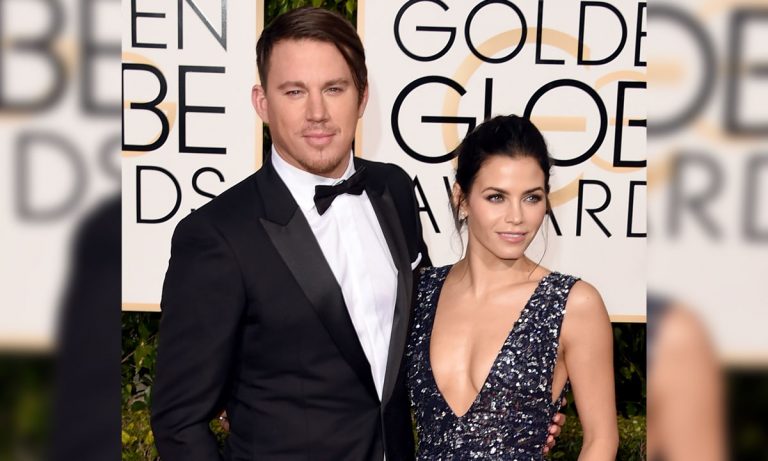
In her new book, Gracefully You: How to Live Your Best Life Every Day, Jenna Dewan finally opened up about her split from Channing Tatum and was candid about the moment she found out he was dating Jessie J.
As it turns out, the 38-year-old learned about the new couple along with the rest of us as it was being reported online. “I was learning things about my ex most people wouldn’t have to face – and over the Internet, as it was happening,” she wrote. “There I was, on a plane, alone, finding out about his new relationship.”
The actress and dancer admitted that she felt “blindsided” by the news that Tatum had started a new relationship with the singer. “Choosing grace as I learned everything about my personal situation along with the rest of the world was really difficult.”
Dewan and Tatum split in April 2018 and she posted a note to her fans on Instagram explaining they would be separating after nine years of marriage. That October, the pair filed for divorce. It was that same month that Tatum and Jessie J began going public with their relationship and Dewan went public with her new beau, Steve Kazee.
Thankfully, Dewan has moved on from her previous marriage and doing phenomenal. Just this September announced the incredible news that she is expecting her first child with Kazee! Their bundle of joy will join Dewan’s six-year-old daughter Everly, whom she shares with Tatum. “As soon as she found out, she started crying, like, ‘This is the best day of my life,’” Dewan said on the Ellen DeGeneres Show.
Vacationers looking to get high, even where cannabis is legal, should expect buying marijuana to be a bit more involved than a curbside transaction outside some tourist trap.
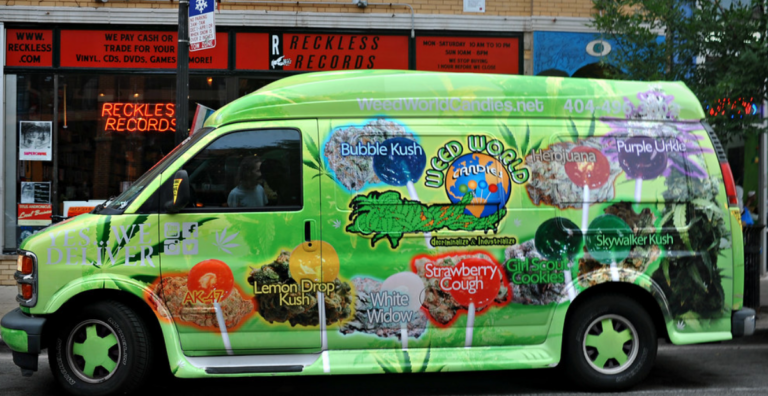
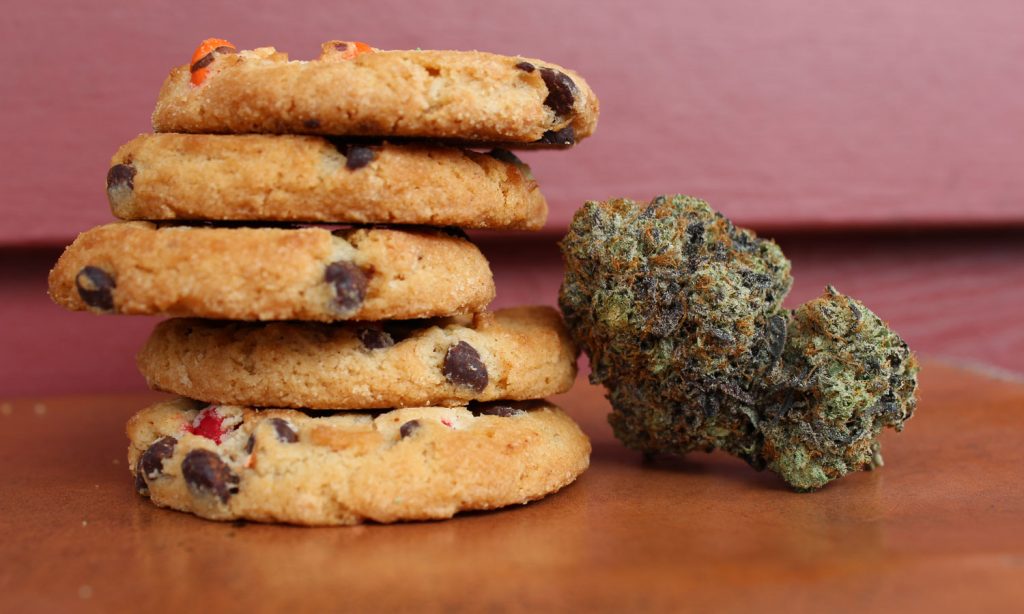
For the past several years, curiously decorated trucks, vans, and RVs, adorned with marijuana leaves and red-eyed cartoon characters have been popping up in touristy areas of big cities, such as NYC, Chicago, Philadelphia, and New Orleans. These trucks sell baked goods, leading buyers to assume they contain THC, or sometimes CBD. In nearly all cases, neither compound is prevalent. These trucks operate in a nexus of indifference, free speech, and naive out-of-towners.
Many of these vehicles belong to Weed World Candies, a company started in New York City in 1999, and whose aim, according to their website, is marijuana and hemp legalization advocacy. Officially, the company says that their confections and baked goods do not contain THC and complies with all laws. Nowhere on the website does it say their products contain CBD, although customers have reported being told otherwise, and in at least one instance, a spokesperson for the company said their products contain CBD.
Under most circumstances, selling fake drugs is also a crime, but policing tourist areas means looking out for a multitude of crimes, and stopping a van from selling bunk edibles to gullible tourists is likely far down the list of offenses given priority.
Photo by Margo Amala via Unsplash
How is the fake edible business lucrative enough to endure 20 years? Likely for the same reasons all hustles aimed at tourists still thrive: Many travelers are looking for new experiences and are more likely to take chances. The fake edibles are priced from $5 to $20, a paltry sum compared to what many tourists spend a day on some vacations. Alcohol might also play a factor, giving tipsy tourists enough nerve to buy a pot brownie should the opportunity present itself.
Vacationers looking to get high, even where cannabis is legal, should expect buying marijuana to be a bit more involved than a curbside transaction outside some tourist trap. Tokers on a trip should at a minimum do some research on how to purchase legal weed at their destination, or enlist friendly locals. Finally, if something sounds too good to be true, like being able to buy magic brownies out of a van, then it probably is.
Side effects and personal choice give marijuana the ability to offer a unique solution, especially with hemp-related CBD oil.
The U.S. National Library of Medicine states that not only is motion sickness prevalent, but that 1 in 3 individuals could be susceptible to the nausea and dizziness that comes with a long car ride or intense rollercoaster.
Understanding motion sickness
Often described as feeling “unwell” and accompanied by nausea and dizziness, individuals who experience motion sickness often describe “feeling out of breath” as well as having sweaty palms or a “clammy” sensation to their skin or appearance. Often triggered by intense motion such as rollercoasters or rides, motion sickness can also happen while merely being a passenger in a car, leaving the individual disorientated.
Marijuana as an anti-nausea agent
We know that cannabis has been studied extensively for its effects on nausea. In fact, Harold Kalant, MD, Ph.D., and Amy J. Porath-Waller, found the following in a 2012 report:
“There is sound evidence from animal experiments and well-designed clinical trials involving humans that cannabis and cannabinoids are effective for the relief of nausea/vomiting and certain types of pain, as well as for the stimulation of appetite.”
The report goes on to explain that as with any pharmaceutical solution, side effects and personal choice give marijuana the ability to offer a unique solution, especially with hemp-related CBD oil. We know CBD activates cannabinoid receptors and can lessen nausea by reducing the chemical that triggers nausea from being released.
Photo by Rex Pickar via Unpslash
In fact, the National Cancer Institute cites that medications with cannabinoids are FDA-approved for nausea and vomiting.
So, how can you prepare for a road trip (or rollercoaster) with CBD? It’s important to understand that while CBD isn’t yet legal in all fifty states, many manufacturers are pushing it as a solution for many ailments, causing confusion. While CBD has been studied to have positive effects on nausea, current regulations make it difficult for specific studies of CBD on motion sickness to be approved. It’s best to discuss troublesome motion sickness with your care team, bringing up CBD to see what they think. Being an advocate for your health is one of your most powerful assets- in any vehicle.