Should the Gov. Kemp sign the new legislation as expected, Georgia would become the 34th state to have a medical marijuana program.
This week the Georgia General Assembly passed a bill that would create a system for patients to purchase medical marijuana in the state. The legislation is expected to be signed by Republican Gov. Brian Kemp whenever it hits his desk, according to his spokesman.
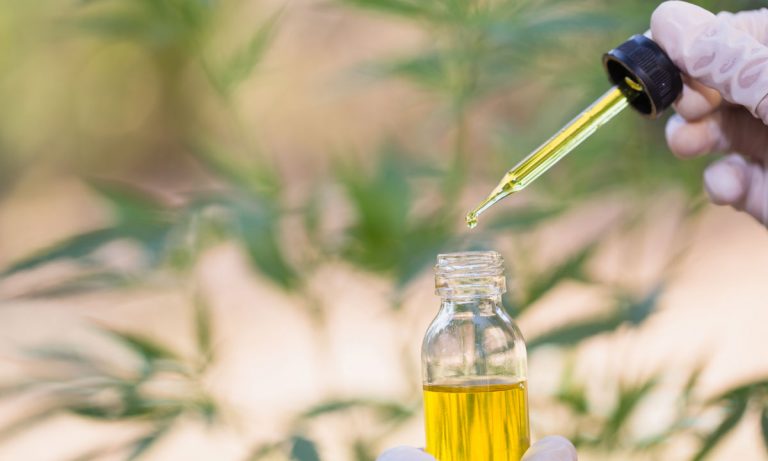
Under the current system, medical marijuana is legal in Georgia, but patients have no legal methods available in the state to purchase it. Current state law prohibits the selling, buying, or transporting of cannabis. The bill passed by the Assembly, HB 324, would license private companies and universities to grow medical marijuana to be processed into low-THC cannabis oil.
In addition the bill would allow the state to license private companies and pharmacies to sell cannabis oil. However, the legislation would not allow the smoking or eating of marijuana, nor would it legalize recreational usage. According to the Atlanta Journal Constitution, Gov. Kemp was institutional in helping broker a deal between the House and Senate and safeguarding any potential illegal distribution.
“Over the years, I’ve met with children who are battling chronic, debilitating diseases. I’ve heard from parents who are struggling with access and losing hope,” Gov. Kemp said. “This compromise legislation is carefully crafted to provide access to medical cannabis oil to those in need. This is simply the right thing to do.”
Those who apply for medical marijuana under the current system include patients with cancer, intractable pain, PTSD, multiple sclerosis, and more. Should the Gov. Kemp sign the new legislation as expected, Georgia would become the 34th state to have a medical marijuana program.
Nobody is saying that alcohol is dead, but younger drinkers are definitely affecting its decline in popularity. Recent trends show that people under 30 are getting tired of drinking and dealing with their hangovers. Can you blame them?
The Atlantic interviewed over 100 people in their 20s and 30s, asking them why they’ve decided to cut back on their alcohol consumption. “It wasn’t until I hit my 30s that I realized that alcohol was no longer my friend,” explains Leanne Vanderbyl, from San Francisco.
There’s a lot of reasons that affect this new perspective on alcohol, ranging from a focus on a healthier lifestyle, to people trying to cut back on costs and finally, to the existence of other drugs that are also asking for consumers’ attention.
An international study from 2017 explains that countries with legal marijuana experienced a 12 percent drop in alcohol purchases. Despite contradictory opinions on the matter, it seems like the cannabis and the alcohol industries are at times in competition with each other. Vanderbyl explains that she chooses marijuana over alcohol because the former doesn’t leave her feeling sick and hungover. “I can wake up in the morning feeling ready for the day,” she says.
The Atlantic consulted with addictions therapist Britta Stark, who explains that there’s several things that are affecting young people and their relationship to alcohol. “Folks in the millennial generation have maybe a better sense of balance. Some do yoga or meditation or are physically active, so they don’t need to find stimulation and stress reduction in substances.” Another, more concerning explanation is the fact that millennials have complicated relationships with over-the-counter medicines and other dangerous substances. Suicide rates are up among young adults, and America’s opioid problem is as strong as ever.
For an accurate picture to be depicted, more time needs to pass and more studies need to shed a light on the matter. Alcohol’s fate will ultimately be decided by younger generations.
Ontario’s first legal cannabis shops are finally here. One challenge they’ll face is Canada’s nationwide product shortage. That’s despite repeated federal government assurances of ample supplies.
However, federal officials disagree. Bill Blair, the minister leading Cannabis Act implementation, has repeatedly said supplies are “adequate” and even “exceed existing demand.”
But the government’s own data shows it’s blowing smoke.
Low sales
Statistics Canada numbers show licensed retailers aren’t selling much. Only one-fifth of national cannabis spending from October to December was legal. In January, legal sales fell five percent.
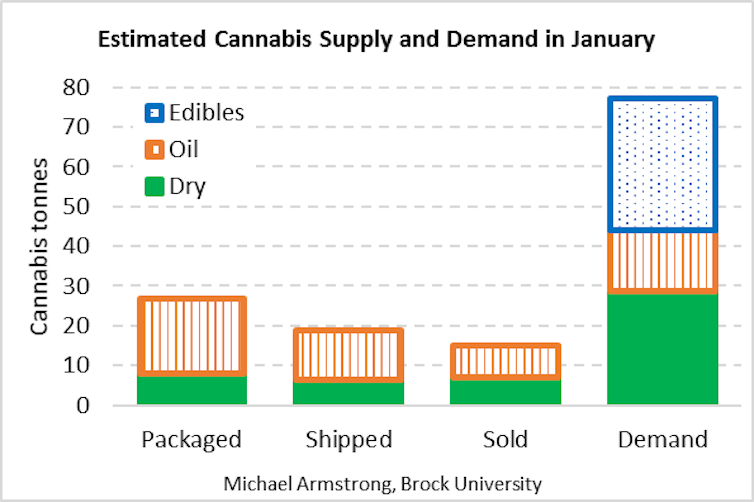
Similarly, Health Canada’s latest update indicates January sales totalled about 15 tonnes of dry cannabis and cannabis oils (1 tonne = 1,000 kg). That’s for medical and recreational products combined. By contrast, its estimate implies monthly demand is around 77 tonnes.
Cannabis oils aren’t the problem. Their sales volume rose four percent, the third consecutive monthly gain.
But dry cannabis sales slid four percent to 7.1 tonnes. That’s concerning because recreational users prefer dry products to oils. In October and November, dry cannabis captured 72 percent of recreational sales nationwide. It got 90 percent in Québec and New Brunswick.
Such widespread weakness can’t be solely due to some provinces having “difficulties” with “distribution systems,” as Blair has claimed. But neither he nor Health Canada has offered better explanations. That department collects extensive industry data but keeps most numbers secret. It publishes only inventory and sales totals. Fortunately, we can learn much from those.
Tonnes of cannabis packaged by producers, shipped by producers or sold to consumers, compared to demand, in January 2019. Combines recreational and medical products. Estimated by author from Health Canada data.Michael Armstrong
Falling shipments
For example, in January retailers sold 5.3 tonnes of recreational dry cannabis, while their inventory decreased 0.5 tonnes. So, they must have received just 4.8 tonnes of new product from producers. (Another 1.8 tonnes went directly from producers to medical clients.)
That implies retailers didn’t sell much dry cannabis in January because they didn’t receive much. January’s dry shipments to retailers were 21 percent lower than December’s, which were already lower than November’s.
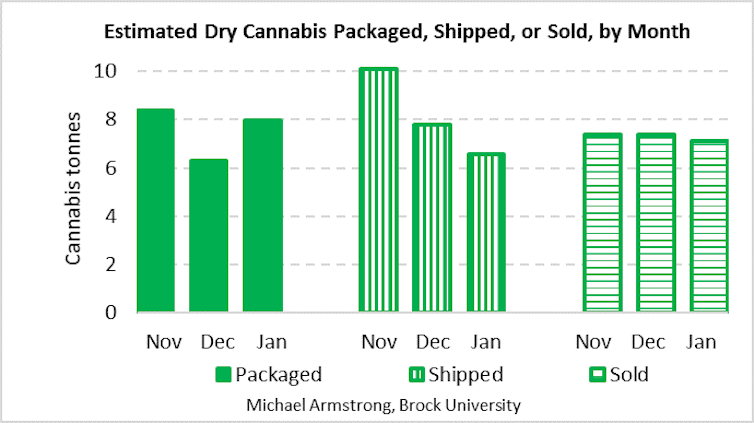
And retailers got little in January because producers processed little in December. Another inventory comparison suggests producers packaged just 6.3 tonnes of dry products that month. That’s only three-quarters of November’s rate. And inadequate to support existing sales.
This wasn’t a temporary shortfall. The average monthly packaging rate from November to January for dry cannabis products was around 7.6 tonnes.
Tonnes of dry cannabis packaged by producers, shipped by producers or sold to consumers, last November, December, and January. Combines recreational and medical products. Estimated by author from Health Canada data.Michael Armstrong
Government smokescreens
This analysis suggests federal claims of adequate cannabis supplies are mere smokescreens for substantial shortages.
Similarly, Health Canada claiming dry “inventories” were 19 times “sales” is just smoke and mirrors. It’s correct but meaningless.
Those inventories were mostly raw material or work-in-process: unfinished cannabis drying, curing, or awaiting processing. Only 15 percent was finished product, and less than half of that was at retailers. And existing sales are too weak to be worth targeting.
(Besides, inventory-to-sales ratios indicate little about availability. In somesectors, retailers hold less than two months of inventory.)
Comparing production to demand is more meaningful. January’s dry product packaging was about 8.0 tonnes, enough for perhaps a quarter of dry demand. Combined dry and oil packaging totaled 27 tonnes, about one-third of overall cannabis demand.
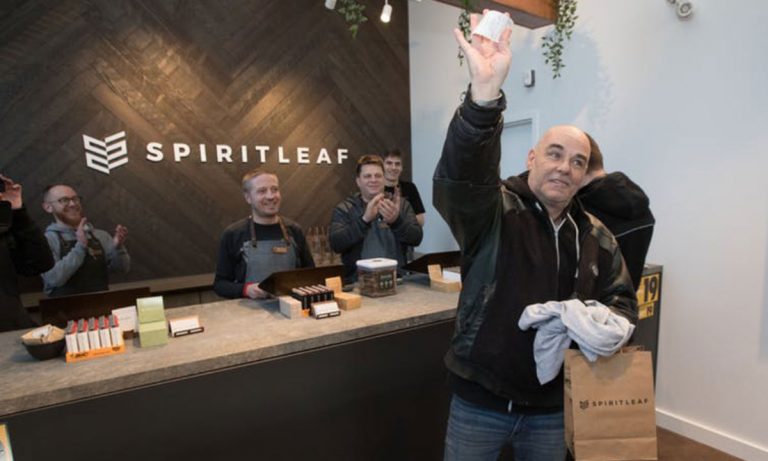
Marie Koued becomes the first in line at a Toronto cannabis store on the eve of the opening of Ontario’s first retail weed stores on April 1, 2019.THE CANADIAN PRESS/Chris Young
There’s another reason the latter fraction is low. The federal government hasn’t yet legalized cannabis foods and drinks. Those edibles constitute 43 percent of sales in Colorado, California and Oregon. Their absence here leaves a big gap.
Stop playing games
The federal government really must stop playing make-believe about cannabis availability. Nonsensical supply claims raise expectations, and hence frustrations, among businesses and consumers.
Similarly, Health Canada must stop playing hide-and-seek with information. It collects monthly fresh cannabis production and finished product packaging data. It should start reporting them. That clarity would help producers and retailers make better business decisions.
Producers are already making progress. Canada now has 164 licensed sellers, with hundreds more reportedly on the way. Total cultivation area rose 20 percent in December alone. But it takes months for new sites to grow, process and ship cannabis to stores.
Britney Spears has been admitted to a mental health facility.
“Britney was having a hard time dealing with her dad’s health issues. Britney hasn’t been drinking or doing drugs or anything, she just has some very difficult emotional and mental health issues. She’s gone away to try with her issues before they get worse,” a source close to the Spears family told Page Six Wednesday.
“She has recently been showing signs of being under a lot of strain,” our source added, before pointing out that dad Jamie is “the support in her life.”
Spears has been in the facility for about a week and is slated to stay for 30 days, TMZ reports.
She seemingly acknowledged her mental health in an Instagram post on Wednesday, writing, “We all need to take time for a little ‘me time.’ :)”
https://www.instagram.com/p/BvziBzUgQoz/
Jamie has been battling a colon condition since last November when his colon spontaneously ruptured. He underwent surgery at the time and was slated to go under the knife again in March.
He has been Britney’s conservator since 2008 after she underwent issues relating to a bipolar diagnosis and her 2007 shaved-head meltdown.
Britney’s two sons, meanwhile, are with their father, Kevin Federline, as she seeks treatment
Extending his world domination tour, RuPaul’s eponymous daytime talk show is set to make a June 10 debut for a three week test run on select Fox TV stations.
Deadline reports: “Described as entertaining and heartfelt, the show will feature Charles’ modern take on the talk format. He will showcase his aspirational message with celebrity and newsmaker interviews, along with empowering everyday people to become their best selves. His sense of beauty, make-up and style will make the runway work for everyone.”
Golf can be an overwhelmingly conservative sport when viewed with a certain lens. The rulebook is filled with formalities and etiquette codes; players must wear shirts with collars and pants in competition. This doesn’t make the sport bad or wrong by any means, but it does instruct recent news that the PGA Tour is warning golfers not to take CBD.
In a PGA Tour newsletter sent to players last month, which was obtained by Marijuana Moment, the Tour told players that “CBD products (like all supplements) pose a risk to athletes because they have limited government regulation and may contain THC, the psychoactive component of cannabis that is prohibited.”
The impetus to inform players about CBD comes from the World Anti-Doping Agency’s decision to drop the non-psychoactive cannabinoid from its list of banned substances. WADA, which governs and drug tests Olympic athletes, sets the standard for most other sports leagues around the country. The PGA Tour believes WADA’s decision “led to an increase of CBD products and marketing directed toward athletes at all levels of play.”
But the PGA believes this works against their athletes’ best interests.
“The FDA, DEA, and private organizations including Major League Baseball (MLB), have conducted tests on CBD and ‘THC-free’ products only to find significant levels of psychoactive (and prohibited) THC or falsely labeled amounts of CBD,” reads the Greensheet newsletter.
The PGA Tour and its golfers have a strange hush-hush relationship with its drug-testing policy. As the Independent noted, only three golfers have been publicly outed for failing drug tests since 2008. Robert Garrigus was recently suspended after testing positive for marijuana, which is why golfers may want to pay attention to the PGA Tour’s CBD warning. That said, other golfers have anonymously admitted to smoking weed on the tour, some amidst tournament rounds.
“Taking a poorly labeled supplement that is contaminated with a prohibited substance is NOT a defense to a violation of the Program,” concludes the PGA newsletter. “Therefore, we strongly recommend that if players choose to use supplements, they only use those that are NSF Certified for Sport.”
After a long day of work, there’s nothing better than making an appointment to get a relaxing manicure and pedicure. You just pick a color, sit back in a comfy massage chair, and then let someone else pamper you. What tops that?
Well, if you want to take the pampering up to the next level, it’s time to sign up for a CBD-enhanced mani/pedi called a “canna-cure.” Nail salons and spas in several states are now offering CBD packages and customers are flocking to try them.
Don’t just think this is another beauty trend, though. There are true benefits to adding CBD to your mani/pedi. Here’s why you’ll want to try it ASAP.
Walking around in heels, typing over a laptop all day, and running and playing other sports can amount to achy hands and feet after a while. If you live with arthritis or another autoimmune condition, you are no stranger to pain in your hands and feet, either. Enter a CBD main/pedi. During a canna-cure, you’ll soak your hands and feet for several minutes in warm water that’s been infused with a CBD bath bomb. The CBD is anti-inflammatory, which means your foot and finger pain will hopefully be reduced after the soak. Plus the warm water reduces swelling and can help with tension and stress, too.
After your soak, most canna-cures will include either a CBD sugar scrub or CBD lotion applied to your hands and feet. Both will warm when rubbed onto your calves and hands. You’ll shed dead skin cells after the scrub. That means your skin will get a new breath of life. Plus the CBD will be applied more directly into the skin than it was with the soak, so you’ll feel its effects even more.
Some canna-cure salons will also offer CBD-infused treats when you sit down, like CBD bubbly water and/or some CBD chocolate. Assuming you’ll be eating these at the beginning of your appointment, and the effects of the topical products can take about an hour, you will leave feeling more relaxed than when you came in. Most appointments take about an hour to an hour and a half. Depending on your stress level, that extra calm may be worth the extra price tag! (Most canna-cures can run you an extra $20-$25 vs. a regular mani/pedi.)
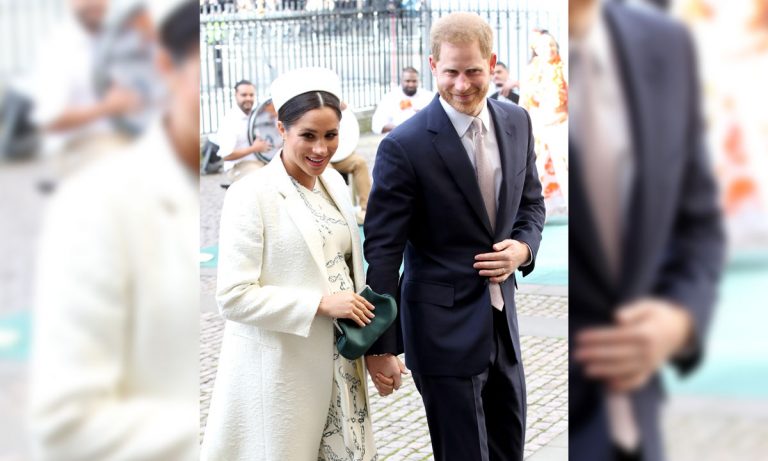
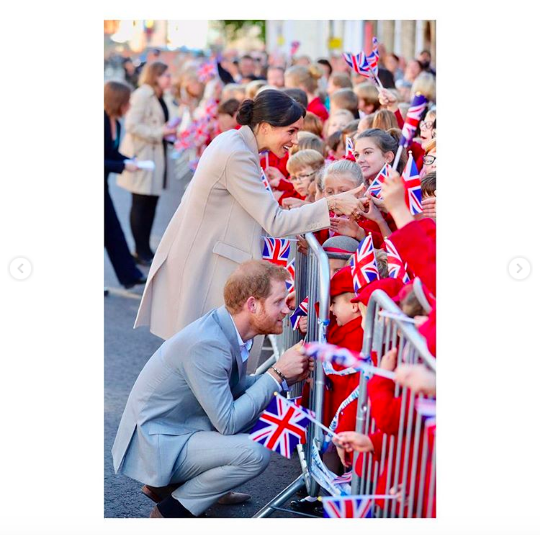
The Duke and Duchess of Sussex (aka Meghan Markle and Prince Harry) made it Instagram official earlier this week by joining the social media platform. And they’ve already broken the record for gaining the most followers in the shortest amount of time.
Markle, who deleted her personal Instagram account before marrying Harry, is back on, along with her now husband, under their professional handle: @sussexroyal. Within less than six hours (5 hours and 45 minutes, to be exact) of launching the account on Tuesday, it amassed a million followers, landing it in the Guinness World Records.
https://www.instagram.com/p/BvwZTPgBsvT
According to the BBC, the royal couple beat the previous record by a landslide. It was held by Korean pop star Kang Daniel, who landed the same amount of followers in 11 hours and 36 minutes back in January.
Congratulations to the Duke and Duchess of Sussex, Prince Harry and Meghan Markle, whose new @instagram account sussexroyal reached one million followers in less than 6 hours https://t.co/manigokiw5 ?
Harry and Meghan’s first few photos highlighted their royal do-gooding. Says People:
The nine photos include special moments from their royal tour to Australia last fall, Harry’s work with the military and his conservation efforts with elephants, Meghan’s bond with the women of the Hubb Community Kitchen and her connection with the public.
The photo gallery caps off with a romantic, behind the scenes black-and-white shot of the couple from their Australian tour.
As of press time, the couple is only following 23 other accounts, including Princess Eugenie, Royal Marines, Kensington Palace and The Royal Family.
This new account means they are no longer entangled in the official Kensington Palace Twitter account, which, according to People, “now has a profile picture of William, Kate and their three children.”
The Twitter bio has also been changed to read: “The official account of The Duke and Duchess of Cambridge and the Royal Foundation, based at Kensington Palace.”
The couple is expecting their first child any day now, so we can only hope this new account will include some pics of the blessed child, like any other doting Instagram parents. Just not too many, though.
Online dating has created an upswing in faking plans to make a quick getaway. An emergency phone call or the death of a pet are tools often used by people — mainly women — who find themselves wanting to escape awkward first dates. In an effort to help these trapped daters, a woman has created an app that does all the hard work for you.
Motherboard reports that the app fakes a phone call from your “boyfriend” in order to bail you out of awkward situations. To activate the feature, Microsoft developer Chloe Condon triggers a phone call from a remote bluetooth button which then makes her phone ring. Here’s what happens when you pick up the call:
Used @twilio + @Azure to create a fake boyfriend to help save me from awkward social situations. Blog coming shortly, but here’s a little teaser of my new boo calling me
According to Condon, this feature can help people escape all sorts of awkward situations, not just uncomfortable dates. “I would be lying if I said I haven’t had one or two scenarios on the conference floor in previous roles where I wish I had some sort of app/hand-signal/telekinesis to flag down a friend to save me from an overly chatty attendee,” she explains.
Although the app is not available on any app store, the code is available for download on Github, where tech savvy people can download it and play around with it, changing the message and the song that plays once you accept the call.
Maybe someone who’s smart will perfect this fake robot boyfriend and add it to basic phone features. It seems like something that could have a viable future.
On April 2, 2019, the federal Food & Drug Administration (“FDA”) Commissioner Scott Gottlieb issued a press release on hemp and hemp-derived cannabidiol (“Hemp CBD”). This is Gottlieb’s first major official press release since the now infamous December 20, 2018 press release which came just hours after the 2018 Farm Bill passed. In that December 20 press release, the FDA stated that even though the 2018 Farm Bill removed hemp from the Controlled Substances Act, the FDA still retained authority over Hemp CBD additives to foods (both human and animal), drugs, and dietary supplements.
Since the 2018 Farm Bill passed and the FDA issued the December 20 press release, there has been a proliferation of various Hemp CBD products nationwide and only very little FDA enforcement. During this time, the FDA has apparently been scrambling to figure out what to do about Hemp CBD (which you can read about here and here).
In today’s press release, the FDA gave some more guidance on what exactly it was doing:
The FDA will be holding a public hearing on May 31, 2019 to get input from the public so that it can use that information in regulating the Hemp CBD;
The FDA is creating a “working group” to “explore potential pathways for dietary supplements and/or conventional foods containing CBD to be lawfully marketed.”
The FDA issued three more warning letters to operators whom it believes have made medical statements concerning Hemp CBD products that were “egregious”.
Another key aspect of the FDA’s guidance is its updated FAQs. In the FAQs (see number 13), the FDA responds to questions regarding cosmetics (which can include things such as topicals) as follows:
“If a product is intended to affect the structure or function of the body, or to diagnose, cure, mitigate, treat or prevent disease, it is a drug, or possibly both a cosmetic and a drug, even if it affects the appearance. (See Question #3 for more information about drugs.)
FDA can take action if it has information that an ingredient or cosmetic product is unsafe to consumers. Consumers can report adverse events associated with cosmetic products via the FDA’s MedWatch reporting system, either online or by phone at 1-800-FDA-1088, or by contacting your nearest FDA district office consumer complaint coordinator. For more information, please see the FDA’s webpage on how to report a cosmetic-related complaint.”
This is an interesting response and we will be sure to give more insight on it in the coming days. But suffice it to say, the FDA apparently isn’t taking as hard a stance against cosmetics as it is against foods. It appears (at least for now) that the FDA is poised to send warning letters to companies selling Hemp CBD topicals IF those topicals are marketed in a way that makes them “drugs”.
Stay tuned to the Canna Law Blog for more on the FDA’s position on Hemp CBD.
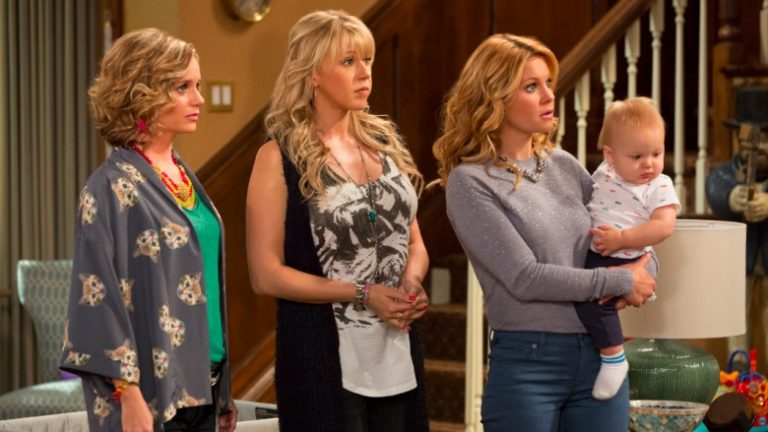
Candace Cameron Bure briefly responded Tuesday to Lori Loughlin’s alleged involvement in the college admission bribery scandal.
On “Today,” co-host Hoda Kotb asked Bure and “Fuller House” costar Jodie Sweetin about their co-star Loughlin, who’s accused with her husband of paying $500,000 so their daughters could pose as crew athletes to get into the University of Southern California.
“It’s too personal to us, and we would never want to talk about someone that’s such a dear and close friend,” Bure said. “I’ve already said that we are family and we stand by each other and pray for each other and we’ll always be there for each other.”
While accepting an award at last week’s Nickelodeon Kids’ Choice Awards, Bure did not mention Loughlin directly, but did say that “a loving family sticks together no matter what.”
Some interpreted the remarks as an expression of solidarity with Loughlin, who turned herself in last month and was released on a $1 million bond.
“Full House” costar Bob Saget, who also appeared on “Fuller House,” later referred to Bure’s Kids’ Choice Awards statement, telling TMZ, “you love who you love in your life … Life’s complicated.” John Stamos, another castmate, said he didn’t want to talk about it.
The pop star was clearly trying to tap into the spirit of April Fools’ Day with a series of leading Instagram posts, but his jokes sparked criticism from followers who were quick to note that the prank isn’t exactly hilarious to people struggling to become parents.
https://www.instagram.com/p/BvucFXZnc-f/
https://www.instagram.com/p/BvuelVAHrOY/
https://www.instagram.com/p/BvukF2cnzQf/
“PREGNANCY IS NOT A JOKE! There are MILLIONS of couples who are struggling with infertility and would do anything to have a child,” one person wrote on social media.
“Of course justin bieber will think a pregnancy announcement would be funny on April fools. esp so when 1 in 7 women have had a miscarriage. not to mention those suffering from infertility,” another Twitter user said.
“I’ve never been mad at @justinbieber but today I’m disappointed in him for posting a fake pregnancy announcement,” another fan wrote. “Honestly, not a funny joke when millions of women are struggling with infertility and other issues of the sort. Sad, @justinbieber.”