In a surprising move, Pakistan has decided to allow marijuana – and they hope it will help their national revenue.
In a surprise, Pakistan is opening the door for legal cannabis. The Islamic country is 96% Muslim, with a belief from most scholars cannabis is similar to intoxicants/alcoholic drink and therefore deemed forbidden. The country’s northwestern region, especially the province of Khyber Pakhtunkhwa, is home to thousands of acres of land where the crop has been cultivated for hundreds of years. The governments has chosen to ignore rather than crack down on the businesses.
But in an effort to help their economy, Pakistan makes positive move on cannabis. The country ranks as the 24th-largest based on the gross domestic project (GDP). When the country was formed, the US was a huge backer during the Cold War, but with the rise of the technology industry in India, they are having to build a broader, internal economy base. To help, it seems the country is embracing cannabis, CBD, and medical marijuana, but not recreational or high THC products.
In Canada and the US, tax revenue of cannabis products have been very lucrative, just like alcohol. Pakistan’s economy is in a bit of turmoil and economists have warned the country needs deep reforms to reduce its dependence on overseas financial assistance. Their $350 billion economy has been plagued with high inflation (up to 38% at one point.). The hope it they can generate more internal revenue and cannabis is one area.
Recently, Pakistan approved the passage of an ordinance that created the Cannabis Control and Regulatory Authority (CCRA). This government body is tasked to regulate the cultivation, extraction, refining, manufacturing, and sale of cannabis derivatives for medical and industrial purposes.
UN laws says if country wants to produce, process and conduct sales of cannabis-related products, it must have a federal entity to deal with supply chain and ensure international compliance. The regulatory framework of the CCRA is the organization.
The CCRA specifies the maximum level of THC in the cannabis derivative to be 0.3 percent to avoid the abuse of medicinal products and use them recreationally. With this move, the government plans to crack down on illicit grows in order to bring them into a licensed tax paying business.
She has won Grammys and awards from BET, BillBoard and more while redefining enticing. But does she consume weed?
She burst into the mainstream in 2019 with her third studio album, Cuz I Love You and has been making waves ever since. Resetting standards of how a female music star needs to look and behave, she has been the center of ongoing dissuasions. Through all this, you wonder does Lizzo consume weed to chill and relax. She has attracted legends of fans called Lizzbians, a number of social media trolls and Grammys, BET awards, Billboards Awards and appearance on SLN, Ugly Dolls, Hustlers, and more . She rode another wave of popularity when she featured an original single titled Pink in the Barbie movie.
She started her career in hip hop music. After doing a couple of studio albums, she signed with with Nice Life Recording Company and Atlantic Records releasing Coconut Play.The album spawned the singles Juice and Tempo. The deluxe version of Cuz I Love You topped the US Billboard Hot 100 and became the longest-leading solo song by a female rapper. In 2021, Lizzo released the single Rumors (featuring Cardi B), which debuted in the top five of the Billboard Hot 100. Her fourth studio album, Special (2022), was preceded by its lead single “About Damn Time“, which reached number one on the Billboard Hot 100 and made Lizzo the first black female singer since Whitney Houston in 1994 to win the Grammy Award for Record of the Year.
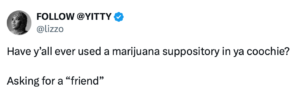
Like everything in her life it seems, she is unabashed about her use of marijuana. Her Instagram shares she is on a fan consuming and treats it just like drinking wine. She has even been cheeky about her use including wink wink tweets about marijuana suppositories.
Lizzo grew up attending the Church of God in Christ but has since embraced a more open concept where she sings hip hop mixed with soul and blues. Lizzo being so open about herself and weed use is similar to the late Mama Cass, who refined talent, fun and what is like to be a celebrity.
Spring has arrived and so has the sunny. While most want to soak in the rays – your lips might need a bit of help.
The summer sun brings out the kid in us, water activities, sun bathing, sports, or just long walks….but our lips might not be so excited. Lips are vulnerable to EV rays and often get forgotten. The skin on the lips can’t produce its own natural moisture or protective oils, making it more prone to drying out, so it is important to give them a little assistance. Could you help your lips with CBD balm…yes, and here is why.
From simple Chapstick to Chanel lip balms, the global market in just lips balms (not counting lipstick, glosses, and other lip products) is expected to hit close to $850 million this year. Not only do the products help the lips stay healthy, they can prevent cancer with a sun screen, so it is important. A CBD lip balm can have extra benefits.
Photo by StockSnap via Pixabay
It’s antibacterial and antioxidant
CBD is known for its antibacterial and antioxidant properties, which, when applied to lip balm, lead to more protection for your skin and to reducing element overexposure. When experiencing symptoms of the flu, cold sores, inflammation or allergies, CBD lip balm can reduce redness and irritation.
The oil is packed with vitamins
Most CBD products are full of vitamins like A, C and E and hemp oil. These vitamins promote healthy skin and slow down its natural aging process. It gives them a healthy appearance and a natural glow.
Drinking enough water is key to keep your body hydrated, especially in the heat. Lips are one of the first places to show signs of dehydration. Good lip balms provide the pathway avoiding them becoming dry and flaky. Lip balms with quality CBD oil creates a seal which can make your lips moist for longer periods of time.
It can treat severely chapped lips
Things happen and before you know it, the lips are painful and chapped. A CBD balm can can help severely chapped thanks to CBD’s healing properties. Unlike the compounds found in everyday lip balms, CBD oil can treat skin blemishes much faster, helping heal superficial cuts, protecting you against weather and more.
Could you help your lips with CBD balm, you bet your summer smile it can.
They are becoming a thing in ALL states…what you should know about hemp and marijuana drinks
Hemp and marijuana beverages represent about $4 billion in sales and are only going to get bigger. Tasty, intoxicating, and available in most states, here are some key things to know about hemp and marijuana drinks. You might enjoy either or both, but where, how and what happens varies between the two.
Hemp or CBD drinks are created by infusing hemp extract, derived from the cannabis plant, into a liquid base. The most popular hemp-infused drinks include water, juice, tea, and coffee. One of the big differences between marijuana and hemp drinks is the “high”. With Delta-9 hemp, consumers tend to have a more intense experience and comes on faster than THC. It is a euphoric high when altered sensory perception and a sense of relaxation.
Photo by MysteryShot/Getty Images
THC or marijuana drinks require digestion (like an edible) for the THC to hit the bloodstream. It takes between 15-20 minutes to kick in, with the effects peaking after approximately 45 minutes. The high from marijuana beverage can be unpredictable, and potentially more intense.
Another big difference is 47 of the 50 U.S. states and DC have legalized the sale and use of hemp-derived CBD products. Bayou City in Texas is a huge brand which sales in mainstream retailers. Cannabis drinks, a growing market but still way behind gummies, can only be purchased in the 24 legal recreational states.
Additional scientists determined liners inside aluminum cans cause the drinks to lose their potency. These liners are used for different reasons, among them extending the product’s shelf life, preventing the corrosion of the can and, most importantly, protecting the flavor of the drinks themselves. Without these liners, the natural metallic taste of aluminum would seep into the drinks.
“Our theory is the cannabis material, the droplets, will stick to the liner and cling on it. When you open the can to take a drink, it will lose its potency,” said Vertosa founder, Harold Han.
Perfect for Cinco de Mayo, weekends, long lunches and just to enjoy while hanging out…tequila will treat you right!
Tequila is very popular for good reason…good tequila can treat you right. 2021 was its year when it passed whiskey as the second most popular liquor. It only stands behind vodka. Celebrity tequila’s have been a huge help with George Clooney selling his Casamigos brand for $1 billion.
If you are thinking about staying in swimsuit shape, tequila is your friend – chilled and straight up is great. At 97 calories a shot, its is one of the best to drink. And it has 0g of carbs, 0g of fat per serving, and 0g of saturated fat.
So to celebrate its success, here are the best simple tequila cocktails. And for your information, all tequila is mezcal. The term mezcal refers to spirits made from the agave plant, while tequila refers to a specific type of mezcal that can only be made from blue Weber agave in five Mexican states. Reposado tequila stays in the barrel for a duration of 2 months to a year, depending on the flavor profile a distiller is looking to achieve.
Photo by Flickr user slgckgc
Paloma
This is a classic simple cocktail to make you happy. The oragin is a bit murky but is generally credited to Javier Delgado Corona, owner of the oldest bar in Jalisco – La Capilla. More importantly – you will be just thankful for this drink and it its refreshing feeling.
Ingredients
2ouncestequila
2ouncesfresh grapefruit juice, plus wedges for garnish
2ouncessparkling water
½ouncelime juice
¼ounceagave nectar or simple syrup, or to taste
Coarse sea salt, for the rim of the glasses
Ice
Create
Salt the rim of the glass by rubbing a grapefruit wedge around the edge and dipping it onto a small plate of salt.
Mix the tequila, grapefruit juice, sparkling water, lime juice, and agave nectar into the glass. Fill the remainder of the glass with ice. Adjust sweetness to taste. Garnish with grapefruit wedge.
Mexican Mule
The Moscow Mule is a go to for some…but what about a warmer more flavorful replacement?
Ingredients
1 ½ oz. Tequila Silver or Reposado
1 lime wedge
1 wedge pineapple
4 oz. ginger beer
Create
Combine the lime wedge and pineapple (if using) in the bottom of a chilled glass or moscow mule mug
While it is credited to have been created as a Bloody Mary alternative, it truly appeared on the scene in the 1940s. Bartender Fernand Petiot is credited with
Ingredients
Tequila Reposado or White
Mexican hot sauce
Celery salt
Black pepper
Tomato juice
Lemon juice
Worcestershire sauce
Horseradish
Celery salt
Black pepper
Create
Chill the tomato juice/mix and tequila first
Shake ingredients in a cocktail shaker without ice
Strain and if time, chill. Straining removes the chunks of horseradish from the drink
Rim the glass and garnish
Serve over ice with the garnishes of your choice.
Tequila Sunrise
Big on college campuses and creating all sorts of boozy adventures – the Tequila Sunrise is delight to the taste buds.
Ingredients
2 oz. Tequila
1 oz. Orange Juice
.5 oz. Lemon Juice
.5 oz. Grenadine
Garnish with a cherry
Create
Combine tequila and juices in a shaker
Add ice, shake vigorously and strain into a glass
Add grenadine then garnish
May you enjoy these the best simple tequila cocktails morning, noon and night!
Taking a cue from the public, Senate leadership is putting forward a bill to end the federal prohibition of cannabis.
In a big week for the marijuana industry and a surprise to most of the industry, Senators Schumer (D-NY), (Murray D-WA), Wyden (D-OR), Cory Booker (D-NJ) and 14 others have deduced to follow the public and make a change. As of today, Senate leadership pushes end of federal prohibition of cannabis.
Senator Patty Murray, a senior member and former Chair of the Senate Committee on Health, Education, Labor, and Pensions (HELP) has long been a champion of veterans. This falls in line with PTSD treatments and with the American Medical Association’s backing of rescheduling and more medical research to see how the cannabis plant can help more patients.
They have reintroduced the Cannabis Administration and Opportunity Act (CAOA), legislation that would end the harmful federal prohibition of cannabis by removing cannabis from the list of federally controlled substances and empowering states to create their own laws. This legislation would be a historic step toward rectifying the failed policies of the War on Drugs and would help federal law better reflect the will of the vast majority of Americans, 91% of whom believe that cannabis should be legalized for either adult or medical use.
“It is far past time that the federal government catch up to Washington state when it comes to cannabis laws. This legislation is about bringing cannabis regulations into the 21st century with common-sense reforms to promote public safety and public health, and undo deeply unjust laws that have for decades disproportionally harmed people of color,” said Senator Murray. “The Cannabis Administration and Opportunity Act will help set us on a safe and responsible pathway to legalization—I’ll keep working to secure the necessary support to get it done.”
Photo by Anna Moneymaker/Getty Images
The Cannabis Administration and Opportunity Act establishes a federal regulatory framework to protect public health and safety, prioritizes restorative and economic justice to help undo harm caused by the War on Drugs, ends discrimination in the provision of federal benefits on the basis of cannabis use, provides major investments for cannabis research, and strengthens worker protections. By decriminalizing cannabis at the federal level, the CAOA also ensures that state-legal cannabis businesses or those in adjacent industries will no longer be denied access to bank accounts or financial services simply because of their ties to cannabis.
The Cannabis Administration and Opportunity Act:
Protects public healthby:
Establishing a Center for Cannabis Products to regulate production, labeling, distribution, sales and other manufacturing and retail elements of the cannabis industry.
Instructing the FDA to establish standards for labeling of cannabis products, including potency, doses, servings, place of manufacture, and directions for use.
Establishing programs and funding to prevent youth cannabis use.
Increasing funding for comprehensive opioid, stimulant, and substance use disorder treatment.
Protects public safetyby:
Removing cannabis from the Controlled Substances Act and eliminating federal prohibitions in states that have chosen to legalize medical cannabis, or adult-use cannabis.
Retaining federal prohibitions on trafficking of cannabis in violation of state law; establishing a grant program to help departments combat black market cannabis.
Requiring the Department of Transportation (DOT) to create standards for cannabis-impaired driving.
Directing the National Highway Traffic Safety Administration (NHTSA) to collect data on cannabis-impaired driving, create educational materials on “best practices,” and carry out media campaigns.
Incentivizing states to adopt cannabis open container prohibitions.
Regulates and taxes cannabisby:
Transferring federal jurisdiction over cannabis to the Alcohol and Tobacco Tax and Trade Bureau (TTB).
Eliminating the tax code’s restriction on cannabis businesses claiming deductions for business expenses, and implementing an excise tax on cannabis products.
Establishing market competition rules meant to protect independent producers, wholesalers, and retailers and prevent anti-competitive behavior.
Encourages cannabis research by:
Requiring the Government Accountability Office (GAO) to study and report on metrics that may be impacted by cannabis legalization.
Requiring the Department of Health and Human Services (HHS) and National Institutes of Health (NIH) to conduct or support research on the impacts of cannabis.
Requiring the VA to carry out a series of clinical trials studying the effects of medical cannabis on the health outcomes of veterans diagnosed with chronic pain and post-traumatic stress disorder.
Requiring the Bureau of Labor Statistics to regularly compile and publicize data on the demographics of business owners and employees in the cannabis industry.
Establishing grants to build up cannabis research capacity at institutions of higher education, with a particular focus on minority-serving institutions and Historically Black Colleges and Universities.
Prioritizes restorative and economic justiceby:
Using federal tax revenue to fund an Opportunity Trust Fund to reinvest in communities and individuals most harmed by the failed War on Drugs.
Establishing a Cannabis Justice Office at the Department of Justice’s Office of Justice Programs
Establishing a grant program to provide funding to help minimize barriers to cannabis licensing and employment for individuals adversely impacted by the War on Drugs.
Establishing expedited FDA review of drugs containing cannabis manufactured by small businesses owned by socially and economically disadvantaged individuals.
Directing the Secretary of Housing and Urban Development to establish a grant program to provide communities whose residents have been disproportionately affected by the War on Drugs with additional funding to address the housing, economic, and community development needs of such residents.
Initiating automatic expungement of federal non-violent cannabis offenses and allows an individual currently serving time in federal prison for nonviolent cannabis offense to petition a court for resentencing.
Disallowing the denial of any benefits or protections under immigration law to any noncitizen based on their use or possession of cannabis.
Prevents discrimination in the provision of federal benefits against people who use cannabis.
Strengthens workers’ rights by:
Removing unnecessary federal employee pre-employment and random drug testing for cannabis
Ensuring worker protections for those employed in the cannabis industry.
Establishing grants for community-based education, outreach, and enforcement of workers’ rights in the cannabis industry.
The Cannabis Administration and Opportunity Act is co-sponsored by U.S. Senators Jeff Merkley (D-OR), Kirsten Gillibrand (D-NY), Elizabeth Warren (D-MA), Ed Markey (D-MA), Michael Bennet (D-CO), Gary Peters (D-MI), Tina Smith (D-MN), John Hickenlooper (D-CO), Ben Ray Luján (D-NM), Alex Padilla (D-CA), Peter Welch (D-VT), Rev. Raphael Warnock (D-GA), John Fetterman (D-PA), and Laphonza Butler (D-CA).
Senator Murray has been a leader on common-sense cannabis reforms. She helped introduce the Cannabis Administration and Opportunity Act last Congress, and in 2017, she first introduced the Secure and Fair Enforcement (SAFE) Banking Act which would allow state-legal cannabis businesses to access banking services. She has reintroduced the bill multiple times and is pushing hard for its passage. An updated version of the legislation—the Safe and Fair Enforcement Regulation (SAFER) Banking Act of 2023, which Murray also cosponsored—passed through committee after a bipartisan markup last fall.
The Kentucky Derby is the pinnacle of horse racing – but will marijuana make an appearance?
House racing is highly popular sports with over 45,000 races run in the US and Canada last year. The Kentucky Derby is the pinnacle of horse racing in North America, but most major metro hubs have some type of opportunity. Globally it is a $400 billion industry with tens of millions of people watching. But are they off to the horse races with cannabis?
The biggest horse racing party is the Kentucky Derby and the Infield (the area inside the track) is a huge one with beer trucks, Mardi Gras bead shenanigans, and maybe a little whiff of weed. While Churchill Downs, where the race is run, bans all smoking, vapes, gummies and more make the way in. The same is true across the realm. But what about those in the race?
Horse racing is an intense activity for the animal, and increasingly, horse owners are adapting human products (either medical marijuana or hemp) for their athletes. Recovery, hydration, inflammation and pain management are all benefits for the horse if done with the correct dosage. Additionally, it is seen as a potential for calming a horse.
Like the human mass market, CBD is leading the way. But the efficacy and safety of some products is questionable, due to very little research and supervision. Until the passage of the 2018 Farm Act, it was illegal to possess or conduct research on hemp as well as marijuana. Like the NFL, owners should be aware CBD and THC cannot be used in when competing, and if CBD shows up on a drug test that horse may be disqualified.
With rescheduling, there should be more research done regarding CBD and THC’s benefits to animals, especially pets and horses. Before administering CBD to horses, horse owners should first consult with a veterinarian.
Additionally, jockeys are banned from using cannabis while racing. This falls inline with the current global sports guidelines. CBD has been used in helping with recovery, but it can not be used prior to the race, especially if you are looking at winning.
The Cannabis world is going through another big change with the potential of rescheduling – but what does it really mean?”
The Fresh Toast – The cannabis world is going through another major change, so what is the future of cannabis after rescheduling?
The Drug Enforcement Administration (DEA) is moving for cannabis to be rescheduled. The anticipated rescheduling follows the Department of Health & Human Services’ (HHS) August 2023 recommendation, based on scientific support for the rescheduling from the FDA, that cannabis be rescheduled under Schedule III of the Controlled Substances Act. Cannabis has remained a Schedule I substance since it was originally “temporarily” classified as such by the Controlled Substances Act of 1970. Schedule I drugs are defined as having no currently accepted medical use and a high potential for abuse, with other Schedule I drugs including heroin and LSD (despite cocaine, fentanyl, and other potentially dangerous drugs being in less restrictive drug schedules). The status of cannabis as a Schedule I drug has long been criticized, particularly as more and more U.S. states legalized cannabis for medical and recreational use.
From a consumer standpoint rescheduling will not actually legalize cannabis. At least not in a way forcing States in which cannabis is currently prohibited to immediately change course as a direct result of rescheduling. Instead, those States are likely to continue cannabis prohibition (though this momentous step may influence further states to legalize). Similarly, states with state-legal cannabis programs will likely not immediately change from a consumer perspective, although further regulation or even a reduction in product pricing due to cannabis no longer being subject to section 280E of the Internal Revenue Code (discussed in detail below) may soon follow.
Photo by 2H Media via Unsplash
There is more going on the business side with rescheduling. Falcon Rappaport & Berkman LLP has reviewed the process and outcomes.
Taxes
The most significant consequence of cannabis rescheduling will be the immediate removal of cannabis from the reach of I.R.C. Section 280E, which is arguably the greatest burden on state-legal cannabis operators. Section 280E prohibits cannabis businesses from writing off many business expenses when calculating their net profit, which has resulted in vastly higher taxes as compared to similar non-cannabis businesses. Instead, section 280E only permits a deduction for the Cost of Goods Sold (COGS) for any business trafficking in any controlled substances (i.e., drugs listed on Schedule I or Schedule II). Despite cannabis businesses operating under state-legal programs, they are considered “trafficking” and cannot take ordinary business deductions. Allowing cannabis businesses to deduct all ordinary and necessary business expenses, and not just COGS, will help to even the playing field with nearly every other legal business.
Federal Illegality
As discussed from a consumer standpoint, rescheduling cannabis does not affect the overall federal illegality of cannabis. This means that state-legal cannabis businesses will not automatically be federally legal, as their federal illegality will continue under Schedule III. While Schedule III drugs may be legally prescribed and sold under federal law, the various restrictions (such as requiring FDA approval of any such Schedule III drug and DEA registration of a distributor) mean that your average dispensary, even medical dispensaries, will still be federally non-compliant. For these same reasons, the reclassification to Schedule III does not mean that marijuana grown pursuant to state programs can be sold in interstate commerce. Marijuana products, even under Schedule III, are only federally legal if they are federally approved and there are only three FDA-approved cannabis-based drugs developed to date (Marinol, Epdiolex, and Syndros).
The United States Patent and Trademark Office (USPTO), the agency tasked with examining federal trademark applications, has generally required use of a mark to be lawful under federal law in order to receive federal trademark registration under the U.S. Trademark Act (see Examination Guide 1-19). The federal illegality of cannabis has thus prevented trademark registration in connection with most cannabis products. Unfortunately, cannabis rescheduling will not remedy this issue. Even in Schedule III, cannabis products would have to be federally lawful, with lawful use of a Schedule III drug requiring FDA approval.
Entitlement to Federal Bankruptcy Protection
Currently, plant-touching cannabis companies are not entitled to federal bankruptcy protection. That is because the U.S. Bankruptcy Code requires that bankruptcy plans are “proposed in good-faith and not by any means forbidden by law.” Since even state-regulated cannabis companies violate the federal Controlled Substances Act (CSA), they are disqualified. Unfortunately, rescheduling to Schedule III of the CSA alone will not likely solve that barrier to bankruptcy. While some have argued otherwise, the fact is that to manufacture, distribute, or dispense a Schedule III Controlled Substance, businesses must be registered with the Drug Enforcement Administration (“DEA”). Any business or person not registered with the DEA is not authorized to manufacture, distribute, or dispense it. Meaning that violations would likely constitute an unlawful act under the CSA. Consequently, an attempt by the non-complying business to commence a voluntary petition seeking federal bankruptcy protection will likely result in a motion to dismiss the case by the U.S. Trustee’s Office.
However, in light of a recent trend among bankruptcy court’s in allowing ‘one-step-removed’ distribution of cannabis-related assets, federal rescheduling may very well result in a more liberalized approach to administering bankruptcy cases so that bankruptcy judges will be more willing to look past the issue of marijuana’s federal illegality.
Status Quo
There are several aspects of the existing cannabis industry which would not be immediately changed by rescheduling cannabis to Schedule III. Ongoing banking issues including the lack of access to standard commercial bank loans and lines of credit would likely persist; difficulties in processing cannabis transactions due to the reality that major credit card companies like Visa, Mastercard and others will likely still not service marijuana businesses; general federal illegality; and the criminalization of cannabis (and continued incarceration of certain offenders) in prohibitive states would remain following rescheduling.
While many had hoped for the de-scheduling of cannabis, the change in stance of the DEA, a longstanding adversary of cannabis reform, is no small feat.
Terran Cooper is a regular contributor to The Fresh Toast. He is part of Falcon Rappaport & Berkman LLP. This article was developed in part with the help of Andrew Cooper and Matthew Foreman.
It has been an aphrodisiac since ancient times – now here are tips to making modern love
The Karma Sutra is the original how-to on how enjoy your sex life. Written in the 3rd century, it has been a North Star and guide to intimacy for ages. The Indian book has been a best seller and the suggestions have been incorporated in a variety of ways across the centuries and globe. I demonstrates cannabis has been used 3000 years to stimulate and enhance the sexual experience. The Indians stepped it up a notch in the 7th century and added cannabis to emerging tantric sex practices. Taking a page from it, here are the best tips to up your intimacy game while high.
If you’re trying out the combination of marijuana and sex for the first time, try using a method that you’re well acquainted. This will help avoid some of the factors out of your control. If you like to plan ahead, try experimenting with different strains and consumption methods before the night of, just so you can have a handle on your high and can eliminate negative side effects. And remember, a bout of giggles can be used as a quick break before the next round of action.
Photo by sirawit99/Getty Images
Take strains into account
Do research and get to know different kinds of marijuana, since these can affect your body and performance in different ways. While some strains enhance physical sensations others leave you with a more cerebral high, something that can get frustrating when trying to have a special sexual experience. While people react differently to different strains of marijuana, sativas are a good starting point, since they tend to improve your mood and increase your sensitivity.
Go slow, finish bigger
You don’t want to be too high, so be cautious and consume slowly, making the process of getting high as gradual and sensual as possible as possible. Let touch be the guide for when cannabis hits. Add a bit more if you need to increase your high than to realize that you’re too high and that you’ll be having trouble keeping your eyes open.
Lube is always a great idea. It makes things move better and adds a subtle layer of extra feeling. Odd fact, THC tends to make you have a bit of dry mouth and slows your body’s production of liquids. So little lube can translate to pleasurable sex. Keep your lube nearby and stay hydrated.
Play with new sensations
Test out new toys or sensations, taking advantage of your body’s newly acquired sensitivities. Again, it’s important to take it slow in order to avoid getting overwhelmed, steering clear of scenarios that are too intense. Go crazy with an ice cube, some lube or whatever else that sounds like a good time.
Most of the industry has been thrilled with the progress of rescheduling. But for the 40+ million who consume – what does it mean in real world terms?
The federal government took a big step toward rescheduling marijuana from a Schedule 1, which is a dangerous drug with zero medical benefits, to to Schedule III such as ketamine, Tylenol with codeine, and anabolic steroids. The industry is excited at the progress, the benefits will include the ability to have simple tax write off like any other normal mom and pop business. But what can consumers expect from marijuana rescheduling.
Two longer term benefits. With a Schedule III classification, medical researchers may find it easier to obtain the necessary approvals and funding for studies. With existing work, scientist have just began uncovering how the plant can help the body. By better understanding of the compound’s potential, better treatments will be available for a variety of health issue. The pharmaceutical industry, the major leader in research, stands to gain from increased research opportunities.
It also will move the medical industry closer into viewing cannabis as a legal, useful tool in treating patients. This could play a part in weaning physicians from using opioids for pain and using something developed from cannabis which is much less addictive.
Another benefit is it allows legal businesses a bit more breathing room and some expansion, even in the short term. The hope is to push out the grey players who are causing issues. One which is the flow of premade products from maker to seller to consumer, currently – some cut corners and products are not quite the same as on traditional store shelves. Rescheduling will allow more oversight and safer products.
“Legalization represents a pivotal shift towards a safer, more accessible, and consumer-friendly cannabis market,” said, Bob Groesbeck, Co-CEO Planet 13. “Legalization would not only have significant economic implications but would also greatly benefit cannabis consumers. “With legal status ensuring that products undergo rigorous testing for safety and quality, consumers can confidently access products that meet stringent standards.
One benefit not seen in the near horizon is a lowering of prices. As a growing industry, most mom and pop need the extra cash to stabilize and grow. So while sales may happen, the benefit for the consumer is a healthy shop/product maker which will be around longer.
“Cannabis policy is a burning question with a small minority of the public but data show that in congressional campaigns, the vast majority (nearly 90% of candidates) never mention cannabis policy in public. That suggests that most voters are focused on different issues. Despite that, the current cannabis rescheduling petition before the federal government, and initiated by President Biden, is moving at lightning speed compared to every other cannabis rescheduling petition before it.” shared John Hudak, Director, Maine Office of Cannabis Policy.