When asked if a recent mash-up of Cher’s cover of ABBA’s “Gimme, Gimme, Gimme” and Madonna’s “Hung Up” inspired her to record with the Material Girl and release a new duet, Cher said “Probably not. That’s the answer.”
In past interviews, she’s been as diplomatic as she can be when talking about the singer. She’s admitted that Madge is “creative,” but has also pointed out that “she’s not talented or beautiful” and, after spending time with her while she was still married to Sean Penn, found her “rude” and noted that she “acts like a spoiled brat,” even going so far as to call her a bitch.
“I couldn’t make it as an actress, I was bad at auditioning. I never got a job…The most challenging part of this process for me was being as vulnerable as the character needed… but [Bradley Cooper] made me feel so comfortable. He challenged me in ways I’ve never been challenged before and I am so so grateful to him for that.”
Onlookers at a Calabasas Sushi spot say that Kim yelled at Kanye when he spoke to her with a mouth full of food. A tipster reports, “Kim was scolding Kanye like he was one of her kids… She thinks it’s gross and really let him have it!”
Have you ever stumbled upon an hourlong online video of someone folding napkins? Or maybe crinkling paper, sorting a thimble collection or pretending to give the viewer an ear exam? They’re called ASMR videos and millions of people love them and consider watching them a fantastic way to relax. Other viewers count them among the strangest things on the internet.
So are they relaxing or strange? I think they are both, which is why I have been fascinated with trying to understand ASMR for the past five years. In researching my new book “Brain Tingles,” I explored the many mysteries about ASMR as well as best practices for incorporating ASMR into various aspects of life, like parenting, spas and health studios.
What is ASMR?
ASMR is short for Autonomous Sensory Meridian Response. Enthusiast Jennifer Allen coined the term in 2010. You may also hear this phenomenon called “head orgasms” or “brain tingles.” It’s distinct from the “aesthetic chills” or frisson some people experience when listening to music, for instance.
People watch ASMR videos in hopes of eliciting the response, usually experienced as a deeply relaxing sensation with pleasurable tingles in the head. It can feel like the best massage in the world – but without anyone touching you. Imagine watching an online video while your brain turns into a puddle of bliss.
The actions and sounds in ASMR videos mostly recreate moments in real life that people have discovered spark the feeling. These stimuli are called ASMR triggers. They usually involve receiving personal attention from a caring person. Associated sounds are typically gentle and non-threatening.
Everyday real-life events that stimulate ASMR include receiving positive personal attention from teachers, clinicians, hairdressers, spa employees, family members, or simply having a friend braid your hair and speak softly to you. The combination of the focused attention, soft voice, light touch and being cared for can quickly switch some brains into a deep state of relaxation.
The popularity of ASMR videos demonstrates that simply watching a recording of a kind, gentle person pretending to give you positive personal attention can stimulate this feeling. Even a video of someone’s hands can trigger ASMR – your brain has evolved to read that as a caring person demonstrating a helpful skill or valuable item.
What does the science say?
Scroll through the comments on ASMR videos and you’ll find plenty of viewers saying that it helps their anxiety, insomnia, depression and other conditions. These comments are not hard science, but they have motivated researchers to look into ASMR in more detail.
A 2015 study reported that the majority of viewers of ASMR videos watch these videos to relax, deal with stress and fall asleep. Some viewers even felt the videos were helpful to their depression and chronic pain. A 2017 study found a majority of viewers watch the videos to relax and some felt the videos helped their anxiety. A 2018 study reported that ASMR videos helped viewers feel more calm, less stressed and less sad, and the participants were so relaxed that their heart rates slowed down in the researchers’ lab.
No one’s sure what percent of the population can experience ASMR, but there may be an associated personality type. Research suggests that being open to new experiences is a personality trait more commonly found in those who experience ASMR than in those who don’t. A 2016 study found differences between the brain connections of those who experience ASMR and those who don’t. But participants weren’t being scanned as they experienced ASMR, so brain activity during the response was still a mystery.
In a recently published study, my co-authors and I reported what happened in the brains of 10 volunteers while they experienced ASMR. We asked participants to lie still and watch their favorite ASMR videos while inside a functional magnetic resonance imaging scanner.
When people were experiencing that ASMR tingling, certain areas of the brain were more active: most notably the medial prefrontal cortex and nucleus accumbens. Interestingly, these brain regions are also active when people, and other mammals, interact with each other in positive ways, like during parenting or grooming behaviors. ASMR videos may be tapping into our natural ability to be soothed by the sights and sounds our brains associate with caring individuals.
Can ASMR be experienced without the stimulus of another person? Some people do report being able to stimulate ASMR in themselves by clearing their minds, focusing on themselves, focusing on loved ones or thinking about ASMR triggers. The process and result may be similar to meditation, mindfulness, or even the calmness reported with praying and religious experiences. The brain regions active during a religious experience in some individuals are similar to those we saw activated during ASMR.
Intentionally harnessing the triggers
ASMR triggers can be used on a person-to-person level to directly soothe the people in our lives. Intentionally using whispering, light touch and positive personal attention to bring on the brain tingles can be helpful for lulling a child to sleep, soothing a stressed family member, or relaxing a friend or romantic partner. ASMR relaxation techniques could also be incorporated into spas, health studios, wellness centers and counseling sessions. I wrote the book “Brain Tingles” as a how-to guide to help people create these person-to-person moments of deep bliss.
The more we understand ASMR then the better it can be used in a helpful way – and there is still a lot to be learned. It’s not yet known why just some individuals experience ASMR, what neurotransmitters and hormones are involved in ASMR, or how the effectiveness of ASMR compares to other current clinical treatments for anxiety, insomnia and depression.
Figuring out more about the biology and benefits of ASMR should make the world a calmer place.
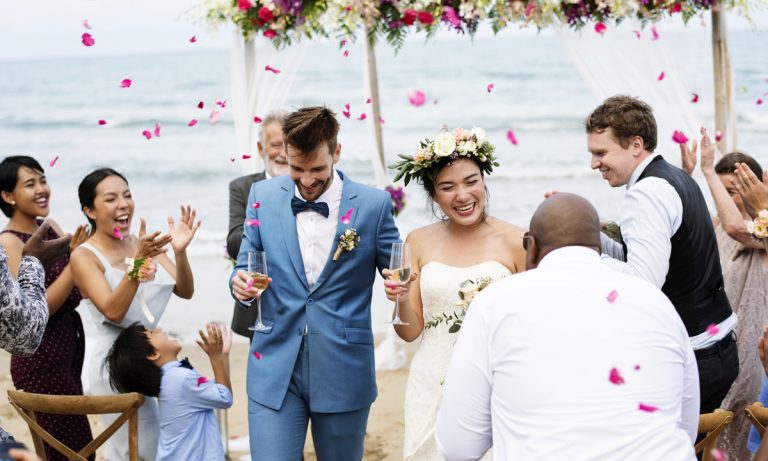
While growing up, you probably heard of damning statistics claiming that half of marriages end in divorces. Baby boomers got married young, got divorced, remarried and did it all over again, affecting the following generation’s perception of marriage. Now, divorce rates are plummeting and it’s all because of millennials, who are taking their time when it comes to tying the knot. Some of them are also disregarding marriage altogether.
A study from the University of Maryland shows that divorce rates dropped by 18 percent between 2008 and 2016. While part of this is due to the fact that couples are getting older (older couples are less likely to divorce) and marriage is becoming less popular, millennials are taking a different approach towards marriage when compared to previous generations. “The change among young people is particularly striking,” says Susan Brown, sociology professor at Bowling Green State University. “The characteristics of young married couples today signal a sustained decline [in divorce rates] in the coming years.”
Marriage and family therapist Emy Tafelski spoke to the Tampa Bay Chronicle and explained that millennials have rearranged their priorities, considering work and personal achievements as more valuable than getting married young and starting a family. While this results in a decrease in marriages, she considers that this is something positive for her patients, saying, “The more discerning we are on who we choose to spend our lives with, the better an outcome we will have.”
The study on divorce rates concludes that couples who are currently getting married are older, more educated, and more likely to stay together. “Marriage is more and more an achievement of status, rather than something that people do regardless of how they’re doing.”
While medical marijuana can help various people cure their ailments, advocates for its legalization generally focus on certain subgroups, like the elderly, young kids with mental disabilities, opioid addicts, and cancer patients. But maybe there’s a whole gender that should be added to that list.
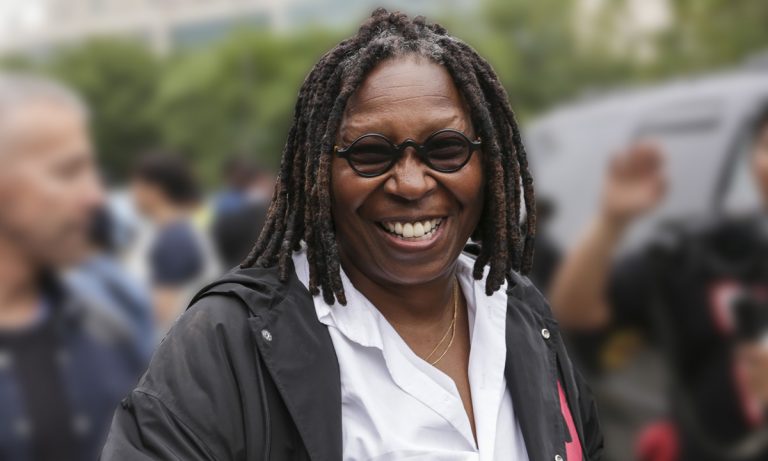
As Whoopi Goldberg recently wrote in the Orange County Register, cannabis can help deal with “everyday women’s health issues.” The actress and The View co-host has made it her mission to promote the specific therapeutic benefits that women receive from using cannabis. Her medical marijuana company, Whoopi & Maya, creates cannabis products specifically designed to do so.
But still, Goldberg believes many women have been left in the dark about how the plant can affect their lives.
“Cannabis is effective at relieving menstrual pain because of the high concentration of endocannabinoid receptors found in and around the uterus,” she wrote in the op-ed. “Skin care is essential to women’s health and topical products are effective for treating skin conditions and protective against environmental stresses. It is only female cannabis plants that blossom into buds, and the botanical has been documented in treating women’s issues since ancient times.”
Even those women who know how cannabis could benefit them “have been persecuted and vilified for far too long for using cannabis products,” writes Goldberg.
“Now that the tide is turning, women are still often in the dark about the specific and tremendous benefits they can receive from this female plant and this budding business. I’ve spent my whole life delivering messages I believe in. I’m proud to be on the front lines of women’s health with a product I believe in. I want to get the word out to everyone with two X chromosomes that there are holistic and therapeutic ways to mitigate the pain of our natural cycles.”
Goldberg’s words remind us that medical cannabis has benefits far exceeding the typical rhetoric peddled in medical and political communities, and even, frankly, the cannabis community. Moving forward, it would be wise for these industries to serve a group that constitutes one half of the population.
“Many women still believe that legalized cannabis products are all about getting stoned or high,” Goldberg writes. “Nothing can be further from the truth. In this age of feminist awareness, it’s important for women to realize that our needs are as unique as a budding flower.”
In research conducted by Four Loko (yes, that Four Loko), the most sex crazed state is one of the smallest. Rhode Island, with a population of a million people, has the most sexually curious mind when it comes to internet searches.
For its experiment, Four Loko tracked sex-related Googles searches, such as “dating apps,” “best bars for singles,” “where to buy condoms,” and “how to get more Tinder matches.” No matter the topic, Rhode Island ended up in the op spot. Rhode Islanders it seems, at least through Google, get very busy.
Other states that rank high include Maine, Michigan, New Hampshire, and Massachusetts. States like New York and California, where you’d expect a lot of sex to be happening, didn’t even make the top half of the list. Michigan, Ohio, and Nebraska, however, made the top half with Four Loko assuming that this is due to the large population of college students.
The least sex-crazed states in the U.S. include Hawaii, Texas, South Carolina, and New Mexico. Mississippi takes the last spot and becomes the place where people Google the least amount of sex related questions. (Even the word they most commonly misspell is boring.)
Of course, these statistics and results don’t mean anything conclusive, they’re just Google searches and don’t actually equal the amount of sex that goes on in the area (at least we assume so). Let’s also keep in mind that the study was conducted by Four Loko so the credibility is up for debate.
“Shyness is nice, and
Shyness can stop you
From doing all the things in life
You’d like to.”
Right again, Morrissey. Millions of us suffer from debilitating shyness. The medical term is general social anxiety disorder, or SAD, and, by some reckoning, it’s the third most common psychological ailment, affecting about 7 percent of people globally. It’s also extremely well represented among cannabis users. Anywhere from almost a third to almost half of people who ever use marijuana also meet the criteria for SAD at some point.
SAD is essentially our fight-or-flight response run amok, until the act of mingling with strangers over cocktails and snacks feels as existentially threatening as facing down a ravenous sabertooth cat on an empty savannah.
Medication can lessen the symptoms, but the preferred treatment is cognitive-behavioral therapy, which focuses on training the mind to react differently to stressful situations. It may even include desensitization exercises, in which patients deliberately seek out stressful situations to confront.
This is obviously as scary as hell. It’s also a slow and potentially expensive process. That’s why many sufferers of SAD prefer to bolster themselves with a dose of “Dutch courage,” taking the edge off their anxiety with a nip of alcohol or a toke of marijuana.
Dr. Julia D. Buckner of Luisiana State University has made a career out of studying the links between extreme social anxiety and self-medication with cannabis. In the last decade or so she has coauthored at least half a dozen papers on the subject. It might seem much ado to prove something we all intuit is true, but she’s managed to put a number to it: Socially anxious people are 6.5 times more likely to be dependent on cannabis than their socially confident peers. They are also 4.5 more likely to use alcohol the same way. What’s particularly interesting, though, is that they are no more likely to abuse either drug than the general public does. In other words, anxious people find the dosage that works for them and they maintain it.
Brain scans show that cannabis is active in regions that process fear and anxiety, but our understanding is still rudimentary. In fact, in its 2015 review of medical cannabis studies, JAMA found only one specifically addressing SAD that met its criteria. The results were favorable, although the study itself was determined to have a “high risk of bias.”
Whether or not cannabis is a medically sound treatment, many thousands of socially anxious individuals currently look to it for relief.
Each season of Trailer Park Boys, the goals of the characters are the same: Get rich, as quick as possible. Usually this involves a secret and illegal scheme to grow marijuana or bootleg alcohol, and almost always ends in failure. Their plans, for however hairbrained or absurd they become, are thwarted by a litany of characters, chief among them Jim Lahey.
The Canadian actors who play Ricky, Julian, and Bubbles are currently touring in Europe, performing in character at various theaters. To promote the show, they sat down with the UK’s Metro tabloid to share their thoughts on Canada’s upcoming legalization of cannabis on Oct. 17.
While discussing their love of Amsterdam, the boys said that “Canada is going to be just like that in October, so we’re pretty pumped.” Ricky, whose character claims to be a master dope grower, chimed in, “It’s going to put me out of a job, which will kind of suck.”
When asked by the paper about picking up some odd jobs or small work to subsidize his loss of income, Ricky replied, “I don’t work, so we’re going to have to think of something. I don’t want to get a job.”
In reality, that couldn’t be farther from the truth. Thanks to the popularity of their show, the boys make plenty of money. They also stand to benefit significantly when cannabis goes legal in Canada thanks to their new weed line Trailer Park Buds, which was announced in a partnership with Organigram earlier this year.
Though there hasn’t been any update about the brand’s availability come Oct. 17, we trust that there will be plenty of demand for the product whenever it does become available to the Canadian masses.
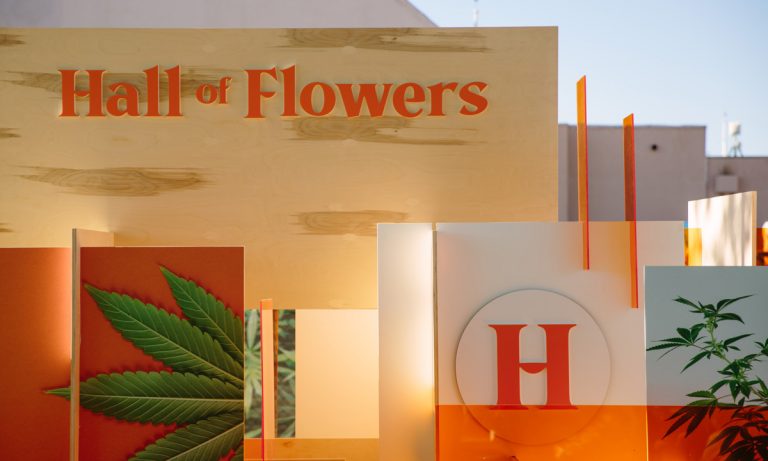
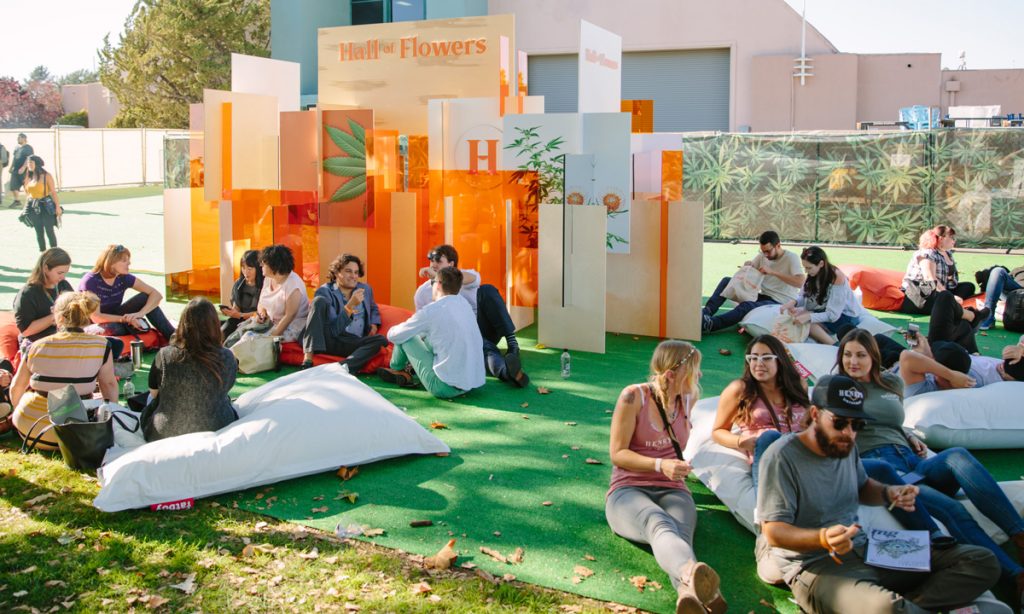
If you want to know what the latest cannabis trends are on the West Coast, look no further than the Hall of Flowers. The inaugural expo in Sonoma, California hosted a who’s who of cannabusinesses, both established and new. We were lucky to get a peek inside the event to discover the latest canna-trends and products. The trade show (Sept. 17-18) was an eclectic mix of authentic, old-school cultivators and corporate bandwagon jumpers offering a myriad of options to elevate the cannabis experience. Here are some highlights.
Photos courtesy of Ridge Production
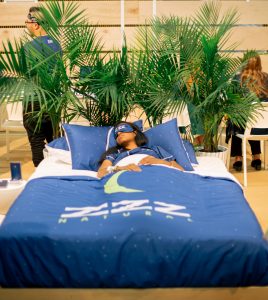
Among the cannabis companies in attendance, there were a few trendy, unilateral themes on display. Sleep was definitely a topic on all the vendors’ lips. From established lifestyle brand Sunday Goods to brand new startup Zzz Natural, there were a plethora of cannabis-infused sleep products available to help alleviate insomnia due to stress, chronic pain and jet lag.
Photos courtesy of Ridge Production
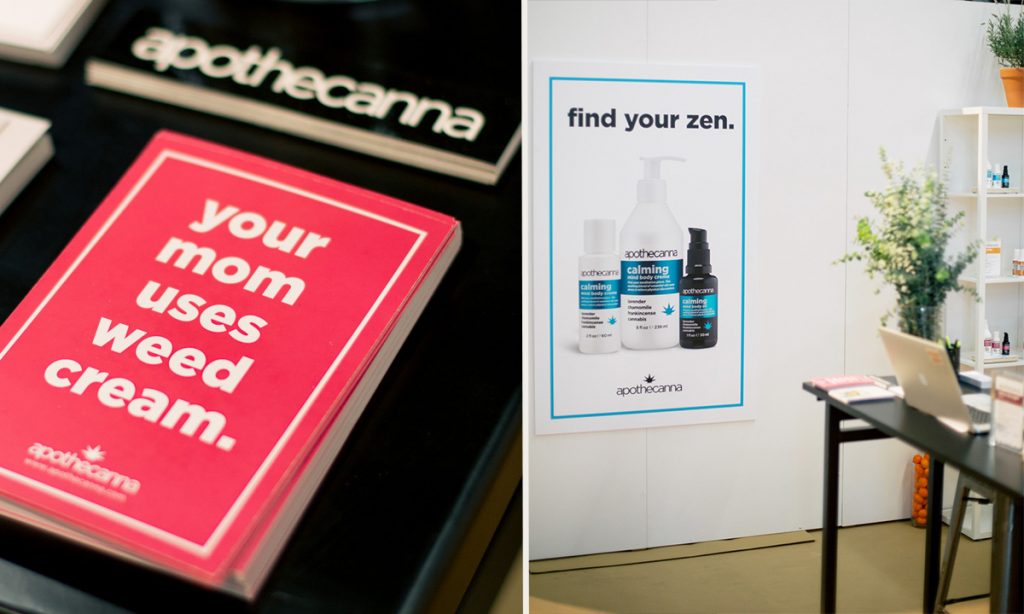
Topicals are also on trend, with Apothecanna leading the pack. With an array of cheeky oils, from “sexy time” lube to a cannabis and arnica body oil, Apothecanna has topicals on lock. Having massage therapists on hand certainly made them a popular attraction.
Papa and Barkley’s transdermal patches were also a big hit. Applying one to the base of the neck between the shoulder blades to alleviate computer cramp is highly recommended.
Naturally, there were oil cartridge and flower vaporizers galore on the show floor.
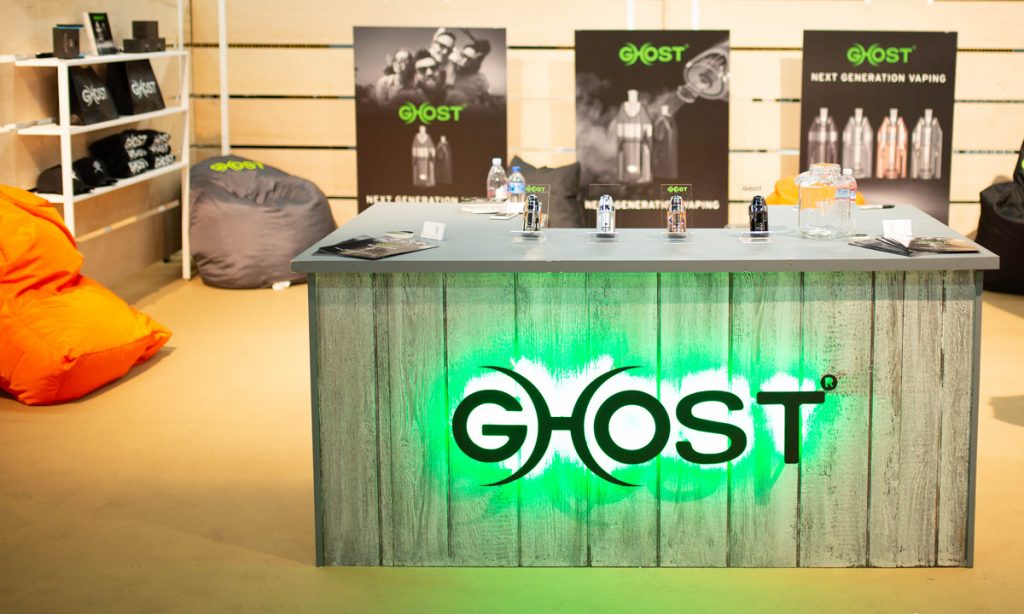
The Ghost vaporizer features advanced on-demand, true convection heating technology. The unit keeps its removable ceramic chamber (the crucible) cool between vapes and prevents material degradation for multi-use sessions by heating only the air that passes through the device when a draw is taken. While it is a bit heavy and clunky to be a true portable, it appears to be designed for portability with a kit that holds the drop-in flower cases. The Ghost features a customizable faceplate for a unique design.
And in other news, Mota is preparing to open a members-only cannabis workspace, like Soho House for cannabis users.
Photos courtesy of Ridge Production
The West Coast is popping off with cannabis brands and products. Rumor has it the next annual Hall of Flowers will be held in Los Angeles. Anyone interested in what’s happening on the cutting edge of the cannabis industry should check it out.
President Trump, in a rare trip to the U.N., called together leaders of 130 countries in order to sign a letter to agitate the War on Drugs. The leaders that made appearances and the ones that didn’t spoke volumes: many U.S. allies refused, including Germany and Spain. However, in a surprising turn of events, Prime Minister Justin Trudeau of Canada signed on.
Former Prime Minister of New Zealand Helen Clark believes that both Canada and Mexico were coerced into signing the letter, citing NAFTA talks currently being held in Washington. “It’s giving in to bullying and extortion and it’s outrageous,” she said without mincing a word.
Though the U.N. talks centered around opium and cocaine, there was no talk as to how prescription medications play into the opioid crisis. There was also no mention of how human rights play an enormous role in these already failed wars.
The War on Drugs has been bloody, brutal and ineffective since its start. It does very little but to ramp up competition between rival cartels and create more inventive ways of trafficking. But at the same time as Trump took over the U.N., there was a gathering of world leaders in Mexico City, looking toward the future of drug policy and what it could really be.
Known as the Global Commission on Drug Policy, the group includes 12 former heads of state, which has been trying to find an end to prohibition since 2011. Monday, they released a report requesting that governments abandon drug wars, mitigate and regulate lower grade drugs and contribute reform ideas as to international treaties, some of which would still need prohibition and some forms of punishment included.
Back in the U.S., cannabis was thankfully absent during the talks, which lends hope that the global progress that’s been made will continue on its upward trajectory. Plus, it’s highly unlikely that Canada or Mexico would have signed had cannabis prohibition been an issue.
According to Cannabis Wire, Nicky Haley had this to say about the revamped drug war efforts:
“Everyone knows someone who has suffered or died from abusing illegal drugs.” The country, she continued, “is confronting a rapid opioid crisis that is fueled by the rapid increase in the illicit supply of synthetic drugs, like Fentanyl.” Pointing to Latin America as the main culprit, finger pointing, bad policy and trumped up language are already in the works.
The Mexico City commission said in their report that the Trump administration’s Global Call to Action on the World Drug Problem “signals the continuation of inefficient, costly and harmful policies…The U.S. government, which tried and abandoned alcohol prohibition, and now faces an unprecedented opioid crisis, should know this better than anyone – especially at a time when numerous states are moving away from prohibition and towards regulation.”
It was once believed that U.S. Attorney General Jeff Sessions was the greatest foe of the cannabis legalization movement. But aside from getting under everyone’s skin and sandbagging medical marijuana research opportunities, he hasn’t done much to stifle the average cannabis industry.
But there is a man on Capitol Hill, bearing the same last name as the head of the Justice Department, who we are learning is the great saboteur when it comes to making progress with pot in the lower chamber of Congress.
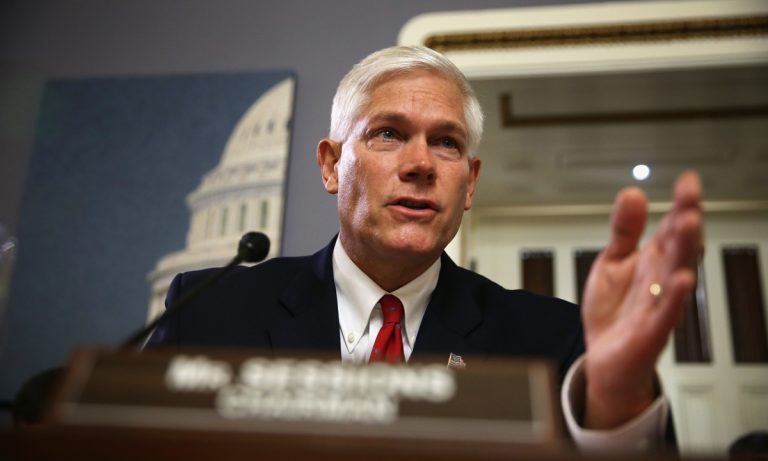
That man is U.S. Representative Pete Sessions of Texas. This twisted hombre, who is the Chairman of the House Rules Committee, has gone out of his way throughout the years to ensure no amendments associated with protecting state-level marijuana laws makes it out alive. Over the summer, he blocked several amendments designed to give veterans access to medical marijuana. It is a run of interference that has three times prevented the House of Representative from so much as taking up a vote on the issue. It hasn’t since 2016.
But Sessions doesn’t just block votes; he professes his hatred for marijuana to the public every chance he gets. At a recent conference to discuss the national opioid epidemic, Sessions told those in attendance that pot isn’t a suitable alternative for painkillers because it is “300 times more powerful” than it was 45 years ago, reports the Daily Beast. This reactionary figure has also suggested that weed is more of a cause than a cure. At the conference, he claimed that marijuana was a gateway to opioid addiction, despite scientific studies and the federal government’s health agencies showing otherwise.
It was the National Institute on Drug Abuse that came out and said that “the majority of people who use marijuana do not go on to use other, ‘harder’ substances,” but rather it is “alcohol and nicotine” that “were more likely to inspire people to use harder substances.” Still, Sessions has conveniently disregarded this information.
It is encouraging, however, that Pete Sessions’ reign of stupidity might be at the end of its rope. The Congressman is up for reelection for the first time in over a decade and stands a distinct possibility of being knocked off his cross by Democratic opponent Colin Allred. This candidate, who served as a civil rights attorney and played with the NFL, is a cannabis supporter. He believes veterans should have access to medical marijuana as a means for treating PTSD and chronic pain.
But the political race has been neck and neck. A recent New York Times/Siena College Poll published earlier this week shows Sessions leading 48 percent to Allred’s 47 percent. Still, if the election goes a certain way, one Sessions is on his way home.
Now, if we could just a find a way to get the other one out of Washington, we’d be in good shape.