Saturday, June 20, 2026
Home Blog Page 864

Legal Marijuana States Beg Congress For Banking Protections

0

One of the most dangerous aspects of the cannabis industry is that it is forced to operate as a mostly cash businesses. This puts employees and countless others at risk for violence and theft. But because marijuana is still considered a Schedule I drug in the eyes of the federal government, most, larger financial institutions simply refuse to accept deposits from the legal pot trade. The fear a relationship with weed could result in charges for money laundering. It is for this reason that a number of states, including Pennsylvania, are now pleading with Congress to pass protections that give banks and credit unions the piece of mind needed to move beyond the apprehension.

Earlier this week, Pennsylvania Governor Tom Wolf’s administration fired off a letter to Congressional leadership, asking for them “to consider legislation that creates a safe harbor for financial institutions to serve a state-compliant business, or entrusts sovereign states with the full oversight and jurisdiction of marijuana-related activity.”

The letter, which was addressed to U.S. Representatives Paul Ryan, Nancy Pelosi and U.S. Senators Mitch McConnell and Chuck Schumer, was also supported in ink by banking authorities in Alaska, Connecticut, Hawaii, Louisiana, Michigan, Montana, Nevada, New York, Oklahoma, Oregon, and Washington state, according to The Inquirer.

To be fair, the federal government has yet to investigate or prosecute any bank choosing to work with cannabis-related businesses. But it’s a schizophrenic business environment. Some of the smaller financial institutions, those that were initially comfortable enough to offer bank accounts to pot businesses, got spooked back in January when U.S. Attorney General Jeff Sessions rescinded a non-binding Obama-era guidance (Cole Memo) that allowed states to experiment with marijuana legalization without federal interference. Accounts all across the nation were closed due to the uncertainty created by this move.

As it stands, approximately 70 percent of cannabis companies are operating without a bank account.

“The well-documented conflict between federal and state law creates barriers for banks desiring to serve businesses involved in state-licensed marijuana activities,” said Pennsylvania Secretary of Banking and Securities Robin L. Wiessmann. “This raises concerns with respect to public safety, increases difficulty tracking the flow of funds, and contributes to a loss of economic activity, workforce development and community development opportunities.”

Aside from the clear obstacles, operating a “cash and carry industry” also threatens the bottom line of cannabis companies. It is easy for a marijuana dispensary to have hundreds of thousands of dollars on hand on any given day. Yet, insurance only covers a cash loss of $20,000, according to Philadelphia-based cannabis banking attorney Steve Schain.

Sadly, some state lawmakers are not even trying to help their own. In California, which launched its recreational marijuana sector at the beginning of 2018, a bill designed to establish a proper banking system for the cannabis trade was recently killed in committee. The proposal, which was introduced by Democratic Senator Bob Hertzberg, would have paved the way to state-licensed charter banks for the sole purpose of serving the cannabis trade. However, while the bill would have ensured banking services for those who cultivate and sell weed in the Golden State, it would not have shielded any of them from federal prosecution,” reports the Associated Press.

Banking protections have been introduced in Congress in the past, but they have so far failed to go the distance. It remains to be seen whether the issue has gained any ground this year.
Cannabis Coffee Shop Conversions Already In The Works For Canada

0

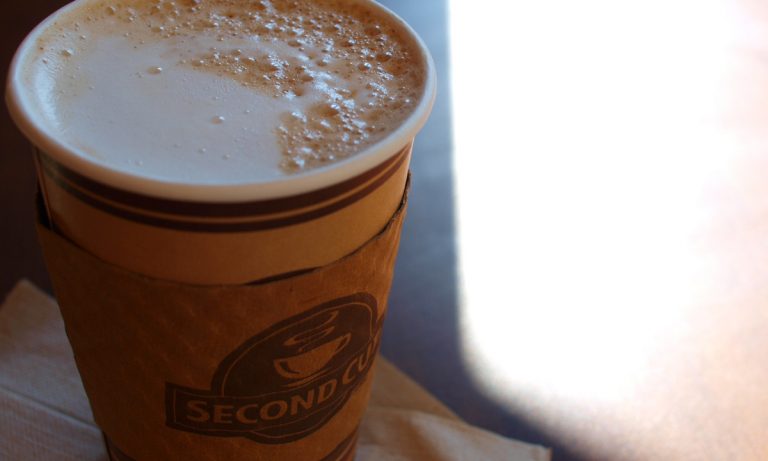
Second Cup is the second largest coffee chain in Canada and it’s looking to convert a portion of its more than 130 shops in the province of Ontario into cannabis dispensaries by spring of next year. Because of considerations like proximity to schools and whether or not a municipality will allow pot shops is deciding the number, at this point, it looks to be around 50 locales.

They’re not slated to be the coffee shops of Amsterdam’s fame, as public consumption hasn’t been approved – yet – but they do represent a trend that could spread like wildfire. There’s nothing stopping any chain store from converting their brick and mortar locations into cannabis dispensaries, and that’s where the money is really going to be coming in.

With Ontario alone making up over 30 percent of the country’s population, it sounds like the country is getting a shot in the arm of cannabis cafes, ahem, dispensaries and it’s not likely the buck will stop there.

Second Cup strategically partnered with National Access Cannabis Corp. (NAC), which are a network of cannabis clinics in Canada. The idea is to convert the existing coffee shops into Meta Cannabis Supply Co. branded recreational marijuana dispensaries. It’s not clear if you’ll still be able to enjoy a cup o’ Joe while perusing your pot, but these new shops are geared up to be the latest “it” thing.

Canada has been a marijuana mecca for decades, despite actual legalization finally going to be in effect on October 17, 2018 making them the first G7 member to make the historic move. In Vancouver B.C. pot coffee shops were a norm and definitely a tourist attraction for years and years and in July 2001 Health Canada allowed access to medical cannabis. So whomever is building has a rich history on which to build upon.

The parade of elephants in the room include that, despite protests that they will “only” be dispensaries, these things in the works already sound an awful lot like the beginnings of the next marijuana tourism hot spots. Said elephant parade also includes companies likely already making plans to follow Second Cup’s suit and convert their own coffee shops and existing retail stores into pot destinations, as regulations allow.

There’s the word, “destination.” As stores continue to brand and expand themselves in preparation for the country’s own already growing green rush, it will be interesting to see how much of the county’s overarching conversations are going to be taken over by cannabis for the foreseeable future.

5 Spas That Use CBD Topicals For Holistic Well-Being

The discovery of cannabinoids and their non-psychoactive properties has opened up new worlds to those who were once completely against the use of cannabis, including the marvelous measure of CBD massage. By isolating that particular cannabinoid or by growing cannabis/hemp with a high-CBD, low-THC content, important options arise for those simply looking for relief.  A CBD rubdown might be just what the doctor ordered.

One thing that really sets CBD apart, aside from its health benefits, is its availability. Though all components of the cannabis plant are considered illegal at the federal level in the U.S., CBD is carried in headshops, gas stations and mom-and-pop stores across the nation. CBD is infused into our morning coffees, our candies, but especially into our skin and muscle products, as its main known course of action is the reduction of inflammation.

Inflammation is the reason for so many of our aches and pains, for joint flare ups and for stiff bones and muscles. Massaging CBD-infused topicals into the skin and tissue where it hurts is a powerful analgesic and spas everywhere have caught on. If you’re lucky enough to live near one of these five high-minded spots, take advantage. Your body will thank you.

Ohm Spa and Lounge—New York, New York

This spa offers “some of the best massages…in NYC,” which is quite the statement. NYC is known for its massages, but at Ohm you’ll find a CBD massage on the menu, so they do have that going for them. They describe the experience as, “The infused massage cream is rubbed into the skin throughout the session to provide a unique sense of calm and relaxation.” $189 for one hour.

The Green Tea Spa—San Diego, California

According to their site, this is “The CBD Spa Experience.” They promise to massage away your worries and pamper you with hemp-derived CBD. The “Get Lit” package is an ever-so-relaxing steal, with a two-hour facial and massage package for $115. (First-time visitors only.)

Lodo Massage Studio—Denver, Colorado

You probably can’t go wrong with an experience called the “Mile High Massage.” It includes a choice of creams, one of which is “Apothecanna’s Pain Crème,” infused with CBD, Arnica, Peppermint and Juniper.

The spa states that as a natural pain reliever and anti-inflammatory, the lotion is perfect for deep, therapeutic work. $75 for one hour.

Blue Marigold Massage—Portland, Oregon

After a few weeks of trials using CBD lotion on their fortunate clients, Portland’s Blue Marigold Massage now offers the infused massage to the masses. Their formula uses other relaxing essential oils and has an infinitesimal amount of THC in it, which is cool, because adding even a little bit, though not nearly enough to get high off of, is enough to create an entourage effect of healing cannabinoids. $105 for an hour.

Interlocks Salon—Newburyport, Massachusetts 

As of June, Interlocks offers their own CBD massage. Their techniques have already won them awards, so imagine the anti-inflammatory properties of CBD melting in with an award-winning massage focused on relieving muscle soreness. Using handcrafted salve from The Healing Rose, these massages are $113 for an hour and can be booked online.

What Is The Scar On Kate Middleton’s Scalp?

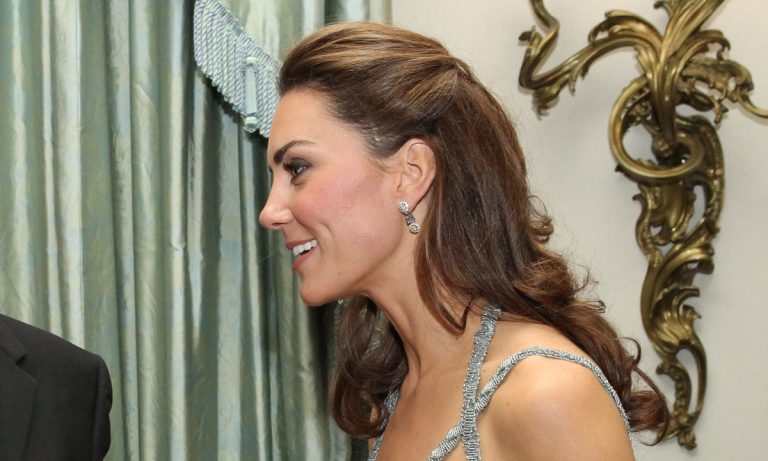
If you’re just now noticing the Duchess of Cambridge has a situation on the left side of her head, we’re hair, er, here to explain. What is the scar on Kate Middleton’s scalp? In 2011, shortly after she married Prince William, Kate was photographed during her first solo engagement as a royal and it was obvious she had a suspicious mark that was visible when she pulled her hair back.

RELATED: Weed And The Royal Family?

At the time, there was some speculation that it was a bad weave, specifically, an extension track. Seriously? This is the flawless, not-a-hair-out-of-place Duchess of Cambridge we’re talking about. She’s like a walking can of hairspray.  V was later dismissed when a palace spokesman confirmed that the mark was actually…a three-inch long scar.

“The scar is related to a childhood operation,” they told the Daily Mail.

https://www.instagram.com/p/Bm6Xl3MBwyE

Though the childhood operation Kate underwent was not disclosed, the Daily Mail  said that senior royal sources confirmed that it had been “a very serious operation,” However, John Scurr, a consultant surgeon at the Lister Hospital in London said the exact opposite:

I really doubt it was any serious medical condition and I would say it is as a result of an arteriovenous malformation – a birthmark – being removed.

Catherine Elizabeth Middleton was born to Michael and Carole Middleton at the Royal Berkshire Hospital, Reading, on 9 January 1982. The Princess of Wales is the eldest of three children, and was christened at the parish church of St. Andrew’s Bradfield in Berkshire on 20 June 1982.
On 29 April 2011, Prince William and Miss Catherine Middleton were married at Westminster Abbey. The couple are now known as The Prince and Princess of Wales, having formally been known as The Duke and Duchess of Cornwall and Cambridge.

SZA Shares Wild Weed Brownie Conspiracy

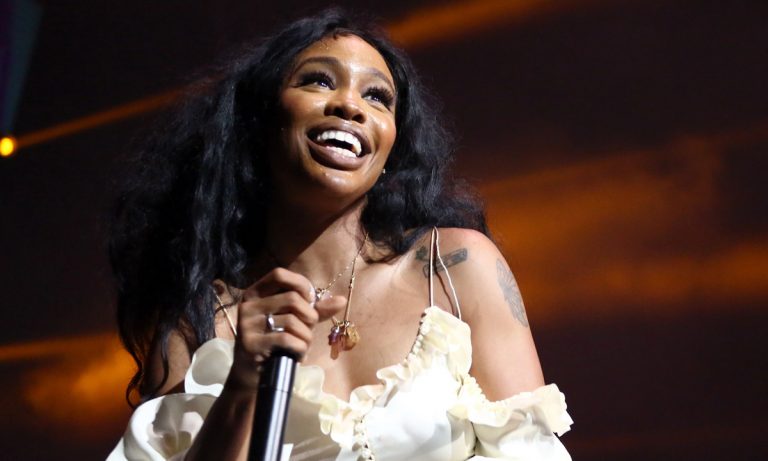
As one of the newly-minted stars in the music industry, there aren’t many talents with more burgeoning careers than SZA. The R&B/pop singer broke out with her debut studio album CTRL in 2017, and the record was rated near the top of many year-end lists. Though she lost out on her five Grammy nominations, her career appears destined for success. Another big part of the news – SAZ shares wild weed brownie conspiracy!

But it wasn’t always that way for the singer. SZA decided to share stories about her retail working days on Twitter, which included True Religion, Lucky Brand Jeans, Sephora, H&M, and Abercrombie. She also had a stint at her hometown pizza shop, and “anywhere else that would allow me to walk in late and moody.”

But it was when SZA revealed she worked at Diesel when things got interesting. Why? Because, says SZA, “they fired me over a weed brownie conspiracy.” Immediately fans flooded her mentions, begging for the full story. And let us tell you—it doesn’t disappoint.

A co-worker had brought in a container of freshly-baked brownies. Everyone starts crowding around, looking for a treat to get through the work day. The woman who brought them, according to SZA, “DONT SAY NUFFIN BOUT NO DRUGS.”  From there…well it’s probably better if I let SZA tell the rest of the story.

The singer probably wouldn’t complain how her life’s turned out, though. Earlier this month, SZA took to Instagram to thank her fans as she crossed two billion streams on her records.

“Today I found out we 2.3 billion streams deep and a bunch a other cool stuff,” SZA wrote on Instagram. “I love my family. I love you all for pressing play at any time. Thank you for this journey.”

https://www.instagram.com/p/BmwXEClDzoP/

Shaking our head at SZA shares wild weed brownie conspiracy.

Ethan Hawke Doesn’t Consider ‘Logan’ Or ‘Avengers’ Real Movies

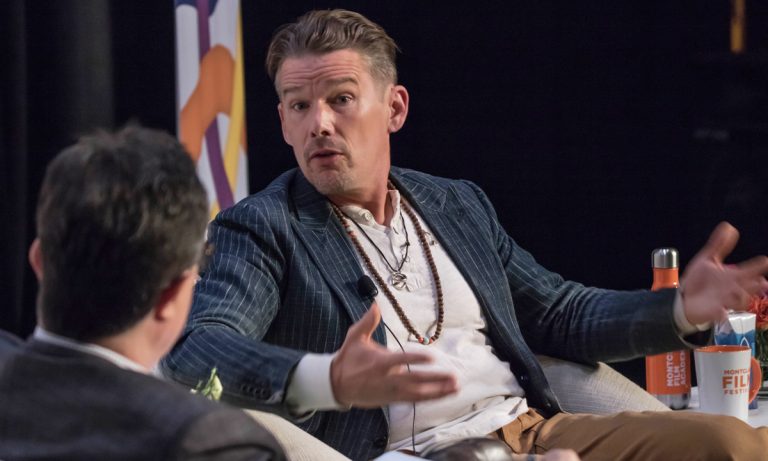
Some advice for Ethan Hawke: Log off from the internet for the rest of the week. That’s assuming he wants to avoid the wrath of infinitely spawning nerds and trolls forming the wave of backlash in response to some recent comments he made. What did Hawke say to irritate these masses? Simple: He bashed comic book movies.

Perhaps “bashed” isn’t the proper term. In a lengthy interview with The Film Stage, Hawke suggested that we not include superhero films in the same category as regular movies. “Now we have the problem that they tell us Logan is a great movie. Well, it’s a great superhero movie,” he  said.

Hawke isn’t necessarily arguing superhero movies aren’t worthwhile enterprises — at least it seems he isn’t making that argument. Instead he’s seemingly positing that superhero movies exist as a separate art form. And we have to say, he kind of has a point.

Via The Film Stage:

[Logan] still involves people in tights with metal coming out of their hands. It’s not Bresson. It’s not Bergman. But they talk about it like it is. I went to see Logan cause everyone was like, “This is a great movie” and I was like, “Really? No, this is a fine superhero movie.” There’s a difference but big business doesn’t think there’s a difference. Big business wants you to think that this is a great film because they wanna make money off of it.

Before you get up in arms, here’s a spoiler-y question: Watching Marvel’s Infinity War, the movie event of the summer, did you really feel the emotional resonance of the characters’ deaths? Did it pain you when a surrogate father sacrificed his daughter to achieve ultimate power with the Soul Stone? Did you weep when Spider-Man faded to ash in Tony Stark’s hands — a relationship by proxy symbolizing a son pained to fail his father, and vice versa? Your “yes” answers were likely fleeting, disappearing as soon as you stepped outside the theater when you remembered the big business game being played here.

This tweet sums it up.

https://twitter.com/misterpatches/status/1032072380095647744

Hawke’s comments are worth thinking about, if only to recontextualize our relationship to these movies. That statement may attract the ire of the legion of superhero fans unwilling to do so, which is where the advice offered to Mr. Hawke comes in handy: logging off for the rest of the day to avoid trolls.

MedMen’s First Quarterly California Return Puts Apple To Shame

When retailers measure success, one of their most important tools is the revenue per square foot equation. While Apple topped the world again last year, clocking in at $5,546 per square foot, and, according to the Motley Fool, the fine jewelry retailer Tiffany & Co. came in at a snazzy $2,951 per square foot, MedMen beat them both with their recent revenue report.

The quarter ended for MedMen on June 30, 2018 and their revenue per square foot came in at an astounding $6,541. Meaning, in one stretched sense of the takeaway, that cannabis is more precious than high end tech or perfectly cut diamonds. The more fathomable takeaway is that this was the grand opening of California’s recreational marijuana market and MedMen managed to scored bigtime.

Another takeaway could potentially be that pot for profit is cozying into the once compassionate market. While we’d never begrudge a woman or man their living, cannabis was always about, and for, the people. Perhaps with this new era of big business and towering revenues, cannabis is becoming the cash crop we always said it would be, and now we have to swallow a bitter, expensive pill.

On the other hand, that pill is not so bitter for the millions of people who now have access to legal cannabis and will no longer fear jail time, job loss or a fast fading stigma that, not so long ago, held people back in big ways. It’s also a rather sweet pill for those who rode the wild west showdown to the finale, invested early and big and are now reaping the benefits.

Two sides of the same coin are a given, and let’s just hope that no matter heads or tails, that there are multiple winners with most tosses. Every toss can’t be an across the board winner, but the hope is thrilling.

MedMen has six strategically located stores in California and for them it’s all about branding, ease of transaction and access to the best medicines. That’s a winning combo in cannabis and it’s working for this brand that also has locations in New York, Nevada and soon to be Massachusetts and possibly Florida.

They all resonate as smart moves — and that revenue per square foot is certainly impressive — but as was also pointed out, the shares for MedMen are ridiculously high, even for a showboat brand that makes more per square footage than other, non-cannabis, iconic money-generators. It may not be time to invest, but it’s high time to keep an enthusiastic eye on MedMen, their impressive revenues and what comes next.

How To Use ‘Shake,’ The iPhone’s Most Useful And Overlooked Feature

Fixing mistakes and errors on our phones is never as easy as it is on a computer. Since laptops and desktops were built for long hours of typing and grinding, Macs and PCs have shortcuts that allow you to quickly fix an error by either pressing Command + Z or CTRL + Z. This comfort is mostly available because of your keyboard, which gives you more control than a 6 inch touchscreen.

In an effort to make smartphones more useful and advanced, developers created gestures as a way of creating a bridge between handheld devices and computers, offering you simple solutions for those moments when you’ve been typing something and make a mistake. Gestures take advantage of the one thing that hand held devices hold over computers: portability and comfort.

The iPhone’s “shake to undo” feature has been around since 2009, yet it’s mainly forgotten and underused, despite the fact that it allows you to take back an error, including auto-correct spelling, by simply shaking your phone.

While there are other ways of deleting something, the “shake to undo” feature is quick and cool, and it only requires for you to use it consciously for the first couple of times until you assimilate it, much like using your fingers as pincers to zoom in and out of a photo.

This shortcut is also exclusive on the iPhone, unavailable in Android or other devices with different operating softwares. Take advantage of it; you know you would have loved it if you were a kid.

How Canadian Boomers Got Into Marijuana

The legalization of marijuana in Canada comes almost a century after the drug was first declared an illegal substance in 1923, but pot didn’t explode in popularity until the 1960s when a group of rebellious people began promoting it as a shortcut to peace and enlightenment.

Concerned about the new use of this drug, in 1969, the Royal Commission on the Non-Medical Use of Drugs visited coffee shops and universities to talk to young people about marijuana use.

One student told them marijuana reveals “a greater sense of the universe.” He enthused that “things you never noticed… now jump out … and every event becomes suddenly deep.” Another touted that cannabis could be the “catalyst to the great Epiphany.”

Related: How To Approach Your Baby Boomer Parents About Weed

One participant promised “fantastic benefits” from smoking marijuana and said that it could lead to “a much better way of living.”

In short, many baby boomers believed marijuana use could usher in a new era of experience, enlightenment and joy. Half a century ago, this was utterly new to most Canadians.

Cannabis convictions soar

Convictions for cannabis went from 60 in 1965 to 6,292 in 1970. By the spring of 1970, the Royal Commission on the Non-Medical Use of Drugs suggested that somewhere between 1.3 and 1.5 million Canadians had used marijuana.

A survey of Toronto adults in 1971 showed that 8.4 per cent had used cannabis in the previous year, with higher rates among young people. Thirty per cent of people between the ages of 18 and 25 said they had tried the drug, while only 10 per cent of people aged 25 to 35 had smoked marijuana. From 1968 to 1972, marijuana use at Toronto high schools tripled.

What made this new generation of young people reject the hard-drinking ways of their elders in favor of a new drug? Part of marijuana’s appeal was its illicit status — it allowed baby boomers to reject the rules of the “establishment” and the habits of their parents.

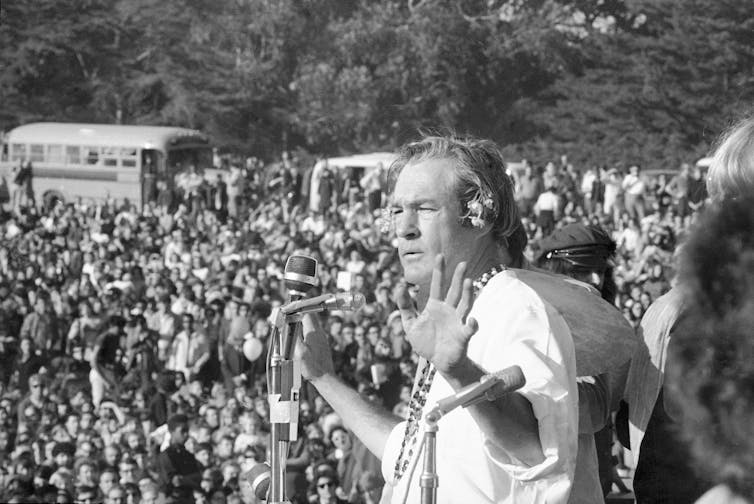
Timothy Leary addresses a crowd of hippies at the ‘Human Be-In’ that he helped organize in 1967. Leary told the crowd to ‘Turn on, Tune in and Drop out.’ (AP Photo/Bob Klein)

It was believed marijuana would open them to new experiences, while alcohol diminished awareness. As the LSD guru, Timothy Leary, put it in his Politics of Ecstasy, alcohol consumption brought about the “State of Emotional Stupor” while marijuana would lead to “The State of Sensory Awareness.”

Marijuana users were well aware that their parents already took a wide array of legal and prescription drugs. They were often highly critical of prescription drugs like barbiturates and tranquillizers. They believed these drugs numbed people to the injustices and inadequacies of North American society.

Promises of enlightenment

By contrast, marijuana promised to open a path to enlightenment. Many baby boomers were interested in Eastern religions and transcendent experiences. As Charles Reich put it in his Greening of America, an ode to the new generation, “using marijuana is more like what happens when a person with fuzzy vision puts on glasses.”

Reich explained that marijuana enabled people to hear new sounds in music and to visualize the world in new ways. It would allow them to understand time differently, thereby releasing them from the unrelenting demands of a capitalist society.

Other marijuana users were influenced by the popular culture of the day to try the drug. The Beatles were getting “high with a little help” from their friends. Janis Joplin spent all her money on drugs in “Mary Jane.” Bob Dylan intoned: “Everybody must get stoned.”

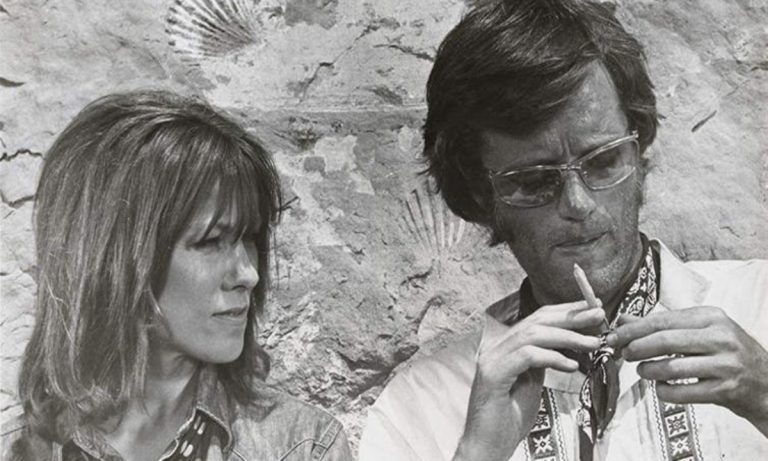
Drug use was also glorified in movies. The Beatles psychedelic cartoon Yellow Submarine premiered in 1968, while the countercultural classic Easy Rider came out the following year. It featured Peter Fonda and Dennis Hopper driving their motorcycles from Los Angeles to New Orleans, smoking dope, taking LSD, visiting a commune and raising the ire of the establishment.

Finding a ‘groove’

Protesters stage a demonstration in Toronto’s Yorkville neighbourhood in the 1960s. Michel Lambeth/Library and Archives Canada, CC BY

From the Mariposa music festival to the coffee shops of Toronto’s Yorkville neighbourhood, marijuana wafted through the air of the late 1960s. Headshops were a vital part of the street life in countercultural communities like Vancouver’s Kitsilano. Stores like the Polevault in Vancouver featured coloured lights beaming through parachutes on the ceiling, while chairs, cushions and ashtrays invited people to stay and “groove.” Countercultural newspapers like the Georgia Straight (Vancouver), Harbinger (Toronto) and Octopus (Ottawa) glamourized marijuana in their pages.

Marijuana proponents did not persuade the Royal Commission that marijuana would usher in a new era of enlightenment. But the Commissioners were persuaded that the costs of marijuana prohibition were too high, both for individuals and the state. They recommended the laws against the prohibition of marijuana be repealed.

This did not happen, as Marcel Martel explains in his book Not this Time. Jean Chretien’s attempt to decriminalize marijuana in 2003 also failed.

Finally, more than 50 years after the “Summer of Love”, cannabis will be legalized in Canada, although the dream of marijuana’s potential to create a new society has largely passed.

Catherine Carstairs, Professor and Chair, Department of History, University of Guelph

One Small Thing Men And Women Value Most In A Relationship

0

Being in a relationship is hard, two personalities, mindsets and wills joined together day after day. Compromise is key along with grace and patience. But there is one small thing men and women value most in a relationship.

There are many health benefits to humor. It decreases stress, lowers blood pressure, and can even relieve pain.  And now, according to a new study, it can also be the glue that keeps a relationship together.

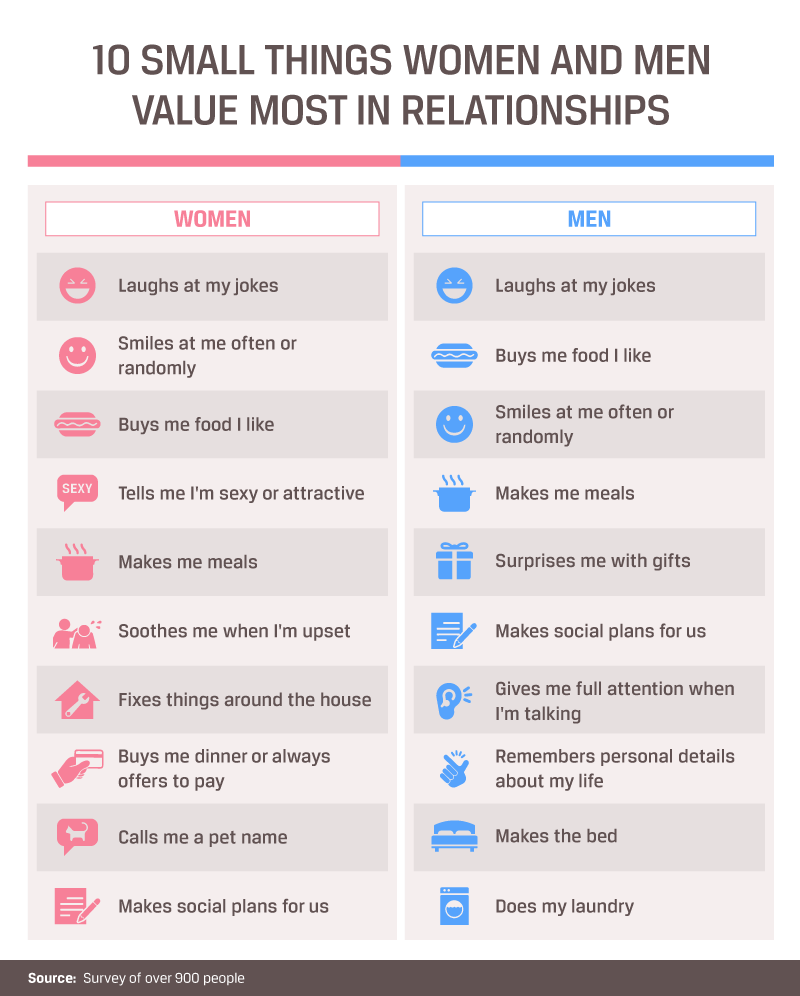
The survey of more than 900 Europeans and Americans aimed to find out which little relationship gestures helped keep the spark alive, and laughter took the top spot.

Nearly 70 percent of both men and women said they ultimately cherish a partner who makes them laugh.

Random smiles and acts of food followed closely behind; 66.8 percent of women preferred a clandestine smile from their partner, while 65 percent of men said the key to their hearts was through their stomach.

According to the survey:

While over 61 percent of women felt receiving a compliment about being sexy or attractive was their most valued relationship perk, that same category did not even make the cut for men. Other sentiments that showed up exclusively for women include being soothed when upset and being called an endearing pet name. On the men’s side, they expressed gratitude for being surprised with a gift and having their partner’s full attention while in conversation.

The survey found that other small gestures became more important over time, like partners who made social plans for the pair. For new couples, only 3.4 percent found this to be an important gesture compared to 10.4 precent of couples who had been together for at least 16 years.

Among women who reached relationship nirvana, 74.2 percent said leaving room to indulge in some “me” time was the best gift their partner could give, according to the survey. And the healthiest relationships? They tend to strike a balance between “together” time and “me” time, which allows both partners time to be independent and nurturing of themselves, which is ultimately necessary for a healthy relationship.

Don't Miss Your Weekly Dose of The Fresh Toast.

Stay informed with exclusive news briefs delivered directly to your inbox every Friday.

We respect your privacy. Unsubscribe anytime.