Reboots are all the rage these days, whether it be in TV or movies. Heck, even The Karate Kid got rebooted on YouTube as Cobra Kai. The key to a successful reboot is shifting a few key variables that updates the original premise to contemporary settings, but doesn’t corrupt its nostalgic allure. A new one could be on the way – Jimmy Kimmel’s Dr Quinn, Medical Marijuana Woman
In that spirit, Jimmy Kimmel decided a certain TV series needed a green-thumb tweak of sorts. “Frasier Crane isn’t the only TV doctor from the ’90s who deserves new life,” Kimmel says. Enter a faux-promo for Dr. Quinn, Medicinal Marijuana Woman, a spoof on the Jane Seymour vehicle popular in the ’90s for its progressive themes and historical setting.
“New trails are about to get blazed,” Seymour narrates in the spoof.
We watch Seymour reprising her Dr. Quinn role as a traveling weed dispensary, reminiscent of The Guy from HBO’s “High Maintenance.” Dr. Quinn rides into tow to treat a man experiencing “so much cholera.” To combat his ails, we see her “Best in the West” medicinal marijuana. Names include Cornbread Kush, Calamity Mary Jane, Wyatt Earple Haze, Pineapple Pony Express, Doc’s Holiday, and more.
Asked on Buzzfeed News’ “Profile” about an actual reboot, Seymour responded enthusiastically: “We wish!…They have brought back absolutely everything, I have no idea why they wouldn’t bring this back…people all over the world, all cultures, love ‘Dr. Quinn Medicine Woman’…It’s so relevant to today, it could not be more relevant.”
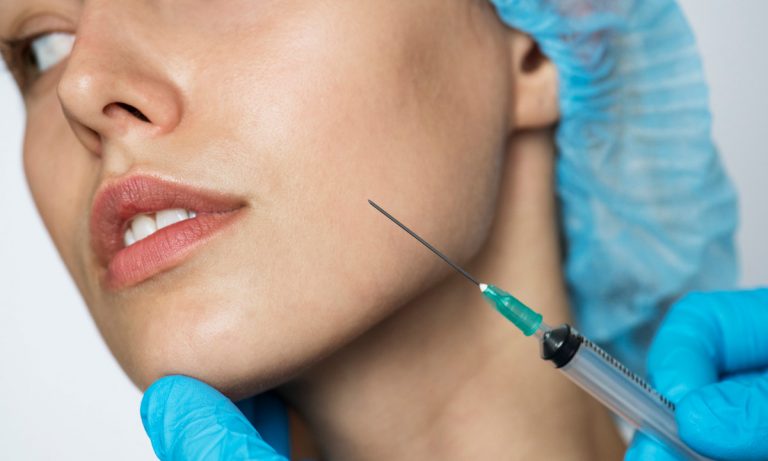
Welcome to the future, where instead of using photo filters where they belong (on social media), people are using them as a template for what they want to look like IRL.
It’s called “Snapchat dysmorphia” and according to a study published in the journal JAMA Facial Plastic Surgery, the desire to look like a filtered version of oneself is a growing trend.
Today, with apps like Snapchat and Facetune, that same level of perfection is accessible to everyone. Now, it is not just celebrities propagating beauty standards: it is a classmate, a coworker, or a friend. The pervasiveness of these filtered images can take a toll on one’s self esteem, make one feel inadequate for not looking a certain way in the real world, and may even act as a trigger and lead to body dysmorphic disorder (BDD).
The article, written by doctors from Boston University School of Medicine’s department of dermatology calls this an “alarming trend because those filtered selfies often present an unattainable look and are blurring the line of reality and fantasy for these patients.”
The paper notes that plastic surgeons first identified this trend in 2017. Current data show that 55 percent of surgeons report seeing patients who request surgery to improve their appearance in selfies, up from 42 percent in 2015.
Researchers say that while adding flowers or animal ears to a photo can be innocent fun, other edits may actually increase pressure to attain an unattainable look.
It can be argued that these apps are making us lose touch with reality because we expect to look perfectly primped and filtered in real life as well. Filtered selfies especially can have harmful effects on adolescents or those with BDD because these groups may more severely internalize this beauty standard. It is important for clinicians to understand the implications of social media on body image and self-esteem to better treat and counsel their patients.
The cure for this type of insecurity is not surgery, which could actually worsen any potential underlying BDD. Instead, researchers suggest psychological interventions, such as cognitive behavioral therapy, as well as medications, such as selective serotonin reuptake inhibitors (which are often used to treat depression and anxiety), often in combination.
For the first time in her existence, 80-year-old Delores Saltzman from Clare County, Michigan spent a night in jail. It began on June 13, when Deputy Ashley Gruno came to Salzman’s front door, looking for her great-granddaughter and to return a lost phone and ID. When Deputy Gruno smelled marijuana coming from the residence, she inquired to find that the pot was indeed Dolores Saltzman’s — and her medical marijuana card was expired.
After a search of the Saltzman home, the Sheriff’s deputy found “7 marijuana pipes, 4 joints, a grinder, and a purple glass jar that also held a quantity of marijuana inside,” according to a statement released by the Clare County Prosecutor to Fox 17. All together it equalled less than an eighth of an ounce of cannabis.
After the house search, Deputy Gruno helped Saltzman with tidying up the kitchen, at the conclusion of which, Saltzman said, “Are you ready hon? Let’s go.” Gruno handcuffed the great-grandmother in the back of the car and did not read her Miranda rights.
Luckily, Saltzman was released the following day and once she renewed her medical marijuana card, the charges were dropped without prejudice. However, Saltzman and her son Mark said that “[cannabis] worked up her appetite when she was sick; helped her heal after surgeries; and eases her pain from ongoing health conditions. [We] are disturbed a deputy jailed her overnight for using her medicine.”
Clare County Sheriff John Wilson wrote an additional statement, “What the person was doing was illegal, had she renewed her medical marijuana card she would have been fine. I agree with the action the prosecutors office and allowing the subject to renew her card, thus dismissing the case. The person was illegally in possession of marijuana.”
No one should be arrested for the simple act of using cannabis, and especially in such a demonstrably medical situation. Aside from the reasons for which Saltzman stated she uses medical marijuana, she also suffered from severe anxiety during the whole ordeal. She spent the night in pain, in a jail cell, away from her medication, all because of an expired medical card.
While the tides are turning in the direction of the cannabis stigma being lifted, there is bound to be confusion about the intricacies of the laws state to state. And while it’s good that the charges were dropped without prejudice, the question remains if she should ever have been arrested in the first place. She was technically outside the law, but also clearly a patient.
Saltzman told Fox 17 that she hopes getting her story out there helps others. “That’s what I want people to do: don’t be ashamed of something that’s going to help you feel better,” she stated proudly. Though chances are she’ll be keeping her mmj card current from now on…
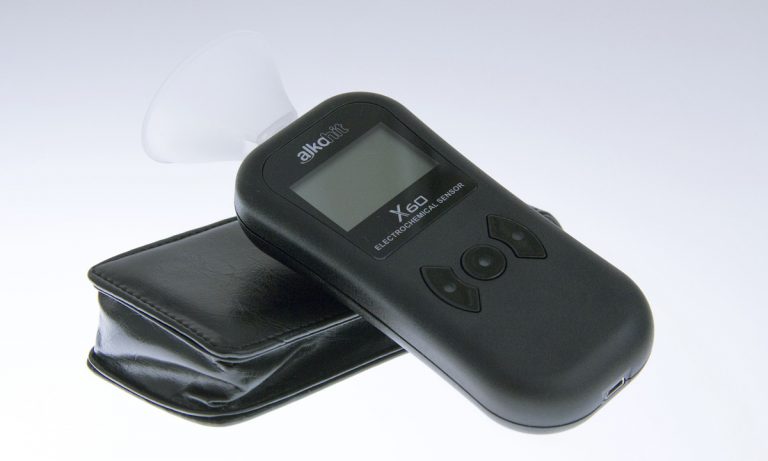
With marijuana legalization taking hold in Canada and parts of the United States, it has become more important than ever for law enforcement to have a proper tool to gauge impairment. Because cannabis metabolizes in the human body in a way that is much different from alcohol, there has not been a roadside testing method that can effectively determine whether a motorist is actually driving high or just someone who has smoked weed at some point over the past month. But one California tech firm claims to have the solution. Oakland-based Hound Labs says it has finally perfected a roadside Breathalyzer test that makes it as easy to test for marijuana as it is for alcohol.
Up to this point, police have been forced to rely on the same field sobriety tests designed to spot alcohol impairment to try and catch stoned drivers. But these methods — walking a straight line, etc — are flawed and have been known to get innocent people jammed up on suspicion of drugged driving. However, the device created by Hound Labs will supposedly seal the scientific divide. The company’s breathalyzer, which tests for both alcohol and marijuana, can detect pot use within a couple of hours, according to NPR.
“When you find THC in breath, you can be pretty darn sure that somebody smoked pot in the last couple of hours,” Hound Labs CEO Mike Lynn told the news source. “And we don’t want to have people driving during that time period or, frankly, at a work site in a construction zone.”
If the test actually works, it would be a game changer. Canada’s law enforcement will be forced to use a 12-step drug recognition expert (DRE) evaluation when the country launches it recreational marijuana market later this year. As Forbes pointed out in a recent report, this method, which involves testing a person’s muscle tone and eyes, will likely put responsible cannabis users in a position of having to fight stoned driving charges.
“While some specific components of the DRE evaluation may have some correlation with recent cannabis use, many of these indicators may also be triggered by subjects who have not used cannabis at all,” said Paul Armentano, deputy director at NORML. “Moreover, other components of the test, such as the rigid muscle tone or pupil size, have no validation for cannabis. Ideally, both of these examinations should be amended and updated to better utilize measures that are validated for discerning subjects who may be under the influence of cannabis versus those who are not.”
So far, more than half the U.S. has legalized marijuana for medicinal or recreational use. Still, police are out there rubbing two sticks together trying to figure out who is stoned behind the wheel. This is making it difficult to prosecute high driving cases in legal marijuana states.
So, an effective marijuana breathalyzer is certainly needed. But whether Hound Labs has actually achieved this remains to be seen. While the company’s roadside device is said to have the power to detect marijuana use within a couple of hours, it cannot tell how much THC was consumed. This means a person could take a hit off a joint or smoke it in its entirety – the results would turn out the same. This factor alone could be enough of a discrepancy for accused stoned drivers to challenge the results in court.
The company says law enforcement agencies will start testing the breathalyzer later this fall.
When I was 24, I drank a homemade cannabis product dubbed “weed milk” — a sort of lumpy, dairy based liquid you were best served to take in room where you couldn’t actually see the consistency — and attended an avante-garde jazz concert. Alone or combined, neither of these activities were good ideas. I spent most of the evening high to the point of fear, hoping my friend wouldn’t stray too far so if I needed use the restroom they could hold my hand and walk me there.
I wish I was exaggerating, I wish that when I think back to an evening 14 years prior, my forehead wouldn’t break out in sweat. But it does. And I am not alone in an experience like this. For those who’ve consumed edibles in their lifetime, there has been that moment (I can think of three, maybe four off the top of my head) when you have incorrectly dosed yourself and you are trapped in a near psychedelic middle ground between real and altered states, curled into a necessary fetal position, willing your body to metabolize faster. Edibles, as many of us have experienced, can be dangerous — that is, if grasping for a hold on reality is a danger to you.
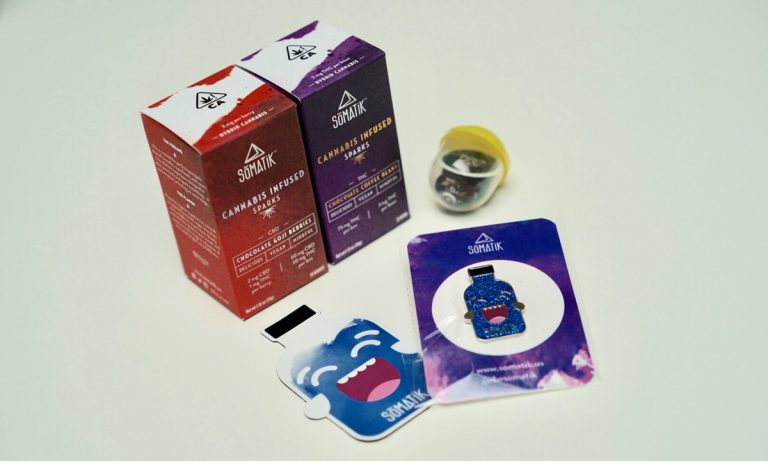
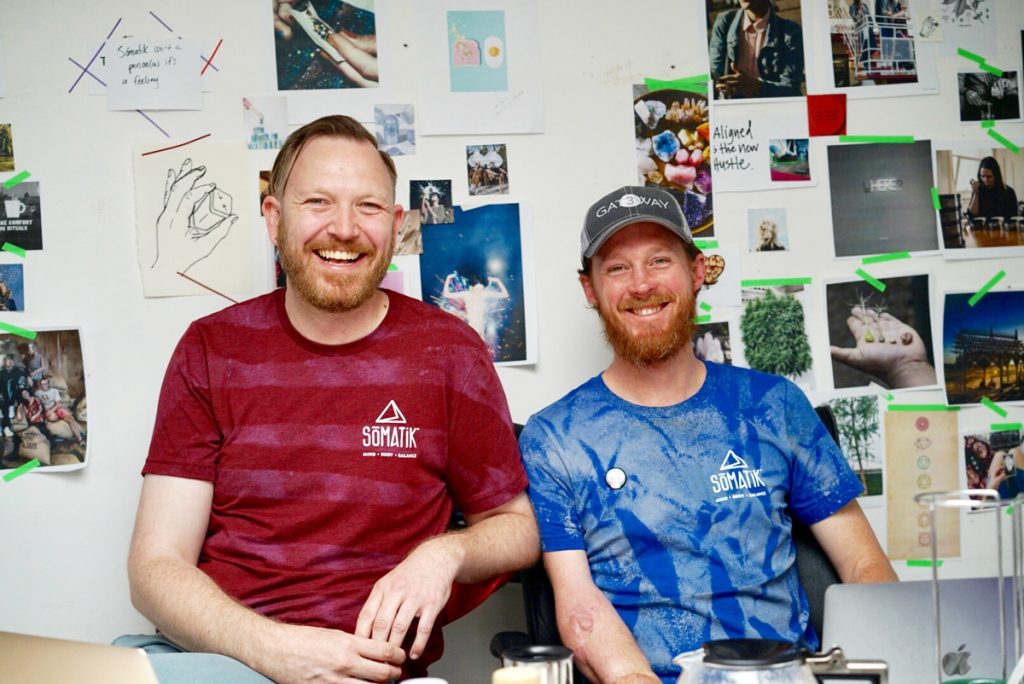
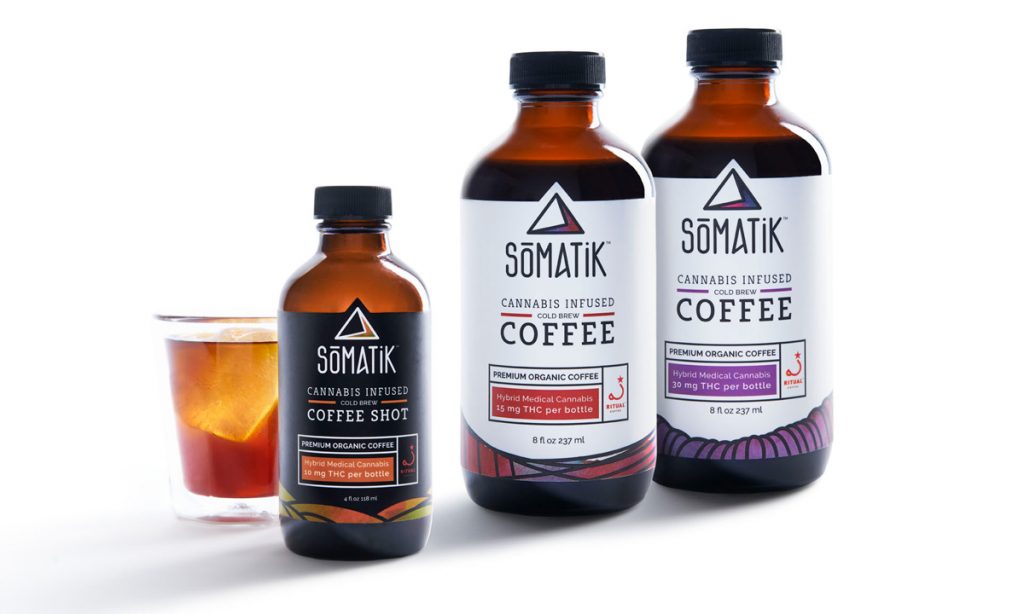
The recent spate of state legalization of weed has offered new and improved edible experiences. With legalization — and the lead up to it — comes regulation, and with regulation and packaging instructions, comes a better chance for consumers to properly consume the product. Even better, edibles aren’t just brownies your friend experimented with after a few glasses of wine; edibles are produced in test kitchens by people who care about both the flavor and the experience they’re providing. People like Somatik founder Christopher Schroeder and his partner (in business and life) Clayton Coker. Their products — cannabis-infused chocolate covered Ritual Coffee beans and goji berries (“Sparks”) and cannabis-infused iced coffee — aren’t just vessels for super-high experiences; they taste good, and, taken properly, they make you feel good, focused, productive even. And this is no accident.
Photos courtesy of Somatik
Before taking the leap and opening Somatik, Schroeder had ruptured two discs in his back. He’d buoyed his physical therapy with cannabis and the resulting experience turned on the lightbulb. “I can see why this works now,” he said of the experience, “and now I want to create a product that provides a more comfortable way to try it.” Smoking — cannabis or otherwise — connotes health risks, so edibles are an easier sell for those looking to give marijuana a try. Schroeder wanted to create a product that played up the “really good qualities of things people already have relationships with.” Things like coffee in the morning, or an iced beverage when it’s hot outside —routines that he saw as entry points for people to insert low-dose, high quality marijuana products into.
Eileen Rinaldi, the founder of San Francisco coffee roaster Ritual Coffee, had done something similar with her company and Schroeder was drawn to it. “It was a natural parallel,” he says, “industries that had taken a product and created a connoisseur version of it.” For Somatik, Schroeder wanted to normalize the idea of ingesting cannabis, like Rinaldi had normalized drinking high-end coffee. After talking, he thought maybe they could do something together, maybe they could try and bring his want of a high-quality, good-tasting, low-dose edible to the market. So they did.
Schroeder likes that the combination of coffee and THC is synergetic, the two working together on the brain’s receptors to get a “more euphoric feeling.”
Photos courtesy of Somatik
The purpose of Somatik’s products aren’t to knock you on your ass (though the potential is there), it’s for folks to be able to micro-dose, to control their high and with it feel a boost in their mood. It’s illegal for cannabis products to have additive supplements, so the combination of coffee and weed is the only way to add an energy factor to the marijuana experience. For Schroeder, though, it goes beyond this: “I’d love to see Somatik at people’s desk at work. They take a sip here, they take a sip there. It keeps you focused but without the physical stress.”
I’ve tried Somatik’s beans a few times and if you follow the helpful dosing guide on the side of the box, it works great. I felt focused and actually did some writing that wasn’t just descriptions of colors and doodles. My experience with the coffee — a probably too large amount prior to a terrifying film in a crowded theater — was more intense, the affects longer lasting and more debilitating. I’ll chalk that up to my choice of activity and probably not being overly careful about how much I consumed.
Talking to Schroeder and Clayton about their business is refreshing. It’s two people whose main strategy is “good quality things that taste good and make you feel good.” Two people who want to carve out a sustainable, consumer-friendly niche in a rapidly expanding market. They won’t stop with coffee and chocolate covered edibles; a wide variety of other beverages and products are already in the works. But they will stick to the plan: make tasty things that make you feel good. And by doing so continue to pull the stereotype of edibles away from wide-eyed nights full of fear and avante-garde jazz. And for that, I think I can say thank you, for myself and for the rest of us.
In a vast spectrum of reporting that ranged in quotes from the National Organization for the Reform of Marijuana Laws (NORML) to the objections from Smart Approaches to Marijuana (SAM), U.S. News released an article titled “Recreational Marijuana: A Business Boon for States?” on the pros and cons of legalization.
The main focuses were the economies in both Colorado, which legalized cannabis in 2012 and Massachusetts, legal since 2016. Big takeaways were that Colorado schools were benefitting from the tax revenues, and, social reform, such as keeping nonviolent “criminals” out of jail for cannabis related offenses, were crucial facets of the legalization movement.
The U.S. News is another mainstream news source in a parade of many to come out with extensive reporting on cannabis, and with good reason. Nine states and Washington D.C. have legalized recreational cannabis, while 30 states and D.C. have medical marijuana laws. Public opinion is overwhelmingly in favor of cannabis related legislature and politicians on both sides of the isle have supportive opinions. Weed can no longer be ignored or poo pooed.
Scientific studies are coming in from around the world, making all the funding the U.S. government put toward negative research look foolish. It’s still nearly impossible to get FDA approval to research cannabis and its effects on our endocannabinoid systems, different diseases, inflammations and more. However, if the study aims to show the negative aspects of impairment, then it is much more likely to be funded and allowed into the annals.
It’s high time that researchers were given the chance to catch up to reporters, who have plenty of facts to work with, but more anecdotal evidence as to maladies than concrete science. Like the Biblical doubting Thomas, some of the hive needs to see in order to believe, and it’s not unreasonable. If the cannabis community were able to back of some of their most ambitious medical claims, they’d not only be adding the most important components to pharmacology to have been discovered in decades, if not ever, they would have definitely made their point.
For now, public education is still expanding, and a lot of the coverage out there is positive. There will still be groups like SAM that want to control the cannabis plant and when and how it’s allowed as long as the remains of pot prohibition stand, but thankfully there will also be groups like NORML as well as the general masses, who quite clearly want their cannabis, the tax revenue it generates and, above all, the justice it means for those who are or would be serving time or losing privileges over an innocuous weed.
Some of us spend our entire lives trying to reach peak #HairGoals by taking supplements, using a silk pillowcase, and eating foods rich in omega-3s — anything to urge our follicles to ‘get in the game’ and give us a shiny, thick head of hair.
But at 7-months-old, baby Chanco has already achieved this. And she’s got an Instagram account to prove it. As you can see by her photos, she was born with a full mane last December, and it’s only gotten more next-level since then.
While baby Chanco’s hair looks pretty solid, there’s a chance it won’t always be this voluminous (womp, womp). According to Yahoo! Lifestyle:
Because of hormones, some babies are born with plenty of hair, only to lose it in the following weeks. Baby Chanco’s hair may not be lost, but its texture and color could change as she grows.
Of course the texture will change as she gets older! What young girl doesn’t immediately kill her hair’s chance of survival with a can of RAVE or AquaNet as soon as she enters Junior High? Until then, baby Chanco, take care of those locks, girl!
It seems like ever since Robert Downey Jr. accepted the role of Iron Man back in 2008, we’ve wondered when exactly he’ll hang up the suit. Downey has appeared as Tony Stark in eight different Marvel films, plus other various cameos. But after 2019’s Infinity War follow-up, the Marvel Cinematic Universe will approach a crossroads with Downey and the countless other actors who make up the Avengers. What happens when Downey no longer wants to suit up in Iron Man armor and Chris Evans decides to hang up his Captain America shield?
Luckily, Marvel hasn’t had to address such concerns yet. But the possibility remains present on the mind of Kevin Fiege, who serves as Marvel’s studio head and de facto MCU architect. He addressed such concerns in The Costco Connection of all places and says the studio has a plan in place should an actor walk away before their character’s story has completed its arc.
That’s what we can look to in the comics. And that’s why these characters are so relevant. I talk about 10 years of movies, but it’s 50-plus years of these characters in the comics
And they’re just as relevant and popular. And that’s because they do get updated. They do change with the times. I have no doubt that all of our actors, who are in peak physical shape, have got another 50 years in them to be heroes.
Fiege added that he hasn’t had to contemplate such action because the focus remains finishing what they started with Infinity War. But his message appears clear that while audiences may have grown accustomed to watching Downey as Iron Man or Scarlett Johansson as Black Widow, these characters will persist beyond whatever actor plays them. We’ve already seen this play out with Bruce Banner/the Hulk—Eric Bana, Edward Norton, and Mark Ruffalo have all played the role within the past decade or so.
Though Marvel has successfully expanded its movie universe, adding in more diverse characters and allowing directors more creative freedom, the idea of 50 more years of these movies seems rather daunting. However, if Downey is still playing Tony Stark circa 2060, you best believe I’ll show up for a screening.
As long as there is a debate about cannabis, which is admittedly still a controversial subject — especially in states where legislation hasn’t been made regarding marijuana — there will be three continually asked questions: What about stoned driving? How do we protect our children? And, isn’t pot a gateway drug?
The latter question, however, has all but been squashed in public debate, especially with studies and numbers showing that cannabis is actually an exit solution for the opiate based pharmaceuticals and street drugs that are ravishing our country. Many veterans and those in chronic pain have weaned themselves off of not just opiates, but muscle relaxers, benzos and other strong, addictive prescriptions.
One Democratic Congressman didn’t get the memo, though. During a caller Q and A on CSPAN, Rep. Elijah Cummings made the painful aside, “We know that marijuana is known to be a gateway drug.” Even though the comment came out during his focus on racial disparities in cannabis arrest rates, it still stood out as a tell.
Over previous years, Cummings had voted several times against protecting states rights when it came to marijuana, but he changed his tune in 2014, including the cast of a full turnaround vote that the federal government should not be able to meddle in state law.
While the remark could have been a gaff on Cummings’ part, it could also show that he, and many others who are new to the positive side of the THC table, still holds some lingering prejudice against the plant. Those prejudices could potentially bleed into policies he votes on in the future, but let’s not jump the gun.
Because of his recent track record, it’s likely a safe bet to give Cummings the benefit of the doubt. Sometimes a safety phrase comes out when we aren’t even thinking it. Perhaps Cummings was imagining a much earlier career debate for a moment or maybe he does still believe that cannabis leads to harder, more addictive drugs, but his recent voting record yet stands out.
As long as Cummings continues to vote in favor of cannabis based policies, we can follow the old adage, “Actions speak louder than words.” Still, the fact that one simple aside that goes against what we’ve learned and have known about cannabis caused such a stir is ultimately positive. People are paying attention and many are changing hardset minds as more and more proofs spill out of the pudding.
Even though cannabis has never caused or has been related to any deaths, the plant is still incredibly misunderstood by the US government who’s reluctant to admit that their system of categorizing drugs is wrong and outdated. In the Drugs of Abuse Resource Guide, the DEA’s own guide of drugs, marijuana is categorized as a Schedule I type of drug suggesting that it’s more dangerous than cocaine, meth, fentanyl and tons of other deadly drugs. The US government is still blind and deaf to the evolving opinions of the world regarding cannabis and to its progress.
Check out this wild list of drugs that the DEA considers less dangerous than marijuana:
Commonly referred to as Benzos and categorized as Schedule IV, these drugs are psychoactive and are found in many anti-anxiety medicines like Xanax and Valium. They’re kind of a mystery, in terms of how they work, but scientists agree that they affect neurotransmitters like GABA. Benzos suppress the activity of these neurotransmitters and help people cope with anxiety and the overactivity of these nerves. These drugs have a lot of potential for abuse and are responsible for the deaths of over 8,000 americans.
Cocaine
https://giphy.com/gifs/powder-SnwifA7bOFDhe
Categorized as a Schedule II type of drug, cocaine is a stimulant and a highly addictive drug that has some therapeutical uses, but is mostly considered illegal due to its dangerous side effects that include violent behavior, paranoia and tremors. In 2011, more than 4,000 people died from cocaine overdose. Overdoses from this drug can also lead to cardiac and respiratory arrests, and strokes.
Categorized a a Schedule II drug, Fentanyl is one of the strongest opiates available. This drug is normally used for treating pain after surgeries because it produces a strong and immediate effect (about 50 times stronger than morphine) that doesn’t last very long, which is also why it’s so dangerous and addictive. Fentanyl is responsible for over 10,000 deaths a year.
Methamphetamine
https://giphy.com/gifs/meth-OyZxU5vdsMJXy
Part of the Schedule II category, this drug is a stimulant that can be snorted, smoked, swallowed or injected. It’s highly addictive because it increases the production of dopamine and can lead to death, strokes, heart attacks and organ failure.
Morphine
https://giphy.com/gifs/drugs-iv-FVBAF9tFhfUZy
One of the oldest pharmaceuticals in history, morphine was widely misused and caused the deaths of thousands of patients. Nowadays, doctors prescribe it with much more care, yet it’s still considered pretty dangerous.
Originally developed as a less addictive and dangerous version of morphine and heroin, oxycodone is just as powerful but easier to acquire, which is why is referred to as “Hillbilly Heroin.” Statistics claim it kills around 5,000 americans a year.