Showtime issued a statement on Monday denying that comedian Sacha Baron Cohen pretended to be a disabled veteran to dupe Sarah Palin, despite her claims. Palin revealed last week she was one of Cohen’s victims, and claimed he impersonated a disabled veteran to dupe her — causing some outrage over the stunt.
“There has been widespread misinformation over the past week about the character of Billy Wayne Ruddick Jr., Ph.D., performed by Sacha Baron Cohen on the Showtime comedy series ‘Who Is America?’” the statement read. “Baron Cohen did not present himself as a disabled veteran, and viewers nationwide who watched the premiere on Sunday can now attest to that.”
“In addition, Baron Cohen never presented himself as a veteran of the U.S. military to former Alaska Governor Sarah Palin during the booking process or during the filming of her interview, and contrary to her claims he did not appear in a wheelchair. In both the interview with Governor Palin and the interview with Senator Sanders, he did not wear military apparel of any kind.”
Mariah Carey Helps Gay Couple Get Engaged Onstage During Concert
Mariah Carey had a special surprise in store during her Las Vegas concert on Saturday, halting the show, “The Butterfly Returns”, mid-performance and inviting one of her backup dancers onstage.
The dancer knew his longtime lover was watching the performance, but what he didn’t know was that his beau was about to ask for his hand in marriage — in front of the audience at the Colosseum at Caesars Palace.
Carey shared a brief video of the magical moment on Twitter, writing, “he said yes!!!”
Carey’s tweet quickly went viral as the “Hero” singer was flooded with praise from the LGBTQ community. As one Twitter user wrote, “Visibility matters.”
A little girl who had the cops called on her for trying to raise money so she and her family could go to Disneyland, not only has her trip covered, she has a growing college fund, thanks to a handful of cannabis companies. Part of thanks to weed companies raise cash for girl harassed by Permit Patty.
Eight-year-old Jordan Rodgers was selling bottled water outside of her home in San Francisco last month when she was accosted by a woman who called the cops on the young entrepreneur for illegally selling the product without a permit.
The girl’s mom, Erin Austin, captured the incident on her phone. It became a big deal because Rodgers is black and the woman, dubbed “Permit Patty”, is white. Racial prejudice at its finest.
So my little cousin was selling water and didn't have a permit so this lady decided to call the cops on an 8 year old. #PermitPattypic.twitter.com/SiL61pnAgl
Green Rush Daily reports that over the weekend, Bay Area cannabis companies joined their community in Oakland to rally support for Rodgers.
At the Pergola at Lake Merritt, the fundraiser featured Rodgers herself. As she had been doing before Permit Patty called the cops on her, Jordan was selling bottled waters and food donated to her by a handful of cannabis companies. Jordan also got to keep all of the proceeds for her college fund.
Shortly after the video surfaced, a musician let it be known that he had purchased four tickets to Disneyland for Rodgers and her family:
No matter how many new apps are developed, dating will always be a complicated and stressful topic for some. Meeting someone new and stepping out of your comfort zone can be fun, but most of the time these first encounters result in awkward meetings that don’t evolve into anything more. You grandparents gave your parents advice, they gave you advice, everyone has talked about it. But here are 5 first date rules you should ignore.
While dating won’t always be stress-free, it’s really important to remove some of the pressure from the situation and to try and have fun. You can’t control whether you’ll like your date or if they’ll like you back but you can definitely make the most out of every single encounter. And that starts by forgetting about some dating rules that are outdated and don’t do much besides make the process even harder.
We’ve all heard about the third date rule and it’s not a good predictor for relationships. Society should never pressure you into doing or not doing anything, and that includes kissing or having sex with someone. There’s no perfect moment to do any of these things, and each date and person you go out with is different. Avoid stressing over these things. If you want to kiss someone, kiss them. If you don’t want to, then don’t. It’s as simple as that.
This belief is outdated and hetero-normative and it’s important to remove that pressure from a first date as soon as you can. It’s dumb that someone has to pay for the date because of their gender.
Go into the first date without any expectations, believing in the fact that you guys are equals. Afterwards, if you have a second date, enjoy the feeling of paying for them or having them pay for you. It gives this gesture much more meaning when it happens organically than when someone pays for you because it’s expected of them.
There’s this weird belief that makes people question themselves and wonder if it’s okay for them to show someone that they like them. It’s good to be honest about your feelings; you’re grown ups and this isn’t high school. If you text someone and they don’t text you back then it’s their loss and that relationship wasn’t going to go anywhere in the first place, regardless of how long you waited to text.
The first date must be perfect in order for a second date to happen
It’s really hard to have a perfect first date because most of the time people are nervous and it can be awkward to hang out with someone you don’t know that well. A great second date is still a possibility after an awkward first, mainly because you’ve already hung out with this person and find yourself a little more relaxed. “If you have a good feeling, give them the benefit of the date and try a ‘redo’,” says Jen Dewall, career and life coach.
Try hard to impress them
https://giphy.com/gifs/iUkHzjqLAeCD6
Yeah, no. It may sound cliche, but you should just be yourself and relax. Don’t waste time in trying to impress someone with your achievements and strengths of character. A date isn’t a job interview.
Sounds like common sense right? That is why you have 5 first date rules you should ignore.
Although there has been a lot of action in 2018 in the realm of cannabis reform — Canada legalized a nationwide recreational pot market, while a few more states legalized in some fashion or another — there is still nothing happening in the United States with respect to this issue at the federal level.
Some of the Trump administration’s most dedicated critics continue to blame U.S. Attorney General Jeff Sessions for the nation’s stagnant drug policy, while others boast that Congress is finally ready to make a change. In fact, some reports point to legislative happenings on Capitol Hill as to the reason the cannabis industry has a “love-hate relationship” for the attorney general. But the truth of the matter is Sessions is no longer a problem for legal weed. Yet Congress still is.
It’s true that the first year and half with Sessions leading the Justice Department was full of uncertainty for the cannabis community. Sessions talked a big game about enforcing federal law every time the media asked about his plans for legal marijuana. He even suggested that all this legalization business was responsible for the opioid epidemic.
At the beginning of this year, it appeared there might finally be a fight. Sessions rescinded the non-biding Cole Memo, which had allowed states to experiment with marijuana legalization without the threat of much federal interference. It was believed that the move was a warning of impending enforcement action. It was at this point that it could be said that the cannabis industry “hated” Sessions. But nothing happened.
A few months later, President Trump, without conferring with the attorney general, gave his word to Senator Cory Gardner that the Justice Department was not going to come swopping in to shut down the legal cannabis trade. Soon after, the president also said he would “probably” sign a bill aimed at eliminating the federal government from the marijuana equation.
Since then, Sessions has not said a peep about marijuana enforcement. There is no crackdown coming and there never was. The Justice Department is too busy dealing with Trump’s immigration directive, not to mention Russia and a slew of other issues, to give two hurling turds about the states that have legalized the leaf for recreational use. But that doesn’t mean that Sessions is doing anything to help the cause, either. The Department of Justice is still sandbagging marijuana research by not allowing the DEA to expand the federal government’s cannabis suppliers. And for this reason, the cannabis industry continues to hate Jeff Sessions.
But apparently, the cannabis industry also “loves” the attorney general because his controversial approach to legal weed has spawned an uprising in Congress that could, one day soon, lead to nationwide legalization. It was the Los Angeles Times Editorial Board that said “It seems the attorney general’s misguided attempts to revive the unpopular and unjust federal war on marijuana may be having the exact opposite effect — prompting a new bipartisan effort in Congress to allow states to legalize cannabis.”
But sadly, there really isn’t any movement in Congress over marijuana. A few bills have been filed, that’s about it. So far, none of them have even received consideration for a hearing. I suspect that none will. As I wrote in Forbes, “it may still be too early to get excited about the possibility of marijuana legalization going nationwide. There is still plenty of opposition in Congress that can and likely will prevent this much-needed reform from happening anytime soon.” None of this opposition includes Jeff Sessions.
So, let’s forget about this so-called love-hate relationship with the attorney general. In fact, lets forget about him altogether. He’s no longer an issue for legal weed. But we do need to summon a “hate-hate” relationship with Congress. If nothing else, the citizens of this country need to start recognizing that these career politicians are the real roadblocks for cannabis reform. They have the power to expand research and provide legal access. But, aside from a really small group of progressive’s, most have no interest in furthering the cause.
On October 17, Canadians will officially be able to spark up across the country, not only without fear of getting arrested, but without the stigma once associated with marijuana. This comes with a slew of other benefits, not the least of which is the ability to research the plant for reaffirming and finding further positive usages.
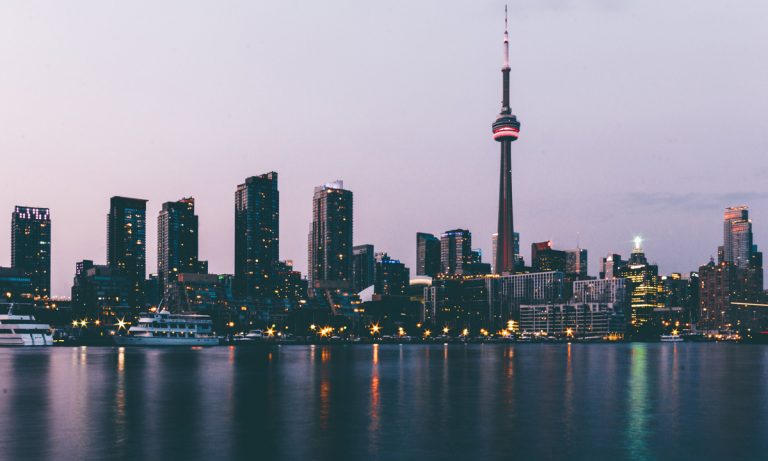
At this time, Canadians are only officially allowed medical marijuana, but what’s the reality? It turns out that in mega hubs like Toronto and Vancouver B.C. there are pot shops lined up that will sell an adult cannabis, no questions asked.
Access to cannabis is beyond cool for many, many people. It can be a lifesaver or even a simple life enhancer, that alleviates enough aches, pains and complaints to live a happy, healthy existence. There are a handful of patients, however, who need more than a couple joints a day to keep symptoms at bay.
From severe seizures to Alzheimer’s to cancer, more research is desperately needed as to how cannabis works on these diseases and disorders, how much of it is needed, in what form it works best and if it is truly the first line of defense that many proponents believe it could and should be.
South China Morning Post reported that the University of British Columbia announced the first cannabis professorship of its kind at its school. They hope to learn more about how cannabis can be used to combat the opioid crisis and other addiction problems.
It’s been predicted that as Canada is only the second country in the world to legalize cannabis and is certainly now the largest legal country, that they will become the world leaders in cannabis research and likely development as well. Research grants are already flowing in.
Alongside opiate reduction and cessation studies, research into soldiers returning home with PTSD is another area of focus for scientists looking to make a difference and raise the medical bar. As with people experiencing pain, those with PTSD report a lessening of symptoms when they use cannabis, to the point that they don’t notice the stress disorder at all.
There are many miracles like this to be found, researched and treated. Canada is set to lead the way and it will be exciting to see and hear what comes out of their libralized cannabis laws. One thing’s for certain, their efforts will be a blessing to all.
Here is your marijuana legislative round for the week of July 9. It was an eventful for marijuana reform, with California releasing draft permanent regulations for its new recreational marijuana market, North Dakota advocates turning in more than enough signatures to place legalization on the November ballot, and Maine and New York making significant changes to their medical marijuana regulations. Learn more in this week’s Roundup!
California
On Friday, the three state agencies tasked with regulating California’s new recreational cannabis market released a draft set of permanent regulations for public comment. The proposed rules would keep much of the present emergency regulatory framework intact while making some significant changes to address concerns raised by cannabis businesses and other stakeholders.
Under the proposal, cannabis products could be delivered into any jurisdiction in California, expanding the delivery area of businesses and providing access for those who live in jurisdictions that have not allowed retailers to operate within their boundaries. The regulations also clarify the forms in which distributors can package and sell cannabis, for example, whether they would be allowed to roll and sell marijuana in the form of joints, which they would be under the new rules. Other changes involve child resistant packaging, advertising, and similar issues.
Maine
On Monday, the Maine Legislature voted to override Governor Paul LePage’s veto of two bills to significantly reform the state’s medical marijuana system, paving the way for them to become law. The reform legislation will eliminate the list of qualifying conditions and allow doctors to write marijuana prescriptions for any condition they deem suitable, lift the cap on the number of dispensary licenses, allow dispensaries to operate as for-profit businesses rather than requiring them to be nonprofit, allow them to deduct expenses like other types of businesses, and make many other changes to . LePage vetoed the bill the week before, as he has with every other piece of marijuana legislation during his tenure, most notably the implementation legislation for the recreational cannabis law passed by voters in 2016.
North Dakota
On Monday, supporter of recreational cannabis in 18,700 valid signatures to place legalization on the November ballot this year, well in excess of the 13,452 signatures required by law. If enacted, the measure would legalize the possession and use of marijuana for adults 21 and older, while also creating a new class of non-felony crimes for those under the age of 21. Marijuana paraphernalia would be legalized and those with prior marijuana convictions for offenses made legal by the referendum would have those records expunged.
New York
On Thursday, the New York State Department of Health approved an emergency rule allowing marijuana to be prescribed in place of opioids. The new rule is the first of its kind in the nation and is intended to help combat the opioid abuse epidemic.
And that is your marijuana legislative round for the week.
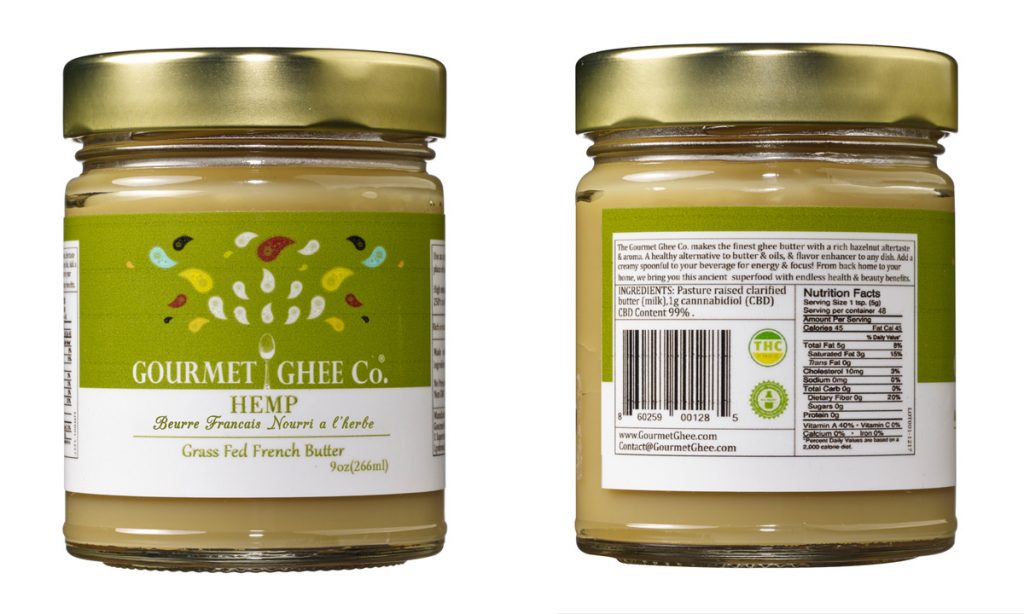
CBD is infused in a lot of different products, but unlike THC or whole plant cannabis, it seems to rarely be featured in butter. The Gourmet Ghee Company not only infuses clarified and strained French butter with hemp, it ages the product to be of the most benefit to the body.
Indian food is most well known for its spices, but another component that makes it so delicious is ghee, which is used across the subcontinent in a variety of dishes. Utilizing grass fed butter from France, the Gourmet Ghee crew has brought the ghee game to a whole new level, keeping in tradition when it comes to cooking and baking, but also “highlighting the benefits of ghee to produce collagen, stronger hair, nails, & bones,” according to a press release.
Having personally tried the gourmet hemp ghee in cooking, I can attest to its delicious, almost nutty flavor, which enhances stir fry, eggs, toast or pretty much anything to be sauteed. It’s a treat that was even featured on “Dr. Oz” as being packed with ancient superfoods that are not flavored, but infused and, importantly, aged so that the goodness inside is enhanced.
The Gourmet Ghee Company is the first of its kind to be owned and operated by an Indian woman; her name is Nazia Aibani and she had this to say, “As the only Woman/Indian owned ghee butter company on the market we know the right way ghee is to be made & most importantly aged to maximize benefits.”
Photos courtesy of The Gourmet Ghee Company
When ghee is clarified, it is strained of all milk fat, making it not only healthier for you, but also safe for the lactose intolerant. “All flavors were carefully chosen & target a specific health need and concern,” stated the company, “Everything from digestion, to fatigue, and even weight loss.”
The ten flavors available now are: Hemp, Saffron and Honey, California Medjool Gate, Silver leaf, 24k gold leaf, Black truffle and Roasted Garlic. I have also tried the Saffron and Honey ghee on a piece of toast with organic peanut butter and some sustainably sourced honey for that extra flavor and nutritional punch. Divine.
Curious about how clarified butter can be used in a cup of tea to maximize flavor and health bennies? Here’s a simple recipe for Hemp Ghee Tea:
A nice tea is recommended: chamomile or green tea are lovely with this flavor
Boil 1 cup of water with loose leaf tea or a tea bag
Add 1 tablespoon of hemp ghee butter when tea is hot in the cup
Add honey or agave syrup to taste
And for a spicy treat, try Hemp Chai Tea, aka a “Hot Shot”:
Boil 1/2 cup of milk
Use 2 teaspoons of loose leaf chai or a chai tea bag
Let chai boil on a low simmer for 5-6 minutes
Strain loose chai leaves
Add in one tablespoon of hemp ghee and enjoy
Creamer isn’t necessary in this already creamy chai, so just sit back, sip and immerse yourself in the gourmet ghee experience.
Road trips can be a grand adventure for of laughs, long discussions, favorite music and more. And if you can see some cool cannabis landmarks – well wow!
Traveling is a sheer vacation, taking time out to slow down and look around. And when it’s a looker of a route and with good company it is an excellent adventure. And if you are a marijuana fan, there is one trip which can add a a bit mystical magic. If you want to slip behind the wheel, here are the must-see cannabis landmarks along 1010. Enjoying California and Oregon’s famed highway should be on a cannabis aficionados bucket list.
Though it’s obvious you shouldn’t drive while high, on these roads it can’t be stressed enough. It’s a bit of a breathtaking drive with mountain edges, steep grades, sharp curves, and some jaw dropping views. There’s plenty of places to stop along the way to let everyone enjoy. It’s about four hours from Grant’s Pass Oregon to Arcata, California, and it’s four hours of some of the most beautiful natural scenery in America, so make sure to see it one day.
In Grant’s Pass you’ll start to see the unique coffee culture that is flourishing in the PNW despite Starbucks, so make sure to hit up a local like Caveman Donuts and Mexican Kitchen, super close to Diamond Cannabis for all of your weedballin needs. Grant’s Pass is a great place to stop and eat if you’re coming to this trip from the North, like Portland, and there’s even a coveted In-N-Out Burger. Grab some Animal Fries and head West on 199 to begin your descent through the hills and into the center of Northern California.
Photos by Danielle Guercio
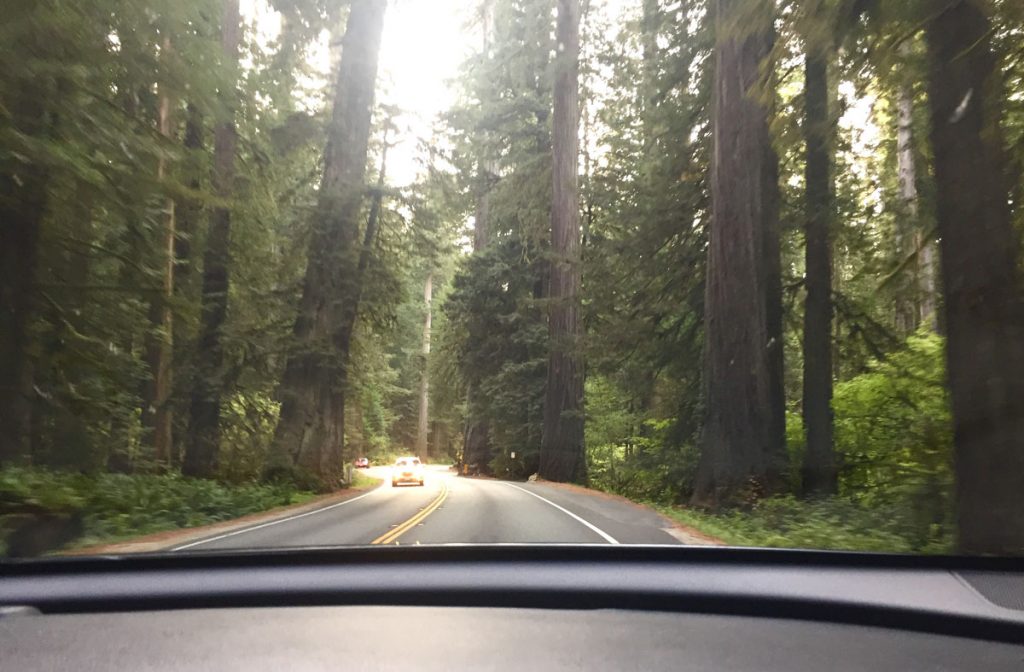
This is a mountainous path with ups and downs and tiny towns and recreational cannabis shops on the Oregon side, medical only on the California side. This state line area is where you start to see the first redwoods, which are as stunning in person as can be imagined. Ferns carpet the ground and suddenly you’ve gone back in time.
To a baked person staring out a car window, this is downright hallucinatory. Pull off on any number of turnouts, like Redwood Vista Point where you can spy a river, wander up into the forest, or just stretch your legs. Don’t forget a forest is a terrible place to light up, so keep a vape handy for part.
Photos by Danielle Guercio
Catch sight of real live elk before coming down into Crescent City, where the Pacific Ocean begins to greet you for the first time. Since it’s a bit treacherous, this is definitely a daytime drive, plus you’d miss all of the sights are forthcoming. Crescent City makes another decent pit stop for essential life functions, but diners and delis and even the occasional seafood shack greet you as you come through the winding forest and begin to hug the coast and get into Klamath, you’ll want to stop frequently to check out the different beaches and lagoons, and maybe the Paul Bunyan Statue.
Photos by Danielle Guercio
If you time this trip right, you can spend the entire hour of soul warming sunset along this strip of land in between the redwoods and the Humboldt lagoons, watching the fog roll in as the rocks turn black to let you know night approaches. Like any western facing sunset, it’s not to be missed, and the beach is a perfect place to have a smoke, provided you take your butt with your butt when you leave.
The last leg of this four-hour jaunt is occasionally coastal and occasionally forest-y, and as you’ve just hopefully watched an ocean sunset, it’s starting to get dark. Coming up into Arcata, you can find adorable hotels and, finally, some dispensaries are among the first ones in California. If you’ve got the munchies, head to Rita’s, which has burritos literally the size of your head are stuffed with delicious Mexican fillings, from Al Pastor to chorizo tofu.
Photos by Danielle Guercio
Road trips take on a different meaning with a bunch of cannabis friends in the car, but make sure to be safe and avoid smoking while the car is moving, as this could be a headache for a sober driver should you get pulled over. Vapes and concentrates are the way to go unless you’re outside of the car. Taking a four hour trip through what looks like a scene out of Jurassic Park is as amazing and awe inspiring as it sounds. If you feel like you need more time, start the trip early and take an hour or two break every time you see something you like, you won’t regret it!
Companies have spent the last decade getting us hooked on their work. Here are four features that make it really hard to put our phones down.
Tech developers encourage us to spend all of our time using their products, no matter the negative consequences for our health or the critiques that they might receive. It’s only recently that big companies like Apple and Google have come up with solutions and ways of helping us manage the time we spend on apps and on our devices.
In a statement announcing a Digital Wellbeing initiative, Google said that “Great technology should improve life, not distract it.” That’s really nice, but this problem goes further than having a feature that notifies you when you’ve been using the app for too long (even if it certainly helps).
Popular Science reports that the addictive design of these devices plays a big part, and that companies have spent the last decade getting us hooked on their work. Here are four features that make it really hard to put our phones down.
Pauses and loading time
https://giphy.com/gifs/jH3o8o553bdug
For optimal functionality, apps should have no loading time. Instead, every time you open an app like Twitter, there’s a few seconds of pause where the logo flutters and you wait for the tweets to come up. You may think you have a bad connection but this is done on purpose.
User Experience (UX) designers claim that this dramatic pause creates anticipation, much like the pause a slot machine takes when you pull the lever. While there’s not a lot of research done when it comes to phones and the effect they have on our brains, there’s a lot of information out there on gambling, which gives us a shot of dopamine whenever we win and receive a reward. The more that time passes and the more society absorbs smartphones, the more our brains will change to adapt themselves to these foreign addicting activities.
Infinite amount of content
https://giphy.com/gifs/mary-poppins-Bp5nePMm65mI8
Pull-to-refresh features are also addictive, asking for us to swipe down to get more content, always providing us a new tweet or a new photo. Infinite scroll is the same — it makes it hard to stop looking through content even if you’ve been looking at your Facebook feed for hours. According to a report from 2016, we spend around five hours a day looking at our phones. It’s safe to assume that this amount has increased in the past couple of years.
Variable rewards
https://giphy.com/gifs/s9R7FEH0zcdSE
This term, developed by psychologist B.F. Skinner, was made famous when he discovered that pigeons would press a lever more frequently when the food was presented irregularly instead of regularly. Since the food presented itself unexpectedly, their reward was much larger.
Variable rewards occur on all social media platforms in different forms. The unpredictability of how many likes you’ll receive or what type of content you’ll view creates a thrilling experience that’s hard to resist. It happens when people constantly check their Instagrams, waiting for new photos or likes. If nothing good is on or you get little feedback then there’s always next time.
Apps notify you when someone posts a photo or when a tweet gets a lot of traffic. It almost seems like the farther you try to keep yourself from an app, the more it demands your attention, reminding you that it’s waiting for you to be used.
You may get a notification from Instagram, for example, letting you know that someone put up a story for the first time in a while. This story will be highlighted in a very attractive pink. Once you watch it, autoplay kicks in, looping you in and practically forcing you to watch all of the remaining stories, no matter who they’re from. Netflix and YouTube have similar features, queuing up more related content once you’re done watching something.
Here’s an interesting fact: Oregon doesn’t actually know how much medical marijuana is currently growing and processing in the state. We’re talking about regulated, licensed marijuana, too, not whatever might be growing illegally.
Managers of Oregon’s marijuana program admitted their lack of oversight in an internal review released late week. The problem stems from soft reporting by producers and an absence of site inspectors, which has driven opportunistic growers toward the more lucrative black market.
How egregious was this lapse in supervision? The internal review–conducted by the state’s health authority, which manages the Oregon Medical Marijuana Program (OMMP)—details that for 20,000 medical marijuana grow sites in 2017, only 58 ever received an inspection.
“Potentially erroneous reporting coupled with low reporting compliance makes it difficult to accurately track how much product is in the medical system. This limits OMMP’s ability to successfully identify and address potential diversion,” the report said.
Reports of Oregon’s black-market problem surfaced a few months back, as state operators were caught selling across the Oregon border. This was coupled with complaints from law enforcement that they had trouble identifying which grows were legal and illegal. The Deschutes county sheriff and district attorney aired their grievances back in February, going so far as to ask the health authority for a list of medical marijuana grow sites. But the agency refused, stating that it was illegal for such a list to exist.
It’s a catch-22 of sorts: Oregon medical marijuana growers are protected by law to have a level of confidentiality, but law enforcement needs a way to identify operations that abide by the law. As the report laid bare, the state’s medical marijuana program lacks any dependable tools to validate grow sites. Instead they’re relying only on outdated and inconsistent county databases.
Oregon recently began requiring medical-marijuana growers of more than a dozen plants to enter a comprehensive seed-to-sale tracking system run by Oregon’s recreational-marijuana regulatory agency. That agency, the Oregon Liquor Control Commission, is adding around 20 staffers, including inspectors and data analysts, to handle the increased workload, liquor commission spokesman Mark Pettinger said.
The report specifically cited “inadequate funding and staffing resources to meet the demands of robust regulation,” as one of the significant roadblocks facing the industry. The internal review was ordered by health authority Director Patrick Allen.