Saturday, December 20, 2025
Home Blog Page 899

All-You-Can-Eat Restaurant Goes Bankrupt After People Ate Everything

All-you-can-eat restaurants are like doubled-edged swords. As a customer, you pay a price and leave in a food coma. As a restaurant owner, you mostly make good business, unless people take advantage and you end up in trouble.

This is exactly what happened to Jianmaner, a restaurant located in Chengdu, China, which now has a debt of $78,000. The owners of the place wanted to develop a large and loyal client base, so they decided to risk losing a bit of money in order to develop a long-term plan, offering monthly subscriptions of $19 for unlimited hot pot meals. It didn’t work, and the restaurant closed after two weeks of business.

Su Jie, one of the owners, said that managing the restaurant was stressful and time consuming, allowing him to only sleep for two or three hours a night. “The uncivilized behaviour of the diners was secondary — the main problem was our poor management,” he said.

While this strategy of losing a bit of money in order to develop a client base is nothing new — it’s how Netflix has taken over the world — it epically backfired in the culinary business. Customers took advantage of the promotion and began sharing their membership cards with family and friends, giving free food to everyone they could.

Mashable reports that the restaurant blew up in popularity in a matter of days, with customers lining up for food at 8 a.m. even though the restaurant opened at 11 a.m. Long lines of people surrounded the place amounting up to 500 guests on a regular day.

Within 10 days, over 1,700 people had signed up for the hot pot promotion. Sadly, it was just too much of a good deal to work in the real world.

Congress May Legalize Hemp-Derived CBD Soon

Cannabidiol is a non-psychoactive cannabinoid that can be derived from industrial hemp and the whole cannabis plant. Although cannabidiol is medically beneficial and non-psychoactive, courts sided with the Drug Enforcement Administration last month that CBD is considered a marijuana extract under federal law. Therefore, as a marijuana extract, CBD falls under the broad definition of cannabis in the Controlled Substances Act, which classified marijuana, and marijuana extracts like CBD, as a Schedule I federally illegal substance in the U.S.

Industrial hemp is a whole different story. Not only can CBD be derived from hemp, but hemp can make numerous products like rope, gasoline/fuel, clothing, and more. Hemp is also heralded as a fantastic rotational crop for farmers, as the plant rejuvenates soil and naturally deters weeds and insect problems.

Why is this important? It turns out that a bill has recently been circulating around Congress, and its intention is to legalize hemp and hemp-derived CBD. Read on to learn more about this bill, the likelihood that it’ll get passed, and the future of hemp-derived CBD.

Decoding The Agriculture Improvement Act of 2018 (Farm Bill)

The legislative bill that has been circulating around Congress includes a portion that would legalize hemp and hemp-derived CBD. Fortunately, this piece of legislation made substantial progress during the week of June 11th. Recently, the U.S. Senate Agriculture Committee agreed to endorse the Farm Bill, which is otherwise known as the ‘Agriculture Improvement Act of 2018’. On June 13th, the U.S. Senate Agriculture Committee voted 20 to 1, and although the proposed bill has several provisions, its intention is to legalize CBD that’s extracted from industrial hemp.

At this moment, growing industrial hemp is legal on a federal scale only for research purposes or if it’s under a pilot program in select states that have legalized it. According to Jonathan Miller, the general counsel for the U.S. Hemp Roundtable (a well-known industry group), the proposed Farm Bill includes the ‘Hemp Farming Act’. The Hemp Farming Act is sponsored by Mitch McConnell, the Senate Majority Leader of Kentucky, and 25 other senators endorsed this act. Although many political figures were all for the Farm Bill, there were opposing forces too.

Specifically, Iowa Senator Chuck Grassley had the only nonconforming vote from the Senate committee. Senator Grassley went further by filing an amendment, which would have stated that extracts, derivatives, and cannabinoids would remain Schedule I controlled substances just like heroin. However, a public outburst occurred after the filing, which led to the amendment never getting voted on.

Next Steps To Pass The 2018 Farm Bill

According to Senate leader Mitch McConnell, the Farm Bill is set to be voted on by the end of June. From there, the Farm Bill must travel to the U.S. House for further consideration. The following statement was issued by Jonathan Miller regarding this bill and the likelihood of it getting passed: “The House may not pass it, and it might not include hemp in their bill. But, if it passes with the current language, then, hemp-derived CBD would be legal from a federal perspective.”

However, this will only be the case if President Trump signs the bill into official law. In the past, President Trump hasn’t publicly expressed his views on hemp. Last week though, the President told various reporters that he supports ending the federal ban on marijuana. If President Trump stays true to his word, the move would be historic because it would result in removing the substance from its current Schedule I classification. Although the President has expressed his views to end the federal ban on marijuana, his attorney general, Jeff Sessions has quite the opposite view.

Regardless, if the Farm Bill passes through the necessary stages it needs to and if it’s signed into law before its expiration date in September, hemp could become an agricultural commodity. However, there will likely be limitations and regulations as to who can grow it and where they can legally do so.

Future Of Legal Hemp & Hemp-Derived CBD

If the 2018 Farm Bill is signed into law, hemp would likely become a huge cash crop for farmers including tobacco farmers. Not only is hemp durable, it’s also extremely versatile since it can make numerous products. In the future, hemp may replace plastic, which would be much more renewable and biodegradable than plastic on a worldwide scale.

Nowadays, more tobacco farmers are moving towards growing hemp since it’s medically beneficial, it helps people rather than hurts them, and it has more positives than negatives unlike tobacco. Overall, if the 2018 Farm Bill is approved, we’ll likely see many changes occur, which could positively impact individuals, society, and the economy, especially since CBD is expected to become an annual $1 billion market by 2020.

New York City Inches Closer To Full Marijuana Legalization

New York became the 23rd state to legalize medical marijuana in 2014, though the law’s rules are still considered some of the most stringent in the nation. Still, it was a step forward for cannabis in The Big Apple and now full legalization is in sight.

Starting September 1, New Yorkers will not have to fear incarceration for smoking, recreationally or medicinally, on the streets. Instead, they’ll be given a ticket that will likely cost about $100 in court. This is a massive move forward, especially considering the disparities in arrest rates between white and black and brown persons when it comes to cannabis.

So besides simply making it a nuisance to get caught with your pot out, New York State is considering the pros and cons of going full legal in a budget set forth by Gov. Cuomo. Not to mention that Cynthia Nixon is running against Cuomo in the upcoming primary and is a vocal supporter of full legalization.

Now there’s a few things to remember with the newfound leniency in New York. For one thing, though we know it’s coming, being able to smoke publically without fear of arrest doesn’t actually commence until September and even then it has its provisions. If the person stopped for public consumption has a warrant or is on probation, is caught while driving or is stopped without identification, they will likely take a ride to lockup.

It will be every breath of fresh air available the day that the U.S. legalizes weed across the board and is normalized to the point of having no more stigma. It would be like popping a large pimple in the prison system, and as gross an image that may be, people will be flooding out of jails and prisons if the law is made retroactive and the flow of nonviolent “offenders” would practically cease.

With all the hustle and bustle, not only in New York City, but across the United States, a little weed, ingested responsibly, is a big cure. Not only to what ails you, but to the simple doldrums, a racing mind, a bad mood or whatever little thing is nagging at a person. Plus, it is an enhancement drug, and if you’re having a terrific day it gets all the better.

As the primary unfolds and minds change about a complex plant that’s been prohibited far too long, New York is the state catching up to the forward thinking fashion this time. It’s better late to the table than never, but one can only hope that more and more New York politicians see the light of change and make it shine.

LeBron James Has New Weed Strain Named After Him

LeBron James and where he will play basketball next season is the biggest story in sports. Thousands of words and podcasts have analyzed every morsel of information that perhaps indicates where James might go. And the latest just so happens to involve the world of cannabis. It has been announced LeBron James has a new weed strain named after him by The Game.

Most commentators have narrowed LeBron’s likely landing spots between returning to Cleveland or moving on to Philadelphia or the Los Angeles Lakers. To convince LeBron to join him in L.A., The Game—the rapper and budding cannabis entrepreneur—decided a new cannabis strain named after him.

As TMZ Sports reports, The Game has unveiled “LA’ Bron James” created by the rappers Trees by Game cannabis brand.

https://twitter.com/ineedblunts/status/1007749125222252545

“[It’s] a strain inspired by my city & them trying to bring King James to the LAKESHOW,” The Game said.

The Game is a noted Laker fan and obviously wants The King of basketball to join him in his city. LeBron James has until June 29 to opt into the final year of his contract or enter unrestricted free agency. By the way, The Game tried his “LA’ Bron James” strain and he’s a fan.

Breaking Cannabis Banking: Tips On Getting An Account

In my previous post, I wrote about avoiding the scammers that abound when it comes to cannabis banking. Because cannabis is federally illegal, getting a bank account has been very difficult for cannabis businesses even though the 2014 FinCEN guidelines (see here) allow financial institutions to provide banking services to cannabis businesses under certain circumstances—which guidelines are still alive despite Attorney General Jeff Sessions rescinding the Cole Memo. Ultimately, FinCEN makes clear in its guidelines that they “should enhance the availability of financial services for, and the financial transparency of, marijuana-related businesses.”

But what exactly should a cannabis business do to get a legitimate bank account with a real financial institution? Plain and simple, you make it as easy as possible for the bank or credit union to abide by the FinCEN guidelines. This means you do not lie about or omit anything regarding your cannabis business.

To even get to this point though, your cannabis business must be in a state with “robust regulations” that give its regulators the authority to tightly control and govern its cannabis industry. And not all states are created equal when it comes to this.

In states like Washington, Oregon, and Colorado, banking is made a little easier because those states have hardcore regulations ranging from financial and criminal background checking on all cannabis business owners to knowing every single dollar that comes into a given cannabis operation and its source. In medical cannabis states like New Mexico and Arizona, which are basically unregulated medical cannabis states, banking is non-existent.  And in California (where I am based), which still has relatively weak cannabis licensing rules (for example, there are no spousal vetting requirements for owners of cannabis businesses), it is still nearly impossible for a cannabis business to get a bank account. This is not likely to change until California tightens up on its licensing regime.

But if you’re in a state with robust cannabis regulations, here’s what you need to do and expect when pursuing a bank account under the FinCEN guidelines:

Cannabis Banking Made Simple

Banks that follow the FinCEN guidelines do so in open violation of the Bank Secrecy Act (BSA). Because cannabis remains federally illegal, they are directly engaging in money laundering. This is why virtually none of the really big banks (like Bank of America and Wells Fargo) will knowingly take on cannabis accounts. But for those banks that are willing to take on cannabis bank accounts, you need to be prepared to basically do whatever the bank tells you to do to secure that account. Because the bank will be the one to be held accountable to the federal government for violating the BSA.

You should expect your bank or credit union to conduct comprehensive due diligence on your cannabis business—nearly always at your expense. This due diligence usually will include the following:

(i) verifying with the appropriate state authorities whether your cannabis business is duly licensed and registered;

(ii) reviewing your cannabis license application and other documents your cannabis business submitted to obtain its state license to operate;

(iii) requesting information about your business and its related parties from state licensing and enforcement authorities;

(iv) developing an understanding of the normal and expected activity of your business, including the products to be sold and the type of customers to be served (e.g., medical versus recreational customers);

(v) ongoing monitoring of publicly available sources for adverse information about your business and its related parties;

(vi) ongoing monitoring for suspicious activity, including for any of the red flags described in the FinCen guidance; and

(vii) constantly updating the above information.

Don’t get frustrated with the bank or credit union over this mandatory due diligence. Your job is to fork over as much documentation as you can to demonstrate that you are licensed and in full compliance with state and local laws.

The Cole Memo, though rescinded, still matters to FinCEN. Specifically, the FinCen guidelines state that “[a]s part of its customer due diligence, a financial institution should consider whether a marijuana-related business implicates one of the Cole Memo priorities or violates state law.” This is a particularly important factor for a financial institution to consider when assessing the risk of providing financial services to a marijuana-related business. Considering this factor also enables the financial institution to provide information in BSA reports pertinent to law enforcement’s priorities. A financial institution that decides to provide financial services to a marijuana-related business would be required to file suspicious activity reports (“SARs”).” This means you should review the eight Cole Memo priorities and implement them in your business practices.

Your bank will regularly file SARs on your business. A financial institution is required to file a SAR if it knows, suspects, or has reason to suspect that a transaction conducted or attempted by, at, or through the financial institution: (i) involves funds derived from illegal activity or is an attempt to disguise funds derived from illegal activity; (ii) is designed to evade regulations promulgated under the BSA; or (iii) lacks a business or apparent lawful purpose. Because commercial cannabis activity is federally illegal, SARs are a must in the cannabis banking world.

The following SARs will likely apply to your cannabis business: (i) Marijuana limited SARs, which mean you are not violating state law or violating a Cole Memo priority; (ii) Marijuana priority SARs, which mean the bank believes you are violating state law or a Cole Memo priority; and (iii) Marijuana termination SARs, which mean the bank thinks you are a threat to its anti-money laundering systems under the BSA so it must end its relationship with you. All these SARs get sent to the federal government for possible investigation.

Your bank will constantly monitor the financial activity of your cannabis business because it must do so under the FinCEN guidelines. Your bank will monitor everything from your deposits to your social media accounts to your ability to keep your license in good standing to ensure that you are complying with state laws and rules. Again, if you want to keep your bank account, you need to assist your bank with this continued due diligence.

The FinCEN guidelines list various red flags banks must watch for. One of those red flags is using management companies or middlemen to secure your bank accounts. The FinCEN guidelines are clear that Cole Memo priorities may be violated if a “customer seeks to conceal or disguise involvement in marijuana-related business activity. For example, the customer may be using a business with a non-descript name (e.g., a “consulting,” “holding,” or “management” company) that purports to engage in commercial activity unrelated to marijuana, but is depositing cash that smells like marijuana.” Cash structuring, commingling of funds with an unrelated business, and “deposits by third parties with no apparent connection to the accountholder” are additional red flags. Pay attention to the FinCEN guidelines’ red flags list and strive to avoid them.

Securing a bank account will not be easy but it is possible if you are in the right state and you prepare and act accordingly. Though state public banking and cryptocurrency have been floated as ways to provide wider access to banking, the FinCEN guidelines are still the key for both cannabis operators and financial institutions. And that’s not likely going to change anytime soon.

American Toddlers Are Eating More Sugar Than The Adult Recommendation

New data from the American Society of Nutrition claims that American toddlers are consuming large amounts of sugar. In fact, these kids are eating more sugar than what’s recommended for healthy adults.

The study, conducted by the Center of Disease Control and Prevention, focused on added sugar consumption, which are the sugars that are added onto foods during preparation or processing. The research sampled more than 800 kids between the ages of 6 and 23 months old, with their parents’ participation in the study. These parents recorded everything that their children ate or drank during the day and then delivered that information to researchers, who calculated the kids’ mean sugar intake.

The results of the study were surprising, showing that sugar consumption increases with age and that it’s a problem for most of American families. On a daily basis, toddlers from 12 to 18 months old consumed 5.5 teaspoons of sugar, and toddlers from 19 to 23 months old consumed 7.1 teaspoons of sugar. If this doesn’t sound like a lot, then it helps to know that the recommended amount of sugar intake for adults is 6 teaspoons for women and 9 for men on a daily basis.

Quartz reports that consuming high amounts of sugar can affect us differently depending on our development and age. During pregnancy, sugar has been known to affect the cognition of the baby; on toddlers and children, it can depress their bodies’ immunity systems; in teens, it can lead to high blood pressure and obesity.

Another disheartening statistic that joins this study is the fact that the younger you are when you start eating sugar, the harder it is to quit the habit, so it’s very important for parents to stay informed and to try to keep their kids from eating sugar for as long as they possibly can.

Kristen Bell Says This CBD Lotion Is Magic

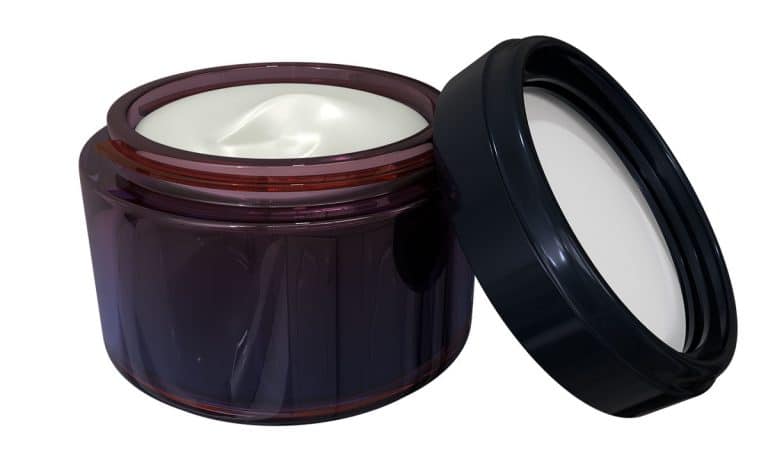
It looks like someone is joining the latest celebrity trend – Kristen Bells says this CBD lotion is magic. Specifically, she has admitted that Lord Jones CBD lotion has become her go-to routine post-workout, as she revealed to her followers in an Instagram post this week. (It also could’ve been a sponsored post the company paid the actress for, don’t forget that possibility.)

“I love my @thelordjones body lotion for my sore muscles after working out,” Bell posted after hitting the gym.

https://www.instagram.com/p/BkRHdonHNPy/?taken-by=thelordjones

The Lord Jones brand has become a trenchant hit with celebrities, as everyone from Meryl Streep and Olivia Wilde are openly praising its pain-relieving abilities. The popular New York Times best-selling author and screenwriter Kelly Oxford also shared her love for the CBD lotion in a recent Rolling Stone feature.

Related: Silicon Valley’s Latest Weed Venture: Marijuana Tupperware Parties

Here’s what she said about the Lord Jones products:

I really like the Lord Jones CBD [products]. Just because it totally relaxes in a way that you sort of feel relaxed after you do a strenuous workout, but you don’t have to do the strenuous workout, which is great. And they have these delicious CBD gummies with sugar all over them. I tend to go to those a lot. The ones with the THC are good too but sometimes I get a little too high from edibles. They are actually delicious candy—it’s kind of annoying how good they are because you would eat them all if you didn’t know they were going to do anything to you.

You can check out the Lord Jones line of products here.

Bell was born in Michigan in 1980 and studied musical theater at New York University, making her Broadway debut while still a student. In 2004 Bell landed her breakout role, the title character on the TV series Veronica Mars. This led to work in films like Forgetting Sarah Marshall, Couples Retreat and Get Him to the Greek, as well as a leading voice role in the Disney megahit Frozen. Bell later starred in the series House of Lies and The Good Place.

‘Queer Eye’ Star Is Opening A Restaurant In NYC 

Antoni Porowski, the culinary expert on “Queer Eye for the Straight Guy,” confirmed in an interview that he’s planning on publishing a cookbook and opening up a casual restaurant in New York City.

While the Netflix revival has been extremely popular and successful, Porowski has rapidly become one of the show’s most debated topics, spawning dozens of memes and think pieces questioning his ability to cook, his importance in the Fab 5, his love for avocados, and mostly how freaking handsome he is.

During a cast interview with 92nd Street Y, Porowski mentioned his experience in the restaurant business and his plans for the future where he wants to open up his own business. “I’m all about cheese and pork belly and decadence, and as a result of the increased vanity of being on camera all the time and working out and eating healthy, I’m developing a fast-casual food concept restaurant that I’m gonna be opening here in New York,” he said.

Porowski is also very aware of the avocado memes, claiming that he’s releasing a cookbook where the fruit won’t be featured. You can check out the full interview below.

Federal Court Denies Review Of DEA’s Marijuana Extract Rule

If you were hoping for some clarity as to the legality of industrial hemp and cannabidiol (CBD) derived from industrial hemp, I have some (mostly) bad news.

Last week, the US Court of Appeals for the Ninth Circuit denied a lawsuit challenging the Drug Enforcement Administration’s (DEA) controversial Marihuana Extracts Rule. In Hemp Industries Assoc. v. DEA, the petitioners and other industry groups challenged the DEA’s rule creating a new drug code number for “”Marihuana Extracts” which is defined to include any extract “containing one or more cannabinoids that has been derived from any plant of the genus Cannabis.” This rule is so broadly drafted that it seems to prohibit extracts from parts of the cannabis plant that are legal or at least unregulated under federal law. Petitioners requested the Court clarify or strike down the DEA’s land-grab rule.

The Court denied both requests. Rather than diving into the substance of the petitioners’ complaint, the Court dismissed the action on largely procedural grounds, as we recently predicted it would. First, the court pointed to the fact that the petitioners failed to make an argument to the DEA while it was accepting comments on the Marihuana Extract Rule and are therefore barred from raising those issues before the Court. The petitioners claimed that another commenter raised their concerns by submitting a question as to whether the rule would cover “100% pure Cannabidiol by itself with nothing else?” But the Court determined the DEA considered this comment and altered the rule to clarify that it covered all cannabinoids. The Court also determined that several of the petitioners’ other arguments were waived for failure to raise the issue during the DEA’s notice and comment period.

The Court did determine that the petitioners’ argument that the Marihuana Extract Rule conflicted with 7606 of the 2014 US Farm Bill (the “Farm Bill”) was not waived, because Congress passed that law after the notice and comment period ended. The Farm Bill allows states to grow “Industrial Hemp” defined as having less than 0.3% THC on a dry weight basis in states that have implement agricultural pilot hemp programs. However, the Court determined that the argument failed on the merits. The Court found that the Farm Bill “contemplates potential conflict between the Controlled Substances Act [CSA] and preempts it. The Final Rule therefore, does not violate the [Farm Bill].” To the positive, the Court is stating that when the Industrial Hemp portions of the Farm Bill conflict with the CSA, the Farm Bill prevails.

This decision makes it clear that the Marihuana Extract Rule is unfortunately still valid, meaning that any products extracted from marijuana is still illegal under federal law, which has long been the case according to the DEA. The great unknown is how this ruling will be interpreted. It’s possible that the ruling could have a chilling effect on the growing CBD industry, by emboldening the DEA to actively pursue products that contain CBD. On this point, it’s important to note that Congress has limited the DEA’s ability to use federal funds “to prohibit the transportation, processing, sale, or use of industrial hemp” grown in accordance with the 2014 Farm Bill. However, it can be difficult to prove where a product containing CBD was derived and the DEA may try to push its boundaries in light of the decision. Therefore, it’s important that companies who are distributing CBD verify that it was derived from a legal source and are prepared to prove it.

State law enforcement agencies could also interpret this decision to crack down on CBD, especially in states that have not implemented Farm Bill hemp programs. These agencies are not limited by the budget provision that restricts the DEA enforcement activities. Although we have not heard any instances of state law enforcement cracking down on these sales, it is certainly possible that some will do so.

The Ninth Circuit could have used this as an opportunity to state explicitly that CBD derived from a legal source is also legal. Unfortunately, it did not. Because the Court did explicitly state that the Farm Bill preempts the CSA, though, the silver lining here is that Industrial Hemp, grown pursuant to the Farm Bill, is not illegal under the CSA according to the Ninth Circuit. In addition, shortly after the HIA filed its petition, the DEA made the following helpful clarifications: 

  • The “marihuana extract” definition does not include materials or products excluded from the definition of marijuana set forth in the CSA.
  • The rule includes only those extracts that fall within the CSA definition of marijuana.
  • If a product consists solely of parts of the cannabis plant excluded from the CSA definition of marijuana, such product is not considered “marihuana” or a “marihuana extract.”

Consistent with the Court’s ruling, this appears to exempt extracts that are derived from lawfully grown Industrial Hemp. It also exempts extracts derived from portions of the cannabis plant that are not included in the CSA’s definition of “marihuana,” which include the mature stalks and seeds incapable of germination.

All in all, this convoluted mess of marijuana, hemp, and CBD law could soon become much clearer if Mitch McConnell’s Hemp Farming Act of 2018 is passed. Stay tuned for more information on the ongoing saga of legal hemp and its derivatives.

Daniel Shortt is an attorney at Harris Bricken, a law firm with lawyers in Seattle, Portland, Los Angeles, San Francisco, Barcelona, and Beijing. This story was originally published on the Canna Law Blog.

You Can Tell If Someone’s A Cheater By Their Voice

0

Your voice can say a lot about you. These bits of information can be obvious, like gender and approximate age, but they can also be much more complex, such as your level of attractiveness or propensity to be unfaithful.

A new study claims that people’s voices may be a good indicator of whether or not they’re likely to cheat.

For the research, scientists made volunteers listen to recordings of people who said that they had or hadn’t cheated; these volunteers later ranked each voice recording on a level of trustworthiness.

The Conversation reports that the recordings all came from people who had “similar pitch, attractiveness, who were of similar size and shape, and had similar sexual histories (aside from cheating).” Crazily enough, volunteers were able to accurately rank those with a cheating history as more likely to be unfaithful, even though they had no information on the people from the recordings. Women were also better at recognizing cheaters than men.

As a way of getting rid of other variables that could influence results, researchers also manipulated the voices. The results were still the same.

Here’s what the study said via The Independent:

These findings expand upon the idea that the human voice may be of value as a cheater detection tool and very thin slices of vocal information are all that is needed to make certain assessments about others.

We were unable to identify exactly which acoustic qualities were driving the perception of cheating ascriptions, albeit a detailed acoustical analysis beyond the aims and scope of this perceptual study.

It is interesting, then, to speculate what aspects of the human voice raters were using to make these accurate assessments because we eliminated differences between groups for the more conspicuous cues of a voice that could be driving factors (i.e., variations in vocal attractiveness, voice pitch, and other basic acoustic features).”

While the study poses more questions than it answers, it’s very interesting to know that our voices carry such weight and importance. It’s also kind of scary and cool that we know so much by doing so little.

Don't Miss Your Weekly Dose of The Fresh Toast.

Stay informed with exclusive news briefs delivered directly to your inbox every Friday.

We respect your privacy. Unsubscribe anytime.