Monday, June 29, 2026
Home Blog Page 960

Facebook Says You’re Not A Product, But Are You? 

Facebook has been wading through the hot waters of scandal lately thanks to the Cambridge Analytica data-mining scandal. Privacy issues have troubled Facebook, and many have been openly wondering if Facebook is the product or if you, the user, is.

Mark Zuckerberg was forced to respond in a congressional hearing to claims about selling personal data and users’ right to privacy. It was part of a public relations campaign that Facebook has embarked following the scandal, where the company wants to reassure users about comfortably and safely using the popular social network.

In a blog post Monday, Rob Goldman, Facebook’s vice president of advertising, tried to address the criticism head on. He wrote:

If I’m not paying for Facebook, am I the product?

No. Our product is social media – the ability to connect with the people that matter to you, wherever they are in the world. It’s the same with a free search engine, website or newspaper. The core product is reading the news or finding information – and the ads exist to fund that experience.

This message was met with even more criticism for Facebook. Goldman comparing the company’s ethos to that of a website or newspaper is particularly ironic as Zuckerberg has repeatedly insisted that Facebook is “not a media company,” but a “technology company.” It also doesn’t help as Facebook has ravaged newspaper and other media companies in the digital advertising market, and analysts have claimed that Facebook and Google own a duopoloy over the digital advertising market.

Goldman tried to explain why Facebook needs to store so much personal data about users, arguing that it was how the social media company researches to “give you a better service.” In addition, Goldman tried to suggest that if anything Facebook was a service and advertisers the product as there were the ones spending money.

But that also opened up the company for more criticism. Saying that “data also helps us show you better and more relevant ads. And it lets advertisers reach the right people,” does cause you to wonder who Facebook is trying to please more—you or advertisers?

What Facebook is and isn’t remains a contentious debate that isn’t going away anytime soon. Of course you listen to the founder of WhatsApp and remove yourself from the narrative and service if you want to play it safe. Then there’d be no worries about ads at all!

California Gubernatorial Candidate Could Spell Big Trouble For Marijuana

John Cox, the Republican frontrunner for in the California gubernatorial race, believes cannabis consumers should be hospitalized. Yes, California. Where marijuana is legal.

In 2016,  57 percent of Californians voted for Prop 64, an initiative that legalized and regulated recreational marijuana consumption and possession and set up a system to sell and tax the substance in retail outlets. Does Cox have a plan to open up thousands of hospitals? That remains unclear.

“I’m suggesting that people who are addicted to substances, substance abuse, should get treated, they should not be incarcerated,” Cox earlier this week in an interview with editors and reporters at The San Diego Union-Tribune.

According to a story by Union-Tribune reporter Joshua Stewart:

He said that California should implement a system akin to the one in Portugal, where people who are found with small amounts of drugs can receive mandatory medical treatment but aren’t charged with a crime.

He said that marijuana users should be put into a treatment facility because they might later begin using harder drugs.

According to recent polling, Cox is running in second or third place. In California, the top two vote-getters in the June primary proceed to the November election. Lt. Gov. Gavin Newsom, a Democrat and ardent cannabis supporter, sits comfortably in first place. Former Los Angeles Mayor Antonio Villaraigosa, also a Democrat, is fighting Cox for second place.

Newsom has been a major supporter of marijuana law reform for years. Much like his early supporter of same-sex marriage, Newsom broke away from the “safe” political position and became the political face of the movement within the state. He was one of the most vocal California politicians supporting Prop. 64, the 2016 initiative legalizing cannabis in California.

Meghan Markle’s Sex Scenes Hidden From The Queen

Meghan: A Hollywood Princess is an biography that was published weeks before the royal wedding, taking advantage of the date to boost up the book’s ratings. Written by Andrew Morton, the book goes in-depth regarding Markle’s life story, exploring her parent’s marriage, the challenges she faced while growing up, and her rise to stardom.

There’s also a part in it where Morton explains that Prince Harry showed an edited version of “Suits” to the Queen, skipping out on all of Markle’s sex scenes.

On an interview with Fox News, Morton explained that Harry showed a condensed version of “Suits” to Prince Philip and the Queen, so that they could appreciate Markle’s work, but that he made sure to avoid including scenes where Markle’s character has sex with Patrick J. Adams. As if “Suits” were an HBO show and the sex scenes were super intense. They’re not.

Morton also said that he finds it amusing that Meghan’s raunchy scenes are on the internet and yet “she’s scrubbed clean her blog, which includes essays on female equality… She also got rid of her Instagram, which had some charming shots of her.” Maybe this is because Kensington Palace can’t control the Internet, and because royals have never had presence on social media? Just a thought.

Another aspect explored in the book is the fact that Markle has been an activist since she was young and that since the moment she met Harry she’s been stepping away from the spotlight. Morton believes that meeting and falling in love with the Prince has allowed Markle to do what she really wants to do, which is activism, especially when it comes to helping women and children.

Meghan: A Hollywood Princess is available for purchase on bookstores and on Amazon.

Sanjay Gupta Just Wrote To Jeff Sessions Regarding Cannabis And Opiates

Dr. Sanjay Gupta, CNN’s chief medical correspondent and one of the most famous converts to rational marijuana policy, has written an open letter to Attorney General Jeff Sessions, detailing how medical marijuana could save the lives of up to 10,000 people every year who are addicted to opioids.

Gupta’s letter, which was posted on CNN.com on Tuesday morning, begins:

Dear Honorable Jeff Sessions,

I feel obligated to share the results of my five-year-long investigation into the medical benefits of the cannabis plant. Before I started this worldwide, in-depth investigation, I was not particularly impressed by the results of medical marijuana research, but a few years later, as I started to dedicate time with patients and scientists in various countries, I came to a different conclusion.
Not only can cannabis work for a variety of conditions such as epilepsymultiple sclerosis and pain, sometimes, it is the only thing that works. I changed my mind, and I am certain you can, as well. It is time for safe and regulated medical marijuana to be made available nationally. I realize this is an unconventional way to reach you, but your office declined numerous requests for an interview, and as a journalist, a doctor and a citizen, I felt it imperative to make sure you had access to our findings.

In the letter, Gupta reminds Sessions that drug overdoses killed 68,000 Americans in 2017, more than 45,000 of them from opioids. Every day, 115 Americans die from opioid overdoses. It has fueled a decline in an entire country’s life expectancy and will be remembered as a sad and tragic chapter in our collective history.

Gupta’s research indicates that medical marijuana can be effective in reducing opioid overdoses because the herb is effective in managing pain — and the symptoms of withdrawal from opiates. For those taking prescription opioids, Gupta said using cannabis can be effective in managing long-term pain and lessening the potential increase in pain typically associated with ending opioid use.

“These are desperate times,” Gupta writes, “and while some may consider making medical marijuana widely available to be a desperate measure, the evidence has become increasingly clear of the important role cannabis can have.”

According to the letter, Sessions has refused multiple requests for an interview with Gupta. Sessions has not commented yet on the letter.

Gupta’s letter concludes: “Recently, your fellow conservative John Boehner changed his mind after being ‘unalterably opposed’ to marijuana in the past. If you do the same, Mr. Attorney General, thousands of lives could be improved and saved. There is no time to lose.”

You can read Gupta’s letter to Sessions here.

Weed 4: Pot Versus Pills will air on CNN this Sunday, April 29th. Check your local listings. 

6 Things Everyone Needs To Know About Today’s Marijuana

0

Today’s Marijuana: As more states open the door to marijuana legalization –whether for medical use or recreational use — the taboos surrounding the herb are quickly vanishing.

For some of you, the last time you tried weed was in your college dorm, fumbling with a badly rolled joint and coughing uncontrollably while trying to act cool. Others just said no.

For those of you who identify as “cannabis curious” 0r simply want to know more about marijuana today, this story is for you. For the hardcore tokers out there, consider this a refresher.

How Many Americans Are Now Enjoying Cannabis?

According to a Gallop poll released in August, 33 million Americans—13 percent of the U.S. population— consume marijuana today on a regular basis. Just three years ago, only 7 percent admitted to regular consumption. Remember, these are Americans self-reporting that they are essentially breaking federal law, so most polling experts believe the number is significantly higher.

In another study released this month by the Centers for Disease Control and Prevention, it was revealed that 47 percent of American adults used marijuana at least once during their lifetime. In 1969, only 4 percent of Americans admitted to trying the herb one time.

The CDC report also found that use among teens (12- to 17-year-olds) dropped 10 percent since 2002.

Clearly, the baby boomers are finding cannabis is fitting into their lifestyle just fine.

What About Potency? Will Marijuana Today Get Me Too High?

Yes, this millennium’s marijuana is a lot stronger than the Woodstock weed of generations ago. That being said, here’s what you need to know.

Back in the 1960s and ’70s, soldiers returning from Vietnam and other world travelers smuggled back literal tons of hashish and Thai stick, ultra-powerful forms of weed that would measure up to what is out there today. So if you were fortunate enough to enjoy the “good stuff” back in the day, you won’t be too surprised.

Botanical science has improved dramatically over the past 40 years. Master growers have been successful in cloning, hybridizing and manipulating the genetics of cannabis strains to produce stronger, more robust plants. Lab studies show that today’s herb is about three times as potent as weed from the 1970s.

But once again, there is an important caveat. The cannabis tested in the 1970s was from product confiscated from law enforcement agencies. Most of this was from near the southern border or smuggled in from Central America. This weed was mostly “Mexican ditch weed” or “brick weed” — a cheap, low-quality product. The high  quality weed — mostly from large grows in northern California — was rarely captured, thus never lab tested.

The bottom line: Yes, today’s cannabis is strong. Do not underestimate its psychoactive effect. Take a few tokes and wait a while before continuing.

Plan ahead and please do NOT DRIVE while impaired.

Will I Still Smell Like a Skunk After Smoking?

Well, the scent of the herb hasn’t really changed. So, yes, your parents (or children or boss or landlord or spouse) will most likely smell it if you smoke it.

There are ways to mask the odor, but it’s likely to be detected by someone with a sensitive sense of smell.

Using a vape pen or portable vaporizer eliminates most of the smell. Since vaporization does not combust the herb — merely heating it enough to create vapor — the smell is less intense and disappears quickly. So if discretion is important, try vaping instead of smoking. Plus, there is always edibles …

Will Today’s Brownies Make Me Pass Out?

Edibles are tricky and need to be handled with care. Eating cannabis is entirely different than smoking or vaping it.

When smoking of vaping, the THC passes through the blood-brain barrier quickly through the lungs. You usually feel the effect quickly and it is much easier to control your dosage. Edible cannabis (candies, baked goods, etc.) need to be processed by your liver before entering your bloodstream. This biological fact means the edible will take longer to take effect — typically 40-60 minutes for the average person — and the high will last much longer.

Because of the way it is digested, edibles are a bit more of a guessing game. Everybody’s metabolism and tolerance is different, so what works for you will almost certainly not work for your spouse or friend. Trail and error is the best way to start with edibles. Begin with a low dose (5 mg), wait two hours, and work your way from there.

In legal states like Washington and Colorado, strict dosage limits are regulated to ensure proper titration.

Overindulging on edibles is an unpleasant experience. So take it easy and take it slow.

What Other Methods Are There For Ingesting Cannabis?

Let’s see, we covered smoking, vaping and edibles. Here are a few other ways to enjoy cannabis:

  • Beverages: Drinking cannabis is similar to eating it because it is processed in the major organs before entering the blood stream. There are some great beverages out there in moderate doses for you to enjoy. Think of drinking cannabis like you would a fine cocktail. Sip it. Savor it. And listen to your body. And don’t drink and drive!
  • Tinctures: This method is preferred for medical patients who want a reliable, fast-acting dose without having to marijuana today. The THC in tinctures are absorbed sublingually — meaning the tissues in your mouth. Take a dropper of the tincture and let it swish around in your mouth for a bit before swallowing. The tissues in your mouth will absorb the cannabinoids. Tinctures are discreet, effective and highly underrated.
  • Lotions, balm, massage oil: Yes, you can use cannabis all over your body, from head to toe. There are cannabis shampoos, soaps, shaving cream, you name it. Here’s the important thing to remember about topicals: You will NOT get high from using them properly. Your epidermis does not have a receptor for THC, the psychoactive ingredient. The receptors on your skin bind to the CBD and other cannabinoids that are not psychotropic. Your body and muscles will feel relaxed and any pain you have will lessen. Try them as part of your everyday beauty routine.
  • And more! We are entering the golden age of cannabis entrepreneurship. If there is a demand for a product, someone is already creating it. Sublingual lozenges and strips. Tampons. Patches. Sex lubes. Gum. The list goes on

Am I Paranoid? Or Am I Just Paranoid About Getting Paranoid?

We here this one a lot. And, yes, any substance that changes brain chemistry, even mildly for short periods of time, can cause your brain to play tricks with you. It’s not pleasant.

This experience typically hits those new to the psychoactive sensation of THC and it usually is a temporary phenomenon. So what do you do if that dreaded sense of paranoia kicks in? Drink a tall glass of water. Lay down. Close your eyes. Turn on some music or the TV. And. Just. Do. Nothing.

Or you can do what legendary rocker Neil Young does: Eat black pepper.

“Try black pepper balls if you get paranoid,” Young said on The Howard Stern Show in 2014. “Just chew two or three pieces. I just found this out myself. Try it.”

Is this an urban legend perpetrated by Young? Nope. There is science to back up his claims. It’s called the “phytocannabinoid-terpenoid entourage effect.”

And here is an interesting take from Psychology Today:

“It is simply too narrow to say that cannabis causes paranoia, because there is no way to measure individual experiences. There are too many variables in an individual’s life, that in conjunction with the use of this plant, cause increased anxiety. The spirit of Mary Jane is a beautiful, creative one. Those who have a lot of experience with psychoactive plants can testify that if you are not experiencing beauty and creativity, it is probably due to some unconscious attitude. Why not explore within yourself? It’s all a learning experience.”

Well said!

6 Smart Sex Tips For Men Who Want To Please Women In Bed

The Fresh Toast has enlisted Rachel Krantz, a sex writer and proud canna-enthusiast, to help readers out with some answers as its sex columnist. No question is off limits, and all questions will remain anonymous. Please send your sex and relationship inquiries to freshlove@thefreshtoast.com. Now, onto this week’s topic: tips for men who want to please a woman.

Q: I’m about to have sex with this woman I really like. The only thing is, she’s mostly only slept with women the last few years. I know she likes men too, but it’s making me feel like I really need to bring it — and like I want to know if there’s anything I can learn from women who sleep with women. Any advice?

A: Good on you for wanting to do your research! As a sex writer and lifelong woman, I found it fascinating that there were some tips about pleasing a woman I only really came to understand from finally sleeping with another one myself. As a woman who also loves men, I’ll share some of these with you, in the hopes that you and other men might learn something too.

Buy Girl Sex 101

Girl Sex 101 is probably the best sex guide I’ve ever read. This book is intended for an audience of women who sleep with women — but men who sleep with women definitely have lots to gain from studying it. I picked up all kinds of tricks in this guide. Seriously, get it on your e-reader, stat.

When In Doubt, Tease

via GIPHY

Teasing, I was reminded once I was able to really slow down with another woman, is something women who sleep with men don’t get enough. Sure, you might think you’ve teased us, kissing around our panty-line, or touching nipples for a couple minutes — but if you want to level-up, you’re going to need to slow it way down.

That means only making out until she’s the one pulling at your clothes; sucking on her nipples through her bra until her hips are wildly bucking; holding her to you firmly-but-patiently by the ass and kissing her neck until she’s shivering and mumbling nonsense. This takes time.

Men sometimes think that slowing down means “being sweet” or lacking throw-down — a “making love” sort of sex. While that can be the case, slowing down can also actually be quite dominant and aggressive. If you’re making her wait and purposefully teasing her until she’s drenched, she is going to feel taken for quite the ride.

Establish A Connection With Her Vagina Before You Touch It

via GIPHY

This is a trick I learned about in orgasmic meditation (a practice also worth looking into if you want to please a woman — but that’s another article). One of the things “the stroker” does in orgasmic meditation is that they look at a woman’s vagina and say a few non-judgmental observations about how it looks before they touch it. They also “ground” the woman by pressing down on her thighs, then stroke her clitoris incredibly lightly for 15 minutes with only their pointer finger — a delicious tease.

Apply some of those same principles: When her hips are bucking at you from all this teasing, ask if you can see her vagina now. Press down firmly on the side of her thighs, and let her watch you look her straight in the vagina. Focus all your attention there; take a finger and gently part her labia, getting the lay of the land. Make her feel you find what you see beautiful and arousing. Cup a palm over her entire vagina and gently get the blood flowing before you touch her clitoris directly. Lightly pull back the hood of her clitoris. Look up and make determined eye contact. Draw out the process of diving in.

Vocalize Your Enjoyment & Take The Pressure Off

via GIPHY

Personally, it would make me very wet if someone did everything in the step above, then said explicitly, “I want to lick you now. I want you to know that as long as I am, I am enjoying it. I will not keep going past when I’m tired, but I really need to taste you. I don’t want you to think about coming; I just want you to focus on your clitoris. Can I lick you now?” Women are socialized to have shame around their vaginas, and to worry constantly during sex about “taking too long” to orgasm. Take that pressure off of her by being explicit about your enjoyment ahead of any insecure questions. A little  enthusiastic moaning straight onto the clitoris also feels great.

Ask Non- Judgmental, Specific Questions

via GIPHY

Even the most practiced of lesbians solicits specific feedback. As you’re pleasuring a woman, you might be tempted to ask “does this feel good?” Instead, it’s more useful to ask non-judgement-based yes-or-no questions like, “would you like me to lick you a little faster? Harder? To the left?” This way, she will be less concerned about your ego — and more focused on the present moment.

Ditch The Term “Foreplay”

via GIPHY

When I was with a woman, everything that is considered “foreplay” in hetero sex was the actual intercourse. It made me enjoy being pleasured much more to know it wasn’t simply an appetizer to the “main event” of penetration.

If you want to be exceptional in bed, you need to ditch the P-in-V = Sex paradigm. Have sex that doesn’t end in penetration sometimes, but in 69ing or mutual masturbation instead. Vocalize the fact that pleasuring her is not just foreplay to you — that it is the sex itself. As hard (heh) as it is sometimes, the more you begin redefining sex as not just P-in-V, the more you’ll be considered a stud. It’s not weak — actually, it’s just the opposite.

‘Scientific American’ Comes Out Strongly In Favor Of Legal Marijuana

Scientific American, the nation’s oldest continuously published monthly magazine, says it’s time to “End the War on Weed.” In a story published in its upcoming May issue, the 172-year-old publication made the case for legalization, calling our current federal policy “ill informed and misguieded.”

The story, bylined by “The Editors,” details the reasoning behind legal reform and the hypocrisy of  criminalizing the plant:

Evidence suggests that cannabis—though not without its risks—is less harmful than legal substances such as alcohol and nicotine. And despite similar marijuana use among blacks and whites, a disproportionate number of blacks are arrested for it. By allowing states to regulate marijuana without federal interference, we can ensure better safety and control while allowing for greater research into its possible harms and benefits.

This is not the first time Scientific American has reported on cannabis. The magazine, which bills itself as the “authoritative source for the science discoveries and technology innovations that matter,” has been writing about the issue for years, including stories such as “Experts Tell the Truth about Pot” in 2o12; “How Safe Is Recreational Marijuana” in 2013; and “Medical Marijuana: How the Evidence Stacks Up” in 2014.

In the May 2018 story, the magazine takes aim, rightfully, at President Richard Nixon’s 1970s-era War on Drugs strategy:

In 1970 the Controlled Substances Act established marijuana as a Schedule I drug, “with no currently accepted medical use and a high potential for abuse.” This is the same category that includes heroin and MDMA (ecstasy). Yet marijuana is far less dangerous than many other drugs, and cannabis or its derivatives have been used to treat everything from chronic pain to post-traumatic stress disorder to childhood epilepsy. A 2015 study that compared the toxicological threshold of marijuana for risk to human health with that of other drugs found that alcohol posed the highest risk, followed by heroin, cocaine and nicotine. Marijuana was among the lowest. In addition, there is some evidence that pot may serve as a safe alternative to other drugs of abuse, including heroin and other opioids.

The story points out that “one in eight U.S. adults smoke it, and more than 40 percent of them have tried the drug at some point in their lifetime. A majority of states allow some form of medical marijuana use, and nine states and Washington, D.C., have now legalized recreational use.”

The magazine is “not advocating for unfettered access to marijuana, especially by adolescents.” Instead, Scientific American, true to its editorial mission, wants more large-scale, randomized controlled studies. Of course, as the magazine points out, “as long as the federal government continues to crack down on state-level legal marijuana, it will be difficult to carry out such studies.”

The story concludes:

It is time to stop treating marijuana like a deadly drug, when science and public opinion agree that it is relatively safe for adult recreational use. The last thing we need is another expensive and ineffective war on a substance like cannabis—especially when there are far more serious drug problems to tackle.

Bill Maher: Democrats Should Represent Weed Like Republicans Tout Guns

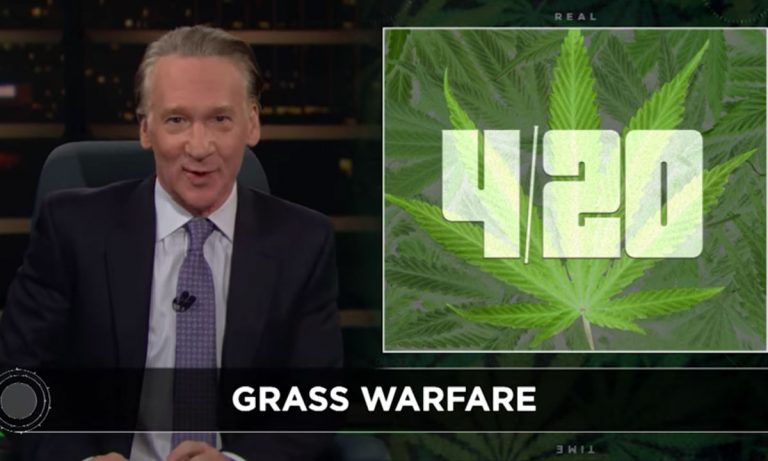
With the upcoming midterm elections coming into focus, marijuana will remain an issue at the forefront of the discussion. But for an episode that aired on 4/20, Bill Maher asserted on Real Time that Democrats need to use cannabis rights as a catalyst to activate young voters.

“We can bring those jobs back from China, but they’re still gonna suck,” Maher joked. “You’re in an Amazon warehouse for eight hours with no one to talk to but the robots, you’re gonna want that vape pen.”

The cantankerous Maher couldn’t resist taking a few shots at former Speaker of the House John Boehner, who announced he was joining the board of advisers at Acreage Holdings. Some wondered if it was just a money grab, but Maher joked about Boehner—who was famously a strident marijuana opponent—that if “you though Boehner cried a lot before, wait until he gets stoned and sees a sunset.”

Jokes aside, Maher argued that Democrats should wholeheartedly assume marijuana as a party issue. He compared the strategy to how Republicans use gun rights as a party stance and energize one-issue voters. Boehner’s move, in Maher’s opinion, represented that the right isn’t afraid to take on the issue if the left doesn’t first.

“Yes, we love weed the way Republicans love their guns. Every election, Republicans run on ‘They’re coming for your guns!’ We need to talk about weed that way and turn potheads into single-issue voters too,” Maher said. “And it should not be that hard because nobody is really coming for your guns, but Jeff Sessions really does want to take away your pot, for which there is no protection like the Second Amendment.”

Though some believe the youth vote will respond handedly in the midterm elections to support an anti-gun stance surging through young voters following school shootings, Maher argued otherwise. Being against guns isn’t a lifestyle, he pointed out, and one-issue voters respond most when legislation affects their lifestyles. That’s why marijuana represents a great political opportunity.

“Weed is a lifestyle. It’s not just something you have an opinion on, it’s in your home, it’s a passion, you like touching it,” Maher said. “Guns and pot—they have magazines about it and so do we. They have gun shops, we have dispensaries. They know the difference between automatic and semi-automatic, we know the difference between indica and sativa.”

Marijuana Aficionados Will Love This New Movie Festival

Dan Savage wasn’t satisfied with just making a film festival that revolved around sex, so he made one about marijuana, too. The podcaster and columnist is the man behind SPLIFF, a film festival “made by the stoned for the stoned.”

The announcement was pegged to 4/20 this year, but will start in 2019. Film festivals usually take place in one location, but SPLIFF will occur simultaneously in San Francisco, Denver, Portland, and Seattle (a.k.a. states where recreational marijuana is legal). It will celebrate all types of marijuana filmmaking over 4/20 next year.

Related Story: Nike Launches White Widow Sneaker For 4/20

“The SPLIFF Film Festival is where filmmakers, artists, animators, and stoners share original film shorts exploring stoner themes,” reads the festival’s website. “From serious takes on pot culture to stoner comedy to mind-blowing weirdness—they all have a home at SPLIFF. Creative types of all stripes entertain, challenge, and amaze SPLIFF audiences with short films that examine and/or celebrate recreational marijuana use and its liberating effects on our imaginations, appetites, libidos, and creative energies.”

SPLIFF from SPLIFF on Vimeo.

All types of artists and filmmakers are encouraged to submit short films with a maximum length of 4:20 (get it?). The festival is seeking “films that explore the meaning, pleasures, and culture of recreational marijuana use.

“Trippy films, comedic shorts, quickie documentaries, parodies of anti-pot educational films (think Reefer Madness ridiculousness or D.A.R.E. scare tactics), mind fucks, pot-influenced journeys, films about pot as a pleasure and pot as a medicine—all these have a home at SPLIFF,” the site reads.

Tickets will go on sale this fall.

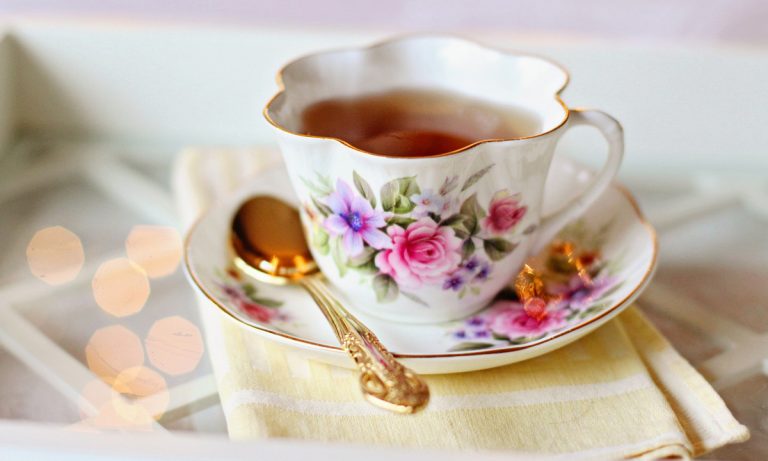
This Is How Meghan Markle Learned To Drink Tea Like A Royal

Meghan Markle has a lot of traditions to abide to even before she marries Prince Harry on May 19. One of the more obscure, yet perhaps most traditional British activity Markle has recently had to master is drinking tea.

And when the Queen is the one you’re trying to most impress, you best follow tea-time etiquette to the letter. And thanks to Food & Wine‘s meticulous research on the subject, anyone can be royalty when it comes to tea protocol.

News of Markle’s tea time rehearsal comes courtesy of a new biography, Meghan: A Hollywood Princess, by Andrew Morton (who’s also written biographies on Princess Diana, Tom Cruise and Madonna).

In addition to learning how to crook her finger when holding a tea cup, Morton reveals several other rules that had to be memorized before having tea with the Queen, such as:

  • You should never add the milk to your cup before pouring the tea. Always add milk after.
  • If you need to stir the milk in the cup, you should use a back and forth motion, rather than a circular motion, so that the spoon doesn’t clink against the sides of the cup, according to British etiquette expert Jo Bryant.
  • Bryant also advises that you should not blow on the tea to cool it down and that you should replace the cup on the saucer between sips.
  • As People points out, women should take a sip from the cup at the same place every time, to avoid leaving lipstick marks around the cup.
  • Your host may consider it rude if you only stay long enough to enjoy one cup of tea—it’s most polite to drink two cups, but three is excessive, according to etiquette expert The Royal Butler.

Also, despite its stereotype, you do not, in fact, extend your pinkie while drinking from your tea cup.

As Food & Wine points out, during Markle and Harry’s post-engagement interview with the BBC, the couple revealed that the queen’s corgis snuggled on Markle’s feet during tea with the Queen. So, it appears things are going well with her training.

Don't Miss Your Weekly Dose of The Fresh Toast.

Stay informed with exclusive news briefs delivered directly to your inbox every Friday.

We respect your privacy. Unsubscribe anytime.