Thursday, May 14, 2026
Home Blog Page 966

Inventor Of Sex Doll Claims It’s Great For His Marriage

Sergi Santos made headlines when he created the first artificial intelligence (A.I.) sex doll. This doll is capable of answering questions and having a “personality,” which is a bit of a stretch, but still impressive.

The doll, named “Samantha,” requires users to romance her before using her, which is nice, because it teaches people that asking is polite and also necessary when having sex. According to Barcroft, Santos decided to create Samantha because “humans are not enough,” and that men and women view sex differently, specifically that men want to have sex all the time. It’s like Santos has never spoken with a human woman before.

He’s also been vocal about how much he loves Samantha, patting himself on the back by claiming that she’s special and that she’s improved his life for the better. Samantha has improved his marriage, especially during times when his wife doesn’t want to have sex with him and he’s desperate, because, according to him, men need to have sex constantly.

Via The Huffington Post:

A man wants to feel in general that the woman is desperate to have sex with him. And if a man feels like the woman will not enjoy [sex] fully, most men do not like the sex. And this is the cause of many sexual problems.

I need sex some times of the day that my wife doesn’t want to, and I said, ‘Look, sex is breaking already many relationships because of lack of synchronicity,’ and I would not put that pressure to my marriage.

Santos’ wife, Maritsa Kissamitaki, also spoke about her husband and Samantha, claiming that she has no problem with her husband using the doll. She said “With couples, I think as long as there is trust in the relationship and mutual respect, then introducing a doll is something that can help.”

Even though Santos thinks including Samantha in his marriage is totally fine, he’d have trouble with his wife having sex with a male sex doll. “If I found that she likes the male doll better than me, in the sense that she doesn’t want to be with me, I’d get divorced.” Such an equal marriage.

For her part, Kissamitaki said she’d be curious to try out the male doll for herself.

County Sues State Of Oregon To Kill Marijuana Law

For the past several months, we have been following Josephine County’s efforts to regulate away its cannabis industry, specifically in rural residential zones. This saga has taken many twists and turns (see hereherehere, and here), but this week brought perhaps the biggest twist yet: Josephine County has sued the State of Oregon to invalidate its cannabis program entirely.

The legal skirmishes began back in December when Josephine County passed an ordinance to severely curtail cannabis production on over 16,000 rural residential properties. A group of growers appealed the ordinance to Oregon’s Land Use Board of Appeals (LUBA), raising a procedural argument (improper notice to affected properties) and two substantive arguments (the county cannot ban pre-existing lawful uses and the ordinance exceeds the county’s ability to impose reasonable time, place, and manner regulations on cannabis production). Last month, LUBA ruled against the county, solely on the procedural issue.

Josephine County failed to provide proper notice of the public hearings where the ordinance was discussed. As a result, LUBA did not reach the substantive merits. As expected, Josephine County elected to appeal the procedural question.

Surprisingly, Josephine County also decided to take the drastic step of filing a lawsuit against the State of Oregon in federal court. We gave our initial take on this aggressive move in news coverage here and here.

In short, Josephine County wants the federal court to:

  1. Declare that cannabis production cannot qualify as a pre-existing “lawful use” because of federal prohibition;
  2. Declare that counties can place any restrictions they want, including a full ban, on cannabis businesses because state legal regimes are pre-empted by federal law;
  3. Declare that Oregon’s medical and recreational regimes unlawfully restrict the county’s police powers in light of federal prohibition;
  4. Enjoin the State from bringing official misconduct charges against any local or county official that ignores their duties under state law.

This is a stunning overreach, as a victory could presumably give counties the ability to even ignore Oregon’s decriminalization statutes. As a county that allegedly wants to crack down on bad actors and the black market, and is apparently struggling to provide basic services, Josephine County should be welcoming law abiding, tax paying cannabis farms with open arms. Instead, I am reminded of my young daughter breaking her own toy when she doesn’t get her way.

This lawsuit raises core constitutional questions, involving states’ rights to promulgate cannabis programs despite the federal Controlled Substances Act, and over the objection of local jurisdictions. In the past, we have seen prohibitionist states attempt to invalidate neighboring states’ cannabis programs, to no avail.

This may be the first time, however, that a county in an adult use state has filed such a lawsuit against its sovereign. We will be monitoring this case closely, as will the Oregon cannabis industry at large and other prohibitionist counties nationwide.

Will Patterson is an attorney at Harris Bricken, a law firm with lawyers in Seattle, Portland, Los Angeles, San Francisco, Barcelona, and Beijing. This story was originally published on the Canna Law Blog

The Seattle Times Endorses Cannabis As Tool In Opioid Fight

In another case of common sense, The Seattle Times endorses cannabis as a tool in opioid fight. The largest newspaper in the Pacific Northwest region, took a direct shot at the Trump administration’s attempt to revive the failed war on drugs. In an editorial headlined “Feds, don’t fight pot — enlist it in the opioid war,” the family-owned paper urged Attorney General Jeff Sessions to reverse course on his anti-marijuana crusade.

The editorial board wrote that Sessions’ “veiled threat toward states with legal marijuana might actually hinder America’s ability to solve the nation’s real drug problem: The opioid crisis.”

Washington citizens voted in 2012 to legalize recreational cannabis and the state has had a lucrative retail industry for nearly five years. Since legalization, more than $740 million in tax revenue has been added to the state’s coffers.

Related: Jeff Sessions Remains Deeply Concerned About Legal Weed

But it’s not the added tax revenue that provoked the 10-time Pulitzer Prize-winning paper to write the editorial. The critical issue is the worsening opioid addiction epidemic spreading across the nation.

According to the editorial:

Two new studies suggest that when medical marijuana is legally and easily available, patients may be more likely to turn to pot instead of highly addictive opioids to treat their pain.

One of the studies found that in states with medical cannabis dispensaries, there was a 14 percent reduction in the number of opioid prescriptions among Medicare patients, who are typically 65 or older.

The other study examined Medicaid data and found similar results, suggesting that loosening marijuana laws may lower the use of prescription opioids among this primarily low-income population. The researchers found that states that legalized medical pot had roughly a 6 percent lower rate of prescribing opioids compared to states that outlawed marijuana.

This is not the first time the Times editorial board has been critical of Sessions and his “good people don’t smoke marijuana” belief system. Earlier this year, when the controversial attorney general announced his cannabis crackdown, the Times wrote: “We know Attorney General Jeff Sessions is a small, backward-looking man with even smaller, more backward-looking ideas, but what was the thinking behind his new federal crackdown on legal marijuana? Punish the blue states?”

Related: Jeff Sessions Rescinds Cole Memo, Launches Crackdown On Marijuana

The times cited a Pew Research Center survey revealing that 61 percent of Americans favor legalizing cannabis.

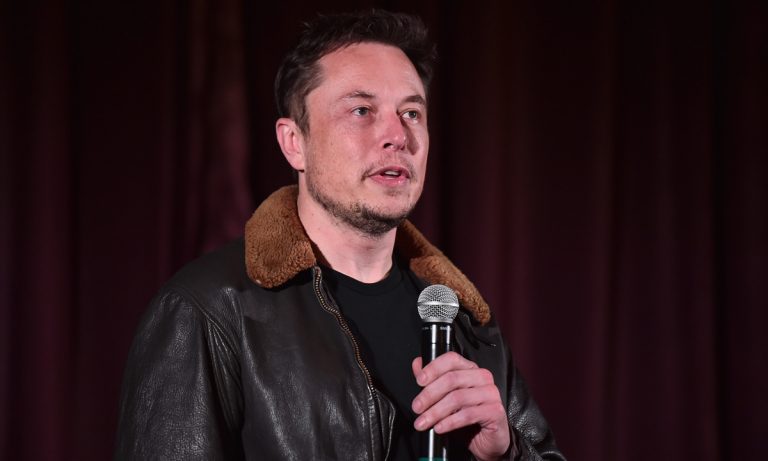
Elon Musk Claims A.I. Could Be An Immoral Dictator

Tesla kingpin Elon Musk is a genius, but he’s also prone to saying crazy things that always end up in headlines. Such as the fact that artificial intelligence (A.I.) would cause World War 3, and that the technology behind it was one of humanity’s greatest threats. He doesn’t like A.I.. 

Musk recently made an appearance on Chris Paine’s latest documentary, “Do You Trust This Computer,” where he talks about A.I. and how dangerous the technology could be for humanity. His exact words were that A.I. could lead to an “immoral dictator from which we could never escape.”

The documentary explores the dark side of A.I. and the immediacy of it, something that Musk has been concerned with since A.I. began to pop up everywhere.

According to Mashable, Musk claims that A.I. technology could be used by authoritarian governments in order to create something that could outlast individuals and political parties and that could lead to permanent structures of oppression. While his ideas sound a little over dramatic, they’re not that far off base.

China and Russia’s technological developments have been leaning towards the creepy side of things, with the former using algorithms to mess with other governments, and the latter planning to launch a monitoring system that will allow them to keep a tab on their citizens.

You can learn more about “Do You Trust This Computer” by watching the trailer below. 

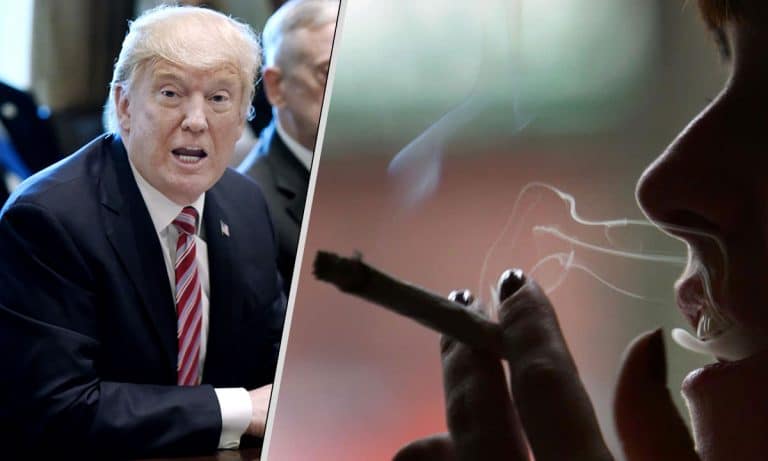
Trump Capitulates: State Marijuana Laws Are Safe

In an apparent swipe at embattled Attorney General Jeff Sessions, President Trump agreed on Friday to protect states’ marijuana laws from federal interference. Republican Sen. Cory Gardner of Colorado announced that he had struck a deal with the president after a three-month of a blockade on US Dept. of Justice nominees.

The agreement is a major victory for the nine states that have legalized recreational cannabis and the 29 states with medical marijuana programs. It also signals yet another defeat for longtime drug warrior Sessions, who rescinded Obama-era policies to protect states’ rights.

In exchange for Trump’s agreement, Gardner will end his blockade of nominees. Gardner began his legislative blockage in January after Sessions’ federal overreach.

Gardner’s full statement reads:

“Since the campaign, President Trump has consistently supported states’ rights to decide for themselves how best to approach marijuana. Late Wednesday, I received a commitment from the President that the Department of Justice’s rescission of the Cole memo will not impact Colorado’s legal marijuana industry. Furthermore, President Trump has assured me that he will support a federalism-based legislative solution to fix this states’ rights issue once and for all.

“Because of these commitments, I have informed the Administration that I will be lifting my remaining holds on Department of Justice nominees. My colleagues and I are continuing to work diligently on a bipartisan legislative solution that can pass Congress and head to the President’s desk to deliver on his campaign position.”

Marc Short, the White House’s director of legislative affairs told the Washington Post — which broke the news  — that Trump “does respect Colorado’s right to decide for themselves how to best approach this issue” regarding cannabis regulation.

“Clearly, we’ve expressed our frustration with the delay with a lot of our nominees and feel that too often, senators hijack a nominee for a policy solution,” Short told the Post. “So we’re reluctant to reward that sort of behavior. But at the same time, we’re anxious to get our team at the Department of Justice.”

Did Rats In Argentina Gobble Up Half A Ton Of Marijuana

0

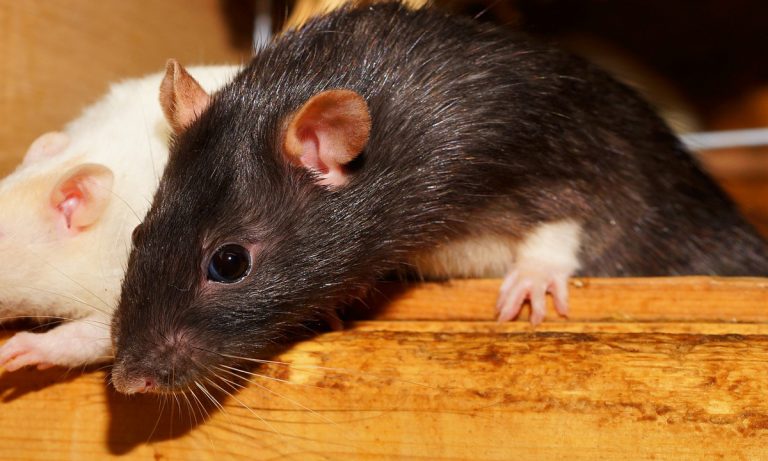
It sounds like a juicy plotline from a third-rate horror flick: A swarm of Argentine rats chew their way through a wall in a police station’s evidence room and eat nearly half a ton of weed. But, alas, it’s just a tall tale from the cops.

According to two Argentine newspapers —  Pilar de Todos and Clarín  — 540 kilos (1,190 pounds) of marijuana vanished from police inventory in the city of Pilar last year. The police officers responsible needed to come up with an airtight story. One of them came up with the least plausible explanation possible: The rats ate it.

After an internal investigation, the eight officers were fired after four of the stuck to the fabrication in a court of law.

RELATED: Argentina Legalizes Cannabis Oil And Other Marijuana Derivatives For Medical Use

“Professionals from the UBA [University of Buenos Aires] explained that rodents can not confuse the drug with food and that, if a large group had ingested it, many bodies should have been found in the warehouse,” judicial sources said.

The officers stand accused of not having fulfilled the responsibility of guarding evidence (in total, six tons of marijuana was in the evidence room). They are ordered to appear before the court next month.

Growing, using or selling marijuana is illegal in Argentina. But the nation decriminalized possessing small amounts nine years ago. Last April, Argentina legalized medical marijuana. The law established a regulatory framework that enables scientific and medical marijuana research while providing marijuana to qualifying patients free of charge.

But cultivating cannabis remains an offense punishable by up to 15 years in prison when intended for commercial purposes, and up to two years if the authorities deem it is for personal use.

Florida Judge Rules Tampa’s Strip Club King Can Home Grow Marijuana

A Florida judge ruled Wednesday that Joe Redner, Tampa’s strip club king, has the legal right to grow marijuana for medical purposes. Though Leon County Circuit Judge Karen Gievers emphasized this only applies to Redner, a 77-year-old stage 4 lung cancer survivor and registered medical marijuana patient, it could open the floodgates for similar cases. The Florida Department of Health has already filed an appeal.

As a “qualifying patient,” Gievers ruled, Redner possesses a constitutional right to own a live marijuana plant. Previously, the health department had stated that everyone is barred from growing their own cannabis plants, including qualifying medical patients.

“Under Florida law, Plantiff Redner is entitled to possess, grow and use marijuana for juicing, soley for the purpose of his emulsifying the biomass he needs for the juicing protocol recommended by his physician,” Gievers stated in her ruling. (In the document, the word “solely” is bolded and underlined.)

“The court also finds…that the Florida Department of Health has been, and continues to be non-compliant with the Florida constitutional requirements.” Until the department stops “violating its constitutional duty and mandated presumptive regulation, the evidence clearly demonstrates that Redner is entitled to follow the recommendations of his certified physician under Florida law,” Gievers added, which is a reference to the 2016 constitutional amendment approved by voters in 2016 that legalized medical marijuana.

Gievers’ ruling legitimizes complaints leveraged against the state’s health department from numerous medical patients. We’ve reported along the way just how Florida’s medical marijuana programs have failed patients. From individuals not receiving their medical cannabis ID cards for months at a time to nefarious clinics taking advantage of patients inexperienced with the drug, it’s been dark for medical marijuana in the Sunshine State. Redner’s attorney Luke Lirot told the Tampa Bay Times Gievers was right “castigate the health department for being a barrier to medicine.”

However, the health department’s appeal places a stay on Gievers’ ruling. That means Redner will remain banned from growing medical marijuana for his personal use. The appeal likely won’t be heard until late this year or early 2019.

“I filed this lawsuit because I couldn’t have survived cancer without medical marijuana. It’s not just a miracle drug—it’s a miracle plant, and the State keeps standing in the way of patients getting their medicine,” Redner told Florida Politics.

“…A mom who’s using low THC cannabis to control her child’s seizures can stick a plant in the ground and make her baby’s medicine for around 30 bucks a month if she can grow her own,” he added. “And 71 percent of us voted for an amendment that clearly gives her that right. This ruling is a victory for the patients of Florida.”

Meghan Markle’s Pre-Wedding Diet And Workout Routine

The royal wedding will be broadcast across the globe, which means the pressure is on when it comes to the royals looking their best.

Prince Harry has reportedly lost 10 pounds and has quit smoking ahead of the wedding. When it comes to Meghan Markle, things have been a little easier since she’s been leading a publicly healthy lifestyle throughout most of her public career. She did run a semi-famous lifestyle blog called The Tig. 

According to Harper’s Bazaar, Markle mainly eats a plant based diet that’s still flexible and allows her to indulge on the weekends. She says that “It’s all about balance,” especially since she exercises like crazy. “Because I work out the way I do, I don’t ever want to feel deprived. I feel that the second you do that is when you start to binge on things. It’s not a diet; it’s lifestyle eating.”

Markle claims that even though she loves carbs and wine, she enjoys these things in moderation, stocking her fridge with healthy snacks and veggies. She also loves to cook, which is great for maintaining a healthy lifestyle and managing your weight.

When it comes to fitness, she’s always worked out a lot, practicing Yoga and running, which she calls her “moving meditation,” that allows her to “get out of her head.” Markle also practices Megaformer pilates, which are a crazy intense work out that shapes your body really fast.

Celebrities Are Banned From Doing This With Cannabis In Canada

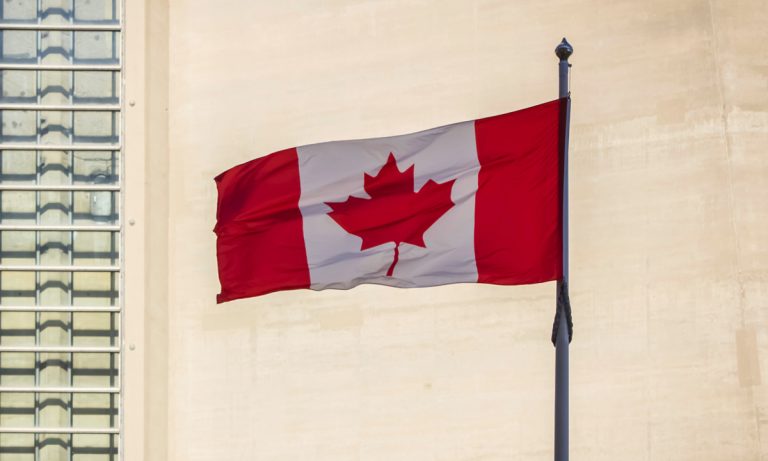
In the United States, famous entertainers ranging from Tommy Chong to Willie Nelson, Whoopie Goldberg and Melissa Etheridge are hawking cannabis products. But in Canada, celebrity endorsements will be outlawed.

“I’m the most recognizable pot head, probably, in the world,” Chong told “CNNMoney.” But the native Canadian won’t be able to lend his image to help sell products, according to Bill Blair, the former Toronto police chief and point person for the nation’s cannabis policies:

The law is explicit and clear, that celebrity endorsement, lifestyle advertising is not allowed with cannabis

Blair’s warning might be news to Canadian celebrities such as the quirky actors starring in “The Trailer Park Boys” or members of the band The Tragically Hip. And just recently, KISS frontman Gene Simmons joined a Canadian cannabis firm. According to Global News in Canada, “established companies will undoubtedly be trying to find ways to get around those rules as more and more celebrities link their names to Canadian pot.”

But Blair insists the Canadian cannabis industry will be free of stars. “It’s not the government’s intention to promote the use of this drug, he Blair. “We are not allowing the heavy marketing that we’ve seen with other products, alcohol for example, and so there will be severe restrictions on things like celebrity endorsement and [company] sponsorship.” Canada is scheduled to legalize marijuana nationally this summer.

In the US, it appears every celebrity who tokes is lining up an endorsement deal. “Legalization has opened the doors to all the celebrity branding,” according to longtime cannabis journalist Steve Bloom, who runs Celebstoner.com. “It’s not surprising that all the most likely celebrities are jumping aboard.”

It’s clear that celebrities see the green rush as another way to extend their brand outside of the entertainment industry. According to New Frontier, a cannabis research firm, the US cannabis market will hit $23 billion in 2o2o.

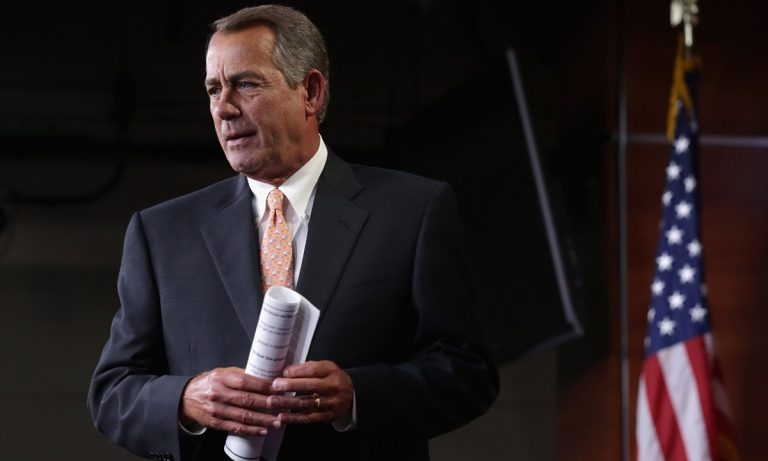
Boehner’s Cannabis Flip-Flop: Is It A Money Grab Or Is It Legit?

Former House Speaker John Boehner’s flip-flop on marijuana reform might rank up there with the all-time doozies. After Boehner’s shocking announcement on Wednesday that his “thinking on cannabis has evolved,” advocates on both sides of the cannabis argument remain dubious of his real intention.

After years of fierce opposition to cannabis legalization, the conservative Republican son of a bar owner tweeted that will join the Board of Advisors of Acreage Holdings, a multi-state cannabis company. “I’m convinced de-scheduling the drug is needed so we can do research, help our veterans, and reverse the opioid epidemic ravaging our communities,” he wrote on Twitter.

Was it a change of heart? Or merely an opportunity to fatten his wallet? Deb Haaland, a candidate for a Congressional seat in New Mexico, thinks it is the latter:

“John Boehner announced he was joining a marijuana investing firm after years of opposing legalization, and years of supporting mass arrests in communities of color for marijuana possession and sale. Millions of black, Latino, and Native American people across America are currently sitting in prison or jail on marijuana charges — and millions more are barred from affordable housing, educational opportunities, and jobs because of a criminal record for marijuana.

“Men like John Boehner who have allowed horrific injustices to occur to our communities should not be allowed to make a dime from this industry until every American in jail for marijuana is freed and their records are wiped clean. For too long, our criminal justice system has used the criminalization of marijuana to oppress communities of color, which is why I will fight for federal legalization the moment I get to Congress.”

Haaland, who would be the first Native American congresswoman in history if elected, is not alone in her suspicion. Comedian/actor Mak McKinney tweeted:

And actress Cynthia Nixon, who is running for governor of New York, also accused Boehner of cashing in on the green rush:

But Erik Altieri, executive director of NORML, the nation’s largest and oldest marijuana reform group, welcomed Boehner. “John Boehner’s evolution on marijuana legalization mirrors that of both the American public in general and Republicans specifically. Recent polling finds that over 60 percent of Americans support adult use marijuana legalization and, for the first time, this percentage includes a majority of self-identified Republicans,” Altieri said.

“Allowing states the flexibility and autonomy to set their own marijuana regulatory policies is consistent with conservatives’ long-held respect for the Tenth Amendment, as well as with the party’s recent embracing of populism,” Altieri added. “Regardless of motive, former Speaker Boehner is still held in high regard by a large percentage of the GOP membership and voter base. We look forward to his voice joining the growing chorus calling for an end to cannabis criminalization. Anything that expedites the ability for patients to access this safe and reliable treatment alternative and that facilitates an end to the practice of arresting otherwise law-abiding citizens for the possession of a plant should be welcomed with open arms.”

The Marijuana Policy Project, another large cannabis advocacy group concurred with NORML. “Politicians have traditionally lagged behind the people on this issue, so it is wonderful to see one so adamantly opposed to legalization reversing course like this,” said Morgan Fox, MPPs director of communication.

But Kevin Sabet, a longtime opponent of marijuana legalization, questioned Boehner’s motives:

Regardless of his motivation, Boehner joins the majority of Americans who believe marijuana should be legal. According to the latest Gallup survey, 64 percent of Americans, including a majority of both Republicans and Democrats, want to legalize it. In 1969, one year after Boehner graduated from high school, only 12 percent were in favor of legalization.

As Fox News personality Geraldo Rivera says, the time are a changin’:


Don't Miss Your Weekly Dose of The Fresh Toast.

Stay informed with exclusive news briefs delivered directly to your inbox every Friday.

We respect your privacy. Unsubscribe anytime.