Monday, December 22, 2025
Home Blog Page 969

Marijuana And Breastfeeding: What New Mothers Need To Know

There have been a handful of conflicting studies and reviews regarding breastfeeding when the mother is ingesting cannabis. Not surprisingly, none of the examinations found that smoking marijuana while breastfeeding was exactly to be advised.

THC is fat soluble and there is plenty of fat in breast milk, meaning higher concentrations of THC being ingested by the baby. While it’s not enough to get the infant high, it is enough to raise concerns in clinical and conservative circles.

A new mother, Crystal Cain, from Oregon has recalled attention to the matter by openly admitting that she is going to breastfeed and also continue to smoke cannabis at her normal rate. She smoked cannabis throughout her pregnancy to combat nausea and anxiety.

Cain wants to breastfeed for the advantages to the baby known to come with breastfeeding. According to KATU, most experts are telling her not to, the hospital had her sign a waiver before she could and Cain herself admitted that there’s not enough information yet, “because nobody tests it.”

It’s true that studies are sparse and conflicting, and as stated before, none of them necessarily recommend smoking while breastfeeding. However, because of the benefits of breastfeeding in and of itself, some educated sources say that taking a more moderate look at the issue is a good idea.

Rather than taking the drastic approach of quitting cannabis all together, LactMed, which is a database from the National Institutes of Health, suggested that cannabis use be taken down a notch. It noted, “it appears preferable to encourage mothers who use marijuana to continue breastfeeding while minimizing infant exposure to marijuana smoke and reducing marijuana use.”

Keeping actual smoke away from babies is a no-brainer these days, and the rest of the approach does seem reasonable. But Cain is correct, not enough testing has been done. It is impossible to say with utter certainty whether breastfeeding while still smoking pot has an effect on the infant’s developing brain, negative or not.

Until we know, brave women like Cain will stick to what they think is right and other brave women will cut back on the cannabis during their breastfeeding days and other brave women will stop all together to ease their mind of any chance of risk.

3 Tips For Dating People Without Using The Internet

0

Dating apps have become the sort of bread and butter of dating, especially since there are tons of apps that have more advanced and personalized technology. Tons of people use their dating apps like any other social media apps: using them often to attract new followers. Or in the case of dating apps, attracting love.

Dating apps are so pervasive that it’s become kind of complicated to talk to strangers in real life. Going to a bar alone can be a pretty isolating experience, because everyone seems to be hanging out with someone the met on Tinder or (gasp!) real life friends.

According to experts, it’s a shame that people are no longer as adept and comfortable with meeting people in real life, where you have perks such as eye contact and physical hints that tell you a lot about the person you’re talking to, giving you much more information than what you could ever get from someone you’ve been texting with. The Cut interviewed Aime Harwick, a marriage and family therapist, who gathered the following set of tips that will help you meet real living people. We all need that sometimes.

Don’t Use Your Phone

https://giphy.com/gifs/portlandia-season-2-episode-3-3o6fJd97kAWWa9Ph28

Try to avoid texting, checking emails, and scrolling through you social media apps.

Says Harwick:

We tend to check our social-media platforms several times a day, often looking at text messages, and checking emails. If we spend even a fraction of that time actually getting out physically into different environments, we would have a much greater chance to meet new friends or potential partners.

Harwick also expresses the importance of making eye contact, which will give you social cues as to whether or not to approach someone. By throwing a simple “hello” at them or making a comment, you can find yourself talking and meeting people you’d never meet in another circumstance.

Get Referrals From Friends 

https://giphy.com/gifs/gilmoregirls-netflix-gilmore-girls-3o6wr9YOB1jqrogUDe

Ask your friends to introduce you to their friends, eliminating a dozen awkward steps in the process. If you share a friend with a potential partner, it’s likely that you’ll also share some common interests.

You’ll also both be much more open to getting to know each other if you know that you have a friend in common. This common friend could also make for tons of conversation topics and funny stories.

Visit Different Places

https://giphy.com/gifs/redbull-good-red-bull-3oKIP8C4lSWT47ZBHW

According to Harwick, going to different bars and hanging out in different places will introduce you to more opportunities to meet platonic or romantic partners.

By switching things up, you’ll encounter different sorts of people and you’ll get much more comfortable with interacting with others outside of your comfort zone. Try broadening your horizons, you’ve got nothing to lose.

Cops Befuddled By Fancy Potato Chip Edibles

On February 15, legal medical marijuana sales began in the state of Pennsylvania. Ahead of this historic date, key cities throughout the state also voted to decriminalize marijuana possession in places like Pittsburgh, Philadelphia, Harrisburg, and more.

But in an August 2017 traffic stop, police officer Bill Meyers and K9 officer Rex were responsible for apprehending 80 grams of marijuana—and four mysterious bags of chips. They were from a brand called Yummi Karma and clearly labeled as “medical cannabis” chips. There were two potato chip flavors, sour cream and onion, and salt and pepper, along with nacho cheese and zesty ranch tortilla chips.

The cops had never seen anything like it. So they tested it in the Hempfield state police laboratory to confirm the chips—which, again, had the words “medical cannabis” explicitly written on the bag—were laced with marijuana.

We’re only hearing about the case now because it took state police almost a year to properly analyze the chips and conclude they did, in fact, contain marijuana.

https://twitter.com/rzotter/status/977179534482132992

“Generally when we see edibles, it’s the brownies, cookies, that kind of thing. … This was the first time anybody’s encountered potato chips,” Park Police Cpl. Jason Monyok told TribLive.com. “It probably came from somewhere where the state has decriminalized. … It’s not something you see in these parts.”

Pennsylvania’s medical cannabis program does not allow for edible products or the smokable flower; medical patients can only acquire cannabis tinctures, oils, creams, and pills to treat their ailments. In addition, Yummi Karma’s products are only available for purchase in California.

The two individuals pulled over by Pennsylvania police did not explain how they received the product. They received misdemeanor charges of possession and drug paraphernalia, to which they pleaded no contest for probation without verdict and each would go on to serve a year of probation. The defendants’ probation ended in March, according to TribLive.com.

YouTube Wants To Teach Kids About Fake News

0

“Fake news” was one of the most-used phrases in 2017, and it’s become a real problem. Misinformation and the amount of media supporting that misinformation makes it really hard for people to filter out content and separate truth from fiction.

If it’s hard for adults, imagine how confusing it must be for kids. To counteract this, Google is partnering up with YouTube educators to produce content that can address these issues directly. Channels such as asapSCIENCE and Smarter Every Day, which have 7 and 5.5 million subscribers respectively, have expressed interest on taking a part in this initiative.

According to Polygon, the goal of the project is to help kids distinguish what’s real and what’s fake whenever they read news or watch educational YouTube videos.  

YouTube is going through a complicated process of their own, not knowing how to handle their large amount of Youtubers. While the website has people who are interested in creating good (and correct) content, there are also tons of conspiracy theorists and users who are interested in simply creating trending videos, no matter where the facts come from. Even though YouTube has never been an official news outlet, it’s become a place where a lot of people turn for information.

YouTube’s CEO Susan Wojcicki released a statement saying that in order to avoid spreading fake news, the company will now supplement videos with Wikipedia entries.

Wojcicki said that even though YouTube is not a news organization, they will do their best to spread information that is truthful, and would invest in algorithms and filtering methods to make sure that the facts stand out on their website. That’s not a lot, but it’s something.

If Cannabis Is More Potent, Why Aren’t Cases Of Schizophrenia Rising?

Most people who smoke pot enjoy it, but a smaller proportion experience psychotic-like symptoms, such as feeling suspicious or paranoid. The question that polarizes researchers is whether smoking cannabis is associated with a risk of developing psychotic problems, such as schizophrenia, in the long term.

Of course, cannabis use is common, while schizophrenia is relatively rare, affecting less than one percent of the population. Even if cannabis use were to double the risk, over 98 percent of cannabis users would not develop schizophrenia. Researchers have to tread carefully in evaluating the evidence and avoiding scaremongering.

Although several studies suggest that cannabis users have a higher risk of developing schizophrenia, one key point remains hotly contested. Since the 1960s, cannabis potency and rates of use have risen in many Western countries with high-potency strains now dominating the market. If cannabis were a cause of psychosis, we would expect that, as this increased, rates of schizophrenia would increase alongside it. But this has not happened.

Still Not Settled

Although this topic was debated by two eminent British psychiatrists, David Nutt and Robin Murray, in The Guardian and by others in Nature, it remains contested whether a cause-and-effect relationship between smoking cannabis and schizophrenia truly exists.

Perhaps we lack sufficient records of schizophrenia cases to show a robust correlation. It has also been argued that not all effects follow causes. For example, although obesity in the West is increasing and is a known cause of heart disease, the risk of suffering fatal heart disease is going down. The reason for this is a third factor: Treatments for heart disease have improved and are saving more lives. If cannabis potency is increasing and rates of schizophrenia are not, a similar third factor may explain this.

Perhaps the answer is in those brief experiences we have when we use cannabis. This week, results from our online survey thecannabissurvey.com are published in Psychological Medicine.

We asked 1,231 cannabis users about their experiences when they used cannabis and calculated a “pleasurable experiences score” and a “psychotic-like experiences score”. We then asked the participants if they were continuing to use cannabis, or if they were thinking of quitting in the future.

Those who reported the most pleasurable experiences continued to use the drug and had no intention of quitting. Those with higher psychotic-like experiences had either stopped or were thinking of quitting in the future. The experience you have with the drug determines whether you continue to use it or not, regardless of your age, sex, mental health history or other drugs you have used.

Interestingly, this might mean that the people at highest risk are the very ones who are quitting. Other studies suggest that, compared with healthy controls, people with schizophrenia have more psychotic-like experiences when they use cannabis. And those at higher risk of schizophrenia – that is, people with genetic or psychological risk factors for the disease – tend to have more psychotic-like experiences. If these are the people who are stopping using cannabis, they may offset their risk of developing schizophrenia from cannabis use.

The Cannabis Discontinuation Hypothesis

We could think of the experience as a warning sign to which they are responding. This could be the third factor that explains why the link between cannabis potency and schizophrenia rates is not direct. We call this the “cannabis discontinuation hypothesis” and propose it in more detail in our paper.

This hypothesis is more nuanced than simply being pro- or anti-cannabis. On the one hand, if you believe that cannabis causes psychosis, this may explain why the rates of cannabis and schizophrenia are not directly correlated. On the other hand, you could argue that since those at highest risk heed the body’s warning system, why does any of this matter. People who are at highest risk will stop in any case. Of course, it is likely that not everyone does, and we need to make sure that we offer the right support to that small group at highest risk who continue to use.

It is important to remember that, at this stage, this is a hypothesis, not a fact. The survey was taken at a single point in time and the online sample we had may be different from the average cannabis user. But this group were moderate to heavy users, drawn from activist sites and social media – those that we need to engage the most in this kind of work.

The ConversationThe best study to confirm the hypothesis would be a long-term study mapping cannabis experiences to schizophrenia risk, drawn from the general population, but this would be a long and expensive study to do. In the meantime, we are continuing to work at thecannabissurvey.com looking at what causes the different experiences we have. Improved knowledge of these factors will lead to more nuanced understanding in the future.

Musa Sami, Researcher & Academic Psychiatrist, King’s College London. This article was originally published on The Conversation. Read the original article.

Federal Government Suggests Marijuana-Laced Fentanyl Is A Concern

Not only is the federal government still trying to convince American’s youth that marijuana is a gateway drug, but also that it is laced with dangerous opioids that can prove fatal. This is what Secretary of Health and Human Services Alex Azar told a group of Millennials earlier this week at the White House. He says black market shenanigans have allowed marijuana to become one of the leading culprits in the opioid epidemic.

“These are very sophisticated operators, and they are lacing other illegal drugs with fentanyl to get you hooked on opioids and bring you into their system,” Azar said in response to a question regarding marijuana being equally as dangerous as prescription drugs. “Marijuana laced with fentanyl, all kinds of other products laced with fentanyl.”

What is true is that fentanyl is a dangerous synthetic opioid that packs a punch around 50 times stronger than heroin. It a prescription drug, which is often used to treat cancer patients who are experiencing severe pain. It was designed to quickly take the edge off for those patients suffering through the worst of the worst. Of course, fentanyl has found its way into the black market, but because of its high potency, tens of thousand of people all over the United States have reportedly died as a result of an overdose.

Reports suggesting that marijuana-laced fentanyl was on the rise began to surface last year. But that didn’t turn out to be the case. What was happening is that coroners in places like Ohio, which has been rocked by opioid addiction, were finding traces of marijuana in the corpses of people who died from opioid overdoses. Come to find out that the user(s) had consumed the two substances separately. But the initial reporting suggested that the mixture might be the latest trend in the arena of street drug commerce.

To date, there are no confirmed cases involving marijuana-laced fentanyl. In fact, if this is happening at all, it is by the users own volition. This is not something that dealers are pushing.

In ways, the stories of marijuana being dosed up with fentanyl are similar to the latest horror show involving bizarre drug mixtures, including marijuana, spice and banana leaves being doused in household bug spray.

Since the days of pot-laced with PCP, drug users have pushed the limits in search for new, interesting highs. But not even the most ruthless dope pushers are out there slinging potentially fatal products to unsuspecting customers. This practice would not be good for business.

Even representatives of the U.S. Drug Enforcement Administration admit that fentanyl-laced marijuana is not a thing. “In regard to marijuana, I’m not familiar with that,” DEA spokesman Melvin Patterson told the Cincinnati Enquirer. At the time of the interview, he hadn’t seen any cases of this, but admits, “There could be.”

Alzheimer’s Disease And Marijuana: What You Need To Know

Alzheimer’s disease is a progressive brain aliment that damages cells. It is the most common form of dementia, affecting five million Americans.

Alzheimer’s is an age-related, progressive brain disease that damages and kills brain cells. It is the most common form of dementia, affecting five million Americans, and it kills about one out of three seniors, which makes it the sixth leading cause of death.

There is no known cure for Alzheimer’s, but there are a few medications that address its symptoms, which include loss of appetite, and disturbances of sleep and mood, such as anxiety and depression, irritability, anger, and aggression.

If you’ve been even casually following medical marijuana news (and something tells me you have), then you know that those are conditions that cannabis has been shown to ameliorate. There is even a body of medical studies specifically addressing cannabis and Alzheimer’s symptoms. Here are a some highlights:

  • A 2016 study published in the Journal of Alzheimer’s Disease found that THC in cannabis oil helped decrease delusions, agitation or aggression, irritability, apathy, and sleep disturbance in patients with Alzheimer’s disease.
  • A 2006 study showed that THC stimulated appetite and reduced nighttime agitation, providing relief not only for Alzheimer’s patients but for their caregivers.

A Pathway To A Possible Cure?

Although the cause of Alzheimer’s is still unknown, a major indicator for the disease is a buildup on brain cells of a protein called “amyloid beta.” This protein plaque impeded communication between the synapses and may be responsible for brain-cell death. There is a growing body of research that suggests cannabis may actually combat Alzheimer’s and not merely mitigate its symptoms.

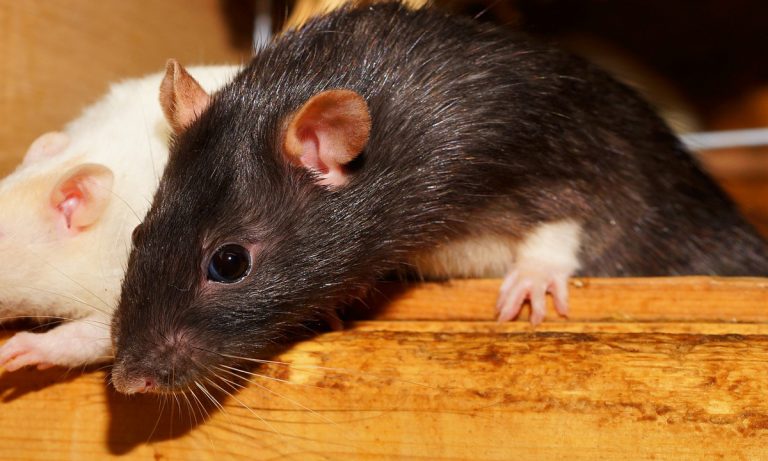
A 2005 study from Spain’s Complutense University showed that injections of the synthetic cannabinoid WIN-55212-2 directly into the brains of rats with amyloid beta plaque reduced neural inflammation and slowed their mental addling. (Which is a curious finding, since WIN-55212-2 is a mightily powerful psychoactive drug that cannot be used on human subjects for fear of triggering major freak-outs.)

In a similar setup, a 2007 study from Ohio State University showed that older rats given daily doses of WIN-55212-2 performed significantly better than their tea-totaling peers in a water-maze memory test. (Land-based maze negotiation, however, was not addressed in the experiment.).

What’s to account for the mice’s improved clarity of thought? A paper published in Molecular Pharmaceutics in 2006 hypothesized that cannabinoids might actually be stripping the plaque from diseased neurons. It concluded: “Compared to currently approved drugs prescribed for the treatment of Alzheimer’s disease, THC is a considerably superior inhibitor of [amyloid beta] aggregation.” This finding was supported by a 2013 study, another, by the University of Florida, in 2014, and, most recently, one by the Salk Institute in 2016.

J.K. Rowling Has A Wonderful Excuse For Writers Missing Deadlines

How many different excuses have you had for not turning your homework in on time? Everyone knows the classics: Your dog ate it, or maybe your computer crashed and it didn’t save, or you were sick all night and couldn’t finish it.

When it comes to procrastinating though, writers are even worse than high school students about completing assignments on time. Every writer has issued an elaborate excuse to an editor about why they haven’t finished a story. J.K. Rowling, however, has one of the most unique reasons for not finishing her story  on time, except she swears it’s 100 percent true.

It started when Quite Interesting (the team behind the BBC show of the same name) tweeted a story about a weasel falling into a Large Hadron Collider.

Soon after, Rowling noticed the tweet and couldn’t help sharing her own story about writers’ excuses.

This may be the best excuse a writer has ever given for not completing their work on time…if it’s true. Rowling does have a fantastical imagination after all. She’s also a wonderful follow for aspiring writers on Twitter, often posting hopeful missives about not giving up and experiencing the same pangs every writer goes through, like rejection and fatigue.

So if you need some extra time on an assignment, just use the aardvark excuse. If it worked for Rowling, it should work for you, too.

FOX Orders A Meghan Markle Documentary Ahead Of The Wedding

The impending wedding of Prince Harry and Meghan Markle is the entertainment bottleneck that keeps on squeezing every last drop of FOMO out of our collective bodies. The nuptials have already spawned a Lifetime movie, and now a FOX documentary exploring Markle’s turn from American actress to British royalty is a thing.

The two hour special will air May 11 and, according to Variety, will discuss the life of Markle and her journey into marrying a Prince. The documentary titled, Meghan Markle: An American Princess, will feature a behind-the-scenes look into the process of the couple’s engagement and a deeper understanding of Markle’s private life.

The film includes interviews with people who are close to Markle, such as her much discussed half-sister Samantha, journalist Piers Morgan, Princess Diana’s former butler, and Dickie Arbiter, the Queen’s former press secretary.

Rob Wade, president of alternative entertainment and specials for FOX, said, “With Meghan Markle on the cusp of becoming a real princess, joining the likes of Princess Kate and the late Princess Diana, this special will give viewers a unique look and insight into her journey, from her upbringing in Southern California to her wedding to Prince Harry in Windsor Castle.”

The documentary was made by Spun Gold, a production company that’s had some experience with British royals; they’ve made documentaries about Prince Charles and specials about Prince Phillip.

California’s ‘Marijuana Disneyland’ Dream Is Dead

Last summer, The Fresh Toast reported on the purchase of an entire ghost town in California called Nipton. All 80 acres and the structures that called it home was purchased for $5 million by a company called American Green, one of the first publicly traded tech companies in the cannabis realm that now has over 50,000 individual shareholders. The company, which has been in business for nearly 20 years, has a lofty mission “to be the cannabis and industrial hemp industry, seed-to sale innovator.”

They wanted to turn the town into a marijuana destination, filled with edibles shops, retails stores, farms, artist in residence programs and a plant to make water infused with CBD.

And now, word has surfaced that American Green ran out of money and sold the town to another penny stock called Delta International Oil & Gas for nearly $8 million. According to a statement, American Green will continue to develop the project over the next five years with a five-year option.

At closing, Delta will assume approximately $3.73 Million in American Green debt, and issue $4 Million in Delta “Series A Stock.”

According to the statement, David Gwyther, American Green’s Chairman, said that the transaction will relieve American Green of the on-going expense of improving Nipton. “That responsibility will now fall upon Delta, giving Nipton the ability to access cheaper capital through a fully reporting company, including the ability to file registered offerings,” adding:

American Green can now expend less of its energy on capital raising, and focus on implementing the revenue-generating components of Nipton, and its other investments, along with many new, and exciting projects on the horizon.

I believe that this will be a win-win situation for American Green and our shareholders.

In a Q&A with NASDAQ after the sale was announced, American Green shared why they sold Nipton in the first place, saying that buying and building towns is very cash sensitive and that up until now, the cost of attracting capital has been very expensive for the company, due, in part to the fact that it’s is an unaudited, non-reporting “Pink Sheet” company.  And that “Delta should have a much easier time raising money, at less cost, leading to a sizeable reduction in dilution for American Green and its shareholders.”

Don't Miss Your Weekly Dose of The Fresh Toast.

Stay informed with exclusive news briefs delivered directly to your inbox every Friday.

We respect your privacy. Unsubscribe anytime.