Tuesday, May 12, 2026
Home Blog Page 999

How Marijuana Can Help With Postpartum Depression

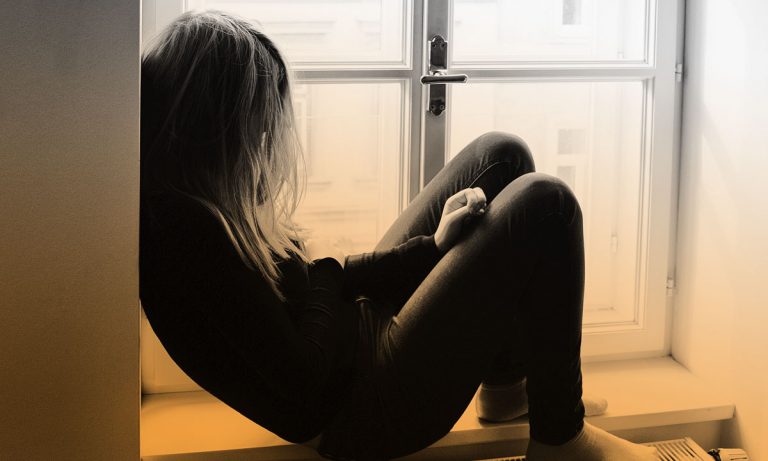
For most new parents, the birth of a child causes extended celebration throughout their lives. They can’t believe they could be so lucky to welcome this new life into the world. But that isn’t the case for everyone. Some go through the “baby blues,” but for other it doesn’t stop there. Support groups say one out of seven women will experience postpartum depression.

Most deal with the depressions through prescribed medication like SSRIs and antidepressants. But some women are turning to cannabis as a way to cope with their depression. One such mother is Celia Behar, who has become a de facto spokeswomen for postpartum depression and cannabis usage.

Following the birth of her first child, she experience intense postpartum depression. She was prescribed Prozac but didn’t like how the drug made her feel. The side effects were far too intense.

“My hands would shake, which I hated. No sleep,” she told an NBC affiliate. “There was definitely insomnia, upset stomach and really bad migraines.”

Following the birth of her second child, a friend recommended she try cannabis. Behar didn’t tell her husband at the time and kept it from friends that she was using cannabis. But now she is speaking out and sharing how someone can consume marijuana in a healthy manner and at the same time be a good mother.

As Behar explains in the above video, she is open with her kids about her cannabis usage. She views it no differently than mothers who drink a few glasses of wine after a long day. This falls in line with a recent study that shows more than half of parents who consume cannabis have done so in front of their kids.

If you’re curious, you can also read about how marijuana affects pregnancy, and why more women are using while they’re pregnant.

This Is How Many Minutes We’re Having Sex Per Week, According To Study

If you had to guess how many minutes the average American couple has sex per week, what would you say? No, really. Bet that number you’re envisioning is correct!

A study by EdenFantasys, an online retailer that focuses on getting everyone “off,” surveyed 2,000 American adults (all in relationships) and found that  couples had sex, on average, 69 minutes a week.

According to the data, three percent reported having sex more than  30 times a month, and 12 percent said they have sex for zero minutes per week. Womp womp.

A whopping 75 percent say they’re too busy for regular sex, while 60 percent say they would like to be having more sex.

More than half (52 percent) admit they schedule sex, which is usually on a Saturday. Thirty percent say it’s the most popular day of the week for sex. More specifically, 10 p.m. on a Saturday.

https://giphy.com/gifs/6OIQhT198z1wQ

The study also reveals that some people (one in five) considers a pre-agreed upon date and time for sex to be a romantic gesture. Say, what?

The average American couple has six “sexpointments” a month, according to the study.

Here’s the breakdown of the average American couple’s sex life:

  • 69 minutes per week
  • 9 times per month
  • 108 times a year
  • 60 hours a year
  • 6 “sexpointments” a month

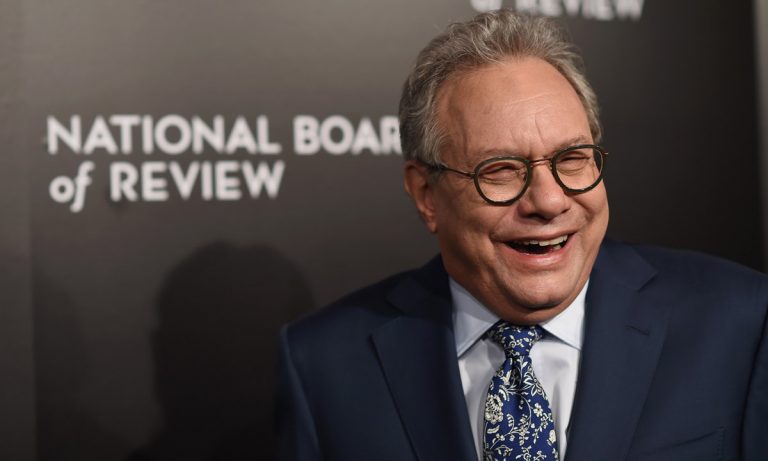
Why Comedian Lewis Black Absolutely Needs Marijuana Edibles On The Road

Watching comedian Lewis Black perform is like being treated to a tasty nougat of released anger and inhibitions. His comedy is in your face and overflowing with curse words. You almost wonder how a man so filled with rage is able to sleep at night.

The answer, it turns out, is marijuana edibles. See, Black is always touring, like most working stand-up comedians. But sleeping in multiple cities a week can disrupt any sleep lover’s bedtime routines, so Black brings marijuana edibles along for every trip.

As he explained to the New York Times, “I’m not doing this to get high, I’m doing this to go to sleep.”

But boy, some of those edibles I have done to try to go to sleep and I’m like, oh no I’m going to sit here and review everything. Once a guy on my tour bus said, ‘Let’s take a little of this and it’ll knock us out.’ But we were up all night and I went through every relationship I’ve ever had, every one, and how I failed, and what was my fault, and it was exhausting. Eventually, I fell asleep but it was mostly because I had run out of relationships.

Black’s other bedtime sleep-inducing hack? Melatonin gummy bears. A military friend of Black’s, who keeps “wackier hours” than him, told the comedian about them. He says they’re an absolute game-changer on the road.

“I find that nothing else can give you a leg up on relaxing,” Black said. “But you don’t do two of them, you do four or five of them. Probably doctors will say I’m wrong, but it does work.”

Rhode Island’s Ballot Initiative Represents Crucial Moment For Cannabis Legalization

Rhode Island citizens will be greeted by a question that could hold fundamental weight to cannabis legalization nationwide this voting season. That’s right, the country’s smallest state can still have the biggest impact.

“Do you support the legalization of possession and use of marijuana by persons who are at least 21 years of age, subject to regulation and taxation that is similar to the regulation and taxation of tobacco and alcohol?” that question will read.

This is one example of a developing strategy by lawmakers to raise questions about cannabis legalization in their state. Some may call the move a half-measure, as it does not actually put forth marijuana legislation should voters overwhelmingly approve. But Rhode Island state law only permits nonbinding advisory statutory referendums and will force politicians’ hands to really examine cannabis legislation when they reconvene for the 2019 session.

According to Tom Angell of Marijuana Moment, at least eight other states are considering such measures to propose cannabis questions to voters. Just this week, Illinois approved legislation that will include a nonbinding cannabis legalization question on the state’s November ballot.

“Shall the State of Illinois legalize the cultivation, manufacture, distribution, testing, and sale of marijuana and marijuana products for recreational use by adults 21 and older subject to state regulation, taxation and local ordinance?” reads the proposed question.

Rhode Island legalization advocates have claimed these questions just stall lawmakers from ending prohibition this year, and allow nearby Massachusetts to accrue possible tax revenue that could’ve been Rhode Island’s. For her part, RI Gov. Gina Raimondo said she’s “open to” giving voters the opportunity to voice their opinions on the issue through a referendum. She emphasized, however, that lawmakers must weigh the logistics behind implementation ahead of such a movement.

Company Launches Cannabis Beauty Care Products For People Of Color

A hemp manufacturer is rolling out a line of beauty and wellness products that cater specifically to minority customers, and claim they are the first in the industry to do so.

“We think this could be a seven-figure brand for us within 12 to 15 months,” Bob Crumley, controlling shareholder of Founder’s Hemp, told Marijuana Business News Daily.

The North Carolina-based company cannot sell in other states due to marijuana still being federally illegal in the U.S., preventing interstate commerce. But the company is working to sell its products in South Africa, Ghana, Bolivia and other countries.

The Hemp Excellence line includes body lotion, body oil spray, body butter, gelcaps, and lip balm.

The company partnered with Segment Marketing Services to target its pitch to people of color.

“The multi-ethnic populations in America are growing faster than any other. So if you’re an entrepreneur, you need to know this sector,” Segment CEO Lafayette Jones told MBND. His background includes stints at Proctor & Gamble and Kraft Foods.

The gelcaps are the only part of the line that contain cannabinoids. The others are made from hemp seed oil. None of the products will produce the euphoria so commonly associated with marijuana.

The capsules contain CBD, one of the most-discussed and studied compounds in cannabis, perhaps only second to THC. The latter produces the euphoria. CBD has been used to treat pain and maladies such as insomnia and anxiety.

Crumley said using hemp seed only is an attempt to attract customers leery about using products with cannabinoids in them

“There are still a lot of people under the misconception that cannabinoids have to come from marijuana,” Crumley told MBND.

Founder’s Hemp was one of North Carolina’s first cannabis businesses. Crumley helped lobby the legislature for a law allowing farmers in the state to grow hemp, which had a long history in the region dating back to colonial times.

College Baseball Coach Fired For Rejecting Colorado Recruit Over Marijuana

Texas Wesleyan fired their baseball coach Mike Jeffcoat after learning he denied a Colorado-based recruit because players from that state always fail drug tests. News of Jeffcoat’s behavior spread via social media when a local Colorado radio host Darren McKee posted a screenshot of an email exchange with a recruit.

Gavin Bell was the recruit’s name, and he thought Texas Wesleyan might be a place to continue his baseball career. So his dad sent off an email inquiry to Jeffcoat, and the coach replied he wouldn’t be a good fit because he lived in Colorado.

“Unfortunately, we are not recruiting players from the state of Colorado,” reads part of the email. “In the past, players have had trouble passing our drug test. We have decided not to take a chance on Student-athletes from your state. You can thank your liberal politicians for that.”

Citing “his remarks as well as the NAIA violations under his watch,” Texas Wesleyan President Fred Slabach and Athletic Director Steve Trachier announced they were terminating Jeffcoat.

“This university and its athletic program does not discriminate on the basis of the public policy of any state,” Slabach said. “We look at the individual student. We care about those students.”

Bell told CBS News he has been overwhelmed by the response generated from the story.

“My intention really wasn’t to do anything to hurt anybody or get anybody fired,” Bell said. “It was just me talking to my coaches and my loved ones about what do I do with this.”

You Can Legally Transport Marijuana To 2018 World Cup In Russia

This summer soccer fans attending the 2018 FIFA World Cup in Russia can legally transport marijuana into the stadiums thanks to a bureaucratic loophole. They can also bring cocaine and heroin, too, providing they have the proper medical paperwork.

You may consider this a joke and worry Russia is trapping naïve travelers, but an economic agreement that includes Russia explains how that’s possible.

Via Newsweek:

The Moscow-based Eurasian Economic Union (EAEU), a joint economic trade bloc of countries including Belarus, Kazakhstan and Russia, allows for certain banned narcotic and psychotropic drugs to be brought into the country with supporting medical documentation. The Russian-led union of nations gives foreign travelers the right to carry drugs including cannabis and cocaine with the proper prescription papers.

As the pro-Kremlin Izvestia newspaper first reported, FIFA rules also stipulate that fans can have banned narcotics on their persons so long as they also carry the proper medical paperwork. This doesn’t mean you’ll see fans lighting up mid-match, however. The country’s smoking ban will remain in effect in the 11 cities that will host World Cup soccer matches, as will Russian Federation laws regarding spectators’ proper conduct.

The 2018 Russia World Cup Organizing Committee confirmed these reports and released a statement clarifying that law enforcement officials will be staged at various checkpoints to confirm the authenticity of the medical paperwork.

“Security officers will monitor the enforcement of rules for carrying prescription drugs to stadium grounds at checkpoints,” the committee announced.

All this falls under a November 2015 Eurasian Economic Commission decision, which states travelers can carry a limited amount of drugs into EPAC countries. The only requirement is those transporting such drugs must maintain documentation “supporting medical documents indicating the name and quantity of goods.”

The Fresh Toast Marijuana Legislative Roundup: March 5

The legislative battle for cannabis reform continues across the nation. In Denver, public cannabis consumption in a coffee shop got the go-ahead. But in Vermont, the aroma of smoked marijuana could be categorized as a “public nuisance.”

Massachusetts: 

On Monday, the Massachusetts Cannabis Control Commission voted to delay licensing for recreational cannabis delivery services and social-use lounges until this autumn, while moving forward with a regulatory package designed to meet a July 1 deadline for the start of recreational sales. The Commission voted to remove licensing for cannabis home deliveries, social-use venues, and “mixed-use” venues, such as movie theaters and yoga studios, where small amounts of marijuana could be sold for consumption on the premises but whose income is derived primarily from non-marijuana sources.

Massachusetts was poised to become the first state to license cannabis lounges, or “cafes,” where patrons could consume marijuana in a social setting. The move comes after harsh criticism from Gov. Charlie Baker and state District Attorneys, who argued that such licenses were beyond the scope of the recreational cannabis law approved by voters in 2016 and that these businesses would pose a unique threat to public health and safety.  

Vermont:  

Lawmakers in the Vermont House of Representatives are considering a bill that would empower municipalities to punish marijuana odor as a “public nuisance.” Under the proposed legislation, which is supported by Gov. Phil Scott’s marijuana commission, cities and towns would be allowed to impose fines if a cannabis odor is emitted from a private residence. It is already illegal to consume marijuana in public under the legalization measure signed into law earlier this year. Starting July 1, adults 21 and older will be allowed to possess and consume up to an ounce of marijuana, and grow up to six plants of varying maturities at home. A vote is expected on the public nuisance bill soon.  

Another bill under consideration in the Vermont House would allow police to use roadside saliva tests for marijuana on drivers who seem impaired. If the test is positive, it would be considered grounds for requiring a more precise blood test. Saliva tests cannot detect whether a driver is impaired by cannabis, and could return a positive result long after any marijuana was consumed. The bill was recently passed by the House Transportation Committee and now faces approval by the Judiciary Committee before going to a vote of the full House.  

Colorado: 

On Monday, the city of Denver granted the nation’s first social-use recreational cannabis license under a pilot program approved by voters in 2016. The license was granted to a café named The Coffee Joint. Denver was the first city to allow such businesses, though the regulations are so restrictive that only one other business has applied for licensing. Patrons will now be allowed to consume cannabis products on the premises, but smoking remains illegal under state law.

The Coffee Joint will not be allowed to sell any marijuana products. Certain medical marijuana dispensaries in California have allowed smoking areas on the premises for several years and some of these were recently granted recreational cannabis licenses. 

Illinois: 

On Thursday, the Illinois Senate voted 37-13 in favor of a bill to put a marijuana legalization question on the ballot in November. If passed by the House and signed by the governor, the bill would place a non-binding referendum on the ballot asking voters whether recreational marijuana should be legalized for adults.

Non-binding referendums are often used by state legislatures to gauge public support for contentious political issues. Gov. Bruce Rauner is an outspoken critic of marijuana legalization, so it is unclear whether he would sign the bill.  

Barbra Streisand Really Loved Her Dog, So She Cloned It Twice

Rich people have a lot of benefits, among them—loving their pets for longer than the rest of us because that’s just the way the world works.

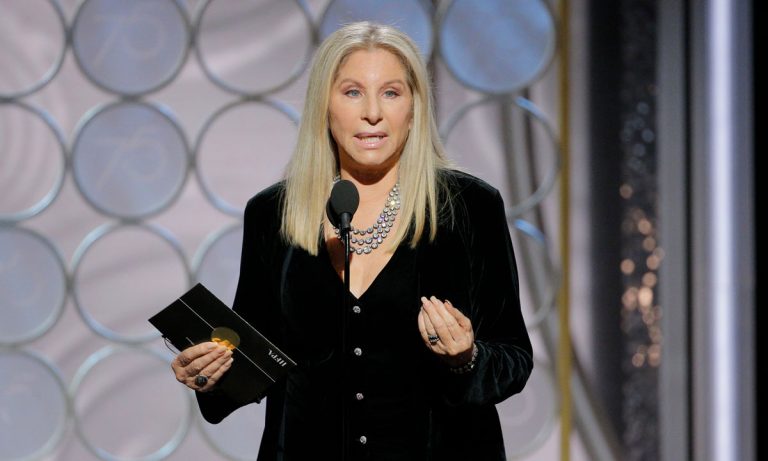
Barbra Streisand did a profile for Variety where she revealed that two of her dogs are clones from her beloved Samantha, who died back in 2017. Her little clones are named Miss Scarlet and Miss Violet, and they were made with the cells collected from the mouth and stomach of her other deceased dog.

According to Streisand, all of her dogs all have different personalities, even though they’re identical copies of each other, which is all kinds of weird. Mashable reports that dog cloning, even though criminally expensive, is not a new phenomenon.

One report found that cloned dogs can cost around $25,000 to $50,000, but that’s not a fixed price. The New York Post reports that a man paid $100,000 to clone his dog. In the article, the man expresses a bit of regret over cloning his pet, claiming that even a genetic copy of his dog didn’t fill the void that his death caused, because the clone is still a different animal. Food for thought, Barbra.

I still love Streisand, but she’s definitely eccentric, to put it mildly. Who knows what I’d do if I had that much money; I might also clone my dog. But there’s always adoption, which is cheaper and also really nice.

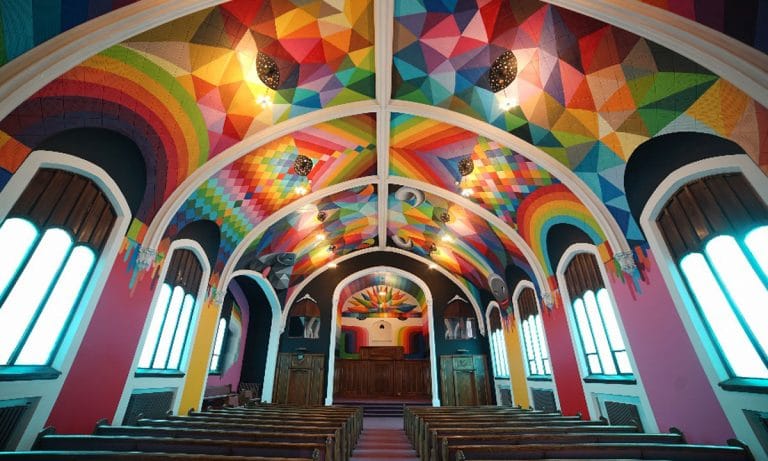
Mistrial! What’s Next For The Church Of Cannabis?

It wasn’t exactly the Trial of the Century, but the court case involving the City of Denver and the  International Church of Cannabis was expected to be a gripping — and groundbreaking — trial. Instead, the court proceedings fizzled about four hours after they began after the judge declared a mistrial.

Denver charged the unconventional church with violating Colorado’s Clean Indoor Air Act when the church openly welcomed parishioners to consume marijuana during a private service last April 20, the first day the church opened its doors. The city also charged the church leaders for encouraging public consumption of cannabis.

Denver County Court Judge Fred Rodgers declared a mistrial for church founders Steve Berke, Lee Molloy and Briley Hale after the prosecuting attorneys said they were unable to seat a six-person jury. The trial will be re-scheduled for mid-July unless both sides agree to a plea deal.

Warren Edson, attorney for the defense, told Westword that he had never seen so many jurors openly disagree with a city attorney’s theory on cannabis. “Basically [the city attorneys] ran out of jurors that they think can be fair to the city,” Edson said. “Hopefully this is a wake-up call for the city that this isn’t the open-and-shut matter that they think that it is.”

After preliminary juror interviews by attorneys on both sides, the judge declared that the jury pool of 24, which was shaved down to 15, was not large enough. “Each side had six pre-emptory challenges,” Edson said. “So if you take 12 away from 15, we didn’t have six.”

One prospective juror wondered aloud if this prosecution of a church was worth the tax dollars being spent on the case. Another member of the jury pool took issue with the number of police detectives (seven) on the prosecution’s witness list.

The church claims it has 5,000 members. Church leaders insist they will still hold consumption-friendly ceremonies on Friday nights for members only.

Don't Miss Your Weekly Dose of The Fresh Toast.

Stay informed with exclusive news briefs delivered directly to your inbox every Friday.

We respect your privacy. Unsubscribe anytime.