Sunday, December 28, 2025
Home Blog Page 1001

Netflix Cancels Marijuana Sitcom ‘Disjointed’ After Just One Season

Netflix has decided to pull the plug on their marijuana workplace sitcom, Disjointed, after a single season.

Produced by TV veteran Chuck Lorre, Disjointed starred Kathy Bates as a lifelong cannabis activist who achieved her dream of opening a marijuana dispensary. It was created by former Daily Show head writer David Javerbaum and Warner Bros.

The show’s demise comes on the heels of Netflix releasing the second batch of episodes from Season 1. Disjointed received disappointing reviews from the comedy, TV, and cannabis communities, which has been the explanation for its cancellation. “Early indications demonstrate a show out of touch and tonally confused,” I wrote last year.

However, the studio plans to shop the show elsewhere, according to Deadline. Whether it will find a landing spot remains to be seen, though cannabis’ status as a trending topic could help the show’s chances.

Outside of Bates, Disjointed’s cast featured Aaron Moten, Elizabeth Alderfer, Tone Bell, Elizabeth Ho, Dougie Baldwin, and Betsy Sodaro. Chris Redd was also on the show, though he left to join Saturday Night Live.

Red Herring Alert: Should California Have A Public Cannabis Bank?

It seems like every state in its own way has tried to grapple with a state-legislated solution to the notorious banking issue across the cannabis industry. And now California is going to study its own banking solution that, in all reality, probably isn’t going to go anywhere.

California is predicted to take in $7 billion by 2020 because of adult-use legalization. Its licensed operators have nowhere reliable to put all of that cash, and you can be sure that the California Department of Tax and Fee Administration doesn’t want those operators trucking hundreds of thousands of tax dollars to Sacramento. Additionally, the cash epidemic was complicated by the fact that Attorney General Sessions’ rescission of the 2014 Department of Justice (DOJ) Financial Crimes memo, which allowed financial institutions to bank marijuana businesses in states with “robust regulation”, in concert with the 2014 FinCEN guidelines. Thankfully, those guidelines still exist, but the Department of Treasury is currently looking at them in the wake of Sessions’ decision.

Back to California.

This month, Treasurer John Chiang announced that his office (along with the California State Attorney General’s office) would undertake a two-part feasibility study around forming a state-backed bank to serve California cannabis businesses. In his office’s November 2017 report, Chiang admitted that creating and supporting a state cannabis bank would be a “formidable” task and that the “definitive solution” is for the federal government to either legalize cannabis or for Congress to create some kind of legal safe harbor for financial institutions that bank the industry.

Nonetheless, Chiang’s report proposed two options for a state cannabis bank:

  • “A public institution that would either (1) finance public infrastructure and expand banking for underserved groups, including the cannabis industry; or (2) take deposits, make loans, and provide other services primarily to cannabis producers, distributors, retailers, and related businesses.” Or,
  • “A privately owned bankers’ bank, supported by the state, which would not take retail or small business deposits, but instead provide financial services, compliance services, and technical assistance to financial institutions serving the cannabis industry.”

Chiang’s report goes into great detail about the pros and cons of choosing either a public financial institution or the banker’s bank model. The report runs the gamut of concerns over federal asset forfeiture risks, industry volatility, special problems with closed loop banking and the Federal Reserve, public costs, profitability, capitalization, federal and state regulatory issues, the inability to secure federal depository insurance, and various and complicated ownership structures over either model. Overall though, both models sound nearly impossible to create, capitalize, and sustain due to existing federal regulations that are insurmountable in every way, because “marijuana” is still a Schedule I controlled substance.

While we appreciate the state’s desire to find a banking solution for cannabis operators, a state-owned, operated, and financially backed bank would have a gargantuan task just to get started–just ask Massachusetts and Colorado. Federal deposit insurers want nothing to do with a bank that is focused on marijuana businesses, regardless of whether it is state-owned. The Federal Reserve also seems unlikely to grant a master account to any newly chartered financial institution whose reason for being is to serve marijuana businesses. Without that master account, the bank wouldn’t have access to the federal money transfer system, a key aspect of banking.

California would be wise to examine state-legal marijuana banking in the Northwest.  Washington and Oregon boast a small but stable number of banks and credit unions that provide services to state-licensed marijuana businesses. Private banking in those jurisdictions grew slowly as those states developed their regulations, and the vast majority of rules are promulgated by state government.

California has only just started, and banks that would serve marijuana businesses there would only now be in a position to start working with California cannabis operators. Additionally, with the level of control that California regulators allow local authorities, marijuana businesses in different, local jurisdictions still face significantly different hurdles from one another. It is more challenging for institutions in California to keep up with the myriad of state and local rules that have been promulgated, most of which are still untested and with new ambiguities being found daily.

Now that the 2014 DOJ Financial Crimes enforcement memo is gone, it’s anyone’s guess as to what Treasury will do going forward and whether increased MAUCRSA regulation will matter to banks and credit unions in California. If banks are going to participate, regulations need to be significant enough that banks believe that they are as “robust” as the Treasury guidance requires, but simple enough that a bank can feel confident about its ability to judge whether or not one of its account holders is complying with state law.

Ultimately, a public bank of any kind is a red herring for the cannabis industry. Instead, existing financial institutions need to be sufficiently supported by the states so that they feel comfortable taking on the risk of servicing cannabis accounts.

Hilary Bricken is a partner at Harris Bricken, a law firm with lawyers in Seattle, Portland, Los Angeles, San Francisco, Barcelona, and Beijing. This story was originally published on the Canna Law BlogA version of this post previously ran in the author’s Above the Law column.

This Denim Mini Skirt-Looking Thing Is Actually A $405 Belt

0

We can all appreciate that fashion comes in all shapes and sizes, and just like art, it doesn’t matter if we “get” it. But sometimes, fashion statements look more like a big case of lazy than creativity. And that’s true of a denim “belt” that’s really pushing the boundaries of the definition. What basically amounts to a chunk of old denim is available through Net-A-Porter for $405.

Listed on sale as a “waist belt,” the description reads:

Designed to appear like it’s been sliced from the top of your favorite jeans, this faded blue version has frayed edges and exposed pockets. It looks even cooler with a slim leather strap over the top.

Head over to Vogue to see how Unravel Project used their belts in a recent fashion show.

https://www.instagram.com/p/BbHxMM2H95b

Yes, this is a belt. Not a pair of short shorts or a skirt, but…a belt. The Internet is also confused:

https://twitter.com/shilohwalker/status/959210066288267265

The belt also comes in black and a blue-gray color. As the fashion editor at Bustle points out, the belt is not all bad:

The cool thing about these non-jeans jeans is that you are able to cinch your waist a la a nice high-waisted pair of vintage denim without actually having to wear jeans at all. If you want to wear leather pants, but add a little denim, there’s no need to grab a jean jacket (boring) when you can grab this belt instead. It makes no sense at all, but when it comes to layering, even I have to admit this is a possible game-changer.

But…but…think of all the second-hand jeans and scissors you could buy for $405.

Patients Rejoice As Medical Marijuana Finally Goes On Sale In Pennsylvania

More than 4,000 patients have been certified to use medical marijuana in Pennsylvania and Thursday they finally had the chance to receive their medicine. The first sales began in western Pennsylvania with the very first purchase by a woman who lobbied for the law’s passage.

Diana Briggs says medical marijuana limits her teenage son from 400 seizures a day down to 50. The $178 worth of product, including tincture and capsules, she bought Thursday will last through the month, she said.

“A very long and winding, four-year journey brought me here today,” Briggs told the Associated Press. “I have been crying all day.”

More stores eastward are expected to open throughout the following days.

However, activists maintain that Pennsylvania has one of the most limiting medical marijuana programs in the country. Pennsylvania law only allows for the sale of marijuana in oils, tinctures, concentrates, and extracts. Edibles and smokable flowers remains prohibited. Medical insurance currently doesn’t provide for medical marijuana, including doctor appointments and the drug itself.

Governor Tom Wolfe, who oversaw the law’s passage, announced Pennsylvania’s first day of sales as a historic event for the state. Qualifying conditions for the program include AIDS, autism, post-traumatic stress disorder, chronic pain, cancer, Crohn’s disease, and epilepsy.

A Look Inside Meghan Markle’s Favorite Pilates Class

While the royal wedding is three months away, sources claim that Meghan Markle hasn’t wasted any time getting ready for the event. She’s been working out and staying fit through a mix of yoga and some crazy Pilates that includes the use of a Megaformer.

Via ET:

“It’s hands down the best thing you could do for your body. You keep coming back for several reasons.”

“Your body changes immediately. Give it two classes and you will see a difference.”

ET really wanted to know what it felt like to be Markle, at least for an hour of torture, so they decided to try that Pilates class with that scarily-named machine. The Megaformer looks like a transformer, having a sliding carriage with several platforms, handlebars, and straps.

A post shared by Natalia (@nataliayogi) on

This total body workout makes you do a little bit of everything, from squats, to side planks, to lunges, and many other things that you probably didn’t even know existed. After warming up, you get to a point where you have to do “Lagree Shakes,” which sounds scary as it should, because it literally makes your body shake. This method causes your muscles to contract and relax with intense focus, which results in you shaking like a leaf.

Shakes and all, you can burn between 500 and 700 calories per class.

Federal Judge To Government: Marijuana Clearly Saves People’s Lives

Last July, several medical marijuana users sued the federal government. While cannabis is legalized in some form in 30 states across the country, it remains a federally illegal substance classified as a Schedule I drug. The civil lawsuit filed argued that marijuana classification as a Schedule I drug should be ruled illegal.

Manhattan Federal Judge Alvin Hellerstein, the judge hearing that civil case, appeared sympathetic toward medical marijuana users in court this week. Assistant US Attorney Samuel Dolinger argued that the case should be tossed and that the plaintiffs should be petitioning the DEA. He cited that as the correct avenue for the plaintiffs instead of strong-arming change through federal lawsuits.

Dolinger referenced past laws like “A 1970 act of Congress that opposed the drug’s use to ‘protect the health and welfare’ of the people, and another act in 1998 for ‘public safety concerns.’” He doubled down, saying medical marijuana had no medical value, but Hellerstein was skeptical of such statements.

Via New York Daily News:

“How can you say that? … ‘There is no currently accepted medical use in the United States,’” Hellerstein asked. “Your argument doesn’t hold.”

“It could be recognized to have some medical use” if the laws change, Dolinger said.

At one point, Hellerstein also said to the five plaintiffs’ lawyer, Michael Hiller: “Your clients are living proof of the medical effectiveness of marijuana.”

“How could anyone say your clients’ lives have not been saved by marijuana?” Hellerstein also remarked. “You can’t.”

However, Hellerstein stated he wasn’t sure what his proper course of ethical action should be. The judge wasn’t sure if he had the power to overturn marijuana’s Schedule I status or if the plaintiffs should be finding recourse through standard government agencies. His announcement on the matter won’t arrive until a later date.

2020 Democratic Hopefuls Are Rallying For Full Cannabis Legalization

Contenders for the 2020 Democratic slot are already showing a common thread: Cannabis should be legalized. Dems are saying that not only should states maintain the laws that their constituents voted for, but that the herb should be legalized at the federal level.

New Jersey Senator Cory Booker introduced the Marijuana Justice Act last August and is confident that it or similar legislation will pass sooner than later. New York Senator Kirsten Gillibrand cosponsored the bill on Wednesday, calling the matter a “social justice issue” and “moral issue” that Congress need address. Both Senators are expected to at least consider a presidential run in 2020.

It’s rumored that Vermont Senator Bernie Sanders will also run again in 2020 as an independent candidate. Sanders would have descheduled cannabis by now if he’d won the office, but time will tell if he gets another shot.

In the meantime, the numbers can’t be denied. Polls abound and though democrats weigh in more heavily on the “legalize it” stance, the majority of Republicans are ready to see cannabis taken off the Schedule I list as well.

To be a Schedule I substance, a drug must have no known medical value and have a high potential for abuse. Aside from the fact that it’s literally called medical marijuana in most legalized states, keeping it in the same category as heroin is simply wrong. Remember, no one has ever died from cannabis toxicity.

On the campaign trail, Trump promised to let state laws alone when it came to cannabis. However, his Attorney General Jeff Sessions is not on board. Sessions rescinded the Obama-era Cole Memo which protected states with cannabis laws in place. This caused anxiety amongst activists, but they weren’t the only ones. Banks shied away and the what was the already legitimized cannabis industry was put back two steps. But not for long. It seems that the harsh, anti-pot rhetoric and actions on Sessions’ part have brought the issue to the forefront, and cannabis is winning.

California Senator Kamala Harris, another presidential hopeful, is an example of a democrat who has come around on the cannabis issue. Whereas in 2014 she openly laughed at the concept of legalization, now she is cosponsoring legislation that would allow banks to work with compliant, state-legal cannabis businesses.

Another potential 2020 challenger, Senator Elizabeth Warren of Massachusetts, is co-sponsoring said banking bill and is also working to broaden medical marijuana policy. Cannabis is certainly not a party issue, but it’s still encouraging to see so many Dems coming out for the herb.

3 Basic Settings On Your Phone That You Should Change

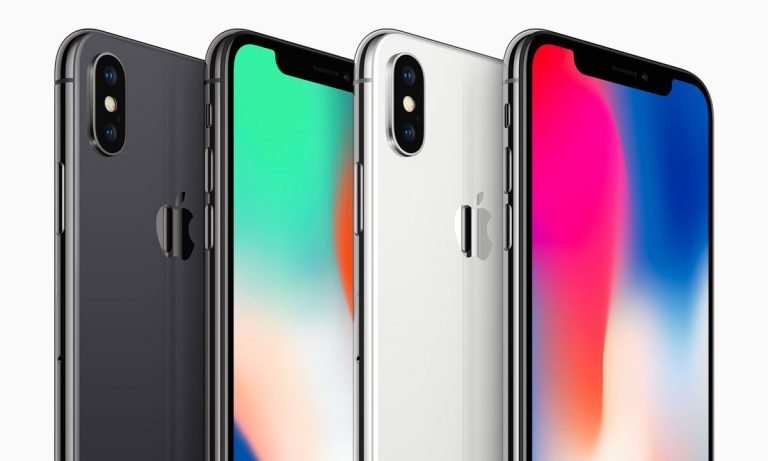
When you buy a phone, the last thing you do is mess with its settings. At least that’s what I try to avoid, believing that if I tinker with the phone’s original settings, I’ll disrupt the magic and balance of the new device. Experts disagree, believing instead that you should adapt your phone’s basic settings to fit your individual needs.

By messing with a few basic settings, you’ll be left with a more secure device that has better storage, and that feels comfortable and personal to you. Gizmodo compiled a few basic tips that’ll leave you with a more secure and better phone. Here are three of our favorites:

Create A Back Up Pin

https://giphy.com/gifs/cheezburger-police-10NPdN6z9vTYWI

Nowadays, your phone is basically your life, so it’s important to set up different layers of security. If your phone has bio metric security, make sure to back that up with a pin. If, for some reason, your phone doesn’t recognize your face or fingerprint, then your pin is the most reliable source of security.

On Android, head over to Settings, and then to Lock screen and security. On iOS, head over to Settings and then tap on Touch ID & Passcode or Face ID & Passcode.

Lock Down Your Phone

https://giphy.com/gifs/chelseashow-mad-phone-xUPGcvPidV1874aayc

It’s important to reduce your screen time out so that the device locks down as soon as you’re not using it. By setting your screen time out to 2 minutes or less, you’ll reduce the odds of someone taking your phone and unlocking it when it’s most vulnerable.

On Android, tap on Settings, then on Display, then on Advanced. This will take you to Sleep, where you’ll choose the window where your phone’s screen will dim. On iOS, select Display & Brightness and Auto-Lock in Settings.

Tweak Your Photo Settings

https://giphy.com/gifs/smartphone-ixDd2qXviXpqE

This step is really useful and will prevent tons of problems in the future. New versions of both Android and iOS allow you to easily select where you’d like your photos to be stored, helping you prevent filling your phone up with pictures and data that you’ll later have to painstakingly delete.

Google photos is available on Android and iOS, and it includes unlimited storage if you don’t mind that your photos and videos will be reduced to 16 megapixels and 1080p. You can pay 1.99 a month to store everything in full size. Apple Photos is only available on iOS, and it’ll sync up with all of your Apple devices. This system allows 5GB of cloud storage, after which you’ll have to pay 0.99 a month.

Kate Middleton Sends Demand Soaring For This Surprising Fashion Accessory

It’s not a secret Kate Middleton has perfect hair, and now we know the reason. It’s a little trick that was big back in the day and now, thanks to the Duchess of Cambridge, is back in fashion.

It’s…a hairnet.

The Daily Mail reports that the online UK retailer Superdrug has seen a 40 percent surge in sales after it was revealed that Kate uses them to create her impeccable signature updos. A big fan of coiffed hairstyles, Kate uses hairnets to secure her hair in place, creating the flawless effect.

https://www.instagram.com/p/Besyr68AxKa

Meg Potter, Superdrug head of beauty, tells The Daily Mail:

Sometimes the classics are the best and the hairnet is a great example of a simple idea which can achieve the best results, without the need for fancy technology or expensive ingredients. To hear a humble hairnet is the secret to keeping The Duchess’ up dos in place and looking sleek is a far cry from all the usual high end gadgets and beauty lovers have rushed out to pick up hairnets in a bid to recreate these fabulous looks.

But there are tons more products that go into creating Kate’s signature Disney Princess hair every day.

Ahead of Kate’s visit to Norway and Sweden, her royal tour hairdresser Amanda Cook Tucker posted a photo in Instagram that looked like a Sally’s Beauty exploded. The hair product haul included 13 brushes, six combs and two hairdryers.

At the time, celebrity hairdresser Jason Collier was quoted as saying, “I’m not surprised Kate’s hairdresser has such a substantial kit for the Royal Tour – we’ve come to expect Kate to look impeccably groomed and glamorous, and she is so famous for that beautiful blow-dry that it always needs to look perfect.”

Buckle Up! Traffic Accidents Rise On 420 Cannabis Holiday

Commuters and anyone else on the road April 20 might want to consider telecommuting or taking the bus. Assuming they already aren’t cannabis enthusiasts calling in sick.

A report earlier this week by The Journal of the American Medical Association reported that, after analyzing data from the National Highway Traffic Safety Administration, deadly crashes rise 12 percent after 4:20 p.m. through the rest of the day.

Researchers looked at records from April 20ths in the past 25 years. The crash was considered fatal if someone involved in it died within 30 days of it happening. Calculations showed 7.1 crashes per hour during that time period.

Similar incidents during the control group, the same time period a week before and after that day, were 6.1.

The increase is in line with the rise in risk on Super Bowl Sunday.

When the data was broken down by state, New York topped the list of fatal crashes on April 20 with Georgia second. Minnesota saw the smallest increase.

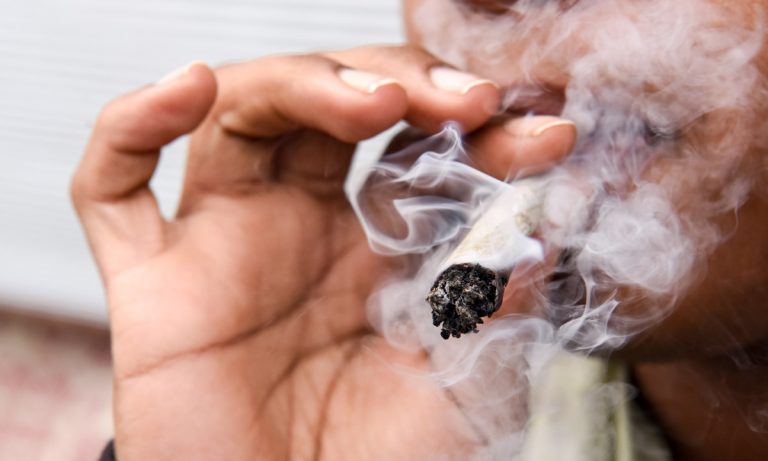
The unofficial cannabis holiday, known as 420 or 4/20, is observed by users lighting up their favorite herb (or chowing down on edibles if that’s their thing) on the day, notably at 4:20 p.m. The tradition’s origins got its start in San Rafael High School, just north of San Francisco. It is now celebrated around the world, sometimes in public as civil disobedience in places where use is illegal or heavily restricted.

Some researchers, members of law enforcement, and politicians have claimed that using cannabis impairs a driver similarly to alcohol. And many states, including those where the substance has been decriminalized or is now legal have added it to what constitutes “under the influence.” But those laws may not be effective, Jake Nelson of the American Automobile Association told MarketWatch. “There is no concentration of THC that would allow us to predict impairment among drivers.”

Researchers pointed out the risks to the general public during that time, not just celebrants, which is despite the fact that “the vast majority of Americans do not celebrate 4/20,” study authors John Staples and Donald Redelmeier wrote. If its popularity continues to increase, so too may the number of traffic fatalities.

Don't Miss Your Weekly Dose of The Fresh Toast.

Stay informed with exclusive news briefs delivered directly to your inbox every Friday.

We respect your privacy. Unsubscribe anytime.