Friday, December 26, 2025
Home Blog Page 1155

How This Woman Is Able To Fly With A Load Of Marijuana In Her Luggage 

As marijuana becomes legal in more of the country but remains a Schedule 1 drug in the eyes of the federal government, there’s been a lot of confusion around traveling with marijuana (including some back-and-forth around a website glitch that waived weed onto planes for a glorious moment, before it was taken down).

Michelle Cleaver, owner of Weed Dudes, a marijuana store in Sitka, Alaska, seems to have hacked the system. She discovered that she can pack five pounds of bud, or about 6,000 joints, or 65 pounds of edibles into her carry-on luggage, and the Transportation Security Administration only barely bats an eye.

How does she do it? Alaska Dispatch News reports:

She lets police know beforehand when she’ll be there. When she gets to the security checkpoint, she alerts TSA. TSA is a federal agency, but its focus is on security threats. Its agents don’t search for marijuana. If TSA agents see marijuana, they call law enforcement, according to TSA spokesperson Lorie Dankers. Law enforcement decides what to do, according to Dankers. The rest goes as follows: Airport police show up. They check the required travel manifest and other state documents. “As long as they have all of their proper Marijuana Control Board documentation … they can continue to travel at their own risk,” said Deputy Chief Aaron Danielson with the Fairbanks International Airport Police and Fire Department.

So, it’s at least partially about having the right documentation and being prepared ahead of time.

Jesse Davis, chief of the Anchorage Airport Police and Fire, told ADN that they’ve been alerted a handful of times to businesses traveling with marijuana, and it’s all gone smoothly.

Full disclosure is key, but there is one party Cleaver doesn’t share her secret stash with: The airline itself. All airlines follow Federal Aviation Administration regulations, which dictate that an airline is at risk if it “knowingly” carries marijuana. What they don’t know can’t hurt them, once she’s through TSA clearance. As long as the loud isn’t TOO loud; She gets a friend to smell-check her luggage once it’s all packed up.

While a common citizen flying around the country can’t pack a shit-ton of weed in their rolling bag and expect to whiz through security, business owners can use this loophole to transport product to hard-to-access locales like Alaska.

Vin Baker Says He Scored 41 Points In NBA Game While ‘Half-Stoned’

Vin Baker’s career is not one to glorify, but wayward tale of squandered potential. A once-rising star, he had a known problem with drinking. So much so that Boston Celtics doctors once told Baker he’d damaged his liver because of his alcoholism.

Financial woes led Baker to losing $100 million due to bad investments and friends taking advantage of him. Reports surfaced all around the internet Baker was working at a Starbucks a few years ago. Losing all that money and other substance abuse problems made Baker hit rock bottom.

But Baker has managed to turn his life around. In an interview to promote his recent book God and Starbucks, the former basketball player detailed his journey of getting sober and telling his story of how far he’s come.

“I came from a dark, dark place,” he told WBUR.

He also added, “We talk recovery, one day at a time. Win the day. So when I got the job at Starbucks as a store manager in training, it was the upswing. I was happy. I was ecstatic.”

One interesting detail that came out of the interview, however, is that Baker admitted he once played in an NBA game after smoking cannabis. Ahead of the game, he was hanging with several other Milwaukee Bucks teammates, including Glenn Robinson. Baker said Robinson was smoking marijuana and offered him some.

Baker indulged. Later, he played “half-stoned,” but was lights out. In fact, it was a coming-out party of sorts for Baker, who scored 41 points.

“Statistically, it was my best game ever as a pro. I scored 41 points,” he told WBUR. “It was a weird coming out party for me, because in some ways it said, ‘Wow, I’ve arrived on this level, to score 40 points, which is a big deal in the NBA.’ But at the same time, the cost of arriving, I didn’t see that night.”

Baker now works in broadcast and served as a youth summer camp director this year.

Kelis Finally Reveals The Boozy Milkshake Recipe That Brings All The Boys To The Yard

First off, before you ask yourself whether or not you should take a milkshake recipe from Kelis with a grain of salt, know that the Grammy nominated singer is a trained chef and graduate of Le Cordon Bleu.

Second, September 12 is National Milkshake Day, so even if you don’t trust a recipe from a singer who made a sextually suggestive song about — honestly, who knows? — it’s worth trying to replicate so you can take part in this national treasure of a holiday.

Now, where were we.

The recipe for this particular milkshake involves Baileys Irish Creme liquor, a cayenne-spiked cinnamon rim, ginger candy and ginger beer. This is how a milkshake becomes a tease on the playground.

Refinery29 has the recipe and accompanying video where, according to Kelis, people still always ask her what’s in her milkshake. Time to come up with a better pickup line, guys.

Ingredients

  • 3 oz Baileys Original Irish Cream Liqueur
  • 8 oz Ginger Beer
  • 4 scoops Chocolate Ice Cream
  • 5 pieces Candied Ginger
  • 1/2 teaspoon Cayenne Pepper
  • Chili Cinnamon Rim
  • Ginger Infused Whipped Cream for Garnish

Preparation

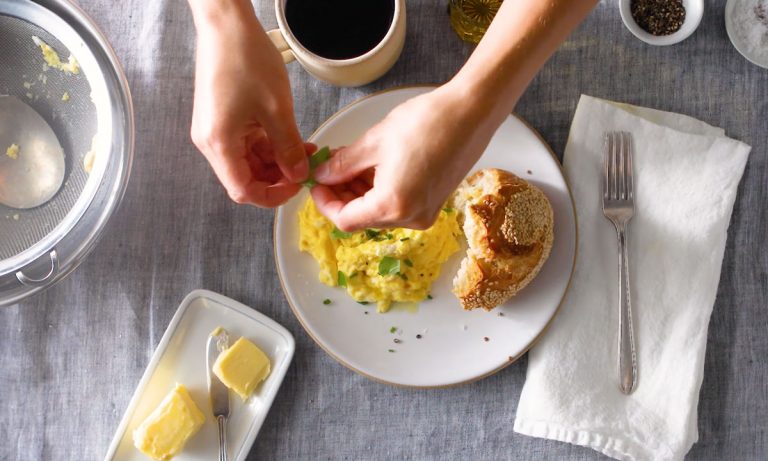
  • Combine Baileys, ginger beer, chocolate ice cream, candied ginger and cayenne pepper in a blender with a cup of ice. Blend until smooth.
  • Pour mixture into glass with chili-cinnamon-sugar rim (1:1:1).
  • Top with ginger infused whipped cream and a piece of candied ginger.
  • Check the yard.

All The American Universities Offering Cannabis Classes This Fall

From Kanye West to Harry Potter, universities offer educational expertise on just about everything these days. But some colleges have recently taken the initiative to develop course regarding cannabis for interested students.

The University of Vermont was the first to start the trend with a “Medical Cannabis” graduate-level class. Now the college has a full-blown graduate-level program that will allow students to learn topics like the history of cannabis, the effects of marijuana on human physiology, and “the issues related to cannabis’ legal production as a medicine and the benefits and risks of its medicinal use.” Another benefit: Students can learn on-campus or online, if they so prepare.

In addition, UC Davis offers an undergraduate class on the “Physiology of Cannabis.” It aims to increase awareness and understanding of how the cannabinoids and cannabis can affect the human body.

“This course is one of the few taught on an American college campus with a dedicated theme on the biology, physiology and medicinal effects of cannabis and cannabinoids,” Yu-Fung Lin, the associate professor of physiology and membrane biology at UC Davis School of Medicine teaching the course, said in a release.

If law is more your jam, Ohio State University has a course at their College of Law titled “Marijuana Law, Policy & Reform Seminar.” It teaches students the complicated manner of cannabis laws at the state and federal levels and the evolving legal nature of the two.

“In this seminar, we will examine the social and historical backdrop of intoxicant prohibition, and assess the legal reforms and political debates now having an impact on the control and regulation of marijuana distribution and use,” the course description reads.

While they are not accredited institutions, there are cannabis colleges for those interested as well. Options include “America’s first cannabis college” Oaksterdam University in California and THC University and Cannabis Training University, both in Colorado.

7 Great Health Benefits Of Hemp Protein Powder

It’s a little known fact that you can make protein out of hemp and that it comes with a long list of benefits that can help you be super healthy while also working some magic for your system. This protein powder is made out of the grinding of the seeds of the plant, leaving you with a hemp protein powder that blends vitamins and fats that are a great addition to anyone’s diet.

Here are 10 facts about hemp protein:

Boost Your Immune System

https://giphy.com/gifs/lukecage-luke-cage-red-carpet-26ueZGSZdaowAeRyw

Hemp seeds have a lot of globular proteins, which are the ones that produce enzymes, antibodies and hormones, while also contributing to the fluid of your blood plasma.

Increases Your Energy Levels

https://giphy.com/gifs/man-moves-energetic-FxaQN9priZFrW

Hemp protein powder contains lots of fatty acids which, when ingested, produce twice as much energy as carbohydrates while also taking a longer time to break down, resulting in energy that’s sustained throughout the entirety of the day.

Strengthens Hair

https://giphy.com/gifs/beyonce-hair-flip-nSPEShm513TZ6

Again, fatty acids combine really well with our system, promoting the growth of healthy hair, adding sheen to it while preventing hair loss.

Reduces Inflammation

https://giphy.com/gifs/fitness-victorias-secret-blonde-7PU6k8hYSO7Xa

According to several studies, the gamma linolenic acid present in hemp seeds works really well for reducing inflammation in people with arthritis.

Repairs Muscles

https://giphy.com/gifs/fitness-amy-schumer-fitspo-10JTWlYFj5t3Us

Athletes use protein powders to repair and build their muscles. Hemp is a complete protein source, meaning that it contains all essential amino acids to repair muscle tissue. Since it comes from a plant, it’s also a good option for people with allergies.

Improves Digestion

https://giphy.com/gifs/loop-monday-fruit-d1FL4zXfIQZMWFQQ

Hemp seed protein powder comes from a plant, so there’s no risk of producing gassiness and bloating, like many other protein powders.

Fights Heart Disease

https://giphy.com/gifs/heart-blood-eat-Ou6gQ8Al6PACk

Hemp is full of fiber, healthy fats and other vital nutrients that are great for heart health. It also contains a lot of arginine, that causes blood vessels to expand.

Chicken Beer And Ice Cream Are On The Menu At This Dog Bar In Croatia

It’s not enough that they usually spend their days napping, eating and playing catch. Now, there’s a beach bar dedicated solely to man’s best friend.

It’s called Monty’s Dog Beach bar and it’ located in Crikvenica, Croatia. On the menu: a specialty brewed chicken and vegetable beer, and ice cream made from bananas, yogurt, peanuts and soy milk. There’s even medicinal teas for senior dogs.

Owners are welcome too. Dogs and their people can grab a sun bed and cool off in the Adriatic waves. And humans have a selection of drinks snacks to choose from, according to Mentalfloss.

Last month, Monty’s hosted a competition between dogs and their owners. Fifteen “couples” competed, jumping off a pier and swimming 100 meters to shore. A four-year-old Samoyed mix named Nimbus claimed the prize: 15 pounds of kibble and a staycation at a nearby hotel.

Take a look:

Marijuana’s THC May Help Improve Memory In Older Adults

A small dose of cannabis per day may help delay the aging process in the brain and improve memory in older adults, according to a new study published Monday in Nature Medicine

Scientists at the University of Bonn, along with their colleagues from The Hebrew University of Jerusalem, demonstrated that marijuana improves the memory and learning abilities in aging mice. Low doses of THC — the psychoactive cannabinoid in cannabis — actually reverses the decline in cognitive abilities.

The breakthrough research holds great promise as a way for doctors to slow the aging process in human brains.

“Although there is a long path from mice to humans, I feel extremely positive about the prospect that THC could be used to treat dementia, for instance,” said Svenja Schulze, a German science minister.

According to Andreas Zimmer, a professor at the University of Bonn and the study’s lead researcher, THC imitates the effect of cannabinoids produced naturally in the body, which fulfil important functions in the brain. “With increasing age, the quantity of the cannabinoids naturally formed in the brain reduces,” according to Zimmer. “When the activity of the cannabinoid system declines, we find rapid ageing in the brain.”

The researchers administered microdoses of THC to mice of various ages over a four-week period. The scientists then tested learning capacity and memory performance in the lab subjects. Mice given a placebo displayed natural learning and memory losses. However, the cognitive functions of the mice treated with THC were just as good as the control mice. “The treatment completely reversed the loss of performance in the old animals,” Zimmer concluded.  “It looked as though the THC treatment turned back the molecular clock.”

The groundbreaking study holds promise as a potential treatment for a host of neurological brain disorders. But the researchers say more research is required before it can be said that THC might reverse cognitive decline in elderly humans.


5 Non-Smoking (And Healthy) Ways To Consume Marijuana

A lot of people believe that to consume marijuana means to engage with a bong or joint, but there are many ways in which you can get high and squeeze out all the wonders of cannabis.

The people who are involved with the business of marijuana are creative, so in the era where everyone is focused on their fitness and  being healthy, enthusiasts have found ways to consume cannabis while lowering the risks and side effects that are associated with smoking.

Check out this list of healthy and awesome ways in which you can make the most out of your cannabis:

https://giphy.com/gifs/tea-kermit-the-frog-sipping-3o85xGocUH8RYoDKKs

Tea

This drink is synonymous with relaxation, and it’s the perfect companion for when you’re feeling super tired and drained after work. Another bonus: You won’t be smoking anything, so your lungs will be grateful. The downside is that, unlike a simple hit from a bong, drinking some cannabis tea involves preparation. Cannabutter is also a great and simple option, which will dissolve quickly into the tea.

Edibles

Probably the most famous out of this list, edibles are very popular within the cannabis community, known for inducing fun and sometimes powerful highs. Edibles are also very popular for medical marijuana users, because it’s gentle on their bodies, fast acting and it helps them cope with the symptoms of their disease.

If you want to control your calorie intake, there are health conscious brands like Julie’s Natural Edibles and there’s also marijuana infused granola mixes, which you can add onto your breakfast or have as a snack. Fun day ahead guaranteed.

Vaporizing

Vaping is considered a healthier option than smoking because the user can control the heat in which the marijuana is cooked, avoiding a bunch of toxins that arise when a direct flame is involved.

With this option you have the ability to consume cannabis in different forms, through concentrated cannabis wax, cannabis oil or some good old dried herbs. It’s important to know that waxes and oils are much more concentrated and thus have higher THC so lookout for a bad high.

Juicing

You can blend raw and fresh cannabis leaves onto your vegetable or fruit juices and smoothies to create a healthy and delicious treat that you can consume after a workout or as a snack. Consuming raw cannabis won’t get you high, but you’ll be taking advantage of all the other good stuff that marijuana offers to the human body.

Topicals

https://giphy.com/gifs/KUdyckOjY2lsk

This method extracts all the good stuff from marijuana through the use of alcohol and whole cannabis plants, leaving a liquid that’s called a tincture, which is ingested orally by placing a few drops of it under your tongue. It’s effects are super fast because of the way it’s consumed and people sometimes use it on teas and beverages. It’s not the most tasty, but there are a few companies who’ve developed honey tinctures which you can sneak into your morning coffee or tea.

A lot of people believe that to consume marijuana means to engage with a bong or joint, but there are many ways in which you can get high and squeeze out all the wonders of cannabis.

All The NFL Players Facing Marijuana Suspensions This Season

While commissioner Roger Goodell might insist otherwise, the NFL is a league with a ton of issues. One so happens to be its players’ relationship to pain and how players choose to treat that pain. Some have turned to cannabis, calling it a “Godsend,” but due to the league’s strict drug policies, it’s pushed some of its brightest stars out of the league.

Yet another player will face possible marijuana suspension, as Cleveland Browns player T.Y. McGill was charged with possession this past weekend. The league has yet to issue its own discipline over McGill’s charge, but he’s far from the only player on the outs this season because of cannabis. Here are all the players suspended this season due to marijuana.

Randy Gregory—Dallas Cowboys

The former Nebraska standout reportedly failed a seventh drug test administered by the league earlier this year, according to TMZ. He already will miss the entire 2017 season due to a previous drug test. Sources say Gregory has “drifted from football” and ignoring NFL officials who have reached out to him.

Unless the NFL changes its drug policy, it appears Gregory might be on the outs. Gregory’s suspension, it’s worth mentioning, helps explain why Cowboys owner Jerry Jones urged other NFL owners to allow players to consume marijuana for pain earlier this year.

Martavis Bryant—Pittsburgh Steelers

The premiere receiver missed all of last year, suspended without pay, due to positive weed tests. While it seemed he might be suspended this year, and reportedly was on a short leash, he received a full reinstatement this week.

Darren Waller—Baltimore Ravens

Darren Waller has never hid his relationship to marijuana. Though the bruising tight end was suspended for four games last season for a positive marijuana test, he just received a year-long suspension for another positive test this season.

Following his last suspension, he was honest about his usage, saying, “There were other personal issues, and [marijuana] was the one thing I always turned to,” Waller said. “It was just about finding more positive outlets for me to do, like talking to people about it and things like that. I’m definitely at a better place with that now.”

“It’s knowing that it’s bigger than me around here. When I’m here, it’s not a problem. I work hard and am involved in everything and positive. But when I leave here, am I still taking that mindset with me wherever I go?”

Justin Gilbert—Free Agent

Justin Gilbert was hit with a year-long suspension this summer for marijuana after failing two tests within two months, but cannabis wasn’t his only problem. A former Oklahoma State star, Gilbert was drafted in the first round by the Cleveland Browns back in 2014. And while the NFL drug policy remains draconian, it’s tough when a player won’t commit to his job of playing football. He reportedly missed meetings, oversleeping, and once showed up to a 1 p.m. game an hour before kickoff.

As usual, cannabis isn’t the problem. Gilbert just doesn’t seem to care about football all that much.

Karlos Williams, Sr.—Free Agent

Sometimes, a player’s relationship with weed costs them a chance at playing in the NFL. Unfortunately that appears to be the case with former Florida State standout running back Karlos Williams, who isn’t currently signed to a team and suspended for at least one year from the league.

He last played for the Bills, where he received a four-game suspension for testing positive. He later showed up out of shape to training camp, causing Buffalo to drop him. Pittsburgh later took a flier on Williams, but they released him back in March.

Seantrel Henderson—Buffalo Bills

Last year, Henderson received a 10-game suspension for his second positive marijuana test. But Henderson’s case differs from everyone on this list. Henderson has been diagnosed with the autoimmune disorder Crohn’s disease and medical marijuana is a common treatment for the condition. Henderson did just that.

“There is zero allowable medical exemption for this per the NFL; however, there clearly should be,” Henderson’s agent told NFL.com.

Henderson had two surgeries to remove parts of his intestines to manage the painful disease. While he will be suspended the first five games this year, reports indicate he gained a stunning 60 pounds this offseason. He weighs 340 pounds now, and he’ll start at tackle when he returns.

A Brief History Of The War On Drugs And What It Means For Marijuana Today

Many currently illegal drugs, such as marijuana, opium, coca, and psychedelics have been used for thousands of years for both medical and spiritual purposes. So why are some drugs legal and other drugs illegal today? The war on drugs is not based on any scientific assessment of the relative risks of these drugs – but it has everything to do with who is associated with these drugs.

The Early Stages Of Drug Prohibition

The first anti-opium laws in the 1870s were directed at Chinese immigrants. The first anti-cocaine laws in the early 1900s were directed at black men in the South. The first anti-marijuana laws, in the Midwest and the Southwest in the 1910s and 20s, were directed at Mexican migrants and Mexican Americans. Today, Latino and especially black communities are still subject to wildly disproportionate drug enforcement and sentencing practices.

Nixon And The Generation Gap

In the 1960s, as drugs became symbols of youthful rebellion, social upheaval, and political dissent, the government halted scientific research to evaluate their medical safety and efficacy.

In June 1971, President Nixon declared a “war on drugs.” He dramatically increased the size and presence of federal drug control agencies, and pushed through measures such as mandatory sentencing and no-knock warrants.

A top Nixon aide, John Ehrlichman, later admitted: “You want to know what this was really all about. The Nixon campaign in 1968, and the Nixon White House after that, had two enemies: the antiwar left and black people. You understand what I’m saying. We knew we couldn’t make it illegal to be either against the war or black, but by getting the public to associate the hippies with marijuana and blacks with heroin, and then criminalizing both heavily, we could disrupt those communities. We could arrest their leaders, raid their homes, break up their meetings, and vilify them night after night on the evening news. Did we know we were lying about the drugs? Of course we did.”Nixon temporarily placed marijuana in Schedule One, the most restrictive category of drugs, pending review by a commission he appointed led by Republican Pennsylvania Governor Raymond Shafer.

In 1972, the commission unanimously recommended decriminalizing the possession and distribution of marijuana for personal use. Nixon ignored the report and rejected its recommendations.

Between 1973 and 1977, however, eleven states decriminalized marijuana possession. In January 1977, President Jimmy Carter was inaugurated on a campaign platform that included marijuana decriminalization. In October 1977, the Senate Judiciary Committee voted to decriminalize possession of up to an ounce of marijuana for personal use.

Within just a few years, though, the tide had shifted. Proposals to decriminalize marijuana were abandoned as parents became increasingly concerned about high rates of teen marijuana use. Marijuana was ultimately caught up in a broader cultural backlash against the perceived permissiveness of the 1970s.

The 1980s And 90s: Drug Hysteria And Skyrocketing Incarceration Rates

The presidency of Ronald Reagan marked the start of a long period of skyrocketing rates of incarceration, largely thanks to his unprecedented expansion of the drug war. The number of people behind bars for nonviolent drug law offenses increased from 50,000 in 1980 to over 400,000 by 1997.

Public concern about illicit drug use built throughout the 1980s, largely due to media portrayals of people addicted to the smokeable form of cocaine dubbed “crack.” Soon after Ronald Reagan took office in 1981, his wife, Nancy Reagan, began a highly-publicized anti-drug campaign, coining the slogan “Just Say No.”

This set the stage for the zero tolerance policies implemented in the mid-to-late 1980s. Los Angeles Police Chief Daryl Gates, who believed that “casual drug users should be taken out and shot,” founded the DARE drug education program, which was quickly adopted nationwide despite the lack of evidence of its effectiveness. The increasingly harsh drug policies also blocked the expansion of syringe access programs and other harm reduction policies to reduce the rapid spread of HIV/AIDS.

In the late 1980s, a political hysteria about drugs led to the passage of draconian penalties in Congress and state legislatures that rapidly increased the prison population. In 1985, the proportion of Americans polled who saw drug abuse as the nation’s “number one problem” was just 2-6 percent. The figure grew through the remainder of the 1980s until, in September 1989, it reached a remarkable 64 percent – one of the most intense fixations by the American public on any issue in polling history. Within less than a year, however, the figure plummeted to less than 10 percent, as the media lost interest. The draconian policies enacted during the hysteria remained, however, and continued to result in escalating levels of arrests and incarceration.

Although Bill Clinton advocated for treatment instead of incarceration during his 1992 presidential campaign, after his first few months in the White House he reverted to the drug war strategies of his Republican predecessors by continuing to escalate the drug war. Notoriously, Clinton rejected a U.S. Sentencing Commission recommendation to eliminate the disparity between crack and powder cocaine sentences.

He also rejected, with the encouragement of drug czar General Barry McCaffrey, Health Secretary Donna Shalala’s advice to end the federal ban on funding for syringe access programs. Yet, a month before leaving office, Clinton asserted in a Rolling Stone interview that “we really need a re-examination of our entire policy on imprisonment” of people who use drugs, and said that marijuana use “should be decriminalized.”

At the height of the drug war hysteria in the late 1980s and early 1990s, a movement emerged seeking a new approach to drug policy. In 1987, Arnold Trebach and Kevin Zeese founded the Drug Policy Foundation – describing it as the “loyal opposition to the war on drugs.” Prominent conservatives such as William Buckley and Milton Friedman had long advocated for ending drug prohibition, as had civil libertarians such as longtime ACLU Executive Director Ira Glasser. In the late 1980s they were joined by Baltimore Mayor Kurt Schmoke, Federal Judge Robert Sweet, Princeton professor Ethan Nadelmann, and other activists, scholars and policymakers.

In 1994, Nadelmann founded The Lindesmith Center as the first U.S. project of George Soros’ Open Society Institute. In 2000, the growing Center merged with the Drug Policy Foundation to create the Drug Policy Alliance.

The New Millennium: The Pendulum Shifts – Slowly – Toward Sensible Drug Policy

George W. Bush arrived in the White House as the drug war was running out of steam – yet he allocated more money than ever to it. His drug czar, John Walters, zealously focused on marijuana and launched a major campaign to promote student drug testing. While rates of illicit drug use remained constant, overdose fatalities rose rapidly.

The era of George W. Bush also witnessed the rapid escalation of the militarization of domestic drug law enforcement. By the end of Bush’s term, there were about 40,000 paramilitary-style SWAT raids on Americans every year – mostly for nonviolent drug law offenses, often misdemeanors. While federal reform mostly stalled under Bush, state-level reforms finally began to slow the growth of the drug war.

Politicians now routinely admit to having used marijuana, and even cocaine, when they were younger. When Michael Bloomberg was questioned during his 2001 mayoral campaign about whether he had ever used marijuana, he said, “You bet I did – and I enjoyed it.” Barack Obama also candidly discussed his prior cocaine and marijuana use: “When I was a kid, I inhaled frequently – that was the point.”

Public opinion has shifted dramatically in favor of sensible reforms that expand health-based approaches while reducing the role of criminalization in drug policy.

Marijuana reform has gained unprecedented momentum throughout the Americas. Alaska, California, Colorado, Nevada, Oregon, Maine, Massachusetts, Washington State, and Washington D.C. have legalized marijuana for adults. In December 2013, Uruguay became the first country in the world to legally regulate marijuana. In Canada, Prime Minister Justin Trudeau plans legalize marijuana for adults by 2018.

In response to a worsening overdose epidemic, dozens of U.S. states passed laws to increase access to the overdose antidote, naloxone, as well as “911 Good Samaritan” laws to encourage people to seek medical help in the event of an overdose.

Yet the assault on American citizens and others continues, with 700,000 people still arrested for marijuana offenses each year and almost 500,000 people still behind bars for nothing more than a drug law violation.

President Obama, despite supporting several successful policy changes – such as reducing the crack/powder sentencing disparity, ending the ban on federal funding for syringe access programs, and ending federal interference with state medical marijuana laws – did not shift the majority of drug policy funding to a health-based approach.

Now, the new administration is threatening to take us backward toward a 1980s style drug war. President Trump is calling for a wall to keep drugs out of the country, and Attorney General Jeff Sessions has made it clear that he does not support the sovereignty of states to legalize marijuana, and believes “good people don’t smoke marijuana.”

Progress is inevitably slow, and even with an administration hostile to reform there is still unprecedented momentum behind drug policy reform in states and localities across the country. The Drug Policy Alliance and its allies will continue to advocate for health-based reforms such as marijuana legalization, drug decriminalization, safe consumption sites, naloxone access, bail reform, and more.

We look forward to a future where drug policies are shaped by science and compassion rather than political hysteria


Don't Miss Your Weekly Dose of The Fresh Toast.

Stay informed with exclusive news briefs delivered directly to your inbox every Friday.

We respect your privacy. Unsubscribe anytime.