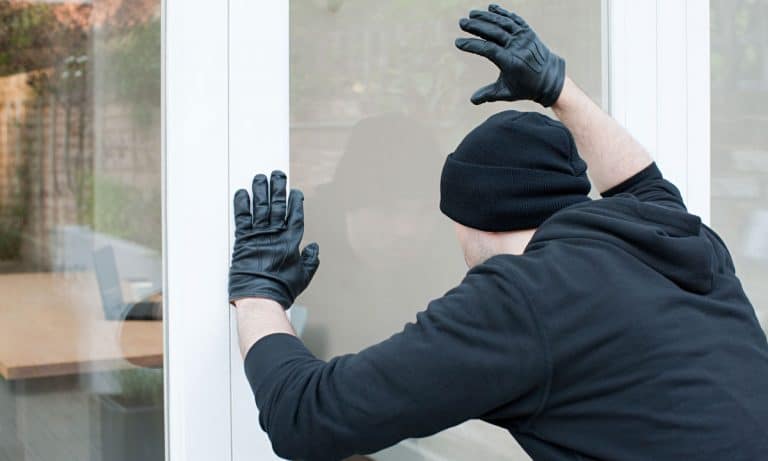
Andrew David Jensen was arrested on July 26th for suspicion of burglary. On October of 2016, there was a break in the city of Thousand Oaks, California and policemen were surprised to find that the toilet of the house hadn’t been flushed. Authorities suspected that it was the work of the burglar who, in the heat of things, forgot basic social rules.
“The suspect did his business and didn’t flush it”
Said Tim Lohman, the very concerned detective who’s leading the investigation. He also said how this was the first case he’d heard of where the police had gathered the suspect’s DNA from a toilet.
“When people think of DNA evidence they usually think of hair samples or saliva”
I’m no expert, Mr. Lohman, but I think DNA’s everywhere in our bodies, especially in everything that comes from our insides. The detective said that he didn’t know if Jensen had an attorney and that his hearing was scheduled soon.
The police department ran the DNA they had through their profile database and found a match. Authorities tracked down Jensen in his home and caught him, 9 months after the robbery had been committed. That sucks so bad and we have so many questions. Was it number 1 or number 2? Is Jensen berating himself over the fact that he could’ve gotten away with the perfect robbery but didn’t because he forgot to flush the toilet? What did he steal? We’ll never know.
A combination of trusting Google Maps and bad car luck left this man stranded in the desert for days.
Mick Ohman said he left home one day to take a leisurely drive through the Bradshaw Mountains in Arizona for lunch. After a particularly tough ride through a boulder-filled path, his car broke down. He was stranded without cell service, far from home.
According to ABC News, his only provisions were a half-full water bottle, two beers, a sandwich and some crackers in a lunchbox in his car. Depending on one’s level of health and age, a person can die from dehydration as quickly as a few days to a week. In the Arizona heat, Ohman was losing hydration quickly.
He recorded video messages to his loved ones and put notes on his car and phone, saying, “If you find this phone and I didn’t do so well, please tell my sisters how much I love them.” He resorted to drinking his own urine — which was better than drinking from the streams, he said.
More than 48 hours passed before he was able to find help, in the form of a biker riding through the mountains. He flagged the biker down and rode back to town with him to get help.
The Department of Health just announced the issuance of new proposed regulations that would make changes to the NY’s medical marijuana program to improve access. Among other things, they would reduce some of the onerous security requirements for registered organizations, shorten the length of the medical marijuana course certifying practitioners must take from four hours to two, and allow additional types of medical marijuana products to be sold.
“This is yet another positive step forward for New York State’s Medical Marijuana Program,” said New York State Department of Health Commissioner Dr. Howard Zucker. “These regulations will continue to improve the program in several ways, including making new forms of medical marijuana available and improving the dispensing facility experience.”
New York’s medical marijuana program has been criticized by the Marijuana Policy Project and patient advocates as unnecessarily restrictive, and initial patient registration numbers were very low compared to other state medical marijuana programs. The Department of Health has made several changes to the program since it issued a report in August 2016, including adding chronic pain as a qualifying condition and allowing registered nurses and physician’s assistants to recommended medical marijuana.
The proposed regulatory changes can be viewed here.
Lawmakers have also been working to improve the medical marijuana program this session. In June, the Legislature passed a bill to add post-traumatic stress disorder (PTSD) as a qualifying condition. Gov. Andrew Cuomo must still sign the bill in order for it to become law.
As of August8, 2017, there were 26,561 certified patients and 1,155 registered practitioners participating in the state program. The number of certified patients has increased by 11,569 (77 percent) since the addition of chronic pain in late March.
For more information on New York’s Medical Marijuana Program, go here.
Game of Thrones has never been a bad or boring TV show. Quite the opposite is true—throughout most of the series run, you practically forget you’re watching a TV show. Reviewers and writers have praised GoT for its novelistic characters and narrative pacing, in addition to esteeming its cinematic set pieces. It’s a sly shorthand to indicate this isn’t like any previous TV show you’ve experienced.
Because while encountering the best stories the boundaries of form melt into gas and vanish. Great storytellers aren’t confined by the rules of what it means when a story is a TV show or movie or novel or anything else. Instead, they break the rules by forgetting they exist and replacing them with their own. Through a sort of narrative osmosis, so does the audience.
You intuitively accept this when watching a Paul Thomas Anderson movie or Lena Dunham’s Girls or listening to the work of Frank Ocean or Louis C.K. Their art compels you because when engaging with it, you feel anything can happen at any time. There are no rules. None, anyways, besides the ones they create.
So it was with Game of Thrones. When a show has the balls to kill its major protagonist the episode before its first season finale, pull off something like The Red Wedding, and strand a major character like Daenerys outside the main plot—and most side quests—for six seasons, you had no choice but complying with what it gave you. Game of Thrones had no care for your expectations or demands, which is precisely why you couldn’t stop watching. This was a game played by its own operation. As an audience, so long as it never betrayed those rules, you couldn’t dismiss the show.
Thanks to George R.R. Martin’s immaculate world-building and fantasy genre subversion, showrunners David Benioff and Dan Weiss didn’t have to invent much. They drove the train along the track laid for them. And what an exquisite train they built! Filled with a colorful acting troupe and lovely interior design, all while cutting away narrative fat and cleaning up clunky dialogue, theirs was a job well done.
But Martin’s inability to finish the books caused Benioff and Weiss to receive promotions as storytellers. Now they must lay down the train track and set course for our eventual destination while maintain the train’s general upkeep. It’s all caused a sort of creative Peter Principle, as Benioff and Weiss have responded in their new roles to reducing Game of Thrones, alas, into being a TV show.
Again, it isn’t a bad or boring TV show. But never has the show nakedly submitted to its formal confines like it has this season. Limited by a seven-episode season, character travel now occurs in 15-minute proceedings that, as many have noted, would’ve previously taken half the season. On some level this is forgivable. Because those horseback rides and brothel visits and inn stays provide two main objectives: a) fleshing out character development with rounded emotional arcs and b) establishing settings and context for this massive world.
By this season, we know Westeros and its geography. Revisiting those vistas could be seen as superfluous and impede the story as it propels into its end game. Exploring character motivations could occur multiple ways and doesn’t require walks in garden or sailing on ships. So long as our heroes’ behavior adds up, it’s an easy sacrifice.
But that’s not really happening, is it? As of late, these complex, moody characters have felt like gamebots. Why they’re proceeding down their paths is often barely explained and rarely explored, outside of twists, deaths, and soapy drama.
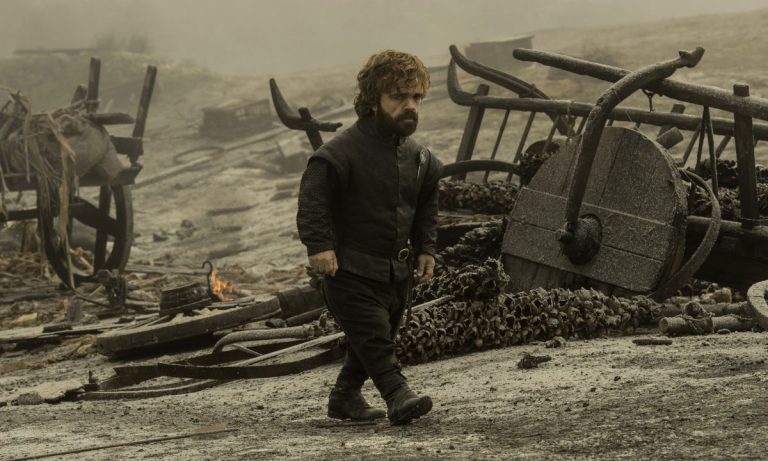
Take for example Jaime Lannister’s arc over the past episode “Eastwatch.” Following an emotionally loaded charge to lance Dany, Bronn saves his life. He recognizes the Lannister cause vs. Dany will result in bloodshed and heartbreak. In King’s Landing, Jaime reunites with his brother Tyrion, who he vowed to kill after Tyrion murdered their father Tywin. This is a convoluted bond between brothers, as they recognize the heart underneath each other’s veneer. They might be the only ones in this messed-up world of their who do. But Jaime, who technically already agrees with Tyrion’s position of ending the war, silences his brother when he tries to explain why he did what he did.
The plot moves forward as they instead agree to a really really stupid plan to smuggle a wight into King’s Landing so Cersei will abstain from war. Why does Cersei need this level of convincing again? Well, you audience members already know she’s cray cray so stop asking questions. Why is Jaime willing to hear out Tyrion on this, again, really really stupid plan but not the devastating murder of their father? The same father, by the way, whose harsh spirit and worldview continues to haunt the actions of each Lannister kid in interesting various ways. Well, hmm, who knows? But isn’t it SoOoOooO wild Cersei got preggers? Kind of complicates things for Jaime as he continues to love a woman who manipulates him and has no real regard for his life, which didn’t he realize that when he almost died ten seconds ago and she didn’t care? Are we suddenly to believe Jaime is an oafish, obedient servant, when he’s been portrayed as anything but?
And how did Jaime reach King’s Landing unperturbed by Daenerys exactly? She will burn alive anyone who refuses to bend the knees, like the Tarlys, but won’t capture the man who just tried to kill her? Cunning and exacting in her war of attrition against the Lannister Army, but too ignorant to wait five seconds for a one-handed man in clunky armor to surface above water? We’re supposed to instead speculate Dany assumed Jaime dead, I guess. Which wait. If that’s so, why does Dany then allow Tyrion to visit Jaime—the man who freaking tried to kill her!—and convince them of this really, really stupid plan? Wouldn’t Tyrion at least mention any of this to his brother?
The more you ask regarding narrative points and character motivations, the more questions actualize. Queries like why does Samwell Tarly, previously shown as hyper-observant and attentive to everyone, silence Gilly when discussing Rhaegar’s annulment and Davos suddenly describing M.I.A. Gendry as a “surrogate son,” despite having his own family we haven’t seen in seasons now. By now, we’ve learned answers won’t ever come. It’s become clear this season intends to service fans not the story. Benioff and Weiss will cut any narrative corner to materialize the dragon sequences and dramatic showdowns of which fans have long anticipated.
People want Jon to face the White Walkers again so Benioff and Weiss made it happen. They manifested some convoluted reasons to manufacture a Suicide Squad of troublemakers everyone loves like The Hound, Jorah (who immediately leaves Dany, his love, why?), Tormund, and Gendry. (Though we all know Suicide Squads aren’t really Suicide Squads until Will Smith literally asks, “What is this? Some kind of Suicide Squad?” and the audience can finally realize, OH, this was the Suicide Squad that was promised.) This random team-up makes about as much sense as the Suicide Squad movie—which, need I remind you, isn’t a good thing!
Game of Thrones isn’t exactly super expensive fanfic now, just lazy storytelling. The showrunners expect you to understand the confines of television episodes they have left. Though the story requires further exploration, understand these actors don’t want to reprise these roles forever. And understand that HBO needs to maintain massive popularity to justify the reported spin-offs they’re producing, so the story must appease the widest audience possible. But that’s the problem with Game of Thrones now—I don’t understand why much of anything happens. At least the dragons are cool.
“Security notices have mysteriously appeared in the dressing room and makeup areas around its headquarters in New York,” sources tell Straight Shuter. “They read: ‘Restricted Access (in bold) Back Stage Area For On-Air Talent & On-Air Guests Only. Beyond this point NO photos, video or recording of any type allowed!’ ”
Someone must be worried that Anderson isn’t as pretty without his makeup and hair done!
Justin Bieber Not Returning Anyone’s Calls
Justin Bieber has his family and friends worried after he quit his tour to spend time with his controversial pastor. And now the young singer isn’t returning people’s calls.
“Justin has stopped talking to a lot of his friends. He seems to have cut everyone out of his life except his pastor,” sources tell Straight Shuter. “People are worried that Justin is giving his new pal way too much power over himself and his career. Anyone who has an opposing opinion has been removed from his life.”
Straight Shuter recently spotted Justin’s manager at the hit Broadway musical ‘Dear Evan Hansen.’ Could Justin be heading to Broadway if he answers his phone?
Love the fresh dirt we bring over daily from Naughty Gossip? Let us know in the comments!
New reviews into pain management and PTSD were commissioned by the U.S. Department of Veteran Affairs. Though the findings weren’t what proponents for cannabis really wanted to hear, it has to be remembered that they are among a very small bank of studies, as it remains difficult to test marijuana’s safety and efficacy due to its federal regulation as a Schedule I drug.
The Department of Veteran Affairs denied all requests for the researchers on the projects to be interviewed.
The two studies did find some positive results with easing neuropathic pain, however, it showed little help for other pains or for PTSD, a condition that many veterans face post combat. Dr. Sachin Patel from the Vanderbilt Psychiatric Hospital in Nashville wrote his own commentary to join the reviews’ conclusions and stated that the findings on neuropathy, “fit generally well with what we know.”
Well over half of the U.S.A. has medical marijuana laws of one kind or another, many with a wide range of medical conditions under their umbrellas. Other states are waiting to implement new laws and medicinal cannabis is becoming a norm in our country. Studies like the ones recently conducted, however, are controversial. Pain is one of the most pressing conditions for one to obtain medical access to the plant.
On the other hand, other research has shown more positive results. The National Academy of Sciences found earlier this year, “that marijuana is effective at treating chronic pain, calming muscle spasms caused by multiple sclerosis, and easing nausea from chemotherapy,” according to reporting by the Chicago Tribune.
At this stage of the game, the VA is not going to prescribe medical marijuana, though they did acknowledge the potential that pot is, “beginning to be helpful,” in a comment from David Shulkin of the Department of Veteran Affairs.
Twenty-seven studies were poured over by the new study’s researchers into chronic nerve pain. They found “low strength” evidence for the plant’s efficacy, and found too little research to support the use of cannabis for chronic pain at this point. As long as cannabis remains a Schedule I drug, research into its uses and benefits are beyond limited.
The research also showed very low risk and few side effects, including short term cognitive impairment and driving impairment. They also admitted that the research did not efficiently cover aging populations or those who use pot chronically.
The second review revolving around PTSD found that there was too few studies and that the ones that had been conducted were potentially biased.
At this point there are definitely not enough studies out there to come to any conclusions, but, “several ongoing studies may soon provide important results,” according to the study authors.
Las Vegas has embraced the nickname Sin City. For generations, the Nevada desert destination is the place to go for legal debauchery and vice: gambling, prostitution, binge drinking … and now recreational marijuana. But tourists hoping to legally enjoy cannabis have discovered a major problem. There is no place to consume the herb.
Last month, Nevada became the eighth state to allow the sale of recreational cannabis to adults, but the law clearly states that it is illegal to consume it in hotels, casinos, sidewalks. Basically, the only place you can use marijuana is in the privacy of a private residence.
What is a cannabis-loving tourist to do? Good question.
In Vegas, it is totally cool to walk down The Strip sipping a cocktail or guzzling a beer. But weed? A tourist caught consuming cannabis in public is gambling on a $600 fine.
City police say they will enforce the law and promise to crack down on tourists who light up in public spaces.
Roughly 45 million tourists visit Las Vegas each year looking to unwind and spend money on their favorite vice. It’s easy to purchase weed in the city, but not so easy to enjoy it.
Why are casinos drawing such a hard line? The gambling regulators in Nevada have told casinos to follow federal law, which still outlaws marijuana. Gaming is a $13 billion business in the state so the risk to the casino industry is massive.
As Tony Alamo, chairman of the Nevada Gaming Commission told CBS News: “This is the marijuana industry. This is the gaming industry. And the two shall never meet. At the end of the day, it’s very clear cut. It’s against federal law. And until the federal law changes, that’s the standard they have to maintain.”
Nevada is not the only legal marijuana state grappling with the issue. All eight states that have allowed for the sale of cannabis do not have sufficient rules in place yet to accommodate out-of-towners. Tourists visiting Seattle, Portland, Denver and other cities in legal states have struggled to find a legal place to consume their legal weed.
The city of Denver is working on a plan to allow cannabis clubs, but negotiations continue. For now, most tourists do what they have always been forced to do: Break local laws.
“That’s the problem,” Las Vegas dispensary owner Armen Yemenidjian told CBS News. “No other industry in the world can you buy a product and then not use it anywhere. It’s silly.”
The effects of marijuana are pretty short, and even on the most extreme cases of over indulgence, there’s no side effect of cannabis that can’t be cured with a nice nap and a relaxed state of mind. When THC is inhaled, the marijuana high is almost immediate. The drug penetrates your brain, and although it may take a little while for your body to understand what’s going on, once you inhale there’s no going back, especially if it’s your first time. The effects of the plant really kick in after about 15 minutes, and can last for up to three hours, depending on how intense the strain is and how your body is reacting in that given moment.
When you’re eating an edible, things change drastically, taking a much longer time to kick in and wear off. Some edibles or marijuana capsules can take up to two hours to have an effect, and can remain in your bloodstream for up to 6 hours.
While the “main” effects of cannabis, or what you associate the word high with, lasts for a short couple of hours, the drug still remains in your system for a long period of time, which is why drug tests can pick it up days after consumption. When the THC leaves your bloodstream it stores itself in the fat of your body, only coming back to life when the fat is burned. This won’t make you feel high, but it’ll make you feel a little off, kind of like a light version of a hangover. These marijuana hangovers occur when you consume a really high dosage for your body, like an extra edible, or smoking a ton of marijuana when you’ve never smoked before. The symptoms can present themselves in the shape of headaches, dry eyes, foggy brain and dehydration.
According to research, teens feel the influence of cannabis for longer periods of time, much longer than adults who’ll certainly have no effects for more than 24 hours. Teens can smoke a lot on a weekend and feel repercussions on the following days of the week.
Few things comfort us than pizza. It’s our most reliable food, great at satisfying many, and fulfills so many of our food cravings. Rarely do you eat pizza and think it was awful—you might feel awful afterwards but that’s your fault for eating too much. Don’t blame the pizza for your inability to contain yourself.
And according to a recent Yelp survey, pizza is the preferred food of single millennials after a late-night hookup. Tacos, meanwhile, came in as a “distant second.” The Yelp survey also indicated that 46 percent of singles were more interested in their one-night stands “if they are into certain foods,” per Today.
What is the No. 1 food their fling could be into? That’s right. Pizza. It earned 59 percent of the vote, followed by ice cream (50 percent), pasta (44 percent), and tacos (43 percent). If you want to secure a second hang or first date, say you like pizza.
The main caveat to mention, however, is that only one in three survey participants stated it was cool to share food with a sexual partner following a one-night stand. Of those down to share a post-coitus meal, it was under the condition that it be a take-out or delivery. No one wants a fancy dinner following a fresh hookup.
Meanwhile, the most serious turn-off for potential partners was loud-chewing, or chewing with your mouth open. That was considered more offensive than “gorging” on junk food or if you drank too much alcohol.
So grab a slice and chew with your mouth closed and you might have a chance in this wacky dating world.
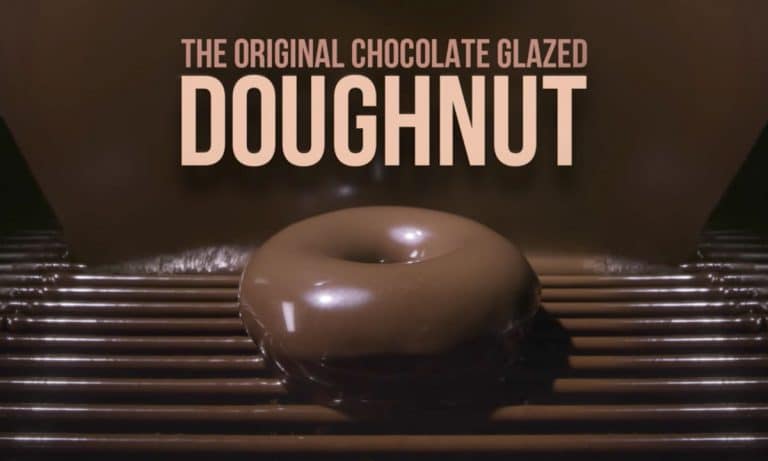
It’s kind of an obvious stunt. In honor of the August 21 solar eclipse, Krispy Kreme (for the first time ever!) is outfitting one of their original glazed doughnuts in chocolate. Let’s take a look:
“The solar eclipse is a rare occasion providing a total sensory experience for viewers across the continental U.S. Chocolate will have the same effect as we introduce a first-time chocolate glazing of our iconic Original Glazed Doughnut,” said Jackie Woodward, Krispy Kreme’s chief marketing officer. “The Chocolate Glazed Doughnut is a delicious way to experience the solar eclipse – no matter where you are – and we can’t wait for fans to try it.”
Just like the eclipse, this special doughnut is basically a once in a lifetime event. It’s only available August 19-21.
Krispy Kreme recently announced that it will be partnering with Hershey’s to release a limited edition Reese’s Peanut Butter Cup doughnut. So, really, if you miss the eclipse doughnut, there’s a pretty great (better?) consolation prize to fall back on.