Thursday, December 25, 2025
Home Blog Page 1198

A New National High: 45% Of Americans Have Tried Marijuana

The number of Americans who say they have consumed marijuana at least once has reached a record high. In poll from Gallup released on Wednesday, 45 percent of U.S. adults tried marijuana at some point in their lives. That is the largest percentage since Gallup started asking the question in 1969. Last year, it was 43 percent. When the question was initially asked 48 years ago, only 4 percent answered affirmatively.

There’s also been an increase in the number of American adults who currently consume cannabis. The latest poll results reveal that 12 percent currently use marijuana, up from 7 percent just four years ago.

The rise in use since 1969 has paralleled the increasing support for legalization — last year, 60 percent said marijuana should be legal, also an all-time record. Eight states allow recreational marijuana use, and these states comprise one-fifth of the U.S. population. An additional 29 states have approved medical marijuana programs.

According to Gallup:

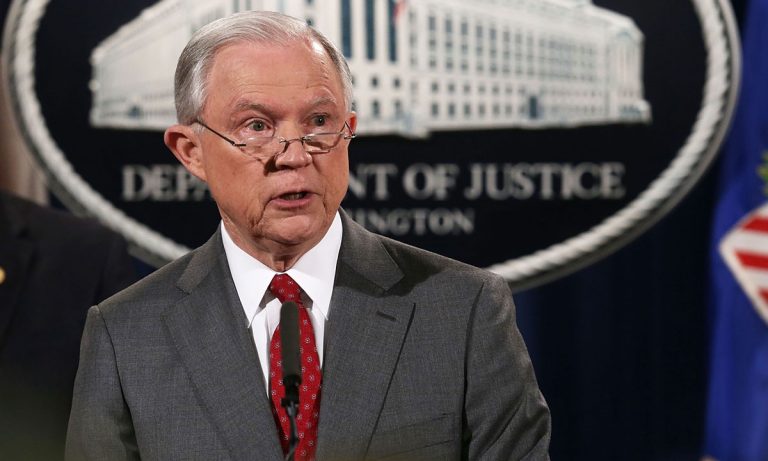
The increase in the percentage who have tried [cannabis] comes amid a possible federal crackdown on legal marijuana. Attorney General Jeff Sessions has initiated a task force studying links between violent crime and marijuana, and this body will reportedly release its findings by the end of July. The attorney general also has asked congressional leaders to undo restrictions on prosecuting medical marijuana providers, citing a “historic drug epidemic.”

Young adults, men and those with household incomes of less than $30,000 per year are most likely to say they currently smoke marijuana, Gallup reported. Thirteen percent of men say they currently smoke marijuana, compared with 7 percent of women. Eighteen percent of those aged 18 to 29 and 13 percent in the lowest income bracket say they currently smoke marijuana.

Gallup suggests that the percentage of consumers is likely to increase as more states look to modify current laws. The report concludes:

Legality may confer a certain societal acceptance of the drug. Sessions’ hopes to prosecute state-level marijuana crimes may prove to be a hindrance, but it is unlikely this multibillion-dollar industry will be stopped anytime soon.

The poll findings were based on interviews with 1,021 adults ages 18 and older living in all 50 states. The survey was conducted from July 5 to 9.

That Time The Father-Of-The-Bride Was Struck By Lightning While Giving A Toast

There are worse things than rain on your wedding day. For example, watching your dad get struck by lightning while he gives a speech.

The odds of being struck by lightning are one in 280,000 in the U.S. The chance of it happening just as you’re about to express your love and pride on your daughter’s wedding day? It’s safe to assume those odds are a lot higher.

Just as JD Nedeu stepped up to the microphone to give a toast, clouds started gathering behind him. Soon, everyone was in for a jolt.

He told Weather.com:

“I went up and grabbed the microphone and just had time to say a couple of things, you know, and BOOM, lightning struck really hard. The current went went through the wire of the microphone I was holding, and then it was like I was holding lightning in my hand.

“I felt quite solid after all that. I think that the microphone wire was able to ground everything. It spared me, I think, from having to take the whole jolt for myself. It’s pretty funny,” he said. “It’s funny now because I didn’t drop dead.”

Amazingly, even says that he might feel better than before the bolt, with his knee problems improving post-shock.

Are You Using The Most Popular Emojis On Facebook?

Emojis are a language unto themselves. They communicate feelings when words seem to fail us. So we guess it makes sense that there’d be a holiday celebrating emojis. That day is known as World Emoji Day and took place this week. To commemorate the day, our friendly pal Mark Zuckerberg shared which emojis people most use on Facebook. It actually gives you a decent indication of what people value most explicitly on the internet: crying laughter and fake hearts. Coming in at No. 1 on the list is the laughing with tears running down your face emoji. Don’t confuse this with the emoji rolling on its side through teary chuckles—that placed No. 4 on the list.

Rounding at the list is various smiling and winking emojis, a.k.a. the standard ones everyone finds themselves occasionally using. While it seems the upside down smiley emoji got snubbed, we’re okay with it remaining a cool kids’ secret for now.

Now, while this information is playfully and colorfully presented, we have no idea the data and statistics behind these figures. This does fit in with the way Facebook prefers to operate. So who knows how much anyone uses any of these emojis—we just know they’re popular.

That being said, there’s a basic breakdown showing what emoji is most popular in each country. Spain and Italy share an affinity toward the kissy face emoji, while Brazil and Mexico appreciate the heart eyes emoji. In America, the land of schadenfreude, we’re big fans of the rolling on our side crying laughing emoji. We’re just trying to smile through the tears, y’all.

Salvador Dalí Is Exhumed With Waxed Mustache Still Intact

Nearly 30 years after he died, the remains of famed surrealist Spanish artist Salvador Dali have been exhumed to see if he fathered a child with a woman in the 1950s.

Maria Pilar Abel, who was born in 1956, says her mom worked for Dali’s family during the time she was conceived, and believes her mom and Dali had an affair the year before she was born.

Dali’s body was exhumed Thursday after Abel won a 10 year court battle with the Gala Dalí Museums and Foundation. His signature long, waxed mustache was reportedly still intact.

As the BBC reports, the claim has surprised many, including Dali’s biographer Ian Gibson, who claims Dali used to boast that he was impotent.

DNA samples have reportedly been taken from Dali’s teeth, bones and nails. It may take weeks before the results of the tests are known.

Dalí died in 1989 at the age of 84. He was best known for his painting “The Persistence of Memory,” featuring melting clocks.

Gossip: Tyga Explains What It Was Really Like to Date Kylie Jenner; Andrew Garfield Clarifies His ‘I’m Gay’ Comment

Speaking with Power 105.1’s “The Breakfast Club,” Tyga said he and Kylie broke up because, like most exes, they were in different places in life and had different priorities. “I have love for her but I’m not in love no more,” he said. “When you’re with anybody that first year, it’s magic and then after that, you start realizing a bunch of shit.”

A lot of their differences had to do with their (often controversial) age gap and how they dealt with their celebrity status. “I think the main thing was a lot of people — a lot of outside influences — and … she’s younger than me and she’s dealing with perception,” he said. “I’m older so I can deal with perception. But for her, growing up how she grew up, image and perception was everything. So you have a bunch of people pulling from you and you’re still trying to develop as a young woman.”

Also an issue was Kylie’s social media fame and constant Snapchatting, apparently. “I like to keep a mystique and I know that’s how she made her money,” Tyga said. He also took issue with the media attention paid to him and thinks race had a lot to do with it. “For the last seven months we ain’t been together, have there been any negative stories out?” he said. “All I’m saying is whoever controls this kind of media doesn’t like seeing rappers with these type of women, especially young white women, and it’s just how it is.”

Overall, he said he likely wouldn’t get back together with Kylie, saying, “I mean, when it was good, it was good. When it was bad, it was really bad.” That said, he has no hard feelings for Kylie’s reported new boyfriend, Travis Scott.

On a (literally) related note, Tyga says it wasn’t awkward at all when his ex, Blac Chyna, started dating Rob Kardashian — even though he found out about it on the internet like the rest of us. In fact, Tyga says he told Rob what he was about to get himself into, before he ended up in the tumultuous relationship. “I told him what the play was. I told him what he was going to deal with,” he said. “I was just with her for three, four years, this is what you’re about to deal with.”

“She just has a different mentality. She really is a good person at heart, but she’s been through a lot in her life, and she didn’t have people to guide her in her life,” Tyga said. “He’s coming from a whole different world, you don’t know how she moves and how she thinks. When you’re in love and when you don’t care what nobody else thinks, love blinds you.”

Andrew Garfield Clarifies His ‘I’m Gay’ Comment

Andrew is trying to clarify:

“That’s of course not what I meant at all,” he told Newsbeat. “That discussion was about this play and how deeply grateful I am that I get to work on something so profound. It’s a love letter to the LGBTQ community. We were talking about, ‘How do you prepare for something so important and so big?’ and I was basically saying, ‘I dive in as fully as I possibly can.’”

He noted that his goal is to continue to support the LGBTQ community and help progress the conversation around it.

“My only longing is to serve and to keep the world spinning forward for the LGBTQ community in whatever way I’m meant to,” he said. “It’s important to a community that I feel so welcomed by. The intention [in my comments] was to speak to that, speak to my desire to play this part to the best of my ability and to fully immerse myself in a culture that I adore.”

Love the fresh dirt we bring over daily from Naughty Gossip? Let us know in the comments!

Take A Peek Inside This Mini World Of Cannabis

All of us have our own niche worlds online. Our small universes where we’re either all fans of similar pop culture, or activists in similar causes. The cannabis community is one such world, where those inside it may seem to live in their own reality, albeit a totally relaxed one.

But it seems Instagram user @minioor is taking that concept a step further. Since early 2016 he has documented a miniature world full of tiny figures and buildings that live in a world of cannabis. They farm, they shop at supermarkets, they visit museums, and more.

It’s a small community almost out of a Wes Anderson film with its delicacy and wistfulness. Except instead its full of marijuana plants, hash, and various paraphernalia. We picked some favorites below, but it’s really worth exploring @minioor page further to see this miniature world of weed.

https://www.instagram.com/p/BAGDvGOs6Eq/

https://www.instagram.com/p/BBXsVXbs6HQ/

https://www.instagram.com/p/BEvVgNlM6Mh/?taken-by=minioor

https://www.instagram.com/p/BAxeixas6Pe/

https://www.instagram.com/p/BASCGJyM6G4/

https://www.instagram.com/p/BB0duonM6LN/

https://www.instagram.com/p/BFRmtbGs6FI/?taken-by=minioor

https://www.instagram.com/p/BBw-iHUs6O2/

Inside The New Rules For Recreational Marijuana In Uruguay

The Latin American country Uruguay has become the first country in the world to legalize recreational marijuana nationally under a government sanctioned program. Uruguay is located in the southeastern corner of South America—sharing borders with Argentina, Brazil, and the Pacific Ocean. It is not without irony that a Latin American country is the first to take this unprecedented step in cannabis legalization, as countries such as Columbia and Bolivia have long been part of the international drug scene. In fact, the identity of Columbia on the world stage is practically synonymous with cocaine production. However, as Uruguay began its recreational cannabis program on Wednesday July, 19 they are setting a new precedent in the development of a regulated drug market.

While most Latin American’s are eager to lose the negative stigma of drug production and sales created in the 1980’s and 90’s, it’s worth noting as a point of comparison as progressive countries such as Uruguay implement legal cannabis use. This is because, as seen in the United States and Canada, the legal cannabis market can mean big business and large tax dollars for state controlled entities such as schools. The sort of big money that used to line the pockets of drug cartels. Interestingly enough, the Uruguayan recreational cannabis program has set forth to undercut black market prices of marijuana to take business away from illegal dealers . That being said, citizens of Uruguay (no international customers are allowed) can now purchase cannabis at pharmacies within a heavily regulated program. Moreover, Uruguayan citizens are limited to the amount of cannabis they can purchase in a week and the government has applied strict tracking systems to deter overindulgence.

The leaders of Uruguay hope that this “international pilot program” of recreational cannabis use can serve as a model for other countries considering a similar platform—essentially making a Latin American country an icon for responsible drug use and regulation. Nonetheless, and just as seen in U.S. States such as Massachusetts, the recreational cannabis program in Uruguay is not without its pitfalls and obstructions. To illustrate, some Uruguayan citizens fear that the implementation of recreational cannabis use will act as a sort of “slippery slope” by encouraging rampant drug use. However, these sorts of claims come hand-in-hand with all cannabis legalization programs the world over and are often times completely unfounded. Nonetheless, the international cannabis community will no doubt keep their eyes on the country of Uruguay in hopes of learning about the benefits and downfalls of recreational marijuana on a national scale.

Massachusetts Marijuana Workplace Ruling: What It Means For You

Earlier this week, the Massachusetts Supreme Judicial Court unanimously ruled that employers in the state must provide “reasonable accommodations” for medical marijuana patients, an unprecedented decision that is likely to have a far-reaching effect across the nation.

In the landmark case, a patient named Cristina Barbuto, was fired on her first day of the job at Advantage Sales and Marketing because of a failed drug test. Barbuto is a legal medical marijuana patient in the state and sought a civil remedy against her employer by claiming handicap discrimination.

Barbuto suffers from Crohn’s disease, a debilitating gastrointestinal condition. She has documentation from her doctor and court documents show that she did not use cannabis before or during work. The Supreme Judicial Court agreed with Barbuto’s claim and reverses the firing.

This is the first appellate court in any U.S. jurisdiction to hold that medical marijuana users may assert state law handicap or disability discrimination claims. The decision may provide guidance for employers to follow to avoid potential pitfalls when dealing with medical marijuana users.

According to the National Law Review:

The court also held that if a medical marijuana user is an individual with a handicap or disability — which would be the case for most if not all medical marijuana users — then that individual may assert a claim for handicap discrimination under Massachusetts state law. Thus, the court held that an employer must engage in an “interactive process” with a medical marijuana user to determine if the medical marijuana user can continue to perform his or her job duties with a reasonable accommodation to the handicap.

What does this mean for workers in other states? Does this decision create  precedent that other appellate courts to follow? It’s unclear what other courts will do, but legal experts suggest that the Massachusetts ruling will have an impact nationally.

Some states, Arizona and Minnesota for example, protect employment of medical marijuana card holders whose use violates zero-tolerance policies.

But in 2015, the Colorado Supreme Court ruled that employees do not have protection from being fired if they violate their’ workplace drug policies. And similar to Colorado, the California Supreme Court ruled in 2008 that companies are not required to accommodate an employee’s use of medical marijuana. California’s Proposition 64, which passed last November, states that employers may continue to enforce zero-tolerance policies prohibiting the use of marijuana.

In Oregon, a bill to prohibit Oregon employers from restricting or penalizing off duty marijuana consumption failed to pass.

“Patients should never have to choose between their health and their job and for the first time, a court has acknowledged that they shouldn’t have to do so,” NORML Executive Director Erik Altieri said about the Massachusetts ruling. “It is our hope that courts in other jurisdictions begin to apply this same rationale to patients as well as to all adults who are using cannabis responsibly off-the-job in compliance with the laws of their states.”

Gossip: Kevin Smith Apologizes For Ben Affleck Gay Kiss Story; Tameka Foster Responds To Usher Herpes

Kevin Smith, saying that ‘A man kissing another man is the greatest acting challenge an actor can ever face’ – and when he finished the scenes he declared ‘Now, I’m a serious actor.’

Now Smith is apologizing for even telling the story in the first place, and specifically apologizing to Ben.

Explained Smith on Facebook Live: “Of course, Affleck doesn’t feel that way today and who knows if he even felt that way then? But he could’ve, he was in his 20s. We all say goofy sh*t in our f**king 20s. But it wasn’t something he went out into the world and talked about. It was something he said to me….I feel f**king terrible. You know me. I like keeping peace. I’m not the guy that likes to rattle sabers or upset.”

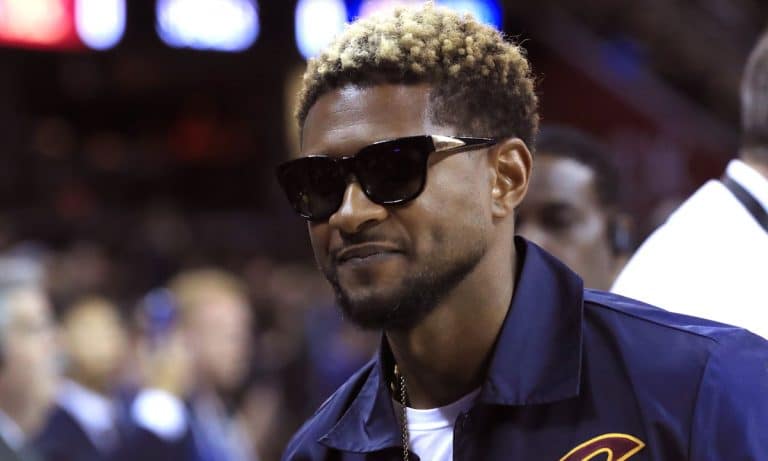
Tameka Foster Responds To Usher Herpes

With news of Usher Raymond passing around herpes making its way around the internet, Tameka took to Instagram to let everyone know that what happens with her ex-husband has NOTHING to do with her.

She writes:

Do not come on my page discussing rumors or people that have NOTHING to do with me. I have been divorced 8 years… Some issues are not my business… ex husbands, ex friends, snakes, hoes, characters, etc. Not my circus, not my clowns … I’m good and my health (Everywhere is great), well my right knee hurts and I need reading glasses but otherwise I’m awesome and enjoying the sun. Miss me with other grown folks crazy gossip.. Not my business at all. I’m living my bestest life. Always. Miss me with the bullshit. Thank you. Carry on.

Love the fresh dirt we bring over daily from Naughty Gossip? Let us know in the comments!

Jay Leno Drives A Car Made Out Of Marijuana

When it comes to the hobbies of late-night talk show hosts, everyone knows that Jay Leno is the car aficionado and Bill Maher is the cannabis enthusiast. But Leno, the former host of “The Tonight Show,” has veered into Maher’s lane in Wednesday’s episode of this current show, CNBC’s “Jay Leno’s Garage.”

In this week’s episode, Leno takes a spin in a car made out of cannabis — industrial hemp to be precise. And not only did he drive it, he decided to buy one.

The show examines the 2017 Renew, the brainchild of retired Dell executive Bruce Dietzen, who designed the car with the environment in mind. According to Dietzen, the unconventional car is “carbon neutral” to manufacture and is made from woven cannabis hemp.

“It sets an example and it lets people know that we can make everything out of plants,” Dietzen sid. “We may not be able to pull up [to] our local gas stations right now and say, fill it up with hemp gasoline, because we have to wait for these fuel companies to catch up and start doing the right thing.”

Manufacturing a vehicle emits roughly 1o tons of carbon dioxide into the atmosphere. “That’s before it even hits the road,” says Leno, where it will release another six tons a year.

According to Dietzen, industrial hemp is 10 times stronger than steel. Of course, Dietzen is not the first auto manufacturer to use hemp-based materials. Henry Ford, the father of  the Model T, produced a car made of hemp back in 1941.

Just how much will a Renew cost you? Dietzen told the Miami Herald that he would be taking custom orders for as low as $40,000 to as high as $197,000, depending on the requested horsepower. Dietzen says he spent a total of $200,000 to make the Renew prototype.

“Believe it or not,” jokes Leno, “Bruce was not high when he invested $200,000 to build this prototype.” Dietzen confirms that he doesn’t smoke cannabis, he just makes cars with it.

Nearly every piece of Dietzen’s car that could be made of hemp is, including the body, dash and rugs. Engine parts, the car frame, windshield switches and other mechanical and electrical parts are not. Manufacturing a car from cannabis, and fueling it with biofuels, could have huge carbon rewards, Dietzen said.

Don't Miss Your Weekly Dose of The Fresh Toast.

Stay informed with exclusive news briefs delivered directly to your inbox every Friday.

We respect your privacy. Unsubscribe anytime.