Tuesday, December 23, 2025
Home Blog Page 1323

The 8 Oscar Nominees Who Might Use That Vaporizer In Their Gift Bag

0

Awards shows are long, drawn-out, overproduced, self-aggrandizing machines of monotony. For the nominated attendees, they must endure hours of preparation, the red carpet gauntlet, and the slog of the award show to reach those three minutes when they learn if they win or not. Many will not win; blame La La Land. It sounds like the perfect time to smoke a little marijuana, don’t you think?

For the third consecutive year, a Haze Technologies vaporizer will be included in the Oscars “Everyone Wins” gift bag. This year it’s the The Haze Dual V3, the first and only dual-chamber vape on the market.

Now, Hollywood has some history with cannabis and awards show. Academy Award winner Jennifer Lawrence admitted she hit the bong before one Oscar ceremony.  Another Academy winner, Susan Sarandon, told Andy Cohen she’s been stoned at “almost all [awards shows] except the Oscars.” At the 2014 Emmys, Sarah Silverman showed off her vape pen at the red carpet.

As one source who’s tagged along with industry pals to various awards shows told Page Six, “There’s no getting around this: If the event takes place in LA, people will be smoking inside, outside, on the way in.” He also added: “These events are so long and drawn out, it could be that weed is the thing that makes them tolerable.”

Here’s what we’re trying to say: that Haze Dual V3 vape will get some usage. It’s not some kooky inclusion. But which of the Oscar nominees will puff the vape? We have some speculation.

Andrew Garfield And Emma Stone

The Amazing Spider-Man co-stars experienced a pretty high-profile relationship. They’ve since split, though are still extremely friendly exes to one another.

But during their relationship, the pair enjoyed a magical trip to Disneyland. Here’s how Garfield described it: “I was with my favorite people in the world, eight of my closest friends. They came out to L.A. to surprise me and we went to Disneyland and we ate pot brownies. And it was literally heaven.”

If you’re a down-some-pot-brownies-and-ride-it’s-a-small-world type, then correlation indicates you’re probably a indulges-in-free-vaporizers type.

Denzel Washington

Ryan Gosling

Here is what Ryan Gosling told GQ in 2010: “The problem with Hollywood is that nobody works. They have meals. They go to Pilates. But it’s not enough. So they do drugs.”

Sounds like a Bret Easton Ellis novel. Also related:

https://twitter.com/IrreverentRizzy/status/455662499845910528

Natlie Portman And Jeff Bridges

Admittedly these two are a firm maybe here. Of course Jeff Bridges famously played The Dude in The Big Lebowski, but he told Cigar Aficionada back in 2013 that he’s laid off the green since it’s become more legalized. “Now that pot is practically legal, I don’t smoke anymore. I’ve been off pot for a while,” he said.

Natalie Portman is a former smoker as well. As she said to Entertainment Weekly, “I love stoner comedies. I smoked weed in college, but I haven’t smoked in years.”

So maybe they won’t use it, but it’s a possibility is all we’re trying to say.

Michael Shannon

Mel Gibson

We have no idea if Mel Gibson enjoys cannabis. Instead, Gibson is on this list to remind you of two facts: a) the absurdity that Gibson was nominated for Best Director for Hacksaw Ridge and b) that there’s a weed strain named after him. This sentence from TMZ is essential reading: “[O]ne dispensary employee tells us the Mel strain got its name because, ‘Once you smoke it, it’s supposed to make you go ballistic.’ ”


[gravityform id=”13″ title=”false” description=”true”]


Paid Sex Breaks At Work? This Swedish Councilor Wants It To Happen

0

Here’s a productivity hack that we all should go ahead and try during the workday tomorrow. A Swedish councilor is floating the notion that employees’ performance would get a boost if they were allowed paid sex breaks at work.

He thinks workers should be allowed a one hour break every day to go home to their partners to get busy. This, he says, would invigorate people to get back to the daily desk grind while maintaining strong relationships with their significant others.

“There are studies that show sex is healthy,” Per-Erik Muskos, a 42-year-old city councillor for the town of Övertorneå, told the AFP news agency. He’s right: Sex is good for the heart, physical contact lowers blood pressure, regular sex can make your immune system healthier, and orgasms are up there with meditation and exercise for melting away stress.

As Quartz notes, Sweden’s approach to working life is a lot different from Americans’ to begin with:

That a small-town Swedish politician would encourage sex-breaks is not hugely surprising. In the work-life balance equation, Swedes clearly value life: two or three times a day, it’s common to have fika, or coffee breaks, to help them disconnect, recharge and eat sweets. The country boasts 480 days of paid parental leave which can be shared between parents, and it has experimented with a six-hour work day (for which employees are paid for eight).

What is remarkable is that Muskos sees the logical time slot for the health-driven sex as being during the work day. Swedes already enjoy a relatively easy work schedule —an average of 1612 hours per year, according to the OECD, 9% percent less than the OECD average. And it does not appear that they are burning the midnight oil working late: only 1% of Swedes work overtime, according to the OECD Better Life Index.

So, they have coffee and pastry breaks, tons of time off for raising families, and super-short workdays in comparison to the rest of the world. Add regularly scheduled sexy time to that equation? Sounds like we’re all moving to Sweden.


Sean Spicer And Recreational Marijuana: What He Got Wrong

During the White House Press Briefing on February 23rd, 2017, Press Secretary Sean Spicer replied to a reporter’s question regarding the dissonance between Department of Justice’s enforcement of marijuana laws and states’ rights regarding the usage for both medicinal and recreational.

While it is commendable and comforting to hear President Donald Trump empathizes with the pain and suffering that terminally ill patients endure and recognizes cannabis as a homeopathic remedy to ease their symptoms, it was equally disconcerting that the Trump Administration will not recognize individual state laws as they apply to recreational use.

By ignoring state laws where recreational use of cannabis is legal, the Trump Administration is choosing to ignore constituent wishes and jeopardize state programs funded by tax revenue. By picking and choosing where they ignore states rights, Attorney General Jeff Sessions thumbs his nose at one of the most traditional of Republican values, and directly contradicts his sworn testimony during his confirmation hearing where he stated that he would not stop legal programs that states adopt “absolutely.”

To cement the case against recreational marijuana, Mr. Spicer attempted to draw a connection between cannabis and opioid abuse. Research continually proves that marijuana is not a gateway drug, and data confirms that addiction rates for opioids outstrip cannabis the way NASCAR outpaces mall walking.

Public opinion also strongly favors marijuana legalization, across party lines and through every age demographic. Restricting legal access to cannabis increases opioid addiction and the death rates associated with it. Simply put, legal access to cannabis has shown dramatic reduction in demand for opioids

Stricter enforcement of federal cannabis laws only serves to stretch government resources for very little gain; it will limit jobs, lessening tax revenue. Illegal importation will increase, putting funds in the hands of criminals and lowering quality with no regulations governing growth and distribution, leading to more insidious crimes.

With no evidence to back a regression in enforcement policies, President Trump and Attorney General Sessions squander resources that improve homeland security, education, and healthcare. Economic growth in the industry is expected to surpass 800 percent over the next decade to over $50 billion. Regressive enforcement is simply bad business.

Cannabis Industry Could Create More Jobs Than Manufacturing Industry In Next Five Years

It was revealed on Thursday by White House Press Secretary Sean Spicer that the Trump Administration would likely impose a major crackdown on the recreational cannabis market. However, the cannabis industry remains hopeful that its ability to contribute hundreds of thousands of new jobs to the grand scheme of American commerce may keep recreational marijuana safe.

In fact, the latest market analysis from New Frontier Data shows legal cannabis may have the power to resurrect the “middle class,” which is the lifeblood of the U.S. economy, by contributing more jobs to the American workforce in the next few years than the manufacturing industry. The report shows legal weed could easily lend to the addition of a quarter of a million new jobs by 2020. That’s more of an employment boost than the combination of factory and government positions, according to Forbes.

“It’s very hard to look at both the numbers and associated economic dynamics and envision that this genie could be put back in the bottle,” said John Kagia, New Frontier’s executive vice president of industry analytics.

However, policy experts, like John Hudak of the Brookings Institution, say the impressive financial projections surrounding the cannabis industry is nowhere near large enough to keep the federal government from shutting it down. Hudak recently told a crowd at the Virginia Cannabis Conference that they were “insane” to think legal marijuana was “too big and popular” to become a target for federal drug enforcers.

“Your industry is small by any metric of American capitalism,” Hudak said. “You are a speck of dust in a clutter of dirt of American capitalism… The president is planning to repeal the Affordable Care Act. If you think that hospitals, doctors and the pharmaceutical industry are small enough to be shaken down by the president, but the cannabis industry is too big to face the same challenge from the president, once again, you’re insane.”

Although a federal crackdown on the recreational marijuana industry in states like California and Maine, which have yet to launch their newly legal markets, would not likely sting too bad, it could have a devastating impact on places like Colorado and Washington, which have grown accustom to the legal marijuana business over the past three years.

Kristi Kelly, executive director of the Marijuana Industry Group, said the Trump Administration’s decision to wage war on the legal cannabis industry would “cause a recession,” in Colorado, sending tens of thousands of workers to the unemployment line.

“The economics of this are huge in Colorado,” Kelly said. “There is a billion-dollar economic impact in Colorado, which is directly attributable or affiliated with the cannabis industry, so that equates to 20,000 people licensed in trade.”

But if President Trump and his U.S. Attorney General, Jeff Sessions, allow the legal cannabis industry to continue with business as usual, New Frontier estimates the nationwide marijuana industry will be worth $24 billion by 2025. However, there is a possibility that only medical marijuana will survive – a scenario that would severely cramp the market’s overall growth potential.

What The White House Doesn’t Know About Marijuana Policy

During yesterday’s White House briefing, Press Secretary Sean Spicer was asked about the Trump administration’s position on marijuana enforcement. This issue has left marijuana advocates, business owners, investors, patients, and consumers wondering what the president’s true intentions are. As 28 states and DC have legalized medical marijuana and eight states and DC have legalized recreational marijuana, the administration’s position is one that will affect many Americans.

Spicer’s response drew a distinction between medical and recreational marijuana. He answered the initial question by stating:

“There are two distinct issues here: medical marijuana and recreational marijuana. I think medical marijuana, I’ve said before, the president understands the pain and suffering that many people go through who are facing, especially terminal diseases, and the comfort that some of these drugs, including medical marijuana can bring to them. And that’s one that Congress, through a rider in 2011…I think put in appropriations bill saying the Department of Justice wouldn’t be funded to go after those folks. There’s a big difference between that and recreational marijuana. And when you see something like the opioid addiction crisis blossoming in so many states around this country, the last thing we want to be doing is encouraging people—there is still a federal law that we need to abide by when it comes to medical—in terms of recreational marijuana and other drugs of that nature. There’s a big difference between medical marijuana which states—in the states where that’s allowed in accordance with the appropriations rider have set forth a process to administer and regulate that usage versus recreational marijuana and that’s a very, very different subject.”

There is a lot to break apart here, and while the issue of marijuana policy is clearly new to the press secretary and to the Trump administration, it is important to break a bit of this down to a few points for the White House to consider.

Medical marijuana and recreational marijuana are equally illegal under federal law.

Although Mr. Spicer is correct that an appropriations rider (formally, the Rohrabacher-Farr Amendment) prevents the Justice Department from spending money to crack down on medical marijuana in states that have approved reforms, that does nothing to address the illegality of the substance. In short, all the amendment says is that DOJ is prevented from enforcing federal law against medical marijuana growers, distributors, and buyers—who are still breaking the law. The Controlled Substances Act makes marijuana illegal in all cases—regardless of the purpose of its use. The Rohrabacher-Farr Amendment does not change that.

The suggestion that medical marijuana states have “set forth a process to administer and regulate” but recreational states have not is fundamentally false.

Recreational states that are currently up and running—Colorado, Washington, Oregon and Alaska—have been implementing significant and stringent administrative and regulatory systems around those policies. The only jurisdiction that has not done so—the District of Columbia—was prevented from doing it by one of President Trump’s supporters in the House, Rep. Andy Harris of Maryland. The District government intended to construct a recreational system that looked much like their medical system in terms of regulatory rigor. In fact, arguments can be made that recreational marijuana regulatory systems in the states that have come online (and in the states that are soon to come online) are more robust than a few of the states that have approved medical marijuana reforms. This distinction is important when disseminating information to the public—one of the roles Mr. Spicer prominently plays—because it reinforces the myth that every medical marijuana system in the U.S. is a tightly run ship and that recreational marijuana systems are free-wheeling, fly-by-night operations. I would encourage Mr. Spicer and other members of the Trump administration to meet with regulators from the Marijuana Enforcement Division in Colorado, the State Liquor and Cannabis Board in Washington, the Liquor Control Commission in Oregon and the Marijuana Control Board in Alaska to understand more clearly what these states are doing.

If President Trump believes in the medical value of cannabis, he can enact meaningful change.

There are many areas where presidential action and/or presidential leadership can go a long way in reforming the nation’s medical marijuana policy. Mr. Spicer was clear that the White House was supportive of medical marijuana and sees it as distinct from recreational marijuana. If so, the White House has a bit of a to-do list. President Trump can:
1.    Support reform proposals in Congress centered on medical marijuana such as the CARERS Act and others.
2.    Codify the Rohrabacher-Farr Amendment (now the Rohrabacher-Blumenauer legislation) that Mr. Spicer referenced to make it permanent law and not contingent on the continuing resolutions that fund our government or the standard appropriations process—if Congress can ever find a way to return to that.
3.    Reschedule cannabis or deschedule it with specific restrictions with regard to medical use.
4.    Deschedule non-intoxicating cannabidiol or CBD.
5.    Call for increased federal funding at NIH and other agencies to study the medical efficacy of marijuana.
6.    Appoint a drug czar and heads of the DEA and FDA who have similar beliefs to the president on this issue.
7.    Lift banking and tax restrictions for medical marijuana firms in ways that lower overhead costs for producers that are ultimately passed on to sick patients.
There is no shortage of ways in which a medical marijuana reform-oriented president can advance those ideas. If the White House is serious about it, President Trump can show the nation that he is more willing to address such issues and public needs than any of his predecessors.

Opioid use and marijuana use are not the same thing.

Mr. Spicer seemed to equate recreational marijuana use with the use of opioids and other drugs. People are dying every day across the United States because of opioids. Heroin is being cut with other, more deadly drugs like Fentanyl and causing a serious overdose crisis in the U.S. Those results are not happening with legal marijuana. Yes, legal marijuana has led to some public health issues and state regulatory systems have tried to respond to those challenges. Those public health issues are minor compared to what is happening with opioids in the states. Mr. Spicer should ask himself if he really believes heroin is as big a threat to Americans as a state-legal and regulated marijuana system. If he believes that answer is “yes,” then his equating the two is logical. If he believes the answer is “no,” he should abandon dangerous rhetoric that simultaneously hyperbolizes marijuana and delegitimizes the opioid crisis. Moreover, Mr. Spicer should read some of the research that suggests marijuana could be used as a substitute for opioids, helping opioid users distance themselves from that drug. That research isn’t a rumor in the marijuana industry; it is medical research coming from the University of Colorado, the University of Michigan, and elsewhere.

Recognize that marijuana legalization does not introduce marijuana to communities.

Recreational marijuana use happens in every state in the U.S. every day by hundreds of thousands of individuals. That includes states with and without recreational legalization. In states that have legalized, the regulatory systems ensure that the product is safer than black market product and that consumers know what they are getting in terms of potency and with regard to the presence of adulterants like mold or pesticides. Moreover, in state-legal systems, officials can use tax revenue to fund information, prevention, public health, and public safety campaigns that help deal with problems that can arise from marijuana use. In states without legal systems, those problems still arise, but states collect zero tax revenue from sales.

The White House can host a summit to address marijuana policy.

Mr. Spicer’s comments from the podium today showed some hesitation and some misunderstandings within the White House on marijuana policy. That same confusion exists among some in the public, as well. That is not a criticism of the White House; it is a reflection of the complex and ever-changing reality of marijuana policy in this country. The White House can show leadership and encourage a better-informed public and policy making community by convening the top experts on cannabis, public health, public safety, drug policy, and medicine to discuss the issue. The president has effectively brought together CEOs, labor leaders, minority communities, and other groups to discuss relevant issues— he can do the same on this issue.

Think about public opinion on marijuana.

The president has often spoken about returning the power to the people. Returning power to the people can take many forms. One is the decentralization of power to the states (closer governmental representatives of the public). Another is for the White House to be responsive to public opinion. For the former, the president can let states do what they like on marijuana policy and have the federal government get out of the way—a policy that should resonate well if the president is truly a small government conservative. For the latter, the answer is not only clear but was reflected by polling results released on the same day Mr. Spicer discussed marijuana from the podium. Quinnipiac University released a poll showing that 59 percent of Americans support recreational marijuana legalization and 71 percent of Americans want the federal government to get out of the way of states when it comes to marijuana policy. And you can bet a lot of that support comes from states President Trump won in 2016. The president may not believe that you can ‘Make America Great Again’ by legalizing marijuana, but if he wants states and citizens to be more in control of public policy, he should consider himself the last person who should try to get in the way.

To sum up, Mr. Spicer was bold in addressing a marijuana reform question head on and refusing to punt on it. His predecessors have not been so brave. He should continue to discuss this issue that matters to many Americans, and in the meantime, take today as an opportunity to push the White House to become better informed on the issue and think hard about what the best policy path forward could be.

This story first appeared on The Brookings Institute website.

8 Tips For Women Sleeping With Women For The First Time

0

No, but really — how does a person have better sex or a better relationship? The Fresh Toast has enlisted Rachel Krantz, a sex writer and proud canna-enthusiast, to help readers out with some answers as its sex columnist. No question is off limits, and all questions will remain anonymous. Please send your sex and relationship inquiries to freshlove@thefreshtoast.com. Now, onto this week’s topic: tips for women sleeping with women for the first time.

Q: Hi! I’m a 25-year-old woman who’s only slept with men. I’ve always liked women, it’s just never happened for me. Now that I’m single again, I decided to put on my dating profile that I like both men and women. I set up a date with one woman, and I think it went well! I was upfront about being a girl-virgin, but she still seems interested. Now I’m just wondering … how the do I actually sleep with a woman without sucking? I’m so intimidated! I know as a woman how picky I can be, and how much people can suck at oral sometimes. How do I go in with great game?

A: I love this question. Up until a few months ago, I was just like you! I’m happy to say I’m on the other side now, and that much of the advice my queer female friends gave me in the years leading up to finally sleeping with a woman proved true and helpful. Now, I also have some advice of my own to dish out. Here are eight tips for women sleeping with women for the first time.

Study Girl Sex 101

This was my first step, and man, was it a good one. Allison Moon’s Girl Sex 101 is by far the best sex guide I’ve ever read. I learned all kinds of techniques in there, and plan to continue revisiting it often. She gives excellent advice on how to please a woman that you can also apply to yourself (and show any future partner). My favorite trick I picked up from her guide? Always warm a pussy up before you touch the clit directly — literally. She suggest cupping your whole palm over the vagina and gently squeezing to get the blood flowing — feels great, and works every time.

Make Sure To Masturbate Digitally On Your Own

While I’m a big fan of vibrators, it’s true that one of the most important ways to understand how to touch a woman is to know how to touch yourself first. Spend some time thinking about what you like, stroke-wise. While it won’t always be the same for another woman, the way you like to touch yourself is certainly a good starting point for learning how to touch someone else.

Be Upfront About Your Lack Of Experience


via GIPHY

In your question, you said you’ve already been upfront with your potential sexual partner that you’ve never slept with a woman. Good for you! While it can me tempting not to reveal your novice status (trust me, I know), lying or omitting information never leads to good sex in the long-run. The person you’re with deserves to know — and putting it out there, preferably before you’re in bed, will help take some of the pressure off of you.

Trust That You Know More Than You Think You Do

This was some advice that was given to me by a queer friend. She said, “you already know how to touch a woman because you know how you like to be touched.” While it’s true that every woman is different, starting with the way you’d like to be touched (and listening for feedback via moans, bucking hips, etc) is a good start. For example, I know I really like to be teased and warmed up with lots of light nipple stimulation, that I like kisses on the neck, that I like a super-light touch on my clit at first — so I just started there, intuiting what I would want if I was my partner and giving it to her. It worked!

Take Your Time


via GIPHY

One of the most fun things about sleeping with a woman as a woman is how much more likely it is your partner will be into taking it slow. I made out with my partner for nearly an hour before anything else happened. Take your time. Don’t do anything — or let anyone pressure you to do anything — before you’re ready. Enjoy how soft her lips feel, and what it’s like to touch breasts. Slow everything down and build up tension. If someone gives you a hard time about it, they’re not worth sleeping with to begin with.

Tease Her

I think most women really like to be teased. (Girl Sex 101 backs me up on that.) Tease her in a way that feels intuitive to you — suck on her nipples through her bra, pull at the sides of her underwear in a way that would get your own panties in a twist. Touch her clit with a feather-light touch for as long as you both can stand it. As long as a tease follows through in the end, she makes a great lay.

Let Her Know You’re Into It

Even if you’re feeling timid, you can let your partner know you’re into it along the way by making noises that aren’t just pornographic moans (although those are cool too). A nice mmmm can go a long way in reassuring your partner that you’re enjoying what’s happening and are indeed into girls and her body. (Of course, if it turns out you’re not into it or things are moving too fast, let her know about that, too.)

Warm Up To Oral Slowly & Listen Carefully


via GIPHY

By far the most daunting part of sleeping with a woman, for me, was oral. What if I sucked? (Heh, suck.) Luckily, in reality it wasn’t scary at all — and no, it didn’t taste “weird,” either.

After you’ve teased and been teased as much as you can both stand, take some time to look at her pussy. Spread the lips apart, pull back the clitoral hood, get a good look. Be sure to let her see you staring in awe. The more she feels like you’re into her anatomy, the more arousing whatever you do next will be. Don’t start licking until you really want to — or keep licking past when you really want to. Let your intuition guide you, listen to her vocal cues and body language (bucking her pussy towards you means harder, pulling back means softer), and don’t forget to check out guides like Girl Sex 101 for more specific tips on technique.

Keep in mind that you already know something about what you like, and that means you’re not a true novice. Above all else, stay present, respectful, and communicative. That’s what good sex is all about, no matter your partner’s gender!


[gravityform id=”13″ title=”false” description=”true”]


Coffee Vs. Hoppy: 7 Of The Best Coffee Flavored Beers Worth The Jitters

0

In the world of craft beer drinking, there are as many options as there are beer-loving imaginations. But sometimes, what the palate wants is not always what the brain wants. Sometimes, instead of a pint, your brain wants you to think you’re having something else: like coffee. The flavor of coffee, after all, shakes your mind awake like a Pavlov dog.

In other words, the internal struggle basically goes like this:

Palate: Mmmm, beer. It’s been a long day, let’s just have beer!

Brain: No! We need coffee! We need to be awake and vigilant!

Palate: Yeah, um, no. Beer time!

Complete person: Ah, I’ve got it! Coffee-flavored beer!

Here are some suggestions on choosing great coffee beers…seven, to be specific. And remember, when sipping these beers in particular, it’s pinkies out!

Stone Brewing Co. Master Of Disguise

https://www.instagram.com/p/v2wzI-rVVp

From the company that made the term “Arrogant Bastard” famous, this unique brew is a trick unto itself. It resembles an ale (lighter, more buoyant) but drinks like a stout (thick and perfect for winter). HOW DO THEY DO IT? (Other Stone coffee brews: Mint Coffee Milk Stout, Americano Stout, Mocha IPA).

Santa Fe Brewing Company Imperial Java Stout

https://www.instagram.com/p/BJ3bleJAL9v

Whenever you see the word “imperial” you can be sure of two things: the beer is strong and it’s going to taste really good. Breweries don’t mess with Imperials unless they know what they’re doing. And in the case of this coffee-flavored beer, that truism holds.

Fort George Brewery Java The Hop

https://www.instagram.com/p/BBFOJC4M48o

This beer could taste like straight up coffee grounds, but would read a 10 out of 10 on the tongue anyway because of the charming Star Wars reference. But lucky for Fort George – a brewery that likes to experiment and has made waves for its yearly “three-way” IPA (partnering with two other breweries) – this Java-inspired brew is otherworldly. (Fort George makes another, way less Star Wars-y coffee brew called Coffee Girl)

Great Divide Espresso Oak Aged Yeti

https://www.instagram.com/p/BQry1J5DNur

Picture a Yeti moving nonchalantly across a snowy dune. It’s almost like the beer crawling past your lips – your palate enjoying the sparkle of the carbonation and the smoothness of the crema-like coffee flavor. That’s what this beer is like.

Funky Buddha Maple Bacon Coffee Porter

https://www.instagram.com/p/BFRrPbEjq7j

Speaking of the experimental, this one is less coffee-forward than others on the list, but damn if we aren’t suckers for working in our two cabin brunch favorite flavors: bacon and maple syrup. Kudos!

Lagunitas Cappuccino Stout

https://www.instagram.com/p/BOfuqDPhpiQ

You know you’re refined when you equate your beer to Italy’s favorite cup of espresso. Light, feathery, fluffy. These are the memorable adjectives one uses when discussing this Lagunitas brew. (High West-ified Imperial Coffee Stout is another Lagunitas beer worth tasting).

Elysian Brewing Company’s Split Shot Espresso Milk Stout

https://www.instagram.com/p/BOirTAVBnYW

And finally, the grand-pappy of them all. An espresso milk stout – malty and rich, creamy and velvety. This is one of the few coffee beers you can have more than two of. What are we saying! Buy a six-pack! Have one for breakfast! six-pack! Have one for breakfast! (Other Elysian coffee brews include: Punkuccino Coffee Pumpkin Ale, The Fix)


[gravityform id=”13″ title=”false” description=”true”]


WATCH: Russian Man Builds House Using 12,000 Champagne Bottles

Using empty wine bottles to build garden decorations and Christmas trees is all the rage. But Champagne bottles? That’s a whole new chapter in the book of ballerdom.

A Russian man named Eldar Ilchibayev built the home in honor of his brother, who had the idea before dying in an accident. Ilchibayev and his father spent two years collecting the  bottles with the help of neighbors, who also donated their empties.

Ilchibayev tells ITV News that the home is not entirely made from glass bottles:

The main frame is built with timber beams, they were set upright. Then the bottles were put around them, and all this was filled with waste matter and concrete. And we put about two, three centimetres of foam plastic between the beams and the bottles.

Here’s video of the impressive home. Something to think about next time you pop a bottle of bubbly.

Flavored Whiskey: More Common And Delicious Than You Think

0

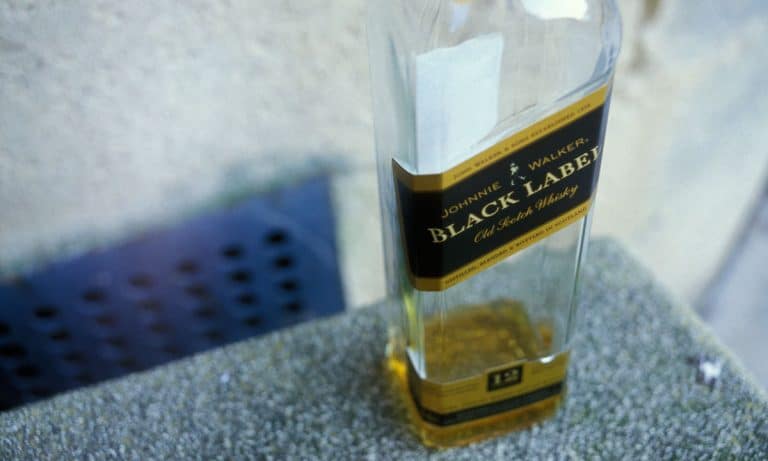
In the United States, whiskey and other spirits are governed by stringent labeling regulations. In many cases, if you know a few basic rules, it’s easy to tell exactly what you’re getting when you pick up a bottle. Anything labeled “straight whiskey,” for instance, was made with exactly three ingredients: grain, yeast, and water. With flavored whiskey, anything goes.

However, for other designations, regulations are more complicated, and often permit the use of a number of different color and flavor additives. The Alcohol and Tobacco Tax and Trade Bureau (TTB), which regulates the labeling of alcoholic beverages, divides their approved list of additives into two categories: so-called “harmless coloring/flavoring/blending materials” (clunkily abbreviated HCFBMs) and everything else.

Cinnamon whiskey

Some flavored whiskeys (image via Margarett Waterbury/The Whiskey Wash)

When we talk about non-“harmless” additives in whiskey, we’re talking about flavored whiskey, a category that spans everything from Knob Creek Smoked Maple to Jim Beam Red Stag, to everybody’s favorite, Fireball Cinnamon Whiskey.

The “harmless” category is trickier. Those additives are only allowed if they are either an essential component of a beverage (for example, liqueurs, by definition, are flavored) or are “customarily” used in the category of spirit in question, as long as they don’t make up more than 2.5% of the final product. Blended whiskey, for example, is considered by the TTB to customarily contain small amounts of flavoring and caramel color.

The HCFBM category is quite limited—when it comes to coloring agents, caramel is the only permitted additive—because it exists to allow limited use of additives without affecting the spirit’s classification. In short, distillers can call a product “blended whiskey,” for example, or even “rye whiskey,” without specifically disclosing that it contains caramel coloring. Just how the TTB defines “customary” isn’t clear, and this particular rule has led to controversy in the past—among Templeton Rye’s series of public relations gaffes was a failure to disclose that their product is flavored, under the TTB’s HCFBM allowance.

That allowance is only granted, however, for certain spirits. When it comes to whiskey, HCFBMs are allowed in anything labeled “blended whiskey” or simply “whiskey”; bourbon and any American whiskey labeled “straight” are all additive-free. Imported whiskeys are another story, since they’re (obviously) regulated by their country of origin.


[gravityform id=”13″ title=”false” description=”true”]


This article originally appeared on The Whiskey Wash.

This Badass Waitress Kicked A Huge Lizard Out Of Her Restaurant

0

Get ready to meet the most badass waitress you’ll even encounter.


Samia Lila, a 25-year-old French server working on holiday at a New South Wales, Australia vineyard, jumped into action when a really freaking large lizard tried to take over her shift.

When a customer grabbed her hand and pointed at the creature making its way into the restaurant, Lila thought it was a dog. In fact, it was a goanna: A species of large lizards that are most commonly found in Australia. They’re typically not found entering bars full of humans, however.

Lila, whose manager said is terrified of spiders but apparently fears no reptile, knew exactly how to handle their new guest. “I like reptiles, I think he is a really beautiful creature [and] I didn’t want to hurt him,” she said, according to the local news affiliate. “At first I was shocked, but then I just smiled. Afterwards I was a bit shaky.”

She grabbed him by the tail and started dragging him backwards through the restaurant and out the door, swinging to avoid a bite. She’d never seen a goanna before a few days earlier, when she spotted one in the forest surrounding the restaurant.

“Every time he tried to reach me, I just lift him up. He’s quite heavy,” Lila said. “I just figured if I do this, he’s never going to reach my hand, and I was just focussed on his mouth.”

Her boss was as impressed as the diners who filmed her battle with the lizard. “I never knew we had so many in the vineyard. She scans for them [and] can spot a daddy-long-legs at 40 metres, but she had no fear at all of that goanna.” Get this woman a raise.


[gravityform id=”13″ title=”false” description=”true”]


Don't Miss Your Weekly Dose of The Fresh Toast.

Stay informed with exclusive news briefs delivered directly to your inbox every Friday.

We respect your privacy. Unsubscribe anytime.