Monday, April 27, 2026
Home Blog Page 25

How Alcohol And Cannabis Affect Gut Health

It has become a wellness focus, but how does marijuana and alcohol impact gut health?

Its awareness has significantly increased in the last decad, becoming a popular topic in both scientific research and public consciousness. While the concept of the gut-brain axis and the importance of the gut microbiome has been studied for decades, it is only recently that the general public has become more aware of the impact of gut health on overall well-being. Here is how alcohol and cannabis affect gut health.

RELATED: What To Keep In Mind When Using Cannabis To Sleep

More people are questioning how lifestyle choices—especially substance use—impact the digestive system. While alcohol and cannabis are commonly used for social and recreational purposes, they interact with the gut in strikingly different ways. Understanding these differences can help guide healthier decisions, particularly for those prioritizing wellness and long-term health.
marijuana edible
Photo by LeslieLauren/Getty Images

Alcohol consumption, particularly in excess, has long been associated with poor gut health. Alcohol can damage the lining of the gastrointestinal tract, increase intestinal permeability (commonly known as “leaky gut”), and disturb the balance of the microbiome—the trillions of bacteria help regulate digestion, immune function, and even mood.

Heavy drinking promotes the overgrowth of harmful bacteria and reduces beneficial strains like Lactobacillus and Bifidobacterium. This imbalance can trigger inflammation, digestive discomfort, and weaken the gut’s natural defenses. Chronic alcohol use has also been linked to gastrointestinal diseases such as gastritis, ulcers, and inflammatory bowel disease (IBD).

Cannabis interacts with the gut through the endocannabinoid system (ECS), a network of receptors help regulate digestion, appetite, and immune response. Unlike alcohol, cannabis does not damage the gut lining or directly alter gut permeability in most users. In fact, some studies suggest cannabinoids like CBD and THC may have anti-inflammatory effects which could benefit conditions such as Crohn’s disease or irritable bowel syndrome (IBS).

Cannabis may also indirectly support gut health by reducing stress and anxiety—two factors known to worsen digestive symptoms. However, research is still emerging. Some users report slowed digestion or appetite changes with cannabis use, and smoking cannabis can carry respiratory and cardiovascular risks that don’t directly relate to the gut but may affect overall health.

RELATED: Should Cannabis Be Part Of A Practical Wellness Routine

Both alcohol and cannabis can have different effects depending on dose, frequency, and form of consumption. Occasional moderate drinking may have limited gut impact for some individuals, while daily heavy use is clearly harmful. Similarly, cannabis edibles may influence digestion differently than smoking or vaping, and high-THC products can have stronger psychoactive effects.

When it comes to gut health, alcohol tends to be a clear disruptor, while cannabis presents a more nuanced profile. While early research shows potential benefits of cannabinoids for gut inflammation and stress-related digestive issues, more clinical studies are needed.

For individuals concerned with maintaining a healthy microbiome and digestive system, moderation and informed choices remain key.

Good News About Parkinson’s Disease And Medical Marijuana

Parkinson’s is in the news again – but there is a bit of hope with cannabis for those afflicted with the disease

Over 10 million people around the world suffer from this miserable disease. But there is good news about Parkinson’s disease and medical marijuana. A growing body of research is shedding light on how it may offer real hope for people living with the disease—a progressive nervous system disorder which affects movement and often includes tremors, stiffness, and balance issues. Recent studies from respected medical and academic institutions suggest that cannabis-based treatments may help relieve some of the most debilitating symptoms associated with the disease.

RELATED: What To Keep In Mind When Using Cannabis To Sleep

One of the most promising areas is in managing non-motor symptoms such as sleep disturbances, anxiety, and pain. A 2022 study by the University of Colorado Anschutz Medical Campus found that cannabis use among Parkinson’s patients led to significant improvement in sleep and pain levels. The researchers noted that these improvements often translated to a better overall quality of life. 
Photo by beusbeus/Getty Images

Even more intriguing is the evidence suggesting that cannabinoids may help with motor symptoms such as tremors and rigidity. A study from Tel Aviv University and Rabin Medical Center in Israel, published in Clinical Neuropharmacology, found that patients who used cannabis reported a 30% to 50% improvement in tremor, rigidity, and bradykinesia (slowness of movement). https://www.urmc.rochester.edu/news/

While medical marijuana is not a cure for Parkinson’s, it is increasingly seen as a complementary therapy, especially when traditional medications come with unwanted side effects or fail to provide full relief. Dr. Benzi Kluger, a neurologist and Parkinson’s specialist at the University of Rochester Medical Center, supports further exploration: “We’re seeing enough anecdotal evidence and early data to warrant larger, more rigorous clinical trials.”

Importantly, not all cannabis products are equal. Many experts recommend formulations high in cannabidiol (CBD) and low in tetrahydrocannabinol (THC) to reduce psychoactive effects while still providing symptom relief. As always, Parkinson’s patients should consult with their neurologist or a medical cannabis specialist before beginning any cannabis-based therapy.

RELATED: Should Cannabis Be Part Of A Practical Wellness Routine

As public acceptance and legal access to medical marijuana grow, so does the opportunity to better understand its role in managing complex neurological conditions like Parkinson’s. Ongoing trials, such as those supported by the Parkinson’s Foundation and the Michael J. Fox Foundation, continue to investigate how cannabis could be integrated safely into long-term care plans.

While much research is still needed, the latest findings offer a welcome dose of optimism for the millions affected by Parkinson’s disease—and point to a future where medical cannabis may be a mainstream part of symptom management.

Guess Who Is A Big Supporter Of Legalizing Marijuana

The struggle continues to match federal policies with the majority of the public, but there is emerging a potential new ally.

As cannabis rescheduling is languishing in DC, a striking shift has taken place. Guess who is a big supporter of legalizing marijuana? A broad bipartisan consensus is forming around cannabis legalization—with Republicans increasingly joining the push. Polling from Pew Research reveals 88% of U.S. adults believe cannabis should be legal in some form—whether for medical or recreational purposes

RELATED: Gen Z Increasing Alcohol Intake Without Cutting Cannabis

Photo by Denise Hasse/EyeEm/Getty Images

This aligns with a broader conservative trend favoring limited federal government and local control. Increasingly, Republican lawmakers argue that cannabis regulation should be a state issue—not a federally enforced one-size-fits-all policy.

Another driver of change: baby boomers and seniors. Once the backbone of anti-drug sentiment, older Americans are now among the growing base of legalization supporters. Pew’s data shows nearly half of Americans 65 and older support both medical and recreational cannabis, and only one in five oppose legalization entirely.

This evolution reflects not only shifting cultural attitudes but also growing recognition of cannabis’s medical potential, especially among older adults managing chronic pain or illness.

Many Republicans also see a fiscal opportunity. Legal cannabis generated over $2 billion in tax revenue in Colorado and over $1 billion in California, funding education, infrastructure, and health programs. Nationally, over half of Americans (52%) say legalization positively impacts local economies.

RELATED: More Boomers Are Embracing Cannabis

States facing budget shortfalls—some led by GOP governors—are increasingly looking to cannabis as a revenue source. Iowa, for example, is reportedly considering legalization as a solution to fill financial gaps left by tax cuts.

While economic arguments dominate, justice reform plays a role too. Pew’s data shows 42% of Americans believe legalization makes the criminal justice system fairer, with only 18% disagreeing. With bipartisan concern over mass incarceration, Republican lawmakers are now exploring cannabis reform as a step toward justice system balance.

As cannabis legalization moves from fringe to mainstream, Republicans are reshaping the narrative. Backed by strong voter support, economic incentives, and shifting generational views, cannabis policy is becoming a bipartisan cause—and a politically savvy one heading into 2026. If only the administration would pay attention.

Should Cannabis Be Part Of A Practical Wellness Routine

 Data and the medical community recognized the benefits of medical marijuana – and they are making it clear to the federal government.

August is National Wellness Month, a time to reflect on our mental and physical well-being. Nationwide, over 33% of adults sleep less than seven hours per night, and about 14.5% struggle to fall asleep, while 17.8% have trouble staying asleep most days. Anxiety disorders also affect an estimated 18.1% of adults—around 40 million people annually. With such widespread stress and sleep issues, should cannabis be part of a practical wellness routine.

RELATED: The Best Types Of Marijuana To Help You Feel Happy

Cannabis, particularly high-CBD products, has gained attention for its potential to support emotional well-being. CBD interacts with the endocannabinoid system, which regulates mood and stress. Many users report feeling calmer and less anxious after using low-dose CBD tinctures or gummies. While clinical research is limited, anecdotal evidence suggests CBD may help reduce mild anxiety without the psychoactive effects of THC. Still, it should complement—not replace—proven strategies like therapy, exercise, and mindfulness.

sleep
Photo by Andrea Piacquadio from Pexels

For those who find falling or staying asleep difficult, cannabinoids like CBN and balanced CBD:THC blends may offer relief. Small doses can help deepen restorative sleep, though response varies widely. Smoking cannabis carries respiratory risks, but edibles, tinctures, or capsules provide controlled dosing. As with any supplement or medication, it’s essential to start low, monitor effects, and consult a healthcare provider—particularly if you’re on other medications or managing existing health conditions.

On a practical basis, here are more suggestions around sleep. Set a bedtime routine, limit screen use before bed, and keep your room cool and dark. Poll shows 57% say they’d feel better with more sleep. Small habits, like reducing caffeine after noon and turning off devices an hour before bed, make big differences.

Other things you can do it moving, even for a brief amount of time. Gentle exercise like walking or yoga significantly improves mood, physical wellbeing and sleep. Light movement helps lower stress hormones and promotes better mental clarity.

RELATED: Cannabis Is Way Better And Safer Than A Honey Pack

Stress contributes to insomnia and anxiety, and mindfulness briefly each day improves mood and mental resilience according to the American Psychiatric Association. Simple techniques—like deep breathing or guided imagery—help break the cycle of racing thoughts at bedtime.

While a burger or a martini are great sometimes, try to eat a balance of fruits, vegetables, lean protein, and healthy fats. Staying hydrated supports gut health and energy levels, while limiting processed sugar helps stabilize mood and prevent energy crashes by mid-afternoon.

Gen Z Is More Similar To Boomers In A Surprising Way

They are are different points in their life – but share a ton in common – including this surprising fact!

Summer love is a thing from vacation romances to song, people start the hunt for partners before the time for cuffing season. In a revealing twist that defies generational stereotypes,Gen Z is more similar Boomers in a surprising way. They tend to groove together in how often they have sex. According to several studies on sexual behavior across age groups, both the youngest and oldest adult generations report having sex less frequently than Millennials and Gen X.

RELATED: How Marijuana Can Heighten Intimacy With Your Partner

Gen Z Is More Similair To Boomers In A Surprising Way

Despite these differences in motivation, the end result is similar: Both Gen Z and Boomers average fewer sexual encounters per month compared to other age groups.

So, which generation is having the most sex? That title goes to Millennials, those born between 1981 and 1996. This group has emerged as the most sexually active, thanks in part to being in the prime of their adult lives—old enough to have stable relationships or established dating habits, yet young enough to avoid the physical or lifestyle-related declines that often accompany older age.

Millennials also benefit from more progressive attitudes toward sex and relationships, contributing to a more open, frequent, and diverse sexual culture. Gen X, while also relatively active, tends to fall just behind Millennials in reported frequency.

RELATED: Forget Ozempic Cannabis Can Help You Get a Summer Body

Experts believe that these trends are also influenced by broader societal shifts. For example, the rise of dating apps has transformed how people connect, often making sexual relationships easier to initiate for some and harder for others. At the same time, shifting values around consent, communication, and gender identity have encouraged more introspection and selectivity in sexual activity, especially among Gen Z.

In the end, the data highlights a fascinating generational loop: the youngest and oldest adults—often portrayed as cultural opposites—are unexpectedly aligned in one of the most intimate areas of life. As our understanding of sex and relationships evolves, so too does the narrative of who’s really getting busy—and who’s not.

Gen Z Increasing Alcohol Intake Without Cutting Cannabis

Gen Z use of alcohol is increasing, what does it mean for cannabis?

In recent years, Gen Z—those born between 1997 and 2012—have shown a distinct preference for wellness, moderation, and conscious consumption. Early studies and cultural trends pointed to a decline in alcohol use among this generation compared to their Millennial and Gen X predecessors. But now is seems Gen Z increasing alcohol intake with cutting cannabis. Fresh data suggests a change in habits. Gen Z is beginning to drink more alcohol, and researchers and industry watchers are asking a key questions what does this mean for cannabis and alcohol?

RELATED: The Best Refreshing Cocktails

Recent market research shows alcohol sales among younger adults have begun to rise modestly. Factors such as post-pandemic socializing, the normalization of hybrid work environments, and targeted marketing by alcohol brands may be contributing to this uptick.

But does increased alcohol use among Gen Z mean they’re turning away from cannabis? Not quite. In fact, the relationship appears to be more complementary than competitive.

kids edibles
Photo by Farknot_Architect/Getty Images

Several studies and consumer surveys suggest while Gen Z is drinking more than before, cannabis use remains steady or even continues to rise. Unlike previous generations who often viewed alcohol and cannabis as either/or substances, Gen Z appears to see them as coexisting within a broader lifestyle of curated experiences. For example, someone might opt for a glass of wine with dinner and a THC-infused gummy for winding down before bed—blending both substances to fit different contexts.

This dual consumption pattern is particularly evident in states where recreational cannabis is legal. Dispensaries report a growing number of Gen Z consumers seeking low-dose edibles, vapes, and beverages—products that mirror the social and experiential aspects of alcohol.

This evolving behavior is having an economic impact. Alcohol brands are shifting their strategies to cater to Gen Z’s preference for quality over quantity, promoting premium cocktails and low-ABV beverages. Meanwhile, the cannabis industry is also capitalizing, with Gen Z emerging as a key growth driver. Sales of cannabis beverages, microdosed edibles, and sleek vape products are rising, especially in urban markets and states where marijuana is legal. Together, these industries are adjusting to a generation that values customization, aesthetics, and hybrid consumption.

RELATED: How To Have A Personalized Cannabis Experience

Ultimately, Gen Z is not simply following in the footsteps of older cohorts—they’re rewriting the playbook. They approach substances, technology, food, and even sex with greater intentionality, often questioning traditional norms and favoring experiences over excess. Whether it’s their digital fluency, evolving views on relationships, or appetite for plant-based dining, Gen Z is defining a new cultural paradigm—one in which cannabis and alcohol are just two ingredients in a much larger lifestyle mix.

More Boomers Are Embracing Cannabis

Despite what the Feds think, marijuana is becoming more popular for the 60+ crowd

While Gen Z is known for drinking less and embracing California sober, a surprising trend is emerging: older adults—particularly Baby Boomers and Gen Xers—are increasingly turning to cannabis. But this shift isn’t about mainly about chasing a high. It’s about wellness, pain relief, and safer alternatives to traditional medications.

With nearly 73 million Baby Boomers now over the age of 60, and Gen X not far behind, the cannabis industry is paying attention. This demographic—once largely cautious or even skeptical about marijuana—is now exploring it for relief from chronic pain, arthritis, insomnia, and even to enhance intimacy and mental well-being.

RELATED: 5 Ways Microdosing Cannabis Can Boost Work Performance

Many older adults are also rethinking their relationship with alcohol. For decades, a glass of wine or a cocktail was the go-to way to unwind or spark connection. But concerns about alcohol’s impact on sleep, liver health, and especially balance, which can increase fall risk, have led many seniors to explore cannabis as a gentler, more functional alternative. For some, low-dose cannabis enhances relaxation and intimacy without the grogginess or safety risks alcohol can bring, offering a more mindful way to unwind.

medical cannabis
Photo by KLH49/Getty Images

“We’re seeing more older patients who are interested in cannabis as part of a broader wellness plan,” said Dr. Leslie Mendoza Temple, Medical Director of Integrative Medicine at NorthShore University HealthSystem in Illinois. “They’re not interested in getting high—they want to manage symptoms and maintain independence.”

A 2020 study published in the Journal of the American Geriatrics Society found that nearly one in five adults over 60 had used cannabis in the past year, most often for medical reasons such as pain, sleep disorders, or anxiety. The majority reported that cannabis was helpful and caused few side effects.

Unlike opioids, which can be addictive and carry significant risks—especially for seniors—cannabis is generally considered safer when used under medical supervision. Low-dose edibles, CBD tinctures, and topical creams are among the most popular products for this age group, offering a controlled experience tailored to wellness needs.

RELATED: Cannabis Is Way Better And Safer Than A Honey Pack

The benefits go beyond physical relief. Many older adults say cannabis helps reduce stress, improve sleep quality, and even rekindle intimacy—an area often overlooked in traditional medicine but vital for emotional health as people age.

“Today’s older adults are more proactive about their health,” said Dr. Carrie D. Jones, a geriatric specialist in Denver. “They want options that work with their bodies, not against them. Cannabis is becoming one of those options.”

As legislation evolves and stigma fades, expect more Boomers and Gen Xers to explore cannabis—not to escape life, but to better enjoy it. With careful use and medical oversight, marijuana may become one of the defining wellness tools of the next aging generation. Now if just the federal government will see the national trends.

Major Institutions Rally Around Medical Marijuana

 Data and the medical community recognized the benefits of medical marijuana – and they are making it clear to the federal government.

It has become a major help in millions of patients treatment, but concerns from the federal government has caused concern. Now major institutions rally about medical marijuana to protect those who need it most. It is a strong show of support for medical marijuana protections with more than a dozen prominent respected national organizations urging Congress to maintain federal safeguards for medical marijuana patients. In a recent letter sent to congressional leaders, the groups called on lawmakers to preserve a key amendment which prevents the Department of Justice from prosecuting individuals and providers operating in compliance with state medical cannabis laws.

RELATED: The Connection Between Country Music And Cannabis

The letter was submitted as Congress considers the annual Commerce, Justice, Science, and Related Agencies (CJS) Appropriations bill, which includes the long-standing Rohrabacher–Blumenauer Amendment (also known as the Medical Marijuana Protections Amendment). First adopted in 2014, the amendment prohibits the use of federal funds to interfere with state medical marijuana programs—a crucial shield for patients, doctors, and providers in 38 states, Washington D.C., and several U.S. territories where medical cannabis is legal.

Major Institutions Rally Around Medical Marijuana

The organizations behind the letter speak on behalf of patients, healthcare professionals, civil rights advocates, and communities concerned about public health and access to care. They worry stripping the amendment would threaten the health and legal safety of millions of Americans who rely on medical cannabis to treat conditions ranging from chronic pain and PTSD to cancer and epilepsy. While the cannabis industry has long advocated for these protections, the new push from mainstream, non-cannabis organizations signals a broadening consensus that medical marijuana access should be preserved.

“For our community, this isn’t a political or commercial issue—it’s a medical one,” said Laura Weidner, Vice President of Government Relations at the Epilepsy Foundation. “We have families who rely on medical cannabis when all other treatments have failed. Removing these protections puts lives and livelihoods in jeopardy.”

The letter urges Congress to maintain the amendment in the upcoming Commerce, Justice, Science, and Related Agencies (CJS) Appropriations bill. It further recommends making these protections permanent, eliminating the uncertainty of yearly renewals and shielding law-abiding patients and providers from sudden legal threats.

RELATED: Cannabis Is Way Better And Safer Than A Honey Pack

While 38 states and several U.S. territories have legalized medical marijuana, it remains a Schedule I substance under federal law. The organizations argue that undermining state programs by allowing federal enforcement would not only violate state sovereignty but would also disrupt treatment plans for patients with conditions like cancer, epilepsy, PTSD, and multiple sclerosis.

Several of the groups have worked for years on issues like veterans’ health, disability rights, and public health—not on cannabis policy. Their involvement signals that access to medical marijuana has become a mainstream concern among those advocating for vulnerable communities.

Full List of Non-Cannabis Organizations Who Signed the Letter

  1. American Civil Liberties Union (ACLU)

  2. American Nurses Association

  3. American Osteopathic Association

  4. Epilepsy Foundation

  5. Human Rights Watch

  6. National Organization for Women

  7. National Multiple Sclerosis Society

  8. National Association of Social Workers

  9. Veterans for Common Sense

  10. National Disability Rights Network

  11. National Health Law Program

  12. Center for Disability Rights

  13. AIDS United

  14. The Michael J. Fox Foundation for Parkinson’s Research

  15. Autistic Self Advocacy Networ

These organizations have little in common politically or professionally—except a shared concern that vulnerable Americans could lose access to legally sanctioned medical treatments. Their unified voice sends a strong message to Congress: protecting patients is not a niche issue, it’s a national one.

Ice Cream And Booze Make For A Cool Treat

The temperature is heating up, so why not combine two favorite summer treats – ice cream and cocktails?

Summer heat is no joke. When the sun is high, the air is heavy, and the temperature climbs above 90°F, we instinctively reach for something cold. Well, ice cream and booze make for a cool treat?  What better way to cool down than with a scoop of ice cream—or better yet, a scoop stirred into a cocktail? Whether you’re relaxing on the patio or hosting a backyard soirée, these grown-up frozen drinks bring the flavor and the chill.

RELATED: The Connection Between Country Music And Cannabis

While it might seem like a temporary treat, eating ice cream can actually help the body feel cooler, thanks to its temperature and texture. According to Dr. Michael Farrell, a neuroscientist at Monash University in Australia, cold foods like ice cream activate thermoreceptors in the mouth that send signals to the brain, telling it you’re cooling down—even if your core temperature hasn’t changed.

It’s this sensory response, combined with the pleasure of sweet, creamy flavors, that makes ice cream so satisfying on a hot day.

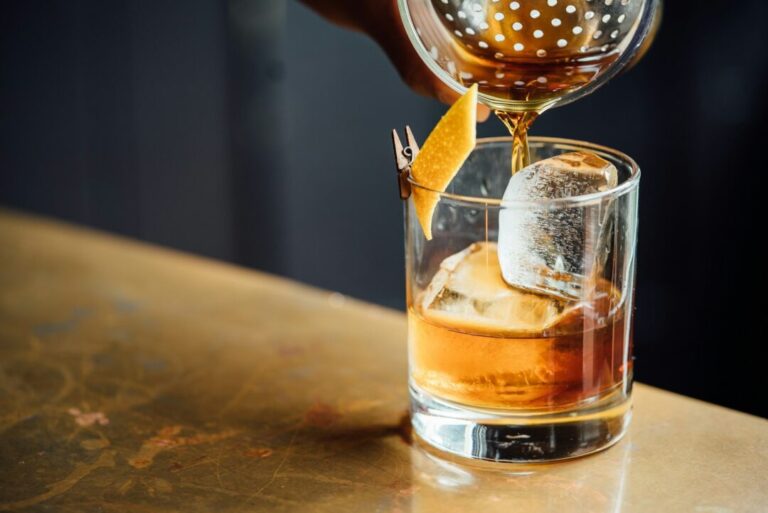
person holding clear drinking glass with brown liquid

Champagne Float

This drink is effervescent, elegant, and endlessly easy.  Bubbles aren’t just for New Year’s—it’s the perfect companion to ice cream when you need a refreshing lift on a sweltering afternoon.

Ingredients

  • 1 bottle (750 ml) chilled Champagne
  • 1 quart vanilla ice cream, sorbet, or frozen yogurt
  • Fresh strawberries for garnish

Create

  1. Chill Champagne flutes in advance
  2. Add 3–4 small scoops of ice cream or sorbet to each glass
  3. Top with Champagne and garnish with a whole strawberry
  4. Serve immediately with a spoon or straw

Margarita Ice Cream Float

The vibe is tangy, creamy, and totally summer-ready. The classic margarita gets a frozen upgrade with creamy vanilla ice cream and citrusy lime.

Ingredients

  • 2 scoops vanilla ice cream (softened)
  • 4 tbsp fresh lime juice
  • 2 cups lemon-lime soda
  • 2 shots 100% agave tequila
  • Lime wheel & salt for garnish

Create

  1. Rim glasses with lime juice and dip into coarse salt
  2. Add two scoops of vanilla ice cream
  3. Combine lime juice, soda, and tequila, then pour over ice cream
  4. Garnish with a lime wheel and enjoy immediately

Martini à la Ice Cream

Want to have something chic, smooth, and full of summer flavor? Turn your cocktail hour into dessert with this pink-hued martini that looks as good as it tastes.

Ingredients

  • 1 oz vodka
  • 1 oz white chocolate liqueur
  • 1 oz strawberry liqueur
  • 2 scoops strawberry ice cream
  • Sugar for rimming

Create

  1. Rim a martini glass with sugar
  2. Shake vodka, strawberry liqueur, and white chocolate liqueur with ice.
  3. Place two scoops of strawberry ice cream in the glass
  4. Pour shaken mixture over the ice cream and garnish with a strawberry

RELATED: Cannabis Is Way Better And Safer Than A Honey Pack

Tropical Sunset Float

This has a Tiki vibes in every icy sip. The fruity float blends pineapple, mango, coconut, and rum—transporting your tastebuds to a tropical beach without leaving the backyard.

Ingredients

  • 2 scoops mango or coconut ice cream
  • 2 oz dark rum
  • 1 oz pineapple juice
  • 1 oz coconut cream
  • Club soda
  • Toasted coconut for garnish

Create

  1. Scoop ice cream into a chilled hurricane glass
  2. Shake rum, pineapple juice, and coconut cream with ice, then pour over
  3. Add a splash of club soda and sprinkle with toasted coconut
  4. Serve with a paper umbrella for full effect

Boozy Chocolate Shake

Indulge with this decadent and comforting goodness with a bourbon twist. This thick shake delivers rich flavor with a hint of warmth—perfect for those evenings when the AC just isn’t enough.

Ingredients

  • 6 oz bourbon
  • 3 cups premium vanilla ice cream
  • 1½ cups whole milk
  • 6 tbsp chocolate syrup

Create

  1. Chill four pint glasses in the freezer for 30 minutes
  2. Blend bourbon, milk, ice cream, and 4 tbsp of chocolate syrup with ice
  3. Pour into glasses and top each with remaining chocolate syrup
  4. Serve with a straw or spoon

Do This To Make Your Commute Longer

As more people are returning to work, traffic is reverting to being miserable. Want to make it worse? 

Return to work is gaining ground and people are back to commuting to the office. Data indicates overall road traffic has largely returned to pre-COVID levels, but the timing is a bit different, rather than a few focused time (early morning, late afternoon).  Now traffic is less intense in the original times and is stretched out across the day.  If you are part of the road way adventure, do this to make your commute longer.

RELATED: The Connection Between Country Music And Cannabis

Tailgating—driving too closely behind another vehicle—is more than just risky behavior. According to traffic engineers and transportation researchers, it’s one of the hidden causes of the frustrating slowdowns and stop-and-go traffic patterns we experience on highways every day.

Most drivers tailgate because they believe staying close to the car ahead will help them get to their destination faster. But the truth is just the opposite: tailgating reduces the efficiency of traffic flow and makes congestion worse, even when there’s no accident or visible cause.

vehicles on road at daytime selective photography

When vehicles follow too closely, drivers have less time to react to minor speed changes. A light tap on the brakes by one car can cause a ripple effect down the line—each driver behind overreacts slightly more, leading to a phenomenon known as a “shockwave.” These braking shockwaves can travel backward through traffic, causing slowdowns or even complete standstills, seemingly out of nowhere. These are called phantom traffic jams—and tailgating is a major contributor.

In contrast, maintaining a safe following distance—typically a three-second gap between cars—helps stabilize traffic. When each driver has enough space to brake gradually and smoothly, these shockwaves can be minimized or even eliminated. The result is less stop-and-go traffic and faster overall travel times.

RELATED: Cannabis Is Way Better And Safer Than A Honey Pack

Another issue caused by tailgating is traffic flow instability. Smooth, consistent speeds are critical for keeping vehicles moving efficiently. Tailgating causes drivers to brake suddenly and accelerate rapidly to keep pace, which creates erratic, inefficient flow patterns that bog down the entire system.

The solution? Slowing down, backing off, and driving predictably. Technologies like adaptive cruise control, which automatically adjusts following distances, are helping. But until such features are universal, drivers can play a major role in reducing congestion simply by giving each other space.

So the next time you’re tempted to ride someone’s bumper, remember: tailgating doesn’t get you there faster. It’s making traffic worse—for you and everyone else on the road.

Don't Miss Your Weekly Dose of The Fresh Toast.

Stay informed with exclusive news briefs delivered directly to your inbox every Friday.

We respect your privacy. Unsubscribe anytime.