Wednesday, May 13, 2026
Home Blog Page 532

FDA Warns CBD Companies On Opioid Addiction Treatment Claims

While there has been anecdotal talk of cannabis with THC as a potential solution to weaning opioid addicts to a less dangerous level of drug use, it has never been proven to be a fail-safe alternative.

The U.S. Food and Drug Administration (FDA) has issued warning letters to two companies for illegally selling unapproved products containing cannabidiol (CBD) in ways that violate the Federal Food, Drug, and Cosmetic Act (FD&C Act). The FDA said that BIOTA Biosciences and Natures CBD Oil Distribution were claiming their CBD products could be used to treat opioid addiction.

The FDA has requested responses from the companies within 15 working days stating how they will correct the violations. Failure to correct the violations promptly may result in legal action, including product seizure and/or injunction.

“The opioid crisis continues to be a serious problem in the United States, and we will continue to crack down on companies that attempt to benefit from selling products with unfounded treatment claims,” said FDA Principal Deputy Commissioner Amy Abernethy, M.D., Ph.D. “CBD has not been shown to treat opioid addiction. Opioid addiction is a real problem in our country and those who are addicted need to seek out proper treatment from a health care provider. There are many unanswered questions about the science, safety, effectiveness and quality of unapproved products containing CBD, and we will continue to work to protect the health and safety of American consumers from products that are being marketed in violation of the law.”

The two warning letters were issued to:

  • BIOTA Biosciences, LLC of Washington state for marketing and distributing injectable CBD products as well as an injectable curcumin product. These products are marketed for serious diseases and as an alternative to opioids. BIOTA Biosciences markets private label CBD and wholesale CBD extracts, and their products include beverages, bulk CBD extracts, and water soluble CBD, as well as injectable curcumin.
  • Homero Corp DBA Natures CBD Oil Distribution of New Hampshire for marketing and distributing CBD products as a treatment to opioid addiction as well as other serious diseases. The firm is an own-label distributor for CBD products as well as a retailer for Green Roads CBD products.
How Does Cannabis Factor Into Teen Usage and Opioid Overdoses?
Photo by GIPhotoStock/Getty Images

The FDA noted that Natures CBD website claimed that its product “Has had success in alleviating severe withdrawal symptoms associated with opiate dependency. Natures Pure CBD also has taken off the ball and chain around the opiate addicts’ neck and has relieved the addiction totally by using Natures Pure CBD restoring the person back to a quality of life worth living.”  “The Opiate addiction rate of recovery is low and Natures Pure CBD oil offers promise for those suffering from chronic opiate use.”  “Natures Pure CBD oil works for these medications which all have addictive properties to them: opium, fentanyl, heroin, hydrocodone, oxycodone, methadone, morphine and hydromorphone. Natures Pure CBD Oil has been effective in the treatment and eradication of opiate use.”

RELATED: FDA Warns 15 Companies For Selling CBD Products That Violate FD&C Act

For BIOTA, the FDA pointed out claims on the website like “CBD . . . and its ability to suppress pain and aid in the detoxification processes has highlighted it as a promising therapeutic for a wide array of disorders such as epilepsy, including many challenging neuropathy conditions. When patients consider trying a new therapeutic like CBD, there are many options for delivery that can be more efficacious to the patient. One delivery option is BIOTA CBD Sterile Vial Therapy.”  “Instant relief for patients that are symptomatic of inflammatory auto-immune diseases”

While there has been anecdotal talk of cannabis with THC as a potential solution to weaning opioid addicts to a less dangerous level of drug use, it has never been proven to be a fail-safe alternative. There have been no FDA evaluation of whether these products are effective for their intended use, what the proper dosage might be, how they could interact with FDA-approved drugs, or whether they have dangerous side effects or other safety concerns.

RELATED: FDA Crackdown On Coronavirus Medical Claims: CBD Companies, Take Note!

In addition, the manufacturing process of unapproved CBD drug products has not been subject to FDA review as part of the human or animal drug approval processes. In March, the FDA provided updates on its work related to CBD products with a focus on protecting public health and providing market clarity. The FDA continues to be concerned that some people wrongly think that the myriad of CBD products on the market have been evaluated by the FDA and determined to be safe, or that using CBD “can’t hurt.”

Under the FD&C Act, any product intended to treat a disease or otherwise have a therapeutic or medical use, and any product (other than a food) that is intended to affect the structure or function of the body of humans or animals, is a drug. The FDA has not approved any CBD products other than one prescription human drug product to treat rare, severe forms of epilepsy.

This article originally appeared on Green Market Report.

Researchers Believe CBD Could Be Crucial To COVID-19

Israeli researchers have launched three clinical trials that utilize CBD’s anti-inflammatory properties as potential COVID-19 treatment.

Researchers believe CBD could be crucial to COVID-19 Israeli scientists have launched clinical trials into whether cannabis can play an effective role in stopping or slowing the coronavirus. Though lung health experts have warned smoking marijuana could exacerbate COVID-19 and its spread, the scientists will study cannabidiol (CBD) alongside existing treatment options as a possible solution.

Last week, InnoCan Pharma announced a collaboration with Tel Aviv University to instill CBD medicine through exosomes — or the small cell structures created when stem cells multiply. The unconventional method will utilize the exosomes as “homing missiles,” as they can uniquely target cell organs damaged by COVID-19. Researchers then believe CBD’s anti-inflammatory properties will repair the damaged cells through a synergistic effect.

As COVID-19 attacks the respiratory system, scientists will have patients receive CBD-enriched exosomes through an inhalation device. Previous studies have shown CBD can help regulate the body’s immune system and reduce inflammation throughout the body.

RELATED: Fact Check: Marijuana Won’t Cure The Coronavirus

A second clinical trial will occur over the coming weeks and includes 10 Covid-19 patients currently undergoing treatment in Israel’s Rabin Medical Center. Doctors will combine traditional steroids and CBD, with the belief CBD will enhance the therapeutic potential of the steroids. The trial, conducted by Stero Biotechs in collaboration with Mor Research Application, already has plans to expand treatment to 40 additional patients should it prove successful.

Israel's Unique Approach To Driving And Cannabis Use
Photo by PublicDomainPictures via Pixabay

“We estimate that our CBD-based treatment can enhance the current treatment of those patients who are in life-threatening conditions,” Stero Biotechs founder and CEO David Bassa said in a statement. “Hospitalized COVID-19 patients are mostly being treated with steroids and our study is planned to demonstrate the benefit of a combined solution with Steroid treatments. We are hopeful that this study will lead to faster benefit for the growing number of COVID-19 patients in Israel and around the world.”

RELATED: Feds Will Pay Scientists To Study Marijuana’s Effects On COVID-19

A third study, launched by Tel Aviv’s Ichilov Medical Center, will investigate whether CBD’s anti-inflammatory properties could lower respiratory symptoms experienced in moderate COVID-19 patients.

Canadian researchers have also announced intentions to study what role cannabis can play in slowing COVID-19. They also believe marijuana’s anti-inflammatory properties could provide a crucial role in potential treatment.

Investors Are Jumping Into Psychedelics After Learning Lessons In Cannabis

All indications are that this could be a safer investment with a substance that has been shown to be a more natural way to treat overall human wellness.

In this moment of a pandemic affecting businesses around the world, the cannabis business situation is especially sobering.

Canopy Growth, once the darling of the industry and a self-described “world leading” cannabis company, announced on April 16 the closing of various operations in Africa, Canada, Latin America and the U.S., resulting in the loss of over half a billion dollars.

Another early cannabis industry dazzler, MedMen, “North America’s premium cannabis retailer,” ran into major management issues, firing co-founder Adam Bierman and showing huge loses in their recent 2020 financial statement.

Both of these operations were founded and run by the so-called “cannabros” who got into the industry without a clear path for profit or sustainability that some made worse. In the case of MedMen, Bierman faced many accusations of burning through earnings with extravagant purchases supporting a high-flying lifestyle.

The glow of fast bucks and sustainable profitable operations has dimmed. Cannabis stocks have been crashing hard through most of 2019, with many of the top cannabis companies in the U.S. having enough cash to continue operations just through the middle of this year — struggling through 280E tax issues (a tax rule where they can’t write off business expenses), and not yet able to fully factor in the ongoing hit from the coronavirus.

Now, there could be a new target for investors who have learned the lessons from the cannabis industry and are working to build another related industry: psychedelics.

RELATED: The Rise And Impending Doom Of Canna-Bro Culture

All indications are that this could be a safer, calmer, more step-by-step investment with a substance that has been shown to be a more natural way to treat various mental health conditions and overall human wellness — just what the coronavirus has put in the spotlight.

Research suggests that psychedelics are catching on. In 2019, the Global Drug Survey collaborated with psychedelic researchers to explore the acceptability of psychedelics and other drugs such as MDMA (ecstasy or “Molly”) and ketamine in psychiatry. “We found high rates of acceptance especially among those with prior experience of using them, although fears based on myths and outdated science,  were evident among psychedelic naïve respondents,” the survey concluded. “Psychedelics are a boom business.”

Investors Are Jumping Into Psychedelics After Learning Hard Lessons In Cannabis Industry
Photo by Activedia via Pixabay

Some insiders say the psychedelics industry could be as much as $5 billion annually. “I have seen some investment groups out there who have invested $100 million in the last 12 to 24 months,” says Tim Regan, vice president of capital markets for KCSA Strategic Communications who is focused on investor relations for their psychedelic practice.

The research players are also in place, offering a closer look at what may be driving interest in this industry.

Rick Doblin, Ph.D., is the founder and executive director of the Multidisciplinary Association for Psychedelic Studies (MAPS). He’s helping design and sponsor psychedelic psychotherapy drug development and has already raised over $70 million in donations. MAPS received FDA Breakthrough Therapy Designation for MDMA-assisted psychotherapy for post-traumatic stress disorder (PTSD) with phase 3 clinical trials already underway and FDA approval expected in 2021.

RELATED: Could Psychedelics Be What Brings Us Back To Nature?

And just last year, the FDA approved Spravato, or esketamine, sold by Janssen Pharmaceuticals, which is a nasal spray used for treating depression, that was also part of the FDA’s Fast Track and Breakthrough Therapy designations. It has been widely hailed as the first approved psychedelic treatment for psychiatric use.

In 2000, Johns Hopkins was granted regulatory approval to do research into psychedelics, publishing a landmark study on psilocybin in 2006, then publishing additional peer-reviewed articles and creating the Center for Psychedelic and Consciousness Research. “Upcoming studies will determine the effectiveness of psilocybin as a new therapy for opioid addiction, Alzheimer’s disease, post-traumatic stress disorder (PTSD), post-treatment Lyme disease syndrome (formerly known as chronic Lyme disease), anorexia nervosa and alcohol use in people with major depression. The researchers hope to create precision medicine treatments tailored to the specific needs of individual patients,” according to information on their website.

The Psilocybin Movement Is Like The Cannabis Movement (Except When It’s Not)
Photo by Moha El-Jaw/Getty Images

Better yet, possession of psilocybin has been decriminalized in both Oakland, California and Denver, Colorado with other cities looking to follow suit.

Investors are itching to get more involved, and the starting gun has been fired.

According to the New York Times, one of those investing groups is Able, an early-stage investor in two companies involved in research of psychedelic compounds for medical use: London-based Compass Pathways (granted a patent that covers treating drug-resistant depression with psilocybins), and Germany’s Atai Life Sciences (a biotech company that is a major investor in Compass).

The psychedelic sector is going to be one of the drivers of the collective recovery from the current economic malaise around the world, according to Richard Skaife, venture capitalist with The Conscious Fund, speaking during the Virtual Psychedelic Conference in April sponsored by the Fund. The Fund is an early stage venture capital firm focused on medical cannabis, hemp and psychedelics.

RELATED: Psychedelics Help You Become Emotionally Adaptable, Study Finds

“What you are looking at is a business that is ultimately closer to being a bioscience company, so you want to look at the validity of the science,” Skaife says. “If we found someone who had the perfect scientific execution, but really had serious questions around how they were approaching business, then we would struggle in terms of making investments into that type of entrepreneur.”

Matthew Nordgren, founder and CEO of the Arcadian Fund, which is focused on the cannabis and hemp industries, said during the conference that the psychedelic industry should be more about developing patients and therapies, whereas cannabis also focused on the recreational part. “You should ask yourselves how to not fall into the cannabis space issues with penny stocks, where people tried to make a quick buck,” he says. “It’s important to have a long term investment view, and long term access to capital.”

Panelists at the conference were asked what was learned from the cannabis business startups? “I joke that weed was just a warmup,” said Robert Laurie, lawyer and board advisor to MAPS. “Psychedelics is much more complicated. At the moment, you have a lot of people in the car going 100 miles per hour in all sorts of directions. I don’t think we are even at the start of venture capital. Smart venture capital and startups are realizing these days that they can get money themselves. What they need big brothers and big sisters for is to be able to do things they can’t do themselves. Just teeing up with a venture capital fund to get money, that it won’t do it.”

“I think that there is a fundamental difference between the two industries,” says Regan. “There is a much more tactical approach to capital raising, to investor marketing, and to communications. In the cannabis business, there was a rush to raise capital and bring in new business and generate profits. Within the psychedelic arena, which is in health care and biotech, you are going to see development that is well thought out.”

New Jersey Voters Support Legalizing Recreational Marijuana, Just Not Selling It

Six out of 10 New Jersey voters say they will vote ‘yes’ to legalize marijuana this November, but uncertainty remains around regulation and sales.

Momentum to legalize adult-use marijuana in New Jersey has existed before, but the matter will rest in voter ballots this election. According to a new Monmouth University poll, recreational marijuana has majority support in the state.

State lawmakers have attempted multiple bids to legalize cannabis through the legislature over the past couple years, but they failed to gather the necessary votes. Instead, they voted late last year to put legalization forward as a ballot question, which has emerged as the primary political vehicle to end prohibition at the state level.

RELATED: The Feds Really Want To Block Michigan Marijuana Users From Buying Guns

A Monmouth poll released Thursday found 61% of respondents would approve the ballot question this November. Another 34% plan to vote ‘no’ while 5% said they have no opinion. Support is highest among Democrats (74%) and Independents (64%), but Republican voters (40%) aren’t as keen on legal cannabis.

New Jersey
Photo by SeanPavonePhoto/Getty Images

Less than 50% of voters believe allowing the sale of marijuana to adults ages 21 and older through licensed retailers is a good idea. That comes as a surprise as the ballot question with majority approval would accomplish exactly that. But only 30% consider it a bad idea while 22% state they have no opinion.

RELATED: Is Legal Marijuana The Economic Relief America Needs Post-Pandemic?

“Support for the marijuana ballot measure is widespread in part because many who have no opinion on whether legalization is a good idea figure they might as well vote for it,” Patrick Murray, director of Monmouth’s Polling Institute, said in a statement.

This conflict isn’t anything new in New Jersey. Residents may support legalizing marijuana, just so long as stores don’t appear in their backyard. A 2018 Quinnipiac poll found only 50% of state residents would welcome marijuana stores into their communities, while 45% opposed cannabis sales in their town. More than 50 towns/municipalities have already banned legal cannabis from entering their communities.

How To Reduce Food Waste During Coronavirus

0

The pandemic is forcing us to cook more, increasing the odds of us wasting food. Here’s how you can avoid this.

During a pandemic, it becomes more important to avoid food waste, even if it’s more difficult, like when you’re facing a fridge filled with perishable items that you panic bought at the grocery store.

Now that people are spending most of their time at home and don’t have the luxury of visiting the grocery store whenever they want, weekly grocery visits should be conducted with care. Perishable items should be purchased in moderation, not only because we should be considerate with others, but also because it’s likely for us to forget about them and for they to go to waste.

Here’s what you should do to reduce as much food waste as possible:

Stick to your grocery list

In order to avoid food waste it’s important to keep a grocery shopping list and to tailor it according to your needs. While in quarantine it’s common to feel the urge to bake or to prepare dishes that you stumble upon on social media, you should try to limit your impulse buys as much as possible. Keep a flexible list of the meals you’d like to prepare and think in advance of what you want to bake or cook that demands more ingredients. Spread these out throughout your quarantine; there’s no rush.

Keep tabs of what you waste

all you can eat resturant goes bust after people eat all they could
Photo by rawpixel.com

RELATED: How To Manage Your Alcohol Intake During Coronavirus

Inevitably some foods will go to waste. Keep track of these foods and pay closer attention to them the next time you purchase them, adapting your portions or cooking them and transporting them to the fridge, that way extending their shelf life.

Know when to use your freezer and refrigerator

If you end up cooking a large meal and don’t want to have to eat it for a week, freeze it and eat it next week. Food experts also suggest storing perishable items in the back of your fridge, which is usually the coldest part of the appliance.

Know your food labels

Chrissy Teigen Went Grocery Shopping And Here's What She Bought
Photo by creekmoreco via Pixabay

RELATED: 3 Grocery Shopping Myths To Avoid During Coronavirus

Food labels are very confusing and they all don’t mean the same thing. There’s four kinds: best by, sell by, freeze by and use by. The first refers to flavor but it doesn’t mean that your item will be wasted after the printed date. “Sell by” indicates when the grocery store should sell the item by. “Freeze by” indicates when the food should be frozen for best quality and “use by” indicates when the food is at peak quality.

No matter the print date, the most reliable way to tell if food is spoiled is by using your senses. Smell the food, look at its texture and/or taste it.

Know what to do with your leftovers

When cooking three meals a day, you’ll inevitably accumulate some leftovers. Try looking up what you can do with these, whether that’s freezing them, eating them the next day, re purposing them for other meals, using citrus peels for baking, stale bread for croutons or cheese rinds for making soups.

How Mixing Cannabis And Caffeine Can Affect Your High

Cannabis and caffeine are go-to substances for many, producing interesting results when paired together.

A lot has been said about marijuana and caffeine, with different companies developing products that combine the two. Even before marijuana was embraced by the mainstream, enthusiasts of the drug were finding creative ways of mixing these two elements by adding cannabis to oil or butter and mixing it in with their coffee, perfecting recipes that resulted in a good high with a nice flavor.  But how can mixing cannabis and caffeine can affect your high?

More research needs to be conducted in order to understand how these two elements work together, but most anecdotal evidence says that the pairing of these two results in a high that’s unlike any other.

Both elements increase dopamine levels

A study from 2017 found that both caffeine and marijuana increased dopamine levels in subjects who consumed it. When these two are consumed together, this boost is increased, resulting in a powerful euphoria and a different experience than the one you’d get when consuming these substances separately.

They can increase your heart rate

Should You Mix CBD With Your Morning Coffee?
Photo by Clay Banks via Unsplash

RELATED: The Science Behind Combining Cannabis And Caffeine

Caffeine and marijuana can both increase your heart rate, so it’s important to be careful when mixing them, especially if you’re someone who’s heart rate increases or can’t fall asleep when consuming more than two cups of coffee a day. When mixing caffeine and weed, choose products and strains that don’t contain too much caffeine or THC, that way eliminating as much discomfort as possible.

Caffeine might prolong your high

A study conducted on monkeys showed some interesting results for caffeine and marijuana. In it, a group of monkeys were administered with 1 mg of caffeine. The other group didn’t take anything. Both groups of monkeys had access to unlimited amounts of marijuana. The study found that monkeys who’d ingested the milligram of caffeine were less likely to ingest more weed. Researchers theorize that the small amount of caffeine boosted the monkeys’ high, making it last longer and require less doses of marijuana.

You might feel wired and tired

CBD Is Safe And Harmless, Right? Not Always
Photo by Tinnakorn Jorruang/Getty Images\

RELATED: Cannabis & Coffee: From Taboo To Trendy

Marijuana is a depressant while caffeine is a stimulant. Live Science reports that despite this, marijuana and caffeine’s effects don’t cancel each other out. Unlike the role coffee plays when consumed by someone who’s drunk (sobering them up), consuming coffee while high will just accentuate that high.

Always be careful

Like all things cannabis, it’s important to find a dose of caffeine and THC that works for you. If you’re interested in trying out the combination of coffee and marijuana, prepare your cup and ingest it in the morning, preferably on a day where you don’t have any meetings or deadlines scheduled. Start off slow and keep a close eye on how you feel throughout the day.

4 Ways To Prevent Work Burnout

Job burnout can affect all sorts of people, draining your energy and making your work more difficult than it should be.

Employment burnout comes in many shapes and forms, making it hard to identify. It can happen to everyone, ranging from people who don’t like their jobs to those who love what they do and find fulfillment in their everyday routines.

Burnout complicates simple tasks by making them tedious and difficult, even those that you used to complete easily. The good thing is that burnout is not permanent and can be diminished and reversed. Here are 4 things you should know in order to prevent or cope with your burnout:

Recognize the signs

burnout is now an official medical condition
Photo via rawpixel.com

RELATED: 5 Things To Talk About When You Don’t Feel Like Discussing Coronavirus

As is the case with most things, preventing a bad situation from happening is usually better than waiting for it to happen and then finding a way to fix the problem. Learn about the topic and try to recognize the signs. Check in with yourself every day once you’re done working. How are your relationships, personal habits and health? While work burnout is something that stems from your job and makes your working hours more difficult, it’s also something that affects other areas of your life.

Get creative with your time

Of course, this all depends on your job and how flexible your schedule is, but try to modify your routine in a way that works for you, giving you the time you need to pursue other things and give your brain a breather. If your schedule is fixed, fill in your free time with meaningful and fulfilling tasks and do all you can in order to separate business from pleasure.

Recognize burnout in others

is it possible to work yourself to death
Photo by rawpixel.com

RELATED: Here’s How CBD Can Treat Your Quarantine Body Pains

Since most of us live under large amounts of stress, it really helps when coworkers are on the lookout for fellow-burnouters. This way, we can help each other and try to find solutions to the problem — together. Burnout is a phenomenon that’s hard to spot, so help yourself and others by spreading awareness.

Figure out if your environment is a contributing factor

While some jobs demand tight deadlines and taxing hours, make sure that your work isn’t being taken for granted and that your environment isn’t toxic. Have open conversations with your coworkers and speak up if you feel like you’re being exploited or taken advantage of.

Is Legal Marijuana The Economic Relief Needed Post-Pandemic

marijuana CEOs argue that legalization could provide the economy a necessary shot in the arm after the coronavirus pandemic.

When the fog that is the coronavirus pandemic lifts, and the threat subsides, Americans and Canadians will discover an economy in serious need of repair. Most up-to-date reports indicate that more than 26 million Americans have filed for unemployment, erasing the 22 million jobs gained since the Great Recession in 2009. Is legal marijuana the economic relief needed post-pandemic.

A way to get some jobs back? According to prominent cannabis CEO, marijuana legalization is a crucial part of the solution.’

RELATED: Why The Black Market Continues To Thrive — And What Is Being Done About It

“When we all start to be able to lift our heads from this Covid experience, we are going to be faced with a scenario where a lot of jobs have gone away, a lot of economic development impact has disappeared,” Charlie Bachtell, CEO of Cresco Labs, told CNBC. “How are we going to bring that back? I think cannabis has to be part of that discussion.”

As Bachtell and others view it, the proof is already out there. Every state outside Massachusetts has deemed adult-use marijuana businesses as “essential” during the coronavirus pandemic. Many state governments have loosened laws around curbside pickup and dispensary delivery in both medical and recreational markets. Americans marijuana use hit an all-time high amid the coronavirus pandemic.

Tucker Carlson: Congress Passed Marijuana Banking Bill To Make Americans Dumb
Photo by Aleksandr_Kravtsov/Getty Images

Around $56 billion — that’s the current value of the American marijuana market, according to Cowen estimates. The only problem? In 2020, the black market captures about 90% of those sales and they all go untaxed.

“One of the programs by the federal government right after the Great Depression was to focus on tax revenue generation,” Curaleaf Executive Chairman Boris Jordan told CNBC. “They lifted prohibition on alcohol and therefore started to tax it—and it became a major revenue generator for both the federal and the local governments around the country.”

RELATED: Why States Need To ‘Flick The Legal Switch’ On Cannabis Amid COVID-19

Marijuana advocates believe legalization could become a necessary shot in the economy’s arm. Even while capturing only 10% of the available market, the legal cannabis industry generates between 200,000 to 300,000 jobs nationwide. According to Glassdoor, marijuana had a 76% increase in job openings in 2019 compared to the previous year. If you extrapolate possible projections should marijuana become legal, the industry could provide serious economic relief in the aftermath of the pandemic.

“You can just point to the fact that we have been deemed essential, why are we not legal?” said cannabis investor Matt Hawkins, managing partner of Entourage Capital. “There is going to be a need for increased tax revenue and where else to look but at a legalized industry like cannabis, that is one of the few growth sectors in the world right now.”

Study Links Daily Marijuana Use To Risk Of Psychosis

0

A 2019 study asserts that strong weed could be what transforms all of the die-hard stoners into a cult of stark-raving mad lunatics.

Okay, this might sound a little crazy, and if it does, it might be because you’ve been smoking too much of that high-quality weed they are producing today in legal states.

Seriously.

A new study finds that partaking in the good green could potentially breed a legion of mental defectives that all of us will one day be forced to contend with.

Researchers at the King’s College London are advising against further legalization because they have found evidence suggesting that high potency pot puts people at nearly five times the risk of developing psychosis.

A 2019 study published in The Lancet Psychiatry asserts that strong weed could be what transforms all of the die-hard stoners into a cult of stark-raving mad lunatics. It could be the downturn of civil society as we know it, and the last gasp before an untimely demise.

Our words, not there’s.

“If you decide to use high-potency marijuana, you should bear in mind: Psychosis is a potential risk,” lead researcher Dr. Marta Di Forti told the Associated Press.

RELATED: Reality Check: Cigarettes And Pot Linked To Teen Psychosis?

Now, before all of you cannabis purists start to get riled up about this research, you should know that those scientists still haven’t concluded that pot is a definitive cause of this mental disorder. But it does contribute to a growing body of evidence connecting marijuana and mental health issues. So, rest assured lawmakers and other less than hip members of the political divide are going to start throwing this study in the faces of those trying to legalize marijuana in more jurisdictions.

Photo by rawpixel.com

But it is essential to understand that the situation involving marijuana users and higher rates of psychosis is a rough argument from way back in the day. So far, all that science has been able to conclude is that there does appear to be some risk. But it is not at all permanent and “the psychotic state…reverses once the effects of the drug have abated,” according to a report from the World Health Organization.

Furthermore, research has found that people who are already susceptible to psychosis are more likely to feel its wrath. So, really, at worst, stronger strains could possibly bring about hallucinations or delusions in some users, but it’s not something that is going to get them buried underneath their local mental institution. They will make a full recovery and live to get stoned another day.

RELATED: Marijuana May Work To Trigger Psychosis In Some People

In the latest study, however, researchers found that people who started smoking marijuana at 15 years of age or younger were at more of a risk of a psychotic episode than those who began using later in life. Previous explorations into this subject have also found that dosage is key to preventing psychotic episodes from occurring.

Still, there is nothing about the latest pile of research that proves marijuana brings on psychosis, says Dr. Diana Martinez, a psychiatrist at Columbia University. “You can’t say that cannabis causes psychosis,” she told NPR, adding that many factors influence whether and how these disorders manifest.

Moms Are Using Marijuana More Than Ever During Pandemic

As parents have to accept responsibilities as caregiver and educator, they have turned to cannabis to help ease the burden.

Marijuana consumption has hit all-time highs during the coronavirus pandemic, but a new survey finds parents using cannabis at nearly double the rate as non-parents. According to an Oasis Intelligence report, having kids at home has played a significant factor in American adult marijuana consumption over the past month.

Oasis, which provides consumers insights for the cannabis industry, surveyed 720 U.S. consumers between March 30 and April 16, 2020 in order to understand what effect shelter-in-place orders, as well as the general stress of the global pandemic, has had on cannabis use.

This representative sample showed a higher percentage of parents with kids at home have consumed marijuana in the past month compared those without kids staying with them. Among parents, 16% of moms say they have used cannabis and 11% of dads. Most striking, only 7% of men without kids had consumed marijuana in the past month, the lowest group among U.S. adults.

RELATED: Smoking Marijuana In Front Of Kids In Legal States Is A No-No

“While millions of lives have been upended by the pandemic, changes in day-to-day life have been particularly dramatic for parents suddenly thrust into the role of both caregiver and educator while balancing work and other demands, and attempts to cope with this increased workload appear to be showing up in cannabis consumption rates,” Oasis co-founders Laura Albers and Ben Woo told The Fresh Toast in a joint statement.

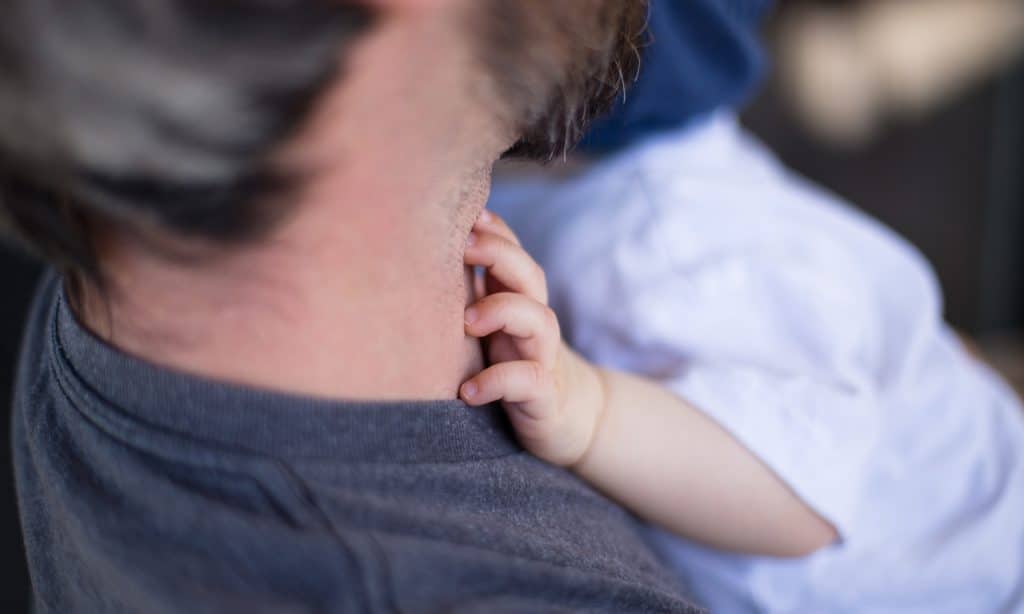
After Baby And Beyond- How CBD And Marijuana Can Help New Moms
Photo by Bruno Nascimento via Unsplash

A 2019 Oasis Intelligence Report could explain why parents have turned to cannabis amid the COVID-19 outbreak. Oasis found 85% of adults use marijuana partly for medical and wellness reasons rather than just for recreational purposes. More specifically, stress and anxiety relief was the most common reason adults used marijuana (40%). Sleep aid (30%) and depression relief (28%) were other common motivations for cannabis use.

But the recent report concluded that parents who consumed marijuana were more hopeful than those who didn’t at a 2-to-1 rate. About 31% of moms are feeling “hopeful” about their current situations, compared to only 20% of non-parents, and now state they value personal relationships more than they did before.

RELATED: Why Would-Be Dads Should Reconsider Using Marijuana

“In truth, parents as a primary cannabis demographic was likely always on the rise, but the unique demands of the pandemic have accelerated their entry into the market,” Woo said. “While this particular surge in new users may be tied more directly to shelter-in-place orders, the effects on the cannabis industry will be long lasting, and the lessons learned can inform any company’s approach to potential consumers for years to come.”

Don't Miss Your Weekly Dose of The Fresh Toast.

Stay informed with exclusive news briefs delivered directly to your inbox every Friday.

We respect your privacy. Unsubscribe anytime.