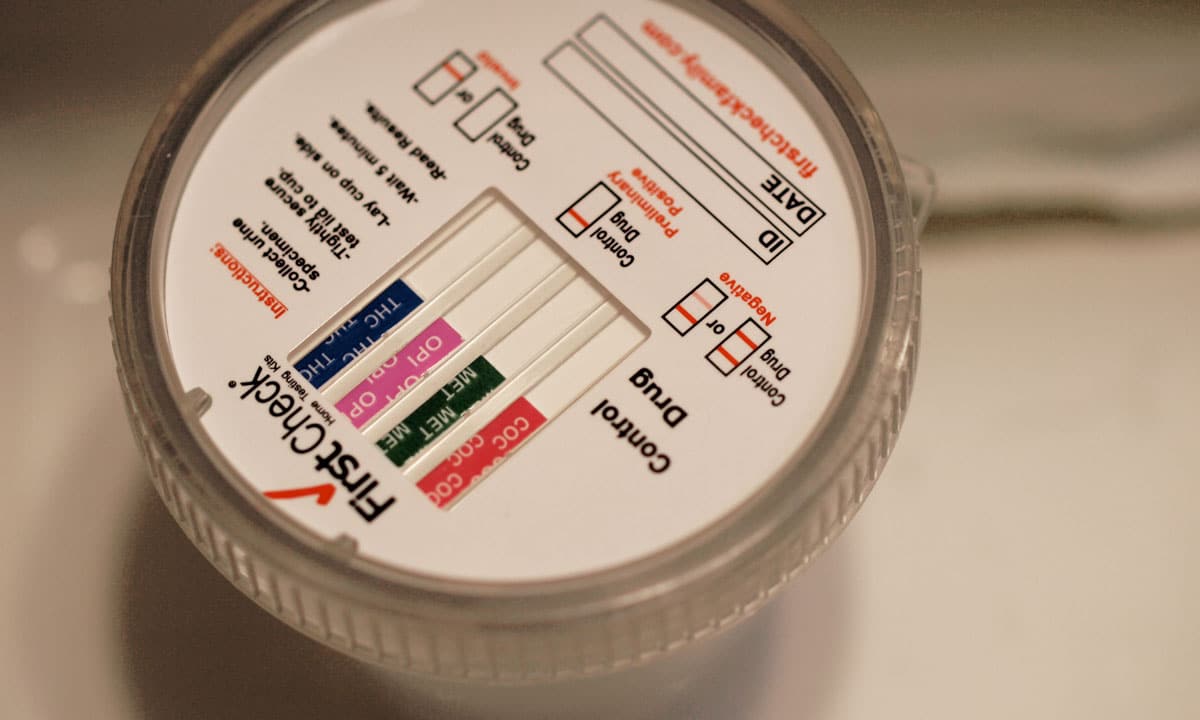
Hair follicle drug tests paint an accurate picture of your drug use over the last three months.
Hair follicle drug tests are some of the most accurate ways of detecting if someone habitually consumes marijuana. These tests are so sensitive that they might even be triggered just by surrounding yourself with people who smoke it. They’re very hard to cheat, so if you regular consume marijuana and have a job that practices random drug testing, you’re in for some bad news. Here is why hair follicle drug tests are hard to pass.
Hair follicle drug tests can paint a pretty accurate picture of your drug use over the previous 90 days. If you’ve smoked weed in the past three months with some sort of regularity, you’ll most likely fail the test. If you smoked weed yesterday and took the test today, you might paradoxically be in the clear since it takes about 10 days for the THC in your body to bind itself to the hair that grows out of your scalp.
How does weed end up in your hair out of all places? Crazily enough, the THC travels all the way there from your bloodstream. When you consume marijuana, the compound only stays in your blood for a short period of time — only while high — but it binds itself to other parts of your body.
Photo by Flickr user Micah Baldwin
As you’re consuming marijuana, your body breaks down the elements in cannabis and stores some of its compounds on the tissue and fat throughout your body, including your hair follicles. These cannabinoids will stay there until your hair falls off or until it’s cut.
So, your one option of passing a hair follicle drug test might just be to shave all of your head and body hair and come up with a reasonable excuse as to why you would do something like this. Sudden alopecia or joining a weird looking cult isn’t likely to fly with your boss.
In short: passing one of these tests as a habitual marijuana consumer is practically impossible. But, if you only consumed cannabis recently or have only occasionally smoked marijuana over the past three months, you’re most likely in the clear.
Market activity in 2020 will go a long way towards determining whether or not hemp’s profitability can sustain its robust trajectory.
To say that 2019 was a boom year for the CBD industry would be a massive understatement, and 2020 is primed to top the record sales and product innovation that have come to characterize this surging market.
On December 20, 2018, President Trump signed the Farm Bill into law, a move which removed hemp from the government’s controlled drug category and spurred farmers across the country to repurpose agricultural land previously used to grow feed and food crops such as corn and alfalfa for hemp varieties with high CBD and low THC (.3% or less) content. Farmers experiencing demand and profit surges since converting their land for hemp cultivation were profiled in a CNN report in April that projected sales of hemp products to be over 2.2 billion dollars by 2022.
Market activity in 2020 will go a long way towards determining whether or not hemp’s profitability can sustain its robust trajectory. Alexi Korybut, CEO of EcoGen Laboratories (one of the largest hemp manufacturers and suppliers in the U.S.) predicts that CBD consumers will skew increasingly Baby Boomer and become more conscientious about the quality and safety of the products they buy. Korybut also projects a greater focus on other cannabinoids such as CBG and CBN as their specialized effects become more widely known.
A 2020 forecast by Rich Maturo of information, data and measurement firm Nielsen predicts that cannabinoid education efforts, especially those targeted towards health care providers, will greatly increase in 2020. (Nielsen data shows that primary health care providers do more than any other demographic to drive brand loyalty and customer usage in the CBD market.) In addition, Maturo projects that CBD prices will fall while the number of hemp farmers entering the industry will continue to rise, as will the percentage of current farmers increasing acreage dedicated to hemp cultivation.
Photo by OlegMalyshev/Getty Images
Despite these positive projections, the hemp industry has experienced its share of problems, as outlined in an October article by Iris Dorbian for Forbes.com. These issues include a lack of widespread, scientifically sound information about the legality and benefits of CBD products, which often deters retailers from carrying hemp products. In addition, changing regulations make it difficult for manufacturers and retailers to keep up as new data emerges about drug interactions and the viable use of CBD as a food additive.
The quality and efficacy of products vary greatly as consistent industry-wide standards are still in process. Dorbian cites a press release from CEO of ValidCare Patrick McCarthy, who echoes Alexis Korybut’s predictions of a growing emphasis on safety and quality, escalating Baby Boomer consumption, and interest in CBG and CBN as features of the hemp industry’s growth in 2020.
Though projections may vary, there do appear to be strong commonalities that provide a clarified, if not completely clear, view of what 2020 holds for the CBD/hemp industry. What is clear is that the impact of hemp-derived cannabinoids will be felt in the health care industry, agricultural system, and consumer market far beyond the coming year.
There are lots of familiar faces who have been honored with royal titles. Here are some of our favorites.
The world of royal titles is a bit confusing, probably even for the royals themselves. (“What do you mean I’m not a Princess?” — Meghan Markle and Kate Middleton.) Even non-royals get honorary titles these days, and it has nothing to do with their heritage. Every year, the Queen doles out accolades to some very well known pop culture icons that have nothing to do with bloodline. Here are 7 celebs with royal titles.
“One of the best-known systems for celebrating achievement is the awarding of UK honours such as MBEs and knighthoods, as well as military awards such as the Victoria Cross.
Honours are decided and announced by the Cabinet Office twice a year: at New Year and on The Queen’s official birthday in June. They are then presented to recipients by members of the Royal Family throughout the year at ceremonies known as ‘Investitures’.
The UK honours system rewards people for merit, service or bravery. Honours are given to deserving and high-achieving people from every section of life: from soldiers to community volunteers, performers and leaders of industry.”
Photo by Chris Jackson/Staff/Getty Images
Types of honors and awards include: Companion of Honour, Knight or Dame, Commander of the Order of the British Empire (CBE), Officer of the Order of the British Empire (OBE), Member of the Order of the British Empire (MBE), British Empire Medal (BEM), and Royal Victorian Order (RVO).
While that may be confusing, there are lots of familiar faces who have been honored with these titles. Here are 7 of our favorites (favourites?).
Adele
Adele received the Most Excellent Order of the British Empire in 2013. Translation? Her royal name is Miss Adele Adkins MBE. This award is given to reward chivalry, charity work, and public service. She received the medal from Prince Charles himself.
Idris Elba
Elba was appointed an Officer of the Order of the British Empire in 2014 for his services to drama. Yep. His looks had nothing to do with it.
The former Mrs. Pitt received the title of Honorary Dame (a way better title) from Queen Elizabeth II in 2014 for her work on efforts to end sexual violence in war zones.
Bill Gates
What’s the better title: billionaire or Knight? The Microsoft founder was awarded honorary knighthood in 2005 for his work through the Gates Foundation, which focuses on healthcare in developing countries.
In 2003, Beckham was named Officer of the Order of the British Empire by Queen Elizabeth II. Outside of his soccer superstar status, he is a longtime supporter of UNICEF and other children’s healthcare causes. His wife Victoria Beckham was appointed an Officer of the Order of the British Empire in 2017 for her services to the fashion industry.
J.K. Rowling
The Harry Potter author is also known as Officer of the Order of the British Empire, a title she was awarded in 2001 for her contribution to children’s literature.
Mick Jagger
The Rolling Stones frontman was granted knighthood in 2003 for his service to pop music, nominated by then-Prime Minister Tony Blair.
Despite all the technology and design that’s available online, the old-school newsletter has proven to be a satisfying way of obtaining the content people want.
With the influx of internet content, it’s becoming increasingly hard to find websites that suit our needs, be that for personal enjoyment or keeping up with the news. It sounds paradoxical that in the age where there’s the most information available, people are having a hard time finding news they can trust and enjoy. Despite all the technology and design that’s available online, the old-school newsletter (a fancy way of saying “email”) has proven to be a satisfying way of obtaining the content people want.
Unlike social media, where websites and blogs seem to fight each other for followers and likes, the newsletter feels simple in the best possible way. The content gets straight to the point. It also has a way of filtering out any information that you’re not interested in.
Everyone could stand to read a book or two more. “Read A Girl” is a monthly newsletter that recommends writing by women. Their entries include famous authors like Tina Fey, Phoebe Waller Bridge and Elena Ferrante to more obscure suggestions that will allow bookworms to discover more women writers. Each newsletter is brief, acting as a review of the book, discussing what works and why the book is a must read.
The Skimm is one of the most popular newsletters on this list, providing you with a quick and easy breakdown of the day’s most important news stories, ranging from politics, to tech, to something random that made everyone talk.
Written by Emma Gannon, The Hyphen is all about “living life more curiously,” which is a pretty broad definition meaning that plenty of things will be discussed. The newsletter also provides different recommendations of podcasts, books and more.
The great thing about newsletters is that, if the writer is good, you can read about a hundred different topics in new and interesting ways, which is kind of the purpose of Woolgathering. This weekly newsletter touches upon topics that range from productivity to work stress, all written by Mike Sturm.
Even in states with some of the harshest pot laws in the country, there is still a good chance that a first time offender will get off with fines and probation.
We see reports all of the time where a driver, presumably with a pocket full of marijuana, leads police on a high-speed chase in an attempt to keep from getting caught with said marijuana and dragged to jail by the hair of his (or her) chin. There’s no denying it: cannabis users living in prohibition states are still afraid of getting busted with marijuana. Here is what to do if pulled over with weed.
And it makes all the sense in the world, too, considering that the penalties for pot possession in some of these areas are still pretty ridiculous. It can mean significant fines, criminal charges and, in some cases, a bunk in the state penitentiary. So, heck yeah, whether it is a smart move or not, marijuana users have been known to run from the cops if they think even for a second that this could be their fate.
But evading police can bring about more trouble than marijuana possession ever could. In fact, any driver that speeds away from police, perhaps screaming something like, “Catch me if you can, coppers,” is at risk of getting slapped with multiple felony charges depending on how the event shakes out.
This is a crime known as evading, fleeing, or eluding law enforcement officers. And depending on which state it happens in, the driver would be better off receiving small-time marijuana possession charges all day than incur that wrath. It’s one of those situations where, sure, the motorist might get away from police, but they probably won’t. Statistics show that making a successful getaway is difficult, even in the largest cities in the United States. Remember, there is strength in numbers, and a motorist is always going to be outnumbered when up against any police force.
Photo by freestocks.org
“People are always going to try and get away, but it is pretty hard to escape,” Greg Meyer, a retired Los Angeles police captain and pursuit training expert, told the Los Angeles Times.
Still, it is worth noting that the prosecution is going to need substantial evidence before it can throw the book at someone for this offense.
Although trying to escape after an officer sets his or her sights on you is always considered a no-no, a nervous driver with weed in his or her pocket probably isn’t going to get nailed just for exiting the street when a cop gets behind them. The laws are different in each state, yet most dictate that cops use flashing lights or even a siren before a motorist is required to stop.
If the driver flees, however, it really all depends on how the event goes from there that determines how they will be charged. In some states, a motorist on the run might catch a misdemeanor charge if their actions somehow don’t involve anyone else. But it’s easy for that charge to see a felony upgrade. It goes without saying that any motorist who endangers or kills an officer or anyone else on the road while fleeing is in deep trouble. A felony conviction for this offense can mean years in prison and fines reaching $100,000. Even misdemeanors can come with jail time and thousands of dollars in fines.
And what about that marijuana charge?
Fat chance of it getting dismissed or even considered for a palatable plea-bargain if the fleeing charge sticks. The courts don’t take too kindly to motorists endangering the lives of law-abiding citizens. That goes triple if someone actually gets hurt or killed. The prosecution will go for the jugular.
All in all, it is never a smart move for someone in possession of marijuana to run from the cops. Even in states with some of the harshest pot laws in the country, there is still a good chance that a first time offender will get off with fines and probation. That is as long as the amount discovered in your vehicle doesn’t constitute trafficking. That’s a whole other story. Typically, prosecutors will work with those caught in possession of small amounts of weed (under two ounces). But if you do happen to mess up and run, make sure to contact an attorney once you are caught.
Rolling joints is an art. Here are some tutorials of the most creative ones we found online.
If you’ve ever smoked a joint then you know that rolling one is not that easy. Even when you have the all the right tools and the best kind of paper, the only way to learn how to perfect the art is to practice. A lot. And that’s for your garden variety joint, which doesn’t ask for much except for some coordination.
The more that cannabis is embraced by the public, the more creative people get when it comes to making their own joints. If this sounds at all interesting to you, then get ready to learn some of the basics of creative joint rolling. It’s a trial and error experience and one that will consume a large amount of your time. Hopefully, you’ll at least get the respect of your friends.
Here are 5 creative ways to roll a joint, ranging from the basics to the truly crazy stuff:
The Classic
You can find thousands of videos of experts rolling joints, but most of them show off a technique that’s impossible to master when you’re a newbie. This video features David Bienenstock, author of a couple of marijuana books, and is the perfect tutorial for newbies due to several reasons: it’s basic and there’s nothing fancy going on. The joint is average sized and it doesn’t even ask for a filter. After a couple of tries, anyone interested will be able to master it.
Here’s when things get a little more complicated. In this video, a guy says that he’s rolling a “perfect” joint, and he means it. Cone joints are very popular and great for sharing, since they contain more weed than the average joint. They’re also harder to roll, which is where this tutorial comes in.
Homemade joints don’t come any better than this, having two filters, a decent cone shape and a channel than ensures that weed will burn out evenly. You might need a couple of hundred tries to achieve this but you’ll get there someday.
The Cross
The cross joint is the kind of joint you see in stoner movies or in like a frat party. This joint is not for the faint of heart, since when it’s built correctly you’ll basically be smoking from two joints at once. It demands the necessary tools for preparing separate two joints, a big and a small one, and also a needle. For a better and more thorough explanation, just watch the video and enjoy Seth Rogen’s handiwork.
The Tulip
The name of this joint should imply that there’s some arts and craft involved, and there is. The tulip joint asks for you to roll a joint, to paste a bunch of rolling paper together and to basically do some origami. The end result only sort of resembles a tulip, but hey, it’s still cool. There’s a bunch of tutorials out there on tulip joints, with some truly hideous results, but here’s one that’s kind of pretty.
While I’m sure there are infinite ways of rolling joints, the scorpion is the craziest one we found that actually had some video tutorials online. These clips aren’t as fun and as well produced as the previous ones, but they are insane, because someone is taking the time to make a scorpion out of paper and weed. Check it out.
CBD is the latest wellness trend, one that makes appearances in the most unlikely products.
The use of CBD in the health and wellness products has been shown to be helpful in relieving pain and inflammation, as well as functioning as a natural sleep aid. However, in order for CBD to be effective, it needs to be taken either orally or topically in a manner where the CBD can actually get absorbed into the body. With its popularity, it seems it is everyone, so here are some of hte weirdest products with CBD.
As reported by Healthline, “The wellness industry is going to do what the wellness industry does best: try to make money. And CBD is proving to be a great way to do that. As a result, CBD is unnecessarily ending up in some cosmetic and wellness products.”
Here’s a listing of some products where adding CBD seems to increase the price of the product without providing any of the actual benefits one can get from CBD.
CBD Mascara
Coating your eyelashes with CBD may give your lashes a creamy texture but you can get this same sensation by using another oil that doesn’t come with such a high price tag. Also, no medical research has demonstrated that CBD gets absorbed into your skin when applied to your eyelashes.
CBD Athletic Wear
As a general rule of thumb, cannabis topicals need be applied to the body and not worn on the body. The only magic you’ll see from any CBD high-end athletic wear is watching how quickly money vanishes from your wallet.
If you’re old enough to buy CBD legally, do you really want to eat kiddie candy? If you enjoy CBD gummies, consider getting some that have a more sophisticated adult look.
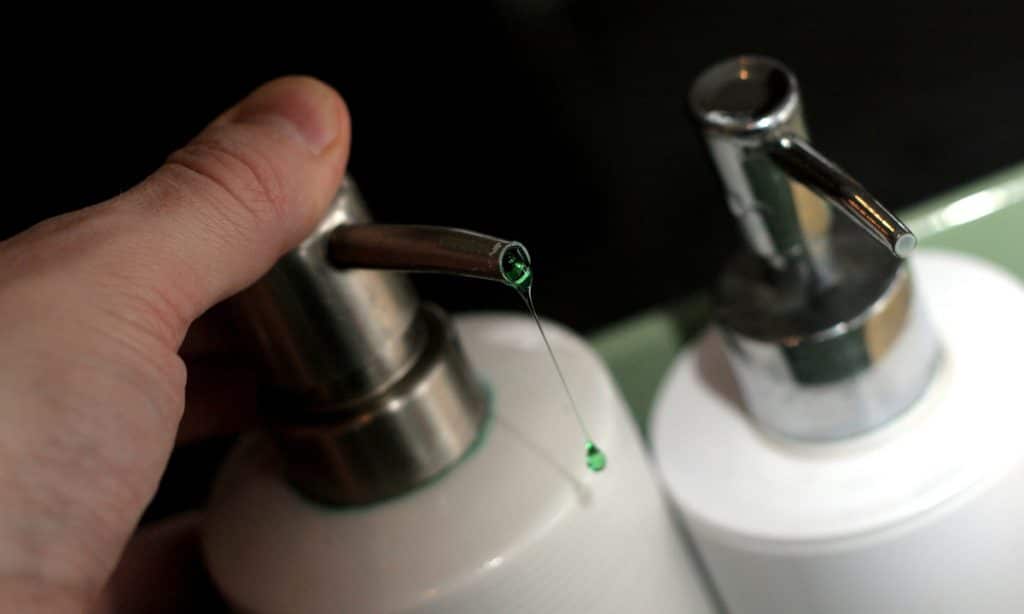
CBD Shampoo and Soap
Any product like shampoo and soap that washes off isn’t able to absorb into the skin to the point where it can provide any of the healing properties of CBD.
Photo by kboyd via Pixabay
CBD Hand Sanitizer
The primary purpose of hand sanitizer is to protect yourself from germs, and that’s not the key reason why people use CBD products. There are plenty of organic hand sanitizers on the market that don’t contain alcohol or a high price tag.
CBD Chew
Yes, you can chew CBD the same way you can chew tobacco — but why?
CBD Toothpaste
So far there’s no medical evidence that using toothpaste infused with CBD will help with gum pain or gingivitis, as well as restoring damage to your teeth. Also, unless you like to brush your teeth for an extended period of time, the CBD will not have time to enter your body and provide any benefits.
Yes, toothpicks are great for removing those pesky bits of food out of your teeth and massaging your gums. But unless you actually chew your toothpicks, none of the CBD on tooth pick is going to actually get into your body.
Before purchasing a product infused with CBD, do a bit of research so that you are selecting topical products that will actually work.
The Alaskan marijuana business has shifted tremendously since its inception, and cannabis entrepreneur Steve Breshear has been through it all.
Alaska is a large and diverse state, with an area twice the size of Texas and a population of less than 800,000, making it the most sparsely populated state in the nation. It is also 500 miles away from the contiguous U.S. and shares a border with both Canada and Russia. Many are attracted to the Last Frontier for its remoteness, natural bounty, and culture of individuality and respect for privacy. Alaska’s history with cannabis is a confusing and long one, with periods of tolerance and criminalization, but in 2015 it became one of the first states to legalize recreational marijuana.
Steve Brashear, founder and CEO of Great Northern Cannabis, a leading and early business in the Alaskan cannabis market, had started considering entering the marijuana business as a career Plan B. He also saw it as a way to scratch his entrepreneurial itch.
“Before I ventured into the cannabis industry, I worked in the oil and gas industry as a regulatory compliance and permitting specialist. When oil prices tanked in 2015, the industry began a significant contraction in terms of operations, assets, and personnel. As the threat of layoffs loomed, I began to explore other opportunities in case I lost my job,” Brashear said, adding, “the timing and circumstances were right, and I officially launched Great Northern Cannabis in October 2015.”
What started as a backup to his job in the oil business has turned into two storefronts, two cultivation facilities, a commercial kitchen to produce edibles, a cannabis oil extraction lab, as well as a corporate office, with plans of further expansion. Although Brashear survived the eventual layoffs he anticipated, he walked away from the oil industry to focus on his budding marijuana enterprise.
In some respects, the recreational marijuana industry in Alaska is not unlike those found in other U.S. states, facing some of the same federal roadblocks and headaches brought on by cannabis’ continued federal prohibition. The regulatory environment is similar to those in other states, with taxation at state and municipal levels, zoning and licensing restrictions.
“In Alaska, banking services are extremely limited for cannabis businesses, because cannabis is still federally illegal in the United States. The lack of banking services creates accounting and public safety issues by requiring operators in the cannabis industry to be all-cash businesses,” Brashear says.
In addition to a lack of banking services, cannabis businesses in Alaska are also hamstrung by IRS Rule 280E, put in place after a drug dealer sued the government for the ability to deduct business expenses. The rule disallows nearly all business deductions except Cost Of Goods Sold (COGS) for any business “trafficking” in schedule I or II substances, including marijuana. The end result is that cannabis businesses pay a much higher effective tax rate than a typical company, and the federal government potentially seeing more revenue from keeping marijuana scheduled than not.
The effective tax rate increase can be quite substantial according to Brashear. “Due to the federal illegality of cannabis, the IRS limits tax deductions for licensed cannabis businesses to only the COGS. In other words, only the cost of your inventory is tax-deductible. Other common business expenses such as labor, rent, and marketing are largely non-deductible. The effect of IRS Rule 280E is that many licensed cannabis businesses ultimately pay realized tax rates of 80-90%.”
Photo by Snehal Shah via Unsplash
The regulatory maze in Alaska is not unlike those in other states. Physical locations are subject to zoning laws, the state imposes an excise tax of $800/pound, while local governments can impose an additional tax, as Anchorage does, adding a 5% retail tax to cannabis products. Alaska also requires those with a direct financial interest in a cannabis business to be a legal resident of the state.
Steve has the following advice for interested cannapreneurs in Alaska: “Anyone considering the launch of a new cannabis business should be well-capitalized and have a strong team with expertise in business, regulatory compliance, accounting, finance, public relations, government affairs, and cannabis. Operating a licensed cannabis business in Alaska can definitely be a challenging and rewarding experience, but it’s not for the faint of heart.”
For Beshear at least, the cannabis industry also has some great positives, including seeing how cannabis changes people’s lives. “One of the most enjoyable aspects of working in the Alaskan cannabis industry is the opportunity to interact with such a diverse group of people. Customers include people from all walks of life – doctors, lawyers, college students, wait staff, mechanics, veterans, and many others. The cannabis consumers include people across all levels of the economic spectrum,” he says.
“Working in the cannabis industry provides you with a close-up view of the difference that cannabis makes in the lives of so many people. It’s a rewarding experience. Working in the cannabis industry is also exciting because it’s a new industry in which entrepreneurs are charting the course and making history. As cannabis entrepreneurs, we are truly steering the ship of a brand new industry, setting the bar for new achievements, and overcoming unique challenges on a daily basis,” Steve continues.
What will the Alaskan market look like in five years? Beshear sees a further consolidation of the market while it becomes harder to enter.
“In five years, I believe the Alaska cannabis industry will look much different than it does today. Specifically, I believe it will be characterized by many more mergers and acquisitions as competitors team up and the stronger companies gobble up the weaker ones. I believe you’ll see several of the top cannabis companies establish market dominance across the state, and the barriers to entry will likely become even more daunting,” Steve says.
He also gave some tips to those venturing to the Great White North, which includes visiting one of Great Northern Cannabis’ stores of course, but also some other rules to remember.
“Tourists should also be aware that it’s not permissible to carry cannabis with them back home on a plane or a cruise ship. They should plan to enjoy their cannabis during their stay in Alaska. It’s also important for them to know that public consumption is illegal, so they should not smoke on the street.”
Raising a question about CBD’s benefits in vein health might be a great conversation for your care team, opening new solutions for an age-old problem.
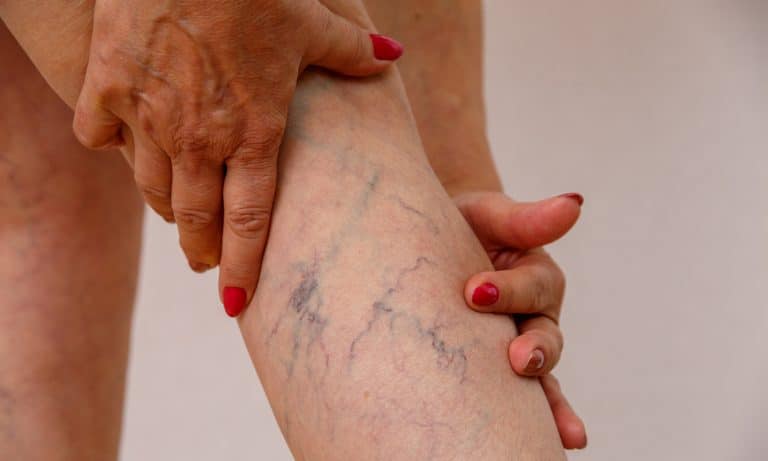
Varicose or spider veins can be as upsetting as they are signaling to a larger issue in the body. The Chicago Vein Institute estimates that over 40 million people in the United States suffer from varicose veins. Here is what to know about CBD’s effects on varicose veins.
According to Dr. Eric S. Hager for the Society for Vascular Surgery, “Women, women who have had multiple children, and obese persons are at a higher risk.” Even more interesting, women who were overweight with a BMI greater than 30 were three times as likely to develop the veins. Additionally, a family history could raise chances of developing the ailment almost 90%.
The veins are much more than a sign of aging, they signal a large problem within the body. The American Vein and Lymphatic Society explains that varicose veins happen when there’s a lack of efficient blood flow from the weakening of valves that causes blood to not flow towards the heart, but instead remain in the leg.
“If the valves of the veins don’t function well, blood doesn’t flow efficiently, and the veins become enlarged because they are congested with blood. These enlarged veins are commonly called spider veins or varicose veins. Spider veins are small red, blue or purple veins on the surface of the skin. Varicose veins are larger, distended veins that are located somewhat deeper than spider veins.”
While varicose veins can be embarrassing, treatments have been available on the market in the form of vein clinics and surgery. With the introduction of CBD into the market, professionals and patients are taking notice of compound’s benefits for varicose veins, but does research support its use?
The short answer is: maybe.
Photo by seksan Mongkhonkhamsao/Getty Images
A 2013 study published by the British Journal of Clinical Pharmacology showed promise for cannabidiol as therapy for the cardiovascular system. The study gave insight into CBD’s benefits and offered that in some cases, cannabidiol could cause a reduction in vascular tension or, “vasorelaxation.”
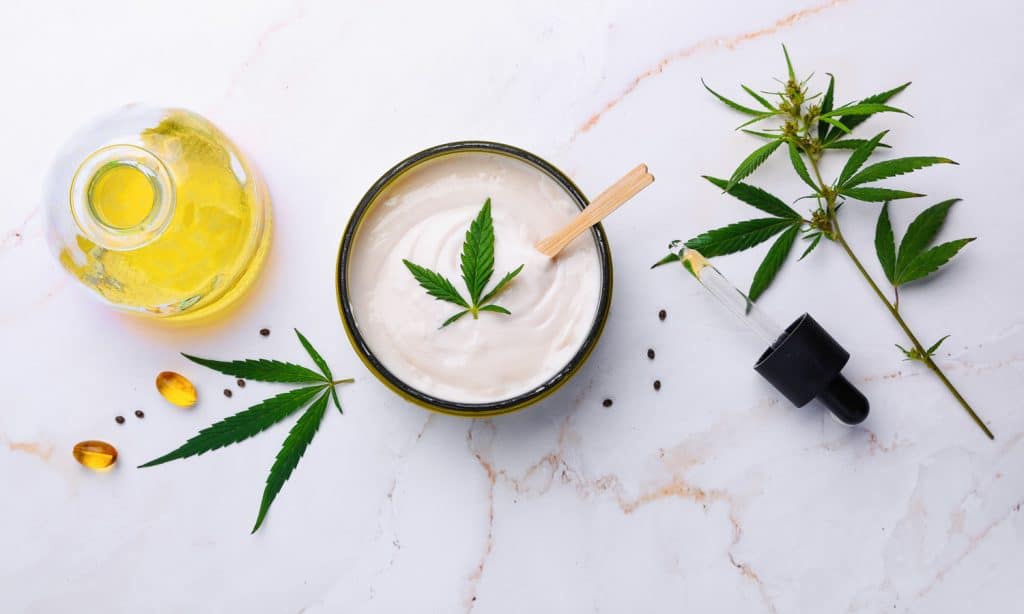
Princeton Vascular Center believes CBD has a role in vein health, citing that since cannabinoid is flush with omega-3 fatty acids, it can not only decrease itching, burning and pain from varicose veins, but it offers an option in improving their appearance as well as long as patients are under the care of a board-certified vein specialist. The Center explains, “The use of hemp oil has been reported to decrease the local itching, burning and pain from spider veins and can be applied to the skin directly. Anecdotally, it has also been reported to improve the appearance of spider veins.”
However, there’s a caveat: CBD seems to offer benefits to varicose veins, while one study found that smoking marijuana e-cigarettes can damage blood vessels after just one use. The August 2019 study stated that out of a small sample of 31 individuals, MRIs before vaping showed healthy blood flow and after vaping highlighted reduced blood flow. While more research is needed, the study implies that continuous use could cause even further damage.
While new research continues on CBD and THC, raising a question about CBD’s benefits in vein health might be a great conversation for your care team, opening new solutions for an age-old problem.
A new report predicts that CBD will be worth billions when it comes to its place in the beauty industry.
Since its mainstream introduction a couple of years ago, CBD has become one of the biggest disruptors in the beauty industry. The compound has been embraced by consumers of all kinds, causing beauty companies to look for original ways to make their mark on the blooming business. A new study predicts that by 2024, the CBD industry will be worth over 950$ million.
This study was conducted by a strategic consultancy firm called Prohibition Partners, who called CBD’s breakthrough within the beauty industry unprecedented.
“Thus far, the disruption we’ve seen in the beauty industry is nothing short of remarkable, attracting attention from high-street retailers, global brands and indie entrepreneurs. Consumers are looking for new and exciting products derived from natural and sustainable sources and cannabis continues to fit this mold, driving product demand through the roof,” said Stephen Murphy, the managing director of Prohibition Partners.
Photo by IRA_EVVA/Getty Images
While the report still mentions there are questions regarding the longevity of the trend, CBD has already left an imprint in beauty companies of all types, from large retailers like Sephora to independent boutique brands. In order for CBD to become a mainstay and not a fad, the study says, the education of the public regarding the compound is a must. That way the influence of ripoffs and sketchy companies can be reduced by a significant margin.
“In this new report, we offer a comprehensive look at the state of the cannabis beauty market, explore potential future trends and commercial opportunities, and analyse some of the most pressing issues that are facing the sector today,” concludes Murphy.
The report is called Disrupting Beauty and it discusses the rise of cannabis products and how the plant has infiltrated mainstream businesses. You can check out the report in full here.