The FDA is strict about leftover foods but doctors don’t believe the subject is so black and white.
Leftovers have vastly different life cycles depending on the person you ask. While some people are capable of eating leftovers that simply won’t kill them, others have higher standards. But no one is more strict that the FDA, which claims that leftovers should be eaten within four days.
In reality, the lifespan of leftovers isn’t so black and white. Depending on the contents and the preparation, some foods might last longer in the fridge and still be completely safe to eat.
The Huffington Post spoke with some experts who explained that foods with high acidity, like tomato based sauces, are able to last a week in the fridge. These foods have lower pH levels and are thus more inhospitable for bacteria. On the other hand, foods with high pH levels and high amounts of moisture, like fish, eggs and cooked meat, have much shorter shelf life. These only last up to three days in the fridge.
Photo by Alexandra Gorn via Unsplash.
While you won’t likely die from eating these foods, you’re opening yourself up to food poisoning and stomach bugs.
The best thing you can do to ensure that your food lasts longer is to store them in airtight containers. You should check your fridge and make sure it’s working correctly, maintaining a temperature of 35-40℉. Be clean in your kitchen, throwing away old sponges, and cleaning knives and cutting boards thoroughly, preventing bacteria from spreading around. You’d be surprised by how delicate food is and how easy it is to get sick.
When it comes to packing your leftovers, label your containers with the dates in which they were prepared. If you’re not planning on eating them soon, store them in the freezer, where they can live forever. Just kidding, it’s three months.
Marijuana can make you really tired if you’re not careful. Here are a 5 tricks that can help you counteract the sleepy effect.
Marijuana is a great medicine for all types of insomniacs, causing your body to loosen up and relax. The effects of the plant vary and are more intense depending on several factors, like the strain, the user’s metabolism and body type. It also matters what time of day it was consumed. And your mood.
Seasoned marijuana users know their bodies well enough to have their favorite strains, which produce reliable effects that they can control. Less experienced users can struggle with smoking marijuana and remaining alert, even if they’re surrounded by people or are consuming in the middle of the day.
Here are a 5 tricks that can help you counteract the sleepy marijuana effect.
Working out is one of the world’s best natural energy boosters, helping you sleep more soundly and decreasing your fatigue. The more regular you are with your workouts, the better your body will function. Many cannabis smokers report that exercising while high helps them work out for longer periods of time, increasing their focus and allowing them to have more fun.
Smoke smaller doses
If the cannabis you’re consuming is making you too sleepy, try consuming it in smaller doses, steering clear of couch-lock. Ingesting smaller doses of cannabis will also limit paranoia, anxiety, and the munchies.
Sativa!
While indicas are relaxing and tend to make you sleepy, sativas are known to produce uplifting effects that pair great with other types of activities. Sativa strains tend to create more cerebral highs that make it a good option for daytime smoking, working out or doing something creative.
If you’re at home or at a friend’s house and you start feeling that powerful marijuana induced stupor, hop in the shower. This will help you relax and wake up, causing you feel refreshed and ready to do something fun.
Coffee or green tea are always great options for when you need a quick burst of energy. Some studies suggest that caffeine can enhance the effects of THC and produce a more pleasurable and effective high. You should start slow when mixing these two elements, considering that one is a depressant and the other a stimulant.
Electricity drives many legal grow operations and could irrevocably damage marijuana plants during harvest season.
Following massive, deadly wildfires a year ago, while also dealing with bankruptcy negotiations, California utility company Pacific Gas & Electric decided to shut off power this week to avoid any more potential damage. Five out of the 10 most destructive wildfires in California history have been connected with PG&E’s electrical network, according to the New York Times. That’s why, when conditions ripe for wildfires began this week, PG&E decided to turn off power for more than 800,000 of its Northern Californian customers.
Count cannabis producers among those affected. Humboldt County, home to some of America’s most famous marijuana grow, was the only county to completely lose power during the blackouts. That included many newly licensed farmers with cannabis crops intended for both the medical and recreational markets, some of whom need success this year to kick their operations off the ground.
This blackout then couldn’t come at a worst time for the cannabis industry. October is harvest season, the time when many cannabis plants are cut down and enter the processing phase. Without undergoing proper drying and curing, fresh-cut marijuana plants can start to rot after just two days, reports Leafly. As Martin O’Brien, the Foxworthy Farms founder and CEO, told the publication, “Mold can slaughter a crop in a day.”
Photo by Tinnakorn Jorruang/Getty Images
Inside grow operations feel the pain as well. Plants left in the ground still suffer damage if electricity goes away for an extended period of time. These indoor crops require lights, fans, humidifiers, water filtration systems, and more to run smoothly. Just 48 hours of no indoor light, and the finnicky plants will revolt, pollinating and mutating in undesirable ways.
Extraction facilities will also be hit hard. Separating cannabis oils from plants to create concentrate products like dabs and vape cartridges is process dependent upon electricity. Many of these facilities “flash-freeze” cannabis flower so that when they extract the oils, it produces little to no degradation of cannabinoids. But even short-term shutoffs could prove wholly detrimental to these products.
“In less than 24 hours that stuff can get damaged,” O’Brien said. “Water pools in the bags and in the top of the freezer—there goes all your high-quality dabs.”
Revenue generated from legal cannabis sales in California have already fallen short of the state’s projections this year. BDS Analytics projects that legal cannabis should exceed $3 billion in sales this year and reach $7.2 billion in 2024. However, the analytics firm also believes black market will retain at least 50% of all marijuana sales in California.
Twitter’s biggest joke this week lists out the three things that guys can’t simultaneously have.
One of the silliest memes in recent memory is the ‘no guy has all three’ meme. Although we can’t find the original version of the joke (or the reason why this became a joke in the first place), Twitter is flooded with different versions of the meme, highlighting how no guy has all of the three requirements to be the perfect guy. These requirements change drastically from meme to meme, with some people referencing pop culture milestones like “Twilight” and others making Bed, Bath & Beyond jokes. It’s very weird.
This meme is one of the most abstract ones yet, with people taking the joke and stretching it in any direction they want. Check out a few of our favorite replies:
no man has all three:
• the lord of the rings the fellowship of the ring extended edition on dvd
• the lord of the rings the two towers extended edition on dvd
• the lord of the rings the return of the king extended edition on dvd
By empowering teenagers with honest information and reality-based tools, the Drug Policy Alliance is changing the conversation of drug education in America.
Every health teacher in America has a similar goal regarding drug education—convince young students that taking drugs isn’t in their best interests. The majority of drug education programs of the past focused on an abstinence-based model like D.A.R.E., using scare tactics and zero tolerance policies to stay away from harmful substances. But instead of spreading fear and anxiety in students, what if you empowered them through education and information? What if you taught them best practices to reduce danger should they find themselves in social situations where drug use occurs?
Those are the questions the Drug Policy Alliance asked when designing its new “The Safety First: Real Drug Education for Teens” curriculum. The program focuses on establishing honest conversations with students and teaches them how to reduce harm when it comes to drugs.
Safety First program manager Sasha Simon says abstinence-only education failed to equip older Americans with the tools to recognize and combat the dangers of powerful substances, as we’ve seen through the country’s opioid epidemic. According to the Drug Policy Alliance, accidental drug overdoses are the leading cause of death for Americans under the age of 50.
“We now have this entire generation of adults who really don’t know how to navigate the landscape and the risk of drug use because they have also received abstinence-based education back in the 80s, 90s, and 2000s. We really all have done ourselves a disservice,” Simon told The Fresh Toast. “The curriculum was an idea to have a sustainable but also a systematic way to share a reality-based and honest drug education.”
Photos courtesy of Drug Policy Alliance
To achieve that goal, the DPA took advantage of tools already within the system. For example, 9th and 10th graders around the country already have health education classes, which focuses on sex, drugs, and wellness. They first tested the Safety First program at Bard Early College High School in Manhattan in Spring 2018, before it expanded to five San Francisco schools.
“I think the biggest thing we’ve noticed is that ‘Just Say No’ doesn’t work,” Drew Miller, the health teacher at Bard, told The Fresh Toast. “We know that kids aren’t just going to say no, whether it’s drugs or sexual intercourse or anything like. And there’s research to back that up.”
Adolescents today, Miller explained, need honest education because of the lack of reliable information they receive elsewhere. Kids are often more aware of new drugs and their effects than their parents are. In addition, posts on social media from influencers or celebrities often glorify drug use without the context necessary to understand the consequences. What are the signs your friend is suffering an accidental overdose? What are quick solutions you can use until medical professional arrive?
Simon says students are already asking these questions, as notable celebrities like rapper Mac Miller, Angels pitcher Tyler Skaggs, and musician Lil Peep have all died from accidental overdoses in recent years.
“When we’ve asked students what else would have you liked to learn in the curriculum after they’ve had it, they wanted even more explicit instruction on how overdoses happen, what is fentanyl,” Simon said. “They wanted to get very specific.”
Photos courtesy of Drug Policy Alliance
Crucially, the Drug Policy Alliance doesn’t want to the Safety First program to be students’ only source of drug education. They want adolescents to dive deeper into the conversations that begin in the classroom, so that when they encounter them in the real world, they know how to overcome them. To accomplish that goal, they focus on teaching kids how to discern credible sources from misinformation. In other words, the kids should understand how to spot fake news after graduating from the program.
Nowhere was this more important than with cannabis. It’s the only drug that spans two lessons in the curriculum, in part because cannabis is being used for both medicinal and recreational purposes. While studies have shown that marijuana legalization discourages teenage use in states like Washington and cities like Denver, it’s important they understand a drug used for medical application also holds consequences in their adolescent development. Whether it’s a substance they consume down the road when their bodies can handle it, in a way similar to alcohol, is ultimately up for the teenagers to decide.
“That’s one of those subjects where we don’t take a position,” Simon said. “We’re pretty apolitical. We think it’s important for teams to be able to decide for themselves.”
Educators and interested parties can download the Safety First curriculum at no cost at drugpolicy.org/safetyfirst.
While there are no steadfast rules on how to fraternize with royalty, there are some traditional etiquette guidelines that will ensure you don’t make a fool out of yourself.
It may come as a surprise to learn that there are actually no official codes of conduct when it comes to meeting a member of the royal family, but that doesn’t mean there aren’t traditional, polite ways of doing things.
Dr. Carolyn Harris, historian, author, and royal commentator, shared some etiquette tips with Reader’s Digest. Here are 5 things to do and not do, should you ever be in the presence of royalty.
Conversing with the Queen and Her Family
After being presented to the Queen, for instance, tradition calls for you to address her as “Your Majesty.” For example, “I’m pleased to meet you, Your Majesty.” After that, you want to use “Ma’am,” which, as the royal website points out, is pronounced “with a short ‘a,’ as in ‘jam.” So, if the Queen asks how you are, your reply should be something like: “I’m good, Ma’am.” However, you can also use “Your Majesty.” And if you’re talking to, say, Meghan Markle, Kate Middleton, or either of their spouses, you’d refer to them as “Your Royal Highness.” And after that, either “Ma’am” or “Sir.”
The proper way to address a king, which there will be in Britain one day soon, the first time you address him will be as “Your Majesty,” and thereafter, as “Sir.”
Gesturing
If you’re a man meeting a member of the royal family, you are expected to bow from the neck, which basically involves lowering your head and raising it again. But a formal handshake is also perfectly acceptable. For women, it’s acceptable for you to just shake hands. However, if you want to keep with tradition, you’ll want to curtsy. According to Debrett’s, noted experts on royal etiquette, “The curtsy should be a discreet but dignified movement, with a slow rise, maintaining eye contact.” And however you greeted your royal is the same way you say goodbye.
According to Debrett’s, if you ever find yourself with a royal party invite in your hands, make sure to keep in mind the following:
It is correct for everyone to arrive before the royal personage
No guest should leave an event before a member of the royal family, except in special circumstances when prior permission should be obtained.
Keep Your Electronics At Bay
When meeting Princess Anne, the younger sister of Prince Charles, don’t even think about trying to take a photo of her with an iPad or iPhone. Dr. Harris says Anne in particular can’t stand people waving their phones in front of her face trying to snap a pic. And both Prince Harry and Prince William have gone on record saying they can’t stand the selfie craze and prefer not to be asked to pose for one.
Pornhub reports that the release of the movie “Joker” has inspired over 741,000 Joker related searches.
For some reason, superheroes make people really horny. Month ago, when “Avengers Endgame” was released, Pornhub reported a significant spike their searches, with people looking for clips featuring the most popular Avengers. Now, with the release of “Joker”, people appear to be pretty invested in clowns.
According to Pornhub’s metrics, over 741,000 searches including the word “joker” have been submitted in the four days that followed the release of the film. TMZ reports that this past Sunday searches hit a high, with over 290,000 of them submitted in the span of 24 hours. This means that a lot of people watched the incredibly creepy and depressing movie and then had the guts to feel horny and look for porn inspired by it.
Pornhub reports that superheroes and villains tend to inspire these sort of searches, no matter the content of the film. In 2016, with the release of “Suicide Squad”, Harley Quinn became the most searched prompt on different porn sites. With the release of the “Birds of Prey” trailer, which is Margot Robbie’s second time interpreting the character, the site reported a similar spike.
Since its release Joker has received pretty polarizing reviews from critics, with some calling it a masterpiece and others claiming that it’s overrated. Joaquin Phoenix is rumored to nab an Oscar nomination, so at least he can say that his role inspired something more than creepy clowny porn.
Two iconic cannabis experts offer some necessary advice for your first introduction to marijuana.
Smoking cannabis for the first time could make anyone wary. You’re not sure if your experience will be full of pure euphoria, or if your smoke session will end in dreaded paranoia. (If that latter happens to you, eat black pepper!) Either way, everyone could use some coaching through their introduction to cannabis.
Luckily, two of the world’s leading experts on smoking weed have some advice. That would be Seth Rogen and Snoop Dogg. Radio legend Howard Stern recently asked Snoop and Rogen what they’d tell someone smoking with them for the first time. A 39-year-old producer on Stern’s show was planning on trying it, and Stern thought limiting yourself to three hits your first time was sound advice.
But Rogen and Snoop disagreed.
“I’d start with one,” Rogen said
“I’d say a half of one,” Snoop argued.
“Exactly,” Rogen said. “This is from two guys who have had too many mother****ers come up and get way too high.”
“And fall out,” Snoop said. “I got a lot of people [who come up and say], ‘My dream is to smoke with you.’ Bang,” he added, pantomiming someone falling asleep on the couch. “He dying and I’m gone.”
But the two celebrities also discussed what kind of cannabis newbies should try first. Snoop suggested a sativa strain of marijuana, “because it’s a little bit lighter and it’s more of an introduction.” But Rogen added that you should make sure it has a decent percentage of THC in it “to make sure you actually feel something because you might not.”
“But again, one f***ing hit,” Rogen emphasized.
Snoop did offer this warning, though: Once you try marijuana, your life will never be the same. Of course he meant it in a positive sense.
“When you smoke this weed, everything is gonna change,” Snoop said. “Your fee for appearances is gonna change, your style of women is gonna change, your hair is gonna get longer.”
That said, Seth Rogen has been expanding his cannabis empire in recent months. Rogen and his creative partner Evan Goldberg teamed with Canopy Growth to create Houseplant—a marijuana company that will educate and “make it easier for people to learn to love cannabis.” Last month, Rogen also hosted an adults-only, marijuana-centric carnival to raise money and awareness around Alzheimer’s disease.
Uber is making it easier for pet owners who want to travel with animals and for drivers who don’t want to deal with the extra hassle.
Surprise pets are one of the most popular complaints that Uber drivers report, which is why the company is introducing a feature that eliminates these types of cancellations. Uber Pet is a bit more expensive and will be introduced on October 16 in select cities, ensuring that drivers are happy and that customers get the transportation they need.
The Verge reports that the first cities where the feature will be introduced are Austin, Denver, Nashville, Minneapolis-St. Paul, Philadelphia, Phoenix, and Tampa Bay.
The option for selecting Uber Pet will appear on the opening menu of the app, where the Uber X and Uber Pool options appear. When choosing Uber Pet, a charge of $3 to $5 is applied straight away, guaranteeing no surprise charges. Drivers who don’t want pets in their cars can opt out of Uber Pet, but those who participate will earn a significant portion of the surcharge according to Uber.
Other ride share services like Lyft and Juno have no explicit pet policy, leaving it up to the driver’s discretion to either accept or cancel the ride. These services put the responsibility on the requester, encouraging them to contact drivers before hand to ask them if there’s a problem with having a pet in their car.
If all goes well in the testing stage, the Uber Pet option should appear throughout apps all over the country within the next couple of months.
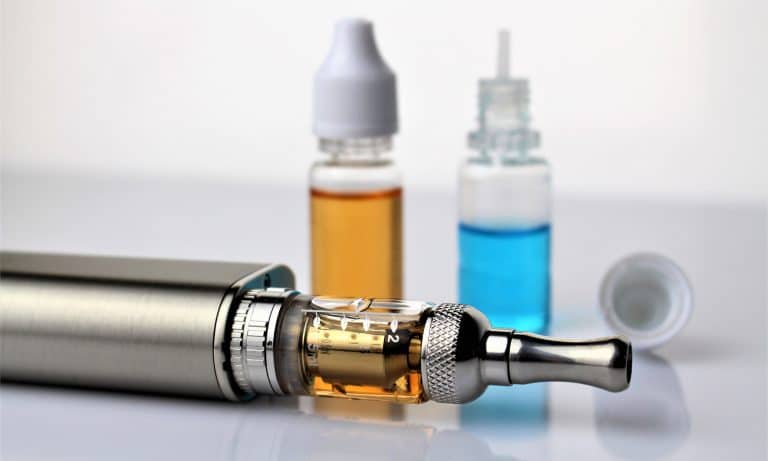
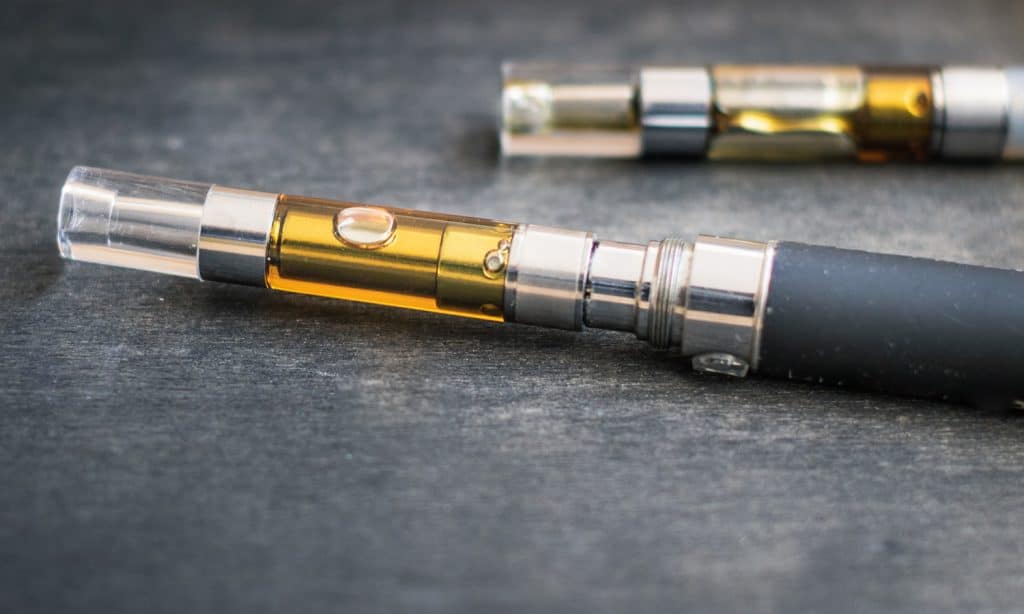
Terpenes that come from cannabis are allowed in marijuana vapor products, but the presence of terpenes derived from any other source is prohibited under the ban.
On October 9, 2019, the Washington State Board of Health (“BOH”) voted to adopt emergency rules banning flavored vapor products, including marijuana products, in Washington State. The ban is effective as of October 10 and will run for 120 days.
It’s not as if we didn’t see this coming. On Monday, Hilary Bricken wrote on this blog that cannabis businesses should expect these types of vapor bans. Previously, on September 27, Governor Jay Inslee issued an executive order requesting the BOH adopt rules banning flavored vapor products. This executive action is very similar to what we saw in Oregon related to flavored vaping products last Friday.
The Washington emergency rules define a “Flavored vapor product” as “any vapor product that imparts a characterizing flavor.” A characterizing flavor is “a distinguishable taste or aroma, or both, other than the taste or aroma of tobacco or marijuana or a taste or aroma derived from compounds or derivatives such as terpenes or terpenoids derived directly and solely from marijuana[,] or hemp plants that have been grown and tested as required by state law, imparted by a vapor product.”
This definition of a characterizing flavor does not include cannabis-derived terpenes. Terpenes are organic compounds found in a wide range of plants that produce flavor and aromas. Terpenes that come from cannabis, either hemp or marijuana, are allowed in marijuana vapor products but the presence of terpenes derived from any other source is prohibited under the ban.
The BOH’s definition of characterizing flavors includes some concrete examples including, “tastes or aromas relating to any fruit, chocolate, vanilla, honey, candy, cocoa, dessert, alcoholic beverage, menthol, mint, wintergreen, herb, or spice.” The definition also includes this unbelievably vague catch-all provision:
A vapor product does not have a characterizing flavor solely because of the use of additives or flavorings or the provision of ingredient information. It is the presence of a distinguishable taste or aroma, or both, that constitutes a characterizing flavor.
In other words, it may not matter what is added to a vapor product if there is the presence of taste or aroma. It remains to be seen how BOH and the LCB will determine what products have the presence of a distinguishable taste or aroma.
Marijuana licensees should expect the LCB to swiftly enforce this ban. Hours after the BOH issued the emergency rules, the LCB emailed licensees to confirm that processors and retailers are to immediately stop selling flavored vapor products. The LCB also indicated that it would follow up with options for returning or destroying products. In addition, the LCB indicated four action items that it is taking while health officials investigate vaping illnesses:
Signage. Prominently post this warning sign in retail locations. This required sign is co-branded with the Washington State Department of Health. A Spanish version, also available, may be posted as an additional sign.
Clarify rule regarding additives on packaging and labeling. There is some confusion among industry members that certain additives, like terpenes, imported CBD, and other cannabinoids do not need to be disclosed on packaging. Current rules require all product components on packaging (WAC 314-55-105).
Disclose to LCB all compounds (including ingredients, solvents, additives, etc.) used in the production and processing of products that are vaped and vaping devices themselves. Public health officials have requested assistance in gathering additional information about ingredients in vapor products.
Cooperate with the ongoing epidemiological investigation. Local, state and federal health agencies are looking into which products have been involved with Washington cases of disease. We ask for your cooperation if you are contacted by someone from a state or federal epidemiology team and/or a representative from your local health jurisdiction.
It’s fair to say that there is a vaping crisis. It’s also fair for regulators to act in response to said crisis. However, given that there is really no evidence that flavored vapor products are causing these widespread illnesses, it’s also fair to say that this ban feels arbitrary and likely to cause great damage to an already struggling industry. Processors who rely on the sale of vapor products are likely not in a position to make this massive shift away from flavored products. Retailers, in turn, may try to return these flavored products to processors to recoup their losses or eat the cost of these now worthless products. Remember, these businesses cannot take out loans (not that banks would offer them) without going through a lengthy application process with the LCB; for many businesses, there are no funds available for a rapid change like this.
A few weeks ago I wrote critically about Donald Trump’s decision to ban vapor products at the federal level, saying that it would likely harm the regulated vapor market and help the illicit market. I was surprised to see Jay Inslee blindly follow Trump’s thinking here, especially when he has so frequently opposed this administration.