Before they become parents to the world’s most photographed newborn, Prince Harry and Meghan Markle went on a romantic getaway that has people freaking out over the price tag.
The couple stayed in the most expensive room at the five-stare Heckfield Place estate located in the English countryside. According to The Sun, the couple enjoyed cozy fire-side dinners in their room, romantic strolls along the grounds, and your basic all-around royal pampering.
Via The Sun:
It is not known if they were charged full price at the hotel, which has a spa and cinema and is owned by US billionaire Gerald Chan.
But the bill, including £350-a-night rooms for three protection officers, could have topped £33,000.
That’s about $43,000.
Kensington Palace declined to comment.
https://www.instagram.com/p/Bph5Hhzn0Au/
The Sun reports that the expectant parents stayed three nights at the luxurious Long Room, which is a private apartment complete with its own dining room and private terraces. A single night will cost you £10,000 ($13,000).
While scrolling through social media, you might have stumbled upon a video of a woman tapping her front camera (your screen) with her really long nails.
According to Buzzfeed, the girl in questions is Sammie Lewis, an 18-year-old Tik Tok user who gained internet notoriety with a video called “☕️ tea 4 u.”
The video is nothing memorable or special. It’s just a girl talking about her day and her encounter with some random guy. The striking, and later viral, part is her whole ritual. Before launching into Tik Tok stories, Lewis, with Starbucks drink in hand, takes a very dramatic sip and loudly and jarringly taps her acrylic nails onto her phone’s front camera. “I don’t really know where it came from, I was just feeling a bust of energy I guess,” explains Lewis.
Drinking and spilling tea have always been sources of inspiration for memes, from Kermit the Frog to all sorts of gifs and photo reactions. It’s partially why this video seems to have resonated with so many users. I guess the fact that it’s its own special breed of annoying also helps.
New versions of the meme imitate Lewis’ movements, superimpose her face onto other clips, or simply borrow her now haunting sound. Let’s get over this meme as soon as possible, okay? Check out some of the best below:
Turn this morning treat into something extra special!
The Fresh Toast – Cannabis pop tarts for your morning sweet tooth is a gift to yourself and a great way to either focus or chill – depending on the day!
They are are undoubtedly one of the world’s most perfect foods. But believe it or not, there’s a way to make them even better: namely, by adding marijuana. Cannabis Pop Tarts for your morning sweet tooth is gift to yourself.
These homemade toaster pastries are inspired by the classic commercial treat, but have a secret nestled inside. A smear of cannabutter is included inside of each and every pastry, which is then topped with your desired filling. Dressed up with icing and sprinkles, these potent pastries are bound to make you feel all warm and fuzzy, and not just because of the nostalgia factor.
4 heaping tsp filling of your choice (chocolate chips, thick caramel or chocolate topping, jam, etc.)
Egg wash: 1 egg, lightly beaten with 1 teaspoon water
To top:
1 cup confectioners’ sugar
1 Tbsp milk or cream
½ tsp vanilla extract
Pinch salt
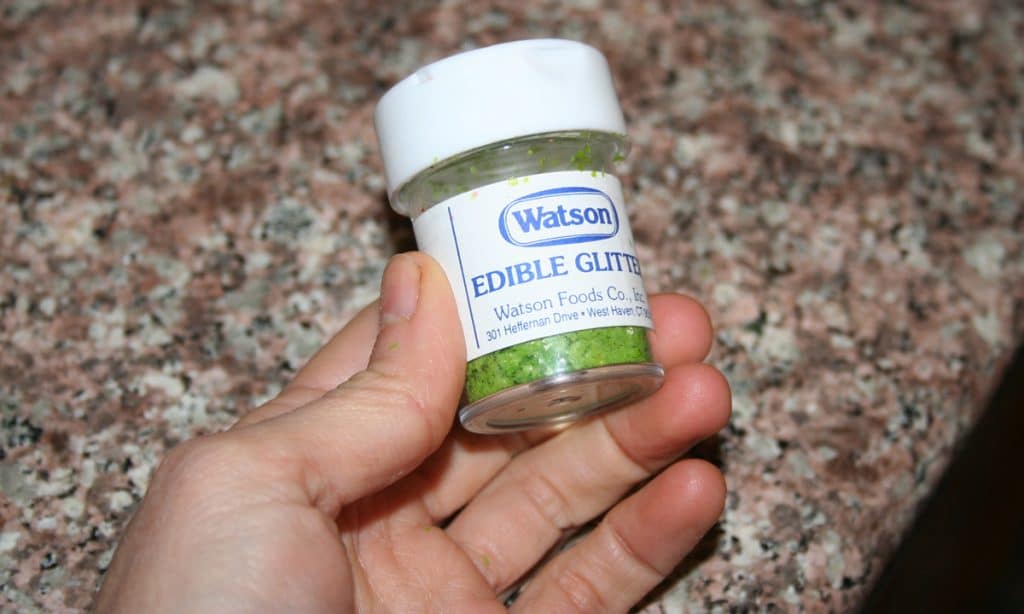
Sprinkles, for garnish (I used a mix of green tinted edible glitter and rainbow nonpareil sprinkles)
1. Preheat your oven to 450 degrees F. Line a baking sheet with parchment paper or a silicone mat.
Photos by Jessie Moore
2. Roll out the dough into a rectangle, approximately 8 inches by 12 inches. Cut the dough into 4×3-inch portions (basically, divide the dough into 8 equal-sized rectangles).
Photos by Jessie Moore
3. Place four of the rectangles on your baking sheet. Smear the center of each one with a teaspoon of cannabutter.
Photos by Jessie Moore
4. Directly on top of the cannabutter, spoon your desired filling, leaving blank space along the perimeter of each pastry. Avoid fillings that are too thin, or they may leak out of your pastries. I used fairly thick caramel sauce, which was probably about the thinnest consistency that would work for these pastries.
Photos by Jessie Moore
5. Brush the “naked” portions of the pastry with your egg wash.
Photos by Jessie Moore
6. Place the second batch of pastry rectangles on top of each topped pastry portion. Press down on the edges to ensure that the egg wash helps form a seal. Gently press the tines of a fork into the edges of each pastry to further ensure a seal. Poke the top of each one once or twice with the tines of a fork to let steam out. If desired, you can use the remaining egg wash to brush the tops of the pastries.
7. Bake for 7-9 minutes, or until golden. Remove, and let cool briefly on the sheet before transferring to a wire rack to cool completely.
Photos by Jessie Moore
8. Make the icing. In a large bowl, use a fork or whisk to whisk together the confectioners’ sugar, milk or cream, vanilla, and salt. Mix until no lumps remain and it’s a thick but still pourable icing. Spoon some on top of each pastry; directly after icing, apply sprinkles (they will stick best while it’s still wet and slightly sticky). Let the icing set, and enjoy!
Photos by Jessie Moore
Store leftovers in a single layer, well wrapped, at room temperature, for up to 3 days.
I “dosed” this recipe with 1 teaspoon of cannabutter per serving. The strength of your finished product will depend on many factors, including the type of marijuana you used and how you made your cannabutter. For more tips on proper dosage, here are 5 ways to figure out your cannabutter’s potency.
Earlier this week Garth celebrated her return to her Beverly Hills, 90210 roots by posting a photo taken with her co-star and longtime friend, Tori Spelling.
Both Garth and Spelling shared the photo taken during a trip to Israel to film a commercial for CASTRO clothing. Although fans of the 47-year-old were excited to see the pair reunited, others said Garth looked “unrecognizable” and accused her of having plastic surgery.
https://www.instagram.com/p/Bvtk2wgHBii/
The comments regarding Garth’s appearance prompted the star to reply directly to her haters.
“You seem so fake,” one commenter wrote.
Without missing a beat Garth replied, “Nope, I’m human.”
The return of the series got just 1.29 million viewers, down from Season 15’s premiere of 1.36 million.
Move over Kim, Kanye West is finally becoming a major star of Keeping Up With the Kardashians — and RadarOnline.com has exclusively learned momager Kris Jenner hopes the new role will save the sinking show!
“Kanye is really in creative control of content for season 16 and that is why viewers saw such a different level of production value in the premiere episode,” a source close to the 63-year-old matriarch told Radar.
“Kris has decided to let him take the reign a bit, and she is just praying that his vision boosts ratings! He is telling her that things need to change, and she is putting her own vision aside for a minute to let him hop in.”
As fans know, the 41-year-old rapper starred alongside wife Kim Kardashian in their confessional interview on the season premiere.
After announcing that they were having a fourth child to her family, the superstar couple returned to Kanye’s hometown of Chicago to show daughter North West his childhood home and settle beef that Kanye had with fellow rapper Rhymefest.
We’ve all heard this a million different times before: “The Avengers” franchise is the most expensive and ambitious crossover event in Hollywood history. Still, no one could’ve prepared us for the fact that there are people out there willing to pay $5,000 for a couple of opening night tickets.
On April 2, “Avengers: Endgame” tickets were released for pre-sale on AMC’s website, crashing the site for an entire day and making millions of people lose their minds. Other websites, like Fandango and Atom Tickets, also reported similar crashes. In six hours the movie become the biggest first day ticket seller in Fandango’s history, beating out “Star Wars: The Force Awakens”.
Screencrush reports that “Avengers: Endgame” opening weekend tickets are now found on Ebay for thousands of dollars. One particularly outrageous price is $4,999 for two tickets on April 28. That’s not even opening night! Other prices include more moderate ones like $100 or $200 per ticket, which is still pretty steep compared to the $20 you’d pay for an IMAX screening.
If you’re struggling to find your ticket for the very anticipated closing chapter of “The Avengers” series, might we suggest waiting until April 29? There are hundreds of movie theaters that won’t charge you two months’ worth of rent.
The next royal tot is about to arrive, and don’t think for a moment Prince Harry isn’t an integral part of the birth — and not just for the obvious reasons. As it turns out, Mr. Meghan Markle has a very important job once the baby gets here.
As soon as the baby is born, Harry is tasked with picking up an encrypted phone and informing his grandma, the Queen, that the blessed baby has arrived.
https://giphy.com/gifs/mic-d0NnEG1WnnXqg
Next on the “to call” list is likely Meghan’s mother, Doria Ragland, and Prince Charles.
The Queen has to be informed of baby Sussex’s birth — any royal baby, for that matter — before it can be made public, usually via a press release, followed by an easel outside Buckingham Palace.
However, this protocol was broken when Kate and Will announced the birth of Prince George on Twitter, so who knows what notorious protocol breaker Meghan will do. Her penchant for eschewing tradition is also why we may not see the much anticipated offspring for awhile.
While Kate preferred to introduce her tot to the world’s press within hours of it emerging from the womb, it would not be outrageous to think Meghan might do things differently.
It’s plausible that the couple may just release a photo of the baby on Instagram. They just joined the social media platform on Tuesday and if they’re like every other doting parent, it will soon be flooded with baby pics.
The cannabis industry has been growing like wild in recent years. Though only a few countries have legalized recreational use, many areas have full or partial medical use. Within the US, almost every state has legalized some degree of medicinal or recreational use. Legal cannabis production is one of the fastest growing industries in North America. If the US moves closer to full legalization of recreational use (currently only in 12 states), the market could explode even more.
The challenge that cultivators face is that ramping up production to sell to newly opened markets is a time- and capital-intensive process. In Canada, the largest producers like Canopy have raised billions in funding to build new production facilities. Most of this new capacity can take a year or more before it is usable. The competition among producers racing to meet legal demand squeezes margins. Just because there is a tremendous opportunity doesn’t mean that success is guaranteed for market participants.
Production and cultivation have also been regionally focused. The first states to legalize recreational or medical use at scale saw local producers spring up to fill in the demand in that area with black market sales filling the gap as the legal growth got up and running. Companies that took advantage of the growth in their home market were not able to replicate that in other markets that became legal at later points. Only in Canada and other countries that legalized on a federal level were firms able to scale up significantly.
There is a big difference between new opportunities becoming available and an individual company being able to capitalize on that opportunity. This is even more true in a field as complicated as cannabis. Each state that has legalized to some degree has instituted their own systems of licensing, tracking, and other regulatory hurdles for companies to follow.
The biggest winners in an environment like this are firms like Helix TCS Inc. (OTC:HLIX) that actually benefit from the strict and complex legal structures. Since their merger with BioTrackTHC, they have been the market leader in seed-to-sale tracking and dispensary point of sale systems. These systems are used to follow each bit of cannabis product throughout the growing, cultivation, processing, and sales process. Regulators concerned about collecting taxes and preventing illegal diversion of product often require the use of these systems as part of the licensing process.
Other major seed-to-sale providers have big positions in individual states (California is the most notable here) but their business has not extended into neighboring jurisdictions. Helix (OTC:HLIX) has created the largest presence in multiple jurisdictions throughout the US and has avoided service issues that have plagued several competitors. The most noteworthy example is in Pennsylvania. Since being awarded the contract for seed-to-sale tracking in PA, the contractor in the state has experienced a number of technical problems that have brought all cannabis sales to a halt on several occasions.
The risk aversion of state legislators relating to cannabis is a great opportunity for firms like Helix with in-depth tracking and reporting platforms. Their software even works for tracking cannabis products past the point of retail sale. Companies can track which customers buy which products and keep medical use records that combine purchases with prescription info. Regulators get insight into sales and use data to make sure legal restrictions are not exceeded.
While most of the press attention focuses on the companies cultivating and processing cannabis products, the best growth opportunities and profits might be going to the ancillary firms supporting the industry. Companies like Helix, which benefits from both its BioTrackTHC tracking software and its recent announcement of intent to acquire Amercanex and the ACExchange cannabis commodity sales exchange, may be able to grow more consistently and not suffer from the margin compression that many producers are expecting as new capacity supply comes into the market in the near future.
Should the Gov. Kemp sign the new legislation as expected, Georgia would become the 34th state to have a medical marijuana program.
This week the Georgia General Assembly passed a bill that would create a system for patients to purchase medical marijuana in the state. The legislation is expected to be signed by Republican Gov. Brian Kemp whenever it hits his desk, according to his spokesman.
Under the current system, medical marijuana is legal in Georgia, but patients have no legal methods available in the state to purchase it. Current state law prohibits the selling, buying, or transporting of cannabis. The bill passed by the Assembly, HB 324, would license private companies and universities to grow medical marijuana to be processed into low-THC cannabis oil.
In addition the bill would allow the state to license private companies and pharmacies to sell cannabis oil. However, the legislation would not allow the smoking or eating of marijuana, nor would it legalize recreational usage. According to the Atlanta Journal Constitution, Gov. Kemp was institutional in helping broker a deal between the House and Senate and safeguarding any potential illegal distribution.
“Over the years, I’ve met with children who are battling chronic, debilitating diseases. I’ve heard from parents who are struggling with access and losing hope,” Gov. Kemp said. “This compromise legislation is carefully crafted to provide access to medical cannabis oil to those in need. This is simply the right thing to do.”
Those who apply for medical marijuana under the current system include patients with cancer, intractable pain, PTSD, multiple sclerosis, and more. Should the Gov. Kemp sign the new legislation as expected, Georgia would become the 34th state to have a medical marijuana program.
Nobody is saying that alcohol is dead, but younger drinkers are definitely affecting its decline in popularity. Recent trends show that people under 30 are getting tired of drinking and dealing with their hangovers. Can you blame them?
The Atlantic interviewed over 100 people in their 20s and 30s, asking them why they’ve decided to cut back on their alcohol consumption. “It wasn’t until I hit my 30s that I realized that alcohol was no longer my friend,” explains Leanne Vanderbyl, from San Francisco.
There’s a lot of reasons that affect this new perspective on alcohol, ranging from a focus on a healthier lifestyle, to people trying to cut back on costs and finally, to the existence of other drugs that are also asking for consumers’ attention.
An international study from 2017 explains that countries with legal marijuana experienced a 12 percent drop in alcohol purchases. Despite contradictory opinions on the matter, it seems like the cannabis and the alcohol industries are at times in competition with each other. Vanderbyl explains that she chooses marijuana over alcohol because the former doesn’t leave her feeling sick and hungover. “I can wake up in the morning feeling ready for the day,” she says.
The Atlantic consulted with addictions therapist Britta Stark, who explains that there’s several things that are affecting young people and their relationship to alcohol. “Folks in the millennial generation have maybe a better sense of balance. Some do yoga or meditation or are physically active, so they don’t need to find stimulation and stress reduction in substances.” Another, more concerning explanation is the fact that millennials have complicated relationships with over-the-counter medicines and other dangerous substances. Suicide rates are up among young adults, and America’s opioid problem is as strong as ever.
For an accurate picture to be depicted, more time needs to pass and more studies need to shed a light on the matter. Alcohol’s fate will ultimately be decided by younger generations.
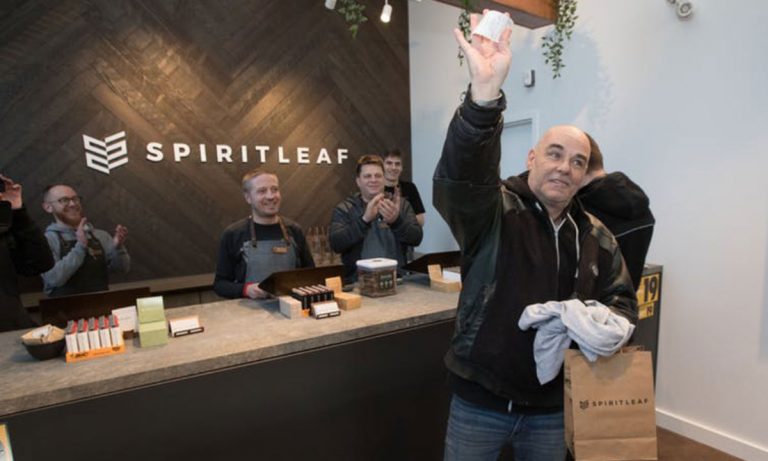
Ontario’s first legal cannabis shops are finally here. One challenge they’ll face is Canada’s nationwide product shortage. That’s despite repeated federal government assurances of ample supplies.
However, federal officials disagree. Bill Blair, the minister leading Cannabis Act implementation, has repeatedly said supplies are “adequate” and even “exceed existing demand.”
But the government’s own data shows it’s blowing smoke.
Low sales
Statistics Canada numbers show licensed retailers aren’t selling much. Only one-fifth of national cannabis spending from October to December was legal. In January, legal sales fell five percent.
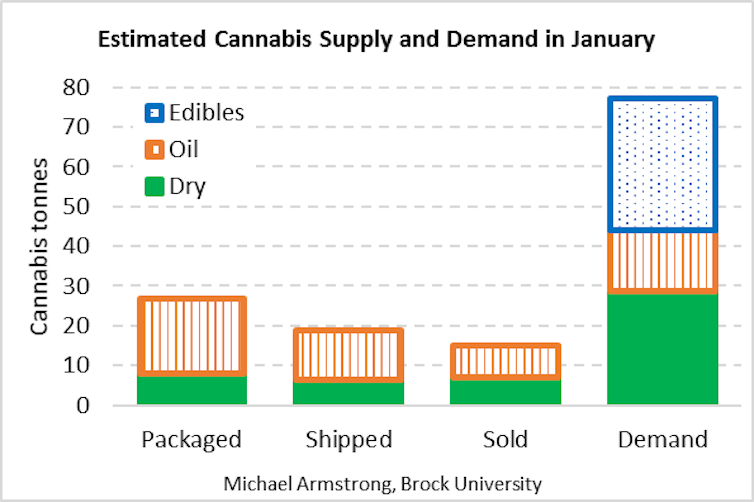
Similarly, Health Canada’s latest update indicates January sales totalled about 15 tonnes of dry cannabis and cannabis oils (1 tonne = 1,000 kg). That’s for medical and recreational products combined. By contrast, its estimate implies monthly demand is around 77 tonnes.
Cannabis oils aren’t the problem. Their sales volume rose four percent, the third consecutive monthly gain.
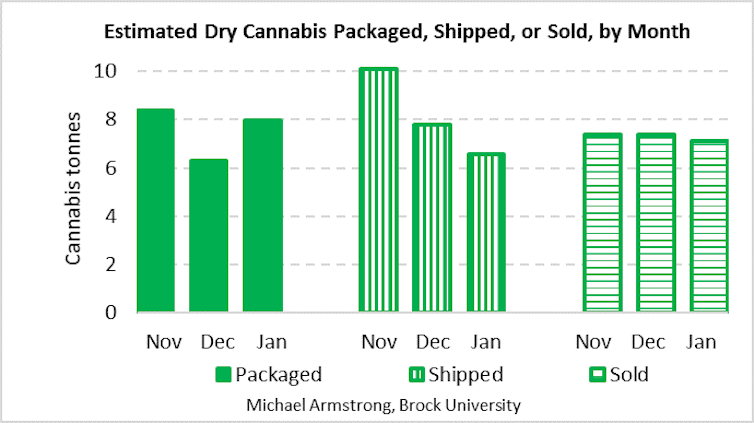
But dry cannabis sales slid four percent to 7.1 tonnes. That’s concerning because recreational users prefer dry products to oils. In October and November, dry cannabis captured 72 percent of recreational sales nationwide. It got 90 percent in Québec and New Brunswick.
Such widespread weakness can’t be solely due to some provinces having “difficulties” with “distribution systems,” as Blair has claimed. But neither he nor Health Canada has offered better explanations. That department collects extensive industry data but keeps most numbers secret. It publishes only inventory and sales totals. Fortunately, we can learn much from those.
Tonnes of cannabis packaged by producers, shipped by producers or sold to consumers, compared to demand, in January 2019. Combines recreational and medical products. Estimated by author from Health Canada data.Michael Armstrong
Falling shipments
For example, in January retailers sold 5.3 tonnes of recreational dry cannabis, while their inventory decreased 0.5 tonnes. So, they must have received just 4.8 tonnes of new product from producers. (Another 1.8 tonnes went directly from producers to medical clients.)
That implies retailers didn’t sell much dry cannabis in January because they didn’t receive much. January’s dry shipments to retailers were 21 percent lower than December’s, which were already lower than November’s.
And retailers got little in January because producers processed little in December. Another inventory comparison suggests producers packaged just 6.3 tonnes of dry products that month. That’s only three-quarters of November’s rate. And inadequate to support existing sales.
This wasn’t a temporary shortfall. The average monthly packaging rate from November to January for dry cannabis products was around 7.6 tonnes.
Tonnes of dry cannabis packaged by producers, shipped by producers or sold to consumers, last November, December, and January. Combines recreational and medical products. Estimated by author from Health Canada data.Michael Armstrong
Government smokescreens
This analysis suggests federal claims of adequate cannabis supplies are mere smokescreens for substantial shortages.
Similarly, Health Canada claiming dry “inventories” were 19 times “sales” is just smoke and mirrors. It’s correct but meaningless.
Those inventories were mostly raw material or work-in-process: unfinished cannabis drying, curing, or awaiting processing. Only 15 percent was finished product, and less than half of that was at retailers. And existing sales are too weak to be worth targeting.
(Besides, inventory-to-sales ratios indicate little about availability. In somesectors, retailers hold less than two months of inventory.)
Comparing production to demand is more meaningful. January’s dry product packaging was about 8.0 tonnes, enough for perhaps a quarter of dry demand. Combined dry and oil packaging totaled 27 tonnes, about one-third of overall cannabis demand.
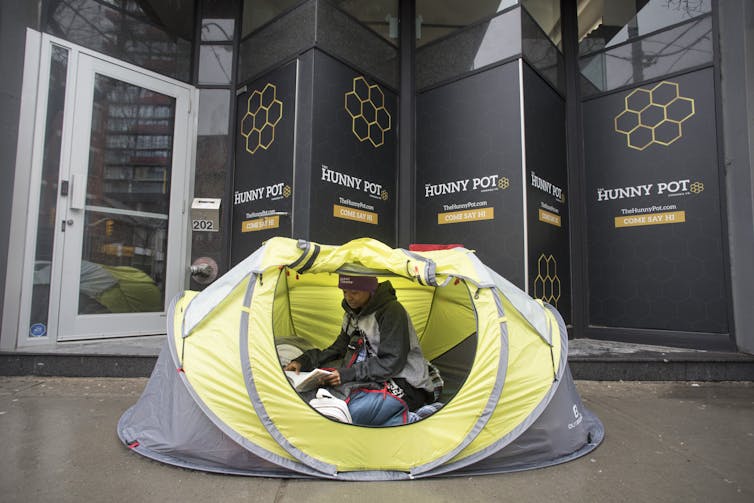
Marie Koued becomes the first in line at a Toronto cannabis store on the eve of the opening of Ontario’s first retail weed stores on April 1, 2019.THE CANADIAN PRESS/Chris Young
There’s another reason the latter fraction is low. The federal government hasn’t yet legalized cannabis foods and drinks. Those edibles constitute 43 percent of sales in Colorado, California and Oregon. Their absence here leaves a big gap.
Stop playing games
The federal government really must stop playing make-believe about cannabis availability. Nonsensical supply claims raise expectations, and hence frustrations, among businesses and consumers.
Similarly, Health Canada must stop playing hide-and-seek with information. It collects monthly fresh cannabis production and finished product packaging data. It should start reporting them. That clarity would help producers and retailers make better business decisions.
Producers are already making progress. Canada now has 164 licensed sellers, with hundreds more reportedly on the way. Total cultivation area rose 20 percent in December alone. But it takes months for new sites to grow, process and ship cannabis to stores.