Thursday, June 18, 2026
Home Blog Page 897

4 Features That Prove Smartphones & Social Media Are Addictive By Design

Companies have spent the last decade getting us hooked on their work. Here are four features that make it really hard to put our phones down.

Tech developers encourage us to spend all of our time using their products, no matter the negative consequences for our health or the critiques that they might receive. It’s only recently that big companies like Apple and Google have come up with solutions and ways of helping us manage the time we spend on apps and on our devices.

In a statement announcing a Digital Wellbeing initiative, Google said that “Great technology should improve life, not distract it.” That’s really nice, but this problem goes further than having a feature that notifies you when you’ve been using the app for too long (even if it certainly helps).

Popular Science reports that the addictive design of these devices plays a big part, and that companies have spent the last decade getting us hooked on their work. Here are four features that make it really hard to put our phones down.

Pauses and loading time

https://giphy.com/gifs/jH3o8o553bdug

For optimal functionality, apps should have no loading time. Instead, every time you open an app like Twitter, there’s a few seconds of pause where the logo flutters and you wait for the tweets to come up. You may think you have a bad connection but this is done on purpose.

User Experience (UX) designers claim that this dramatic pause creates anticipation, much like the pause a slot machine takes when you pull the lever. While there’s not a lot of research done when it comes to phones and the effect they have on our brains, there’s a lot of information out there on gambling, which gives us a shot of dopamine whenever we win and receive a reward. The more that time passes and the more society absorbs smartphones, the more our brains will change to adapt themselves to these foreign addicting activities.

Infinite amount of content

https://giphy.com/gifs/mary-poppins-Bp5nePMm65mI8

Pull-to-refresh features are also addictive, asking for us to swipe down to get more content, always providing us a new tweet or a new photo. Infinite scroll is the same — it makes it hard to stop looking through content even if you’ve been looking at your Facebook feed for hours. According to a report from 2016, we spend around five hours a day looking at our phones. It’s safe to assume that this amount has increased in the past couple of years.

Variable rewards

https://giphy.com/gifs/s9R7FEH0zcdSE

This term, developed by psychologist B.F. Skinner, was made famous when he discovered that pigeons would press a lever more frequently when the food was presented irregularly instead of regularly. Since the food presented itself  unexpectedly, their reward was much larger.

Variable rewards occur on all social media platforms in different forms. The unpredictability of how many likes you’ll receive or what type of content you’ll view creates a thrilling experience that’s hard to resist. It happens when people constantly check their Instagrams, waiting for new photos or likes. If nothing good is on or you get little feedback then there’s always next time.

Constant notifications and autoplay

https://giphy.com/gifs/olivia-munn-the-newsroom-sloan-sabbith-3BgE1S5ZHf0li

Apps notify you when someone posts a photo or when a tweet gets a lot of traffic. It almost seems like the farther you try to keep yourself from an app, the more it demands your attention, reminding you that it’s waiting for you to be used.

You may get a notification from Instagram, for example, letting you know that someone put up a story for the first time in a while. This story will be highlighted in a very attractive pink. Once you watch it, autoplay kicks in, looping you in and practically forcing you to watch all of the remaining stories, no matter who they’re from. Netflix and YouTube have similar features, queuing up more related content once you’re done watching something.

Oregon Admits Problems With Medical Marijuana Program

Here’s an interesting fact: Oregon doesn’t actually know how much medical marijuana is currently growing and processing in the state. We’re talking about regulated, licensed marijuana, too, not whatever might be growing illegally.

Managers of Oregon’s marijuana program admitted their lack of oversight in an internal review released late week. The problem stems from soft reporting by producers and an absence of site inspectors, which has driven opportunistic growers toward the more lucrative black market.

How egregious was this lapse in supervision? The internal review–conducted by the state’s health authority, which manages the Oregon Medical Marijuana Program (OMMP)—details that for 20,000 medical marijuana grow sites in 2017, only 58 ever received an inspection.

“Potentially erroneous reporting coupled with low reporting compliance makes it difficult to accurately track how much product is in the medical system. This limits OMMP’s ability to successfully identify and address potential diversion,” the report said.

Reports of Oregon’s black-market problem surfaced a few months back, as state operators were caught selling across the Oregon border. This was coupled with complaints from law enforcement that they had trouble identifying which grows were legal and illegal. The Deschutes county sheriff and district attorney aired their grievances back in February, going so far as to ask the health authority for a list of medical marijuana grow sites. But the agency refused, stating that it was illegal for such a list to exist.

It’s a catch-22 of sorts: Oregon medical marijuana growers are protected by law to have a level of confidentiality, but law enforcement needs a way to identify operations that abide by the law. As the report laid bare, the state’s medical marijuana program lacks any dependable tools to validate grow sites. Instead they’re relying only on outdated and inconsistent county databases.

Via the Associated Press:

Oregon recently began requiring medical-marijuana growers of more than a dozen plants to enter a comprehensive seed-to-sale tracking system run by Oregon’s recreational-marijuana regulatory agency. That agency, the Oregon Liquor Control Commission, is adding around 20 staffers, including inspectors and data analysts, to handle the increased workload, liquor commission spokesman Mark Pettinger said.

The report specifically cited “inadequate funding and staffing resources to meet the demands of robust regulation,” as one of the significant roadblocks facing the industry. The internal review was ordered by health authority Director Patrick Allen.

Treat Your Pain With Homemade Cannabis-Infused Topicals

Cannabis-infused topicals represent an ideal solution for those seeking an effective natural and non-addictive way to treat joint pain, inflammation, and muscle soreness. Also, anecdotal evidence points to cannabis topicals as an aid in treating other ailments such as cramping, headaches, itching, dermatitis, and psoriasis.

With the exception of transdermal patches and sensual lubricants, products infused with cannabis do not breach the bloodstream. As such, they are not psychoactive. This means they can be taken by those not desiring the euphoric high often found when consuming cannabis via other delivery systems. In addition, cannabis topicals work well for those who view smoking any product as a health hazard.

For those who like to dabble in homemade remedies, cannabis infused topicals can be made at home without having to purchase any fancy equipment. Here’s an easy recipe for making a cannabis healing salve.

Prepare The Oil

Melt out 2 cups of coconut oil. Ideally put the oil in the sunlight where it can melt though you can put it into the microwave. Just be careful not to burn the oil. Put the oil into a saucepan. Choose a saucepan with a heavy bottom that won’t burn easily.

Prepare The Cannabis

The cannabis needs to be prepared before it can be used for topicals using a process called decarboxylation (decarb for short). Preheat the oven to 200 degrees. Crush cannabis with your hands. The cannabis should be dry and crispy. One advantage to making topicals is that you can use all parts of the cannabis plant – buds, leaves, stems, and even the roots. The entire plant can be used. Just be sure to clean off any dirt particles before crushing the cannabis. Measure out 2 cups of crushed cannabis and place in a Pyrex baking dish. Put in the oven for 10 minutes. Then remove from the oven.

Make The Infusion

Place the heated cannabis in the saucepan containing the coconut oil. Simmer anywhere from twenty minutes to an hour. Do not bring to a boil. Strain the mixture through a cheesecloth and set aside.

Finishing Touches

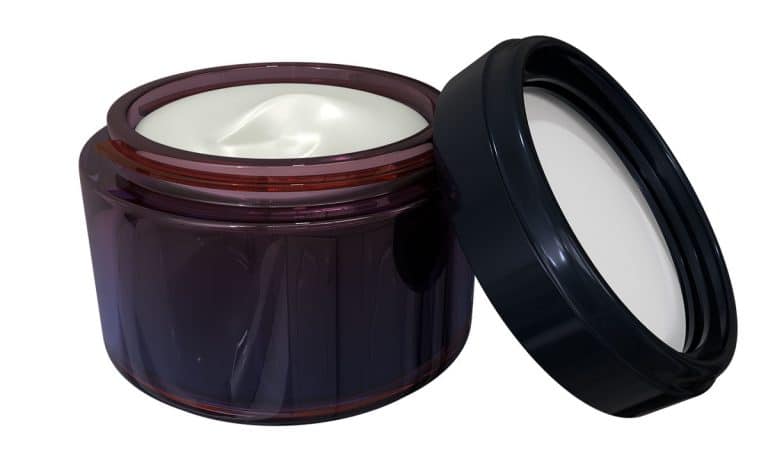
Melt one ounce of beeswax in the saucepan. The beeswax is there to firm up the cream so it’s not as liquid. So, if you want a firmer cream, add a bit more beeswax. Add the coconut and cannabis mixture and stir together over low heat. Then remove from heat and add 1T of Vitamin E Oil. If you like, add in lavender or other essential oils depending on your preferences. Put this salve into glass containers and allow to harden. Store in a cool, dry place. Should the topicals get a bit on the liquid side due to exposure to the sun, simply put it back in the refrigerator until the cream hardens to the desired consistency.

Making Topicals with the Magical Butter Machine

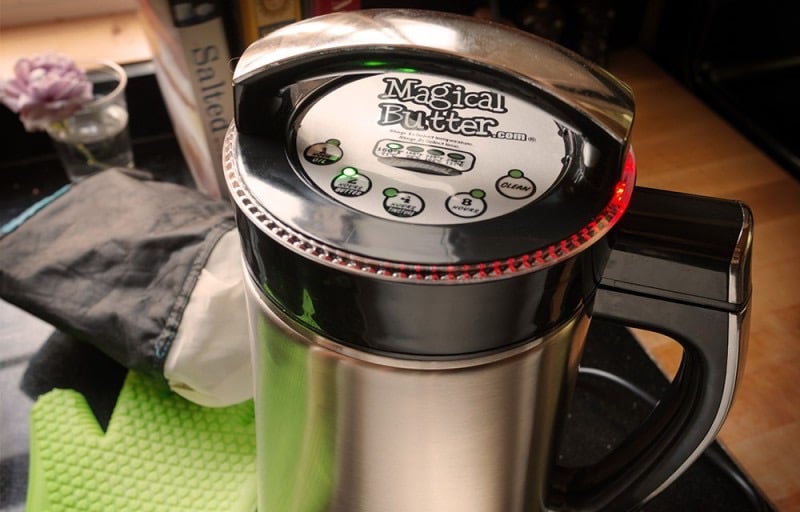
The above method works well for those who like to make a infrequent batches of cannabis topicals. Those who truly enjoy making topicals on a regular basis should consider investing in a Magical Butter machine (MBM). This machine can be used to make other cannabis infused products like tinctures and cannabutter. And it eliminates any mess caused by cooking over the stovetop and then straining the product with a cheesecloth.

Photo courtesy of Magical Butter

Bill Stewart of Half Baked Labs offers these suggestions regarding how to make a cannabis salve in the Magical Butter Machine. First decarb the cannabis for 30 minutes at 250 degrees. Pour two cups of coconut oil into the MBM. Add cannabis, and process at 160 degrees for 2 hours. Next strain and clean the MBM. After cleaning the MBM, return the strained oil to the MBM. Add 3/8 cup of beeswax. (This is 3x the batch size on the original recipe, but is the smallest amount you could do in the MBM.) Run for 1 hour at 130 degrees. Then add 1T Vitamin E oil, and any desired essential oils. Pour this cannabis salve into containers and let it cool.  You can wait until it is thickening but not set, and fluff it up in a mixer before putting it in a container if you’d like a fluffier consistency.

Marrying Your Cousin Doesn’t Pose This Issue

Cousins getting married is one of the oldest and most timeless jokes in the world. We know there’s precedent in real life but we don’t have to be experts on the matter to know that something weird happens when you have babies with someone who shares some of your genes.

Not that long ago, cousins getting married was a common occurrence. You might want to take a look at your family tree because it’s likely that at some point, some of your ancestors shared the last name before marriage.

Related: Why Do We Procrastinate Sleep Even When We’re Tired?

Popular Science reports a genealogy study that revealed that the practice of marrying cousins was once pervasive. In fact, from 1650 to 1850 a given person was, on average, fourth cousins with their spouse. As the years passed, this trend stopped being so common. By the 1950s, married couples were, on average, seventh cousins. This is due to the evolution of methods of transportation, which allowed people to move to different places and, ultimately, getting to know people who were not their family.

While the stats of marrying cousins decreased as the world evolved, the study reports that consolidating money and  power was a big factor in marriages, which is why this phenomenon still occurred even after the industrial revolution. Yaniv Erlich, the man who conducted the study, believes that people stopped marrying their cousins because of an evolving society who no longer considered this acceptable. The slow progression of women’s autonomy also played a big part. Nowadays, marriage between first cousins is illegal in 24 states.

The genetic problem that pops up when first cousins get married is due to the fact that the parents share 12.5 percent of their DNA. This is bad for genetics, since diversity is very important for healthy babies. If you inherit a bad gene from your mom, then your dad’s genes will work hard to make up for that.

Related: Your SPF Moisturizer Is Not As Effective As Sunscreen, Says Study

Statistics report that 4 to 7 percent of the kids who’s parents are first cousins are estimated to have birth defects. While it’s not a big number, it becomes more problematic if these kids were to marry their first cousins, resulting in an even smaller pools of genes. The farther you marry, the more you reduce the odds of passing down birth defects to your kids.

While this may not seem like a big problem for the modern world, it’s a thing in some places with small populations. In Iceland, where the population is of 330,000 people, it’s common for citizens to fear marrying a distant cousin.

Idiots Blow Marijuana Smoke In Goat’s Face

Following a video that went viral on social media, three Massachusetts men were arrested for animal cruelty after footage showed idiots blowing marijuana smoke into a goat’s face, then they get arrested!

The men were identified as Lorenzo Kelley, 20, Nuno Camara, Jr., 18, and Jared Jorge, 21. Each were charged with one count of animal cruelty once identified as the men in  the video, local police said in a press release this week.

The video allegedly shows the men removing a goat from its outdoor pen and placing a chain around its neck. Later, the goat is seen inside the home of one of the men, with one man sitting on the goat’s back. Two men were also seen blowing marijuana smoke in the goat’s face, with the third man filming.

Related: This New Paint Absorbs The Smell Of Marijuana And Cleans The Air

“Throughout the video the men can be seen cheering and laughing at the alleged abuse of the animal,” the release said.

The goat is in the custody of local animal control and will remain so until after the investigation, authorities said. Police expect the goat to be okay.

A reminder: Smoking marijuana is never an excuse to be a jerk and is not part of the cannabis community.  Especially when it concerns animals.

17 Insane Wiener Toppings Across America Because National Hot Dog Day

National Hot Dog Day is upon us (July 18) — a day that is actually a pretty great symbol of America, because nearly every section of the country has its own particular way to enjoy this cheap snack, which speaks volumes about the culture of the cities in which they reside. Believe it or not, there are at least 17 cities that have unique hot dog toppings. Here we go:

Anchorage

We’re still a little fuzzy on what these dogs are made of. Caribou? Reindeer? Pork? Beef? A combination of all four?

It likely depends on what street vendor you buy yours from. But whatever the ratio, these sausages are served in a steamed bun and topped with grilled onions and…whatever else!

https://www.instagram.com/p/BUcguuqF9a5/

Atlanta

In Atlanta, you can get your dog “dragged through the garden,” which is a cute way of saying topped with coleslaw.

Boston

Red Sox games are best watched with a Fenway Frank in hand: dogs that are boiled, grilled and served in a top-loaded New England style bun with mustard and relish and (sometimes) Boston baked beans.

https://www.instagram.com/p/BTCYk4Mg93A

Chicago

The famous Chicago Dog is topped with yellow mustard, chopped white onion, bright greet sweet pickle relish, a dill pickle spear, tomato, a a pickled sport pepper to bring some heat.

It’s finished with a dash of celery salt and served in a poppy seed bun.

https://www.instagram.com/p/BV8enQRlosk/

Cincinnati

A Coney Dog is usually topped with Cincinnati-style chili and heaps of shredded cheddar cheese.

Cleveland

Cleveland is home to the Polish Boy, which is a kielbasa served on a bun layered with fries, barbecue sauce (or hot sauce) and coleslaw.

https://www.instagram.com/p/BClSYDaxYjQ

Denver

The Rockie Dog, a foot-long dog served with grilled peppers, kraut and onions, is a big hit at Coors Field.

Detroit

The distinguishing feature of the Coney Dog is a chili topping — sometimes referred to as Coney sauce — with cheddar and raw onions.

https://www.instagram.com/p/BV7o3LSjuE-

Houston

The Texas Dog is piled with chili, cheese and jalapeños (or raw onions).

https://www.instagram.com/p/ZJLsgqnSLG/

Kansas City

If a reuben sandwich mated with a hot dog, it would be this hybrid: a sesame seed bun topped with melted Swiss cheese and sauerkraut.

Milwaukee

According to Delish, a Wisconsin purist will demand their bratwurst come served on a toasted hard roll, butter, spicy mustard, sweet pickles and sauerkraut.

Los Angeles

No, these dogs aren’t topped with avocado (yet). A favorite variety of carts throughout L.A. is a link wrapped in bacon and topped with grilled onions and peppers.

https://www.instagram.com/p/2a2T-6EMkR

New York

The simplicity of New York street food is what makes it so special. You can’t visit without grabbing a NY-style dog: straight up mustard and grilled onions (or sauerkraut).

Newark

The Italian Dog rules the roost in New Jersey. It’s a hot dog served on an Italian roll and topped with onions, peppers and deep fried potatoes.

https://www.instagram.com/p/BVXoRPNh-pI

Philadelphia

This classic Philadelphia dog is a simple concoction of the usual toppings: mustard, ketchup, chopped onion, relish.

But there are several variation, including one from Levis Hot Dogs that features a  fish cake and is topped with slaw and spicy mustard.

https://www.instagram.com/p/lIdGCkIgwM/

Phoenix

Found mainly in Tucson and Phoenix and southern Arizona, the Sonoran is wrapped in bacon and grilled, topped with pinto beans, tomatoes, shredded cheese, onions, and other condiments, like salsa, mayo, and ketchup.

https://www.instagram.com/p/BTz-bzrAu75

Seattle

For whatever reason, Seattleites love their dogs with a nice schmear of cream cheese (and often a drizzle of sriracha), especially from a hot dog cart…late at night…after a pub crawl.


https://www.instagram.com/p/BJOe5ECAPW3


Why Your Marijuana Smells Skunky

0

The aroma is unmistakable — and becoming more common, especially in states that have legalized cannabis. It’s a dank scent, here is why your marijuana smells skunk.

Have you ever wondered what gives cannabis that unique odor? And why does some weed reek of skunk or dirty socks and other times it has the refreshing aroma of lemons or pine?

The answer: Terpenes.

Terpenes are essential oils that provide the fragrance in foods and herbs. When you take a whiff of basil, for example, what you are smelling are the terpenes. Cannabis strains also have unique terpenes that provide the aroma. Some strains smell lemony (limonene) or spicy (caryophyllene) or floral (linalool) or piney (alpha-pinene).

Terpenes not only provide the smell, they have essential therapeutic benefits, as well.

According to Martin A. Lee, author, cannabis authority and director of Project CBD, scientists have identified the molecular structure of more than 20,000 terpenes, which compose the largest category of plant chemicals. Nearly 200 terpenes have been found in cannabis. The terpenoid profile varies wildly from strain to strain.

According to Lee’s research, here are some of the most prevalent terpenes and their medicinal value:

  • Alpha-pinene (essential pine oil), the most common terpene in the plant world and one often found in cannabis, is a bronchodilator potentially helpful for asthmatics. Pinene also promotes alertness and memory retention by inhibiting the metabolic breakdown of acetylcholinesterase, a neurotransmitter in the brain that stimulates these cognitive effects.
  • Myrcene, another terpene present in numerous cannabis varietals, is a sedative, a muscle relaxant, a hypnotic, an analgesic (painkiller) and an anti-inflammatory compound. This musky terpene contributes mightily to the infamous “couch-lock” experience and is the one that gives off the skunky aroma.
  • Limonene, a major terpene in citrus as well as in cannabis, has been used clinically to dissolve gallstones, improve mood and relieve heartburn and gastrointestinal reflux. Limonene, an anticonvulsant, has been shown to destroy breast-cancer cells in lab experiments, and its powerful antimicrobial action can kill pathogenic bacteria.
  • Linalool, a terpenoid prominent in lavender as well as in some cannabis strains, is an anxiolytic compound that counters anxiety and mediates stress. In addition, linalool is a strong anticonvulsant, and it also amplifies serotonin-receptor transmission, conferring an antidepressant effect. Applied topically, linalool can heal acne and skin burns without scarring.
  • Beta-caryophyllene is a sesquiterpene found in the essential oils of black pepper, oregano and other edible herbs, as well as in cannabis and many green, leafy vegetables. It is gastro-protective, good for treating certain ulcers, and shows great promise as a therapeutic compound for inflammatory conditions and autoimmune disorders because of its ability to bind directly to the peripheral cannabinoid receptor known as CB2.

So the next time you smell skunk, you’ll know it’s the terpene myrcene. Relax and chill.

By the way, have you ever tried combing mangoes and marijuana? It’s a match made in terpene heaven.

Medical Cannabis Can Now Replace Any Opioid-Based Treatment In New York

On July 12, emergency regulations were filed by the New York State Department of Health to immediately allow people to register for medical marijuana for any type of condition that would otherwise be treated by opioids. This addition means that those experiencing severe pain, (chronic pain is already a qualifying condition) can obtain NY cannabis-based products for their treatment.

In a press release, the Department of Health stated, “In addition, within the next week, certified patients and designated caregivers will be able to print temporary registry ID cards. This will allow them to purchase medical marijuana products more quickly after registering for the program. Patients may use the temporary registry ID card in conjunction with a government issued photo identification to purchase medical marijuana products from a registered organization’s dispensing facility.”

They also quoted New York State Health Commissioner Dr. Howard Zucker as saying, “Medical marijuana has been shown to be an effective treatment for pain that may also reduce the chance of opioid dependence. Adding opioid replacement as a qualifying condition for medical marijuana offers providers another treatment option, which is a critical step in combating the deadly opioid epidemic affecting people across the state.”

Clearly New York is on top of the opioid crisis and the health department clearly sees cannabis as the anti-gateway drug, helping those in the throes of addiction to reduce and even stop the use of opioids. Cannabis can also prevent addiction from even starting if it is prescribed as a first line of defense.

It’s smart policy and a great harm reduction technique that is overdue, and very welcome. New York could be setting a new president that will affect patients in and out of the Empire State. As of now, there are over 62,250 certified patients in New York, and with new dispensaries popping up in both up- and downstate, and with this new qualifying condition, there are bound to be more soon.

To qualify for a medical marijuana registry card in New York, you must have one of the following conditions: cancer, HIV or AIDS, ALS, Parkinson’s, multiple sclerosis, spinal cord injury with spasticity, epilepsy, inflammatory bowel disease, neuropathy, Huntington’s disease, PTSD, chronic pain and, as of now, severe pain as an opioid replacement.

Does Thinking You’re Fat Affect How Much Money You Make?

0

Two things people often think about are money and their appearance. Past research has shown that there is a correlation between the two: People subjectively considered attractive earn more.

And body weight plays a major role in attractiveness. A person’s body mass index – which adjusts a person’s weight for their height – and their success in the workplace are linked. Put simply, thin people, especially women, are rewarded more than their larger colleagues. But those studies only considered how other people perceive you.

In new research, we looked at the flip side: Does our own perception of our bodies, even when incorrect, make a difference? In other words, does thinking you look fat or skinny affect your wages?

Knowing if a worker’s own perception of his or her weight makes a difference – rather than only the employer’s – could help determine the best way to mitigate the impact of weight discrimination on earnings. In addition, a better understanding of gender differences in weight perception might help explain the persistent gender wage gap.

Pressure to ‘look good’

Americans spend billions of dollars each year on making minor changes to their appearance with makeup, hair dye and other cosmetics. We also spend billions trying to change our weight with diets, gym memberships and plastic surgery.

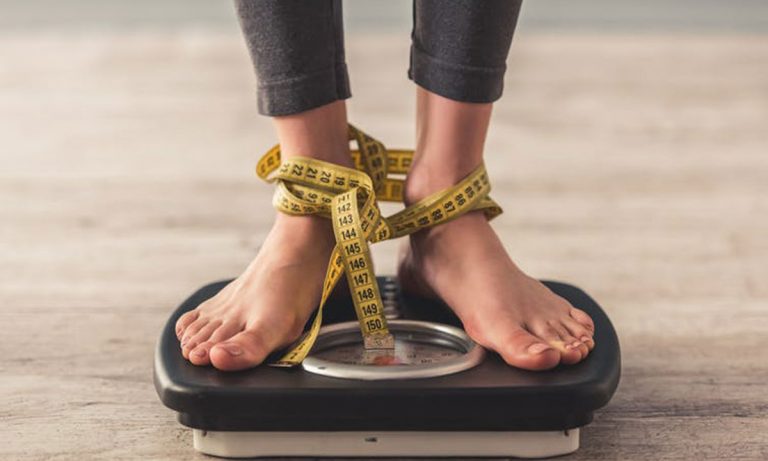
Trying to live up to the pervasive images of “perfect” models and movie heroes has a dark side: body-shaming, anxiety and depression, as well as unhealthy strategies for weight loss or muscle gain. For example, anorexia nervosa involves the extreme over-perception of weight and claims the lives of roughly 10 percent of its victims. It also has a financial cost. Having an eating disorder boosts annual health care costs by nearly US$2,000 per person.

Why is there both external and internal pressure to look “perfect”? One reason is that society rewards people who are thin and healthy looking. Researchers have shown that body mass index is related to wages and income. Especially for women, there is a clear penalty at work for being overweight or obese. Some studies have also found an impact for men, though a less noticeable one.

Does weight perception matter?

While the research literature is clear that labor market success is partly based on how employers and customers perceive your body image, no one had explored the other side of question. Does a person’s own perception of body image matter to earnings and other indicators of success in the workplace?

In simple terms, does it change your wages if you think of yourself as overweight when you are not? Or if you think of yourself as skinny, when in reality you are not, does this misperception affect your ability to find and keep a job?

We were interested in answering these questions because it is often easier to fix your own view of yourself than to fix the entire world’s.

Our recently published study answered this question by tracking a large national random sample of the first wave of U.S. millennials, born in the early 1980s. We followed about 9,000 of them starting in 1997 when they were teenagers and ending 15 years later when the oldest was 31. Our research followed these respondents over a critical time period when bodies change from teenage shape into adult form and when people build their identities.

The survey asked respondents to report their actual weight and height. It also asked each to classify themselves each year as “very overweight,” “overweight,” “about the right weight,” “slightly underweight” or “very underweight.” This enabled us to compare each person’s clinically defined BMI category, such as being underweight, with his or her perception.

As in other research, women in our sample tend to over-perceive weight – they think they’re heavier than they are – while men tend to under-perceive theirs.

What other people think matters more

While self-perceived weight, especially when incorrect, can influence self-esteem, mental health and health behaviors, we found no relationship between the average person’s self-perception of weight and labor market outcomes like wages, weeks worked and the number of jobs.

In other words, it’s not what you think about your appearance that matters in the workplace, it’s just what other people think. Worrying if eating another cookie will make you look fat may harm your self-esteem, but thinking you’re overweight likely will not affect your earnings.

Because we find that women earn lower wages than men do even when accounting for weight perception differences, it appears the well-known gender pay gap is not due to differences in self-perceived weight.

While the continued gender penalty in the labor market is frustrating, our finding that misperceived weight does not harm workers is more heartening. Weight misperception is common, but thinking you’re heavier or lighter than you are doesn’t dampen earnings.

At the same time, it’s important to remember that although self-perceived weight doesn’t appear to affect wages, it still takes a toll on mental and physical health.

Passing over heavier workers to hire or promote less productive but thinner workers is inefficient and unfair. Our results indicate that expanding efforts to reduce discrimination on the basis of body weight in the workplace is important.

Since employers’ perception of weight is what matters in the labor market, policies to reduce the social stigmatization of body weight, such as curbing body-shaming, make sense. Changing discrimination laws to include body type as a category would also help. For example, Michigan is the only state that prohibits discrimination on the basis of weight and height.

The ConversationWe believe expanding such protections would make the labor market more efficient and fair.


Patricia Smith, Professor of Economics, University of Michigan and Jay L. Zagorsky, Economist and Research Scientist, The Ohio State University

This article was originally published on The Conversation. 

Is Second-Hand Marijuana Smoke Harmful To Children?

Researchers, under the guidance of the Centers of Disease Control and Prevention, found that 75 percent of the children exposed to their guardian’s second-hand pot smoke showed traces of THC in their urine.

Although marijuana has been made legal in over half the nation for both medicinal and recreational use, physicians are urging parents not expose their children to second-hand marijuana smoke, for fear that it will contribute to them having a variety of health conditions later in life.

It seems that a small study out of Colorado, where marijuana has been fully legal for years, shows that children of parents who use the herb are showing signs of the THC metabolite in their system. In fact, researchers, under the guidance of the Centers of Disease Control and Prevention, found that 75 percent of the children exposed to their guardian’s second-hand pot smoke showed traces of THC in their urine.

“There is a strong association between those who said there was someone in the home who used marijuana or a caretaker who used marijuana and the child having detectable marijuana levels,” lead study author Dr. Karen Wilson told NPR.

While there has not been much evidence collected throughout the years with respect to the risks involved with second-hand marijuana smoke, some health experts are of the opinion that even the smallest amounts of THC, the psychoactive compound of the cannabis plant that provides its high effects, can lead to developmental issues in children, especially in those babies whose mothers continued to smoke weed during pregnancy.

“Our hypothesis is that it is not good for kids,” Wilson said. “We strongly believe that once we do the research to document secondhand marijuana exposure that we will see there is a negative effect on children.”

The results of the latest study, however, appear to be more of a suggestion that marijuana “smoke” can be hazardous to children rather than the substance in general. After all, cannabinoids are found naturally in breast milk – providing protections against nasty bacteria and viruses that could compromise a newborn’s brand spanking new immune system.

Health professionals say that because most people consider marijuana to be a safe substance, they do not give much thought to its second hand smoke being as dangerous as the smoke from tobacco. Yet, while doctors admit there is a lack of evidence to prove this theory without a shadow of a doubt, they say there has to be some level of common sense at work, until the federal government provides the medical community with more opportunities for cannabis research.

“There is no reason to believe that it is any safer than tobacco smoke exposure,” Dr. David Beuther, associate professor of medicine at National Jewish Health in Denver, told NPR. Beuther went on to say that he believes secondhand marijuana smoke goes against the purpose of the human endocannabinoid system by actually increasing a child’s risk for respitory and heart problems in their adult lives.

Until there is more scientific data to discredit these claims, health professionals want to encourage people not to smoke marijuana around children.

“Get it out of the house and away from your baby,” Beuther said. “Not in the car, not in the home. If someone wants to smoke marijuana, they need to do it outside, far away from your baby or your child, because at this point we believe the adverse health effects are probably as bad as second-hand cigarette smoke.”

In short, don’t smoke around the kids and keep medicines out of children’s reach.

Don't Miss Your Weekly Dose of The Fresh Toast.

Stay informed with exclusive news briefs delivered directly to your inbox every Friday.

We respect your privacy. Unsubscribe anytime.