Tuesday, June 16, 2026
Home Blog Page 927

7 CBD Skincare Products That Will Change Everything

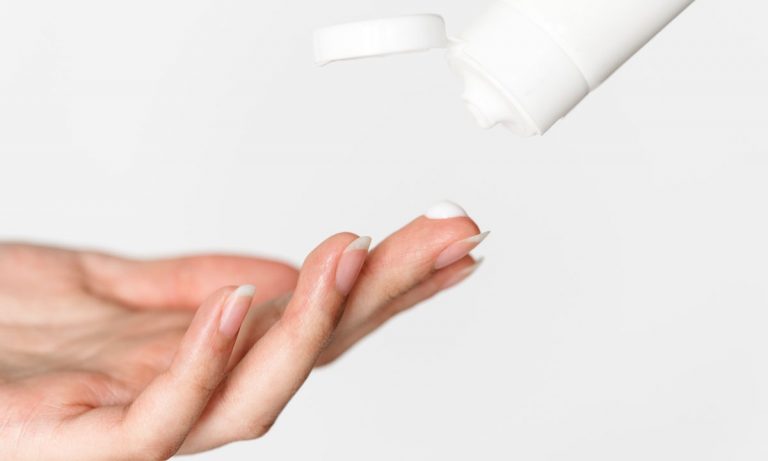
It was only a matter of time before CBD skin care began flooding the market. CBD helps reduce pain and inflammation, so, theoretically, it may treat skin issues like acne and eczema as well. The Fresh Toast perused a plethora of product expos from New Orleans to New York, as a genuine product tester, rather than a paid influencer, to discover the latest in CBD skincare offerings.

Here are the top 7 takeaways:

The CBD Skincare Co.

They may not win any points for their simplistic brand name, but perhaps they are going for the Honest Company approach. On the plus side, they are entirely women-owned. Women who are in favor of breaking the grass ceiling, while smelling scrumptious in the process, will love their scented, CBD soaps. They smell so yummy that it is tempting to take a bite out of the bar. (Please don’t.)

With culturally appropriated cannabis scents like Purple Haze and Black Magic Woman, they are tempting to bathe with, whether they contain CBD or not. Their infused body bar contains 50mg; however, there is no telling how much the skin absorbs with each wash. Their company claims their soap treats acne, eczema, and psoriasis, and soothes muscles and joint pains. A bar of Green Power may induce singing in the shower.

Da Crema Botannicals

The sales rep at the Cannabis World Congress and Business Exposition, was reminiscent of a turn-of-the-century traveling apothecary. His far-fetched claims were pure snake oil salesmanship. “I’ve been making my products since 2014. No other company at the CWCBE can claim that,” he boasted.

FYI, buddy, there are plenty of products that have pioneered CBD years prior to 2014; but they had to wait for regulations to be in place to tout them in the mainstream marketplace. (Heck, even The Body Shop had a hemp salve back in the 1990s.)

However, despite their outlandish claims, Da Crema’s products are worth a look, as they are fun. CBD massage oil might come in handy on date night, whether it is beneficial or not. Likewise, their dead sea-salt scrub, which contains activated charcoal to assist lymphatic drainage and pull toxins out through the pores, is a stimulating exfoliant.

Dr. Hartridge’s CBD Bath Soak

It was designed by an actual female doctor, unlike other products that use the title gratuitously. Dr. H created her bath salts with pure relaxation in mind. “With SOAK, my goal was to make a product that would not leave your tub in need of a cleaning,” she said. After all, a bath isn’t quite as relaxing as it should be, if it leaves a ring around the tub that needs to be scrubbed off. Hardly anyone wants more chores to tackle on their personal time.

Dr. Hartridge also wants her clients to feel free to customize her bath salts with whichever essential oil is their favorite, which is why her CBD and Epsom salt formula is unscented. While CBD is the new kid on the bath time block, Epsom salt has been around for generations, and is renowned for treating aches and pains. They are a winning combination to combat drudgery and malaise.

The Legion of Bloom

This Sonoma County, California-based cannabis company serving sustainably grown, pesticide-free products to medical patients and adult consumers. Zana is the Legion of Bloom’s wellness & beauty line. Zana Lasting Beauty Facial Serum, incorporates the ancient wisdom of Ayurveda, with the modern application of non-psychoactive cannabis. Zana’s Aruvedic, CBD- infused transdermal roll-on contains 65 mg of cannabis-derived CBD per bottle, along with organic sunflower oil, carrot seed, rosemary, geranium, frankincense, clary sage, lavender, blue tansy, and peppermint. The roller can be applied directly to the face, neck, and décolleté to refresh and perfume the skin. Zana also claims to alleviate sore muscles, aches, and pains. Anyone who was a fan of Aveda’s discontinued essential oil roll-ons will appreciate Zana.

Miracle Nutritional Products’ CBD advanced wrinkle cream and CBD advanced wrinkle eraser serum contain 500mg and 300mg respectively of full spectrum hemp oil blend. Both are paraben-free and are tested on humans, not animals. The cream is water-based, and is suitable for people with oilier skin, whereas the serum is oil based, and is most likely more appropriate for dry skin, depending on which texture is preferred. Both contain Spanish lavender and skin savior hyaluronic acid, but the cream also contains diamond powder.

Shira Adler, the author of an essential book, The ABCs of CBD, created Shira Synergy essential oil and CBD facial mists, in a variety of scents and themes, with a distinctly Wiccan vibe. Smile Synergy spray contains CBD, Vetiver, rosemary, and lavender to “anchor focus and create a feeling of connection, calm, protection and focus,” while Clear contains Himalayan Cedarwood and white sage to “lighten, brighten and transform your energy and mood.” Nurture has cinnamon leaf, camphor and cumin to “warm, soothe and comfort,” while Inspire has peppermint, Bulgarian Rose, and Ylang Ylang to “encourage creativity and productivity.” At the very least, her mists are refreshing and smell delicious. If Shira’s synergy mists brighten your day, or put a bit of pep in your step, so much the better.

Treat Yourself’s CBD Rich Brightening Eye Serum

sExcellent for slathering on under eyes, to replenish fatigued eyes, in the morning and evening. In addition to full spectrum CBD, it contains Jojoba oil, prickly pear seed oil, rosehip seed, CO2 extract, vitamin E, and Somalian frankincense.

It is doubtful that minuscule amounts of topically applied CBD products are substantial enough to be genuinely beneficial; however, it can’t hurt to use everyday products such as massage oil, serum, face spritz, exfoliant, and soap, that contain tiny amounts, especially if they smell lovely.


Use This Travel Hack To Get Your Luggage First At Baggage Claim

As you begin to make travel arrangements for the holidays, keep this travel hack in your back pocket: there’s a simple way to ensure your luggage will be one of the first on the carousel at baggage claim. Have we got your attention?

Travel + Leisure has a couple of tricks up their sleeve to make sure you’re not spending your vacation waiting for your suitcase to arrive.

One way is to kindly ask for a “Fragile” sticker from the check-in attendant. Says T+L:

Bags that are marked as fragile will typically be loaded later and come out before the other bags. Plus, they’re also likely to get less wear and tear. The downside with this tactic though is that once in a while, these stickers may not be seen or noticed by staff.

Another tactic, according to ramp worker and gate agent Thomas Lo Sciuto (via Quora) is waiting to be the last person to check in. Says Sciuto, “Bags will always be loaded front to back on the bag carts, so if you check in last, your bags will be in the last bag cart, which will make them the last on the aircraft, and the first off the aircraft at your destination,” adding:

If they are the first off the aircraft, they will most likely be the first on the bag carts and then the first to be unloaded at baggage claim.

So, how does one make this happen? Sciuto says one of the best ways is to ask to gate check your bag.

Of course, these hacks are all dependent on airline, size of the airline and/or baggage handlers. So don’t be too disappointed if you follow these tips and your bag doesn’t get first placement on the carousel.
As T+L explains, there are only two “surefire ways” to guarantee your bags arrive first: either book a first or business class flight or join an airline’s frequent flier club to receive a priority tag on your bag.

5 Interesting Things Apple Didn’t Clarify About iOS 12

During Apple’s recent Worldwide Developers Conference (WWDC), the company warned against the excessive use of their devices while also taking the opportunity to introduce several features that we’ll be able to use once we download their latest software. IOS 12 promises to improve devices’ performance, provide you with an experience unlike any other, and finally solve the iPhone’s problematic battery issue.

While a lot of interesting factors were discussed in detail, such as Memojis and Siri’s new capabilities, others were left up to the user to discover once they interact with the device. Mashable compiled a list of these features and how different they are when you interact with them directly; Here are 5 of our favorites.

Memojis Have No Gender

https://giphy.com/gifs/realitytvgifs-phone-keeping-up-with-the-kardashians-kuwtk-jyllN0iwpqydi

Related: Will The ‘Do Not Disturb’ Function On iPhones Really Save Your Life?

One of the most discussed features of the iOS 12 is the Memojis, which are very similar to Snapchat’s Bitmoji, but with much more flexibility. Since these avatars are part of your device’s software, you’ll be able to use them in Messages, FaceTime, and others.

Apple was smart in choosing to avoid giving gender to their Memojis. You start off with an androgynous looking Avatar, which you can customize until it looks like you. Sort of. You’ll be able to modify facial details, hair, skin color and face shape.

Group FaceTime Has Some Serious Power

https://giphy.com/gifs/broadcity-season-2-episode-5-3o6nULgNfqtdFZ4OEU

Group FaceTime is one of the features that has been more eagerly awaited and it’s pretty impressive. Group FateTime is able to link video calls between up to 32 people, beating out the numbers of Skype and Google Hangouts which max out at 25 users. Of course, when you’re video calling with 32 people, the quality of the video won’t be the best, and your phone will only display four major video bubbles on your screen. The rest of the bubbles will be seen on the bottom of the device.

Parents Have A Lot Of Control Over Their Kids’ Phone

https://giphy.com/gifs/vh1-black-ink-crew-chicago-3o7aCSmrq4p7v23720

Related: Apple Wants To Help You Manage Your iPhone Addiction

Thanks to Screen Time, parents will now be able to monitor how much time their kids spend on certain apps. They’ll also be able to set time limits on these apps, blocking them out and preventing them from sending out notifications.  Another interesting feature is Downtime, which suggests when it’s time to put the phone down.

Screen Time will now be tied to an account, meaning that parents will be able to restrict and block out certain apps from being used on several devices, such as your kids’ phone and iPad.

Gestures Are Coming To All iPhones

https://giphy.com/gifs/the-sopranos-tony-soprano-james-gandolfini-14shCKHPfckaGI

Gestures were one of the best features of the iPhone X. Now, with the iOS 12, other iPhones will have Gestures of their own, such as swiping anywhere on the Dock to get to the Home Screen and swiping down from the right side to bring up the Control Center.

Siri Is Going To Be All Over Your iPhone

https://giphy.com/gifs/cbc-funny-comedy-mr-d-3o7abI41DLtDBd1VQs

Related: 5 iPhone Easter Eggs You’ll Want To Find Immediately

One of the biggest changes of the new iPhone software is Siri’s presence. Siri Shortcuts will now allow you to ask Siri to do anything from anywhere on your phone, such as add an item to your shopping cart. If you do this a lot, a text suggestion will pop up asking you to take some action. This is all done with the objective of developing Apple’s AI and getting more people to use Siri for complex tasks.

Elon Musk Announces Free Trial For Tesla’s Self-Driving Feature

No matter how controversial Elon Musk is and how many times he makes the news for bizarre reasons, his plan to make cars as technologically advanced as possible is moving forward, promising to deliver an Autopilot feature that customers will be able to test for free.

According to Mashable, Musk introduced this feature during Silicon Valley’s annual shareholder meeting, where he talked about Tesla’s Model 3 production details, and his plans to build a Gigafactory that creates batteries in Shanghai. Then he mentioned that for the next month, Tesla would be offering free trials of the car’s Autopilot feature, which is a semi-autonomous software that allows self-driving. The site describes this feature as “hardware needed for full self-driving capability at a safety level substantially greater than that of a human driver.”

Musk said that the Autopilot software is currently being worked on every day and that it’s reliability and capability would improve within the next 6 to 12 months.

While all of this sounds very promising, the Autopilot feature, which costs 5,000 dollars to install, has lead to some serious crashes over the past few months. Tesla defends themselves by saying that these incidents are mostly due to human error and, even though Musk didn’t address these issues directly, that Autopilot’s improvements will be dramatic in the near future.

Meet The First Female CEO Of A Public Cannabis Company, Ever

Smoke Cartel Inc, a publicly traded cannabis company in Savannah, Georgia, has named Darby Cox as their new CEO. The online marijuana accessories retailer is the first public cannabis company to appoint a woman.

According to Green Rush Daily, women executives in the cannabis industry have been declining:

Between 2015 and 2017, the percentage of women who hold executive positions fell from 36 percent to a mere 26.9 percent. Though this is still higher than the national average of 23 percent, gender equality is still a long ways off.

As cannabis grows into a major industry, now is a pivotal time not to lose the industry’s characteristic diversity.

Cox is no stranger to Smoke Cartel. She co-founded the company.

“When we went public, we made the decision to switch roles as we thought it would be a little bit better suited to our personalities and our skill sets,” Cox explained to GRD shortly after the announcement of her new, historic role.

Cox herself is a medical marijuana user. “You want to buy it from somewhere that’s fitting it to your lifestyle, that understands that what you’re doing isn’t a crime, that it’s apart of your routine, that it’s apart of your life, an enhancing feature, and not really a detriment,” she said.

Cox’s appointment comes on the heels of Savannah, Georgia’s decision to decriminalized cannabis.

Canadian Cannabis Market Will Top $7 Billion In Year One Of Legalization

Whoa, Canada! A just-released report forecasts that Canadians will spend roughly $7 billion on cannabis products in 2019 and increase their overall consumption by up to 35 percent once recreational cannabis is legalized later this year.

The study, conducted by Deloitte, reveals that legal recreational cannabis sales could generate up to $4.34 billion in sales, accounting for more than half of total cannabis sales. National legalization is expected to pass later this summer.

Deloitte’s report also suggests that the illicit “black” market could still be worth more than $1 billion a year in Canada. The report, titled, A Society In Transition, An Industry Ready to Bloom, shows that two-thirds of today’s cannabis consumers will participate in the regulated market, leaving about 30 percent or the market continuing to shop underground.

“Most current and likely cannabis consumers want a variety of products offered at reasonable prices from suppliers who can vouch for the safety and origin of those products,” said Jennifer Lee, Partner, Cannabis National Leader, and Consumer Advisory and Analytics Practice National Leader. “Cannabis companies will need to have secure supply chains to protect the quality and integrity of their products, and retailers will need to meet consumer expectations, including providing a positive, engaging retailing experience and protecting the privacy of their customers, especially online.”

According to Deloitte:

Governments at all levels will need to establish a strategy to encourage the cannabis industry to develop in a safe, healthy, secure, well-regulated and professional manner, according to Deloitte, in part to reduce the stigma surrounding cannabis consumption so that people move their purchases away from the illegal market. It’s also to protect the consumer and public at large.

Deloitte says retail fundamentals will still apply: customer insight and data is critical. Cannabis retailers will have to execute modern retail fundamentals just as effectively as more traditional retailers to be successful. For retail stores, that means having staff with strong product knowledge, clearly and prominently displaying prices for all products, and offering convenient hours and locations. Online retailers should endeavor to provide free shipping, quick delivery and organized product groupings, and to ensure their customers’ privacy is protected and data is secure.

“Canada is in a unique position as the first G7 country on the cusp of legalizing recreational cannabis,” said Deloitte’s Mark Whitmore. “The move to legalize recreational cannabis has sparked a wave of innovation and entrepreneurship, similar to Canada’s technology sector, which will create jobs for Canadians, new opportunities for businesses and revenues for governments.”

Other notable findings in the Deloitte report include:

  • The legal recreational cannabis market is expected to generate sales of up to $4.34 billion in 2019, the medical cannabis market will account for between $770 million and $1.79 billion, and the illegal market will generate a further $510 million to $1.04 billion.
  • There is considerable interest in cannabis-based edible products, even though these will not be available for at least a year after legalization. Six out of 10 likely consumers are expected to choose edible products.
  • Current and likely cannabis consumers are expected to purchase the majority of their products through physical retail locations, while about one-third will also buy products online through approved retailers’ websites.
  • Legalization of recreational cannabis will create a new type of cannabis consumer who is older than today’s typical consumer (aged 35-54 versus 18-34), better educated (university or graduate school education versus high school or college education), less of a risk taker and likely to consume cannabis less frequently (less than once a month versus several times a week).

John Morgan And Activists Slowly Winning Florida’s Medical Marijuana Battle

In the ongoing battle between Gov. Rick Scott and the state of Florida vs. attorney John Morgan and medical marijuana activists, the former has received its second striking blow in a row. Judge Karen Gievers lifted the automatic stay placed on her ruling that Florida medical marijuana patients should have access to smokable cannabis. Her ruling called the current restrictions imposed by Florida legislation as “unconstitutional,” a ruling the state immediately appealed, imposing the aforementioned stay.

Morgan and two patients with terminal illnesses filed an appeal to that stay. Gievers ruled that the state’s tactic to further delay her May 25 ruling would cause irreparable harm to patients. She gave the state until June 11 to put into action a process for patients to be prescribed smokable marijuana.

When the state legislature created Florida’s medical marijuana program, they included a provision that would ban smokable cannabis, citing health risks. Morgan filed a lawsuit, along with Cathy Jordan and Diana Dodson, who claimed that smoking cannabis has prolonged their lives.

In Gievers’ four-page ruling she specifically acknowledged the potential harm the patients would experience should the stay be extended. Jordan has lived with ALS since 1986 while Dodson was diagnosed with HIV in 1991.

“First, they cannot legally access the treatment recommended for them,” Gievers wrote in the four-page ruling. “Second, they face potential criminal prosecution for possession and use of the medicinal substance.”

Morgan has been his usually apoplectic self when discussing the state’s medical marijuana laws, calling out Gov. Scott directly with the hashtag #SlickRick. “Where is your compassion man?” Morgan asked. The powerful Florida attorney also challenged Scott to debate discussing the merits of their claims.

Though that doesn’t answer the more pertinent question lingering—how will the Florida Department of Health, tasked with regulating medical marijuana in the state, respond to Gievers’ ruling? The DOH wouldn’t answer any questions about possible changes it will make in the next week, though it did announce it was reviewing the ruling. In a statement to the Miami Herald, the DOH defended the framework of the current law.

“The use of medical marijuana is outlined in state law, which was passed by an overwhelmingly bipartisan majority of the Florida legislature,” DOH spoksperson Devin Galetta told the Miami Herald. “Our focus remains with ensuring that patients have access to medical marijuana, and the Florida Department of Health has made significant progress in making this treatment available. In fact, there are more than 117,000 patients who have access to medical marijuana and over 1,300 doctors are licensed to order this treatment.”

Study: Marijuana Can Eradicate Inflammatory Bowel Disease

Researchers at Harvard Medical School have been asking questions about citizens’ cannabis use. They wondered if legalization of medical marijuana in Massachusetts in 2012 has had an effect on the use patterns of patients. They were specifically interested in people with inflammatory bowel disease, IBD, and the results may surprise you. 

Most people go through their daily routine without any concern about how their intestines are doing. They don’t worry about severe cramping or losing bowel control when going about their lives. The same cannot be said of people suffering from inflammatory bowel disease. It can be a life-altering condition with additional serious symptoms like diarrhea, abdominal pain, bloody stool, weight loss and a lack of appetite. 

IBD includes two main subsets of the disease, Crohn’s disease and ulcerative colitis. Both are qualifying conditions accepted to be a medical marijuana patient in Massachusetts. Logic would follow that as cannabis became a legal option for those suffering from the condition more people would consume to alleviate their symptoms. Afterall, the herb has been well documented in its efficacy when it comes to providing relief for IBD symptoms. It has shown to relieve inflammation. cannabis has also shown to be an antioxidant and provide neuroprotection. That is why the US Government is seeking a patent for this purpose. 

In this study, over 300 patients with IBD were surveyed. Although there was an almost doubling of marijuana use within the sample from 12 percent in 2012 to almost 23 percent in 2017, there was no significant increase due to what was considered “medical marijuana” use. Over half said that legalization made no impact on their decision to use “medical marijuana.” 

Some people argue that while all marijuana use is not intended to be medical, the plant offers rewards regardless of how you categorize its use. “Recreational” or “medical” use doesn’t matter to the plant; it does not discriminate. We know that many people self-medicate. They read an article or some bit of research about a remedy and do a solo case study. People do this to cure hiccups, headaches and to relieve hangovers without any professional guidance. They just want to fix it quickly.   

By no means do all people who use cannabis to relieve a wide variety of symptoms consider themselves medical marijuana users. Some just do not see the need to go through the trouble to become a patient. Others fear being placed on any sort of registry or creating a health record that could come back to haunt them in some way. These researchers suggested that a process like this could be one barrier that prevents more involvement in the official medical marijuana system. A reluctance to speak with their physician is another reason that they listed. In the end, they could not be certain of the reasons. 

Studies like this provide an interesting and important snapshot into this moment of increasing legalization. It helps us better understand usage patterns and barriers to entry for patients. They also spotlight the need for additional education for both patients and their healthcare providers to know more about the possible benefits of cannabis for health conditions. 

The world of cannabis is a wild growing tapestry of experience and understanding. We thank the folks at Harvard and all similar efforts to contribute to its depth and composition.

Marijuana Is The New ‘Big Long,’ Says ‘The Big Short’ Trader

When one of our preeminent journalists writes a book about you then Hollywood produces a movie about said book, all based on a financial decision you made, best believe people listen when you talk economics. Danny Moses, a hedge funder involved in The Big Short trade, fits the description. And Moses is just now focused his attention towards the cannabis industry.

Moses believes marijuana is the new “big long,” he said at the Cannabis World Congress and Business Expo last week, according to Business Insider.

“The lack of banking and lack of access to capital is creating a huge opportunity,” Moses said. “It’s a gold mine, but it’s also a minefield.”

To recap, Moses was the head trader under Steve Eisman at FrontPoint Partner when the housing market crashed in 2008. Michael Lewis later wrote the bestseller The Big Short: Inside the Doomsday Machine about Moses and Eisman’s bet against that housing market. That book was the basis for the Oscar Best Picture winner.

Via Business Insider:

Because marijuana is considered a federally illegal substance (though it’s legal in several states), many of the biggest Wall Street banks won’t lend money or underwrite deals to companies in the sector. It’s an opportunity that some cannabis-specific firms and middle-market investment banks, like Canaccord Genuity, are keen to take advantage of.

But that Wall Street reluctance is starting to change. Tiger Global, a firm with $22 billion under management, invested in Green Bits, a cannabis technology company, in April.

“It’s not like Goldman Sachs is going to pull their business from Tiger just because they invested in that company,” Moses said.

In fact, Moses has followed his own advice. He’s invested in and sits on the board of Merida Capital, which is a New York-based private-equity firm dedicated to cannabis. He also advised those interested in investing in the cannabis industry to start small. Because in Moses’ estimation, the cannabis industry is only in its “third” inning, so need to rush things.

“Get to know the companies, both public and private and be patient,” suggested Moses.

Is Apple Trying To Kill Third-Party Apps?

Nowhere seemed a bigger hotbed for revolutionary ideas and concepts than Silicon Valley in the 21st century. The technology birthed in that era has fundamentally changed the way we live, in ways both exciting and scary. And while it’s safe to assume some random start-up is generating the next new platform or product every day, the tech titans on the top have become ruthless at effectively stealing ideas initiated by third-party developers.

We need to look no further than the new iOS features Apple announced at their annual Worldwide Developers Conference this week. Here’s a short list:

Group Facetime

When using the iPhone’s Facetime feature, it was only good for 1-on-1 video calls. But now, Apple has unveiled Group Facetime, which will allow up to 32 participants at once. Compare that to other video chat services, like Skype or Google Hangouts or Houseparty, that are popular among teens.

Skype and Hangouts allows for 25 people at once, while Houseparty limits calls to eight people at a time, though you can be on multiple Houseparty calls at once.

Time Trackers

Sure, it’s kind of strange we’re all so addicted to our screens that our only solution is apps on those screens to limit more time on those screens. There are loads of apps available to block yourself, but now Apple will employ something they call Screen Time. Their service will track how much time you spend on various apps and send you a weekly report to tell you how you’re doing. Try not to get bummed out.

Ruler

A new Apple app named Measure allows you to measure the sizes of things in real life via augmented reality. But you could also just use Ruler or AirMeasure — apps that perform an identical task and already available in the App store. Or you could, you know, just use an extra measure if you wanted.

Bitmojis

They’re playful and fun once you understand how to use them, and especially useful when you can’t be bothered to conjure a real response to someone. Apple will now have Memojis, which are completely customizable avatars that function similarly to their Animojis.

Remember Miis on the Nintendo Wii? They’re basically those but slightly better looking.

IFTTT

Apple wants you to have more automation via its new Shortcut app. That means you can connect multiple actions across various apps to occur one after the other. In addition, you can activate this feature through Siri voice command to make things even easier. It’s basically an identical service as IFTTT (If This Then That), though IFTTT isn’t available through Siri voice command — just Google Assistant and Amazon’s Alexa. Like many other third-party developers, IFTT will have a hard time competing with all the advantages Apple has.

FaceTime is a standard app that comes with the iPhone. If it was accidentally deleted, you can download it by opening the App Store on your iPhone 6 and download it there. additionally, you can check Facetime for pc incase you want to download facetime in big screen.

Don't Miss Your Weekly Dose of The Fresh Toast.

Stay informed with exclusive news briefs delivered directly to your inbox every Friday.

We respect your privacy. Unsubscribe anytime.