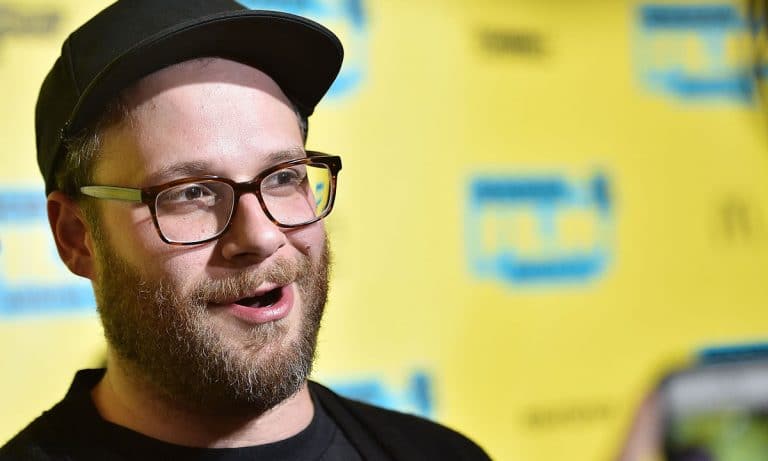
Many celebrities have spoken earnestly about their activism surrounding cannabis legalization, but perhaps few have so boldly proclaimed how far they’re willing to take it. Actor and comedian Jim Belushi revealed that when it comes to educating the mainstream on cannabis, he’s willing to go to jail over it.
“I believe in this medicine,” Belushi told Bloomberg. “I’m a celebrity. I could be arrested immediately—and I want to be, by the way, because I want to send the message out that this takes opioids off the street.”
Belushi played host to one of the many after-parties around the Milken Institute’s Global Conference at his $38.5 million Los Angeles mansion this week. The dinner was organized by Green Table Global, which specializes in “premium dinner events where we bring together influencers, investors and experts to exchange ideas, support and resources.”
“So nice to host all you gentlemen and ladies in the money honey business,” Belushi said in his opening remarks. “You’re going to make money in this space. But you’re going to have a sense of healing our community. You’re going to have a sense of doing something really important—and making money.”
Belushi, 63, the younger brother of the late John Belushi, was speaking from personal experience. He owns a farm in Oregon where he grows cannabis. He rolled out his Vault dispensaries this year and plans to launch a brand of pot in the near future named after the Blues Brothers, the musical duo originally played by his brother and Dan Aykroyd.
Other notable guests at the dinner included “Shark Tank”’s Kevin O’Leary and US Representative Tim Ryan, the Ohio Democrat.
This is the first article of a weekly column where we’ll discuss the best and funniest memes we can find. If you have any ideas or comments please send them to us!
Internet memes belong to the digital era. Or so we thought, before Vice published an image of a drawing that’s basically a modern day Twitter meme.
Memes are a phenomenon that’s hard to explain to people who don’t use the Internet regularly, no matter their age. Even if a person is young and well versed on social media apps, some memes are only understood and reserved for the most avid of Internet users, those who look out for these trends and implement them on their day to day lives.
Merriam-Webster describes memes as “an idea, behavior, style or usage, that spreads from person to person within a culture,” which is vague, but it sort of captures the feeling of what memes are; they’re funny and relatable bits of media that are shared between a community. With social media, this community can be very large, affecting thousands of people who live in different states and continents. But it can also be small and shared between close friends.
Vice published an image of what might be the first meme ever, extracted from a 1921 satirical magazine called The Judge.
While the words of the image are a little old-timey, the content is extremely relatable and could make anyone believe that it was made today. The funny use of the doodle version of the man compared to the nice and elaborate drawing of him is a type of comedy that’s very meme-ish, if that’s even a word. It’s like the Expectations Vs. Reality meme and tons of others with the same format. This is not to say that people from the 1920’s were dumber than us, but it’s very surprising to see that 100 years ago people made jokes that still feel fresh and relevant today.
The image of the meme went viral, and it sprang reactions from all over Twitter, where it was compared to other memes, creating the world’s craziest meme-ception.
Those in Massachusetts shouldn’t expect a massive rollout when the first marijuana stores open for recreational consumers in two months. When July 1 rolls around, the head of the commission says supply will be “sparse,” according to a report from WBUR.
“I think it’s fair to say it’s not going to be on every street corner in every city and town in Massachusetts,” Cannabis Control Commission Chairman Steven Hoffman said.
Part of the issue revolves around how the law was constructed. While 813 applications for cannabis business have been filed to the commission, state law dictates they can’t issue licenses until June 1. Not even Hoffman had an accurate depiction of how many stores to expect come July 1.
Cannabis businesses face several challenges as they look to set up shop. Before they can get a license from the commission, they need to show they have reached an agreement with the city or town in which they will be located.
Many communities have enacted moratoriums or outright bans of marijuana business. While Hoffman says it’s ultimately up to the cities and towns to decide whether to welcome cannabis businesses, he’s hopeful many will ultimately decide to allow the businesses in, now that they’ve seen what the regulations look like.
“I think the supply issues are going to—and I hate this bad pun—but we going to we’re going to grow out of them,” Hoffman says. “People are going to get cultivation licenses. It’s going to take however many months it takes to grow plants. We’re going to get that resolved.”
While most new cannabis retail markets experience an initial shortage, Massachusetts will experience a slower beginning than most. Maybe pump the brakes on Boston becoming a marijuana capital by 2020?
It may seem like the British Royals throw around the titles “Princess” and “Prince.” It’s what fairy tales thrive on. But in real life, that’s not at all how it works. In fact, there are only a couple of ways to become a princess: you have to be the daughter of a prince (i.e. Princess Charlotte born to Prince William) or you have to marry one (i.e. Princess Kate married to Prince William).
When Kate Middleton married William, her title became Princess William of Wales, though we all know her as the Duchess of Cambridge.
In much the same way, grandchildren born to the sons of the monarch receive the title of prince or princess, but those born to the daughters of a monarch don’t. In the case of the family of Prince and Princess William of Wales: Prince George’s children will automatically be princes and princesses; Princess Charlotte’s kids will not (unless, of course, a tragedy upends the British line to the throne).
Lucy Hume, an expert on the royal rankings, tells Town & Country that “Royal titles are inherited through sons, so if Princess Charlotte has children they would not automatically inherit the titles ‘HRH,’ ‘Prince,’ or ‘Princess.'”
But things may be changing, as both Prince Harry and Prince William have chosen to marry for love, not business. As T&C puts it, “For the bulk of British history, marriage was a transactional means to fortify alliances between nations, so princesses typically married princes and their children took on the titles of their father’s country. Now that love matches are standard protocol, the question of titles comes into play.”
Legalization is long overdue. And just last week, US Attorney General Jeff Sessions, while testifying before the US Senate, surprisingly said that cannabis should be researched and that there may be some benefits to medical marijuana. We’ll take a lukewarm comment from the man that said “good people don’t smoke marijuana” and take that to the bank. Which brings me to the topic of today’s post, banking (a transition as smooth as my middle school dance moves).
It’s no secret that many cannabis operators have to operate as cash only businesses since many financial institutions still refuse to offer banking services to the cannabis sector (which has led to an increase in interest in cryptocurrencies). In California, many banking institutions that were considering openly banking cannabis businesses decided to remain on the sidelines once A.G. Sessions rescinded the Cole Memo this January. However, like the slow but forceful gravitational pull of the moon, we’re starting to see tide shift towards more banking opportunities on the horizon.
Part of the shift has to do with fact that the cannabis licensing agencies in California (the Bureau of Cannabis Control, the Department of Food and Agriculture, and the Department of Public Health) will start issuing annual licenses in May. To date, all of these agencies have only issued temporary permits, which required little more than a local permit, a location, and a premises diagram. The application for an annual license requires much greater detail. Although some applicants may balk at the amount of information they must provide, the fact intensive nature of the application process will undoubtedly help cannabis operators obtain banking services. A cannabis business owner that has received an annual permit from the state, can use that permit as a stamp of approval when walking into a bank to open an account. Possession of an annual license will signify to banks that you’ve passed a background investigation and proven to the state that you have the procedures in place to run a compliant cannabis business. Don’t lose sight of that fact as you’re cursing all the hoops you’re jumping through.
Another step in the right direction when it comes to opening banking services to the cannabis industry is the progress of Senate Bill 930 in the California state legislature. SB 930 was first introduced by State Sen. Robert Hertzberg (D-Van Nuys) on January 25, 2018, and was approved by the Governance and Finance Committee last Wednesday. SB 930 would provide for the licensure and regulation of cannabis limited charter banks and credit unions whose sole purpose would be to provide banking services to the cannabis industry. SB 930 is more workable and has a stronger likelihood of success than the prospect of a state backed bank, which we last discussed here.
In order for SB 930 to be successful, it is paramount that the FinCEN guidance issued by the Department of Treasury remain in place (see here for the importance of the FinCEN guidance). The bill would also create the Cannabis Limited Charter Advisory Board (“Board”) that would hold public hearings, submit reports of enforcement activities, and provide guidance on specified investment activities. The Board will be comprised of the state Treasurer (you can find our analysis of the Treasurer’s banking report, here), the state Controller, and Chief of the Bureau of Cannabis Control. SB 930 would also authorize charter banks and credit unions to issue special purpose checks for the following:
To pay fees or taxes to the state or local jurisdiction;
To pay rent on property that is associated with the account holder’s cannabis business; and
To pay a vendor that is located in California for expenses related to goods and services associated with the account holder’s cannabis business.
SB 930 will still have to clear some procedural hurdles before it’s in front of the full Senate for a vote, but this is definitely another step in the right direction to ease the logistical burden – and enormous public safety concern – that dealing in all cash poses on cannabis businesses. SB 930 is yet another piece in the fight against the federal government’s unjust war on cannabis. Eventually the final blow will have to come from the federal government, but in the interim California, along with many other states, will continue to lead the way.
Habib Bentleb is an attorney at Harris Bricken, a law firm with lawyers in Seattle, Portland, Los Angeles, San Francisco, Barcelona, and Beijing. This story was originally published on the Canna Law Blog.
Have you ever made a bartender stop dead in their judgemental tracks with your drink order? I have, and let me tell you, he was a newbie For that attitude. My time spent year round working in a tiki bar proved to me that seasonal drinks only go so far when put up against personal preference. Just because some people are transitioning to PSL’s doesn’t mean you need to follow the crowd.
Being fall-like has nothing to do with what you enjoy to drink, so why bother fretting if you want a ‘summery’ drink in the fall or even the dead of winter. Temperatures may drop but that does not mean a 6 month hot drink sentence if you are into cold drinks, or fruit flavors that typically scream sunscreen and splashing when it’s more snowball and santa weather. If you’re taking the time to infuse a beverage with cannabis, that’s even more reason to have the exact drink you want, haters be damned.
The Italian classic is definitely a harbinger of spring, but there is not one single fault in having it year round. Consisting of a dash of bittersweet Aperol with ice, prosecco, and a splash of seltzer with an orange peel, a classy glass of this will please you year round if you let it. Teasingly bitter while cool and bubbly, it’s somewhere in between a cocktail and a glass of wine, making ideal conditions for a few drops of alcohol tincture to add greenery. Traditionally consumed after lunch and before dinner, aromatics help stimulate the appetite, and we already know cannabis does that.
Try mixing ½ oz Aperol and ⅛ oz cannabis tincture* over ice, top with Prosecco ¾ of the way, finish with a splash of sparkling water, and express an orange peel over the top. Mi Piacere!
Photo by Danielle Guercio
Agua Fresca
It’s never a bad time to drink fruit infused water, and agua fresca is as easy to make as can be. Choose literally any fruits, chop, and infuse for at least 4 hours. The fruits will lend their scent and a light flavor, and you get to have water that isn’t boring. Take it to the next level with ⅛ oz glycerin tincture* for every two to three people. Make a year-round tasty version with oranges, rosemary, and lavender flowers for invigorating flavors, or try out something lighter with honeydew and lime. This is also a great way to use watermelon rinds, cucumber peels, or basically any fruit peels left over from other applications for a second wind.
Iced Coffee
Cold brew or simply chilled Americanos start filtering into the streets in April in most american cities, but we all know coffee is a way of life best kept personal.
Don’t listen to anyone who questions your preference for Ice in the icy throes of January, they don’t have your best intentions at heart. There’s no shortage of way to spike your coffee with cannabis, often described as weedballin for it’s special focus enhancing properties.
Photo by Danielle Guercio
Arnold Palmer
Lemonade is not strictly for hot days, and the popular half-and-half formula also aligns with that philosophy. Sweet cannabis infused lemonade is more than just a tasty beverage, it can help keep your high calm and centered, while tea’s caffeine at a half dose will improve focus without making you feel like you mainlined a macchiato.
Squeeze a full lemon into a glass with 1 TBS sugar and ⅛ oz glycerin tincture*. Mix until dissolved. Add ice to the top, pour in ¼ cup water, then fill with cold tea and yell FORE! like you’ve always wanted to.
Fruit Sangria
Sangrias don’t have to be hot weather exclusive, but even when they are, the deliciousness is a motivator to keep drinking it year round. Though the usualinvolves oranges and apples, you can use anything you want, from fall’s bounteous berries to cider apples and a cinnamon stick.
Blur the lines between mulled wine and sangria by making this Dankgria with red wine. Chop one apple and zest one lemon, add to a pitcher. Toss in one cinnamon stick and one star anise pod. Stir in ½ cup of calvados or brandy and 1/2oz glycerin tincture*, add one bottle of dry red wine, and you’ve got a middle ground that’s workable for these in-between weather days.
Froze
Since posting our own frose recipe, I’ve made it again and again with different fruits and berries. At this level of deliciousness, It won’t be waning in popularity as we wind into fall.
Make one that’s less sun-dependent with fall berries and maybe some late-season watermelon or cantaloupe over the usual strawberry. The fruits are entirely interchangeable! Just be sure to use enough ice, cooler weather doesn’t mean you have to skimp on the slush.
Photo by Danielle Guercio
Pina Colada
I can count the people I trust to make me a pina colada on one hand. If presented the opportunity to have such a perfect creation from one of those five people, I don’t care in the slightest if it’s blizzarding outside, I’m drinking it, I have and would do it again! When these colleagues and I felt like experimenting, we became so fond of cannabis infused coconut drinks that we made it a weekly indulgence to close out a busy Saturday, for employees only!
Make a weed-infused pina colada with 1 oz coconut milk or coconut cream, 2oz fresh pineapple juice, 1/8th oz cannabis alcohol tincture*, 2oz rum, and ½ oz simple syrup.
*Cannabis Infusions
Decarboxylate 3.5g of finely ground cannabis at 225 degrees for 20 minutes in a tightly sealed, oven safe container. Put cannabis in lidded mason jar or vacuum sealed bag with cannabis and ½ cup olive oil, 2oz glycerin, or 1oz high proof alcohol. Heat in water bath just under boiling for at least 1 hour. Strain and chill to use in recipes
Maybe if people spent less time adapting to the commercial concept of seasonal enjoyment and more time being true to their tastebuds we would have less of a mental divide between spring summer and fall/winter food and drink options. Crafting quality cannabis beverages is much more exciting when you are picking what your heart desires.
Most actors don’t have beetles named after them but Leonardo DiCaprio sure does, and he’s super proud of it.
DiCaprio is an environmentalist and has done a lot of work for the planet, battling global warming and aiding in preserving animals and the environment, so the beetle in his honor doesn’t come out of nowhere.
The beetle species is called Grouvellinus leonardodicaprioi, which sounds like a Harry Potter spell but still is pretty sweet. The beetle was discovered on the side of a waterfall in Malaysian Borneo, and it was in pretty bad shape, with a missing antenna and a front leg.
According to Mashable, the expedition was conducted by Taxon Expeditions and it’s part of a program that trains people to capture, study and identify new species of animals. On a statement, the company said that the beetle was named in DiCaprio’s honor due to the 20th anniversary of the Leonardo DiCaprio Foundation, which works to preserve biodiversity and has done important work for the planet.
For his part, DiCaprio was so honored that he put the beetle as his profile picture on Facebook. The internet couldn’t resist and had to add a few comments of their own:
It was only a matter of time. Facebook has announced that they’re going to be giving Tinder a run for its money by entering the dating side of technology.
According to Facebook, they’re building a feature for dating and relationships within the Facebook app. Because, duh, that’s what many people primarily use the social media platform for already.
“People already use Facebook to meet new people, and we want to make that experience better. People will be able to create a dating profile that is separate from their Facebook profile — and potential matches will be recommended based on dating preferences, things in common, and mutual friends. They’ll have the option to discover others with similar interests through their Groups or Events. However, what people do within the dating feature will not be shown to their friends. We’ll share more information when this begins testing later this year.”
The announcement was made during F8, an annual two-day event in San Jose where developers meet to explore the future of technology. Facebook founder Mark Zuckerberg said that 1 in 3 marriages in the U.S. start online and reminded everyone in the audience that “there are 200 million people on Facebook who list themselves as single, so clearly there’s something to do here!”
Zuckerberg says if Facebook is focused on helping people build meaningful relationships, “then this is perhaps the most meaningful of all.”
Facebook’s Chief Product Officer, Chris Cox, demoed the platform, saying, “We hope this will help more folks meet and find partners.”
Superman – the first, most famous American superhero – turns 80 this year.
The comics, toys, costumes and billion-dollar Hollywood blockbusters can all trace their ancestry to the first issue of “Action Comics,” which hit newsstands in April 1938.
Most casual comic book fans can recite the character’s fictional origin story: As the planet Krypton approaches destruction, Jor-El and his wife, Lara, put their infant son, Kal-El, into a spaceship to save him. He rockets to Earth and is taken in by the kindly Kents. As he grows up, Kal-El – now known as Clark – develops strange powers, and he vows to use them for good.
But the story of the real-life origins of Superman – a character created out of friendship, persistence and personal tragedy – is just as dramatic.
From Villain To Hero
When I was a kid growing up in Cleveland, my dad would regale my brother and me with stories of Superman’s local origins: The two men who had concocted the comic book hero had grown up in the area.
As I became older, I realized I wanted to understand not only how, but why Superman was created. A 10-year research project ensued, and it culminated in my book “Super Boys.”
In the mid-1930s, Jerry Siegel and Joe Shuster were two nerds with glasses who attended Glenville High School in Cleveland, Ohio. They worked on the school newspaper, wrote stories, drew cartoons, and dreamed of being famous. Jerry was the writer; Joe was the artist. When they finally turned to making comics, a publisher named Major Malcolm Wheeler-Nicholsongave them their first break, commissioning them to create spy and adventure comics in his magazines “New Fun” and “Detective Comics.”
But Jerry and Joe had been working on something else: a story about a “Superman” – a villain with special mental powers – that Jerry had stolen from a different magazine. They self-published it in a pamphlet titled “Science Fiction.”
While “Science Fiction” only lasted for five issues, they liked the name of the character and continued to work on it. Before long, their new Superman was a good guy. Joe dressed him in a cape and trunks like those of the era’s popular bodybuilders, modeled the character’s speedy running abilities after Olympic sprinter Jesse Owens, and gave him the bouncy spit-curl of Johnny Weissmuller, the actor who played Tarzan. It was a mishmash of 1930s pop culture in gladiator boots.
When they were finally ready, they started pitching Superman to every newspaper syndicate and publisher they could find.
All of them rejected it, some of them several times. This continued for several years, but the duo never gave up.
When Superman finally saw print, it was through a process that is still not wholly clear. But the general consensus is that a publisher named Harry Donenfeld, who had acquired the major’s company, National Allied Publications (the predecessor to DC Comics), bought the first Superman story – and all the rights therein – for US$130.
The world was introduced to Superman in “Action Comics” No. 1, on April 18, 1938, with the Man of Steel appearing on the cover smashing a Hudson roadster. The inaugural issue cost 10 cents; in 2014, a copy in good condition sold for $3.2 million dollars.
When the comic became a runaway hit, Jerry and Joe regretted selling their rights to the character; they ended up leaving millions on the table. Though they worked on Superman comics for the next 10 years, they would never own the character they created, and for the rest of their lives repeatedly filed lawsuits in an effort to get him back.
But there is another more personal piece to the puzzle of Superman’s origins.
On June 2, 1932, Jerry’s father, Michel, was about to close his secondhand clothing store in Cleveland when some men walked in. Michel caught them trying to steal a suit, and ended up dying on the spot – not in a hail of gunfire, but from a heart attack.
Jerry was 17.
Jerry Siegel pictured while serving in the U.S. Army. Wikimedia Commons
Some believe Jerry may have created Superman as a fantasy version of his own father – as someone who could instantly transform from a mild-mannered man into a hero capable of easily overpowering petty thieves. Indeed, some of the early Superman stories feature Jor-El out of breath (as Michel often was from heart disease) and show criminals who faint dead when confronted by Superman. As many victims of childhood trauma often do, Jerry may have used Superman to re-enact his father’s tragic death over and over in an attempt to somehow fix it.
In Superman’s never-ending battle of good versus evil, this same story is repeated again and again on the page, in cartoons and in movies. It’s seen in kids who pretend to be Superman, tucking towels in at their neck and playing out battles in their backyards.
Why is Superman’s 80th birthday important? It isn’t just about celebrating a “funny book” about a guy who has heat vision and can fly. It’s about using fantasy to make sense of the world, plumbing personal tragedy to tell a story, and using art to envision a more just and safe society.
The hemp plant has been around for millenia. It was thought to be one of the original crops of the fertile crescent and, more recently, people were required to grow hemp in the United States during World War II. If you didn’t know that last fact, look up “Hemp for Victory” and look at the propaganda.
Now, we’re inching back into industrial hemp farming with 13 states having re-legalized it. We’re still a far cry away from saving the planet with hemp at this point, but could it be done? And how? We’ll start with the facts that hemp can easily replace trees for making paper, furniture and building materials and can also replace the chemicals used to make plastic.
Hemp is perhaps the most versatile plant in the world and can be used to make a slew of things that go from beyond useful to environmentally friendly when using hemp. In fact, it even makes biofuel and can build the cars and jets that utilize it.
Want to get even more excited about the hemp plant? Think about the above statements: it is possible to stop deforestation by using hemp for paper and building materials, it’s possible to stop toxins from splitting apart our atmosphere by halting the use of chemicals in plastics, and especially by using biofuel. Plus, hemp cleans the air of carbon emissions by basically trapping the carbons inside the plant at an enormous rate.
Best of all, growing hemp is super healthy for the Earth. It can grow in many, many soil conditions and then takes that soil and increases its microbial content. And the parts of the plant that fall back to the land when harvested enrich the soil further. Because hemp is so soil friendly, it also doesn’t need to be rotated with other crops.
The reason that no crop rotation is a good thing is that most plants and tubers require pesticides and other chemicals. Hemp is truly a miracle plant in that it grows sturdy, without harmful substances and is at the ready to make the planet more sustainable once again.
The original bible on hemp was written by Jack Herer, called, The Emperor Wears No Clothes, and it’s available for free at www.JackHerer.com. If the idea of hemp has piqued your interest, this is definitely required reading that will change your whole idea of the world and what we can do to restore it and make it thrive.