Monday, May 11, 2026
Home Blog Page 1018

Young Love: How To Find Out What Your First Netflix Binge Was

It’s hard to remember a time where people didn’t use Netflix on a regular basis. Even though it’s easy to name a bunch of shows and movies that you’ve watched through the site, it’s hard to pinpoint the exact moment Netflix became a thing.

For Valentine’s Day, Netflix released some of their data, featuring their most binged shows by first time users including Family Guy, Orange Is The New Black, Breaking Bad, and Stranger Things.

This release of information no doubt gave everyone a case of the simpler times, before the company took over the world and made shows that were actually good. 

Discovering your first Netflix love is pretty simple. First, log on to Netflix. Head over to your account button and click on Account, where you’ll be taken to a section that has a few queues. Click on My Profile, and then Viewing Activity, which will show you your entire viewing history. You may need to sit down for this. 

By scrolling, and scrolling, and scrolling, you’ll finally land at the bottom of the page, where you’ll see the first movie or show you ever watched on your Netflix account. You might be surprised by something really weird and obscure. The Netflix catalog wasn’t as good back then. 

6 Valentine’s Day Gifts Every Cannabis Lover Will Enjoy

Valentine’s Day is almost here, and whether or not you believe in celebrating this not-really-a-holiday-at-all event, everyone — even the skeptics — appreciates getting a little treat on February 14. Here are six gifts both the cannabis enthusiast and cann-curious in your life will enjoy.

Bella Crema Elegante

This is a line of lovely infused bath bombs, bath salts and lotions. The products absorb quickly leaving the skin feeling luxuriously soft,  relaxed, and pain-free without any greasy residue.

https://www.instagram.com/p/Be3kphaDaVV

Sacred Mind & Body Massage Oil 

Rich, blended oils create this therapeutic massage oil that is 100 percent free of harmful ingredients making it safe, effective and perfect for even the most sensitive skin. Ingredients include Omega 3, 6, and 9 fatty acids found in hemp seed oil that act as anti-inflammatory agents, soothing irritated and sensitive skin.

https://www.instagram.com/p/BRT3gUOjWee

Herb Grinder

This beautiful aluminum metal grinder from the “MasterGrind Shield Series” can be used for weed, herbs and spices. The razor sharp “Lion’s Tooth” curved diamond teeth deliver the perfect grind every time. They come in an array of designs and colors. Available on Etsy for $40.

Chocolate Box Sampler from Kiva Confections

This limited edition chocolate sampler box from Kiva Confections contains four different flavors and, for $40, a total of 720mg of THC.

Cannabis Cookie Sampler From Big Pete’s Treats

If your Valentine is more into cookies than chocolate, you can surprise them with this Big Pete’s Treats cannabis cookie sampler. This heart-shaped sampler includes six individually-wrapped cookies in three popular flavors: Chocolate Chip, Cinnamon Sugar and Peanut Butter. Each cookie contains 10 milligrams of THC.

THC Molecular Necklace 

To personalize your Valentine’s Day gift this year, you can choose from 12 different gemstones to include in this THC molecular necklace. At the end of each gemstone are either sterling silver filled or 18k gold filled beads. The jeweler who makes these necklaces hand selects semi-precious stones from a trusted vendor, saying, “I only choose stones that I feel are beautiful and reflect the gemstone’s natural beauty. Since not one stone is the same, every necklace is a unique, one-of-a-kind creation.” Available on Etsy for $29.

Paris Jackson Seen Leaving Los Angeles Marijuana Dispensary

Paris Jackson was seen leaving a marijuana dispensary with a conspicuous paper bag recently. According to Page Six, she was wearing “a pair of tiny tie-dyed shorts and mirrored shades in LA on last week.”

Jackson then jumped into the car without much attention. The model and daughter of Michael Jackson is known for her changing looks and bold fashion choices. Sometimes those style choices net her unnecessary criticism.

This week even she addressed the criticism with a tongue-in-cheek Instagram post with the text “how r u a famous model and look homeless” superimposed on the photo.

https://www.instagram.com/p/Betuve0H4bu/?taken-by=parisjackson

Jackson’s father, The King of Pop, was in the headlines this week following a firebrand interview with Quincy Jones, the legendary music producer on some of Michael’s most successful records. Jones told Vulture that MJ was “greedy” and “Machiavellian” in crafting some of his biggest hits.

Canadian Brewers To Produce Beer Made Completely From Marijuana

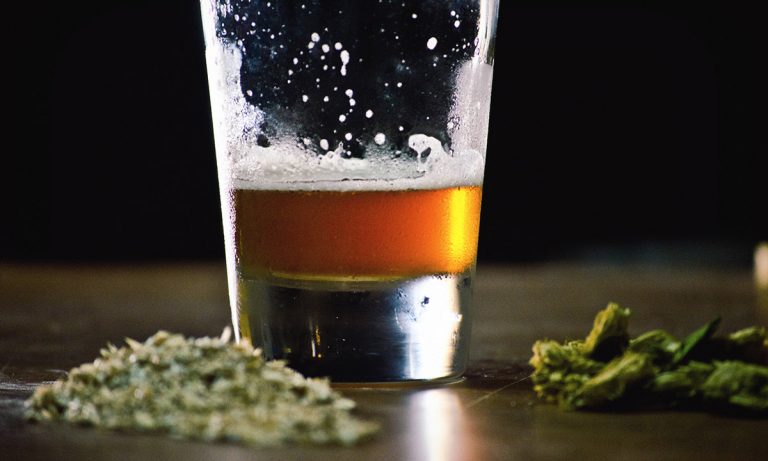
Cannabis-infused beer is one thing, but an entire beer made from cannabis is another. And it appears that possibility isn’t too far from becoming reality. Seeing a demand, Canadian Brewers to produce beer made completely from marijuana and have filed a patent to make it more profitable.

The company? Province Brands, which filed a patent for the “world’s first beers brewed from the cannabis plant.” The move demonstrates the beer industry’s growing interest in the cannabis industry. Just last year an ex-Budweiser executive suggested marijuana was the “new craft beer.”

RELATED: Beer And Bud: Inside Corona’s $191 Million Investment In Marijuana

Via the DrinksBusiness:

While other companies have produced cannabis-laced beers and wines, Province Brands is the first “global company” to produce beers brewed entirely from the cannabis plant, describing its products as “alcohol-free, yet highly intoxicating, and with a dose-response curve similar to that of alcohol”, as well as being low calorie, low sugar, and mostly gluten free.

“The fact that the first Fortune 500 company to invest in the cannabis space was not a tobacco giant like so many had predicted but was, in fact, Constellation Brands, one of the largest and best run adult beverage businesses in the world, truly validates our efforts and proves the market for beverages like those Province has been brewing,” said Province Brands CEO Dooma Wendschuh.

RELATED: Learning All About CBD Beer With Portland’s Coalition Brewing

Marijuana beer would upend a history going back thousands of years. Beer may have been known in Europe as far back as 5,000 years ago, and was mainly brewed on a domestic scale. Beer produced before the Industrial Revolution continued to be made and sold on a domestic scale, although by the 7th century CE beer was also being produced and sold by European monasteries. During the Industrial Revolution, the production of beer moved from artisanal manufacture to industrial manufacture, and domestic manufacture ceased to be significant by the end of the 19th century.

Recreational marijuana is expected to be fully legal and available for retail in Canada by this summer. Cannabis drinks are expected to be legal by early 2019.

Green Rush Blues: California Cannabis After Legalization

The huge underground cannabis economy was woven into the commercial fabric of California long before the 2016 passage of Proposition 64, which legalized marijuana for adult use. Transforming a shadowy, multibillion-dollar industry into a heavily taxed and regulated structure presents unique and enormous challenges. Who will gain and who will lose under the new regime? Will the expected financial dividend from legalization be broadly distributed throughout the Golden State? California’s cannabis regulations are supposed to accomplish two key objectives: Curtail illicit sales and rein in extensive harm to the natural environment caused by black market growers.

But the way legalization is being implemented could have the opposite effect. Steep taxes, higher operating costs, and an insatiable out-of-state demand for California cannabis all but ensure that the black market will survive – if not thrive – in the near term and ecological abuse will continue, as Angela Bacca reports in this special, three-part series. 

Eco-Crisis: Will Cannabis Legalization Save California’s Forests?

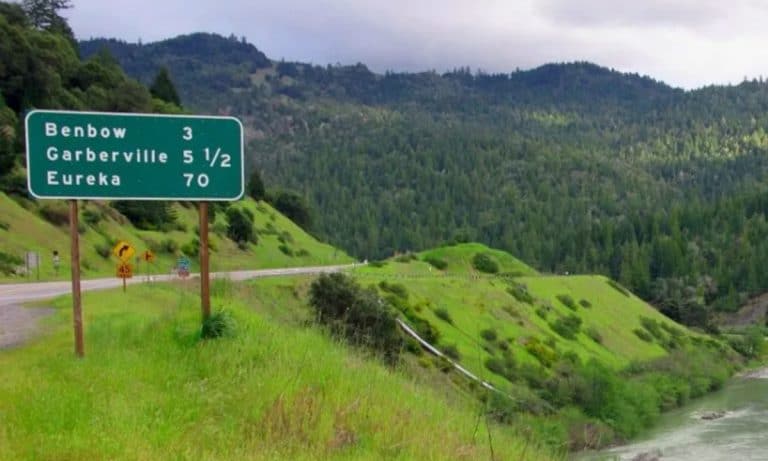
California’s North Coast, unlike the densely populated semi-arid deserts of the south, is both wet and green. Its lush rainforests contain some of the world’s oldest and tallest trees and are home to rare and unique species. But folks who live in this area have struggled to survive in a hardscrabble, boom and bust economy characterized by commodity extraction and production. Logging trees became the region’s first big business, and today what is left of them are Northern California’s biggest tourist attraction.

In the tiny community of Leggett, tourists drive through a seven-foot-wide hole cut into the bottom of a nearly 300-foot redwood tree. Sometimes the visitors bypass the main road, Highway 101, to admire the towering trees as they drive along The Avenue of the Giants, which winds through an ancient, majestic redwood forest.

In the autumn, anyone driving up Highway 101 can also catch a whiff of the region’s most famous export – marijuana.

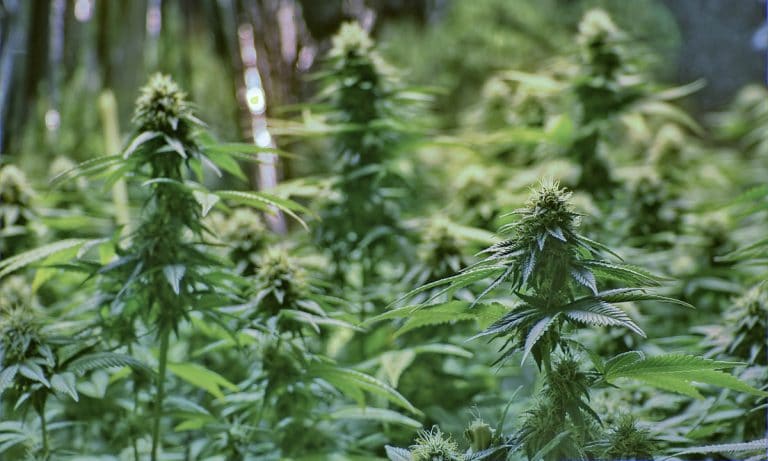
Cannabis cultivation has never been a well-kept secret in the Emerald Triangle, America’s marijuana breadbasket, which includes Mendocino, Humboldt and Trinity Counties. For hundreds of miles – from San Francisco to the Oregon border – billboards advertise events like the yearly Emerald Cup, a Northern California harvest festival that showcases the best of the region’s growers and artisanal product-makers.

The few small towns that line the highway typically only have one main street, but many prominently placed cannabis-themed businesses. During harvest season, trimming shears go on sale at grocery store checkouts. Every year, young marijuana migrants (aka “trimmigrants”) come from far and wide and are seen hitch-hiking up Highway 101 looking for work, hoping to process the harvest.

The first wave of marijuana farmers who settled in the region in the late 1960s and early 1970s identified with the back-to-the-land movement. Imbued with countercultural idealism, many of the original growers were environmentalists who eschewed the extractive capitalist practices that over-logged and overfished the Pacific forests and North Coast.

Some homesteaders found that growing a modest cannabis crop afforded the means to fight for wilderness protection and engage in other forms of ecological activism. “Farming with attitude,” as one Emerald Triangle resident described under-the-radar cannabis cultivation, spawned small, sustainable, community-oriented businesses that continue to endow the region with its unique character.

Death By A Thousand Cuts

But today’s cultivation scene is more complicated and less altruistic. The green ethos that prevailed in the early days has given way to a different set of players, including Wall Street-backed corporations with deep pockets and black market growers who exploit state laws and pollute the dense forests that provide cover for their illicit operations. These Green Rush interlopers are causing irreversible damage to the state’s water supply and precious natural resources.

“Think of this as death by a thousand cuts,” said Stormer Feiler, a senior environmental scientist with the North Coast Regional Water Quality Control Board.

Feiler, who works in the Water Board’s cannabis regulatory program as an enforcement specialist, is referring to the plots of private and public forest lands that are “cut” into marijuana grow sites. “Cuts” are made by chopping down old growth trees and diverting water out of local streams. Often the growers that occupy the cuts spread dangerous fertilizers and pesticides, poisoning the habitats of the region’s endangered species.

Many of the cuts are carved into steep mountain slopes, causing erosion and mudslides that can choke off streams. Each cut into the forest has its own impact, but the sheer magnitude of cuts made in the last 20 years – since medical marijuana became legal in California – is overwhelming state officials.

Feiler has lived in Mendocino County for 40 years. He worked as a millworker when the region’s main product was timber. Feiler saw firsthand the damage caused by overfishing and over-logging the region, which led to the decline of both industries and high unemployment. The end of timber clear-cutting in the 1990s happened to coincide with the advent of legal medical cannabis in California.

“The timber infrastructure had collapsed, and those jobs were disappearing. There were a lot of displaced workers who turned to marijuana cultivation,” Feiler recounted. “Cannabis farming was a viable economic alternative if you were willing to take the risk.”

Boom And Bust

The North Coast economy has always been characterized by “boom and bust” industries that capitalized on the region’s finite natural resources. The discovery of gold in the Sierra Nevada mountains in 1848 triggered a stampede of 300,000 people to California and a fast-track to American statehood in 1850. But tales of California’s newly minted Gold Rush millionaires obscured the fact that most prospectors who panned the streams and worked the mines didn’t make it rich.

Image

What’s more, the long-term cost of the Gold Rush would be felt long after the mineral wealth was extracted. Today, the Golden State is still footing the bill to clean up an estimated 20,000 toxic abandoned gold mines littered throughout California’s landscape.

Humboldt County environmental scientist Dr. Mourad Gabriel says the region should learn from the mistakes made during the 19th century Gold Rush. He warns that future generations will end up paying dearly to clean up the ecological damage already inflicted by legions of marijuana growers who are operating by stealth in the North Coast’s forests.

Once rushing rivers and the streams that fed them are running dry as more marijuana growers divert water to irrigate their cash crop. The fish that live in these waterways become trapped in stagnant pools where they starve, fail to spawn and die. Most egregiously, dangerous pesticides and rodenticides are deployed around grow sites to keep mammalian predators from chewing on cannabis roots and stalks.

These pesticides not only end up in cannabis consumed by humans – they are also poisoning the food chain and destroying rare habitats. Pesticides have caused the decline of the Northern Spotted Owl and the mass die-off of the Pacific Fisher, an endangered weasel species. Gabriel refers to the Fisher as the “canary in the cannabis field” that rang alarm bells among scientists and led to the discovery of the massive scope of the problem.

In 2004, Gabriel and wife Dr. Greta Wengert co-founded the Humboldt-based Integral Ecology Resource Center (IERC), a non-profit “dedicated to the research and conservation of wildlife and their ecosystems.” Five years later they turned their attention to the plummeting Pacific Fisher population. Their research determined that the mysterious die-off was due to internal hemorrhaging from widespread pesticide exposure.

More recently they found carbofuran, a highly toxic pesticide, at cannabis grow sites. Small doses of carbofuran can kill large animals and humans. Gabriel warns that these chemicals could end up in crucial waterways that supply the state’s major cities. “What amount of carbofuran in the water supply is acceptable in San Francisco?” he asks.

Gabriel’s efforts to educate the public about damage to North Coast ecosystems caused by the Green Rush infuriated some growers. In 2014, one of his family dogs was found dead from poisoning in his yard.

Satellite Imagery

Undaunted, Gabriel maintains it is imperative for future generations that science prevail in assessing the impacts of all the “cuts” on the land so that adequate remediation efforts can be pursued. The problem, he cautions, is already much larger and costlier than most people realize. Site-by-site cleanup is expensive – and beyond the resources of the various non-governmental organizations, law enforcement, researchers, scientists and state agencies that are tasked with the job.

“We are talking about possibly up to 100,000 or half a million parcels or more in California,” Gabriel said. “What we stand to lose is these natural resources [everyone is] dependent on.”

Gabriel’s estimates are based on aerial imagery. He refers to a 2017 Humboldt County Cannabis Environmental Impact Report. Using satellite imagery to identify the cuts made to private and public lands for marijuana cultivation, the county estimates that there are around 15,000 cultivation sites in Humboldt alone, a jurisdiction with just 135,000 residents.

Of these grow sites, about 2,300 have taken steps to come into compliance with the new regulations. That leaves about 85 percent of Humboldt’s cannabis farmers who are choosing not to operate in accordance with state regulations or county ordinance. Growers who did not meet the December 31 deadline will not be able to secure a license in Humboldt County until at least 2020.

Gabriel emphasizes that his concerns are not rooted in any sort of “Reefer Madness.” He has been invited to visit several small sustainable private grows and, as a Humboldt resident, he knows many in his community rely on cultivation to make ends meet.

“I look at it this way – just like logging, or any other industry that is going to [alter] these pristine and continuous landscapes, there needs to be a specific cap. There needs to be something that is going to put a regulated oversight on what occurs,” Gabriel asserted. “The long-term path to a solution is to get people enrolled and in compliance with the program’s requirements.”

Water Woes

Water is one of the most pressing issues in the Golden State. In recent years, drought-stricken California has struggled to provide water for a growing number of citizens and thirsty industries. There is always a huge demand for water in the Central Valley, where large agribusiness operations produce most of the nation’s fruit, nut and vegetable crops.

California’s current water woes are exacerbated by the marijuana-driven Green Rush. Water diversion to irrigate cannabis grow-ops on both private and public lands is a major concern of the California Water Boards and the Department of Fish and Wildlife. These agencies have collaborated on developing a pilot program for water management and oversight of legal cannabis farms in response to emergency conditions caused by a ten-year drought, extensive water diversion, and reckless pollution by pesticides and other poisons.

Image

The Department of Fish and Wildlife (DFW), unlike the regional water boards, has a law enforcement division. This division created a Marijuana Enforcement Team that works with other local and state agencies to root out trespass growers who are damaging the national forests and threatening water resources.

In 2015, Gov. Jerry Brown signed legislation expanding the Marijuana Enforcement Team’s power to levy fines on violators of the state Fish and Game Code 12025 involving “controlled substance cultivation” on private property.

Cannabis growers can incur hefty fines because of DFW infractions.

Representatives of the DFW and the state’s regional Water Boards assert their goal is not to shut down businesses that communities rely on, but to protect the state’s natural resources from the negative environmental impact of unregulated cannabis grow-ops. Although these agencies are stretched thin, they are working with farmers to bring them into compliance with state agricultural law pertaining to water and land use.

For example, the North Coast Regional Water Board launched a pilot program in 2015 to regulate water usage by legal cannabis cultivators who are compliant with state and local ordinances. The program is widely viewed as a success in Humboldt and Mendocino Counties, where it was first implemented.

In Nevada County, however, cannabis farmers who enrolled in the Water Board program or who sought county permits have been subject to enforcement action visits from the Nevada County sheriff. The punitive targeting of several growers who tried to bring their businesses into compliance sent a discouraging message to those who were unsure about emerging from the shadows of the black market.

A Sticky Situation

Image

Local officials in the Emerald Triangle recognize that the region’s economy depends on cannabis and they understand the importance of enrolling farmers in a legal, regulated system. The hope is that legalization will help rein in ecological damage from black market grow-ops in Northern California and other parts of the state.

But the new regulations could have the opposite effect if large numbers of growers decide the legal route is still too risky and not worth the expense and hassle.

Kristin Nevedal, a Humboldt-based community activist, fears that the deck is stacked against multigenerational family farmers who practice integrated pest management, companion planting, and other sustainable, outdoor cultivation methods, which actually contribute to ecological restoration.

“Humboldt County is renowned internationally,” says Nevedal. “We were known for redwood trees – well we cut most of those down. We still have them, sure, but as an industry that’s done. Fishing was boom and bust, as well. The mainstay here, for generations, has been cannabis.”

But the legalization of marijuana is threatening to upend the Emerald Triangle’s idiosyncratic economy. “We are in a sticky situation moving into a commoditized marketplace,” says Nevedal. “It’s not about quality, it’s about price.”

She wonders whether sustainable farmers and artisanal product-makers throughout the region will be able to maintain their unique identity with corporate money looming ever larger in California’s immense cannabis industry.

These concerns prompted Nevedal and several colleagues to establish the International Cannabis Farmers Association (ICFA), a non-profit “group of farmers, scientists and stakeholders working together to promote the unique quality and ecological superiority of sun-grown Cannabis products while preserving the heritage of traditional farming communities.”

Nevedal, the ICFA board chairwoman, is also co-founder of the Emerald Growers Association, a former director of the Patient Focused Certification Program at Americans for Safe Access, and a current board member of the California Cannabis Industry Association. She is particularly concerned about the economic impact of legalization on the North Coast, as well as the environmental effects of how the state is regulating cannabis.

The Sunlight Tax

A major problem, according to Nevedal, is that the current tax structure incentivizes large-scale, indoor cultivation, which is far from “green.”

This became evident when the ICFA collected and evaluated data about the profit incentive and potential environmental impacts of different types of indoor and outdoor grow licenses issued by the state. They started by researching the energy draw of different types of medium-sized (Type 3 license) cannabis gardens and they linked this information to the amount that can be harvested and price-per-pound – both of which are determined by lighting source.

Under the new tax-and-regulate rules, small farmers using the sun as a lighting source stand to lose the most.

Image
Source: International Cannabis Farmers Association 2017 Report  

The IFCA estimates (see chart above) that an indoor garden, unconstrained by changing seasons, can produce six harvests or more a year, but will expend 1,995,840 kilowatt hours of energy, which is the equivalent of adding 298 houses to the electrical grid. A “mixed-light” garden in a greenhouse or another structure that utilizes the sun, supplemental lighting and light deprivation techniques, expends 554,400-kilowatt hours of energy, or about the same as adding 82 houses a year to the grid.

Compared to energy-intensive indoor grow facilities, sun-grown cannabis has a low carbon footprint. An outdoor cannabis garden can produce two harvests a year at most (depending on climate and latitude) with minimal energy expenditure.

Here’s the catch: Under the new regulations, taxes do not adjust for cultivation type – but wholesale prices do.

The IFCA used recent market prices to estimate the cost of a sun-grown pound at $800, mixed-light at $1,000, and indoor at $1,400. Factoring in the high state and local cultivation taxes (for Humboldt County), farmers with the smallest license levels who grow outdoors – despite being more sustainable – will pay about 21 percent of their gross receipts in taxes, compared to a rate of about 17 percent for indoor larger scale growers. And that’s in addition to being taxed by weight at the same rate as an indoor grower.

As it stands, the state’s regulatory scheme could push small sustainable farmers out of the market entirely.

This story originally appeared on Project CBD

Lessons Learned From The Women Grow Leadership Summit

Hundreds of established and up-and-coming cannabis industry leaders came together to share stories and insights in Denver, Colorado, on February 1-2, 2018, at the Women Grow Leadership Summit (WGLS). During two intense days of learning and networking, they connected, educated, and empowered each other at the largest industry gathering focused primarily on women. I’m also sure that deals were being made because finding capital is an important element of all business verticals, and Women Grow (WG) helps connect ideas with funding.

As a non-traditional impact investment vehicle, WG fulfills a social mission using a for-profit structure. This is an increasingly important branding strategy in both cannabis and the at-large business world.

Women Grow

Women Grow was created in Denver, Colo., in 2014, and serves as a catalyst for women to influence and succeed in the cannabis industry. As the end of marijuana prohibition in the U.S. comes into clearer focus, WG connects, educates, inspires, and empowers the next generation of leaders by creating programs, community, and events for a diverse set of business executives and leaders in all segments of the cannabis industry.

Together, members have started more than 1,000 women-owned businesses in the marijuana industry, and there are monthly events in 35 cities across the U.S. and Canada. A popular Speakers Bureau ensures diversity at industry events and in media coverage, and an online Video Education series creates timely access to relevant content.

The Summit

Women control 85 percent of consumer spending, so it isn’t a stretch to say that female consumers will also come to dominate cannabis purchasing decisions. Therefore, marijuana products and services that women love are bound to rise to the top. But women and minorities are substantially underrepresented in cannabis leadership roles. Hence the need for WGLS.

There were several overlapping threads to this year’s Summit, including equality (women and minorities are underrepresented in cannabis, especially in positions of power), leadership (including the benefits of being together for the Summit), diversity, and navigating the legal issues of cannabis as a mainstream business.

While there was some content distributed on Wednesday, January 31, it was confined to Women Grow Market Leadership and Women Grow Members and consisted primarily of a special workshop, a welcome reception, and a professional development session. Thursday kicked off bright and early with a series of lightning talks. All sorts of topics were covered in short order, including such notables as Climbing in Heels – The Art of Exceeding Self-Expectation, From Target to THC: Confessions of a Corporate-to-Cannabis Crossover, Diversity in Cannabis Report, How-To For Women (Cannabis 101), The Intercultural Conversation – Cannabis Between Cultures, and Why Science Matters.

Friday was devoted to breakout sessions, small panels that included topics such as Addressing Sexual Harassment in The Workplace, Big Brand Insights to Guide Your Canna-business Marketing, Know The Law, Cannabis & the Feminine, Careers in Cannabis After 50 – How to Market Yourself, Investing in the Cannabis Industry, and How Women Grow.

Was It Worth It?

Sister Kate of  Sisters of the Valley, an organization that sustains farm operations and compassionate activism by making products for people in a spiritual environment, described the spiritual healing environment of WGLS: “The entire two days were a euphoric walk in the clouds with angels on angel-missions. Except these angels are of the bad-ass-warrior variety, carrying the most beautiful combination of femininity and strength. Here I found women who do not deny their scars, nor make excuses for their victimizers. Here I met women who re-purpose their own suffering in order to better help and understand others – to better connect and heal others.”

As for her thoughts on how WG approaches empowering underrepresented groups, Sister Kate is not sure what they are doing, but believes they are doing it well.  She related, “we were so pleased to see the mix of colors and genders and ethnicities and religious beliefs. It was a beautiful tapestry of color in the conference. The women of color that we spoke with – many have had terrible hardship to overcome. Amazing stories that made my life look like a cake-walk. Their pure-bred warrior strength and courage is something to salute and something that brought tears to my eyes. We will definitely be back every year.”

Just Show Up

Sister Kate further advises newbies to “Show up. Just show up. You will heal from the experience. You will be healed, you will be strengthened, you will leave a Viking Warrioress intent on claiming her own bliss. Just show up. That’s all you have to do. The energy bath is incredible and might remain with you the rest of your life.”

Toward that end, this year’s Women Grow Leadership Summit focused on transforming careers in the cannabis industry. At the end, attendees left with a plethora of meaningful connections and vital industry knowledge that should ignite much success.

Conclusion

While there were some significant changes in the command structure of Women Grow that were announced at the Summit (Dr. Chanda Macias, CEO of National Holistic Center, has been named as Women Grow’s new Chairwoman of the Board of Managers, and Garcia’s second-in-command, Director of Communications Gia Morón, will be assuming a new position as Executive Vice President), the organization’s mission remains the same – to empower women and others who want to make a difference in the world of legal cannabis. It’s a textbook example of how an impact investment approach can be a highly successful branding strategy while also doing good in the world.

This story first appeared on MJ Headline News. For more coverage of the cannabis industry, click here.  

Vice Employees Are Complaining About Action Bronson’s Weed Usage

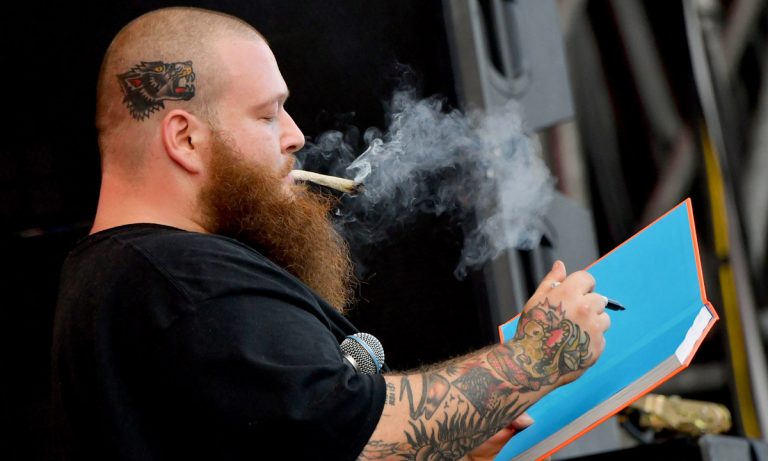
Let’s put this right up front: Action Bronson, TV host, is an inimitable, hyper-captivating character I can’t get enough of. Neither, it seems, can the rest of the world. For the somewhat incipient VICELAND, Bronson hosts three total shows, each of them highly consumable. He is a star and stars usually get away with what they want.

But Spin Magazine reports a friction bubbling from employees of Vice’s editorial operations. Production of The Untitled Action Bronson Show occurs in the same building where many editorial staffers work, and his antics have been labeled disruptive, boorish, and rude.

One of the major sticking points, according to Spin, has been Bronson’s heavy weed usage.

Via Spin:

Another sticking point raised by nearly every source was Bronson’s use of weed in the office. The rapper is an avowed pothead who smokes constantly on camera. This has extended, too, to the Vice office and its main lobby. Vice has a no-drug policy at its office, though as it pertains to Bronson it is not enforced. Bronson is said to leave parts of the office, including large, shared areas, reeking of weed smoke daily—a mild and even comical annoyance, especially at a largely millennial workplace like Vice, but one that staffers believe erodes the professionalism the company should be growing into. These sources also referred to other talent who smoke weed in the office, but said their use is limited to private areas and is respectful of the staff’s working environment.

As one source explains, “He smokes weed all the time, the whole building smells like weed when he’s there.” Another echoes those sentiments, saying, “He smokes pot all day long in the lobby of the fucking office. The whole lobby stinks.”

Of course, constant workplace intrusions and disruptions as described in the article are something nobody should have to deal with. But it’s still weird to hear Vice, of all places, complaining about weed usage in the workplace.

4 Things That Will Keep An Old iPhone Running For As Long As Possible

Old phones are useless and most of the time no one wants them, so they end up haunting the bottom of your drawers for a really long time. If you’re the type of person who gets annoyed when an old device is going to waste, or if you are simply very attached to your phone and don’t want to waste money on an upgrade, there are a few things you can do to keep it functioning as best as possible.

While newer versions of the iPhone will always work better than older ones, being capable of storing and processing much more information, CBS News compiled a few things you can do that’ll help your old iPhone work at its best.

Here 4 of our favorites: 

Don’t Update The OS

https://giphy.com/gifs/fashion-blog-10NVUaFVKzbUpW

Updates in the software enhance your phone’s performance, but if the device is old it takes a toll on the processor and causes it to run slower. If your phone works well, then steer clear of updates.

Get A New Battery

https://giphy.com/gifs/l0HlwWvBodzZVh0m4

Battery packs get damaged over time, so your phone ends up having a much worse battery life than the average iPhone, which is already pretty bad. Apple has been facilitating battery replacements recently, or, if you’re brave enough, you can swap the battery yourself.

Clean Charging Ports

https://giphy.com/gifs/originals-bob-ross-stick-around-xT9IgzUuC5Ss6ZnTEs

Charging ports can get filled with lint and other things, which can make it harder to charge your device. Make sure to clean all ports, and to take good care of your phone.

Free Up Storage

https://giphy.com/gifs/sotu-trump-donald-xUOwG3PDzSrkx5yQY8

By heading over to Settings > General, your iPhone will show you the largest apps it has installed. Get rid of the largest ones you’re not using, and consider storing your phones and videos on the iCloud. Your phone will be much faster in no time.

Seattle Joining San Francisco In Erasing Past Marijuana Convictions

San Francisco made history and national headlines last week when District Attorney George Gascón revealed the city would dismiss and seal past marijuana convictions. Now Seattle’s mayor and city attorney said Thursday they too would provide “restorative justice” to the city.

In a press conference, city attorney Pete Holmes of Seattle will move to dismiss past cannabis possession convictions, which he estimates could affect between 500 to 600 cases. It could be even more.

“I can’t emphasize enough how much a conviction affects a person’s life the moment it happens. Almost every application they fill out will ask, ‘Have you ever been convicted of a crime?’” Mayor Jenny Durkan said at the conference. “While we cannot reverse all the harm that was done, we can give back to those people a record that says they were not convicted.”

Durkan also wrote an op-ed in The Stranger further explaining her decision. Throughout her legal career, she witnessed firsthand the devastating impact the war on drugs had, “especially [for] people of color and their families. People’s lives were ruined for misdemeanor marijuana offenses.”

Though Durkan hopes this necessary first step will inspire other cities and communities, she notes that there is work that remains to be done.

Via The Stranger:

Addressing the wrongs that were caused by the failures of the war on drugs for many years in this country – and particularly the damage wrought on communities of color – won’t happen overnight. We must provide more effective alternatives to prosecution and incarceration through drug and mental health courts, restoring rights and supporting re-entry. Our actions must go far beyond the realm of criminal justice reform; it will require us to make our City more affordable, close the opportunity gap through free community college and technical training, and to continue the hard work of building trust between our community and the Seattle Police Department.

Seattle and San Francisco are cities among the nine states to have legalized recreational marijuana. These “reformative justice” moves could set a precedent moving forward, as more states consider legalization.

While California Struggles With A Lack Of Cannabis, Oregon Has Too Much

Two neighboring West Coast states with legal marijuana laws are struggling with supply and demand. While California, just one month into its legal retail system, is having a difficult time keeping up with demand, Oregon is having the opposite problem: there is too much supply. What’s going on here? And what does it all mean?

Supply-and-demand problems are common in states that have just turned on the “Open For Marijuana Business” sign. New markets need time for the supply chain to develop, and often discover hiccups early in the process. This is what California is going through for the most part. But another factor is that many growers did not register with the state, and are hiding in the shadows of the gray and black markets.

Most experts claim that until California gets a handle on the legal market, the black market will continue to grow. Meanwhile in Oregon, the oversupply is also helping the black market thrive. US Attorney Billy Williams told Newsweek that Oregon’s marijuana industry has a “massive” overproduction problem.

Oregon produces nearly three times more cannabis than can be consumed in the state, former Oregon State University Professor Seth Crawford told the Associated Press. “Make no mistake about it, we are going to do something about it,” Williams warned.

The state’s excess marijuana clearly is not being thrown away—it is going somewhere. Law enforcement officials are concerned that Oregon growers may become illegal exporters to non-legal states, keeping the illicit market alive. Williams said that 16 states have reported cannabis seizures coming from Oregon and that Oregon postal agents had recovered 2,644 pounds of marijuana in outbound parcels during 2017.

“This lucrative supply attracts cartels and other criminal networks into Oregon and in turn brings money laundering, violence, and environmental degradation,” Williams said.

Most cannabis insiders believe that as long as there is a demand in states refusing to adjust prohibition laws, the supply will find its way there. “It is simple economics,” said one Oregon grower who did not wish to be identified. “It’s a simple plant to grow, so there will always be ample supply. Anybody who understands economics will agree that supply will meet demand.”

Another problem, also an economic certainty, is that as legal prices plummet, growers seek to find more profitable revenue streams. If the black market becomes that much more lucrative than the legal market, some growers will follow the money. “Grumblings within the industry suggest this is happening,” reported the Oregon Office of Economic Analysis.

The OOEA report concludes:

Conditions today are great for consumers, but potentially worrisome for some businesses. It will be interesting to watch how the market and industry continues to evolve. Our office’s forecast expects sales to continue to increase due to both new customers as usage increases and social acceptance of marijuana rises over time, and due to black market conversion. It’s the latter that is the most worrisome from a long-run perspective of industry viability. This is why enforcement and compliance are key issues being addressed by policymakers and industry professionals today.

Don't Miss Your Weekly Dose of The Fresh Toast.

Stay informed with exclusive news briefs delivered directly to your inbox every Friday.

We respect your privacy. Unsubscribe anytime.