For years now, multiple studies have suggested that medical marijuana may help wean opioid users off the highly addictive substance. Fresh research from the American Journal of Public Health concludes that “legalization of cannabis in Colorado was associated with short-term reductions in opioid-related deaths.”
“After Colorado’s legalization of recreational cannabis sale and use, opioid-related deaths decreased more than six percent in the following two years,” according to Melvin D. Livingston, Tracey E. Barnett, Chris Delcher and Alexander C. Wagenaar, the co-authors of the research.
The data discovered that the 6.5 percent reduction represented “a reversal of” a 14-year increasing trend in opioid-related deaths in Colorado since 2000. The researchers, however, were quick to point out that the findings were preliminary. “As additional data become available, research should replicate these analyses in other states with legal recreational cannabis,” the report said.
But the news is promising, considering the opioid addiction epidemic spreading across the nation. Health officials report the number of opioid-related deaths quadrupled between 1999 and 2015. The CDC reports 188,000 people have died from opioid overdoses during this time frame.
The research appears to be a complete contradiction of the current administration — most notably Attorney General Jeff Sessions. According to Sessions, the concept that cannabis could be used as a remedy to the opioid epidemic is “stupid” and “hyped.”
“I’ve heard people say we could solve our heroin problem with marijuana. How stupid is that? Give me a break,” Sessions said in a speech in March.
According a story from Washington Post reporter Christopher Ingraham:
While numerous studies have shown an association between medical marijuana legalization and opioid overdose deaths, this report is one of the first to look at the impact of recreational marijuana laws on opioid deaths.
Marijuana is often highly effective at treating the same types of chronic pain that patients are often prescribed opiates for. Given the choice between marijuana and opiates, many patients appear to be opting for the former.
From a public health standpoint, this is a positive development, considering that relative to opiates, marijuana carries essentially zero risk of fatal overdose.
This morning, in conjunction with Tetra Bio-Pharma Inc., Aphria Inc. announced that it will start promoting a co-developed medical cannabis blend product under Health Canada’s Access to Cannabis for Medical Purposes Regulations, a.k.a. ACMPR. Tetra has signed a distribution agreement with Aphria to sell “Rx Princeps”, its unique blend of dried medical cannabis used in its PPP0001 clinical trials. Production of Rx Princeps has been initiated and will be available to patients in the coming weeks.
This morning, Emerald Health Therapeutics Inc. announced that through Emerald Health Botanicals Inc., its wholly owned subsidiary and a Licensed Producer under the ACMPR, has submitted license applications to Health Canada for approval of two new cannabis cultivation sites. Emerald is preparing for the large-scale production of cannabis in anticipation of legalization of the adult-use cannabis market on July 1, 2018.
Today, India Globalization Capital, Inc. announced that the company has identified Germany, Canada and certain licensed medical cannabis states in the U.S. for commercialization of its “IGC-AD1” Alzheimer’s drug. The German market recently opened for imports of cannabis products that can be sold in licensed pharmacies, and the company’s initial research indicates that there are about 7.8 million patients with Alzheimer’s in these combined markets.
This morning, in conjunction with Aphria Inc., Tetra Bio-Pharma Inc. announced that it will start promoting a co-developed medical cannabis blend product under Health Canada’s Access to Cannabis for Medical Purposes Regulations, a.k.a. ACMPR. Tetra has signed a distribution agreement with Aphria to sell “Rx Princeps”, its unique blend of dried medical cannabis used in its PPP0001 clinical trials. Production of Rx Princeps has been initiated and will be available to patients in the coming weeks.
Cannabis is spreading quickly across the US, and as it does, many scientists are also exploring its potential benefits and pitfalls. When it comes to the latter, results are reassuringly sparse, but a new study shows that dopamine production in adolescent mice is affected by the repeated use of THC.
The debates around cannabis can get heated, especially as its medical usages are far more than anecdotally backed. The children are always a factor, though, and parents to police officers to scientists want to know: what does cannabis do to young brains?
Researcher Dr. Jeffrey Edwards from Brigham Young University spoke with Medical News Today about the new findings, published in the Journal of Neuroscience, on dopamine, GABA cells, THC and the developing brain.
Dr. Edwards and other researchers injected juvenile and adolescent mice with THC, marijuana’s superstar cannabinoid, to see how it impacted the ventral tegmental area (VTA) of their brains. The VTA has everything to do with rewards and contains both dopamine and GABA cells, which normally hinder VTA dopamine cells.
“Dopamine cell increased activity is thought to mediate reward,” said Dr. Edwards. “Thus, if these VTA inhibitory cells alter their activity it would alter the activity of the nearby dopamine cells and thus alter reward.
“The interesting part,” he added, “was that the receptor mediating this plasticity was CB1.” CB1 refers to the ‘cannabinoid receptor type 1,’ which becomes activated by plant-derived cannabinoids – like THC from cannabis.
Dr. Edwards also pointed out that it was important to take the ages of the mice into consideration, as, “adolescent humans have worse THC-induced outcomes compared to adults.”
He went on to stipulate that adolescents that use THC may have lower IQs, decreased cognition and a higher chance of addiction as adults.
The next project for Dr. Edwards and team will be to see if THC has the same effects on the VTA of adult brains for comparison. No matter the results, nothing can take away from the massive medical usage of THC and other cannabinoids, even when administered to an adolescent who otherwise experiences multiple seizures or who battles debilitating anxiety.
According to a research report by New Frontier Data, medical marijuana sales are forecast to grow to $5.3 billion in 2017, accounting for 67 percent of total cannabis sales. Medical sales in currently legal states are forecast to grow to $13.2 billion by 2025, at which point medical sales will account for 55 percent of all sales. In comparison, adult-use sales in 2017 are forecast to reach $2.6 billion, rising to $10.9 billion by 2025.
Medical cannabis products are known to be beneficial for such conditions as chronic pain, post-traumatic stress disorder (PTSD), sleep disorders, anxiety, nerve pain and others. “Looking at these numbers, it would appear that medical cannabis would be a drop in the bucket when it comes to impacting the total pharmaceutical industry. However, when you start to break down the numbers by specific sectors of the industry, like chronic pain or symptoms associated with chemotherapy, which are very lucrative markets for pharmaceutical companies, you will certainly see cannabis have a major impact,” said Aguirre De Carcer, CEO of New Frontier Data.
The research points out that the United States constitutes 35 percent of the global pharmaceutical market, the largest market in the world, and a major driver of the US economy, and it is estimated that cannabis and related products can replace $4.4 billion to $4.9 billion per year of current spending on existing treatments.
“Significant changes are already underway in California for medical cannabis and adult use laws, which we see will have major implications for the cannabis industry, including ecommerce and delivery services in the state,” said Giadha Aguirre de Carcer, New Frontier Data CEO. “As the largest state in the country – and the largest potential market for cannabis products – the implications for the growth of the industry because of California’s adult use market cannot be overstated.”
Indeed, the future is bright for medical marijuana in the Golden State. According to a comprehensive data analysis performed by BDS Analytics, California medical marijuana dispensaries sold $894.85 million worth of cannabis products in the second quarter of 2017 alone. That figure is for medical marijuana. For comparison, in the same time period Colorado’s recreational market accounted for $516.39 million. Oregon sold $163.07 million and Washington sold $302.77 million.
In recent years, there has been increasing media attention on drugs known as “K2,” “bath salts,” fentanyl, “molly,” and others. Unfortunately, much of the coverage – even by some of the most well-meaning journalists – contains misinformation and inaccurate or misleading terminology. This all serves to perpetuate unfounded myths and unhelpful hysteria about these substances.
The Drug Policy Alliance has created media tip sheets on synthetic cannabinoids, synthetic opioids, synthetic cathinones, and MDMA to help journalists accurately and constructively cover these frequently misrepresented substances. These tip sheets address some of the biggest mistakes made when reporting on these drugs, including:
Casual Use Of Incorrect Terminology
Media coverage is littered with colloquial and slang terms for drugs. This is seemingly benign, but incorrect terminology spreads confusion among people who use drugs and the public.
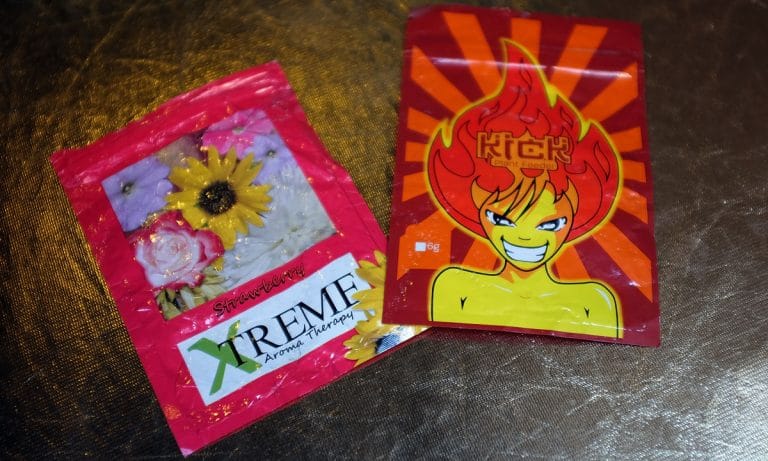
For instance, what is “K2”? Originally, it referred to a specific synthetic cannabinoid product sold legally in bodegas and corner stores across the country. It came in tiny colorful packaging and the brand name was “K2.” Since that particular brand, along with another called “Spice,” became popular, the names stuck, and now they are both used to refer to any synthetic cannabinoid.
“Ecstasy” and “molly” are other examples of this. Both are slang terms for MDMA, but journalists often use them interchangeably. MDMA refers to the actual substance people believe they are taking, while “ecstasy” and “molly” can actually contain any number of different substances due to the lack of legal regulation.
Using these terms sans quotation marks, or any kind of clarification, gives the false impression that “K2,” or “molly” is one specific, consistent substance. In reality, these terms could refer to any number of substances, each with different possible effects – an important fact that is easily obscured.
Oh, and don’t call synthetic cannabinoids “synthetic marijuana” or “fake pot.” Though synthetic cannabinoids often act on many of the same receptors in the brain as THC – the active ingredient in marijuana – the comparison doesn’t stretch much further than that. Calling synthetic cannabinoids “fake pot” perpetuates the harmful myth that these substances are similar.
Jumping To Conclusions
In the rush to get a story out, journalists often report speculation as fact before all the evidence has come to light. This can quickly start an endless cycle of misinformation.
In 2012 an especially horrific story out of Miami made headlines; a man had attacked and chewed at the face of another man. At the time, one police officer had speculated that synthetic cathinones (commonly known as “bath salts”) were involved. Based on this speculation, and despite a lack of evidence, outlets readily reported that “bath salts” had caused this man to turn into a “cannibal” and a “flesh-eating zombie.”
A month later, toxicological tests found no trace of synthetic cathinones in the attacker’s system. By that time, however, the damage was done. There was suddenly a frenzy of media attention on alleged cases of synthetic cathinone use – most with bizarre behavior, and many later proven to be unconnected to synthetic cathinones. Regardless, “bath salts” became synonymous with “cannibalism” and “zombies.”
Relying on outlier cases and speculation of witnesses promotes unhelpful hysteria, erodes public trust in reporting, and adds to the misinformation that surrounds these substances. This can be harmful in the long term, especially when there are real risks.
Calling Humans ‘Zombies,’ And Other Dehumanizing Language
Speaking of zombies…
Often, when a wave of drug use affects an area, or a particularly gruesome drug-related incident occurs, the word “zombie” begins to pop up in the news. In fact, going by headlines, one might think that episodes of drug-induced zombie-like behavior are a somewhat regular occurrence here on earth.
This isn’t a recent phenomenon, nor is it particular to any one drug; it is all part of the age-old pattern where media uses overly sensationalized language when reporting on drugs. While this may make for a vivid story, it takes away from its ability to explore underlying social issues. Moreover, this portrayal of people who use drugs can be dehumanizing, and contributes to the prevailing stigmatized image of people who use drugs, all the while fueling unproductive hysteria.
Just this past year, a spate of synthetic cannabinoid (“K2”) related hospitalizations hit parts of Brooklyn and Harlem. Story after story described the situation as a “zombie apocalypse,” and painted a picture of “hordes” of people overrunning the neighborhood. This sort of exaggerated language obscures the fact that these so-called “zombies” are real human beings. Furthermore, a narrow focus on the cases with the most bizarre behavior, combined with over-the-top imagery, frames the issue in a way that fails to explore larger social issues at play or any possible solutions.
Ignoring the Role Of Prohibition
“New” drugs come with many risks – but the danger these substances pose are due to prohibition. Just because a substance is illegal doesn’t mean the market for it goes away. Chemists can tweak a formula to make a legal substitute for a popular illicit drug, and without any oversight or regulation, the new substances created can be quite dangerous.
Let’s return to “molly” as an example. The drug MDMA is well-researched and is not that harmful if taken with intentional precautions. A copycat substance, mephedrone, became popular, but also caused far more unpleasant experiences and hospital visits. A main reason mephedrone even entered the market was because there was a shortage of MDMA – one example of prohibition driving invention and substitution.
Reporters also err when they don’t point out that many overdoses could be avoided if currently-illegal substances were made legal, and then regulated. The recent rise in deaths from fentanyl-related overdoses is driven by prohibition in two ways. The potent, cheaper-to-produce fentanyl is cut into heroin in the first place to increase profit margins. Then, because people are buying from an unregulated underground market, they have no way to know if their heroin is adulterated.
Prohibition is also behind people choosing to use riskier drugs simply because they are not illegal yet or because they don’t show up on drug tests. The synthetic cannabinoid market meets a demand created by the ongoing prohibition of marijuana. In fact, people would be much less likely to use synthetic cannabinoid products if legally regulated marijuana were accessible to them.
The media plays an essential role in shaping the public’s understanding and perception of drugs. It is well worth the effort to report on these substances accurately and constructively – and hopefully make these four common mistakes a thing of the past.
Stefanie Jones is the Director of Audience Development at the Drug Policy Alliance. Sara Qureshi is a media consultant for the Drug Policy Alliance.
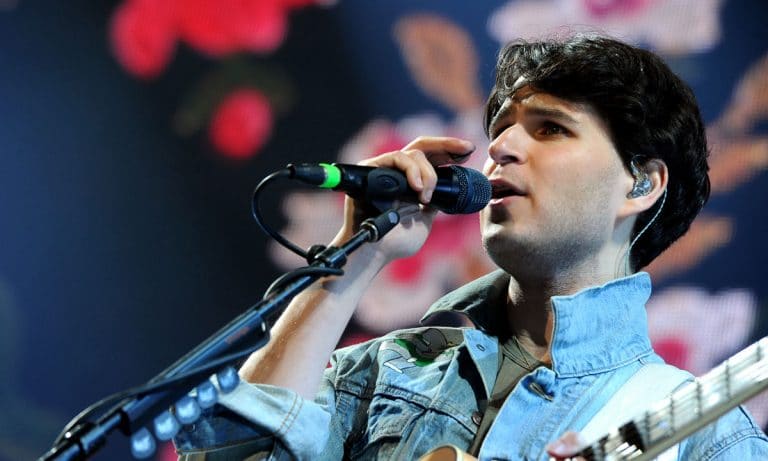
You could say Vampire Weekend has experienced a unique trajectory since the release of their saturated and beloved third LP Modern Vampires of the City. Since that record dropped in 2014, founding band member Rostam Batmanglij departed to focus on other music projects, Vampire Weekend became a campaigning tool for Bernie Sanders’ presidential candidacy, and Ezra Koenig now has his own Beats 1 Radio Show called Time Crisis, which carries all of Koenig’s wry, aggregated personality.
Oh, and Koenig debuted the Netflix anime project Neo Yokio this month. The anime features Jaden Smith as Kaz Kaan, Neo Yokio’s demon-hunting, fashionable bachelor who shares a similar DNA with Hamlet. While working on Neo Yokio Koenig—who strongly calls New York home—lived in Los Angeles, familiarizing himself with the city’s finest edibles.
As he told Rolling Stone in a recent interview, Koenig needed this breather before producing Vampire Weekend’s much-anticipated fourth album, which has the working title of Mitsubishi Macchiato. “[A]fter this period of smoking weed and making cartoons, I came back fresh. Back to chapter four, feeling renewed,” he said.
Expectedly, Koenig was cagey when discussing what the new record will sound like with all the changes within the band, whom apparently have brought guitarist Steve Lacey into the mix. He did explain the marked shift between the new change in approach from Vampire Weekend’s first three albums.
I don’t want to say too much about the sound, but this is the first album I’ll be making in my thirties, and when a band gets to their fourth album, it’s a lot like hitting your thirties and figuring out how to dress: You might love seeing the newest sweatshirt collabs from some brands you like, but at some point you pull it over your head and look in the mirror, like, “Hm. This doesn’t make sense anymore.”
Currently the record is about 80 percent done. While Koenig admitted he does “miss New York, it’s been cool to learn more about L.A. All the varieties of edibles, all sorts of stuff,” he said, with a laugh.
In the midst of back-to-back tragedies that appears to be the world’s new M.O., an NPR employee posted an adorable story about something or someone named Ramona to the company’s social media account. It took seconds for the post to go viral.
The NPR errant Ramona Facebook post is the only good thing in the world right now pic.twitter.com/QchgLVqChO
The post was edited shortly afterwards, apologizing and explaining that the content in it was meant for a private account, but people still hung onto Ramona and decided to rant about it on Facebook and to create a bunch of hashtags that trended all over social media.
Finally, the people were heard and they got what they wanted when NPR gave an update on Ramona and explained that she was, in fact, a baby and not a cat. She does have a cat, which is what the post originally says. Still, hashtags like #ramonaforever and #bringbackramona are still in use and many accounts like the Houston Zoo won’t forget about her, even though her genetic make up is still being debated.
Please, @NPR, please let #Ramona be named after Ramona Quimby. Girl, cat, whatever – strong, independent, just a little mischievous. https://t.co/dLFDmJB9fG
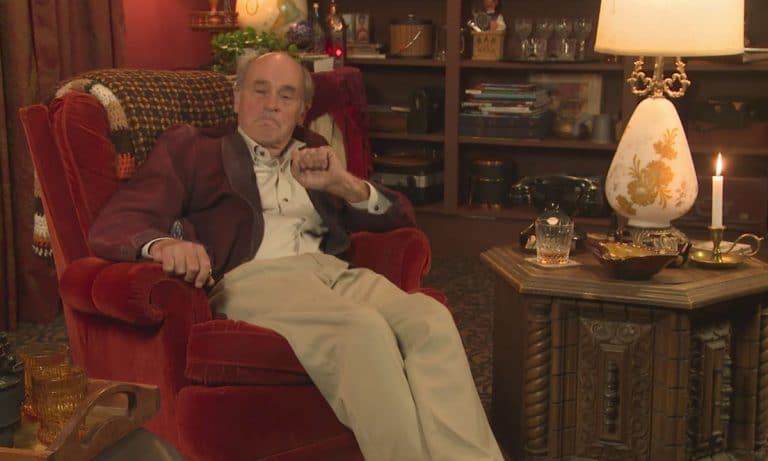
As a character, Jim Lahey was real in the way myths are real. He existed as both fact and fiction. Played by the Canadian actor John Dunsworth who passed away this week at 71, Lahey evolved into a totemic figure, a symbol of being broken and knowing you’ll always be broken like all the things around you, but still trying to fix it anyways. This, we assume, is why he drank.
Few things make us laugh harder than the sight of Jim Lahey, Sunnyvale Trailer Park Supervisor, drinking liquor. We don’t know if he so much consumed liquor or just transformed into it like he was some alcoholic Animorph. He was like Kafka’s vision of Metamorphosis, but drunk.
We're in shock and heartbroken by the sudden loss of our dear friend John Dunsworth. We respect the family's wishes for privacy at this time
But like the German writer, Lahey was a poet. We swear the things that somehow came out of the man’s mouth shouldn’t be said by any other man. If isolated, we’re not sure if Lahey’s quotes were all that funny. But Dunsworth was so damn committed to his character—you might be shocked to learn Dunsworth was an avid figure in the Nova Scotia theater community—that he so very often had you rolling on the floor pissing your pants.
So to commemorate Dunsworth’s passing, I wanted to remember him in that way. Though he was so very different from his most famous character, Jim Lahey will continue live on in so many of our minds, especially when we’re having a drink. I’ll get out of the way and let Jim Lahey—and the liquor—do the talking.
The 17 best Jim Lahey quotes
1. “I am the liquor.”
2. “After you have one sippy-poo, you gotta have two sippy-poos.”
3. “Nice disguise, Bubs. You might be able to fool the FBI, but you can’t fool the FB-Me.”
4. “I’m mowing the air Rand, I’m mowing the air!”
5. “I’m sober enough to know what I’m doing, and drunk enough to really enjoy it.”
6. “Tick-tock, tick tock. The shit clock’s ticking, Rick.”
7. “You don’t cross my shit line, I don’t cross your shit line. When he told everyone I was drinking again, he crossed the g****** shit line.”
8. “We’re sailing into a shit typhoon Randy. We’d better haul in the jib before it gets covered in shit.”
9. “You know what a shit barometer is, Bubs? It measures the shit pressure in the air. You can feel it. Listen, Bubs. Hear that? Sounds of the whispering winds of shit.”
10. Basically every phrase that included the word “shit,” like shit hawks, shit moths, and shit blizzards.
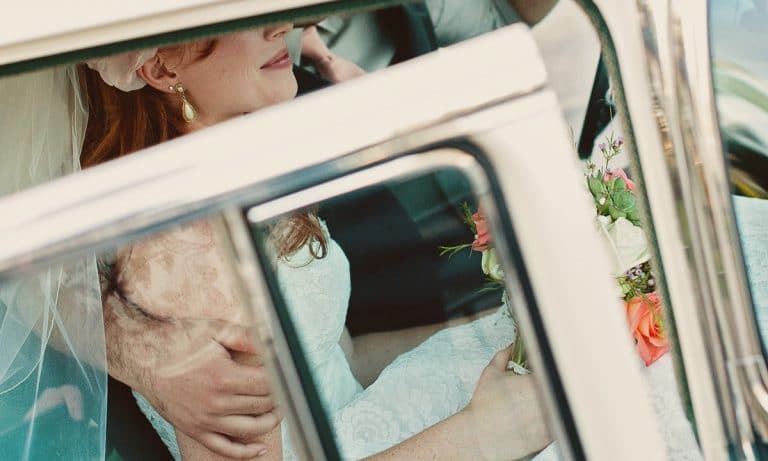
If you’re planning a May wedding, you’re probably knee deep in planning: Venue? Check. Florist? Check. Officiant? Check. Caterer? Check. Wedding Gown? Check. Marijuana? Ch… Wait. What?
Yes, now that the adult recreational use of cannabis is legal in eight states, more and more bride and grooms have begun incorporating marijuana into their wedding day. You could say that weed and weddings are a perfect marriage.
The Wedding Report, a publication that tracks nuptial costs, estimate that weddings are a $60-billion-per-year industry. The average American wedding will run $27,000. And the marijuana is a $6.9 billion industry, according to Arcview, a cannabis market research firm. How many couples are saying “I Do” with doobies? It’s hard to estimate, but the business is blooming.
According to the expo organizers. the events are designed to be “a fun and educational opportunity for couples and canna-businesses to come together and learn about how to safely and intelligently bring cannabis into their special day in classy and sophisticated ways.”
Last year, CNBC featured a Denver-based florist specializing in weed weddings. “The motto is ‘Straight from your bouquet to your bowl.You can literally take it out and smoke it,” said Bec Koop, owner of Buds & Blossoms.
Koop told CNBC her favorite anecdote from a wedding:
“Best story ever was a grandma came up [at a reception], and she wanted to try some cannabis soda. She took a little sip, and she was like, ‘My grandson tells me I’m going to feel great!’ “
Koop said she made sure the first-timer had a small dose. “Within about an hour, she was out dancing harder than I’ve ever seen a grandma dance,” she laughed. “She totally had a blast and came up to us afterward and asked where she could get some more.”
There is also a websites such as CannaBride and LoveandMarij.com that focus exclusively on weddings and cannabis.
Let’s be clear: Weed at weddings is nothing new. Sneaking away from the boozy reception for a toke has been a coping mechanism for guests and members of the wedding party for a long time.
But today, with cannabis out of the closet, many couples have decided to keep it classy and incorporate the herb with the celebration. After all, it’s a private party and it’s legal.
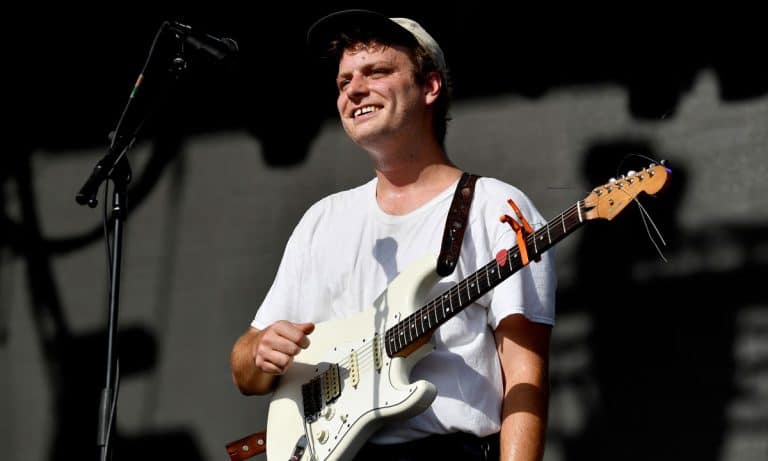
With a head of floppy hair underneath a forwards-facing baseball hat, singer-songwriter, Mac DeMarco, grins his signature gap tooth smile. To many, he’s an unlikely hero of music. To others, his talent and skill are obvious. The psychedelic-voiced minstrel of contemporary mellow rock music croons, singing his songs about lost youth and the dire creep of time. And on his latest record released in May, This Old Dog, the Canadian-born DeMarco laments the loss of his father, spiritually and, likely, physically. We had a chance to talk with DeMarco before he embarked on yet another series of national gigs to ask him about the new record, his smoking habits on stage, his relationship to death and much more.
Let’s start with a hard-hitting question – have you ever gotten in trouble smoking a cigarette on stage?
It happened last week actually. The UK is very particular about smoking in the venues. I was crowd surfing and somebody put it in my mouth. They were like, ‘That’s enough!’ and they told me to put it out, which was fine. But sometimes it can be a long time for me, like an hour and a half show, sometimes the cravings get the best of me – though I’m not trying to tell anybody else they should smoke.
How important is it for you to maintain a sense of humor with your music?
It happens inherently, I think. I tour with a lot of really old friends and I meet a lot of new friends on the road. I don’t know if I’m a funny guy, but I enjoy laughing. I can be serious but I can also be funny. People tend to latch onto the funny part a little bit more, which is totally fine. More importantly, though, I take what I do seriously to an extent, I think. But at the same time, if somebody wants to rib me, I can laugh as well. It’s all entertainment, that’s the root of it.
A lot has been written about your image, but do you think about it very much?
I tend not to think about it much. I don’t like to read articles about myself, or read reviews. I like Instagram, that’s the only social media I use. I think it’s pretty funny sometimes. I’ll check it out. Other people can say what they want to say and I’ll keep doing what I want to do. I think it’s nearly impossible to really control, especially in today’s technological age. The amount of ridiculous shit that shows up on the internet is crazy. I just tend to let the wind blow me where it blows me.
How much has changed in your life since Salad Days came out – did I read you just bought a house?
Yeah I did. It’s crazy. I think even before Salad Days, with “Rock and Roll Night Club,” the first album I did with my record label, it didn’t like explode, but I met a lot of people through that. That’s what got me signed to a label in the first place. When 2 came out, the shows started getting bigger. That was the turning point for me; we were playing to nobody before that point. Then, all of a sudden, like what the hell, people wanted to see us play so we started touring. I wrote Salad Days between tours. I don’t think it was a big HERE IT IS, though it kind of feels like that now. It was just a slow and steady incline. Even today, it didn’t feel like it jumped again, just kind of kept going. The shows – that’s pretty much how I gauge anything. Some shows it’s like, “Holy shit, there are a lot of people here.” It just seems to keep going.
Do you work with any grand plan in mind or is it more moment to moment?
Things change here and there, but for the most part, even before I started doing it under my own name, I was thinking, “Going on tour would be cool” and now we’re on tour. I do the things that are immediately interesting to me. I think that was the funny thing with this album, people who worked with me, people who anticipated it, they were expecting the next step after Salad Days. But I don’t really see it that way, I don’t really care, I’m going to do what I want to do.
But some things are important to me. Like having the freedom to do what I want to do. And to do it comfortably at this point, especially since we’ve been doing it now for a long time. I’m still enjoying myself. Just doing it as real as we can while having a good time. It’s hard to say, I’m trying to think of some new goal, like, “The next album, I want to win a Grammy or play stadiums!’ What the fuck? Hopefully, we can just keep touring. I’m addicted to the excitement of creation. When you make a song you like, it’s like, “Oh, wow, this feels great.” Hopefully I can keep getting high off that and I don’t have to withdrawal.
“This Old Dog” is a bit more rigid rhythmically – mostly because of the acoustic guitar you use prominently on the album. Did you approach writing it differently?
A little bit. It would have been fairly simple if I just made Salad Days again – the same guitar songs, same drum sounds. But I bought a lot more musical gear and I learned a lot about recording. To be completely honest, I don’t really listen to the same kind of music that I listened to back in the day when I was making my old records. It’s also hard to say, it’s sort of weird when you’re in so close to something as much as you are when making a recording. I don’t think, “I have to make a song like the last one.” Well, sometimes I do, but that’s when it’s like, “No, no, no, no!” But this new record kind of fits into the final piece of the triangle – first, 2, then, Salad Days, now it’s finis. Maybe I’ll do something totally wacky next time.
Your last two records often touch on the idea of time passing, losing youth and losing vibrancy. Do you think about loss and death often?
I think Salad Days is more, “Okay, I’m growing up now. Here we go. Responsibility. Get your head on your shoulders.” And on This Old Dog it was about my dad passing away. He hasn’t yet, which is completely insane. When we were face-to-face I thought he was going to be out in a couple weeks. I have a strange relationship with the guy – and I’m trying to rationalize that and understand that. So, yeah, they’re loss in two different ways. I also like to infuse the mentality of “Keep your chin up” into everything I do. It’s crazy, being alive is crazy, we all know this, yet here we go! There’s a pinch of that and a pinch of other stuff. But I’m not trying to crucify anybody.
You also have this very compassionate side in your work. Do you feel empathy is particularly important?
It does come up a lot. Things that torment me or that I struggle with, often I’m looking for the brighter side – or not the brighter side, but a release or something. It depends on whom I’m singing to, a lot of times I’m singing to myself or singing to my girlfriend. Like, “Here, let’s figure it out.” I care about people and I remember my experiences, so yeah, that’s my way of being like, “Hey, it’s okay.” It’s therapeutic for me.
Is there something you discovered about yourself while making This Old Dog?
I had a bunch of songs I’d written. Mostly acoustic stuff, like just recording into a mic, no instrumentation beside guitar and voice, and I just put them away at some point. I did a lot of those recordings in New York [before moving to Los Angeles] and I didn’t think I’d show anybody. But I wasn’t on tour and it was like, “Well, we already ate dinner, now what are we going to do?” I didn’t think they’d see the light of day. But later I was like, “I kind of like this, some of these might be fun to play for people. It might make me feel a little uncomfortable but for the most part, let’s rock and roll!”
Speaking of rock and roll, you tour all the time, how do you maintain your sanity on the road?
It’s difficult I’m struggling with that right now. I don’t know. We have a really crazy schedule until about Christmas time this year. I’m not as good at it as I used to be. There are some things that are easier, certain luxuries. Certain people are excited to see us and they treat us a little better now that they know us. But I’m going to figure something out. I’ve been drinking a whole bottle of Jameson on stage every night lately. And that’s now a way anybody should live life. I’m going to figure it out, hopefully.