A leisurely swim in Washington state’s Cliff Lake turned into something from a B-movie horror plot, when a swimmer was attacked by a pair of otters.
On his way out for a training swim while on vacation, triathlete Stew Larsen said he swam past what he thought was a curious river otter. A little splashing sent the critter scurrying into the brush.
But on his way home, Larsen said the otter came back with a buddy: Two of them were now watching him swim past. The splashing didn’t help this time, and the emboldened otters advanced on the swimmer.
In the resulting waterborne scuffle, Larsen said he “connected with one of them” and ended up bitten on his right thigh, where an otter’s fangs cut through his wetsuit to draw a bit of blood. “I had been thinking that if they’re protecting a den, I’d be better off in the middle of the water and away from the shore,” he said, “but I finally figured that if I’m going to be bitten, I need to be on land and I swam with everything that I had left.” Eventually, he said, he was able to make it to some rocks, where the otters backed off and a relative in a boat was able to make a rescue.
Otter attacks are rare in southwest Montana, and otters aren’t hungry for human flesh. But they can be territorial, and are apex predators capable of taking on crocodiles. They’re cute from afar, but don’t piss them off on their own turf.
While you might think of Spam as a basic canned meat, it’s actually one of the greatest business success stories of all time: Since Hormel Foods Corporation launched the affordable, canned pork product in 1937, it’s sold over eight billion cans in 44 countries around the world.
On July 5, Spam celebrated its 80th anniversary. It’s fitting that this comes only a day after the birthday of the United States. The product is up there with Coca-Cola, McDonald’s and Pizza Hut as one of the most distinctive American brands of all time.
As a consumer behavior researcher, I believe Spam’s widespread success can be attributed to two factors: it addressed a real need, and also formed an emotional connection with its consumers, by tapping into American ideals like ingenuity and resourcefulness.
Spam ‘Hits The Spot’
Spam isn’t exactly the most exciting product.
The original recipe included chopped pork shoulder meat with ham, salt, water, sugar and sodium nitrite. (This remained unchanged until 2009, when Hormel added potato starch in an effort to eliminate one of the product’s less attractive features: the gelatin layer created by the cooking process.) At the time it was introduced, it was the only canned meat product on the market that needed no refrigeration. This feature gave Spam a significant competitive advantage.
Hormel also created buzz around its new product by sponsoring a name contest to promote it.
The winner was an actor named Kenneth Daigneau, who was awarded US$100 for coming up with the name “Spam.” (He was also the brother of Hormel’s vice president, so there may have been a bit of nepotism involved.)
Anointed with its new name, the product was buoyed by a heavy advertising effort that emphasized its versatility. For example, in 1940, Hornel fielded submissions from Spam fans to create a 20-page recipe book featuring 50 ways of incorporating the canned meat into meals.
Homemakers readily embraced Spam, and it became a popular lunch and breakfast meat. But sales really took off during World War II. Over 150 million pounds were used in the war effort, making Spam a cornerstone of troops’ diets. (Soldiers also used Spam’s grease to lubricate their guns and waterproof their boots.) In each country where they were stationed, American soldiers introduced it to the locals, giving foreigners their first taste of Spam.
Since then, Spam has become a sought-after product in many countries around the world, especially those that have faced economic hardship. Because it’s cheap, filling and has a long shelf life, it addresses a real need.
As American As Apple Pie?
But how did it become such a cultural icon?
In a 2012 paper, marketing researchers Rajeev Batra, Aaron Ahuvia and Richard P. Bagozzi developed a model of “brand love.” Based on studies on consumers’ brand attachment, they showed that in order to form meaningful attachment with brands, consumers need to experience them in ways beyond simply buying and using the product.
Hormel seemed to intuitively understand these ideas. Simply selling a cheap, useful product wouldn’t be enough. In creative and humorous ways that went beyond traditional advertising, they appealed to consumers by positioning the brand as a patriotic food that reflected American ingenuity – with a streak of eccentricity.
In the years after the war, the Hormel Girls – a musical troupe of female World War II veterans – traveled the country performing songs and promoting the product. The group even starred in a top-rated radio show on three national networks.
Since then, the Spamarama cooking festival (1976-2007), a Spam museum (1991), a Spam recipe contest (1991), a Spam-sponsored NASCAR race car (1995) and even a 2005 Broadway musical – “Spamalot” – all enhanced what’s called the brand experience, the way consumers interact and connect with a product.
These marketing ventures were accompanied by the introduction of new products and flavors. The Spamburger (1992), Spam Lite with 50 percent less fat (1995), Spam Hot and Spicy (2000), Spam with Bacon (2004), Spam Teriyaki and Spam Jalapeño (2012) reflected consumers’ evolving tastes and preferences. Spam Spread was even introduced just in case you’re “a spreader, not a slicer.”
An ad for the ‘Spam Burger.’
Refashioning Spam In The 21st century
In other cultures around the world, Spam is viewed as a distinctly American product, though it’s been incorporated into local cuisine in creative ways. In Hawaii – where seven million cans are sold each year – McDonald’s franchises will offer Spam-based products, like Spam, eggs and rice. The Spam Musubi – Spam on rice wrapped in seaweed – is also a popular snack and lunch food.
In South Korea, Spam is considered a popular holiday gift, while in the U.K., the Spam fritter is served with chips and mushy peas in burger bars. In the Philippines, Spamsilog is a common breakfast meal of Spam, fried rice and sunny-side up egg.
Back in the United States, restaurateurs have seized upon Spam’s place in the cultural imagination to (somewhat ironically) incorporate the product in refined dishes. At San Francisco’s Liholiho Yacht Club, you can get Spam fried rice with uni and mushrooms. Animal in Los Angeles offers foie gras and Spam, while New York City’s Noreetuh serves Spam agnolotti with burgundy truffles. It was even featured in a culinary challenge on Season 11 of Top Chef.
When Spam was first introduced, Hormel was eager to promote the product’s versatility with taglines like “Cold or hot…Spam hits the spot.”
But with the canned meat moving from the front lines of World War II to $40 entrees at high-end restaurants, its various incarnations have likely surpassed its inventors’ wildest visions.
The Parliament of Catalonia just approved by a 118 to 9 vote a new law that (Ley de asociaciones de consumidoras de cannabis) establishes legal standards for cannabis clubs. Up until now, cannabis clubs in Catalonia, Spain were protected solely by municipal regulations and they have to a large extent been operating in legal limbo. This new law gives greater legal certainty to Catalonian cannabis clubs.
The law could still face legal challenges by Spain’s central government in Madrid or in front of Spain’s Constitutional Court, but for now it is the law of the land for Catalonia (which consists of four provinces: Barcelona, Girona, Lleida, and Tarragona. The law is intended to regulate recreational and therapeutic uses of cannabis as a way to improve public health standards, while also curtailing the illegal market and cannabis tourism.
Here are some of the new laws key points:
The law will regulate the consumption, cultivation, and transportation of cannabis.
The cannabis clubs must be self-sustaining non-profit associations.
The law will impose requirements on how, who, and by what means cannabis can be delivered to a cannabis association.
To combat “cannabis tourism,” members of cannabis clubs must wait 15 days after joining an association to obtain cannabis.
The law will establish limits on advertising.
Cannabis clubs may not sell alcohol, cannabis-infused food, or any other drug.
Catalonia’s new cannabis law also imposes the following limits, but not for those utilizing cannabis for therapeutic purposes:
You must be 18 years or older to join a cannabis club.
Cannabis club members between the ages of 18 to 20 years old will be limited to obtaining 20 grams of cannabis per month.
Cannabis club members 21 years old and above are limited to 60 grams of marijuana per month.
The quantities of cannabis dispensed to club members must be accurately logged in a ledger.
Each cannabis non-profit association can produce no more than 150 kilograms of cannabis per year.
Nadja Vietzis an attorney at Harris Bricken, a law firm with lawyers in Seattle, Portland, Los Angeles, San Francisco, Barcelona, and Beijing. This story was originally published on the Canna Law Blog.
In a joint statement, the United Nations (UN) and World Health Organization (WHO) expressed their support for countries in the review and repeal of laws that criminalize drug use and possession of drugs for personal use. This joint statement, which addresses discrimination in health care settings, comes in light of the Sustainable Development Goals (SDGs) which aim to “ensure that no one is left behind”.
The WHO has previously called for drug decriminalization as a necessary measure for public health but this joint statement with the UN represents another significant step in the global movement for drug decriminalization.
There is growing support for drug decriminalization – the elimination of criminal penalties for drug use and possession – in the U.S. and around the world. Leading medical, public health and human rights groups have endorsed drug decriminalization, including the International Red Cross, the American Public Health Association, American Civil Liberties Union, the NAACP and Latino Justice.
Public opinion on decriminalization has also been steadily increasing as the harms of criminalizing drugs become more apparent. Polls of presidential primary voters in Maine, New Hampshire and even South Carolina found that substantial majorities in each state support ending arrests for drug use and possession. In 2016, the first state-level decriminalization bill was introduced in Maryland and a similar version was reintroduced in 2017.
Internationally, several countries already have some form of drug decriminalization. Portugal, most notably, decriminalized drugs back in 2001 as a response to the country’s HIV crisis and has demonstrated the vast benefits of decriminalization – substantial reductions in overdose, HIV/AIDS and addiction, all without any increase in drug use or crime.
Not only does drug decriminalization drastically reduce the number of people mired in the quicksand of the criminal justice system – it also, as the UN/WHO statement highlights, vastly improve public health. It decreases the stigma against people who use drugs and addresses the discrimination they historically face.
The harms of discrimination are only exacerbated in health settings, where it is literally a matter of life and death. Decriminalization can be the difference between a loved one getting the health services they need and a loved one being stigmatized, denied treatment and in danger of losing their life.
Drug decriminalization is a rational and fiscally sound policy rooted in health and human rights. Governments throughout the U.S. and around the world have an indisputable moral and scientific imperative to pursue it.
Who hasn’t felt like pushing someone and stealing their fish from time to time? Timmy, the naughty penguin in this tale of two penguins, was accused of stealing fish and shoving other penguins. Betty, the conventionally good penguin, earned the title by being good at swimming and waiting patiently for fish.
The National Aquarium of New Zealand posts their “Naughty” and “Good” Penguins of the Month, praising one and ridiculing the other for their behavior. Someone spotted this tradition and posted it to Facebook, where it went viral.
The image made its way to Reddit, and then to Twitter, where people are divided on whether Timmy is in fact Naughty or just thinking outside the enclosure. Is he “bad” because he knows what he wants and goes after it?
What is more American than a county fair in the middle of summer? It’s the place to go for gut-busting fried food, stomach-churning carnival rides … and next year in California, cannabis.
That’s right. The Golden State, which legalized recreational marijuana last year, will allow cannabis on fair property. According to a report this week in the Sacramento Bee:
Gov. Jerry Brown last week signed a bill that details how to carry out the November 2016 ballot measure that legalizes recreational marijuana as of January 2018. Tucked deep in the text is an option for county fairs to allow sampling and sales for people 21 and older in designated spots.
The Stanislaus County Fair has had “minor discussions” among the board and Chief Executive Officer Matt Cranford about the issue, spokeswoman Adrenna Alkhas said by email.
“We must always look at our demographics and keep in mind that this is a family-friendly fair,” she said. “Once this takes effect next year, we will give it thorough thought and see how supportive the public would be.”
California is not the only state to consider the cannabis question. Last summer, the Oregon State Fair added a new agricultural prize for best marijuana plants. There were nine cannabis entrants last year, displayed in a greenhouse with its own entrance and exit. Only people 21 and older were allowed to see the exhibit.
“This is really a reflection of where Oregon is now as a state,” said Oregon State Fair spokesman Dan Cox.
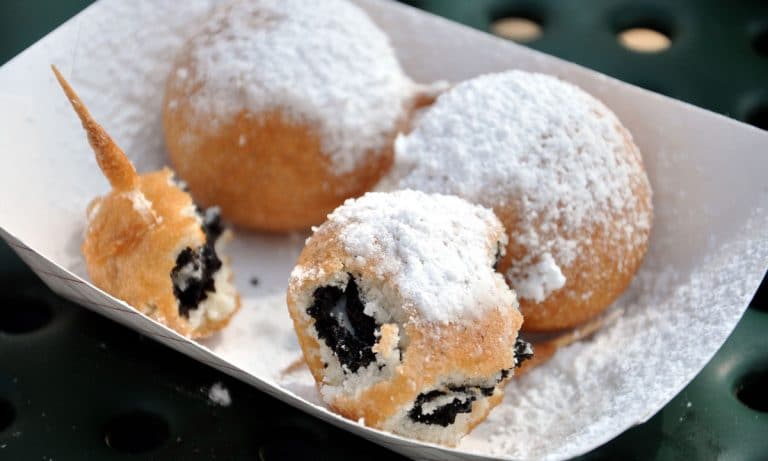
Since retail sales of cannabis will not begin in California until next year, this summer’s fairs will not offer cannabis. You’ll have to wait for next year to enjoy a little marijuana before eating a deep-fried Oreo or the elephant ears or the corn dog.
They don’t get you high quite like smoking a joint, and the certainly don’t taste like weed, but for people who want to get buzzed without eating their edibles, drinking a soda is the next best thing. Plus, today’s cannabis sodas look just like the real thing, so they’re easy to sneak into public places, not that we’re suggesting that. Here are 7 spiked carbonated drinks that will get you high without all the added sugar. (It’s easy to overdose on this stuff, so make sure you watch your dosing).
A THC-infused soda reminiscent of Fresca. Each Sprig is infused with 45 mg of THC oil, which is blended with natural citrus flavors and a small amount of pure cane sugar (half the amount of regular soda).
The Natural Cola fizz is a nod to Americana. It’s made by infusing CO2 cannabis oil in sparkling water along with sugar cane, fresh-pressed lime juice, vanilla, kola nut and cinnamon (and 10 other plant compounds).
Olala sodas feature 10, 50 or 100 mgs of THC per 9 oz bottle and come in a variety of flavors: Orange Cream, Ginseng Cola, and Lemon Lime Citrus. All are made with pure CO2-extracted cannabis, pure cane sugar, and natural flavors.
Five flavors made with local ingredients from Washington State, like fresh cherries and fresh lemon and ginger juices. All are made with local cannabis extract and come in sativa, indica, THC + CBD, and Hybrid. (The coffee mocha goes down easy).
The drinks are made with natural fruit flavors (black cherry, strawberry lemonade, tangerine, tropical punch) and high grade, pure cannabis oil to create a line of potent drinks that range from 30 mg to 240 mg.
The “Sparkling” line of beverages are for those looking for a soda alternative. The lemon and blood orange flavors have zero calorie and zero sugar and contain 10 mg of THC.
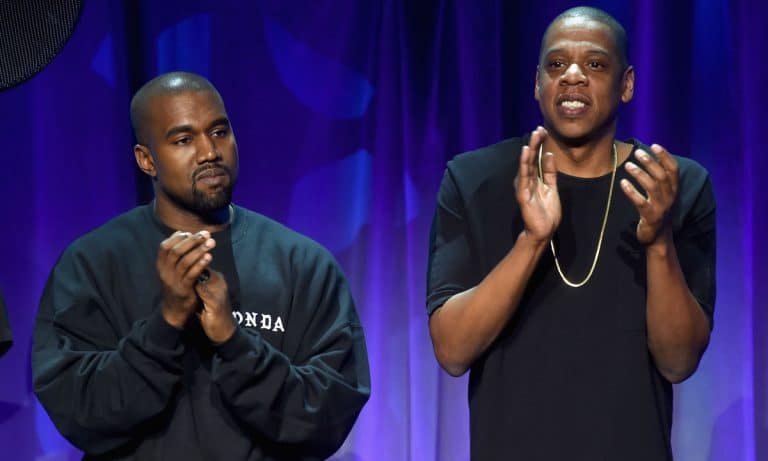
Jay-Z is still so steamed over his falling out with Kanye West that he addressed it on his new album 4:44 — nearly nine months after West ranted about Jay-Z and wife Beyoncé onstage. Now a source tells Page Six why Jay-Z can’t let go of the bad blood. In the opening track of the album, which was released Friday, Jay-Z raps, apparently about West, “This ‘f - - k everybody’ attitude ain’t natural” and “You ain’t the same.”
We’re told it was his response to West slamming the couple at his concerts last year. At one concert in Inglewood, Calif., before West’s alleged nervous breakdown, West said, “Beyoncé, I was hurt. I went down seven years on behalf of your fake s - - t” and “Jay-Z. Call me bro, you still ain’t call me . . . I know you got killers, please don’t send them at my head.”
We’re told the feud stems from West “forcing [his wife] Kim Kardashian” on the Carters.
“[Kanye’s] rant was really about Kim and Beyoncé not being BFFs. Kanye is frustrated that his wife does not have a better relationship with Beyoncé. He wanted to put that pressure on Jay. It’s like, ‘We’re cool and we do business together, and now our wives should be friends?’ ”
But the source said, “It’s not organic. It’s not real. Beyoncé is a Southern, God-fearing woman, despite what you may see when she’s entertaining. She may not have much in common with Kim,” a source told us. Added the source, “It’s like, Jay believed in you and now you’ve alienated him to where he’s like f - - k you.” One source doubts their friendship will survive, but another said, “Their relationship is familial . . . I’d be very surprised if they didn’t work together or have some kind of relationship in the future.”
A source tells us that the two are still very much “in the early stages” of their relationship and recently met up while he was in London for work. We’re told that the duo caught a showing of Sam Mendes’ play Ferryman last week during their trip abroad.
“It’s more than a summer fling,” the insider shared. “They are having fun and care for each other. It’s early and they are taking it slow.”
And while the new couple has done their best to keep things under wraps in the beginning stages of their romance, the two stepped out on the town in Los Angeles Thursday night for a quick date night.
We saw plenty of fireworks fails over the past year, but as 2017 continues to out-do itself, it’s only right that the biggest fireworks fuck-up would emerge on the birth of our nation this year.
A man in Michigan wins the Stupid Fireworks award because he decided it was the best way to solve his bee problem—a nest was growing in his garage. Of course, he burned his own garage down instead.
MLive reports crews responding to the home in Grand Blanc Township on Monday saw fireworks shooting into the sky from the burning garage. No one was injured. Grand Blanc Fire Chief Bob Burdette says the homeowner was trying to use a smoke bomb to get a bees’ nest out of the garage. Homeowner Mike Tingley says that while he’s sad about his garage, he’s happy the incident wasn’t worse. Tingley says “everyone is safe and that’s the main thing.”
That’s a pretty calm and reasonable reaction from someone who just tried to blast bees out of his home using explosives. Or, it’s the reaction of a man who knows he’s fucked up big time and doesn’t want to admit that this was massively dumb.
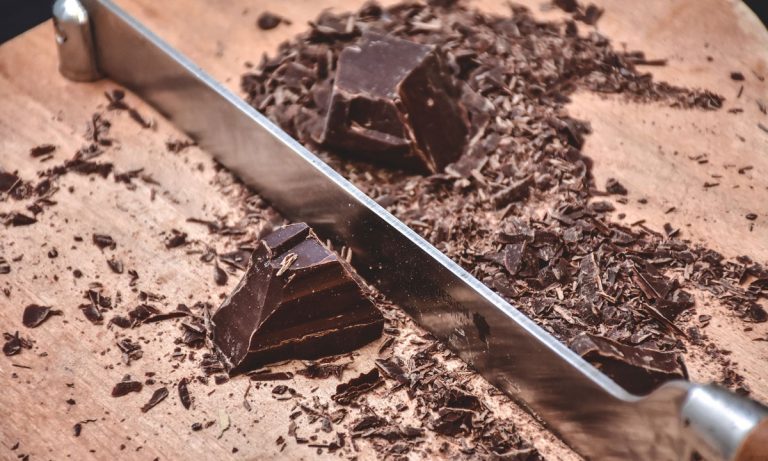
Named Coco Loko, the substance is made of cacao powder along with energy-drink ingredients like gingko biloba, taurine, and guarana. Nick Anderson, the 29-year old who created the product is the owner of Legal Lean, which is responsible for another drug-free consumable that takes advantage of pop culture stereotypes: a drug-free cough syrup that mimics the popular combo (see Purple Drank). Because as everyone knows, cold suppressants are popular for their flavor.
https://www.instagram.com/p/BV5yephAB26
Anderson tells The Washington Post that the effects of Coco Loko can last as long as an hour and describes the high as being “almost like an energy-drink feeling, like you’re euphoric but also motivated to get things done.”
Coco Loko, which sounds a lot like Four Loko, that cheap malt beverage underage kids love, hasn’t been approved by the FDA.
Doctor Andrew Lane from the Johns Hopkins Sinus Center tells The Post that he has a few obvious concerns, mainly that it’s not clear how much of each ingredient in the Coco Loko would be absorbed into the nasal mucus membranes and that “putting solid material into your nose — you could imagine it getting stuck in there, or the chocolate mixing with your mucus to create a paste that could block your sinuses.”
An Atlanta-based company that distributes the product to smoke shops and liquor stores says it’s not flying off the shelves, but “people are definitely curious.”
Starting July 10, Coco Loko will be available on Amazon for about $25. That’s 10 servings. Or, like, 50 candy bars.


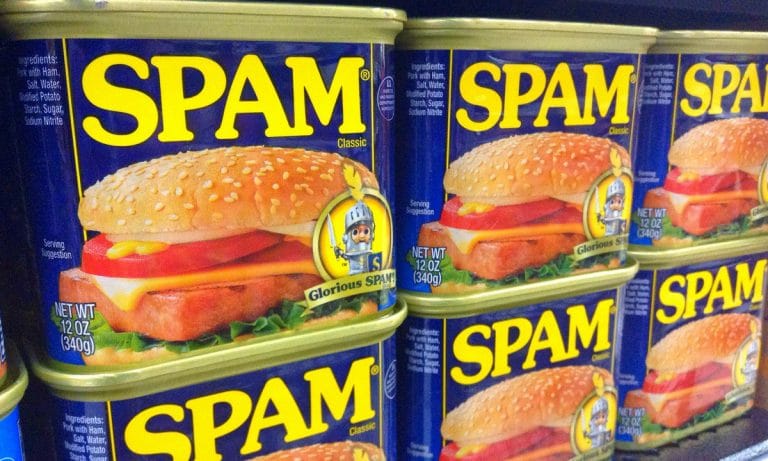
 But with the canned meat moving from the front lines of World War II to $40 entrees at high-end restaurants, its various incarnations have likely surpassed its inventors’ wildest visions.