Matt Gaetz, who voted yes on the MORE Act, still hopes to influence the President on marijuana legalization.
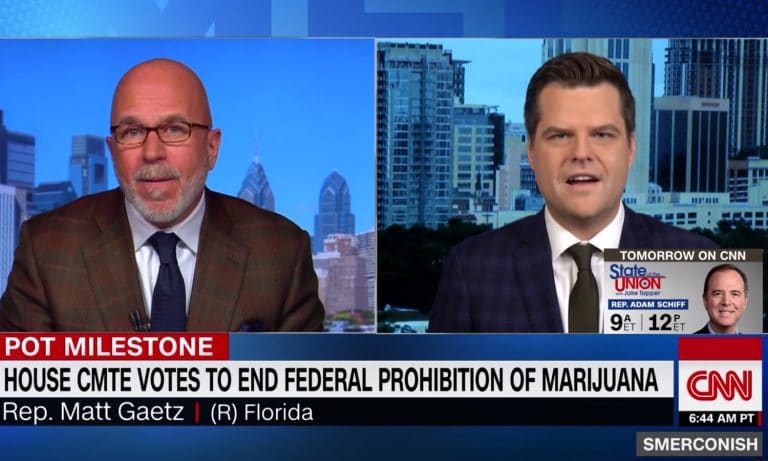
Rep. Matthew Gaetz didn’t hold back against Kellyanne Conway, criticizing the White House counselor’s previous statements against marijuana legalization. Gaetz responded to Conway’s comments, which represented a pro-prohibition attitude, with a meme currently on popular—“OK, boomer.”
“For all the folks that talk about the benefits and legalities of marijuana, there are many health professionals and employers increasingly concerned that this is not your grandfather’s or your father’s marijuana,” Conway previously said on CNN in April. “The TCH components are much stronger.”
Gaetz, while an avid supporter of President Donald Trump, voted his approval of the Marijuana Opportunity Reinvestment and Expungement (MORE) Act last week, which passed in the House Judiciary Committee. When asked about Conway’s views on legal marijuana, Gaetz labeled them as reminiscent of outdated thinking from the baby boomer generation.
Said Gaetz:
To my friend Kellyanne Conway, I would say, ‘OK, boomer’. That’s a very boomer approach to marijuana, for no other reason than it’s THC, not TCH, and I think her reflection shows a real ignorance to the science.
Under the MORE Act, marijuana would be removed from the Controlled Substances Act, effectively legalizing marijuana at the federal level. It will also place a 5% sales tax on all marijuana products, which will fund grants and programs to support those communities affected by the war on drugs. In addition, the bill would allow VA physicians to recommend marijuana to veterans.
Though CNN host Michael Smerconish labeled Gaetz a “Trump whisperer,” the congressman didn’t indicate that Trump was backing the MORE Act.
“President Trump is no fan of marijuana,” said Gaetz. “But I think he made commitments about medical marijuana in his 2016 campaign that we still need to fulfill. Fortunately, Attorney General [William] Barr is in the rule making process now so we can accelerate the approvals of research…which will accelerate the pressure on Congress.”
Before you make any rash decisions, think about the people in the room. How are your parents attitudes regarding marijuana? Your siblings? Your aunts and uncles?
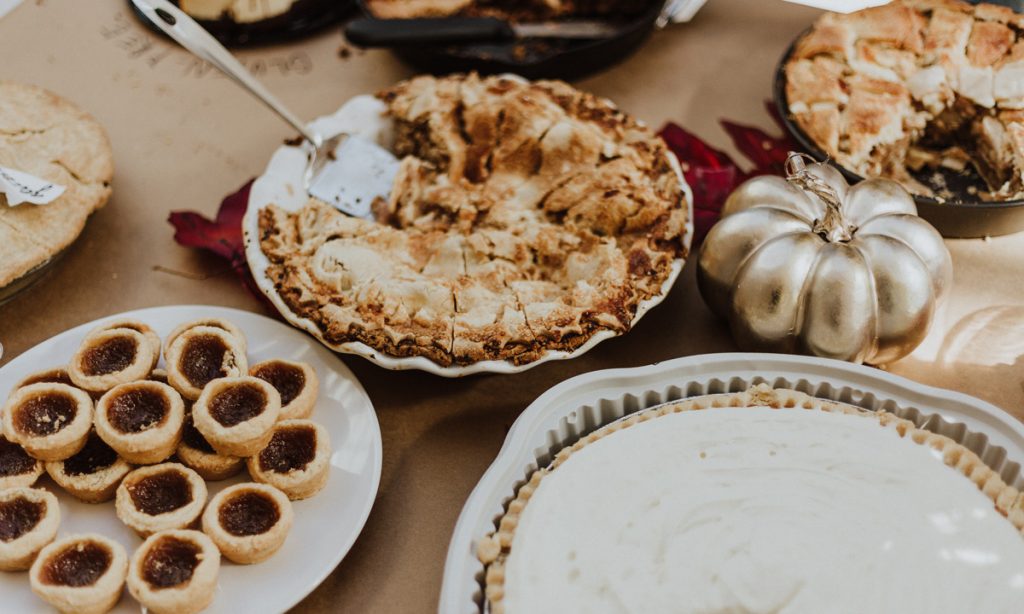
There’s something extremely Thanksgiving about going for a walk, smoking a joint with your siblings or cousins, and then returning home to a delicious meal that you’ll enjoy immensely. While most family members will remain in the dark, the errant cool aunt might give you a knowing look.
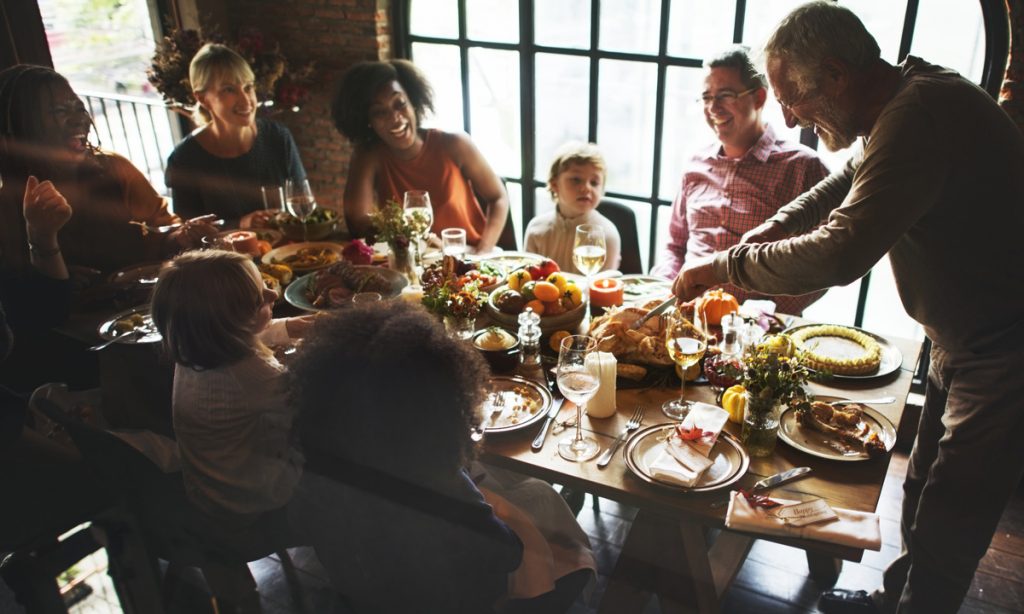
Since times are changing and people are becoming more and more open to the idea of marijuana, maybe it’s time to share and see what happens. As always, you should be careful when making this suggestion, especially since it’s family and not a group of close friends. Here’s how you can get high with your family this Thanksgiving.
Read the room
Before you make any rash decisions or suggest anything, think about the people in the room. How are your parents attitudes regarding marijuana? Your siblings? Your aunts and uncles? If it’s a small gathering the odds are in your favor; the people who are hanging out with you are probably those closest to you and will be much more open to participate without the presence of distant relatives. Still, before you pull out a bong, tread carefully.
If you live in a legal state there’s no need to stick to tradition and smoke a joint. Try to think of something that might be the most fun and effective way to get high with your group, be that cooking your own edibles, vaping or sharing some gummies. Try ingesting these when the mood is right and not when you’re fighting with your family over politics or whatever. Adding marijuana into that mix might only make things worse.
Don’t mix drugs and alcohol
This is a hard one since people tend to start drinking early on Thanksgiving, but it’s important to remember that mixing substances is a bad idea, especially when you go too far. If you’re planning on smoking a little weed, don’t stress out too much. But if you’re planning on having edibles or something more intense, it’s best to steer clear of the alcohol. Bottom line: don’t give your body the chance to purge your Thanksgiving dinner.
No one appears to have any idea whether access to legal weed would really keep people from using opioids in the first place.
There is a growing body of evidence showing that medical marijuana could be all that is needed to tame the gnarly beast known as the opioid epidemic. On the other hand, there is also some research showing that this is all kooky talk.
It seems that ever since the first study emerged showing that the cannabis plant might be able to prevent tens of thousands of Americans from dropping dead every year from fatal overdoses, we have seen a steady stream of new studies showing conflicting results. To say the science over this concept is all over the map is an understatement.
Simply put, no one appears to have any idea whether access to legal weed would really keep people from using opioids in the first place, or serve as a trapdoor from the throes of addiction. Some of the latest research on the matter shows the confusion over marijuana and opioids is still prevalent.
A study published last week in the Canadian Medical Association Journal shows that while cannabis is often revered as an alternative to opioids, the reality is that the people suffering from opioid use disorder really don’t have any use for weed. Using 30 years of data, researchers at McMaster University found that when cannabis was used by people with an opioid problem, tossing marijuana into their rehabilitation treatment plan didn’t make them more likely to stay on the mend.
“There is limited evidence that cannabis use may reduce opioid use in pain management, and some high-profile organizations have suggested cannabis is an ‘exit drug’ for illicit opioid use, but we found no evidence to suggest cannabis helps patients with opioid use disorder stop using opioids,” said lead researcher and associate professor of psychiatry and behavioral neurosciences, Dr. Zainab Samaan.
Photo by Charles Wollertz/Getty Images
However, a separate study published last week in PLOS Medicine from the University of British Columbia (UBC) and the B.C. Centre on Substance Abuse shows that marijuana might “lower or address the risk of overdose” in people considered heavy opioid users. The study mostly indicates that people who used cannabis daily as a means of controlling chronic pain were less likely to encounter a problem with opioids.
It is worth noting that the UBC study was funded to the tune of $2.5 million by Canopy Growth, which is one of the largest cannabis companies in North America. Still, researchers associated with the study say that the idea that marijuana could save the world from opioid addiction is largely exaggerated.
“We are very aware of the risk of harms,” said lead researcher M-J Milloy. “And I want to emphasize that none of us think that cannabis is a panacea or a silver bullet to knock out the overdose crisis. What we do think, though, is that it has tremendous potential.”
What appears to be real is that cannabis works for some people who are trying to manage chronic pain. It is not clear whether the majority of these people were cannabis users to begin with or if they are new to the scene. There is also some question as to whether the opioid epidemic is truly the result of doctors doling out prescription painkillers with rabid enthusiasm.
A recent study published in the Annals of Emergency Medicine shows that only around 1% of opioid patients ended up with problems stemming from opioid misuse. The bulk of this drug problem, the study shows, appears to be coming from people using heroin and fentanyl.
It should be noted that some legitimate pain patients — those who may have endured trauma, battlefield injuries or gone through surgery — are not excited about trading in opioids for medical marijuana. They argue that pot just doesn’t have the strength needed to cut through this type of pain.
Regardless of where the research goes on this issue, the effectiveness of marijuana as a substitute to prescription painkillers really depends on the person. For minor aches and pain, marijuana might do the trick, while those people experiencing higher levels of pain might be better suited with a carefully monitored treatment plan consisting of opioids. But one thing is certain, according to Dr. Samaan: Competent research on this controversial subject is scarce. “The reality is that there are no good studies or good evidence to show us it’s beneficial,” she told CBC News.
Thanksgiving and politics don’t mix, but if the subject of marijuana legalization comes up around the Thanksgiving dinner table this year, here are some handy tips.
As Thanksgiving Day approaches, take the time to truly count your blessings. If you are a cannabis consumer, be thankful that you are among the majority of Americans that live in a state where there is some form of legal marijuana — whether it be recreational, medical or CBD only.
There are now 11 states, plus Washington D.C., that allow adults to use marijuana recreationally, and 33 states that offer marijuana for medical purposes to qualifying patients. Many of these are among the nation’s most populated states.
Despite this bit of good news, it still can be difficult to have the “marijuana talk” with those family members who are wary of these progressive new laws. Thanksgiving and politics don’t mix, but if the subject of marijuana legalization comes up around the Thanksgiving dinner table this year, here are some handy tips:
Be Chill
The worst thing you can do is be in attack mode. Yes, you are on the right side of history, but nobody likes a know-it-all without a little empathy. Listen to the other side and truly try to understand where they are coming from. A lot of your friends and family members may have grown up during the Reefer Madness days or the Just Say No days. It takes some understanding.
Sometimes, their fears can easily be assayed with calm … and facts.
The War On Drugs Did Not Work
By any objective measure, the United States’ War on Drugs has been a trillion-dollar boondoggle. All that money did nothing to alleviate drug use.
Here’s how Steve Downing, a former deputy chief of the Los Angeles Police Department, described it:
“The war on drugs was a failure, I should know as I once led it. Our policies have done more harm to people and community than marijuana. We demonize people. We unnecessarily criminalized people.”
The War on Drugs was waged to shrink the supply of illegal drugs. Instead, drug prohibition has created a lucrative black market for drug cartels and other criminal enterprises. A RAND Corporation study suggests marijuana accounts for about 20 to 30% of drug cartels’ revenue. Legalizing cannabis would slash that revenue from the bad guys.
A report from the American Civil Liberties Union revealed that there are hundreds of thousands of arrests for marijuana possession each year. A look at the numbers shows that race plays a major factor. Studies prove that black and white Americans use cannabis at similar rates. But black citizens are nearly four times more likely to be arrested than whites for marijuana possession.
Here is what Washington D.C. Police Chief Cathy Lanier says about these arrests:
“All those arrests do is make people hate us. … Marijuana smokers are not going to attack and kill a cop. They just want to get a bag of chips and relax. Alcohol is a much bigger problem.”
It is clear that America cannot continue to incarcerate cannabis consumers. The financial cost is exorbitant, but the social cost is even greater. There is a better way.
Speaking Of Finances …
A report from the Tax Foundation, a nonpartisan think tank, found that legalizing cannabis could generate up to $28 billion in federal, state, and local tax revenue. Yes, Americans essentially are throwing away nearly $30 billion annually in tax revenue.
With California passing recreational cannabis, it alone will triple the size of America’s $6 billion legal pot industry within 10 years.
A Gallup poll earlier this year found that two in three Americans support legalization.
According to Gallup:
When Gallup first asked this question in 1969, 12 percent of Americans supported the legalization of marijuana use. In the late 1970s, support rose to 28 percent but began to retreat in the 1980s during the era of the “Just Say No” to drugs campaign. Support stayed in the 25 percent range through 1995, but increased to 31 percent in 2000 and has continued climbing since then.
Americans have shifted more than 50 percentage points on the issue since Richard Nixon’s first year in the White House. That is seismic.
Give Hugs
You may win a few arguments. You may fail to sway some family members. No matter what happens, give a hug or a handshake. Keep smiling. It’s Thanksgiving! Enjoy the day with your loved ones. And know that you are on the right side of history.
There are some potential drawbacks to using weed while gaming, namely the decrease in linear motor response and a slowing in the perception of time.
For many, cannabis and video games is as inspired a combination as peanut butter and chocolate. While many devotees of both swear marijuana boosts their gaming performance, so far the emerging science is mixed. Weed might actually improve certain performance factors, but may also decrease others.
The common stereotype is that smoking weed turns people into human sloths, content to snack on junk food and stare at cartoons on the TV. Some research suggests that cannabis consumption improves focus and cognitive performance, attributes that are critical in the competitive gaming space.
CBD is commonly associated with a decrease in pain and inflammation, conditions that can be brought about by long periods of gaming, and can seriously impair performance. CBD’s calming effect can also contribute to improved gaming, improving situational awareness and decision-making.
There are some potential drawbacks to using weed while gaming, namely the decrease in linear motor response and a slowing in the perception of time. Some studies suggest that the decrease in fine motor skills continues to increase in consumption while the desired effects plateau at some point. Real world effects vary by individual and some studies used unrealistic consumption scenarios such as administering THC-only doses intravenously.
For some of the world’s top gamers, access to medicinal or recreational marijuana is limited, especially in regions such as Asia, the nexus of pro gaming. Recreational cannabis is available in popular US states, such as California, however, where esports is also popular and home to game developers, dedicated arenas, and pros.
While cannabis is legal throughout Canada, the esports scene is still ramping up, but showing potential, with Canadian pro gamers such as Quebecer Stéphanie Harvey and teams such as Toronto Defiant as part of the esports scene internationally.
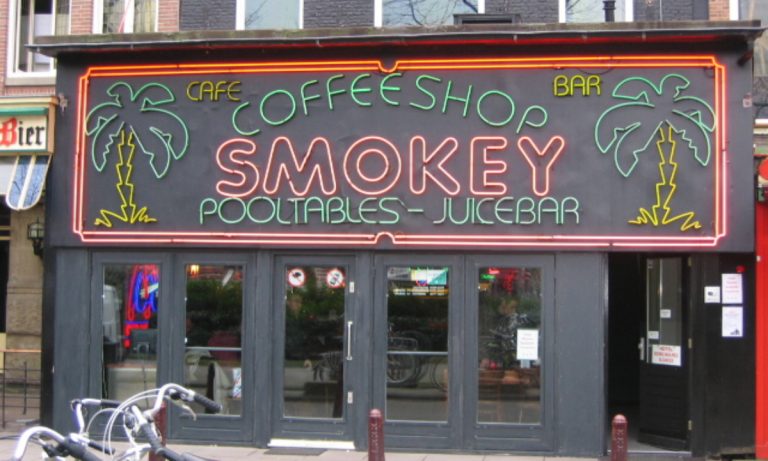
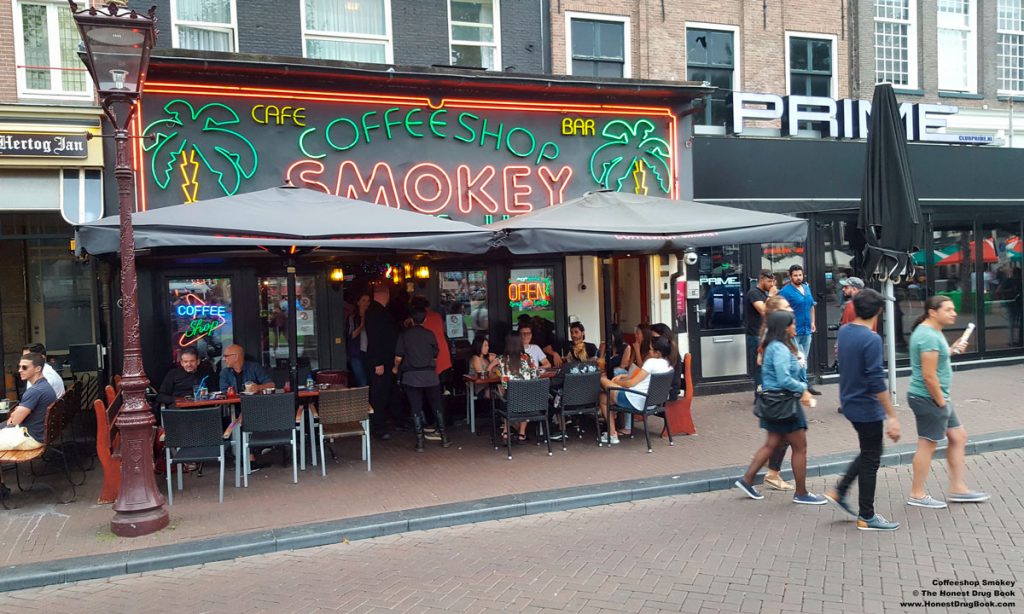
Amsterdam is known for its renowned canals, unique architecture, cannabis coffee shops, and the red-light district. Overall, it’s more of a liberal city than people may think.
For several decades, Amsterdam has been a widely-visited Dutch city that’s been at the forefront of successful cannabis coffee shops. Although these coffee shops have similarities to American cannabis dispensaries, there are some aspects that could be incorporated into the U.S. cannabis model. Here’s how.
Background Of Amsterdam’s Cannabis Coffee Shops
Although different U.S. states have implemented their own cannabis programs over the years, the U.S. federal government classifies cannabis as a Schedule I illegal substance. Whereas, in Holland, cannabis legislation is set up very differently. Their classification of cannabis is somewhat similar. However, Holland’s legalization approach went into a different direction. In particular, Dutch law can be quite practical, which is different than that of many other countries.
In the early 1970s, Dutch lawmakers realized that a drug-free society would turn out to be a complete utopia or dreamland. Therefore, the country’s government decided to develop the “Tolerance Policy” with the intention of attempting to overcome the negative affect that prohibition would have on Dutch society. From this point, the sale and consumption of cannabis within the grounds of licensed coffee shops and cafes turned into a reality.
In the Netherlands, the transaction of small quantities of cannabis are allowed, whereas, the mass production of cannabis continues to be forbidden in addition to punishable by the full extent of Dutch law. Overall, though, the Netherlands is known as one of the few destinations in the westernized world in which cannabis consumption has been decriminalized.
Amsterdam — Cannabis Capital Of The World
Moreover, Amsterdam’s first coffee shops opened in 1975, which made them a symbol of cannabis culture. This Dutch city is also the home of the first High Times cannabis cup. In addition, Amsterdam has become a center/hub for cannabis enthusiasts to visit at least once during their life. For those who wish to experience Amsterdam’s historic cannabis coffee shops and cafes and the well-known cannabis scene, there’s opportunities to do so without fearing of getting arrested or paying steep fines.
In Amsterdam, cannabis consumers can sample different world-class strains in addition to experiencing guided expeditions throughout the country’s cannabis production process from the beginning stages of growing to harvesting.
Dutch Cannabis Tourism Vs. U.S. Cannabis Tourism
Currently, the American cannabis-oriented tourist hub is still far away from the successful Dutch model. It’s unlikely that the U.S. would make changes to their cannabis tourism industry that’d replace Amsterdam as the world’s cannabis hub. This is the case because of one primary reason, which is that the Dutch were there first, and they stamped their cannabis presence into the ground long before other countries did.
In your opinion, what makes tourism so intriguing? For one, tourism is all about traveling to new locations that are different from what one’s home has to offer. Travelers can also experience a different culture and people, new ways of life, and places they’ve never been before. For as long as Amsterdam’s cannabis tourism industry existed, it has thrived. However, once cannabis legalization grows to become an even larger worldwide marvel, the uniqueness of international cannabis tourism could lessen. In other words, why would people travel overseas to purchase and experience something that they could find near their home?
In the future, cannabis tourism will most likely shift to mostly domestic rather than international traveling, but this won’t happen tomorrow. Cannabis legalization efforts are growing in other countries, but the pace is slow and steady.
Photo by Flickr user Dominic Milton Trott
Differences Between Amsterdam Coffee Shops & U.S. Cannabis Dispensaries
Although Amsterdam coffee shops and U.S. dispensaries both sell goods to consumers, the settings of these two locales are quite different. For example, customers can expect to receive cannabis menus from bartenders at Amsterdam coffee shops alongside a lingering aroma of different cannabis strains being lit up. Whereas, in dispensaries, customers are greeted by budtenders, who are normally behind a counter, and they’re presented with a cannabis menu too.
However, one key difference between Amsterdam’s coffee shops and cannabis dispensaries consists of the consumer experience they provide. At coffee shops, individuals undergo a combined consumer experience with kind intentions and assistance from the purchasing stage to the munchies stage. While, dispensaries focus on helping customers get the cannabis products they’re looking for, and then, they send them on their way.
Also, the aromas of Amsterdam coffee shops and cannabis dispensaries are dissimilar mostly because consumers can light up in Dutch coffee shops, which isn’t allowed in U.S. dispensaries.
Trending On-Site Cannabis Consumption
Overall, Dutch legislation regarding cannabis consumption is relatively flexible. This is mostly the case because the law’s intention is to regulate people who are allowed to sell cannabis rather than where consumers are allowed to light up. This turned into the beginning of many smoke-friendly bars that have opened near several established coffee shops.
Although tobacco can be openly consumed in many public places, this has spread to cannabis consumption in Holland as well. In the U.S., some California dispensaries have attained a legal on-site cannabis consumption permit in Los Angeles and San Francisco. Then, in Canada, there has been an increase in BYOC (bring your own cannabis) in their vapor-lounge scene, which continues to grow. Although there are few public places in which individuals can openly consume cannabis in the U.S. and Canada, this is slowly changing.
All in all, U.S. cannabis dispensaries and America’s cannabis tourism industry can learn a lot from the Dutch cannabis model. In the future, Amsterdam’s cannabis industry will continue to be known as well-developed and established, and due to its historic background, it’s likely that people will still travel there even when cannabis legalization efforts evolve further in North America.
This week we highlight HAIM’s great new song, Jhené Aiko, who’s always in top form, and a sort of light song from Grimes.
This Week’s Music is a weekly column that discusses the weeks’ best, worst, and most interesting songs. We try to select songs of different artists and genres to keep things interesting and to please a variety of music fans.
This week we highlight new music from HAIM, Jhené Aiko, who’s always in top form, and a sort of light song from Grimes. Have a listen.
Pop
HAIM – Hallelujah
HAIM has always stood out from some of their pop counterparts because they’re a truly a band. Their music has always felt layered and intricate, ever since they released their first record in 2013. Although they’ve always played with people’s perceptions and have had to accept criticisms and belittlement because they’re all girls and siblings, their careful compositions have always been able to speak for themselves. As the band ages, it becomes more clear that they have a large arsenal at their disposal, providing fun and bright songs but also melancholic and thoughtful ones, with plenty of layers in terms of voices and instruments.
Jhené Aiko knows her strengths well, always releasing songs supported by her amazing and distinct vocals and her simple yet clear musical arrangements. It’s hard thinking of an artist that is so well aware of their skills. “None Of Your Concern” is classic Aiko, from the heartbreak to the faintly oceanic sounds. I’d say that Big Sean’s participation diminishes the song’s effect; there’s no need to mess with a foolproof formula.
Electronic
Grimes – So Heavy I Fell Through the Earth
Despite the heavy song title and an even heavier music video where some kind of warrior battles a dragon while a planet burns and freezes in the background (I’m serious), “So Heavy I Fell Through the Earth” is kind of light. At least in terms of sound, the compositions are brighter and much less dour and edgy than some of Grimes’ previous outings. While I tend to lean towards a darker Grimes — even if she scares me — musical records need some balance. Let’s see what the rest of her album has to say once it’s released on February 21.
Research from McGill University in Montreal is the first study to demonstrate that the opioid system in human brains is directly involved in musical enjoyment.
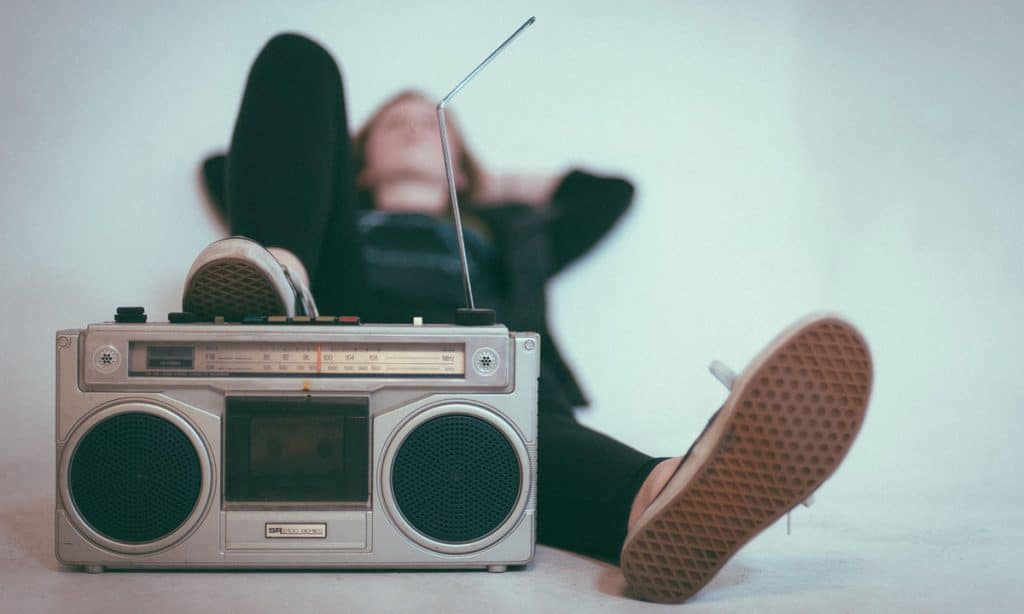
We all know intuitively that the trifecta of sex, drugs and rock ‘n’ roll provides pleasure in most humans. And now a new study proves that the euphoria you experience while enjoying music is triggered by the same brain chemical system that gives humans pleasurable feelings associated with sex and recreational drugs.
The landmark research from McGill University in Montreal is the first study to demonstrate that the opioid system in human brains is directly involved in musical enjoyment.
“This is the first demonstration that the brain’s own opioids are directly involved in musical pleasure,” says cognitive psychologist Daniel Levitin, senior author of the paper.
While previous work by Levitin’s lab and others had used neuroimaging to map areas of the brain that are active during moments of musical pleasure, scientists were able only to infer the involvement of the opioid system.
“The findings, themselves, were what we hypothesized,” Levitin said. “But the anecdotes — the impressions our participants shared with us after the experiment — were fascinating. One said: ‘I know this is my favorite song but it doesn’t feel like it usually does.’ Another: ‘It sounds pretty, but it’s not doing anything for me.’ ”
Photo by Eric Nopanen via Unsplash
Although the neural underpinnings of music cognition have been widely studied in the last 15 years, the study found that relatively little is known about the neurochemical processes underlying musical pleasure. Preliminary studies have shown that both performing and listening to music modulate levels of serotonin, epinepherine, dopamine, oxytocin, and prolactin. Music can reliably induce feelings of pleasure, and indeed, people consistently rank music as among the top ten things in their lives that bring pleasure, above money, food and art.
Aside from the strong findings, the study also suggests that musical therapy may be much more effective than previously known. And musical therapy is not a “new-wave” form of treatment for improving mental health. It is one of many types of therapy.
“The idea of music as a healing influence which could affect health and behavior is as least as old as the writings of Aristotle and Plato. The 20th century discipline began after World War I and World War II when community musicians of all types, both amateur and professional, went to Veterans hospitals around the country to play for the thousands of veterans suffering both physical and emotional trauma from the wars.
Photo by Kelly Sikkema via Unsplash
“The patients’ notable physical and emotional responses to music led the doctors and nurses to request the hiring of musicians by the hospitals. It was soon evident that the hospital musicians needed some prior training before entering the facility and so the demand grew for a college curriculum. The first music therapy degree program in the world, founded at Michigan State University in 1944, celebrated its 50th anniversary in 1994. The American Music Therapy Association was founded in 1998 as a union of the National Association for Music Therapy and the American Association for Music therapy.”
The McGill University study proved to be “the most involved, difficult and Sisyphean task our lab has undertaken in 20 years of research,” according to Levitin. “Anytime you give prescription drugs to college students who don’t need them for health reasons, you have to be very careful to ensure against any possible ill effects.”
Music’s universality and its ability to deeply affect emotions suggest an evolutionary origin, and these recent findings “add to the growing body of evidence for the evolutionary biological substrates of music,” the researchers write.
A recent study provides very interesting data for those of us who grew up hearing that marijuana lowers sperm count and may even cause atrophy or shrinkage of the testicles.
Infertility is big business. Five billion dollars is spent in the U.S. each year towards helping couples conceive a child. More importantly, infertility creates stress and hardship for the approximately 15% of couples who have trouble conceiving.
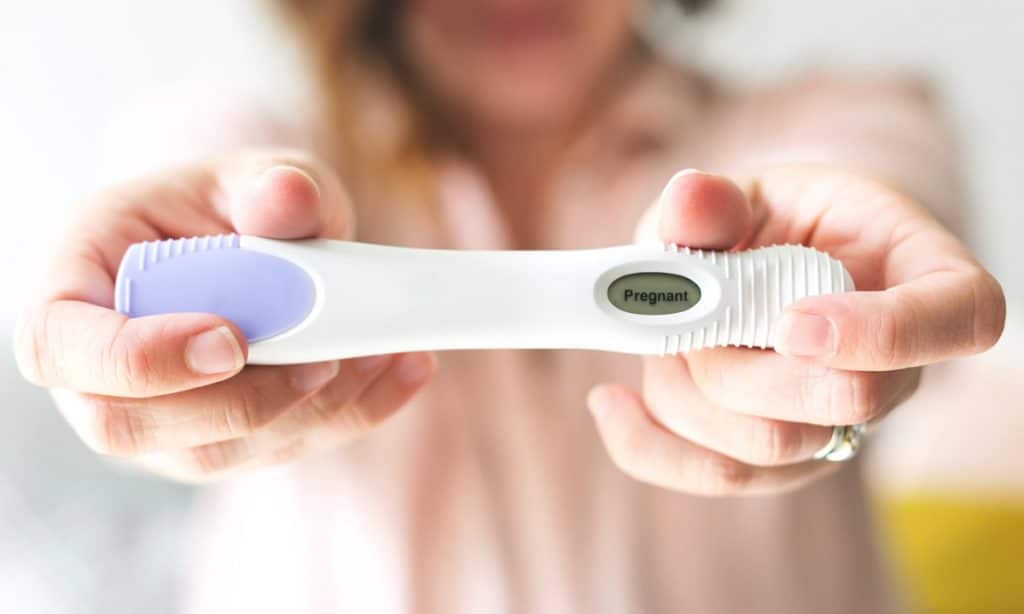
With an increase in both legal marijuana in the U.S. and consumer usage of the herb, researchers naturally wanted to know if fertility is reduced among couples in which one or both partners consume. The short answer is no.
The study, published in the Journal of Epidemiology and Community Health, found that consuming cannabis did not show itself to affect the probability that a menstrual cycle resulted in pregnancy, otherwise known as fecundability.
The researchers conducted an online survey of over 4,194 women in the United States and Canada and 1,125 of their male partners. Participants were not using birth control nor any fertility treatment at the time. Both women and men participated in a baseline survey, and the female partners continued to submit data every eight weeks for one year. Twelve-percent of the women and 14% of the men reported having used cannabis within the 60 days leading up to the study.
The data showed that, regardless of cannabis use, the chance of getting pregnant was unchanged. It seemed to have no effect. According to the report:
“In this preconception cohort study, there was little overall association between female or male marijuana use and fecundability.”
This is very interesting data for those of us who grew up hearing that marijuana lowers sperm count and may even cause atrophy or shrinkage of the testicles. Testicle shrinkage is a myth that caught the attention of many boys and men in the 1980s, though it has no grounding in fact. The same myth was widely touted about Mountain Dew and Yellow #5 dye.
Now that cannabis is becoming locally legal for many Americans, we can no longer rely on the myths and half-truths that passed for information in the days of full-bore prohibition.
Previous studies have pointed to cannabis as a cause of reduced sperm count and motility, or ability to move. The results of the recent study stand in opposition to studies like one conducted on lab mice in 2010 that showed cannabis reduced sperm cells’ motility as well as the fertility of the male mice.
Photo by Sarah Pflug via Burst
Widely respected MDs like Harvard’s professor emeritus of psychiatry Lester Grinspoon have been very vocal about past studies that point to a connection between cannabis consumption and reduced fertility.
As Grinspoon stated in an interview with WebMD:
“The fact of the matter is people have difficulty accepting the fact that cannabis is one of the least toxic substances known to man,” stated Dr. Grinspoon. “We keep searching with these microscopic lenses for things, but it just doesn’t show.”
So, can we take this new study as the absolute truth? It is probably a bit early for that. Researchers note one of the key limitations of this study is the fact that amount and frequency of cannabis use were not considered. Another consideration is the fact that the majority of citizens living the U.S. and Canada still do not have access to legal cannabis. This fact could be a very rational reason some participants may not want to admit to using the substance.
Funding for follow up studies is bound to be available for follow-up research. Additionally, as more states legalize cannabis and the stigma is further reduced, it should be easier to find even larger groups of couples willing to contribute to this search for knowledge.
Everyone uses their smartphone way too much. Here’s how you can stop.
Smartphone addiction may sound like an exaggeration, something that only bloggers and celebrities are affected by, but then you find yourself reaching for your phone subconsciously and you realize that your will isn’t as strong as you thought it was. It’s no one’s fault. Smartphones are designed to be as enticing as possible, begging for your attention even when their screens are off and there’s nothing going on.
Popular Science reports the average smartphone user unlocks their phone 70 times a day, using it for a couple of minutes and then putting it away. The cycle repeats itself every 10 minutes, leaving us in an endless loop of phone-checking that makes us all look a little crazy. Here are 5 tips to help you quit your smartphone addiction.
Quitting your phone for a couple of days straight may only result in tons of anxiety, so try to take it slow at first, reducing your smartphone intake little by little.
Popular Science recommends setting a timer every 15 minutes, allowing you to check all of your apps and then putting your phone face down somewhere in your line of sight. The fact that your phone is in front of your will reduce your anxiety and, over time, you’ll feel less of a pressing need to check your phone constantly.
Make your phone less attractive
Even though smartphone addiction goes beyond the fact that your phone beeps and it attracts your attention, make sure to turn off all of the notifications you can find.
Photo by rawpixel.com
Popular Science recommends a sort of extreme method to get you to grow bored of checking your social media apps by creating folders for each app and putting them on the last page of your screen. This method will make your phone look clunky, but it’ll make these apps harder to access. You can also delete your social media apps and limit yourself to using the website version.
The busier you are, the less time you’ll have to invest on social media, so try to let go of your phone and watch a TV show, bake a cake, do a sport, all without checking you phone. It won’t be easy, but you’ll feel great afterwards.
Every time you get a notification from Facebook, Twitter, etc., your brain gets a dose of dopamine, which is why it’s so hard to stop. This endless loop of stimulus keeps your brain moving all the time, so it helps to try calming exercises such as meditation, yoga and routine workouts, which are all natural and more consistent sources of dopamine.
Just because you’re trying to use your phone less doesn’t mean your life has to get messy. Instead of keeping notes in your phone, carry around a physical notebook and use a physical calendar. Same goes if you purchase an alarm clock, which might even keep you from scrolling in bed.