Instagram has multiple uses. You can shop on it, get regular updates from your friends, follow your favorite personalities and upload stories while showing off cute dog ears. It’s fun and addictive but it’s so much better when there are animals involved.
Instagram animal personalities are an entire subgenre of the social media platform. These guys are worth millions of dollars, with millions of followers and, best of all, never posting anything controversial. What you see is what you get with them: a cute photo with an adorable and even inspiring write-up underneath.
Time magazine compiled a list containing the best and most famous animals with Instagram accounts. Check out five of our favorites:
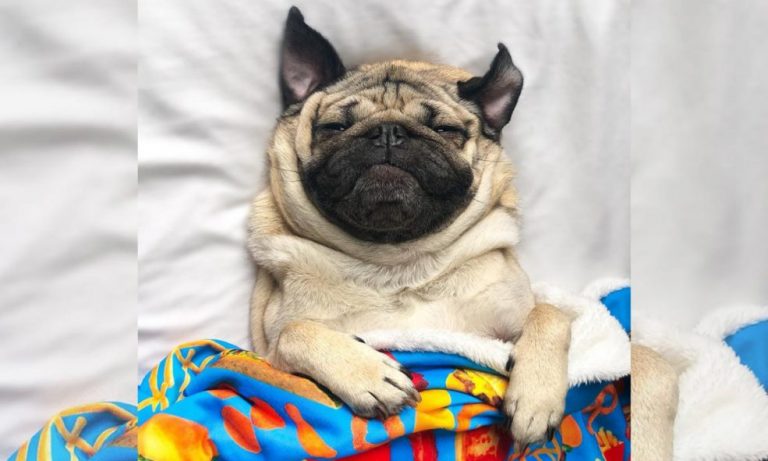
With over 3.7 million followers, Doug the Pug is more famous than some well established celebrities and Instagram personalities. He tends to star in funny videos where he’s seen wearing adorable clothes, starring in altered versions of TV shows and modeling with famous humans. Pugs are naturally adorable and beloved by all, and Doug is the perfect embodiment of that.
Juniper has 2.7 million followers and is a fox. Literally. Juniper is a North American red fox born in captivity, incapable of living in the wild. The fox’s family also cares for other exotic rescues, making them well equipped of caring for a fox.
Pumpkin is another exotic animal rescue, adopted by her family when she fell out of a tree and landed in their backyard in the Bahamas. Pumpkin was nursed to health and remained in that household, becoming a great companion to two rescue dogs.
Jill the squirrel was a victim of the 2012 Hurricane Isaac. She was rescued by a family and is now six years old. She’s also a vegetarian and is extremely adorable and friendly, unlike any other squirrel I’ve ever seen on the street or on parks.
Raegan is a labradoodle and he stands out from other Instagram dogs because he tends to be photographed while wearing human clothes, accompanied by an adorable little boy who matches most of his outfits. Reagan is less known that some of the other names on this list but he’s already released a few books and has developed a devoted fan base.
Cannabis is pretty good for sleep, but THC doesn’t always help everyone hit the pillow. If you are seeking better slumber, CBD could be the way to go. That is until we get the full rundown on CBN, the deteriorated form of THC, which is said to be even sleepier than all other cannabinoids but harder to produce.
CBD is plenty viable, and since it became federally…ignored…it’s much easier to obtain. What exactly does CBD do for sleep?
Consumer Reports says, “10 percent of Americans who reported trying CBD said they used it to help them sleep, and a majority of those people said it worked.” Sounds pretty excellent! But since CBD can also increase focus and wakefulness in the daytime, it’s good to get the dosage or method right.
One of the key ways that CBD can help you sleep, aside from its potential (but untested) effect on the body’s sleep regulating receptors, is its indirect but sleep aiding features—pain and anxiety assistance.
For now, the only way to figure it out is on your own. We love CBD for sleep, so here are three suggestions for CBD snooze boosters.
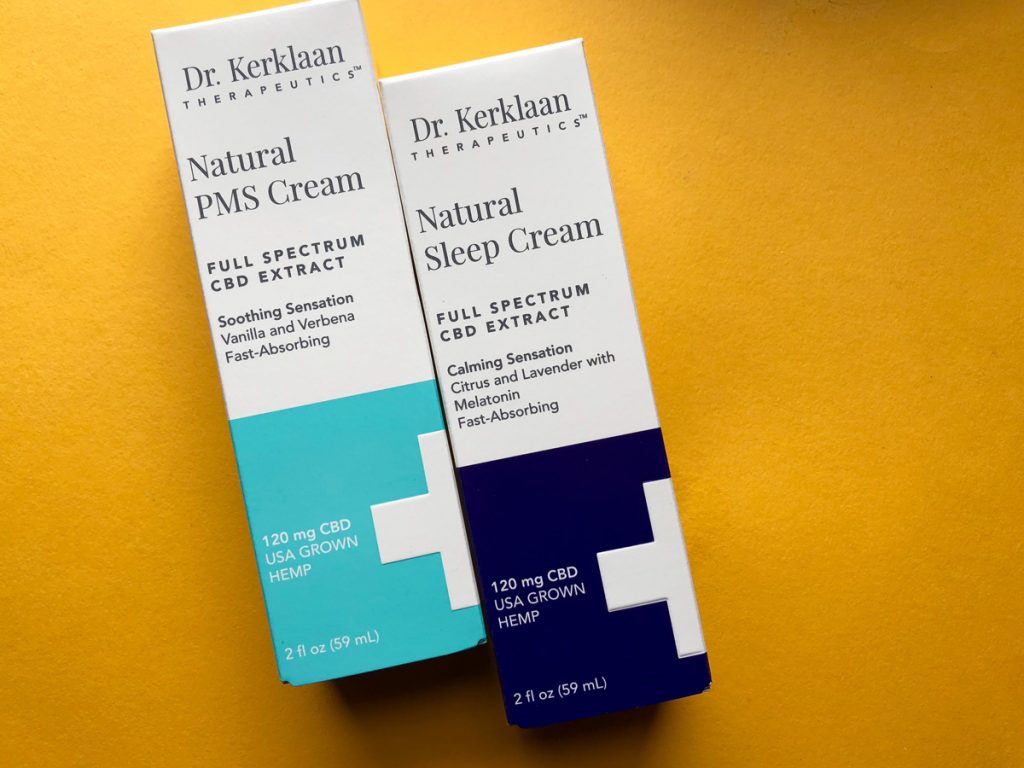
Honestly this product is a bit miraculous. I only use it on my hands sometimes and still feel sleepier within moments of applying. This cream smells nice and light, nothing too pronounced that could distract or awaken you, and its melatonin and CBD dose is great for sore shoulders or just sniffing before you slip away to dreamland. A tiny dot goes a long way, which makes the price less of a concern.
The tincture route is always brilliant for fast sublingual dosing—or dropping in your nighttime tea. Internally dosing CBD for sleep may require a bit of extra oomph. Genevieve R. Moore PhD wrote for Foria Wellness that for sleep your best bet is, “Oral supplement a few hours before bedtime. Lower doses can energize while higher doses encourage sleep.”
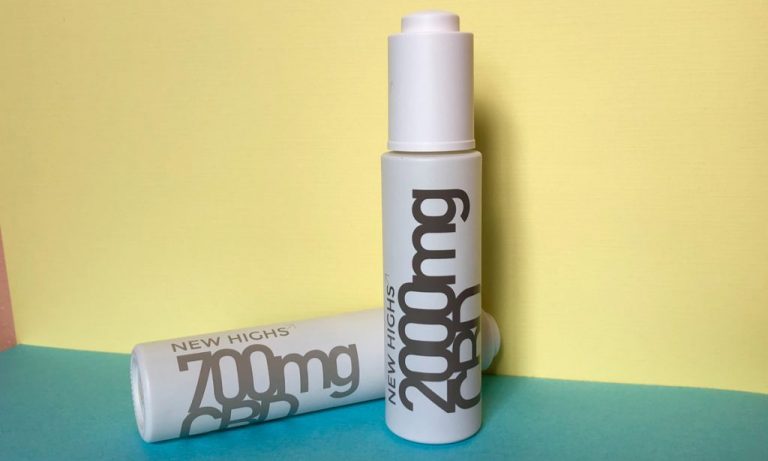
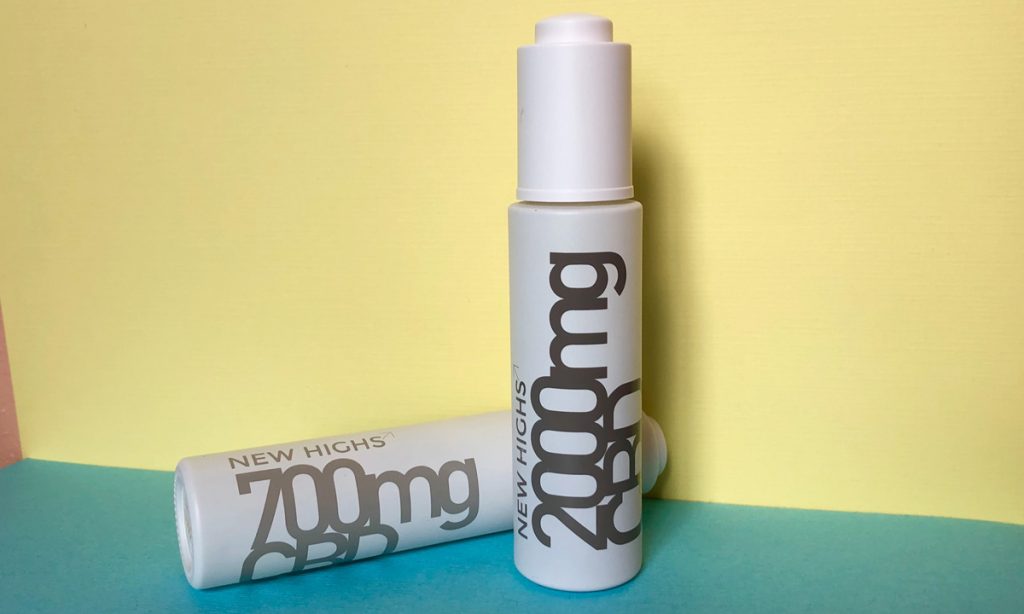
This is why I go for super potent (and fresh to the market) New Highs CBD Tincture for help knocking out. It comes in much stronger doses than most of the entry level CBD out there, and so drop for drop you still get the control of a tincture but with the strength for slumber. A full spectrum and extra potent CBD oil is great for medical cannabis users, the Price per dose is much lower than with edible and inhalable CBD products.
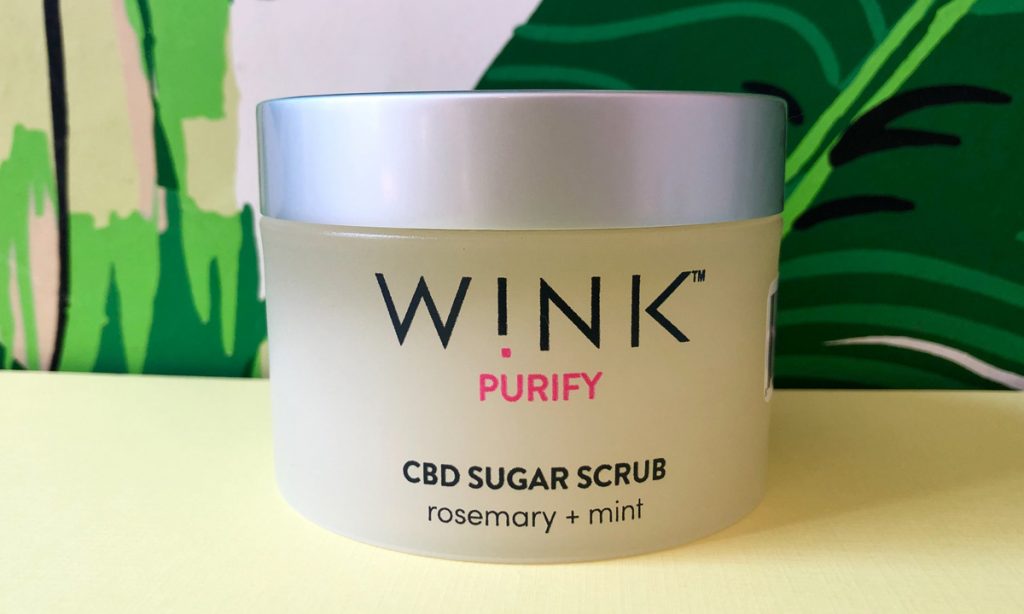
Nothing gets the body in sleepy mode like a fabulous bath or nice long shower. W!nk beauty knows that we crave unique CBD experiences that are seamlessly incorporated into our beauty routine, and their aromatherapeutic CBD Detox Scrub gives you improved circulation, the refreshing stimulation of a sugar scrub, and the added bonus of CBD to work on your muscles and mind while you soak after a good rubdown. Feeling extra spa-ced out? Add on a CBD sheet mask, with 25mg of inflammation reducing cannabinoids from full spectrum hemp oil.
Having different methods for nighttime CBD means when it’s time to get some sleep, you can scrub up, suds up, lotion up, or drop a little something under your tongue. Focus on deep breathing, clearing your mind, and let the cannabinoids do their thing—hopefully you’ll be asleep in no time.
Amazon and alcohol tend to result in stupid mistakes. We’ve all heard of these stories, maybe from a friend that had one too many drinks and ended up buying a big cat tree that takes up most of their living room, or from personal experience, when after a black out drunk incident mysterious packages started appearing at your doorstep. It is a thing, Tipsy shoppers love to buy stuff on Amazon and other sites.
Drunk packed last night at 2am. My suitcase is just a pile of random, + a drunk Vietnam purchase. What? pic.twitter.com/yJlKlVAsOJ
Although these episodes tend to make us feel embarrassed and like we have an alcohol problem, they’re incredibly common. The Hustle conducted a survey on over 2,000 adults and concluded that each person spends around $444 dollars a year on drunk online purchases. Over 85 percent of these buys are conducted through Amazon. That’s a whole lot of money for a website that has over 100 million Prime members.
The survey shows that the second most visited site while drunk is Ebay (21 percent) and the third is Etsy (12 percent). It appears that drunk people really love to buy clothes and shoes, with the occasional splurge on music concerts and the like.
Luckily for everyone, only 20 percent of people end up regretting and returning their online drunk purchases. “To be honest, they’re almost always stupid buys, but the humor factor outweighs the stupidity,” explains The Hustle. Your friend may not love that cat tree but it’s still a pretty good story.
Full legalization in New York State seems to have hit a road bump. What looked like a done deal when Governor Cuomo said he wanted to see some legislation this year, now looks as if it could be stalled. Supposedly a disagreement over diversity amongst the licensees has caused some politicians in Albany to push back. New York State Assembly member Crystal Peoples-Stokes has stated that her position is that adult-use marijuana will not be implemented in New York State if it is not inclusive of equity. NY pretends it wants diversity in cannabis and hasn’t put together the framework to make it happen.
The New York Medical Cannabis Industry Association (NYMCIA) seems to agree in principle, but the actions taken by the state and by the NYMCIA spell a different story altogether. Hillary Peckham, the only women-led licensed cannabis operator in the state recently resigned as President of the organization. Her company Etain Health is on the endangered list of cannabis companies in the state and it seems the state has made no serious moves to make sure that the only woman-owned company survives. It makes public statements that it wants to make sure there is diversity, but the actions the state actually makes are just the opposite. Peoples-Stokes and New York State Senator Andrea Stewart-Cousins, both supporters of diversity in cannabis did not respond for a request to comment.
The First Five
Etain is one of the original five licensees in New York and remains a family-owned business. It is the only female-led company in the state. Most of the original five have been bought out by larger multi-state operators known as MSO’s. Many were forced into that situation because the laws in New York’s medical marijuana program were so restrictive that patients didn’t sign up. It’s not cheap to run a cannabis company, much less one that has few patients to service. The hope for the original five was that they would be well positioned to become recreational operators one day.
Then the state decided that five licensees weren’t enough, even though those five were barely surviving and expanded the group to ten. Now the state is considering legalizing adult use cannabis and it looks as if it is considering a competitive bidding process -including an auction in order to get recreational licenses. The existing medical license holders will have to compete with others resulting in the pioneers receiving little advantage for blazing a trail as settlers come swooping in.
While the number hasn’t been confirmed, Peckham said the auction fee is expected to be quite high. That is based on a comment from one of the New York politicians who said that the $10 million that California asked for was “too low.” Peckham said that amount would be almost impossible for Etain to raise and if she doesn’t get a recreational license, it is pretty much game over.
The auction fees are intended to be used to pay for the department that will oversee the marijuana program and possibly provide incubator money and loans for minority and women-owned businesses. Peckham noted the hypocrisy of borrowing money from the department you’ve just funded through auction fees.
Just Raise The Money!
Every day there are headlines about cannabis companies raising millions of dollars, so the general response to Etain’s complaint about the potentially high cost of entering the auction is met with the response to ‘just to raise some money.’ Peckham explains the problems with that simplistic response.
Investment = Loss Of Company Control
“If I take money from an investor they will want ownership of the company and then it will cease to be a woman-owned company. Something that is very important to me and at the core of our mission at Etain,” she said. Plus, it’s well known that women-owned companies have a harder time raising money than male-led companies. That is why women-owned funds have sprung up to help their peers, but Peckham noted that these funds wouldn’t be able to deliver the amount of money she needs.
NYS Loan Rejected
The next suggestion for Peckham was to borrow the money. Peckham did apply with the Community Economic Development Department for a loan but was rejected because she worked in cannabis. Rafael Salaberrios, Vice President of Economic Revitalization told Peckham in an email, “It was a very difficult decision for us to make, but after conversations with the New York State Department of Financial Services(DFS) it was concluded that JDA Is not equipped to handle the necessary monitoring required by the Feds on Marijuana projects. JDA does not have the expertise or the manpower DFS thinks is needed to move forward.”
NYMCIA Incubator Loan
The NYMCIA suggested that the group pony up for a fund to help women-owned and minority cannabis businesses in incubator money. On the surface, this sounds like a great idea. Unfortunately, the irony of the only woman-led company (there are no minority-owned cannabis companies in New York) putting money in a fund that she would then be asking to receive money from seemed to be lost on the remainder of the group. She was derided as “cheap” by one of the male members of the group. The proposed pledge was $2.5 million.
Her only option was to resign from the group in order to try to take advantage of the fund. “They didn’t seem to understand the inherent conflict of interest or that I would be donating to a fund and then turning around and asking for money from that fund. Not only that, the contribution to the fund was probably going to escalate,” said Peckham. She had joined the association by pledging $50,000 but was now being asked to bump that up to $2.5 million for the fund. In her resignation email, Peckham wrote, “Etain cannot commit to ongoing or escalating financial commitments for a program that creates conflicts for requirements…We must conserve our capital for targeted purposes to remain sustainable in this industry.”
NYMCIA Says Nothing
Adam Goers, Vice President of Corporate Affairs at Columbia Care, a multi-state operator that is expected to become a publicly traded company this year, is chairman of the NYMCIA. The group did not respond to a request for comment on Peckhams resignation. NYMCIA recently stated that it asked fellow MSO MedMen Enterprises Inc.(MMNFF) to resign from the Association following a lawsuit filed by the company’s former CFO James Parker, in which Parker alleged CEO Adam Bierman had made derogatory comments.
“The Association has a zero-tolerance discrimination policy for any of our members who engage in this type of despicable behavior,” NYMCIA representatives said in a letter addressed to Gov. Cuomo, state Senate majority leader Andrea Stewart-Cousins and Assembly speaker Carl Heastie. MedMen confirmed that it had not resigned from the group and was still a member. Of course, seeing Etain go under just means one less competitor for the group.
The Wholesale Market
Saving a female-led company is not only good for diversity, but it turns out it will be important to the entire New York cannabis company. Etain provides several companies with a quality product. Without her, they lose a provider. This is very important because several people have told Green Market Report that some New York cannabis companies have been bringing in product from out of state illegally. A claim that hasn’t been verified, but a review of a company’s cultivation square footage versus sales will answer that question, especially if the company isn’t buying the product from another New Yorker.
Just Say Sell
The nuclear option to just sell the company which also isn’t possible for Peckham. Once again the state in its vision for diversity stated that women-owned and minority businesses can only sell to another like-minded company. Since there are no other women-owned or minority-owned cannabis companies in New York, there is no one to sell to.
Options
The State could insist on a residency requirement for the recreational licenses, which would help Etain. Or it could carve out recreational licenses for existing medical license holders that are not publicly traded companies. There seem to be options available for the state to protect the diversity it claims to want, so far it hasn’t pursued anything other than talk.
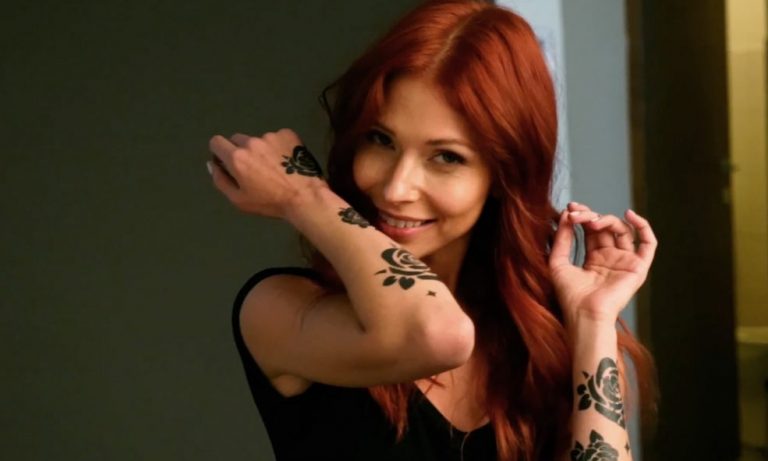
Because tattoos and perfumes are traditional and outdated concepts, AMKIRI decided to blend the two together, resulting in the world’s first idea of its kind: a fragrance with its own stamp and signature.
The brand launched this past week and consists of selling inks infused with unisex smells. Created by designer Shoval Shavit Shapiro, the product was developed and refined with the help of her mother, a chemist and cosmetics expert who ensured that the final ink served the purposes of a temporary tattoo and fragrance.
“There’s no better way to express your individuality than by using your body as your most personal piece of art,” said Shapiro in an interview with Vogue. “We want to empower individuals with this multi-sensory form of self-expression.”
The ink can be purchased in two styles: one that’s easier to apply, with a wide brush, and a second one that’s meant to be used by people who are more comfortable handling paint, allowing them to create elaborate and special designs. The inks come with different scents that include spicy ginger, juniper berry, and more, and are available in charcoal and white shades.
AMKIRI’s inks are also vegan and cruelty free and meant to be easily removed even though they can stay in your skin for up to 12 hours. You can purchase AMKIRI’s wand and stencils on their website.
New Jersey lawmakers have failed to make recreational marijuana a reality in the state, as a pivotal vote on legislation was called off Monday. Despite concerted efforts by Gov. Phil Murphy and Democratic state lawmakers, the votes were not there to pass the bill, according to reports.
“While we are all disappointed that we did not secure enough votes to ensure legislative approval of the adult use cannabis bill today, we made substantial progress on a plan that would make significant changes in social policy,” State Senate President Stephen Sweeney said in a statement to NJ.com.
This renders as a devastating blow to Murphy, who made marijuana legalization a key issue during his gubernatorial campaign and the benefit of full Democratic control in the State Assembly and Senate. But his push for legalization stirred infighting amongst state Democrats, with some African-American lawmakers criticizing the bill for introducing harm to public safety for communities of color.
The New Jersey Cannabis Regulatory and Expungement Aid Modernization Act, which would have legalized and taxed cannabis in the state, was one of the more progressive marijuana bill the country has yet seen. Not only would the bill expand access to the state’s medical marijuana program—making it tax free and protecting parents from losing custody of their children—it would quickly expunge the marijuana convictions of hundreds of thousands in New Jersey.
Another vote to legalize in the state won’t come until after the November election, Sweeney has previously stated, but reports indicate a vote could come as soon as May. A recent poll showed that a majority of New Jersey voters support recreational marijuana legalization.
“This is not an issue that’s going away,” Sweeney said. “Marijuana will get passed in the state of New Jersey one way or another.”
Ask a teen today how she communicates with her friends, and she’ll probably hold up her smartphone. Not that she actually calls her friends; it’s more likely that she texts them or messages them on social media.
Today’s teens – the generation I call “iGen” that’s also called Gen Z – are constantly connected with their friends via digital media, spending as much as nine hours a day on average with screens.
How might this influence the time they spend with their friends in person?
But studies like this are only looking at people already operating in a world suffused with smartphones. They can’t tell us how teens spent their time before and after digital media use surged.
What if we zoomed out and compared how often previous generations of teens spent time with their friends to how often today’s teens are doing so? And what if we also saw how feelings of loneliness differed across the generations?
To do this, my co-authors and I examined trends in how 8.2 million U.S. teens spent time with their friends since the 1970s. It turns out that today’s teens are socializing with friends in fundamentally different ways – and also happen to be the loneliest generation on record.
Less work, but fewer hangs?
After studying two large, nationally representative surveys, we found that although the amount of time teens spent with their friends face to face has declined since the 1970s, the drop accelerated after 2010 – just as smartphones use started to grow.
Compared with teenagers in previous decades, iGen teens are less likely to get together with their friends. They’re also less likely to go to parties, go out with friends, date, ride in cars for fun, go to shopping malls or go to the movies.
It’s not because they are spending more time on work, homework or extracurricular activities. Today’s teens hold fewer paid jobs, homework time is either unchanged or down since the 1990s, and time spent on extracurricular activities is about the same.
Yet they’re spending less time with their friends in person – and by large margins. In the late 1970s, 52 percent of 12th-graders got together with their friends almost every day. By 2017, only 28 percent did. The drop was especially pronounced after 2010.
Today’s 10th-graders go to about 17 fewer parties a year than 10th-graders in the 1980s did. Overall, 12th-graders now spend an hour less on in-person social interaction on an average day than their Gen X predecessors did.
We wondered if these trends would have implications for feelings of loneliness, which are also measured in one of the surveys. Sure enough, just as the drop in face-to-face time accelerated after 2010, teens’ feelings of loneliness shot upward.
Among 12th graders, 39 percent said they often felt lonely in 2017, up from 26 percent in 2012. Thirty-eight percent said they often felt left out in 2017, up from 30 percent in 2012. In both cases, the 2017 numbers were all-time highs since the questions were first asked in 1977, with loneliness declining among teens before suddenly increasing.
A new cultural norm
As previous studies have shown, we did find that those teens who spent more time on social media also spent more time with their friends in person.
So why have in-person social interactions been going down, overall, as digital media use has increased?
It has to do with the group versus the individual.
Imagine a group of friends that doesn’t use social media. This group regularly gets together, but the more outgoing members are willing to hang out more than others, who might stay home once in a while. Then they all sign up for Instagram. The social teens are still more likely to meet up in person, and they’re also more active on their accounts.
However, the total number of in-person hangs for everyone in the group drops as social media replaces some face-to-face time.
So the decline in face-to-face interaction among teens isn’t just an individual issue; it’s a generational one. Even teens who eschew social media are affected: Who will hang out with them when most of their peers are alone in their bedrooms scrolling through Instagram?
Higher levels of loneliness are just the tip of the iceberg. Rates of depression and unhappiness also skyrocketed among teens after 2012, perhaps because spending more time with screens and less time with friends isn’t the best formula for mental health.
That argument assumes that electronic communication is just as good for assuaging loneliness and depression as face-to-face interaction. It seems clear that this isn’t the case. There’s something about being around another person – about touch, about eye contact, about laughter – that can’t be replaced by digital communication.
The result is a generation of teens who are lonelier than ever before.
Cookies are irresistible to most, but Girl Scout Cookies in particular inspire far less self control. Their tasty flavor combos and limited availability makes it pretty hard to say no when you see a cutie pie in a blue, brown, or green sash, selling her wares to raise money for her troop. I had the blessing of buying cookies from a scout right outside of a dispensary in Colorado, and having been a Girl Scout myself, it was an amazing, full circle experience.
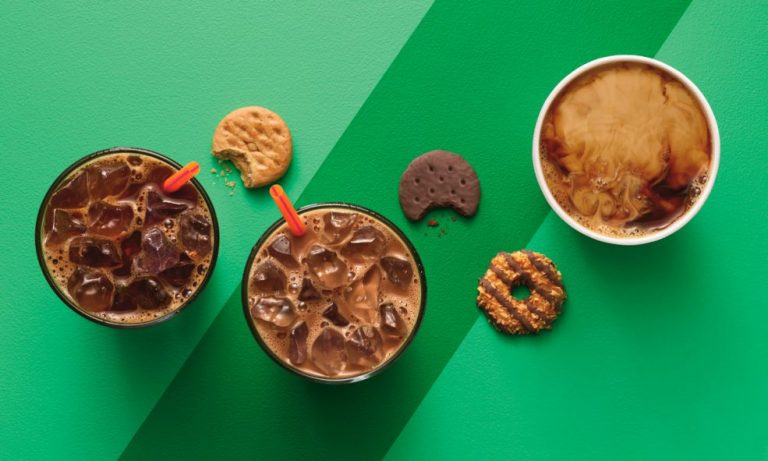
Did it completely help her cause that I knew I’d be hungry later thanks to the big bag of goodies I had on hand? You bet. Did we devour the cookies as soon as the mood struck? You bet double. So seeing Dunkin’ Donuts adopt those iconic cookies for a coffee is like getting a more convenient second chance on the cookies you may not have copped this year.
According to Refinery29, “From now through spring 2019, you can get your morning coffee packed with one of three classic Girl Scout cookie flavors: Coconut Caramel, Thin Mint, and the brand-new Trefoil Shortbread, featuring a buttery, toasted flavor.” It’s not just regular coffee that can get the cookie treatment at Dunkin’ Donuts. R29 continues, “The flavorings will be available in all Dunkin’ coffee drink offerings: hot and iced coffee and espresso drinks, including cappuccinos and lattes.”
But what if you could dose your Girl Scout Cookie coffee with some Girl Scout Cookies cannabis? And once you’ve picked your tasty jam, how should you go about making it cannabis-y? There are a few options. If you don’t care what strain you use, products like Ripple give you a quick and flavorless shot of THC, but if you want to go cookie for cookie, you may have to make your own.
Stirring some gently decarbed GSC concentrate, which can be rare in some states, into coconut oil or glycerin is an easy way to make a DIY tincture that is low-effort and just right for speed and controllability. If you know you have a 100mg jar, you can easily divide doses by the total volume of liquid you melt it into. This means you end up with three sizeable doses per tablespoon or 30 smaller doses per milliliter if you use one ounce of oil. It’s pretty simple to follow and even easier to use.
If the enticing aroma of Girl Scout Cookies in your coffee isn’t enough, the terpy excellence of GSC goes well with all three. It’s minty notes are a match made with thin mints, buttery trefoils play nicely with the pine of the GSC’s Durban Poison parentage, and my personal favorite, samoas, are chocolate and caramel yumminess that a coconut oil base would only enhance.
Get your cookie on from now until the end of spring, like the real thing, these coffee flavors are only temporary. Let’s hope the strain is forever.
Winter is over, which means that dates can now be set in places that are not inside your home or well insulated restaurants.
Not to say that chilling at home and dining out don’t have their place in romance, but spring allows you to finally reacquaint yourself with nature, adding some fun and variety to your love life. Ditch the stuffy jacket and pack an umbrella and check out these five date ideas that are perfect for spring.
A road trip is much simpler if you don’t have to account for freezing weather and slippery and dangerous roads. Rent a car or take your own and map out a route, ensuring to make stops in the most interesting spots you can find. You may get a little car crazy but it’ll be worth it in the end. Probably.
Leave your house and plan hikes, runs and bike rides through mountains or interesting neighborhoods. Whatever activity that gets you moving and outdoors is a good date idea. Even if you’re not the most active person, spring is the perfect opportunity to take advantage of the outdoors since it’s the most balanced weather. Besides, what’s a better way to force yourself to work out than to do it with someone you like and want to impress?
Walks in the park provide an opportunity to smell nature and to watch all sorts of people, which is nice if you’re in the mood for something relaxing and you’re still traumatized by the remnants of winter. Picnics are also great for spring since they make for cheap dates and allow you to get in touch with nature.
Classes tend to be set indoors but there are several that take advantage of the weather, which can really kick things up a notch and make you feel really great. Look into the options available in your city and give them a shot. “Research demonstrates that couples who learn a new skill together connect deeper,” says relationships coach Clarissa Silva on an interview with Bustle.
Festivals have all sorts of themes, ranging from arts & crafts to foods and literature, providing options for all types of people. If the festival you want to go to is a few hours away then make a trip out of it by driving over and getting to know your town and visiting nearby spots.
Open your Twitter or Instagram account and chances are good somewhere in there you may see an unflattering photo of a stranger. It’s become increasingly common to share pictures of people we don’t know online. With so many social media site, can you sue because of a photo on social media?
And it could happen to you. Imagine, for example, rolling out of bed and heading to the store to pick up a much-needed item. Your hair is unkempt and you’re wearing last night’s pajamas, but you’re unconcerned because certainly no one will notice you. Unbeknownst to you, someone you don’t know takes your photo and posts it on social media, perhaps including cruel language or tagging an account like She Has Had It or People of Walmart which feature and mock unappealing pictures of strangers.
Hundreds of people like, share and comment on this photo of you – do you have any legal recourse against anyone? Having taught and researched Internet law, I believe the evolving online legal landscape may answer yes.
Lawsuits about these kinds of photos tend to turn on a person’s right of publicity, which limits the commercial use of one’s name, image, likeness and/or identity. The outcome of current cases could rein in this common posting practice.
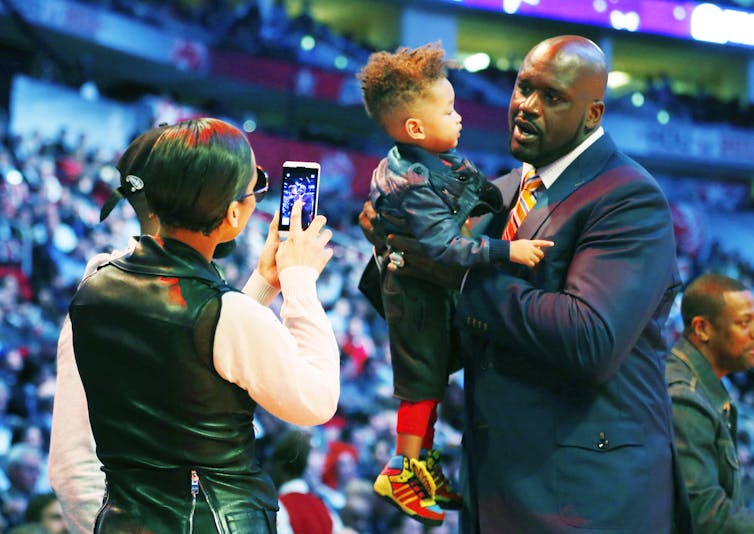
Fans love to take pix with Shaquille O’Neal. Jeff Haynes/Reuters
An online Shaq attack
In April 2014, sports commentator and former star athlete Shaquille O’Neal posted a Photoshopped image on his Twitter and Instagram accounts of himself side-by-side with Jahmel Binion. He captioned the picture “SMILE PEOPLE.”
Binion, who was 23 years old at the time, suffers from ectodermal dysplasia, which has left him with a disfigured appearance. In the photo, O’Neal contorted his facial features in an attempt to make a face similar to Binion’s. The social media post received more than 17,000 “likes” and more than 700 comments (many of which were rude or offensive) on Twitter alone.
Based on this activity, Binion sued O’Neal in a Florida federal court for, among other things, something called “appropriation,” which is essentially a right of publicity claim. The basic idea is that you can stop others from using your name, likeness or identity for commercial gain. The Florida court recently denied O’Neal’s motion to dismiss the claim, which means that Binion can continue with the case against O’Neal.
Right of publicity, in the social media universe
So does this right of publicity protect you from having someone post a harmful image of you on social media?
Because the right of publicity is based on state law, the parameters of the right vary significantly by jurisdiction. Roughly 30 states recognize claims based on the right of publicity through statute, common law or both. Most of these states extend the right of publicity to all people, not just celebrities or other famous individuals.
Though there is a lack of uniformity regarding its application, the most common requirements include a person:
1) using another’s name, identity, likeness or persona without consent in a way that causes harm; and
2) receiving some kind of benefit or advantage based on that use.
In the social media universe, it probably won’t be hard to show that a person is harmed when their image is used without permission, especially where cruel or offensive language is used.
The question of the benefit or advantage obtained, however, will be more difficult to prove and has historically thwarted Internet suits of this kind.
With the rapid rise in ubiquity of social media platforms, attorneys have grappled with applying traditional right of publicity law to new frontiers like Facebook, Instagram, Pinterest, Tumblr and Twitter.
Everyone’s still trying to figure out the benefit received from using a stranger’s photo online. In one recent case, Fraley v. Facebook, Inc., Facebook found itself in a right of publicity lawsuit based on its use of the Sponsored Stories advertising feature.
These are paid ads featuring the names and pictures of Facebook users based on their past Facebook activities and “likes.” Though the suit against Facebook ultimately settled, the right of publicity claims survived – the plaintiffs could show a clear connection between the value of their unauthorized endorsements to their Facebook friends and the benefit Facebook gained by using their photos.
While the commercial advantage may be clear in a case like Fraley, where Facebook received money for their ads with people’s pictures and likes, the Binion scenario is more challenging. O’Neal’s post, though widely shared and liked, did not provide a direct commercial benefit to him. Most states require that the defendant received some commercial or monetary benefit.
Some legal authorities, however, state that the right of publicity is not limited to purely commercial benefits. The victim’s right of publicity claim may survive even if the offending party does not receive money or other benefit.
In fact, in Binion, the court suggested that the fact that O’Neal’s post generated significant social media interest and was widely viewed and shared could meet the benefit standard. All those “likes” and “favorites” are a currency all their own. Social media users, therefore, could be exposed to legal liability for posting pictures of strangers under such a theory.
With no uniform body of law to reference, social media users remain susceptible to right of publicity claims. Individuals and companies who use social media to connect with others must be mindful of such uncharted territory and create social media strategies that mitigate their risk of liability. Otherwise, posting photos – particularly unflattering ones – of strangers will continue to expose users to such risks.


 Then the state decided that five licensees weren’t enough, even though those five were barely surviving and expanded the group to ten. Now the state is considering legalizing adult use cannabis and it looks as if it is considering a competitive bidding process -including an auction in order to get recreational licenses. The existing medical license holders will have to compete with others resulting in the pioneers receiving little advantage for blazing a trail as settlers come swooping in.
 “The Association has a zero-tolerance discrimination policy for any of our members who engage in this type of despicable behavior,” NYMCIA representatives said in a letter addressed to Gov. Cuomo, state Senate majority leader Andrea Stewart-Cousins and Assembly speaker Carl Heastie. MedMen confirmed that it had not resigned from the group and was still a member. Of course, seeing Etain go under just means one less competitor for the group.