Cardi B took over the world last year with a couple of amazing songs and collaborations with singers, and an enviable attitude and personality. With a combination of sassiness and hilarity, Cardi B gave us millions of reaction gifs and phrases that lend themselves to almost every situation.
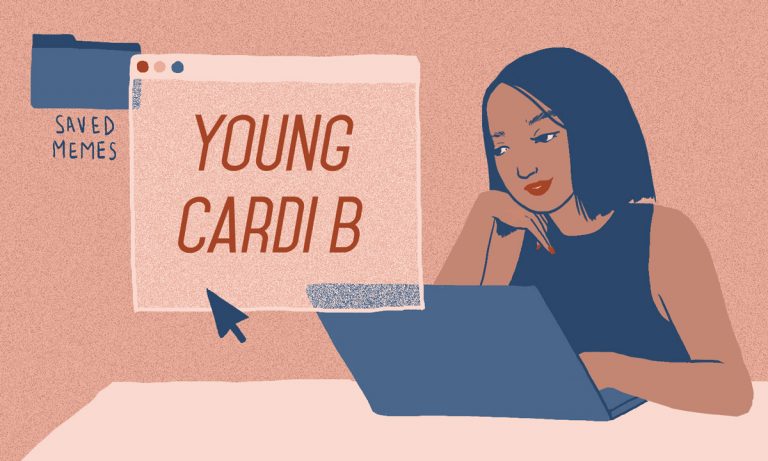
A photo of 5-year-old Cardi, who simultaneously looks adorable and like she’s judging you, is her latest viral offering that lends itself perfectly for a meme, with people attaching different phrases on it while putting the image on different scenarios.
Most of these memes start with the phrase “My mommy says,” followed by a situation that’s funny and eerily reminiscent of your childhood. You may find yourself identifying with Cardi – if you were an annoying kid – or remembering someone who was just like her.
Following is a conversation with Erin Green of Edibles by E regarding her unique edibles made with THCA.
First off, what prompted you to try CBD tinctures? In December 2015, I underwent a back surgery and by March 2016, I was diagnosed with chronic pain and Fibromyalgia. Doctors prescribed the usual opiates for my symptoms: Norco, Percocet, and a few others. Then the memories of people in my life and the memories of their heartbreaking battles with opiate addiction came crashing down on me. A friend suggested that I use a CBD tincture to try and relieve my pain and hopefully replace the opiates. The CBD tincture that I ended up with was not the most palatable concoction but when is medicine supposed to be enjoyable?
Why did you switch to using THC? I heard it was good for sleep. Fibromyalgia is notorious for insomnia and I’m no exception. And the THC worked. It got me to a place I could stop taking Ambien. And it was helping with my pain and it lessened the symptoms but I felt chronically high which I don’t want on a daily basis. I want to be a productive person and relate to other people and being high every day wasn’t making that very easy for me.
Photos courtesy of Edibles by E
I decided to not decarboxylate the THC first and just use the cannabis as is and without heat. I read that the psychoactive effects aren’t active unless heat is applied or unless you decarboxylate the cannabis first. Turned out that I still got relief from the cannabis without feeling the psychoactive effects. I later learned this is the cannabinoid called THCA.
How do you use THCA to treat your pain? I use THCA during the day to help relieve my symptoms and my pain without being high. I use THC at night to also relieve pain and to help with sleep. Both cannabinoids have properties that are medically beneficial. Through my research though I do believe that THCA is a more powerful anti-inflammatory.
Surprisingly THCA is one of the stronger cannabinoids, for reasons I have yet to figure out, CBD is the only non-psychoactive cannabinoids marketed by the cannabis industry. This is basically the reason Edibles by E was created. It felt like it was my duty to see to it that THCA was offered to people like me so at least they have this choice. It didn’t feel right to keep this information to myself.
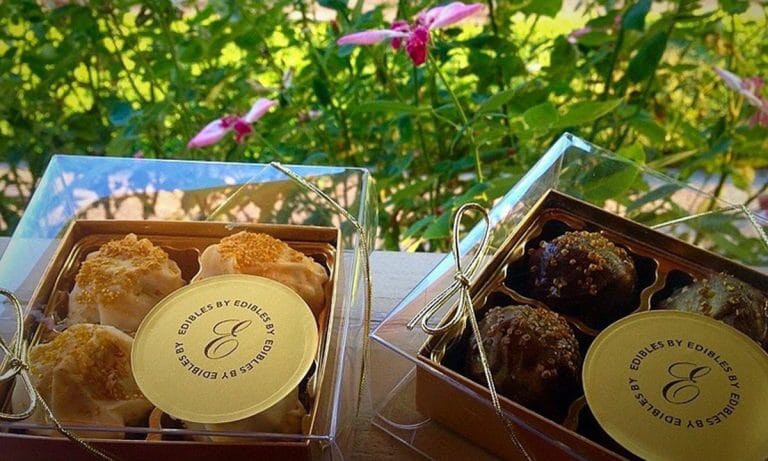
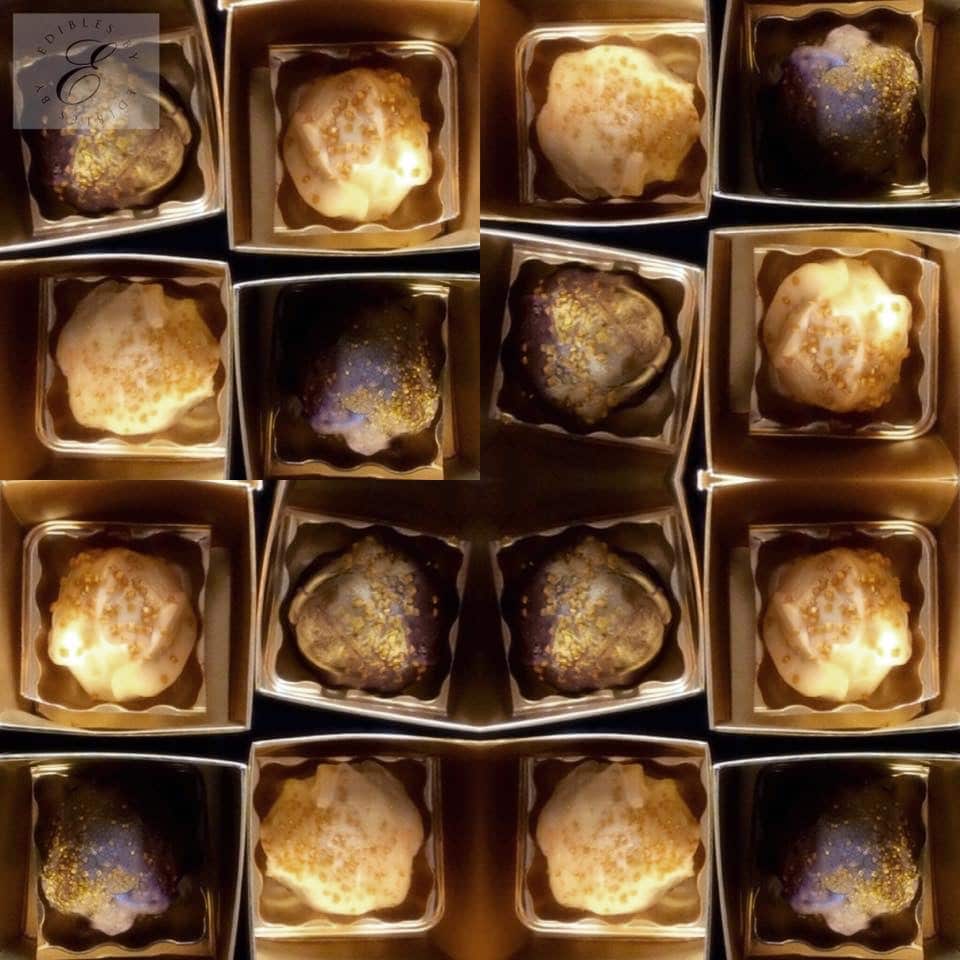
Explain the products that you offer. Some of our edibles come in both cannabinoids and are low dose, allowing patients to accurately dose with the option of a psychoactive or non-psychoactive medication. We offer delicious truffle cakes in double chocolate or lemon chiffon, we created the Honey Shot which is cannabis infused flavored honey in a pipette (tube with a plunger) so you can get every drop plus a pipette cap in case you want to wait and save it for later. We also have our green apple and spearmint sublingual mints. Sublingual is a melt in your mouth delivery system so the effects are quicker than the ordinary edible that gets processed through the stomach and liver. These mints or lozenges are lower dosed and great for microdosing and for those new to cannabis.
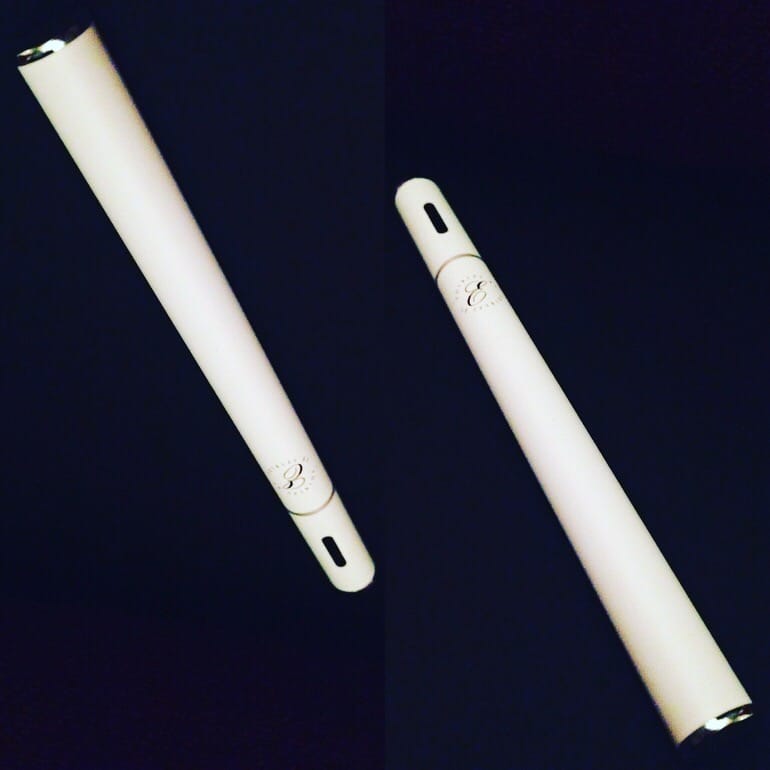
The most recent product we have out on the market is the ready to go easy vape. This is intended for people who are curious about vaping and also for those older people like my 70-year-old aunt who was letting her three grandchildren’s life choices stress her out so bad I couldn’t take it. I introduced her to our stylish and easy to use vape pen and she’s doing great now. She self medicates and doesn’t have to charge it or worry about a button to push or a cartridge to buy and it’s just classy enough that she called and asked me for one for her friend.
What are your future plans? Terpenes have been my latest research project. They are what gives most natural elements the smells you’re used to like lavender and lemons and cloves. If you squeeze the leaves of the pine tree and you got a drop of liquid this would be a terpene. Along with aroma, terpenes also give you taste and when it comes to cannabis the terpenes combined with THC can offer certain medicinal benefits as well. Our next product will be our new vape pen “Fullfilled.” This will be ready to and easy to use just like our current vape pen however instead of reintroducing terpenes to create the original strain of the cannabis oil we will add nine particular terpenes that we researched to create a perfect blended formula to give you the best flavors and aromas and to also work with the oil to add terrific medicinal benefits.
Receiving a surprise cameo in the hit movie The Menu, this summer, 45 million pounds of marshmallows will be toasted over a fire in America. Many will be used as an ingredient in the quintessential summer snack. Here is a history of the S’More, a favorite campfire snack.
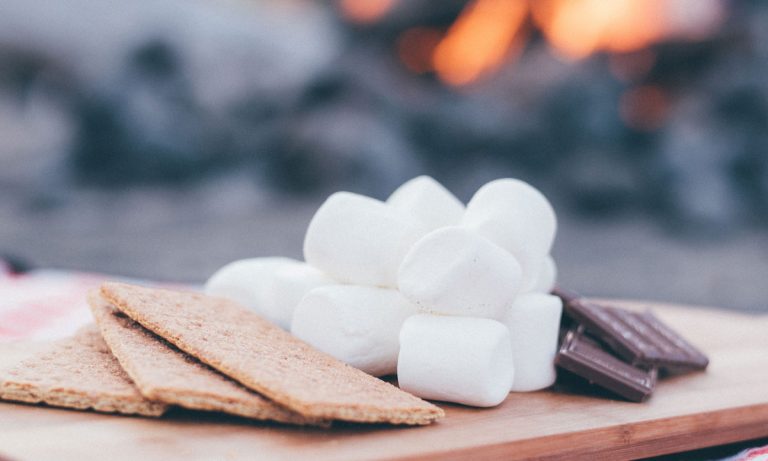
Huddling around a campfire and eating gooey marshmallows and warm chocolate sandwiched between two graham crackers may feel like primeval traditions.
But every part of the process – including the coat hanger we unbend to use as a roasting spit – is a product of the Industrial Revolution.
The oldest ingredient in the s’more’s holy trinity is the marshmallow, a sweet that gets its name from a plant called, appropriately enough, the marsh mallow. Marsh mallow, or Althea officinalis, is a plant indigenous to Eurasia and Northern Africa. For thousands of years, the root sap was boiled, strained and sweetened to cure sore throats or simply be eaten as a treat.
The white and puffy modern marshmallow looks much like its ancient ancestor. But for hundreds of years, creation of marshmallows was very time-consuming. Each marshmallow had to be manually poured and molded, and they were a treat that only the wealthy could afford. By the mid-19th century, the process had become mechanized and machines could make them so cheaply that they were included in most penny candy selections. Today the marshmallow on your s’more contains no marsh mallow sap at all. It’s mostly corn syrup, cornstarch and gelatin.
Chocolate is another ancient food. Mesoamericans have been eating or drinking it for 3,000 years. The Europeans who encountered indigenous people in Mexico in the 1500s noted that chocolate was used to treat numerous ailments ranging from dysentery and indigestion, to fatigue and dyspepsia.
But again, it was the Industrial Revolution that made chocolate cheap enough and palatable enough for the average person. The chocolate that the Mesoamericans ate was dark, grainy and tended to be somewhat bitter.
In 1875, a candlemaker-turned-chocolatier named Daniel Peter invented a process to mix milk with chocolate. He then added some more sugar, and the modern milk chocolate bar was born. Peter’s company eventually merged with Henri Nestle’s two companies, and Peter’s invention was dubbed the Nestle chocolate bar. It proved to be so much more popular than the darker bars on the market that other candy companies, from Cadbury to Hershey, released their own versions.
Finally, the graham cracker was invented by the Presbyterian minister Sylvester Graham, who felt that a vegetarian diet would help suppress carnal urges, especially the scourge of “self-pollution” (read: masturbation).
The original graham cracker used unsifted whole-wheat flour. Graham felt that separating out the bran was against the wishes of God, who, according to Graham, must have had a reason for including bran.
In his “Treatise on Bread, and Bread-Making,” he gives many examples of prominent writers throughout history who urged the consumption of whole wheat flour.
Graham was highly influential in the development of the health food movement of the 19th century, and his acolytes included John Harvey Kellogg of the Battle Creek Sanitarium, who used the graham cracker as a basis for his famous flaked cereal line.
As for how the graham cracker became a part of the s’more, the snack’s true origin remains unclear.
The first mention of this treat is in a 1927 edition of the Girl Scout manual “Tramping and Trailing with the Girl Scouts.” In a nod to the treat’s addictive qualities, it was dubbed “Some More.”
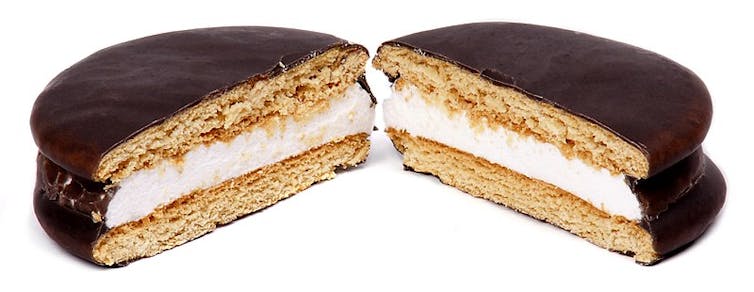
Some think the moon pie may have inspired the s’more. Evan-Amos
Today, the s’more has become so popular that it’s inspired a range of spin-offs. You can eat a s’mores-flavored Pop Tart for breakfast, munch on a s’mores candy bar for dessert and even unwind after a long day at work with a s’mores martini.
As I often tell my students, the health-conscious Sylvester Graham is probably rolling over in his grave after what became of his beloved cracker. Hope you enjoyed a history of the S’More, a favorite campfire snack.
It is a bizarre world, the United States drug market. Although the federal government, specifically the U.S. Food and Drug Administration, must first deem a medication “safe and effective” before it is distributed to patients all across the country, the drug sometimes comes back to bite them in the ass. In fact, here are 10 FDA-approved drugs researched less than cannabis on the market!
There have been a number of medications recalled throughout the years because their side effects end up proving detrimental to patients. This is funny, considering that the cannabis plant still remains a Schedule I dangerous drug under the DEA’s Controlled Substances Act. Meanwhile, somewhere around 30 states have legalized it for medical purposes. So far, no shocking side effects have reared their ugly head. Still, the feds continue to block any chance of making it easier to research the herb to find out if it fits the criteria of an FDA approved medication. The only exception being the recent green light of GW Pharmaceutical CBD drug Epidiolex – a deal that cost the company billions to bring to fruition.
The fact that the FDA sometimes has to recall prescription drugs shows that the research process leading up to the all-important seal of “approval” is a bit of a scam. And the agency, perhaps trying to avoid getting wrapped up in a major scandal, does not make a lot of noise when it comes to pulling these drugs off shelves. In fact, most people would never know a drug has vanished from the market unless they were taking it at the time when the kill switch was tripped.
The FDA says it only does this “when the risks of the drug outweigh its benefits.” Basically, when harmful side effects come up “that were not known at the time of approval.” This happens when the drug simply isn’t given enough attention in the research phase. Considering there have been thousands of cannabis studies conducted over the years, here are 10 medications that were researched less than weed.
Accutane: The drug was marketed for nearly 30 years as an acne treatment. It was later found to cause a variety of birth defects and even miscarriages. The drug was also found to cause suicidal thoughts.
Darvocet: It was popular painkiller for more than five decades. It was later banned after being linked to thousands of heart-related deaths.
Cylert: Prescribed for around 30 years for ADHD, this drug was eventually pulled from the market for causing liver damage.
Posicor: This drug was used to treat hypertension and chronic angina pectoris. But it was short lived. After a year on the market, it was recalled for its capacity to have fatal interactions with common drugs.
Redux (Dexfenfluramine): A popular, but short-lived appetite depressant that was often prescribed with Phentermine (often referred to as Fen-Phen). It was pulled after just one year for causing heart problems.
Selacryn: The drug was marketed as a way to lower blood pressure. Come to find out, the drug company suppressed its negative research. It was later shown to cause liver and kidney damage.
Vioxx: Prescribed to millions of people as a NSAID painkiller (For example: aspirin, ibuprofen), the drug was yanked from the market after causing heart attacks and sudden cardiac deaths.
Quaalude: A popular sedative for more than 20 years was eventually declared a Schedule I dangerous drug after causing a variety of side effects, including seizures and death.
Permax: The drug was prescribed for almost 20 years for Parkinson’s disease. It was recalled for obstructing blood flow to the heart.
Omniflox: Once considered a groundbreaking antibiotic, the drug was pulled from the market after five years because it caused blood abnormalities, kidney failed and life-threatening breathing distress.
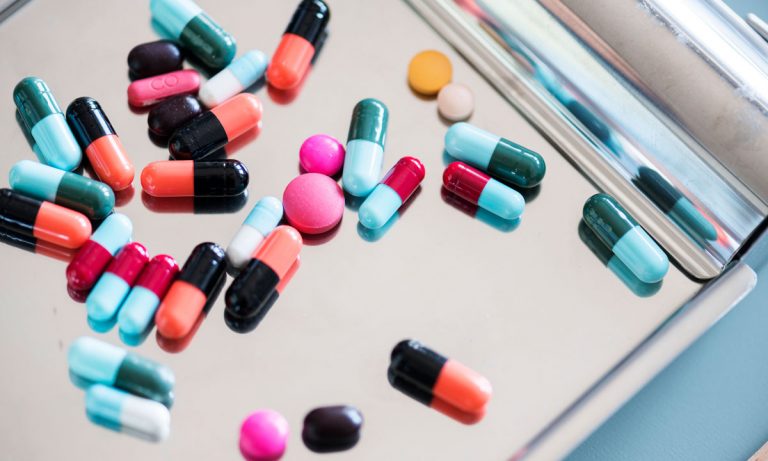
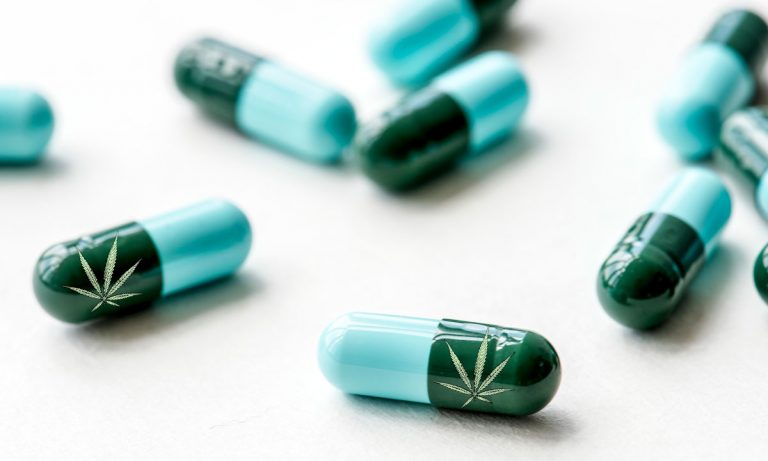
As time goes on, more and more pharmaceutical-based companies are getting involved in the cannabis industry including FSD Pharma. Recently, FSD Pharma entered themselves into the growing pill market. Not too long ago, FSD Pharma initiated and entered themselves into a non-binding letter of intent with a huge leader in the swiftly growing cannabis pill market, otherwise known as Canntab Therapeutics Limited. According to PR Newswire, FSD Pharma and its subsidiary—FV Pharma Inc. sealed a collaboration and profit-sharing agreement with Canntab Therapeutics Limited for the production and market of oral dose cannabis delivery platforms. Read on to find out more about FSD Pharma and Canntab, this recent agreement, and the kinds of cannabis products that’ll be manufactured, produced, and sold in the future.
About FSD Pharma & Their Mission
For those who don’t know, FSD Pharma owns a license to produce cannabis under the Access to Cannabis for Medical Purposes Regulations (ACMPR) via its completely-owned subsidiary, FV Pharma Inc. Their license was originally awarded last year on October 13th. FSD Pharma is headquartered in Cobourg, Canada in the former Kraft plant, which is about an hour away from Toronto, Ontario.
Some of you may wonder what FSD Pharma’s mission is. According to their management team, FSD Pharma’s mission is to effectively transform their facility into the biggest indoor hydroponic cannabis facility in the world. One of the intentions of this company is to target every legal aspect of the cannabis industry, which includes processing, manufacturing, cultivation, extracts, research, and development.
About Canntab Therapeutics Limited & Their Mission
In addition, the other company that’s a part of the recent FSD Pharma collaboration and profit-sharing agreement is Canntab Therapeutics Limited. Canntab is known as a Canadian cannabis oral dosage formulation company that’s based in Markham, Ontario, Canada. Canntab participates in the research and development of various cutting-edge pharmaceutical grade creations of different cannabinoids. Thus far, Canntab has successfully developed an in-house form of technology to deliver standardized medical cannabis extracts from certain strains in an assortment of continual yet prolonged release pharmaceutical dosages for therapeutic uses. Overall, Canntab’s mission consists of putting ‘medical’ in medical cannabis.
Details About FSD Pharma And Canntab’s Collaboration & Profit-Sharing Agreement
Moreover, as briefly mentioned above, FSD Pharma and Canntab decided to team up to produce and market oral dose cannabis delivery platforms. FSD Pharma plans on supplying up to 10,000 square feet of space for Canntab at their 620,000 square foot facility in Cobourg, Ontario in which building, and installation will take place at Canntab’s own expense and at their own manufacturing facility within the bigger FSD facility. This section of the FSD facility will be referred to as “Canntab Premises”.
Furthermore, the “Canntab Premises” will function in accordance with good manufacturing practices in which a collection of original cannabis oral dose delivery platforms will be produced such as gel capsules and tablets in addition to other variations of cannabis-based products. These products will include both pain-relievers and sleep aids. Both FSD Pharma and Canntab foresee incredible opportunities through offering several different pharmaceutical cannabis-based tablets. Overall, the intention of the “Canntab Premises” is to provide Canadian international markets including Germany and Australia with these products.
Services FSD Pharma Plans To Offer Canntab & Royalty Percentages
On another note, FSD Pharma plans on helping Canntab properly prepare the items necessary to submit an application to Health Canada in order for Canntab to attain a license. Specifically, under the non-binding letter of intent’s specific terms, FSD Pharma will help Canntab attain a license to both process and sell different cannabis products in accordance to the Cannabis Act.
Due to the services FSD Pharma will offer Canntab, Canntab will give FSD Pharma a specific royalty percentage and profit-sharing rights based on the sale of Canntab products. Additionally, Canntab will give FSD Pharma 50 percent of Canntab’s retail sales profits that accumulated from their products. Also, FSD Pharma will be authorized to recollect 50 percent of the profits generated by FSD pharma sales of Canntab products. Then, Canntab plans on paying FSD Pharma a royalty of 3.5 percent of Canntab’s sale price for all the products that are manufactured and sold from “Canntab Premises”. From here, the non-binding letter of intent’s specific terms will be replaced by a definitive agreement in which both Canntab and FSD Pharma plan on executing by July 15th of this year. The following was stated about this agreement and overall move by FSD Pharma’s Chief Executive Officer, Thomas Fairfull:
Pills and tablets are the norm for most patients’ method of consuming medicine and nutraceuticals. It’s still difficult for doctors and other alternative health practitioners to prescribe smoking as a form of medicine. This agreement with Canntab adds to the growing FSD Pharma suite of cannabis-based products to be manufactured at our large facility.”
In your opinion, which large pharmaceutical company will be the next one to get involved in the cannabis industry? Stay tuned to find out while also witnessing the progression of pharmaceutical grade cannabis products. Please keep in mind that the information included in this article was pulled from PR Newswire, in which different assumptions of theirs were used to draw conclusions. The forward-looking information that’s in this piece and in the PR Newswire release is based on opinions and estimates of management at the date the information was produced.
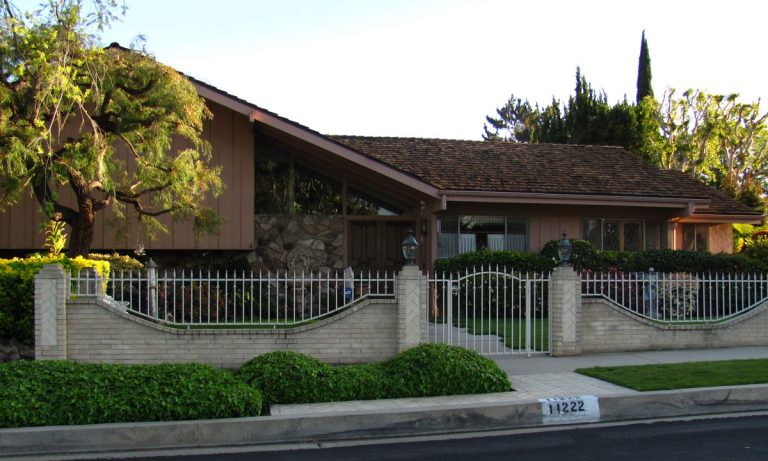
One of the most photographed homes in America is up for sale. Better known as the Brady Bunch house, the dwelling just hit the market for $1.85 million. And according to Deadline, one of those interested in scooping up the property is a developer, who may decide to tear it down.
The two-bedroom, three-bathroom house, located at 11222 Dilling Street in Studio City, CA., sits on a third of an acre. It’s on the market for the first time in 45 years, last purchased by Violet and George McCallister for $61,000 in 1973 — one year before the series ended.
But if you think you know what the interior of the home looks like, you probably don’t. Only the home’s exterior was used on the show. As with most sitcoms, the rest was shot on a sound stage.
“I have several buyers already interested,” Jodie Levitus Francisco, a realtor with Berkshire Hathaway, tells Deadline. “They’re developers for the lot size. They might tear down, but the listing agent said the family was hoping to get someone to preserve the house, and at $1.85, I don’t know if a developer would pay that much.”
Ernie Carswell, a Douglas Elliman agent who is listing the property, tells the LA Times that the split-level house has been updated and upgraded but retains almost the exact interior decor from that era.
https://www.instagram.com/p/BlbIPOdnpz4/
“This is a postcard of exactly what homes looked like in the 1970s,” he said, adding:
We’re not going to accept the first big offer from a developer who wants to tear it down. We’re going to wait a few days, in case there are others who want to purchase it as an investment to preserve it.
Carswell says he expects to see an “avalanche” of emails and phone calls in regards to the property.
Mrs. McCallister, who previously owned the home, had five sons and, according to Carswell, wasn’t bothered by the throngs of tourists coming by here property to take a looksie. However, he tells the LA Times, after the public became a little too comfortable and started coming up to the front door, a “low brick wall” was built to keep them out.
The McCallisters, who have both passed away, left their home to their children, who are now selling it.
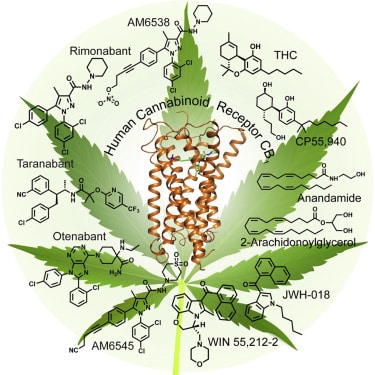
In its October 2016 issue, the journal Cell published the first atomic-level images of the human brain and cannabinoid receptor 1 (more familiarly known as CB1), the neuroreceptor that responds to THC, one of the key active ingredients in marijuana.
This is more than a cool new visual; it will help scientists understand exactly how THC functions in the body and why some molecules related to it have very different—and sometimes harmful—effects. It might also aid in designing drugs that are even more effective and more targeted than THC to treat conditions including pain, inflammation, obesity, and fibrosis.
This might not sound like sexy, cutting edge medical research, but the imaging posed a formidable technical challenge to an international team of researchers.
Neuroreceptors are structures nerve cells use to communicate with each other via electrical signals that are carried by an array of chemicals called “neurotransmitters.” You can’t just take a photo of neuroreceptors because they are far too small to be seen by lightwaves. We can only glimpse them through X-rays, which have minuscule wavelengths. And even then, we can only do it indirectly via a technique called X-ray crystallography.
The process is easy enough in theory, although fiendishly hard to execute: You bombard an atomic-level structure with X-rays, which bounce off of it in mathematically precise ways. If you record where the X-rays land, you can work backward to calculate the shape of the object that caused these deflections. Make sense?
The difficulty is that you can’t use just once object—say a CB1 receptor—because it’s still far too small. You need tens of thousands of molecules to disrupt X-rays enough to get measurable results. But if you have tens of thousands of molecules randomly jumbled together, you will get an equally random scatter of X-rays. In order to get useable evidence, every single one of the molecules must precisely aligned.
God knows how they did it, but the scientists managed to “crystalize” the CB1 receptors (that’s the lingo for putting them into a stable, uniform order) and to interpret the X-ray pattern, which proved more complex than expected. (Evidently, the receptor that’s responsible for getting us high has a suitably trippy shape.)
So, enough prelude: What does CB1 look like?
From an aesthetic standpoint, it’s a mess.
I admit that over the course of writing all these medical marijuana posts, I’d imagined my own, somewhat romanic, version of the CB1 receptor—something like an oyster mushroom or rhododendron leaf—a sort of frilly-edged cup-like frond swaying languidly from a little stalk firmly rooted in a neuron. In the hard gaze of science, however, he receptors look like an unruly wad of New Year’s Eve streamers.
A less subjective description is this: Seven transmembrane helices (think DNA) that are connected by six stiff and wiry loops (three extracellular and three intercellular, if the difference means anything to you). Somewhere deep in the structure is a funnel that receives the THC molecule. But to my untrained eyes the whole thing is an unintelligible mess.
If you’ve read this far, though, you’re clearly interested—so don’t take my word for it: Check out the images yourself and download the free article.
One of the things we treasure most is our memories — good or bad — which makes it disheartening to learn that childhood memories, specifically, aren’t as accurate as we once believed. These memories are sometimes surrounded in confusion, like when you recount an event with someone that was there only to discover that there are apparent errors in both versions of the story, leading to inevitable disagreement.
According to new research, over 40 percent of our very first memory is false. These memories, from ages one to three, get fuzzier as people get older.
Science Daily reports that the research, conducted by the University of London, surveyed over 6,000 people, asking participants to detail their first memory along with their age at the time. Participants were told that the memory had to be certain and that it couldn’t be based off a photo or a story from a family member. Out of the descriptions acquired, researchers studied the language used, the descriptive detail, and more.
Researchers believe that memories before the age of two are based on fragments of an early experience that recalls an object or a feeling. These memories are later filled in with the subjects’ knowledge of their childhood, which is obtained throughout their life from photos or family conversations. Researchers concluded that four out of 10 middle aged or older adults have fictional memories of their infancy.
In our study we asked people to recall the very first memory that they actually remembered, asking them to be sure that it wasn’t related to a family story or photograph. When we looked through the responses from participants we found that a lot of these first ‘memories’ were frequently related to infancy, and a typical example would be a memory based around a pram […] This type of memory could have resulted from someone saying something like ‘mother had a large green pram’. The person then imagines what it would have looked like. Over time these fragments then becomes a memory and often the person will start to add things in such as a string of toys along the top.”
Professor Martin Conway, co-author of the study, concludes that the most surprising part of all this research is the fact that people don’t know that their memories are fiction. Even when someone tells them that their memories are false, people have a hard time believing them.
We are halfway through July and there are still no recreational cannabis dispensaries in Massachusetts. Though slated for a July 1 opening celebration that was a long time coming already, the shops are yet mired down by delays and it’s still unclear when they’ll be able to start opening.
Steve Hoffman is the chairperson for Massachusetts’ Cannabis Control Commission and he told reporters last week that a completed application for a cannabis testing laboratory had been received. The first completed application in the state and one of the main reasons why recreational pot shops still haven’t opened.
Hoffman predicts that if the three existing medical marijuana testing labs apply for the positionings that they should be ready to hit the marketplace along with the newest application in a relatively timely manner. The commission’s next vote on such things is July 26, but even if everything goes smoothly and testing facilities are at the ready, recreational cannabis is still a month or more away. And that’s optimistic.
Locally, things aren’t much better in the hurry up and wait department. Recreational and now even medical cannabis dispensaries are required to get a Host Community Agreement to be signed off on by local officials. Unfortunately, the community isn’t held accountable to complete the agreements in any sort of timeframe, so some have chosen to really drag their feet.
Dragging their feet is better than digging them into the dirt and not giving an inch, however. As is written in the law, if a community wants to ban cannabis operations from taking place inside their little borders, they can do so, thus another lack of licences to be signed off on.
Representative Mark Cusack and Senator Patricia Jehlen, both chairs of the Joint Marijuana Policy Committee, wrote a letter to Hoffman and the commission as a whole regarding the committee’s concern for both the delays and the communities opting out of the marijuana marketplace.
“Of particular concern to us is what we understand to be the wide-spread practice by municipalities and prospective applicants to enter into host community agreements that undermine state statute and our collective efforts to disincentivize and successfully migrate the illicit substance of marijuana within the Commonwealth into a legalized, well-regulated, tested, and taxed system,” they wrote in no uncertain terms.
Indeed, the Commonwealth, for the most part, still waits with great anticipation, and likely will continue to do so for the foreseeable near future.
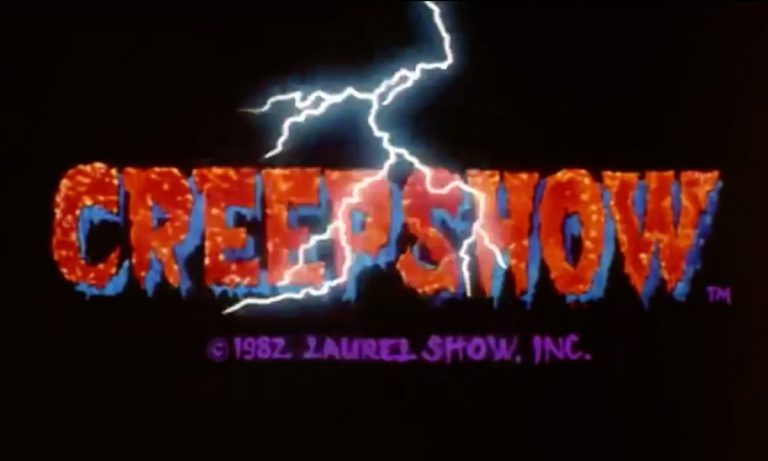
The unending stream of reboots has no end in sight, with Greg Nicotero helming a TV adaptation of the 80s movie Creepshow.
Nicotero, known for his make-up work and producing role on “The Walking Dead,” announced that the show will be developed with Shudder, a horror streaming service owned by AMC. “Creepshow is a project very close to my heart! It is one of those titles that embraces the true spirit of horror…thrills and chills celebrated in one of its truest art forms, the comic book come to life! I’m honored to continue the tradition in the ‘spirit’ in which it was created,” stated Nicotero in a press release.
This will be Nicotero’s first time directing but he’s had a lot of experience in the industry, working in the make-up department with George Romero, the original director of the 1980s movie, along with other directors of blockbusters such as Robert Rodriguez and Michael Bay.
The Creepshow TV adaptation will be an anthology series which will focus on telling stories that are original, fun and scary. It’ll be interesting to see the places the show will go considering that the original film was an homage to the horror comic books of the 50s.
Even though the movie is a cult classic, spawned two sequels, and was Warner Bros. most successful film in 1983, it’s mostly memorable because it was Stephen King’s first screenplay. He also had a pretty amazing cameo in the final version of it. The series is scheduled to debut on Shudder in 2019.

 As I often tell my students, the health-conscious Sylvester Graham is probably rolling over in his grave after what became of his beloved cracker. Hope you enjoyed a history of the S’More, a favorite campfire snack.