Monday, June 15, 2026
Home Blog Page 944

Mastering Bong Etiquette

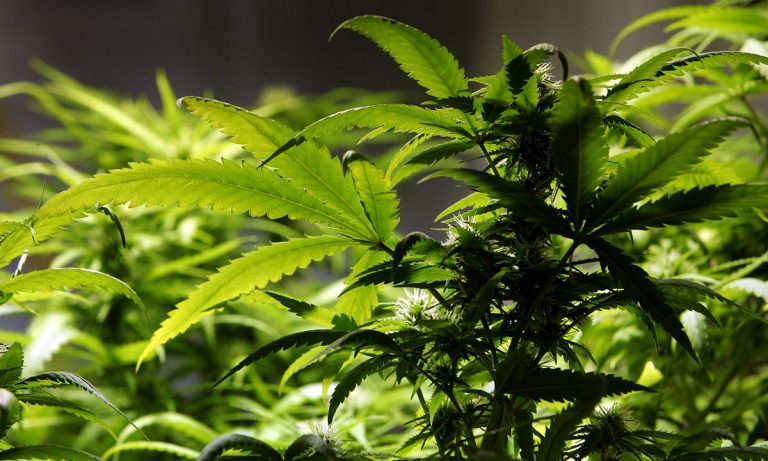
As the cannabis industry matures and smoking technology improves, you would think the bong would fall out of favor. You would be wrong. Flower is still popular and not just for joints.  It is the traditional user that savors the flavor and high.  But, you want to start mastering bong etiquette as you enjoy it with friends.

Here are bong etiquette tips that everyone should follow.

Most cannabis enthusiasts hang onto their water-filtrated device for many reasons:

  • It is a smoother smoke than joints or pipes
  • It is a functional piece of art that matches the owner’s personality
  • It is a communal, sharable experience
  • Tradition! It is one of those cannabis customs that just won’t die

A typical bong includes a slider bowl which leads to a chamber filled with water. Users draw water-filtered smoke from a mouthpiece. The bowl is located near the base of the device and is inserted into the body of the bong where the water sits. The water, allows the smoke to filter through the water before hitting the lungs, providing for a smoother experience. As the smoke is drawn through the water, it helps cool the smoke which not only helps in filtering those unwanted carcinogens and ash, it also helps in cooling the smoke.

RELATED: 4 Ways To Enjoy Weed Without Smoking It

Glass, Ceramic Or Acrylic?

Most bong enthusiasts will tell you that glass is the only way to go. Not only is glass considered the best conduit for the smoke, it is aesthetically pleasing. Glass artists around the globe still make stunning pieces of functional art.

Glass bongs are pricier and are, obviously, more fragile than others. But consider it more than a device to smoke marijuana; it is an extension of your artistic sensibilities.

Ceramic and acrylic bongs do the job just fine, so if cost or durability is important to you, these are for you.

Your Bong Experience:

Clean it: First of all, keep it clean! Nobody wants to put his or her mouth on a filthy bong. Even if the mouthpiece is clean, it is just good manners to take good care of your piece – especially if you are going to share it with others. Sure, your best friend won’t mind, but is that how you treat a friend?

Just add water: Add enough fluid to the chamber to allow the pipe to be under water. And, yes, water is what you want to put in your bong. Juice, booze or soda may sound great, but it does little to enhance the experience. Stick with H20. If you take a draw and water gets in your mouth, you’ve overfilled the chamber. Simply pour water out until the slider is submerged and you get a nice bubbly sound.

Fill the bowl: How many of you will be partaking? And how big is your bowl? Those are really the only two questions you need to ask. Let’s assume you have a standard-sized bowl and you are sharing with two friends. Fill the bowl about half full (¾ gram or so) of cannabis. You can put ground cannabis in your bowl or a chunk off of a bud. Either will work, although I prefer unground bud.

Bong etiquette: The supplier of the herb usually gets to go first. When lighting, make sure your lighter captures just a corner of the pipe – do NOT burn off the entire top layer of green. Ideally, there will be enough “fresh green” to allow the second user to get some. Burning the top layer of green all for yourself is akin to picking out all the exotic nuts in a can of mixed nuts and leaving the peanuts for everyone else. Can you say party foul?

Take it Easy: There is no need to overwhelm your lungs with heavy smoke. You don’t want to cough up a lung – especially on your first turn. Put the mouthpiece around your lips, light the herb in the bowl and gently inhale the smoke until you feel it in your lungs. Stop inhaling and hold it for a second or two before exhaling.

Don’t ‘Hold the Microphone’: Once you are handed the bong, take your turn and pass it to the next person. Do NOT keep talking about your cute dog or your obnoxious co-worker. This is called “holding he microphone” and is bad form. First of all, nobody is listening to your story; they are all waiting for you to pass the bong. Secondly, you are wasting precious cannabis. Waste not, want not.

Pass to the Left: After you have had your turn (one of two solid draws), carefully pass the bong to the person on your left. Why? Who knows. It’s just the way polite cannabis society does it. By consistently passing the same direction, you ensure that everybody takes their turn and gets what they need. Note: Pass the lighter, too.

Know Your Limit: Just because the bong has come around to you again, there is no need to continue. This is NOT an Olympic competition; it is supposed to be an enjoyable, relaxing and social experience. Simply take the bong and hand it to the person on your left.

Blowing the Ghost: When the herb is done, the ashy residue usually gets sucked into the water chamber. This is what is called “cashing the bowl” or caching the bowl” — experts just can’t seem to agree on the proper spelling. But all it means is that you either need to fill up the bowl again or put the bong down and enjoy your experience. If the bowl is done while it is your turn, tell the person to your left that the bowl is empty. It’s like handing someone an empty bottle of wine. Who would do that to a friend? Don’t be that smoker.

Watch Your Hygiene: Do you think you may be getting that bug that’s going around? Do you have a cold sore on your lip? Do you have a slight cough? Don’t partake in the party. This is the time for you to either abstain or use a personal device.

If You Break a Bong, You Own the Bong: Yep. Those are the rules. Sorry.
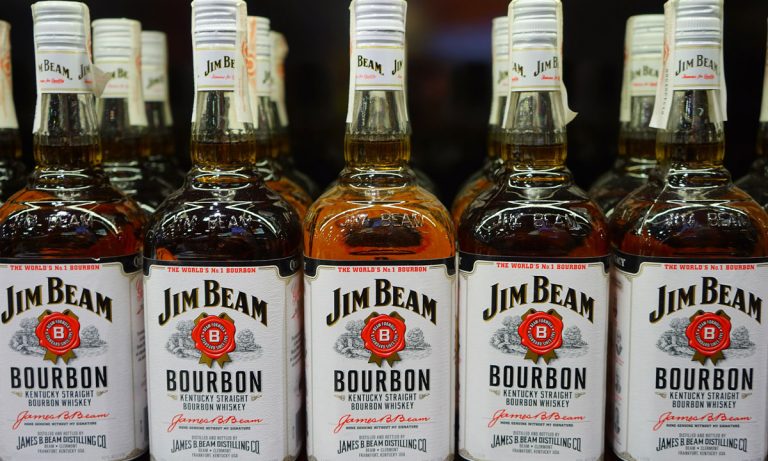
Alcohol Heir Has Plans For Cannabis Empire

Jim Beam, one of the world’s most famous bourbon brands, has a long history of taking products out of the murky shadows of illegality and into the light of lawfulness. It appears one heir of the family fortune will replicate the success in a new sector: Cannabis.

According to a Bloomberg report, Ben Kovler, whose great-grandfather Harry Blum helped build Jim Beam into a global leader, plans to take his marijuana business public. Kovler, 39, sees similarities between the liquor industry of the 1930s and today’s market for cannabis.

Kovler is the founder, chairman and largest shareholder of Green Thumb Industries, a cultivator, processor and dispensary business operating in six U.S. states. Kovler plans to take GTI public in June. GTI owns and operates 12 marijuana dispensaries in Maryland, Massachusetts, Nevada, Pennsylvania and Illinois, and has plans to expand to Florida. With products in more than 100 stores, the company’s revenue topped $20 million last year and should exceed $70 million this year, Kovler told Bloomberg.

“A lot of people think this stuff is about liquidity and finding exits, and I firmly believe the bigger opportunity for us is to go to Canada and use that currency to increase our scale,” GTI investor Sanjay Tolia told Bloomberg. Tolia is the founder of Bengal Capital, a trading firm. “It’s hard to do that if you’re not public.”

Legend has it that James B. Beam Distilling Company was founded in 1935 by Jeremiah Beam, Harry L. Homel, Oliver Jacobson and Harry Blum. Six years later, Blum bought out his partners for roughly $1 million.

The company plans to evangelize the virtue of vaporizer products. “We’re taking the world from moonshine to cocktails,” Kovler told Bloomberg. “People come in complaining that the moonshine burns their throat, and we say, ‘Here, try this rum and Coke.’ We’re seeking to create an authentic relationship with consumers in the same way that alcohol companies do with hard liquor, beer and wine.”

World’s Biggest Weed Deal Ever: A $2.3 Billion Business Merger

Two of the largest cannabis companies in Canada merged on Monday, making it the largest marijuana deal in history. Aurora Cannabis will purchase rival MedReleaf for $2.51 billion as Canada gets closer to national cannabis legalization scheduled for July.

The historic deal is just the latest in a string of mergers and acquisition in the nascent marijuana industry. Aurora and MedReleaf expect to produce a combined 570,000 kilograms (nearly 630 tons) of cannabis per year.

“This is a transformational transaction that brings together two pioneering cannabis companies, both committed to high technology, high quality and low-cost production, to create a powerful platform for accelerated growth and success on a global scale,” Terry Booth, CEO of Aurora, said in a statement. “The combination strengthens our capacity to service the rapidly expanding global medical cannabis markets, and amplifies our early-mover advantage,” Booth added.

The deal is Aurora’s second large acquisition of the year, coming just months after it bought CanniMed Therapeutics. Shares of Aurora and MedReleaf each rose 1 percent on Monday morning on the Toronto Stock Exchange.

Large-scale Canadian cannabis farmers are fighting for market share as Prime Minister Justin Trudeau pushes to legalize recreational use this year. Deep-pocketed Aurora has acquired more than 10 companies in the past two years. “We’re not done,” Booth said. “Over the next couple weeks you’ll see some more activity from Aurora,” but nothing as large as the MedReleaf deal, he said.

In another deal Monday involving Canadian cannabis firms, Canopy Growth announced it agreed to buy the 33 percent stake in BC Tweed Joint Venture that it doesn’t already own.

Among the highlights of the Aurora-MedReleaf deal:

  • Industry-leading scale: The transaction brings together two leading operators with a combined nine facilities in Canada and two in Denmark.
  • Low production costs and industry-leading yields: Aurora’s automated greenhouses are expected to deliver industry-leading efficiency and low production costs, delivering sustainably robust margins. MedReleaf’s high-yield cultivation is expected to further enhance productivity and reduce costs across the combined entity’s facilities.
  • Extensive distribution channels in Canada and internationally: The two companies have established distribution agreements with Alberta’s Alcanna (formerly Liquor Stores), Quebec’s SAQ, Pharmasave and Shoppers Drug Mart in Canada, among others.

People Are Still Being Arrested For Marijuana In NYC And Race Is A Factor

A major investigation by the New York Times finds continued racial disparities in marijuana enforcement and arrests in every neighborhood in New York City.

The Times found:

Across the city, black people were arrested on low-level marijuana charges at eight times the rate of white, non-Hispanic people over the past three years. Hispanic people were arrested at five times the rate of white people. In Manhattan, the gap is even starker: Black people there were arrested at 15 times the rate of white people.

The Times also debunked the NYPD explanation for the disparities, which the police attribute to more 311 and 911 complaints in certain neighborhoods.

“New York’s marijuana arrest crusade is causing significant harms to the City’s most vulnerable communities and has long been used as a justification for the hyper-policing of communities of color,” said Kassandra Frederique, New York State Director for the Drug Policy Alliance. “NYPD is funneling tens of thousands of New Yorkers into the maze of the criminal justice system every year and putting people at risk of deportation, losing custody of their children, and barring them from employment and housing – all for nothing more than a small amount of marijuana.”

“Given New York’s embarrassing history as the marijuana arrest capital of the world, we must focus on repairing the harms of prohibition and ending the biased policing practices that have ruined the lives of so many young Black and Latino New Yorkers. Ultimately, the best way to address the disparities and challenges posed by prohibition is to create a system to tax and regulate marijuana that will reinvest in communities that have been most harmed by the marijuana arrest crusade,” Frederique continued.

DPA has consistently documented the NYPD’s racist marijuana enforcement over the past decade, including the release of multiple reports.

DPA is currently leading a campaign, Start Smart New York, to pass marijuana legalization in New York, with a focus on racial, social and economic justice.

Last week, Assemblymember Crystal Peoples-Stokes and Senator Liz Krueger were joined by organizations and groups dedicated to criminal justice reform, civil rights, and public health as they stood in support of the Marijuana Regulation and Taxation Act (MRTA), a bill that would legalize the production, distribution, and use of marijuana for adults over the age of 21. The bill would effectively end marijuana prohibition in New York State and would create a system to tax and regulate marijuana in a manner similar to alcohol.

The legislation also ensures tax revenue generated from marijuana legalization is put to use repairing communities devastated by harsh enforcement of prohibition by directing revenue to fund job training, adult education, youth development programming, establish or expand community centers, bolster re-entry services for the formerly incarcerated, and otherwise support community-focused programming in communities that have been disproportionately impacted by the drug war, in addition to education, public health, and drug treatment.

Tantra Speed Dating: What The Hell And Why Should I?

Tantra speed dating is just like speed dating, except that in this scenario, strangers pledge their unconditional love for each other.

This new phenomenon started in New York with the Tantra Institute. Also known as “Yoga for love,” the institute tries to give something more meaningful to their participants, offering a different and deeper way of getting to know a potential romantic partner.

People who go to these events sit in a puja circle (they lay down on top of each other, like a weird renaissance painting) and engage in “relationship skills” and “fun connection” exercises. Nope, this isn’t an orgy, even though it sounds like one.

These meetings, according to an essay from someone who went there, draw inspiration from tantra, meditation, partner yoga, and improv acting, which sounds like a trip…and much more entertaining than yet another unsuccessful date facilitated by a dating app.

According to the author, like a lot of people who go on dating apps, these people were looking for real connections and life changing moments. A boyfriend, a girlfriend, whatever.

Tantra Speed Dating is run by a sort of moderator, who tells people what to do. It also goes deep — too deep for a first date. Here, people are forced to talk about the important men or women in their lives, thanking them for their influence and confessing all of these things to a practical stranger.

While online dating mostly sucks, it’s a little better than having strangers massage your back and tell you about their most private and intimate experiences. But that’s just us, though, maybe people are really into this thing. That’s cool too.

Study Shows Oncologists Not Equipped To Talk Cannabis With Patients

In November 2016, the lead study members of Medical Oncologists’ Beliefs, Practices, and Knowledge Regarding Marijuana Used Therapeutically: A Nationally Represented Survey Study sent surveys to a random 400 medical oncologists from across the nation on what the title entails.

Cancer is a qualifying condition for medical cannabis in all legal states but one and it is a constant topic in the community for good reason. Cannabis has been shown to be the only medicine that works for some of the side effects of cancer due to chemotherapy and other treatments, such as nausea, loss of appetite and pain in countless cases around the world.

It may be one of the most discussed topics in the cannabis world, but that message doesn’t seem to be reaching the people who need the information most, the doctors who treat the cancer. The survey found that while 80% of the respondees said that they had discussed medical marijuana with patients, only 30% felt equipped to do so.

Many oncologists failed to respond at all, the response rate at 63 percent. We can only speculate at their hesitation to respond, but it seems that they would fall in the ranks of simply not knowing how to respond, much like the survey showed a gross lack of knowledge on the subject.

Forty-six percent of the oncologists did end up recommending the use of cannabis to patients during said discussions, showing some open mindedness on the part of some doctors who clearly feel uninformed.

The study concluded in its abstract that the results show “a concerning discrepancy between oncologists’ self-reported knowledge base and their beliefs and practices regarding MM… A majority believes MM is useful for certain indications. These findings are clinically important and suggest critical gaps in research, medical education, and policy regarding MM.”

But maybe what the results show are an opportunity. The first genius to make an app with a collection of studies from different countries on the effects of cannabis on cancer and cancer symptoms, with an objective summary page on what medical cannabis has been found to be useful and an easy navigation to see a list of the most common symptoms, treatment methods and ways to discuss them with patients will win. Not for themselves, but for a community thirsty for knowledge and the patient base that needs them.

Here’s How The THC In Medical Marijuana Can Combat HIV

Cannabis has been reliably shown to whet the appetite and soothe chronic neuropathic pain. But there is evidence that cannabis might actually combat the disease itself.

We know that many HIV/AIDS patients find relief in cannabis. In fact, science tells us that as many as one in three do. Cannabis has been reliably shown to whet the appetite and soothe chronic neuropathic pain. But there is evidence that cannabis can do more than treat the symptoms of HIV; it might actually combat the disease itself.

In a 2014 study, researchers at Louisiana State University Medical Center examined the guts of rhesus monkeys infected with simian immunodeficiancy virus, the monkey version of HIV. (I’m assuming the monkeys were just caught up in the hedonism of the late ‘70s, like the rest of us, and living without any regard for tomorrow.) The gut is a major center of the immune system, which HIV (and SIV) infiltrates and then exploits to reproduce itself.

RELATED: 8 Facts and 1 Big Speculation About Marijuana And HIV

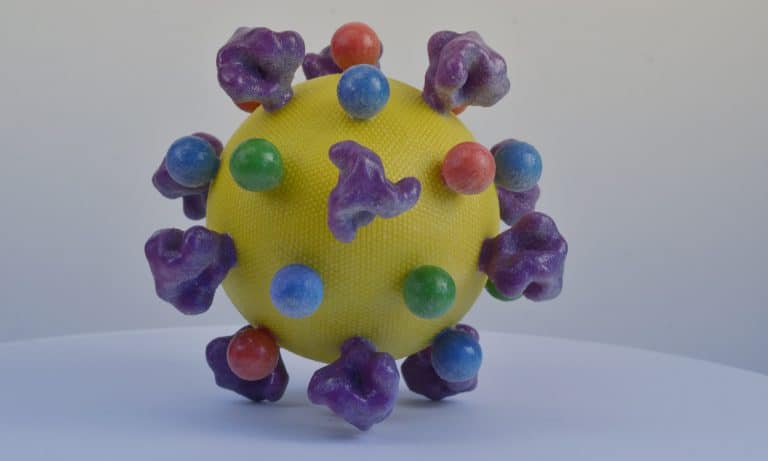
Coincidentally, the gut is also host to a great abundance of cannabinoid receptor 2 (CB2) cells. Or is it coincidental? Scientists have long speculated that CB2 cells play a role in immunity—but what that role could be is far from clear.

The Louisiana State team treated the monkeys with twice-daily does of THC. According to lead researcher, Dr. Patricia Molina, “we thought it was going to increase viral load.” But the results were quite the opposite. After 17 months of exposure to THC, the monkey’s guts showed lower viral loads, along with increased abundance of CD4 and CD8 cells—which are varieties of immunity-conveying T cells that are typically devastated by HIV. In other words, the CB2 cells stimulated by THC did a kick-ass job keeping SIV at bay.

RELATED: Marijuana Can Protect The Brain From The Effects of HIV

These findings jibe with an earlier study by the Mount Sinai School of Medicine, which showed that, in tissue samples, CB2 blocks a certain signaling process that HIV uses to infiltrate other cells. But the two studies don’t exactly address each other: The monkey-gut report shows an effect during the early stage of infection, while Mount Sinai’s in vitro tests apply only to the very late stage.

How Much More Sex Do You Have In An Open Relationship

The more the merrier has long been used as an excuse to bring along more people – but is it true?

In today’s world, there are situationship, sides, and more. So how much more sex do you have in an open relationship? The more doesn’t always make the merrier when it comes to sex. Contrary to what people in monogamous relationships might believe, being in an open relationship doesn’t automatically make your sex life better, a new survey found.

RELATED: 8 Questions You Need To Ask Before You Have Sex With Someone

Conducted by Berlin-based research company Dalia, the survey asked more than 11,000 people from the European Union between the ages of 14-65 about their romantic lives.

Only 2.5% of those surveyed were in open relationships, but for those who were, their reporting for sexual satisfaction were slightly lower.

According to the survey:

71 percent of people in polyamorous or open relationships are satisfied with their sex life compared to 82 percent of people in monogamous relationships and 80 percent of people who are married, in civil unions or partnerships. The least sexually satisfied people are those who are single and looking for a relationship; only 40 percent are satisfied. Single people are also more likely to choose not to divulge information about their sex life.

The increase in sexual satisfaction might just be a matter of proximity. If the person you’re trying to get busy with is in the same room with you, you’re more likely to get it on:

People who live together (as couples with children often do) have readier access to sex than those in relationships who don’t live together. The EU survey only found 275 people, or 2.5 percent of the total, who said they were in open relationships.

RELATED: 4 Ways Weed Works in The Bedroom

If you’re only living with one person—instead of pursuing multiple people—you’re more likely to have regular, satisfying sex. Data shows The most interesting and supporting fact is that the vast majority of open marriages fail- according to research, open marriages have a 92% failure rate. This just goes to show that non-monogamy doesn’t work for the vast majority, especially not in the long term. Whether it is as satisfying to your sense of adventure as the open-relationship folks is up to you.

This Is The Right Temperature For The Perfect Marijuana Dab

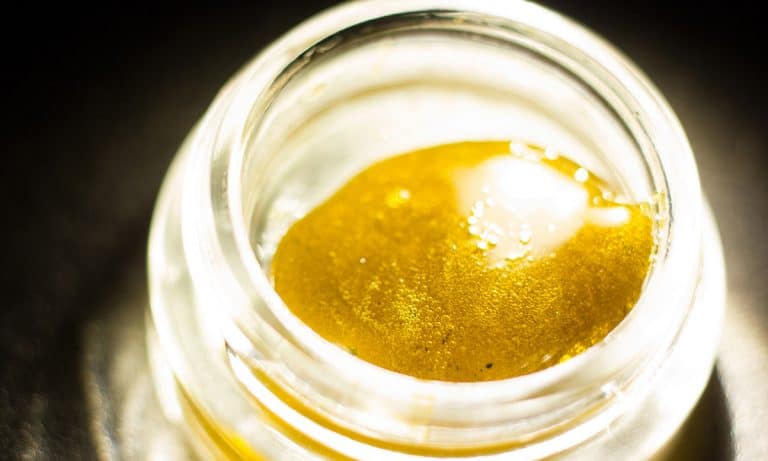
Before getting into the perfect temperature for dabbing, let’s talk about what dabbing is. Nothing like a joint, a dab is a small dose of highly concentrated cannabis heated on a hot surface and then inhaled.

According to The Fresh Toast‘s cannabis editor, Al Olson:

Focus on the word “concentrate” — and fully grasp the meaning. Cannabis concentrates are exactly what they sound like: Take the herb and extract all the THC out of it as you can. The extreme amount of THC in the concentrate means you will need very little (just a dab) to achieve the psychoactive effect.

These nailhead-sized concentrated doses are formed by extracting the THC, usually with the help of a solvent like butane. And according to Olson, “Typical marijuana bud contains roughly 15 to 25 percent THC; concentrates typically range between 65 to 85 percent THC, depending on the type and quality of the product.” It’s possible to overdose on dabbing, so make sure you have a “dab buddy” with you.

Now, how to extract the THC. According to Key to Cannabis, the compounds found in cannabis, like THC, boil/vaporize from 315-440°F (157-227°C) — the minimum temperature required to fully vaporize the cannabinoids and terpenes in your concentrate. “With regards to dabbing, temperature should be looked as a continuum from too low to too high,” advises KTC.

When it comes to dabbing at both low and high temperatures, the publication recommends low temp dabbing for more flavor, and smoother and longer hits. You want high temp dabs if you want a thick smoke with intense effects. (They provide a nice chart examining temperature and effect).

As for whether to use a torch or electric nail for dabbing:

Using a torch, you can heat your nail anywhere from 0-1,000+°F (0-538°C). The same holds true for electric nails, or e-nail, which uses an electric coil to heat the dabbing surface – most coils can be set to temperatures ranging from 0-900°F (0-482°C). The important thing to note with e-nails is that there is a disparity between the temperature setting on the unit and the actual dabbing surface temperature. Meaning that although the heating unit is set to 680°F, the dabbing surface may only be 600°F.

Vape pens also work. Today’s pens even allow you to adjust the heat for this very reason.

But before you start dabbing, make sure you’re not just canna-curious; dabbing is not for the marijuana newbie. Says Olson, “If you have an understanding of how your body reacts to cannabis, give it a try. It’s a different experience than smoking or vaping dried herb.” It’s also considered more addictive than smoking.

This Lady Left A $7,000 Tip By Accident On A $22 Bill

The whole gratuity situation can get pretty muddled once you’re outside of the US. In some countries, people don’t even tip, or tip something like 10 percent because the waiters’ paychecks already account for their work. It’s complex stuff.

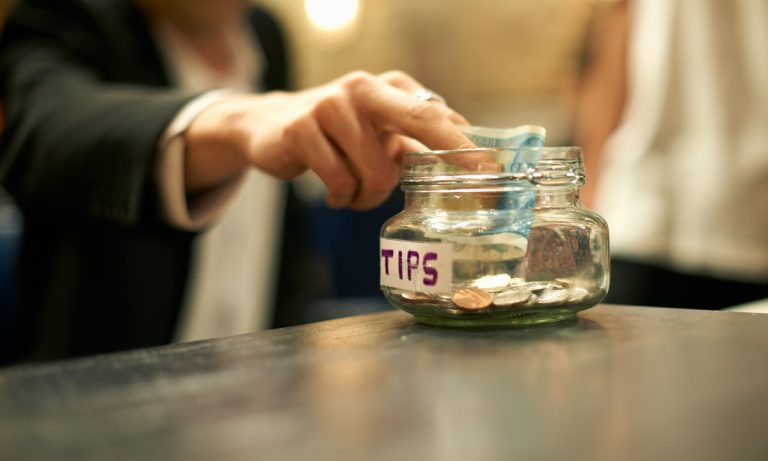
Thanks to a dumb mistake that could happen to anyone, Olesja Schemjakowa accidentally entered her pin number as her tip, resulting in a charge of $7,709. According to Munchies, she found out that she’d done this a month later when the bank mailed her monthly statement.

Olesja is Russian and was having a snack with her son near Zurich at a restaurant called New Point Cafe. Her meal cost around 23 Swiss franks, which equals to $22. This means that she tipped the restaurant 32,000 percent. For whatever reason, the restaurant thought this was normal and that they somehow deserved that amount of money, because they didn’t report it.

A Swiss news outlet reports that Olesja hasn’t been able to get her refund because, according to her bank, an accidental charge isn’t the same as a fraudulent one. Sorry.

The restaurant’s owner did say that’d he’d refund her the seven grand, even though he later stopped all contact with her and New Point recently filed for bankruptcy. This cautionary tale demonstrates that the world is out to get you and that, from now on, you should seriously consider tipping in cash.

Don't Miss Your Weekly Dose of The Fresh Toast.

Stay informed with exclusive news briefs delivered directly to your inbox every Friday.

We respect your privacy. Unsubscribe anytime.