Sunday, December 21, 2025
Home Blog Page 952

What Meghan Markle Did During Her Secret Trip To Chicago Last Week

On April 11, Meghan Markle was spotted at the O’Hare International Airport of Chicago, even though she tried her hardest to travel under the radar and remain incognito.

Markle was seen wearing a Sox cap and an all-black ensemble, while surrounded by Chicago police security. When asked by the Chicago Tribune, the Chicago Police Department said, “The State Department’s Bureau of Diplomatic Security provides security details to certain foreign dignitaries and official guests while they are in the United States. The security we provide to these visiting dignitaries and guests is based on the level of threat they face in the United States.”

They also said that they never provided specific information about specific details. So don’t ask them any more questions.

TMZ reports that Markle will be in the city until April 15, and that her trip is limited to immigration business. The same day she was spotted at O’Hare, she was spotted at the VFS Global U.K. Visa Application Center where she was submitting her visa application before her wedding on May 19. The process took 10 minutes since Markle is said to have paid $1,500 for premium processing, which allows the visa to be ready within days.

According to The Cut, Markle submitted a family visa, which you can apply for as a partner or spouse of a British citizen. After a period of six months, she’ll be able to request a citizenship — a process that can last up to 3 years.

Which Employees Consume The Most Weed

File this under The Least Surprising News Of The Day: Coloradans who work in restaurants and hotels consume the most marijuana. This not-so-shocking revelation comes from a new report from Colorado’s Department of Public Health and Environment.

The report, published April 13 in the Centers for Disease Control and Prevention’s Morbidity and Mortality Weekly Report, reveals that nearly a third (32.2 percent) of food service employees report using marijuana in the past 30 days.

According to the study —which surveyed more than 10,100 people on cannabis use, with the results broken out by age, sex, race and occupation — 28.3 percent of artists and those working in the entertainment and recreation industries consumed cannabis in the last month.

Colorado residents employed in education, public administration, utilities and mining, oil and gas are the least likely to use marijuana. In all those industries, fewer than 6 percent of workers use the herb. In Colorado, employees working in mining and utility industries must take mandatory drug tests. Failing the test results in termination.

Related Colorado Restaurants Have Trouble Recruiting Help Because of Legal Marijuana

But drug testing is not a foolproof deterrent. As Live Science points out:

Workers in construction; manufacturing; and the agriculture, forestry and fishing/hunting industries use weed at rates of 19.7 percent, 16.3 percent and 14.4 percent, respectively, the researchers noted. That puts those workers all close to or above median consumption rates by industry, even though all three of those industries tend to routinely drug-test employees, according to the researchers.

“Employers and safety professionals in states where marijuana use is legal have expressed concerns about potential increases in occupational injuries, such as on-the-job motor vehicle crashes, related to employee impair­ment,” the report states.

Overall, the survey found that 14.6 percent of all employed Coloradans currently are cannabis consumers.

Related: Drug Test? Here’s What You Need To Know

Aside from occupation, the survey also examined use by other demographic categories. Marijuana use was higher among ages 18–25 (29.6 percent) than among those aged 26–34 years (18.6 percent) and 35-older (11.0 percent).

Men (17.2 percent) are more likely than women (11.3 percent) to be consumers. By race/ethnicity, marijuana use was highest among non-Hispanic whites (15.3 percent), followed by Hispanics (15.1 percent) and non-Hispanic blacks (14.5 percent)

Does Using Cannabis Make You Forgetful?

Often, the charges against cannabis users are tied in with the usual stoner clichés: laziness, poor work ethic and reduced memory function. In this article, we will discuss some emerging research on the topic working memory and cannabis, finding out once and for all what cannabis use does to our memories.

New Evidence And Old Ideas

Cannabis use dates back thousands of years, yet it’s use, cultivation, and sales have been less than legal for much of the last century. While untold thousands have been arrested, several billions of dollars have been collected through the legal system.

What’s worse: along the way, through drug violence many have died.

The resulting psychosocial process commonly revolves around a specific idea with an outsize (more influential than it should be) pretense. Such is the concept of ‘Reefer Madness.’ Something rare, when given the scope of worldwide interaction with a product or good like cannabis. Yet, when an experience is awful or conflated, it tends to stick out in the mind of those who experience it is.

As marijuana became more popular in the years leading to the Marijuana Tax Act of 1937, so too did public misunderstandings of the plant. Ideas of madness and paranoia began to percolate around the subject of marijuana, and it was tacked on that significant impairment of memory was from cannabis.

Back then, media didn’t move as fast as it does now, and it was scientifically valid to blame mothers for schizophrenia.

The point is, times have changed. With more and more state legalizing cannabis after 80 years of prohibition, it is time to employ some of the advances in technological and scientific understanding to gain perspective.

True: memory and reaction time are statistically correlated to cannabis use.

False: memory retrieval gets worse with cannabis use.

What Is Working Memory?

Working memory is a lot like the RAM memory of a computer. It does not mean information has been hard-coded into our memory. Instead, working memory implies a near-term function, where maybe only seconds to days have passed.

On the topic of working memory and cannabis use, one recent study in sticks out in particular. The study observed 75 participants, 60 of which have used cannabis while 15 had not. The objective was to determine whether the age of onset – that is, when in an individual’s life they first used cannabis – is related to working memory reaction time.

Working memory reaction time was measured using a system of cues and responses which imitated the typical functioning of memory in our environment. With regard to memory and cannabis use, the series of cues made by researchers additionally evaluated the following:

Memory Encoding: This was evaluated by showing one or three stimuli to be recollected.

Memory Maintenance: Using advanced imaging technology (fMRI), memory maintenance was evaluated by showing where the information was held and maintained in the brain.

Memory retrieval: This was measured by showing four stimuli and evaluated by matching cues to the previous stimuli.

As the main focus of the study was to determine if the reaction time of an individual’s working memory relates to cannabis use IF exposed during adolescence, the true results of the study provide evidence that cannabis and memory have a highly variable, if not totally illogical, relationship.

The Results

By using a fMRI scanner, researchers were able to show the parts of the brain which are most active when supplied with the encoding, maintenance, and retrieval stimuli. As was consistent with previous research, the areas of the brain researchers focused includes the posterior parietal cortex (PPC) and dorsolateral prefrontal cortex (DLPFC), which help regulate executive function and control in the near-term.

The results found three relationships regarding working memory and cannabis use worth noting.

First and most unfortunately, research reinforced the idea that individual’s who began using cannabis earlier in life had longer reaction times than both cannabis users who began using after adolescence and non-users. This suggests broadly that cannabis use may impact the development of encoding information if used early in life.

(Note: this does not mean cannabis use is a predictive factor for memory issues, rather working memory and cannabis use may have a relationship.)

Second, the age an individual first uses cannabis and whether they have used cannabis once or repeatedly had no relationship on the behavior of the brain. According to researchers, this may suggest the age a person initially uses cannabis may reflect substance use risk characteristics rather than a cannabis-exposure effect (such as impaired memory) on brain development.

And last but not least, among the group of 75 participants, the researchers were able to show repeated cannabis use AND greater levels of overall cannabis use were associated with increases of performance in the activation (i.e. – working of) of the dorsolateral prefrontal cortex (DLPFC) during the maintenance period

Cannabis and creativity? Check out this strain.

Additionally, across all 75 participants, users of cannabis generally performed better than non-users, which includes a faster reaction time and higher memory retrieval accuracy.

Joey is a freelance writer, Board-Certified Pharmacy Technician (CPhT), cheesemonger, and digital marketer based out of Denver, Colorado. He has been a contributing writer in the cannabis industry for nearly two years. In his time in the cannabis space, he has written on economics, taxes, regulations, law, and medical or scientific research. Read more of his work here.

Scientific Study Finds Marijuana May Make You Walk Funny

A few telltale signs that you may have been consuming cannabis: Red eyes, cottonmouth, a seemingly perpetual grin … and you walk funny. Wait. What?

A group of Australian scientists have discovered evidence that marijuana consumption could alter the way people walk. The findings of the study, to be published in the September issue of the journal Drug and Alcohol Dependencesuggest that cannabis consumption is “associated with long-lasting changes in open-chain elements of walking gait.”

According to the study:

  • Cannabis users exhibit increased angular velocity of the knee during walking gait.
  • Cannabis users exhibit reduced shoulder flexion during walking gait.
  • Gait changes in cannabis users are not of a magnitude that is clinically detectable.

The study examined 22 cannabis users to 22 non-drug using Australians. The researchers found slight differences in how each group moved. Cannabis users moved their knees faster when swinging their leg forward to walk, but tended to move their shoulders less. The researchers found no difference in walking speed or balance.

“Most of the research on illicit drug use focuses on long-term changes in cognition and psychological well-being,” the study’s author Verity Pearson-Dennett of the University of South Australia told PsyPost. “Illicit drugs exert their effects by changing the levels of neurotransmitters in the ‘pleasure centers’ of the brain, but these neurotransmitters are also very important in movement.

“It is therefore possible that these drugs may impact the way we move,”  Pearson-Dennett continued. “It is important to fully understand the long-term effects of cannabis use, particularly given the move to decriminalize use in many countries and the growing tolerance to use of cannabis.”

The authors of the study, citing the small sample size of their research, called for further research. According to Pearson-Dennett, the next step would be to study if the “gait disturbances” diminish with increased time between cannabis consumption.

Warning: Every Alcoholic Drink Shortens Your Life By 15 Minutes

How many drinks have you had this week? Don’t worry, no need to say the number aloud. But if it’s more than five, you should reconsider your drinking habit if you want to live a long life.

According to a recent study published in The Lancet, a healthy person should consume a maximum of five drinks per week. In scientific terms that’s 100g of alcohol. In more approachable terms, that’s roughly five pints of beer or five moderate glasses of wine per week. Slugging down more than five drinks a week increases your risk of stroke, heart failure, fatal aneurysm, or death.

Researchers surveyed more than 600,000 people, analyzing their drinking habits and patterns from 83 studies conducted in 19 countries. One leading scientist compared the risks for a 40-year-old drinking over the daily guideline to smoking. Just drinking two units a day over the limit leads to steady increases of death rates.

“The paper estimates a 40-year-old drinking four units a day above the guidelines [the equivalent of drinking three glasses of wine in a night] has roughly two years’ lower life expectancy, which is around 1/20 of their remaining life,” David Spiegelhalter, the University of Cambridge’s Winton professor for the public understanding of risk, told The Guardian. “This works out at about an hour per day. So it’s as if each unit above guidelines is taking, on average, about 15 minutes of life, about the same as a cigarette.

“Of course, it’s up to individuals whether they think this is worthwhile.”

Time for some good news. There was also a recent study that found drinking can be a benefit for individuals over the age of 90. Drinking two glasses of wine or beer a day improves your chances of living longer by 18 percent. Actually, for those in their 90s, consuming two drinks a day is better than exercising. Who knew your true golden years were in your 90s?

Here’s How An Ontario Teen Got Invited To The Royal Wedding

It’s not often a 15-year-old is invited to the most anticipated wedding of the year, especially one not related to the bride or groom.

But Faith Dickinson from Peterborough, Ontario is unlike most kids her age. She scored an invite to Prince Harry and Meghan Markle’s nuptials because of her charity work for her non-profit Cuddles for Cancer, which provides fleece blankets for soldiers, veterans, and those recovering from illness. She’s just one of seven philanthropic teens representing The Diana Award at the royal wedding May 19.

The award, according to the charity’s website, is described as “the living legacy to Princess Diana’s belief that young people have the power to change the world for the better.”

At the Legacy Award Dinner last year, where she accepted her award, Dickinson told NBC News that Prince Harry called her “the most impressive redhead there. ”

Dickinson started her charity when she was just 9-years-old to help keep her aunt warm during treatment for breast cancer. “Faith is a firm believer that ‘everyone deserves a cuddle’, so she also makes her Cuddle blankets for people that have other illnesses and diseases, and even for those grieving,” according to her website.

So far, the teen has made more than 3,000 blankets and raised more than $30,000 to pay for fleece and delivery fees. Each blanket is personalized and have been shipped across the world, including Canada, the U.S., U.K., Germany, Brazil, Australia, France and Africa.

8 High-Dose Cannabis Edibles

While microdosing gains popularity and cautionary tales circulate about overdoing it on edibles, sometimes a higher dosage is simply called for. And not just for girls night in for an awesome high. Bigger doses of cannabinoids can be a very medicinal experience, especially for those who suffer from any sort of wasting syndrome, the side effects of cancer treatment or intense pain. Here are 8 high-dose cannabis edibles which may help.

Often a high dose of THC and CBD can be just the thing to have a patient eating again and maybe even smiling or laughing. While you should still exercise caution, working up to the higher dosages is a smart idea, if you do happen to get “too high” just remember that you signed up for the experience and that it’s working wonders in your bodily systems.

These eight edibles are serious medicine and are recommended for those who need every little bit of relief they can get and who have a high tolerance already.

A post shared by Punch CBD (@punchcbd) on

Related: How To Consume Cannabis Edibles With Confidence

Punch Edibles out of California have been packing a punch since 2013. They were aiming to produce an edible that was compact, yet potent and they succeeded. With up to 225 mg of cannabinoids per square of chocolate, get ready to be medicated.

Born in 2009, Cheeba Chews are a classic that have won many awards for their small size, great flavor and 175 mg per little rectangle. Best of all, they’re available in California, Nevada and Colorado, thus available to more patients. If you’re looking for a seriously high dose, have two or three, just start with the one and give it some time.

A post shared by Cheeba Chews (@cheeba_chews) on

Recommended only for those in extreme pain and with high tolerances, Korova Edibles’ Black Bar is infused with 1,000 mg of THC. It also has double the chocolate and quite a bit of saturated fat (which helps carry the THC to your system), so expect to be satisfied.

Related: Are Marijuana Edibles Better For Your Brain Than Smoking?

From the likes of Hashman Infused comes the 420 Cherry Bomb. Packed with 420 mg of cannabinoids from hybrid cannabis this Belgium/artisan chocolate infused treat is peppered with cherry pop rocks just for the fun of it.

Though VCC Brands also carries a 1000 mg Cookies and Cream 4.20 Brownie, the 500mg Peanut Butter S’Mores 4.20 Brownie sounded too good not to mention. Both of these edibles are highly potent so enjoy responsibly and alleviate that pain!

A post shared by LOL Edibles (@loledibles.ca) on

Bhang’s “The Bite” is similar to Punch and Cheeba Chews in that you get a lot of THC and CBD in a little package of delicious chewy chocolate truffle. With 180 mg per bite, a couple few of these should have you feeling fine.

Related: Educating The Public About Marijuana Edible Consumption

Delta 9 Edibles have an array of options for getting your higher dosage in. There are capsules for those who want to save on calories or just can’t keep any food down.
The ten capsules in a bottle carry 300 mg of THC. Also try their potent chocolate triangles.

Just the thing to start your day, LOL Edibles makes one of my personal faves: Fruity Crispy bars with 300mg of THC. Have this with a glass of milk or your favorite milk substitute and give yourself a medicinal morning.

Crazy Stuff People Do To Pass A Drug Test

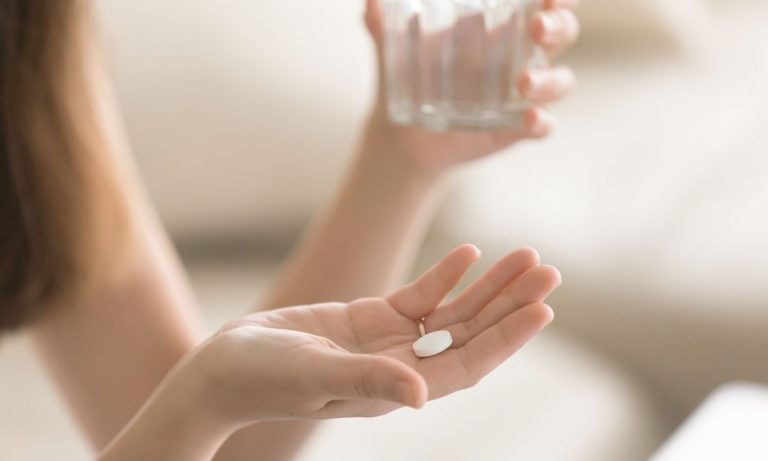
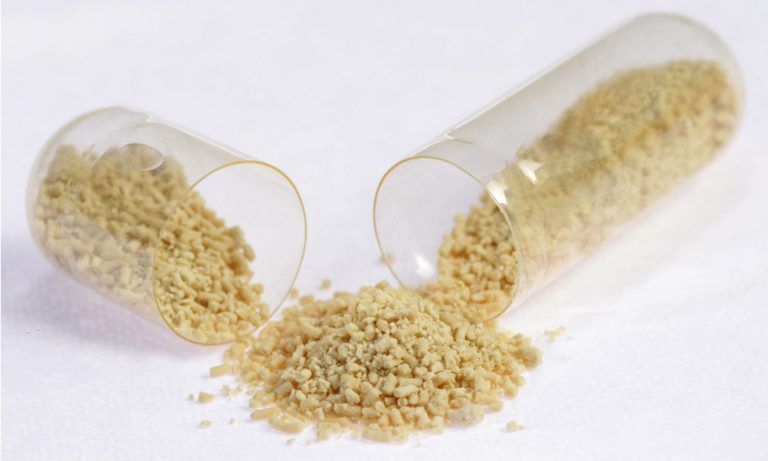
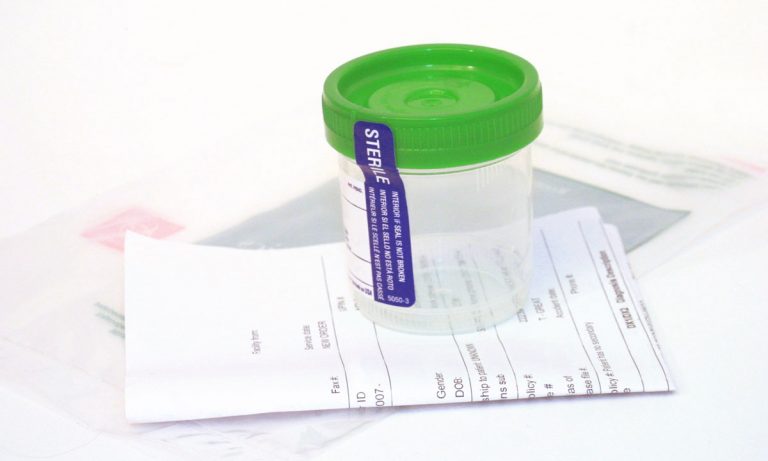
The phone rings. On the other end of the line is the human resources manager at the company you’ve been schmoozing with for the past week in hopes of securing gainful employment.  You’re a charming person — there’s no doubt about it — so you’ve managed to pass the interview process with flying colors. But the manager tells you there’s one tiny detail left before making your new position final. The company requires a drug test. You are not going to believe the crazy stuff people do to pass a drug test.

Well, you know this is that going to be a problem. Especially since you just finished getting dabbed out with a few friend’s minutes before the call. Panic and the overwhelming fear of having to move back into your parent’s basement infiltrates every part of your being. The doom is looming, the say the least. After all, if you do not get this job, your relationship with that person, who was always too good for you in the first place, is over. The state is going to throw you in jail for failing to pay up your back child support, and you may even die from some bizarre, undiscovered sickness that scientists will later determine was caused by eating Ramen noodles at every meal.

Related: Drug Test? Here’s What You Need To Know

It is hairy situations like these that force people of all ages to take drastic measures in order to pass a drug test. These desperate souls are willing to risk life and limb just to pee in a cup without the THC panel jumping off and screaming, “This fool’s high right now.” And while we must admit that it is exciting to hear about clever attempts to keep from being rendered homeless and forced to eat out of the trash, some of the great lengths some folks have gone to are the workings of the insane. Seriously, desperation breeds whack job tactics.

Drinking Bleach

https://giphy.com/gifs/filmeditor-movie-drinking-3ogxAUQILNsgQThLVe

Seriously? People have actually consumed bleach thinking it will prevent them from submitting dirty pee. Of course, this radical method is pretty dangerous, since this common household chemical can eat away at a person’s esophagus, stomach lining and even kill them dead. The warning label on the product should take out all of the guesswork, but — you know – morons will be morons. What’s really messed up is drinking bleach will not increase a person’s chances of passing a drug test. Not in the slightest. This concept is just some idiotic Internet rumor that was started years ago that some very special people have swallowed as gospel. Please do not do try this at home.

Drinking Deadly Amounts Of Water

https://giphy.com/gifs/spinninrecords-dance-water-1dIXvzKukc4x1I51AV

Consuming water before a drug screen seems logical. It dilutes the urine and can sometimes throw off a test, as long as the person being tested hasn’t smoked weed in a week or so. But some people have taken the “flush the system” method to extremes by binge drinking gallons of water. This is almost as dangerous as drinking bleach, as consuming this much augua can cause a nasty condition known as hyponatremia.

Related: Does Marijuana’s CBD Show Up In Drug Tests?

Basically, the blood stream gets swamped out and the brain starts to swell. It can be fatal. A few years back, a California radio station hosted a water-drinking contest in which the WINNING female contestant dropped dead. So, keep that in mind. Mass water consumption is no way to trick a lab into seeing clean urine. If you are leaning on this practice, moderate your water intake. Medical professionals recommend a person drink half their body weight in ounces each day. Stick with that.

Fake Sex Organs

https://giphy.com/gifs/parks-and-recreation-rob-lowe-chris-traeger-LkcIVUmf1qoUM

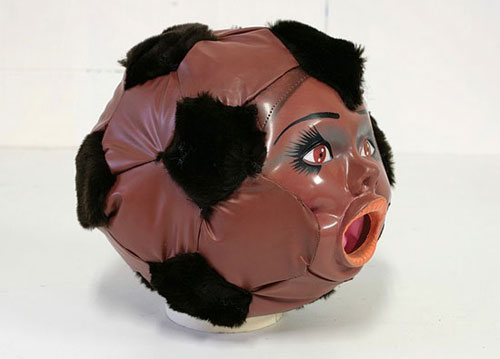
We’re all for strapping one on from time to time, but we draw the line at getting fitted for a phony wiener just to get a job. Still, for the person who needs to ensure that his or her pee shows up clean, there are fake sex organs out there that can be used to clandestinely deliver synthetic urine into a cup. Sure, this method is not at all dangerous, but one must sort of start to reconsider their position in life once it become necessary to hold a plastic dangling appendage between their legs just to earn a buck. But maybe we’re being a bit snobbish. It’s not like we had to pass a drug test to write this article.

Inventor Of Sex Doll Claims It’s Great For His Marriage

Sergi Santos made headlines when he created the first artificial intelligence (A.I.) sex doll. This doll is capable of answering questions and having a “personality,” which is a bit of a stretch, but still impressive.

The doll, named “Samantha,” requires users to romance her before using her, which is nice, because it teaches people that asking is polite and also necessary when having sex. According to Barcroft, Santos decided to create Samantha because “humans are not enough,” and that men and women view sex differently, specifically that men want to have sex all the time. It’s like Santos has never spoken with a human woman before.

He’s also been vocal about how much he loves Samantha, patting himself on the back by claiming that she’s special and that she’s improved his life for the better. Samantha has improved his marriage, especially during times when his wife doesn’t want to have sex with him and he’s desperate, because, according to him, men need to have sex constantly.

Via The Huffington Post:

A man wants to feel in general that the woman is desperate to have sex with him. And if a man feels like the woman will not enjoy [sex] fully, most men do not like the sex. And this is the cause of many sexual problems.

I need sex some times of the day that my wife doesn’t want to, and I said, ‘Look, sex is breaking already many relationships because of lack of synchronicity,’ and I would not put that pressure to my marriage.

Santos’ wife, Maritsa Kissamitaki, also spoke about her husband and Samantha, claiming that she has no problem with her husband using the doll. She said “With couples, I think as long as there is trust in the relationship and mutual respect, then introducing a doll is something that can help.”

Even though Santos thinks including Samantha in his marriage is totally fine, he’d have trouble with his wife having sex with a male sex doll. “If I found that she likes the male doll better than me, in the sense that she doesn’t want to be with me, I’d get divorced.” Such an equal marriage.

For her part, Kissamitaki said she’d be curious to try out the male doll for herself.

County Sues State Of Oregon To Kill Marijuana Law

For the past several months, we have been following Josephine County’s efforts to regulate away its cannabis industry, specifically in rural residential zones. This saga has taken many twists and turns (see hereherehere, and here), but this week brought perhaps the biggest twist yet: Josephine County has sued the State of Oregon to invalidate its cannabis program entirely.

The legal skirmishes began back in December when Josephine County passed an ordinance to severely curtail cannabis production on over 16,000 rural residential properties. A group of growers appealed the ordinance to Oregon’s Land Use Board of Appeals (LUBA), raising a procedural argument (improper notice to affected properties) and two substantive arguments (the county cannot ban pre-existing lawful uses and the ordinance exceeds the county’s ability to impose reasonable time, place, and manner regulations on cannabis production). Last month, LUBA ruled against the county, solely on the procedural issue.

Josephine County failed to provide proper notice of the public hearings where the ordinance was discussed. As a result, LUBA did not reach the substantive merits. As expected, Josephine County elected to appeal the procedural question.

Surprisingly, Josephine County also decided to take the drastic step of filing a lawsuit against the State of Oregon in federal court. We gave our initial take on this aggressive move in news coverage here and here.

In short, Josephine County wants the federal court to:

  1. Declare that cannabis production cannot qualify as a pre-existing “lawful use” because of federal prohibition;
  2. Declare that counties can place any restrictions they want, including a full ban, on cannabis businesses because state legal regimes are pre-empted by federal law;
  3. Declare that Oregon’s medical and recreational regimes unlawfully restrict the county’s police powers in light of federal prohibition;
  4. Enjoin the State from bringing official misconduct charges against any local or county official that ignores their duties under state law.

This is a stunning overreach, as a victory could presumably give counties the ability to even ignore Oregon’s decriminalization statutes. As a county that allegedly wants to crack down on bad actors and the black market, and is apparently struggling to provide basic services, Josephine County should be welcoming law abiding, tax paying cannabis farms with open arms. Instead, I am reminded of my young daughter breaking her own toy when she doesn’t get her way.

This lawsuit raises core constitutional questions, involving states’ rights to promulgate cannabis programs despite the federal Controlled Substances Act, and over the objection of local jurisdictions. In the past, we have seen prohibitionist states attempt to invalidate neighboring states’ cannabis programs, to no avail.

This may be the first time, however, that a county in an adult use state has filed such a lawsuit against its sovereign. We will be monitoring this case closely, as will the Oregon cannabis industry at large and other prohibitionist counties nationwide.

Will Patterson is an attorney at Harris Bricken, a law firm with lawyers in Seattle, Portland, Los Angeles, San Francisco, Barcelona, and Beijing. This story was originally published on the Canna Law Blog

Don't Miss Your Weekly Dose of The Fresh Toast.

Stay informed with exclusive news briefs delivered directly to your inbox every Friday.

We respect your privacy. Unsubscribe anytime.