Wednesday, June 24, 2026
Home Blog Page 1020

This Artist Puts A Camera Inside Her Vagina And Takes Photos Of Lovers

0

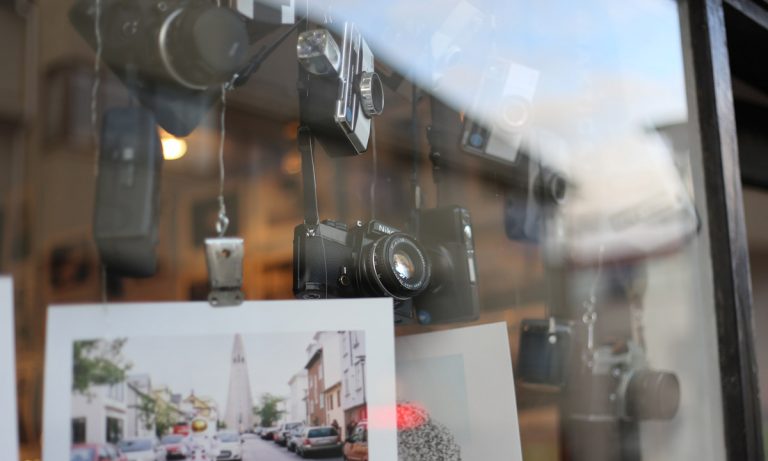
Putting a camera inside your vagina to take photographs of people might sound like the most complicated thing in the world, but it kind of makes sense when you read why Dani Lessnau came up with this inventive and intimate method of photography.

Taking a page out of Ann Hamilton’s project Face to Face, in which the artist takes pictures of subjects by placing a camera inside her mouth, Dani Lessnau’s series of photographs titled Extimité tries to embody the female gaze, questioning and exploring what that term even means.

In an interview with Dazed magazine, she reveals that by inserting a pin hole camera inside her vagina, she becomes one with the camera, creating her own version of the female gaze without feeling like she’s imitating other photographers and power dynamics.

By following this method, she becomes vulnerable herself while still retaining her power, getting rid of the hierarchy that exists between the subject and the photographer.

Lessnau explains that she uses a pinhole camera because they can be made at home and they contain no lenses, allowing her to embody the role of the camera. She also explains why she chose to use film, claiming that it’s a physical object and that it represents an impression, which she links to relationships and the way in which people leave a mark on each other.

You can read the full interview here, and check out her photographs on her website.

This Girl Scout Sold 300 Boxes Of Cookies Outside Marijuana Shop

Believe in the kids, bro. One enterprising Girl Scout had the innovative scheme of her short lifetime when she established shop outside a San Diego marijuana dispensary. Her father told FOX 4 News that she sold more than 300 boxes of Girl Scout Cookies in just six hours.

Related: These Cannabis Baking Kits Will Soon Be A Thing

The San Diego shop Urbn Leaf posted an Instagram of the girl holding a box of cookies promoting her entrepreneurial spirit.

https://www.instagram.com/p/BetbYbtlNEH/?utm_source=ig_embed

“I think our customers loved it,” Urbn Leaf’s Savannah Rakofsky said to Mashable. “They went out and bought boxes.”

Related: This Is Why You Get More Work Done In A Coffee Shop Vs. Your Office

Not everyone loved it unfortunately. As news spread of this young girl’s impressive feat, the Girl Scouts of San Diego informed the San Diego Union-Tribune that setting up shop in front of the dispensary was against the rules. Why? Because the girl didn’t have a permit and “the dispensary is not an approved site for booth sales.”

Apparently, the rules surrounding enterprising Girl Scouts selling cookies in front of weed shops is a hot topic indeed. It may surprise you that the rules change depending by the state. Whereas the Girl Scouts of Colorado prohibit the selling of cookies at marijuana or liquor storefronts, the Oregon chapter says it’s not against the rules.

Girl Scout Cookies were originally home baked by girl members with moms volunteering as technical advisers. The sale of cookies to finance troop activities began as early as 1917, five years after Juliette Gordon Low started Girl Scouts in the United States. The Mistletoe Troop in Muskogee, Oklahoma, baked cookies and sold them in its high school cafeteria as a service project.

Chrissy Teigen Went Grocery Shopping And Here’s What She Bought

When a celebrity is spotted food shopping, everyone wants to know one thing: what are they eating? And luckily for us Refinery29 did a deep dive into an Instagram photo Chrissy Teigen recently posted of herself and her daughter, Luna, during a grocery haul.

As a throwback to the Highlights Magazines of our youth, here’s the breakdown of what they found. Can you spot these items?

Chrissy is a big home cook and the author of the popular cookbook Cravings, so chances are pretty high that she has a big meal planned. And those eggs? They’re laying on their side, but they might be getting scrambled anyway, so whatever. Continuing on…

https://www.instagram.com/p/Be6mZ_un2y7

  • 1 clamshell of greens
  • Carrots
  • Scallions (maybe?)
  • 1 bottle Califia Farms plant-based milk

It’s a little nice to see Teigen exploring plant-based options, seeing as how she is often photographed eating rich comfort foods. And also as a reminder, she’s currently pregnant with her second child. Maybe she’s having a bad reaction to dairy these days? Continuing…

  • 1 box Cap’n Crunch
  • 1 box Frosted Flakes
Refinery29 points out that when she was pregnant with Luna, Teigen craved a combination of Cap’n Crunch’s Crunch Berries and Fruity Pebbles. So, maybe this is sugar cereal cravings 2.0 for baby number 2? Regardless, Teigen’s shopping cart is pretty similar to your average Joe’s. What’s a little less relatable is how great she looks while she pushes that cart.

Burger King Won’t Hire You If You Say You’re Smart

We can learn a lot about how fast food restaurants run from Daniel Schwartz, the CEO of the restaurant group that owns Burger King, Tim Hortons, and Popeyes. Schwartz, who was only 32 when he got the top job, has revealed how he chooses employees. And he’s very particular.

During an interview with The New York Times, Schwartz, who is now 36, said he has a desire for hard work, which he learned from his parents, and he expects the same of his staff.

It’s a characteristic he specifically looks for during the interview process:

One question I ask is, ‘Are you smart or do you work hard?’ You want hard workers. You’d be surprised how many people tell me, ‘I don’t need to work hard, I’m smart.’ Really? Humility is important.

He said if his parents taught him anything it’s to respect others. And that has trickled down into the culture of his fast food empire. “Neither of them led teams or organizations, but there was always this emphasis on kindness and manners and just being a good person. I always have that in the back of my head, regardless of who I’m talking to. The world’s a small place, life’s short, and so you should only be nice to people. I don’t raise my voice at work. I don’t have tantrums.”

As for how he hires, he says he likes people who are passionate and who have persevered and who are clearly humble and not arrogant. “It’s okay to be confident, but not arrogant,” he said. “I like people who genuinely are looking for a project and not a job. We’re looking for people who want to be part of something bigger. We don’t want people who see us as a steppingstone.”

“I also like people who say they’re willing to do anything. They just want to get in the door. I had that attitude earlier in my career. I didn’t care what I was going to do. I just wanted to be involved in interesting projects, working with interesting people.”

You Can Now Buy Legal Marijuana Online In Canada

Shopify, a 12-year-old Canadian e-commerce company, signed a contract with the government of Ontario that could be a game-changer for the cannabis industry. The provincial government selected Shopify’s retail platform for cannabis sales online and in brick-and-mortar locations, becoming the region’s sole distributor of legal recreational marijuana.

The Ontario Cannabis Retail Corporation, a subsidiary of the Liquor Control Board of Ontario, agreed to use the Ottowa-based firm’s software. “Our top priority is fulfilling the province’s framework for the safe and sensible retailing of recreational cannabis for when it is legalized by the federal government,” said George Soleas, president and CEO of the LCBO.

“We look forward to combining our expertise as a socially responsible retailer with Shopify’s world-class commerce solutions to deliver the safe, informed and reliable shopping experience that our new customers will expect,” Soleas added. Roughly 40 recreational cannabis stores in Ontario are expected to open their doors this year, and the number of physical stores is forecast to reach 150 in two years.

According to the website IT World Canada:

Shopify will connect to OCRC’s head office systems and allow for shopping across desktop, mobile and in-store sales. The actual design for the in-store and online user experience is yet to be determined. The OCRC and Shopify are working together to combine Shopify’s commerce solutions. The screens will include product and health information, which will fall in line with federal guidelines and marketing provisions once legislation passes. In-store POS systems will work through iPad hardware.

Canada is expected to have nationwide recreational retail sales of marijuana by July 1. According to most estimates, the country will hit $4.5 billion in retail sales in three years.

Ontario is the nation’s most populous province and second largest by total area. Roughly 40 percent of all Canadians reside in the province. Ontario is home to Canada’s capital city, Ottowa, and the nation’s most-populous city, Toronto.

Shopify is a cloud-based, multi-channel commerce platform designed for small and medium-sized businesses. Retailers can use the software to design, set up, and manage their stores across multiple sales channels, including web, mobile, social media, marketplaces, brick-and-mortar locations, and pop-up shops. Headquartered in Ottawa, Shopify currently has contracts with large brands such as Red Bull and Nestle.

The Fresh Toast Legislative Roundup: Feb. 12

Criminal justice reform took center stage last week in the cannabis world. In Seattle and Vermont, some marijuana offenses can be expunged from the record of those convicted. In Massachusetts, the waiting game continues, and in Arizona, legalization may return to the ballot. Find out about more in our weekly marijuana legislative roundup. 

Massachusetts:  

On Friday, the Massachusetts District Attorneys Association sent a letter to the state Cannabis Control Commission urging regulators to postpone plans to legalize certain types of marijuana businesses. The letter argued that cannabis delivery services, social-use lounges, and so-called “mixed-use” venues were beyond the scope of the recreational cannabis law approved by voters and that such businesses pose a unique threat to public safety.

Under the regulatory package being considered by the Commission, the state would allow licensed businesses to deliver small amounts of marijuana to customers. The rules also provide for marijuana consumption at licensed social-use venues such as cafes, and sale of small amounts of cannabis products at other types of businesses, such as movie theaters, whose primary source of income is derived from sources other than marijuana sales.

The letter is similar to one submitted by Governor Charlie Baker, in which he urged the Commission to focus on licensing retailers, growers, and other core businesses to get recreational marijuana sales off the ground by a July 1 deadline. The rules are expected to be finalized next month.  

Washington: 

On Thursday, officials in Seattle announced that the city would automatically clear prior convictions for minor marijuana offenses. The policy would apply to all such convictions in the city since 1997, when the state legislature mandated that misdemeanor marijuana charges be tried at the municipal level, rather than in county district courts.

The city stopped prosecuting misdemeanor marijuana crimes altogether in 2010, when City Attorney Pete Holmes came to office on an outspokenly pro-legalization platform. The announcement follows similar moves by officials in San Francisco and San Diego.  

Vermont: 

Last week, lawmakers in Vermont introduced legislation that would make it easier to expunge minor marijuana offenses. The measure would allow anyone convicted of possession of up to two ounces of cannabis to begin the expungement process immediately after serving their sentence.

Under current law, those convicted of marijuana offenses must wait five years before pursuing expungement. Vermont recently legalized possession and home cultivation of small amounts of cannabis. The Governor’s office said it is still reviewing the proposal.  

Arizona: 

On Thursday, lawmakers in the Arizona House of Representatives unveiled legislation to place recreational cannabis legalization on the ballot again this year. If passed by the House and Senate, the bill would place a question on the November ballot asking whether small amounts of marijuana should be legal for adults 21 and older in the state.

The measure would legalize adult possession of up to one ounce of cannabis and cultivation of up to six plants at home. Public consumption would be banned and municipalities would be able to prohibit marijuana businesses within their jurisdictions. The state’s medical marijuana laws would remain intact. Arizona voters narrowly voted down a similar referendum in 2016.  

Olympic Athletes Can Use This Type Of Marijuana Right Now

When marijuana first officially appeared at the World Olympics, it was around auspicious circumstances. Snowboarding, long considered winter sports’ stepchild, had finally joined the proceedings as an official Olympic sport at the 1998 Nagano Olympic Games. Ross Rebagliati, the Canadian snowboarder turned cannabis entrepreneur, received the first Olympic Gold awarded in snowboarding. It wouldn’t be a long celebration.

Before Rebagliati left Japan, his gold medal was stripped away when the International Olympic Committee discovered 17.8 nanograms of marijuana in his blood. Rebagliati would receive the final punchline, though—the IOC had to return Rebagliati his gold medal when they realized marijuana wasn’t even on their banned substances list.

The following year the World Anti-Doping Agency formed to respond to rising concerns surrounding illicit drug usage at the Olympics. Marijuana was initially included under the banned substances list, though now that restriction has mostly lifted. In 2013, WADA raised the threshold for a positive test from 15 nanograms per milliliter to 150 ng/ml. For comparison, Rebagliati tested positive with 17.8 ng/ml in his blood, which he maintains came from secondhand marijuana smoke.

Essentially, don’t use it during competition and you’ll be fine.

Here’s where things get tricky. Though the WADA explicitly mentions cannabis, hashish, and marijuana as being banned substances. However, cannabidiol (CBD) is not. Why? Well, marijuana, in the IOC’s eyes, can be considered a performance-enhancing drug.

Via USADA:

While the effects of marijuana can decrease hand-eye coordination and distort spatial perception, there are other effects that can be performance enhancing for some athletes and sport disciplines. Cannabis can cause muscle relaxation and reduce pain during post-workout recovery. It can also decrease anxiety and tension, resulting in better sport performance under pressure. In addition, cannabis can increase focus and risk-taking behaviors, allowing athletes to forget bad falls or previous trauma in sport, and push themselves past those fears in competition.

However, you might still be wondering why lift the ban on CBD? Well, because it’s a known anti-inflammatory and helpful in the recovery process for athletes. Other than that, the IOC didn’t offer much of an explanation.

When they removed it from the prohibited substances list, they wrote, “Cannabidiol is no longer prohibited. Synthetic cannabidiol is not a cannabimimetic; however, cannabidiol extracted from cannabis plants may also contain varying concentrations of THC, which remains a prohibited substance.”

Eat Like A Royal: 5 Of Meghan Markle’s Favorite Foods

We’ve already figured out how to pluck our brows like Meghan Markle, get a smile like Meghan Markle, and land a Prince like Meghan Markle, so why not eat like her, too? Thankfully, Town & Country has come to our rescue. They went down the rabbit hole of Markle’s food habits and compiled a list of the bride-to-be’s favorite dishes proving once again you guys, SHE’S JUST LIKE US!

When Marie Claire interviewed Markle back in 2013, she talked about her foodie status:

I love to cook. My character is a foodie because they know that I’m a foodie. I’m always on the quest to find amazing new restaurants and new recipes. I’m a California girl, right? I grew up with that farm-to-table dining before it was sweeping the nation. I do think there’s some value to really throwing yourself into food and embracing where it comes from.

Here are 5 of her favorite indulgences. For the full list, head over to T&C.

Mac & Cheese

Who doesn’t love mac and cheese? Certainly not Meghan Markle. It’s one of her favorite childhood food memories. She told EyeSwoon:

“…you know what I do really happen to lovvvvve is that boxed macaroni and cheese. I now buy the Annie’s organic one if I’m craving it, but I throw some frozen peas into it and have this gooey simple childlike meal. I used to cook it for the kids I would babysit and I always enjoyed feeling like a kid and eating it with them. I’m also not averse to eating tater tots. With ketchup and sriracha.”

French Fries

Markle doesn’t shy away from carbs, so it shouldn’t come as a shocker that she loves fries. She mentioned once that she “could eat French fries all day,” and that, according to Delish, “french fries and vino are my vices.”

Acai Bowls

Back to EyeSwoon, when asked, Markle told them that this healthy meal is part of her breakfast routine, along with a clean cleanse shake, or a green juice. Her recipe includes a frozen banana and frozen berries topped with coconut flakes, fresh berries, sliced fresh banana, a drizzle of manuka honey, and a sprinkle of bee pollen.

https://twitter.com/athenacalderone/status/935593487835258881

Sushi

Just like her Suits alter ego Rachel Zane, Markle loves sushi IRL, citing favorite spots like Sushi Park in LA and Sugarfish, according to Meghan’s Mirror. She’s also a big fan of fish tacos.

https://giphy.com/gifs/thehills-xT5LMTNTKP4myherE4

Roast Chicken

Tired of hearing about her and Harry’s love of roast chicken yet? No? Markle told the world during her and Harry’s first televised interview that he proposed while they were cooking chicken at home.

“It happened a few weeks ago at Nottingham Cottage…just a cozy night roasting chicken…It was an amazing surprise and so sweet…very romantic,” she said. She even told Food & Wine that she brings roasted chicken to dinner parties, calling it “a game changer.”

Lawsuit To Legalize Cannabis At The Federal Level Going To Court

Petitions to de- or reschedule cannabis at the federal level have been getting denied since 1972 and appeals haven’t helped as of yet either, but a new lawsuit is coming to New York City has immense promise. It will get the current administration’s attention at the very least.

There are five named plaintiffs, mostly with conditions that brought them to medical cannabis. At its heart is Alexis Bortell, a 12-year-old girl battling epilepsy. She uses medical marijuana to quell debilitating seizures.

And though the suit got a little attention from lawmakers, the story was catapulted into national attention after Attorney General Jeff Sessions came down with some harsh rhetoric around cannabis and the rescindment of the Obama-era Cole Memo, which protected legal cannabis from federal prosecution.

The 98-page complaint covers many constitutional arguments, and delves into the 10,000-year history of the plant with a focus on US policy in the last 100 or so years. It points out the racist issues of the current law and how it was meant to stigmatize outsiders of all kinds.

This is a dance that has been taking place for decades. This time around, however, 30 states and the District of Columbia have already legalized marijuana in some form, more Americans than ever approve of the plant, and the substance and quality of this new case could all work together and result in an unprecedented ruling.

Who are we to deny a natural substance, especially when it’s safer than aspirin, peanuts or even going on a road trip? And aside from being safer, it’s a saver. For patients nationwide suffering from seizures, crippling PTSD, cancer related side effects, chronic pain and more. Cannabis fights the opioid epidemic and keeps patients off of addictive benzos.

The Wednesday hearing will mostly be listening to arguments to have the case dropped, with the added drama of cannabis activists descending upon the courtroom. And though court hearings and petitions have previously fallen on deaf ears, this may very well be the right time to have a contentious court case like this win.

Jeff Sessions Says Marijuana Is Illegal ‘Everywhere’ In America

It was just last month that Colorado Senator Cory Gardner threatened to hold up key Justice Department nominees until US Attorney General Jeff Sessions revered his attitude on state marijuana laws. He has stuck to his word. Now, the lawmaker is receiving some blowback from Sessions, who calls the confirmation delay “frustrating.”

“Too often, we’ve seen bad judgments, even politics enter into the work that we do,” Sessions said during a speech earlier this week at a National Sheriffs’ Association event. “We’re trying to confirm a number of important component heads at the Department of Justice.  It’s just getting to be frustrating, I’ve gotta tell you. Our nominee to the National Security Division — the anti-terrorism division — was approved unanimously in the committee. But because right now one senator’s concerns over unrelated issues — like reversing federal law against marijuana — we can’t even get a vote.”

Although Sessions did not call Senator Gardner out by name, the direction of his angst was fully understood. Gardener, who voted to confirm Sessions last year based on a promise that marijuana enforcement would not be a priority, says he feels duped over the reversal of an Obama-era memo that has allowed states to experiment with marijuana legalization. He told NPR that the policy shift “directly contradicts” the promise made by Sessions on the issue prior to his confirmation as attorney general.

The two met in January to hash out their differences, and “there was no breakthrough,” according to Gardner. But the Senator is not letting up until an agreement is made. “I have not changed my decision to hold these nominations until we have a commitment that lives up to what I believe was given to me prior to the confirmation,” Gardner added.

Sessions, who prior to his confirmation told Congress to change the national marijuana laws if enforcement was was no longer needed, says he, “Cannot and will not pretend that a duly enacted law of this country — like the federal ban on marijuana — does not exist.”

“Marijuana is illegal in the United States — even in Colorado, California, and everywhere else in America,” he added.

Senator Gardner hasn’t always been a pro-pot reform advocate. In fact, he was opposed to marijuana legalization in Colorado before the passing of Amendment 64. But now he feels it is his duty to protect the voice of the voters. There is now some talk about Congressional action. Gardner says he is reaching for “a long-term legislative solution.” But there still isn’t enough support Capitol Hill to bring this issue to a head in 2018.

Don't Miss Your Weekly Dose of The Fresh Toast.

Stay informed with exclusive news briefs delivered directly to your inbox every Friday.

We respect your privacy. Unsubscribe anytime.