Friday, December 19, 2025
Home Blog Page 1191

Cannabis And Rose Infused Honey Makes Everything Taste Fancy

One of the most enlightening food segments I ever heard was a nutritionist breaking down sugars and sugar substitutes on NPR. As a die hard sweetener purist, I was vindicated by her enlightening information, which was essentially that all sweeteners have a glycemic action in the body, so even the lower calorie ones can still add up. This also means that if people like the taste of some of the healthier sweetener alternatives like agave and Stevia, more power to them, but they aren’t inherently better than white sugar or honey.

This boils down to one thing in my basic sweet heart: Use the ones you love, in moderation, like all things. Cannabis is one of those things. Finding a way to dose in the morning without overdoing it or relying on combustion is a tricky endeavor. Not everyone has the stomach for candies and baked goods in the morning, but there’s a place for infused honey in everyone’s morning.

A spoonful dosed into tea, coffee, or even lemon water would do the trick. And if you’re more into food, there’s toast and yogurt for the drizzling. Honey infused with roses adds an extra special perfumed quality that can make everything feel more luxurious.

Photo by Danielle Guercio

Rose and Cannabis Infused Honey Syrup

Danielle Guercio, 2017
Makes 6oz; 14mg THC per serving

  • ½ cup rose buds
  • 1 cup Honey Syrup
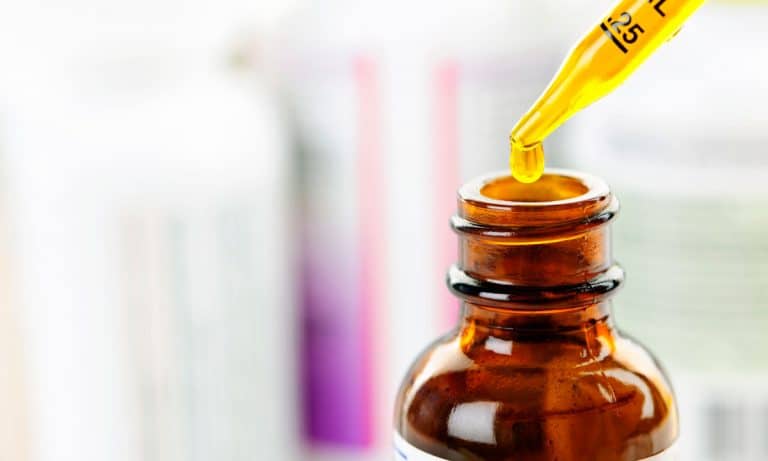
  • ½ oz cannabis infused glycerin tincture*
Photo by Danielle Guercio

You can totally use regular honey for this recipe, but for the love of god don’t use fancy or raw honeys, as any heat will render their finer qualities useless.

In fact, you can go ahead and use cheaper honey syrups if you’d like, because if you are using regular honey you’ll need some water added to thin the viscosity for best dosing.

Photo by Danielle Guercio

Set up a double boiler and heat up the honey syrup. Drop in some roses and give a stir every few minutes. Allow to infuse for about 30 minutes.

Photo by Danielle Guercio

Strain while warm and reserve the candied roses for garnishing desserts and drinks. You can also dip them in sugar to be extra, just allow to cool on parchment where they won’t stick. Once slightly cooled, you can add the cannabis tincture. Store in a clean jar, you can refrigerate but you don’t have to.

Photo by Danielle Guercio

Use in anything you would use honey in. Thanks to it’s slightly thinner consistency and water content, you can use much easier in cocktails. This syrup will dissolve into cold water much faster than pure honey.

Photo by Danielle Guercio

*Cannabis Infused Glycerin Tincture

In an oven safe container double sealed with foil, decarboxylate 3.5 grams finely ground cannabis at 225 degrees Fahrenheit. Put cannabis in a mason jar or vacuum sealed bag, pour over 2 oz vegetable glycerin and seal tightly. Place in a water bath at just under boiling for 1 hour. Strain and keep contents in a sterilized container. Stores indefinitely in freezer.

Photo by Danielle Guercio

If you are looking for a nice DIY get well soon gift or perhaps a special someone, this simple potion will be impressive and used up fast. Honey is one of those ubiquitous foods that nearly everyone loves, and a spoonful can be used in most recipes, from sandwiches to roasted vegetables and the obvious dessert and beverage applications.

Photos: Danielle Guercio

5 Brilliant Marijuana Business Ideas Killed By Regulations

Though we very much want states  to follow the federal government’s “robust regulation” directives in the 2013 Cole Memo, we can’t help but bemoan when “robust” state cannabis regulations take the fun and creativity out of marijuana business ideas.

Over the years, clients and potential clients have come to the cannabis lawyers at my firm with a bevy of business proposals that in federally lawful world would make sense and probably even be profitable. Unfortunately, we have to nix most of the “creative” business models and product proposals we see in California, Washington, and Oregon (the cannabis states in which we have our offices and in which our lawyers do most of their work) because these states rarely tolerate or permit unique business models or ideas.

In the spirit of the innovation that we have had to quash, the below are the five best/most interesting business proposals killed (or suffering a slow death) from comprehensive cannabis business regulation:

  1. Delivery. It’s a small miracle when a state allows cannabis delivery to customers by dispensaries. And even those few states that permit this typically put it under such serious restrictions you’d think the driver is moving millions in gold or a high level federal prisoner. Washington State doesn’t allow delivery, which helps the illegal market there. Oregon didn’t permit home delivery by retailers until February of this year. Even California’s proposed MCRSA retailer regulations (which will be withdrawn in full, but probably re-issued in similar form in the near future) restrict deliveries to retail licensees that have complied with a massive amount of security procedures.
  2. Fresh food manufacturing and manufacturing certain other products. States do not generally like cannabis manufacturers processing fresh foods or potentially hazardous foods or foods that might appeal to kids. The list of prohibited products varies by state, but the following fresh food items nearly always make the list: heated food, refrigerated food, anything with alcohol for drinking, pies, fruits, vegetable butters, dairy products, meats and seafoods. California planned to ban caffeinated products in its draft MCRSA manufacturer rules. And good luck trying to find any legally sold cannabis-infused gummy candies (or really any traditional candies other than chocolate and fruit chews) in California, Oregon or Washington.
  3. Cannabis events. We’ve previously written about how state cannabis regulations tend to be the death knell for the kinds of cannabis events that were immensely popular just a few years ago. Many states prohibit any gifting of cannabis and that has led to far fewer cannabis cups and cannabis parties.
  4. Marijuana online exchanges and marketplaces. Cannabis-legal states just aren’t ready for cannabis businesses to sell online or through exchanges of any kind. Whether it’s because of a lack of transparency or trust, or just the potential logistical nightmares, states pretty much force in-person transactions within the cannabis chain of distribution, all the way down to the consumer. California may be the one hope here since MAUCRSA retailers can use “technology platforms” they own and control for customer deliveries.
  5. On-site consumption and branded merchandise. No state allows public consumption of cannabis and most also prohibit their cannabis licensees from selling branded merchandise. Though some cities (Denver and Portland) have made a push for social, on-site consumption, most states loathe this as well, which is a real shame since consuming with others in a social setting normalizes cannabis and would likely boost tourism. California is another bright spot here as MAUCRSA will allow for consuming cannabis on the premises of retailers and micro-businesses, but only if the cities and counties in which those businesses sit also allow for this. As far as sales of branded merchandise, the majority of states prohibit cannabis businesses from selling any branded merch. from their licensed premises. For example, Washington State bans that practice (but Oregon does not). California is trying to take it a step further by stopping the sale of all branded merchandise by any cannabis businesses whatsoever.

About Hilary Bricken: Hilary Bricken is an attorney at Harris Bricken, PLLC in Seattle and she chairs the firm’s Canna Law Group. Her practice consists of representing marijuana businesses of all sizes in multiple states on matters relating to licensing, corporate formation and contracts, commercial litigation, and intellectual property. Named one of the 100 most influential people in the cannabis industry in 2014, Hilary is also lead editor of the Canna Law Blog. You can reach her by email at hilary@harrisbricken.com.

Gossip: Kim Kardashian’s Controversial Instagram Ad Is Back; ‘Wonder Woman’ Might Be The First Comic Book Nominated For Best Picture

The Kardashian-Jenner family pushes all kinds of products through their Instagram channels—watches, gummy bear hair vitamins, laxative teas, you name it.

But by far the strangest and most controversial Instagram influencer advertisement comes by the way of Kim Kardashian, who back in 2015 got in trouble with the FDA for posting about a prescription morning sickness pill without listing the side effects. Kardashian just posted about the drug again in a paid endorsement, but this time there’s a whole lot more in the caption.

#Ad #DYK 4 million babies are born each year in the US. That means a lot of my US followers are mommies2B who could have morning sickness like I did! I want to share what helped me: Diclegis® (doxylamine succinate/pyridoxine HCl), the only FDA-approved medication for morning sickness when diet & lifestyle changes fail. My doctor assured me that it’s safe & effective for mom & baby. It’s also easy to recognize – it has the cutest pregnant lady on it! #DontSufferinSilence you’re not alone! If you have morning sickness, ask your healthcare provider if #Diclegis is right for you. The most common side effect of Diclegis is drowsiness. Diclegis.com US Residents Only Diclegis is a prescription medicine used to treat nausea & vomiting of pregnancy in women who haven’t improved with change in diet or other non-medicine treatments. Limitation of Use: Diclegis hasn’t been studied in women with hyperemesis gravidarum. Important Safety Information Don’t take Diclegis if you’re allergic to any of the ingredients in Diclegis. You should also not take Diclegis in combination with medicines called monoamine oxidase inhibitors, as these medicines can intensify & prolong the adverse CNS effects of Diclegis. Don’t drive, operate heavy machinery or other activities that need your full attention unless your healthcare provider says that you may do so. Don’t drink alcohol or take other central nervous system depressants such as cough & cold medicines, certain pain medicines & medicines that help you sleep while you take Diclegis. Severe drowsiness can happen or become worse causing falls or accidents. It is not known if Diclegis is safe & effective in children under 18 years of age. Keep Diclegis & all medicines out of the reach of children. Tell your healthcare provider about all of your medical conditions, including if you’re breastfeeding or plan to breastfeed. Diclegis can pass into your breast milk & may harm your baby. You shouldn’t breastfeed while using Diclegis. Additional safety information can be found at DiclegisImportantSafetyinfo.com. Duchesnay USA encourages you to report negative side effects of prescription drugs to the FDA. Visit fda.gov/medwatch or

A post shared by Kim Kardashian West (@kimkardashian) on

‘Wonder Woman’ Might Be The First Comic Book Nominated For Best Picture

There have been 537 films nominated for the Academy Award for Best Picture and 89 winners. None of these have ever been a movie based on a comic book. Of these, only a small percentage of nominees have even been science fiction and fantasy films. And most of these nominees came after 2009, when the Academy expanded the category to include up to 10 movies.

Related Story: District Attorney Calls Marijuana ‘A Gateway To Homicide’

For the last eight years, a number of genre films that would have been unheard of as Best Picture nominees in the previous decades have made the list: District 9, Avatar, Inception, Gravity, Her, Mad Max: Fury Road, Arrival. That’s a big jump in genre films even though classics like Star Wars, Raiders of the Lost Ark, E.T. the Extra-Terrestrial all earned nods for Best Picture. (The biggest—and only—genre movie to win the award was The Lord of the Rings: The Return of the King in 2013.)

Love the fresh dirt we bring over daily from Naughty Gossip? Let us know in the comments!

Walk-In Marijuana Clinics A Hit In Tampa Bay

When the Sunshine State really went the way of the green rush with the latest legislation out of Tallahassee, Tracilea Young, founder of California based Tetra Health Care (THC) clinics saw an opportunity. Young is President of the chain. Now she’s opened six walk-in marijuana clinics in Florida, five of them in the Tampa Bay area. She plans to open at least 20 more. The clinics themselves are sterile and nondescript. There’s a waiting room, reception staff in scrubs and you get a health checkup before your walk in or standard appointment.

Medical cannabis is the new kid on the Florida block, but it’s popular, despite its sometimes confusing legislature. The laws seem to change constantly. As of now, seven companies are allowed to grow the plant, though that number is expected to rise to 17 by the end of this year.

A medical marijuana recommendation from THC runs $198 dollars, but they don’t just hand them out. A patient must meet the qualifications in Florida to receive said recommendations. Since the Florida Supreme Court determined that qualifying conditions include “impaired strength, weakness or enfeeblement,” according to floridamarijuana.net, the range of ailments is wide.

Young entered the cannabis space in 2015 after her husband, the father of her eight children, went through stage four throat cancer. They were amazed by the benefits of the plant, but not by the experience of obtaining a California recommendation. They had to wait in line at a warehouse until someone basically said, “Next,” wrote it out, took their money and sent them on their way.

Young made up her mind to open clinics that were made for patients and their needs.

The Tampa Bay area THC clinics see an average of 13 patients a day who are greeted by the professional, customer-centric staff. They need a valid state ID and proof of residency to be seen. Then there’s the criteria of the Department of Health and the $75 state fee. After that, patients receive their registration cards in the mail and are free to use their recommendation at any Florida dispensary they choose.

Here’s Why Cops Hate The War On Drugs As Much As We Do

The United States has been waging a war on drugs for nearly 50 years. Hundreds of billions of dollars have been spent on this long campaign to thwart the production, distribution, sale and use of illegal drugs. This sustained investment has resulted in millions of drug offenders being processed through the American criminal justice system. It has also influenced crime control strategies used by American police.

Under President Barack Obama, there was a period of reform and moderating of tactics. But President Donald Trump’s attorney general, Jeff Sessions, is announcing plans to return to “law and order” approaches, such as aggressive intervention by law enforcement and use of mandatory minimum sentences by prosecutors.

I recently co-authored a book with University of Louisville criminal justice professor Richard Tewksbury on the role of confidential informants. In my view, a return to a “law and order” approach would undo recent gains in reducing crime rates as well as prison populations and would further strain tense police-community relations.

Drugs Are Different

Unlike violent or property crimes – which usually yield cooperative victims and witnesses – police and prosecutors are at a disadvantage when fighting drugs. Drug users don’t see themselves as crime victims or their dealers as criminals. Police thus have limited options for identifying offenders.

Alternatives include the use of undercover operations or conducting aggressive crackdown operations to disrupt the market in real time. But sneaking up on or infiltrating secretive and multilayered drug organizations is not easy to do, and usually produces only low-level offenders. Poor police-community relations don’t help. Heightened enforcement and punishments have made matters worse by increasing the secrecy and sophistication of the illegal drug market and forcing police to develop criminal intelligence on offenders.

So how do police gather criminal intelligence on drug crimes?

The most honorable way is to rely on law-abiding sources who see the criminal activity and feel compelled to report it to the police in order to stop the problem.

The second option is for police to turn to a paid informant who is familiar with the drug operations to set up a buy or inform on the criminal activities of others in exchange for money.

A third option is to apprehend known drug offenders and coerce them into divulging information on higher-ups in exchange for a lighter sentence. We call these folks “indentured informants” because they “owe” the police information. If they don’t follow through on their end of the deal, they face the weight of criminal prosecution, often through heavy mandatory minimum sentences.

As police-community relations have eroded over time, police have slowly but surely increased their reliance on criminal informants – especially to develop cases on higher-level criminals.

Consequences Of Coercive Tactics

Mandatory minimum sentences serve as a strong motivator to snitch. It has become the “go-to move” for authorities.

Not surprisingly, drug dealers fight back against this coercive method of getting evidence with a “stop snitchin’” campaign. Retaliatory violence often erupts, and it becomes harder for police to get evidence from both criminal and civic-minded informants who fear reprisals from drug dealers. Anger grows against police who are perceived as not following through on promises to protect witnesses or clean up neighborhoods.

There exists yet another wrinkle in the equation. Reliance on harsh drug sentences and confidential informants has become part and parcel to how other types of criminal cases are solved. Witnesses or persons privy to information in homicide or robbery cases are routinely prodded into cooperating only after they find themselves facing a stiff penalty due to their involvement in an unrelated drug case. Here again, this produces short-term gains but long-term complications for criminal justice authorities as states move to decriminalize or legalize drugs. What happens when prosecutors working violent or property crime cases can no longer rely on the threat of mandatory minimum sentences to compel individuals to provide information?

By exploiting intelligence sources and putting them at risk, the war on drugs has pitted the police against residents in drug-ridden communities. This runs contrary to the ideals of community policing, in which trust and legitimacy are essential to members of the community and law enforcement collaborating to prevent and combat crime.

The ConversationThe past decade has witnessed significant reforms within the criminal justice system, particularly as it relates to drug enforcement. Authorities have sought to integrate a public health approach into the long-standing criminal justice model and adopt a more patient and long-term view on the drug problem. In the end, the reliance on informants and mandatory minimum sentences creates numerous unanticipated negative consequences which will continue to grow if we revert back to them.

Dean A. Dabney is an Associate Professor of Criminal Justice & Criminology, Georgia State University. This article was originally published on The Conversation. Read the original article.

10 Types Of Marijuana Perfect For Pain Relief

There are multiple ways to consume marijuana, you can eat or drink it, rub it into your skin, vape, smoke and much more

Physical pain can come from any source, like from the aftermath of a very intense workout or from that time where you fell down the stairs like an idiot. Marijuana has many amount properties that do wonders for muscle relaxation and pain relief without the scary side effects that some prescription drugs are known for, and we have the best types for relief right here at your fingertips.

RELATED: 8 Ways to Enjoy Marijuana Without Smoking It

Know that there are multiple ways to consume marijuana, you can eat or drink it, rub it into your skin, vape, smoke and much more. Ask the budtenders at your local dispensary which products have the strains listed and then pick how you want to put it into your body. Here are 10 types of marijuana perfect for pain relief.

https://giphy.com/gifs/miamiopen-3o7bubGBOB852Gc2nC

Hustler Kush

This indica dominant herb has an earthy and piney aroma that’s perfect for when you need pain relief right away. Hustler Kush acts fast and lasts for a while, relaxing your body and leaving you happy and stress-free.

Godberry

This fruity strain provides strong pain relief effects that are perfect for a lazy day at home, where you can chill out with a numb body and doze away. You’ll feel like a new person the next day.  

Charlie Sheen

These lemon scented buds are perfect for treating pain and insomnia, providing a relaxing and uplifting effect that’s unparalleled and hard to beat.

Orange Wreck

Smelling a lot like oranges, pine and funky stuff, this special strain has a particular flavor that comes with a bunch of powerful effects like igniting your appetite and providing pain relief.

Durban Cheese

https://giphy.com/gifs/eating-cartoon-mouse-l1L2UkgpuiE4U

RELATED: Marijuana Legalization And Crime: The Only Facts You Need To Know

This strain is the result of a blend of two indica and sativa strains. It’s aroma is weirdly described as a pleasant mix of lemon and cheese and its a great choice for providing mild pain and stress relief.

Django

Django means “I am awake” in Romani, and that’s what this strain will do, providing energy and uplifting vibes to help you out through your day, while also offering pain relief and strong relaxation. This type of marijuana is perfect for when you want to relax while not losing any motivation.

Blackberry Bubble

This indica dominant strain is only produced in Arizona and its specialized in providing mind and body relaxation without anchoring you to the couch. It gets its name from its fruity and delicious aroma and flavor.

KT Dawg

Offering the perfect middle ground between soothing and uplifting, KT Dawg provides anti-inflammatory effects and a focused and cerebral high that’ll have you feeling cool and creative.

Medicine Woman

This complex strain was designed to provide relief for fibromyalgia patients, thus leading to a relaxing high that relieves stress from your muscles while not impairing any of your mental capabilities.  

Black Dahlia

https://giphy.com/gifs/kate-mara-ahs-murder-house-hayden-VXpi7U5VKFbBC

This flower earned its name from its purplish-red color buds, not from the creepy and super famous murder that took place in 1947, Los Angeles.  This strain is sticky to the touch and its perfect for relieving pain and lending a hand during those sleepless nights where you’re sick of tossing and turning.

Can Marijuana Help Treat Concussions And Save The NFL?

Chronic traumatic encephalopathy (CTE) is a name culled from the Greek that means exactly what is says: a disease of the brain caused by injuries sustained over a long period of time. The symptoms include memory loss, confusion, poor impulse control, emotional volatility, depression, suicidal thoughts, and dementia. On the upside, it can take years or even decades after concussions are suffered for these to show.

CTE is extraordinarily rare for anyone who doesn’t get their head repeatedly knocked about. In fact, for years it was assumed to be limited to boxers, and it was even called dementia pugilistica—boxing madness. But that was before 2003, when an autopsy on deceased Pittsburgh Steeler center Mike Webster found unmistakable signs of CTE.

A subsequent wave of suicides among retired NFL players who were displaying symptoms of CTE skyrocketed awareness of the disease. Strident denial by the NFL only stirred the fires of controversy. From the flames have emerged a Frontline documentary (later made into a book) and—the ultimate sign of public concern—a very serious Will Smith movie.

Last year, researchers at Boston University announced that they had found CTE in the brains of 96 percent of the NFL players they have examined.

Outrage over the hidden epidemic of sports concussions seems to have quelled, and we see fewer editorials like this one questioning the future of aggressive sports like football in high school. Nevertheless, the underlying problem is real: Last year, researchers at Boston University announced that they had found CTE in the brains of 96 percent of the NFL players they have examined. When they included high school, college, and semi-pro players, that number only dipped to 79 percent.

If the US is prepared to accept CTE as the cost of playing sports, the question then shifts to: How can we best lessen its effect?

I bet you wouldn’t have guessed that, for some, the answer is cannabis.

The Gridiron Cannabis Coalition, a coalition of retired athletes who made their reputation on the gridiron, (plus Snoop Dogg, because cannabis), is lobbying hard to get the NFL to drop its ban on marijuana. Their medical argument is not only that cannabis can treat the symptoms of CTE—in particular pain and emotional disturbances—but that it can actually protect the brain against traumatic injury.

The first point is a slam dunk. Er, touchdown. Not only is marijuana an effective (if mild) pain reliever, it has the even better effect of helping patients taper their use of opioids, which have far worse side effects that weed.

On that second point, however, Snoop and his doobie brothers are getting ahead of the science. While there is evidence that cannabis can provide relief for neurological conditions such as epilepsy, Parkinson’s, even Alzheimer’s, we’re less sure that it can actually prevent damage when administered in advance, and there’s no literature that specifically addresses CTE.

However, that work is underway. Researchers at Temple University are collaborating with a private pharmaceutical firm to see if a newly-formulated synthetic CBD, which they call “50 times more potent [and] 500-fold safer” than the real deal, can protect the brain against traumatic blows. Any results, though, will likely be years away.

This Star-Studded British Airways Safety Video Is The Best Thing In Air Travel

One of the best parts of any flight is the boarding. Kidding. Everyone knows the best part of any flight is the drinking. But the second best part of being stuck on an airplane is getting to watch one of those entertaining safety videos that some airlines spend quality time making, like Virgin and Air New Zealand. And that’s exactly what British Airways is doing. They’ve teaming up with UK charity Comic Relief, and a hand full of British celebs, to make a fun and educational pre-flight safety video.

The video features a foul-mouthed Gordon Ramsay, who demonstrates the proper way to store “handbaggage”; Thandie Newton, who helps passengers locate the nearest exit, and gets her name mangled by the director, who can’t stop flirting with her; Sir Ian McKellan who explains the oxygen masks; and Gillian Anderson, who demos how to brace oneself for a potential crashing, after which she is told to “chill out a little” by the director. Rowan “Mr. Bean” Atkinson and Jim Broadbent also have roles, the latter of whom is left with showing viewers the proper way to fold a tray table into the upright position.

The video ends with a quick mention of Flying Start, the charity for which there are envelopes in the front pockets of each seat to donate. Watch the entire thing here.

11 Perfectly Innocent Foods Corrupted By Flamin’ Hot Cheetos

Bright red Flamin’ Hot Cheetos have become the surprise ingredient of the past year. They’re on everything from sushi, burgers, bagels and now a Bloody Mary.

Center Hub bar, situated inside a food hall in Irvine, CA, has the drink on its menu. It’s a classic Bloody Mary with a celery stick garnish, but it’s rimmed with Flamin’ Hot Cheetos dust and floated with a few chips in their entirety. Yum?

If you’re wondering what on earth this thing tastes like, simply head over to Yelp, where reviews range from: “Very strong but I would like it to be spicier,” to “All it is is hot Cheeto rim topped with 7 pieces of hot Cheeto. For $9 I didn’t think it was worth it.”

Grilled cheese

This sandwich from Bin 702 in Las Vegas uses a housemade Flamin’ Hot Cheeto spread.

https://www.instagram.com/p/BQ10YgjluVN

Sushi

Encrusted with Flamin’ Hot Cheeto dust.

https://www.instagram.com/p/nwlsQzuHbW

Poke wrap

The Cheetos add spice and crunch to these poke wraps. Bonus: you can add the hot Cheetos dust to any of the menu items here.

https://www.instagram.com/p/BJ2D-7dB9bz

Bagels

Known for their crazy Instagram creations (like the Crumb Cake Overload), The Bagel Nooks’ bright orange bagel features Flamin’ Hot Cheetos inside and out.

https://www.instagram.com/p/BWn43lJFVEn

Pizza

Why not?

https://www.instagram.com/p/BMpeL8WANTA

Burger

S&B’s Burger Joints trot out the Flamin’ Hot Return of the Mac as a “one night only” off-menu special. It’s topped with mac and cheese and Flamin’ Hot Cheetos.

https://www.instagram.com/p/BW0GkV5jIdi

Mac and cheese

If you took the innards out of the S&B’s burger, you’d have this.

https://www.instagram.com/p/BWqzIXWhOh5/

Hoagie

This limited time hoagie from Lefty’s features shaved ribeye, a blend of Swiss and American cheese, nacho cheese and Flamin’ Hot Cheetos.

https://www.instagram.com/p/BW0XoDWh7ft

Loaded fries

The fries at Pig Pen Delicacy at Trade Food Hall in Irvine, CA (same location as the Flamin’ Bloody Mary) are topped with mac and cheese, bacon and crushed Flamin’ Hot Cheetos.

https://www.instagram.com/p/BXBgs0eAXju

Street corn

Chicon in Austin, TX sells this street corn during happy hour that’s topped with Flamin’ Hots, lime mayo and feta.

https://www.instagram.com/p/BW0Nx0AF5rN/

The El Pepino Loco food truck in Santa Ana, CA does one better:

https://www.instagram.com/p/BW3KmJwHNGM

Inside The Turbulent Lives Of Medical Cannabis Refugees

Thanks to cannabis being legalized for medical purposes in over half the states in the United States people are finally starting to have access to this amazingly beneficial plant. For the population of the other half of the U.S. however, they are still denied this access which has led to an increase in the number of medical cannabis refugees across the country. A medical cannabis refugee is an individual who has had to relocate to a different state for medical purposes. For many of these refugees it’s a matter of life and death. This can clearly be seen when you look at the stories of Coltyn Turner and Alexis Bortell among various others.

What many people don’t realize are the multitude of trials and tribulations that refugees must endure aside from their already devastating medical conditions. If you’ve never had the honor of meeting or spending time with a medical cannabis refugee chances are you’re not aware of some of the things that they must battle on a daily basis. Let’s take a look at some of the things these individuals face when they make the decision to become a medical cannabis refugee.

Relocation Separation

Imagine what it would be like to leave behind everyone and everything you know to live in a different state just so that you could medicate with a plant. Imagine the separation you would feel from your friends, family and loved ones. This is the pain that medical cannabis refugees experience daily. From parents of adolescent patients who have chosen to leave everything behind to give their children a chance at life to the adults who no longer want to face the fear of jail or even worse for medicating with cannabis, this is the pain they must endure when they become a medical cannabis refugee.

Out Of Pocket Costs

Unlike traditional pharmaceuticals and treatment options, medical cannabis isn’t covered by insurance so everything comes out of pocket. That means on top of the expenses that come with relocating to a cannabis compassionate state, medical cannabis refugees and their families are forced to pay for the products they need out of pocket. This not only can become very expensive, it’s an undesired and unneeded added stress to the patients and their families.

Embarrassment and Negative Stigma

Many medical cannabis refugees see great success when choosing cannabis as their medical treatment however, many of them face embarrassment and negative stigma from others who are not educated to the truths about cannabis. Be it family members or friends, many medical cannabis refugees face backlash for their choices and often times it causes them to be alienated from loved ones.

These trials and tribulations would be unnecessary if only our federal government would show compassion and do the right thing by removing cannabis from being classified as a schedule 1 narcotic. The scientific and anecdotal evidence makes it clear that cannabis truly is a medically beneficial substance and there is no reason that anyone should ever have to become a refugee to have access to cannabis.

Don't Miss Your Weekly Dose of The Fresh Toast.

Stay informed with exclusive news briefs delivered directly to your inbox every Friday.

We respect your privacy. Unsubscribe anytime.