Friday, April 24, 2026
Home Blog Page 1344

Watch Ricky Gervais Eat Insanely Spicy Hot Wings

The Office creator and UK comedy legend Ricky Gervais stopped by First We Feast’s Hot Ones to eat absurdly hot hot wings (vegan this time) and talk about his new project, Netflix’s David Brent: Life on the Road. “This is like a cross between Charlie Rose and fucking Jackass,” Gervais says at the video’s start.

Gervais handles the spice pretty well at first, managing to talk about life on the road and his most iconic character without showing signs of obvious pain. But about 14 minutes in, he has a vegan wing that does him in. “That’s really hot, that’s really hot man,” he says. “I can’t do the last two sauches….[screams while rubbing his tongue with a napkin]…that’s really hot.”

Luckily, the interview goes on and Gervais weighs in on his favorite cheeses (“The Stilton is the greatest of all the cheeses I think”) and talks about the times he met Jay Z.

Later he accuses host Sean Evans of being addicted to hot wings. “You’re basically a heroin addict,” he says. “That’s why you’re dressed like you’re in Trainspotting.”

Watch the full video below.


Peanut Butter On Eggs? The Peculiar Eating Habits of 7 Celebrities

0

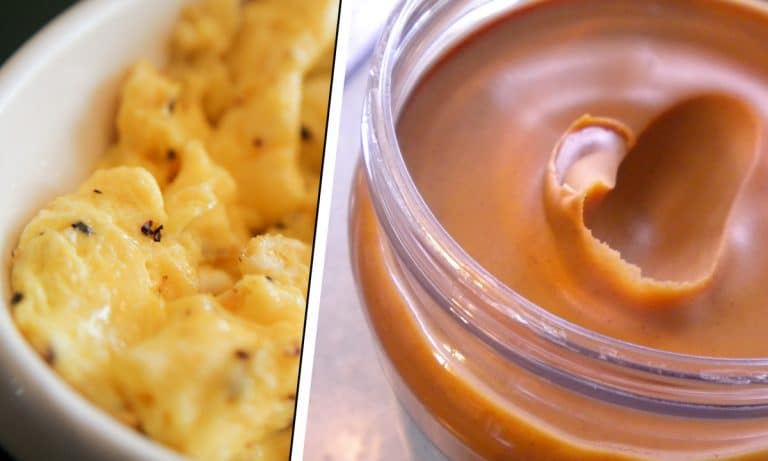
Peanut butter. It was the cause of a major social media freakout earlier this week when actor Scott Foley (known mainly for his roles in Scandal, and being Jennifer Garner’s ex) Instagrammed a video of himself putting Skippy peanut butter on his scrambled eggs.

https://www.instagram.com/p/BQI0GH2FKqU

Hey, it was creamy! Chunky would’ve been downright weird.

But that’s a pretty mild food quirk compared to most celebrities. Here are 6 that come to mind as having known food issues.

Channing Tatum

https://www.instagram.com/p/-r2kQBgCKu/

In a Reddit AMA last year, he was asked a simple question that had a curiously weird answer.

Chrissy Teigan

https://www.instagram.com/p/BONSZVdglPn/?taken-by=chrissyteigen

The actress/model/cookbook author told Delish that in addition to eating zero carbs in the morning, “I lick off the nacho cheese seasoning and put the chips back in the bag. You still get all the flavor, not all the carbs!”

What’s wrong with carbs???

Nic Cage

https://www.instagram.com/p/BQGGLnigl0a/

The actor is very picky about his food. And by picky, I mean effed up. “I actually choose the way I eat according to the way animals have sex,” he told The Sun back in 2010. “I think fish are very dignified with sex.  So are birds.” But the guy who ate a cockroach in Vampire’s Kiss won’t eat pork, because pigs are sloppy sex animals. “So I don’t eat pig meat or things like that. I eat fish and fowl.”

Mariah Carey

https://www.instagram.com/p/BQHA8pUjwXO/

To shed her baby weight, she told Star Magazine that three days a week, she eats purple foods like plums, grapes and eggplants.

The healthy, but not very satiating sounding diet apparently helped her lose 90 pounds.

Hugh Hefner

https://www.instagram.com/p/BIErnRnDHhs/

The Playboy mogul prefers to eat the food at his famous mansion, but when he dares to dine out, he reportedly brings his own food to restaurants. Nothing to see here.

Mark Zuckerberg

https://www.instagram.com/p/BEMtMcfQeel/

In 2011, the Facebook founder ate only meat he killed with his own two hands. No word if he’s still doing this. Every year, the guy challenges himself to a “year of” something, whether it’s learning Mandarin or wearing a tie everyday for 12 months. Ties > slitting animal throats, yes?

Op Ed: Why Asset Forfeiture Laws Need To Change Now

0

During a brief meeting with sheriffs where President Trump was apparently introduced to the complex subject of civil asset forfeiture, he offered to destroy the career of the Texas State Senator seeking to reform the system. Whether this was an actual threat or a poor and misguided attempt at humor, its aim was unmistakably to chill reform efforts. It appeared Trump did not know anything about civil asset forfeiture prior to the meeting, and after he got a one-sided lesson from the law enforcement community, he predictably gave it his full-throated endorsement.

We at the Drug Policy Alliance, an organization that has spent decades critiquing this practice and crafting common sense reforms, would encourage the President to spend some more time learning about the civil asset forfeiture system and the compelling reasons why that system needs reform.  He would quickly learn that this is one of the diminishingly few policy areas where both sides of the political aisle can find common ground.  Instead, he appears to have doubled down and even promised to fight Congress on the issue.

The practice of civil asset forfeiture allows law enforcement agencies to seize property – anything from cash in a wallet to a car or a home – from a person suspected of violating the law without actually charging or convicting the person of a crime. It is a perversion of the most basic principle criminal justice, where people are presumed guilty and face significant financial and legal hurdles to prove the “innocence” of their own property.

In 2014, for the first time ever, law enforcement officers took more property from Americans – $4.5 billion – than burglars did. Law enforcement agencies have grown dependent on this easy, no-strings-attached source of revenue, especially regional “anti-narcotics” task forces, SWAT teams, and other paramilitary groups. In many cases, agencies get to keep forfeiture proceeds for their own budgets and spend them as they see fit.  Factoring profit into public safety decisions creates an atmosphere ripe for abuse within law enforcement agencies.

Defenders of the current system often claim that the status quo is necessary to combat major cartels and criminal organizations, as the Texas Sheriff did.  However, this claim is belied by the fact that most forfeitures are for relatively small sums of cash.  In fact, a 2014 Drug Policy Alliance report found that the average value of state seizures in California was $5,145 in 2013 and another report by the Institute for Justice found that the median value of property forfeited in 2012 in 10 states ranged from $451 (in Minnesota) to $2,048 (in Utah).

These values do not come anywhere close to the level of “kingpin.” Most often the police simply shake down people they find suspicious, most of whom do not have the resources or the will to fight back, especially when the potential legal fees are greater than the money seized. As with everything else that is wrong with the criminal justice system, civil asset forfeiture disproportionately affects those with low income and people of color.

Civil asset forfeiture expanded rapidly in the 1980s as a way to incentivize local law enforcement agents to become foot soldiers in the federal government’s escalating war on drugs. Prior to the 1980s, civil forfeiture was rarely used. That all changed when Congress amended the Comprehensive Drug Abuse Prevention and Control Act in 1984 and allowed federal law enforcement to retain the proceeds from forfeitures and share them with state and local agencies.

The result is that federal forfeiture revenues have grown from $97million in 1986 to close to $4.5 billion in 2014.  These forfeiture proceeds are instrumental in sustaining the failed drug war – and the need for reform has never been more urgent.

Despite statements from President Trump’s nominee for Attorney General, Jeff Sessions, and many in law enforcement who oppose efforts to fix the system, there is strong momentum for reform.

Legislative campaigns to fix forfeiture laws have been successful in over a dozen states from California to Florida and many in between. Policymakers of all political stripes are calling out this injustice, and editorials from national and state-level news outlets across the country support reforming the system.  The Left-Right coalition pushing for reforms continues to grow and includes advocates for civil rights, property rights, criminal justice and drug policy reform.

Snap judgments and threats of political destruction can never become acceptable substitutes for serious policy debate. Civil asset forfeiture and its perverse incentives corrode the public’s trust in the very institutions that we rely on for our safety. We must be ever vigilant against the temptation to pursue profit in the guise of acting for the public good.

Anyone who seeks to preserve the integrity of law enforcement institutions through civil asset forfeiture reform should be commended, not threatened, or used as a bad punch-line.

Theshia Naidoo is the Legal Director of Criminal Justice for the Drug Policy Alliance’s Office of Legal Affairs.

More Stories

[soliloquy id=”24090″]

6 Subscription Boxes That We Love More Than Anything

Is there a better feeling than the one you get when a package you’ve been waiting for gets delivered to your front door? Why would you ever go shopping and wait in line if you can have all your favorite stuff delivered straight to you? This question has been raised a lot lately, considering that the internet gives you access to everything, even stuff you didn’t know existed, and delivers them promptly to your door.

Subscription boxes are the answer to internet shopping aficionados, gifting you with a box filled with stuff that caters exactly to your interests. There are all types of subscription boxes out there, so we leave you with 6 that peaked our attention and that will probably peak yours.

AuBox


via GIPHY

If you enjoy partaking with the herb, AuBox is the subscription box you’ve been waiting for, offering marijuana related products that can come in the shape of snacks or even pet accessories. This newly assembled company will provide you with different types of luxury items that include Marijuana in different forms, exploring all the amazing properties that the herb offers.

The items in the boxes vary each month, even if you keep reordering a box with the same theme. AuBox has different boxes that range from edibles (cookies, popcorn, chocolates), to intimates (lotions, bath bombs, candles), to so much more. The product is currently only available in California, which we’re sure we’ll change soon. 

Umba

Umba provides you with a monthly subscription box of handcrafted items, shining a spotlight on talented international and american artists that have found trouble distributing their work.

Each monthly box includes two to three handmade objects, that could range from jewelry to bath products, including a story about the artist behind the product. If you’re not ready to commit to a month to month subscription, you can buy their grab bags which are a one time purchase.

Craft Coffee


via GIPHY

Each box contains three brews of coffee, which are chosen by the experts behind Craft Coffee according to their properties and general deliciousness.

When you’re creating your profile on the website, you’ll have the option of selecting the type of coffee you prefer, so you’ll receive no unpleasant surprises when your Craft Coffee box arrives at your doorstep. Each box comes with brewing tips and tasting notes, so you have the best experience coffee can offer.

BarkBox

As its name suggests, this box includes dog stuff for you and your pet. By picking your dog’s size on the website, you can treat him to all types of clothing items, snacks and toys that will make all the other members of the dog park jealous.

Each month, BarkBox comes up with a new theme that will be included in their boxes, which will always have 2 toys, 2 bags of all natural treats and a chew. The proceeds from your purchase go to animal shelters and clinics. What’s not to love?

Unbound

Bows just make everything better. ESPECIALLY DILDOS.

A photo posted by Unbound (@unboundbox) on

This subscription box is delivered every 3 months, with different items, all looking to provide the very best sexual experience for women and couples. Unbound is discreet and tries to help you and your partner out when you’re looking for sexual toys on the internet or in real life, guiding you through this intimate and sometimes overwhelming field.

When there’s so much variety of stuff, with varying degrees of quality, Unbound becomes a bridge, trying to provide items of quality that are a good fit for you. The company also donates their proceeds to nonprofit organizations that support female sexual health and wellness. What are you waiting for? It’s for a good cause.

Loot Crate

This subscription box is a nerd’s wet dream, including all types of superhero/alien/sci-fi/gaming related stuff. Loot Crate offers different types of boxes that tend to your specific nerdy needs, ranging from gaming themed items to nerdy clothing artifacts. Each month has a new theme, where you can sign up for a subscription that lasts several months, or do a one time purchase. Choose wisely.


via GIPHY

Panty Party: The Video Game Where You Are The Underwear

We live in an era where video games are bigger and better than ever, gathering devoted followers and creating valuable and complex content that make people respect them and consider them an art form. Panty Party is not one of these games. In it, you embody a living and breathing underwear that tries to save the world by fighting a powerful force that’s turning people into, well, underwear. In true RPG fashion, you’ll get to choose which underwear you’ll play as and the weapon of your choice, swords or guns.

Each pair of underwear comes with a different set of skills and abilities that you’ll have to use to your advantage to succeed in the game. The mechanics of Panty Party are very similar to other fighting games, where the character you choose alters the way in which you play. The big difference is the fact that you’ll be playing as underwear. Say underwear one more time.

You can download the game on Steam. Which panty will you choose?

Op-Ed: Marijuana Legalization Must Include Justice Reform

0

Across our country, we routinely take a pledge that ends in “with liberty and justice for all.”

Yet that fundamental promise has been broken in six of the eight states that have legalized recreational marijuana use, as tens of thousands of people remain in state prison for nonviolent marijuana crimes.

The majority of America is now cannabis friendly; nearly 60 percent of our nation’s population resides in states with some form of legalized marijuana. Twenty-nine states plus Washington, D.C. have legalized medical marijuana and eight of those states have also legalized marijuana for recreational use: Alaska, California, Colorado, Nevada, Maine, Massachusetts, Oregon, Washington and Washington DC.

Related Story: More Busted For Marijuana Than All Violent Crimes Combined

Now, it’s the responsibility of these eight state governments, concerned citizens and the leaders of the marijuana industry to also demand justice reform for those who have been the past victims of the war on marijuana, those that will not enjoy the privileges and freedoms that come with this new legislation.

To date, only Oregon and California have taken the lead in addressing marijuana criminal justice reform.

According to a Drug Policy Alliance report, in 2015, more than 6,000 Californians were in state prison or jail for the non-violent offenses of growing or distributing marijuana. The day after Proposition 64 passed in California, these inmates were allowed to apply for early release or parole and have their records expunged. It’s only reasonable that the six other recreational states pass similar legislation for  those prisoners who remain incarcerated for acts that are now legal in their own state.

In addition, people who were previously convicted of marijuana offenses and have since been released from prison or jail should also have their records expunged. There is a very real impact on those who have been arrested on marijuana crimes, even if they are no longer incarcerated.

They have been saddled with a criminal conviction that can make it difficult or impossible to vote, obtain a student loan, get a job, maintain a professional license, secure housing, or even adopt a child.

It is cruelly ironic that there now are farms in America legally growing thousands and thousands of plants worth tens of millions of dollars, while someone who has served their time for that same action is sitting at home with a felony conviction still on their record.

And while it is legal in recreational states to possess and smoke marijuana, federal laws outlawing its use make it a firing offense for government workers remain in place.

There is another serious social impact of the government’s war on marijuana. According to the ACLU, marijuana arrests now account for over half of all drug arrests in the United States and the arrest data revealed one consistent trend: significant racial bias.

The prison population in the United States is 2.4 million and Blacks and Hispanics make up two-thirds of that total, while Blacks only consist of 12 percent of the general population and Hispanics around 17 percent.

Despite roughly equal usage rates, blacks are four times more likely than whites to be arrested for marijuana and Hispanics more than three times. Going strictly by the numbers, it’s clear that Black and Brown Lives Matter less when it comes to marijuana enforcement and incarceration.

As part of this discussion, there is also a fiscal argument to free non-violent marijuana prisoners. I work in the financial sector of the cannabis industry, providing sales software and financial technology that enables producers to transact safely, securely and in regulatory compliance.

Marijuana is now a mainstream business in eight states and our company was recently selected by Microsoft to participate in its newly created Health and Human Services Pod for Managed Service Providers. That means I’m a by the rules and numbers guy.

States spend more than $3.6 billion dollars enforcing marijuana laws every year. In 2015, law enforcement agencies made 574,641 arrests for small quantities of the drug intended for personal use, 13.6 percent more than the 505,681 arrests made for all violent crimes, including murder, rape and serious assaults. The costs of housing prisoners in states that have legalized recreational marijuana are staggering; ranging from $30,000 to $71,000 per inmate per year.

While these same state governments are salivating over the tax revenues from marijuana sales (Colorado alone collected $135 million in taxes in 2015), lessening the burden on our police, courts and prison systems will also save them millions of dollars.

While humanitarianism is at the heart of this movement for criminal justice reform, money talks, too.

The fact is that medical cannabis legislation was passed because of a social movement that demanded conscience and compassion. Yes, there is concern about whether the Trump Administration will uphold states’ rights in regard to legalizing and decriminalizing marijuana, especially with the confirmation of Senator Jeff Sessions as Attorney General.

While we hope that the President will recognize that our Constitution empowered states to deal what they thought was the best interest of their citizens, we must recognize that right now, changing federal marijuana law is impractical. That’s a long-term campaign we will wage, but in the meantime, let’s use our political capital and financial resources to make a more immediate impact. We must rely on the same moral compass that enabled medical cannabis to become law to push for fair-mindedness in states that have legalized recreational marijuana.

I’m proud to be a member of the cannabis industry, both as a businessman and an activist. When discussing criminal justice reform, it’s critical that we remember we’re talking about real people, not members of a cartel or organized crime. This is about a mother or father, son or daughter, grandmother or grandfather who went into the marijuana business at the wrong time.

These eight recreational marijuana states have now declared that it’s the right time. With their battles for legalization over, it’s time to release the nonviolent prisoners-of-war.

David Dinenberg is the founder and CEO of KIND Financial, which provides financial technical support for the cannabis industry. 

More stories

[soliloquy id=”24090″]

Redman and Method Man’s THC-Infused Fudge Revisited

East Coast cannabis enthusiasts have a healthy dose of bravery. They continue to literally blaze the trail in the face of legal and cultural prohibition’s grasp. Nearing a decade ago, the first edible I ever made was from a High Times coffee table book, where Redman and Method Man shared a guilty pleasure that was workable even for beginners, or if you’re really high to begin with.

RELATED: Boozy Marijuana Gummies

This recipe eventually got a bit gourmet. This I chalk up to perfectionism, but it serves it’s purpose and is still incredibly simple to prepare. With just peanut butter, powdered sugar, ANY source of cannabis you have on hand, and some optional chocolate, you’ve got a popular staple that you will come back to time and time again.

Red and Meth are weed legends, and they also helped fight the ‘dumb stoner’ stereotype by making a movie about smart smokers, How High. Their enthusiastic participation in the cannabis subculture will definitely be of historical note. Put some respek on their legacy by throwing this yummy fudge into your repertoire.

Photos by Danielle Guercio

Red & Meth’s Peanut Butter Weed Fudge (2008)

With edits by Danielle Guercio

  • 16 oz peanut butter, crunchy covers herb’s texture, if you’re using it.
  • 8 oz powdered sugar
  • 3.5 oz dark chocolate
  • 2 oz Herb leftover from butter or tincture making -or-
  • 1 oz cannabis coconut oil or butter
Photos by Danielle Guercio

In a microwave safe container, heat up peanut butter until softened. Mix in herb, the crunchy peanut butter will cover up not only the taste of the bud but the texture of the leaves. This gives you a treat that ends up being A LOT stronger than anticipated.

RELATED: 8 Things You Need To Know About Eating Marijuana Edibles

Add the powdered sugar in three portions until it makes a thick batter. Scoop into a silicone brownie mold for optimal portioning, or in a pinch, a parchment lined cake pan.

Photos by Danielle Guercio

Refrigerate overnight, melt chocolate and put in a sandwich bag. Cut a small hole and drizzle chocolate over fudge pieces. If you used a cake pan, just slice before covering in chocolate.

Photos by Danielle Guercio

If you didn’t want to use leftover butter, oil or tincture pressing, you can add 1oz of your favorite extraction, whether oil, butter, or even glycerin tincture. These will make it significantly softer, so keep in the freezer if you don’t plan on sharing with a large crew of people right after making.

Photos by Danielle Guercio

As I remember eating in the late part of the early aughts, this treat both hits the spot like a yummy dessert and kicks your ass to next week. This is especially true if you use pressings leftovers, there is so much more strength than you think left in those leaves!

MORE RELATED STORIES 

[soliloquy id=”24172″]


Big Changes As This Marijuana Product Sales Increase 400%

0

They have become about as ubiquitous as earbuds in some parts of the nation. In California, one study suggests that sales of cartridges grew from a modest 6 percent in 2015 to 24 percent in 2016. Now, the industry my have big changes at this marijuana produces sales increase 400%. Vapes could give flower a run for their money.

This surprising data comes from a report released titled Eaze Insights: 2016 State of Cannabis Data Report.

Eaze, a three-year-old California company that delivers medical marijuana in under 20 minutes, released its second annual report on Wednesday using data from more than 250,000 cannabis consumers on the Eaze platform and over 5,000 survey respondents.

And there appears to be no stopping this hot cannabis trend.

RELATED: First-Of-Its-Kind Marijuana Vaporizer Uses The Power Of The Sun

The technology behind these devices have improved exponentially over the past two years with safer materials and more efficient production techniques. Even with the augmented quality, the price for these devices have remained relatively stable.

As the popularity of vaporizing soars, sales of dried flower is slowing. According to the report, flower went from 75 percent of total sales in 2015 to 54 percent in 2016.

RELATED: Is Apple Going to Make an iVape?

Also, according to Eaze data, in 2015, less than 5 percent of deliveries contained a vaporizer cartridge. In 2016, that number increased to 20 percent. In 2015, only 7 percent of people had ordered a vaporizer cartridge on the Eaze platform. By the end of 2016, 31 percent had ordered a vaporizer cartridge – a 429 percent year-over-year jump.

Sessions Is Now Attorney General: What It Means For Marijuana

0

It’s official whether you like it or not: Jeff Sessions on Wednesday was confirmed to be America’s top cop. No amount of hand-wringing or meme-sharing or angry outbursts will change the fact that the man who once said “good people don’t smoke marijuana” is the United States Attorney General.

So instead of lamenting the confirmation of Sessions, here are five positive things to focus on:

It’s About The Economy

Cowen and Company, a financial services research firm, projects that the marijuana retail industry will be worth about $50 billion in 10 years. That’s Billion with a capital B. And Cowen says that is a conservative projection! It is already a major economic engine employing more than 100,000 and generating millions in tax revenue. Why would a pro-business administration want to do away with this kind explosive industry growth?

Cowen and Company, a financial services research firm, projects that the marijuana retail industry will be worth about $50 billion in 10 years. That’s Billion with a capital B. And Cowen says that is a conservative projection!

“I’m hopeful that he’s enough of a capitalist to at least see the economic benefits this has provided to the various states in addition to the social justice and medical benefits,” said Jeff Zucker of Green Lion Partners, a cannabis business strategy consultancy.

All Politics Is Local

Eight states have already defied federal law and have legalized adult recreational use of cannabis and 29 states have some form of medical marijuana program in place. Cities have taken it upon themselves to decriminalize possession and make cannabis offenses the lowest law enforcement priority.

The is not to say that a federal mandate would not disrupt the status quo, but you can safely bet that state and local governments will fight back.

Also, reach out to your state and federal representatives. Marijuana policy reform is now a bipartisan issue.  In fact, Republican Congressman Dana Rohrabacher of California introduced legislation in the U.S. House of Representatives this week that would resolve the conflict between state and federal marijuana laws and allow states to determine their own marijuana policies.

The Respect State Marijuana Laws Act exempts individuals and entities from certain provisions of the Controlled Substances Act if they are acting in compliance with state marijuana laws. This is the third time Rohrabacher has introduced the bill. Twenty of his colleagues in the House, including seven Republicans, co-sponsored the Respect State Marijuana Laws Act of 2015, which was introduced in the 114th Congress.

“The call for federal marijuana policy reform is growing louder and louder,” said Don Murphy, MPP director of conservative outreach. “Congress needs to listen to their constituents and to state lawmakers, most of whom agree marijuana policy is an issue best left to the states. This is a bipartisan solution that ought to find support on both sides of the aisle.”

Science Matters

Cannabis is a medicine for veterans suffering from PTSD. And young children with severe epileptic conditions. And seniors with intractable pain. The list goes on and on. These — and many, many more ailments — are all medical conditions that “thousands of years of history, tens of thousands of research studies and modern experience with millions of patients are proven to be relieved with botanical cannabis,” Dr. David Bearman wrote on Huffington Post.

These can’t be the people Sessions was referring to when he said “good people don’t smoke marijuana.”

There is a growing list of studies demonstrating the clear efficacy of medical marijuana. More than 150 medical organizations including the American Medical Association, American Nurses Association, American Public Health Association and American College of Physicians, endorse the medical use of cannabis.

Read The Memos

Under Barack Obama, the Justice Department ordered law enforcement to refrain from meddling with state marijuana laws. Federal officials were not allowed to intervene unless:

  • Marijuana was being sold to minors.
  • Sales of the herb was funding illegal activities.
  • It was being transported across state lines.

These informal rules were  issued in a memorandum known as the Cole memo, authored by former Deputy Attorney General James Cole.

During the Senate Committee confirmation hearing, Sessions was asked if he would follow the Cole Memo. His response was telling: “If I am fortunate enough to be confirmed as Attorney General, I will certainly review and evaluate those policies, including the original justifications for the memorandum, as well as any relevant data and how circumstances may have changed or how they may change in the future.”

Sure, Sessions could toss the memoranda in the circular file. But until he does, the policy is in force.

The People Have Spoken

Support for marijuana legalization has never been higher. Last year, a Gallup Poll revealed that 60 percent of Americans want the plant legal.

When Gallup first asked this question in 1969, only 12 percent of Americans supported the legalization of marijuana use. In the late 1970s, support rose to 28 percent but began to retreat in the 1980s during the era of the “Just Say No” to drugs campaign. Support stayed in the 25 percent range through 1995, but increased to 31 percent in 2000 and has continued climbing since then.

“It would be political suicide for the Trump Administration to go against a campaign promise on a hugely popular issue that won even among their demographic,” said Troy Dayton, CEO of the ArcView, a cannabis research firm.

And  Tom Angell of Marijuana Majority says: “A clear majority of Americans support legalizing marijuana and super-majorities across party lines believe that states should be able to implement their own cannabis laws without federal interference. The truth is, marijuana reform is much more popular with voters than most politicians are, and officials in the new administration would do well to take a careful look at the polling data on this issue before deciding what to do.”

9 Types Of Glassware You Need In Your At-Home Beer Bar

0

It’s constant: “Let’s raise a glass to this!” “Let’s raise a glass to that!” With all this glass raising expectation, where’s the teaching lesson on what kinds of glassware to use for your at-home beer bar? Everyone’s familiar with the ubiquitous pint glass, but what other chalices might be out there to hold your brew? What other glinting receptacles are available for you to clink with, to cheers! another victory, a promotion, or to wish someone well?

Here are 9 beer glasses (not to be confused with goggles) that you should stock in your kitchen cabinets for the next time a special occasion finds you.


1. Schooner

https://www.instagram.com/p/BPtZ6Z0A8_y

Otherwise known as a half-pint, but here’s the dirty little secret: It’s more than a half-pint! It’s 10 oz. (a half-pint would be 8 oz.). The jury is still out whether walking up to the bar and saying, “Can I get a schooner of IPA” is a cool-sounding thing, but you’ll definitely sound like you know what you’re talking about.

And, if you ask G.I. Joe, knowing is half the battle (or maybe 10 oz. of the battle).

2. Trappist Goblet

https://www.instagram.com/p/BQTe6ytDWmD

Maybe the coolest of all the beer glass options. This one makes you feel like a king at a feast table no matter where you are or what you’re drinking. Put the goblet next to a cornucopia and just end it there. You’ve won life!

3. Stein

https://www.instagram.com/p/BOPhrnHh5a5/?tagged=steinglass&hl=en

Basically like a thick, fortified glass mug. But get one at your favorite German bar and smash it down on the table and watch the froth shoot up and then slide down everywhere and say, “LET’S HAVE ANOTHER ROUND!” You’ll either feel like the surly dwarf from Lord of the Rings or you’ll feel like there’s mutton hanging from your proverbial beard. Either way, sounds fun!

4. Boot

https://www.instagram.com/p/BOIXIFTjCtR/?tagged=steinglass&hl=en

Another German institution when it comes to beer guzzling. The beer is the ultimate challenge. It’s the ultimate F-You to the gods, where you proclaim your dominance over the entire (beer drinking) world. Get the boot, fill it with beer, and watch the faces stare you, aghast, as you chug down the lifeblood of the evening.

5. The Long V

https://www.instagram.com/p/BQIFmH3Dq14/?tagged=pilsnerglass&hl=en

Otherwise known as a Pilsner glass. This is a delicate, pseudo-fancy option for drinking. You see these glasses in airports and T.G.I.Fridays — in other words, places that churn out customers but also still want to seem high-minded.

The Long V glass is deceptive. You feel like you can drink the contents in one sip. But be careful, young one, they pack the same punch as a pint glass.

6. Dragon’s Egg

https://www.instagram.com/p/BQFBhgxDejQ

Or what most people know as a snifter, but let’s call it a dragon’s egg for fun. It’s always nice to get a little medieval reference in your drinking spell. These are the squat, fat and round glasses that somehow make you feel like you’re getting more for your drinking buck. It’s subliminal somehow. Or, maybe, MAGIC!

7. Tasters

https://www.instagram.com/p/BPtwU6BBmO6

These small, bullet-like glasses are like the shot glasses for beer. They’re tiny, not much to look at on their own, but when they’re lined up in a row on a little wooden board, they’re what dreams are made of. Look, there’s a Pilsner, Red Ale, Porter, Brown Ale, and an IPA — all in one location! Mouth-watering.

Flute

https://www.instagram.com/p/BPx3xo_gMpI/

Not just for champagne anymore. Flutes are a combination dragon’s egg and taster. They’re sleek, delicate and fun. They’re not the most useful of glasses because they don’t fit on a board and they don’t hold a lot of liquid, but they show off you have a sense of the lavish.

Tulip

https://www.instagram.com/p/BL9Bl3WB2UH

The prettiest sounding beer glass. A more refined version of the dragon’s egg. The tulip blooms and blossoms, giving your beer a wide birth to pour out into your lips before you say, “Ahhhh.” Also, if you hand someone a “tulip of beer” they will likely remember that moment for at least a week, the sign of any good night.

More Related Stories

[soliloquy id=”23129″]

Don't Miss Your Weekly Dose of The Fresh Toast.

Stay informed with exclusive news briefs delivered directly to your inbox every Friday.

We respect your privacy. Unsubscribe anytime.