Saturday, June 27, 2026
Home Blog Page 618

Cannabis Edibles, Extracts, And Topicals Are Now Legal In Canada

Although these products are now legal for sale, they will likely not be available to consumers until mid-December, and in limited quantities at that.

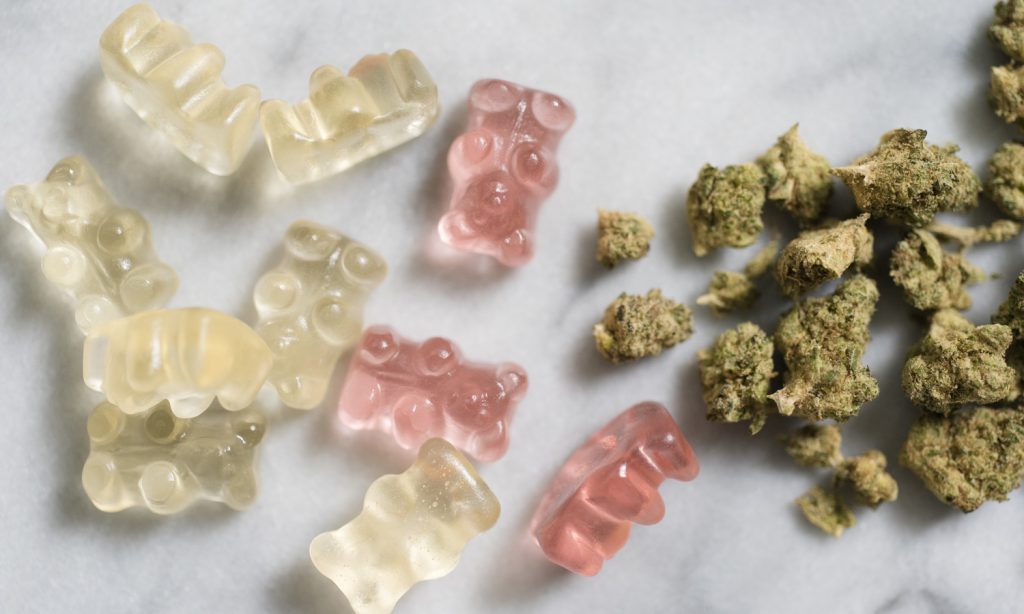
A year after Canada’s national legalization of cannabis, on October 17, 2019, the Government of Canada’s new regulations for edible cannabis, cannabis extracts, and cannabis topicals went into effect. The first round of regulations under the Cannabis Act went into effect on October 17, 2018, and allowed adults who are 18 or 19 years or older (depending on the province or territory) to possess up to 30 grams of legal dried cannabis, or its equivalent in non-dried form and grow up to four plants per residence for personal use. During the first year of legalization in Canada, only dried cannabis products were actually legal.

Now, phase two of the implementation of the Cannabis Act is in place, and the production and sale of edible cannabis, cannabis extracts and cannabis topicals is now legal for provincial and territorial retailers and federally licensed sellers of cannabis for medical purposes. However, although these products are now legal for sale, they will likely not be available to consumers until mid-December, and in limited quantities at that.

RELATED: The Sad Reason Marijuana Research Hasn’t Exploded In Canada

Licensed manufacturers must provide 60-days’ notice to Health Canada of their intent to sell any new products, hence the projected timeline for availability in mid-December. It will likely be some time before a broad range of edible and extract products are actually available for purchase by consumers.

Many of the restrictions placed on cannabis manufacturers in Canada will be familiar to those in most U.S. markets. Some of the highlights of the new regulations include the following:

  • Products cannot contain nicotine or alcohol;
  • Cannabis extracts cannot contain sugars, sweeteners or sweetening agents;
  • Edible cannabis products must not contain any ingredients other than food and food additives;
  • Edible cannabis products cannot contain caffeine unless that caffeine is present via ingredients that naturally contain caffeine and the total amount of caffeine in each container does not exceed 30 mg;
  • Edible products that must be refrigerated are not allowed;
  • Edible cannabis products may not contain a quantity of THC that exceeds 10 mg per immediate container;
  • Cannabis extracts and accessories that contain cannabis extracts cannot be promoted in a manner that could lead consumers to believe that the product has a flavor other than the flavor of cannabis;
  • Cannabis products cannot be promoted in a way that could associate the cannabis with an alcoholic beverage (making collabs with alcohol brands unlikely). The same prohibition goes for tobacco products.
do cannabis products over promise and under deliver
Photo by Jamie Grill/Getty Images

RELATED: Canada’s Legalization Of Weed Edibles Is Another Global Social Experiment

In addition to the foregoing, the Cannabis Act contains testing requirements and restrictions on marketing, advertising, and labeling that will look familiar to many in the U.S. markets, although some of the Canadian regulations are notably more stringent that what we’ve seen here in California. The following restrictions on product wrappers are a great example of the level of detail and extent of the restrictions faced by cannabis manufacturers in Canada:

The interior and exterior surface of a wrapper must

(a) not display any brand element;

(b) not display any image or information;

(c) be one uniform colour, which may be different for each surface;

(d) not be fluorescent, have fluorescent properties in the ink or have pigments that absorb ultraviolet energy and transmit it as a longer wavelength, such as the Pantone 800 series;

(e) have a smooth texture without any embossing or decorative ridges;

(f) not include any hidden feature that is designed to change the appearance of the wrapper, such as heat-activated ink or a feature that is visible only through technological means; and

(g) not be capable of emitting a scent or sound

With these restrictions in place, we’ll be curious to see how the introduction of cannabis edibles, concentrates, and topicals goes in Canada, and anticipate that it will be a relatively slow ramp-up.

Alison Malsbury is an attorney at Harris Bricken, a law firm with lawyers in Seattle, Portland, Los Angeles, San Francisco, Barcelona, and Beijing. This story was originally published on the Canna Law Blog

Meme Of The Week: ‘Joker’ Inspires Hundreds Of Ridiculous Memes

This week’s meme started the way many other memes have started before — by making fun of someone’s tweet.

Few films in recent memory have caused as much debate as Joker. Starring Joaquin Phoenix and directed by Todd Phillips, the film was the natural outcome of many years of films following the tried and true superhero format: an art film packaged for mainstream audiences. It’s also a meme goldmine.

RELATED: Meme Of The Week: ‘No Guy Has All Three’ Meme Incorporates Tons Of Pop Culture References

This Joker meme started the way many other memes have started before — by making fun of someone’s tweet. The original post highlights one of the Joker‘s many dance scenes and calls it “The dance of freedom. The death bells. The rising of the Joker,” which is pretty hilarious. So people had to jump onboard and add scenes or music that improved on the original, providing a wide variety of hilarious versions.

Check out some of our favorite responses:

RELATED: Meme Of The Week: Kylie Jenner Sings And Social Media Makes Memes

Marijuana’s Effect On Sore, Aching Muscles

The cannabinoids in marijuana not only assist in blocking nerve pain, but they limit the side effects of typical prescription drugs. 

Whether it’s after a long workout or a moving injury, soreness and stiffness can complicate anyone’s life, but they don’t have to. With the rise of opioid addiction, is it possible that marijuana and CBD can alleviate some of the symptoms of sports and back injuries? 

study published in 2017 in Health Affairs found that this is precisely what’s happening in states with medical cannabis laws: Prescriptions for opioid painkillers in these states dropped by 1,826 per doctor as patients found their alternatives. 

Weed offers pain relief

Marijuana is recognizable as an option for pain relief. In fact, the FDA has approved pharmaceutical CBD and THC for the treatment of chronic pain associated with AIDS and chemotherapy, while offering an alternative for opioid addiction.

RELATED: 4 Ways That Medical Cannabis Can Ease Chronic Pain

The National Center for Biotechnology Information shared insights from the book Marijuana as Medicine on how THC counters pain. 

“Cannabinoids have shown significant promise in basic experiments on pain. Peripheral nerves that detect pain sensations contain abundant receptors for cannabinoids, and cannabinoids appear to block peripheral nerve pain in experimental animals. Even more encouraging, basic studies suggest that opiates and cannabinoids suppress pain through different mechanisms. If that is the case, marijuana-based medicines could perhaps be combined with opiates to boost their pain-relieving power while limiting their side effects.” 

Cannabis Users Exercise Much More Than You Think
Photo by rawpixel

In short: The cannabinoids in marijuana not only assist in blocking nerve pain, but they offer a way to boost the power of other medicines as well as limiting side effects of typical prescription drugs. 

RELATED: Study: Three Puffs Of Marijuana A Day Will Combat Chronic Pain

But will it work on your injury? Cannabis appears to work on chronic and acute pain that often accompany sports or back injuries. In 2017, the National Academies of Sciences Engineering and Medicine offered a large-scale report  on pain, which shared, “The committee found evidence to support that patients who were treated with cannabis or cannabinoids were more likely to experience a significant reduction in pain symptoms.” 

As with any addition to your healthcare regimen, it’s always best to discuss options with your doctor.

5 Easy Halloween Costumes That Are Fun And Stress Free

Here are 5 simple costume ideas for Halloween, because Halloween is stressful enough.

Sure, dressing up is fun, but it’s mostly stressful. Unless you have a lot of time to think about your perfect costume, you’ll most likely end up going to a Halloween party in your pajamas. Luckily, there are a lot of great costumes out there that aren’t all that expensive, doing the job and eliminating most of the Halloween-induced stress.

Here are 5 simple costume ideas for this year.

5 surprising movies americans watch on halloween
Photo by BarbaraALane via Pixabay.

A skeleton

Skeletons are very popular Halloween elements while also being super easy to adapt to your needs. If you’re good with make-up, you can go all out on your costume. If you’re not artistically inclined you can simply buy a skeleton onesie and call it a day. There are plenty of options on Amazon, fitting different budgets and styles.

Dog costumes

If you’re not a costume person but still want to share the Halloween spirit, dog costumes are your best bet. There are thousands of them, all of them cuter than the other. You want your dog dressed up as a pineapple? There’s a costume for that. Maybe your dog will hate you for a day, but isn’t it worth it?

RELATED: 5 Creative Ways To Improve Your Lame Halloween Costumes And Decorations

https://www.instagram.com/p/_SYoOmEq_i/

An avocado

Is there a more millennial icon than an avocado? No, there isn’t, which is why there’s hundreds of costumes out there, from the DIY to onesies.

Regina George from Mean Girls

While you could choose to dress up as a Plastic, there’s not a more iconic nor easy look than a basic tank top with the boobs cut out. Genius.

RELATED: Last-Minute Halloween Costumes For The Cannabis Lover

https://giphy.com/gifs/mean-girls-rachel-mcadams-uzSR4YuoeYR2M

Ketchup and Mustard

Is it the most original idea in the world? No. Does it work? Totally. There are hundreds of Ketchup and Mustard costumes available for sale online. These costumes are also some of the easiest ones to make on your own.

Guess Which Generation Spends The Most On Marijuana

We’ll give you a hint: it’s not millennials. Plus, women and men prefer different cannabis products, but not in the ways you’d expect.

If you had to guess which age group spends the most money at dispensaries, what would your answer be? The safest choice would probably be millennials, who account for over half of all legal marijuana sales and maintain sizable disposable incomes. But you’d be wrong.

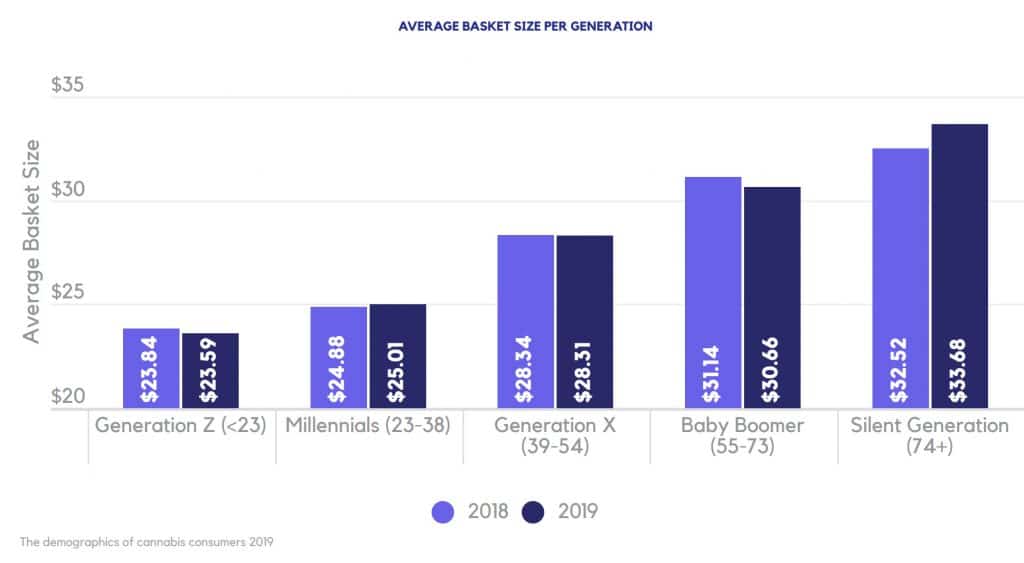
As it turns out, the older the generation, the more money they’ll spend on weed. Never would you assume that those ages 76-years and older would drop the fattest stacks buying marijuana, but that’s where we are in the legal cannabis era.

That news comes courtesy of Headset, a data and analytics firm that specializes in the cannabis industry. Their latest report focused on major marijuana buying trends, but ended up revealing more about preferences among generations and genders. While many prognosticators will share general assumptions about consumption preferences between men and women, the data says something a little different.

RELATED: Youths Smoke Less Weed, Adults Smoke More Following Marijuana Legalization

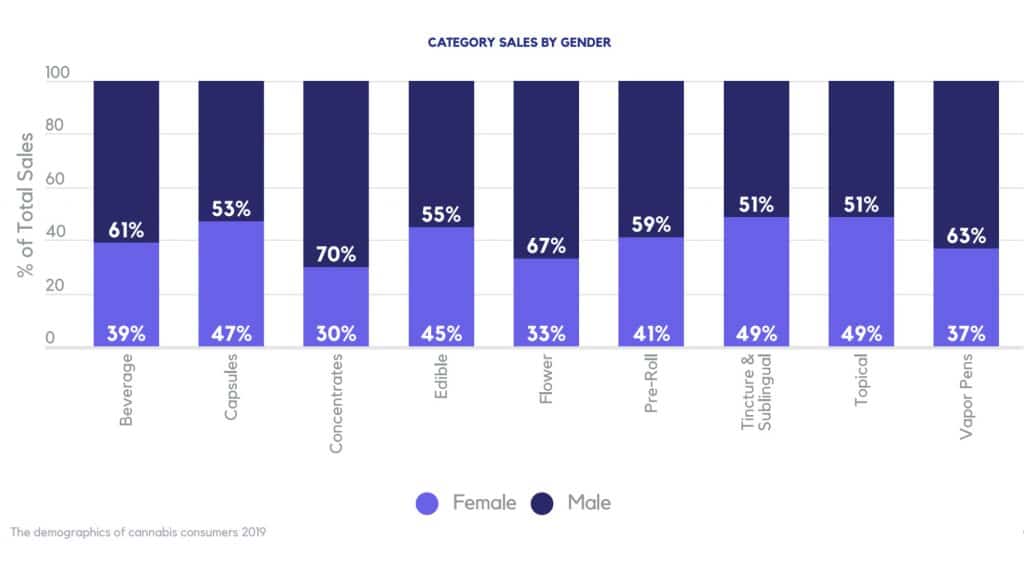
For example, a commonly held belief is that women choose wellness products at a far higher rate than men do. This is mostly true, according to Headset’s data, with women spending the majority of their cannabis dollars on topical, capsules, tinctures and sublinguals, as well as edibles. But as it turns out, men love these products too. All four of those categories show close to 50-50 splits between the percentage of total sales among men and women.

You Won't Guess Which Generation Spends The Most At Marijuana Dispensaries
Graph courtesy of Headset

In part, that’s due to men spending more money overall on cannabis products, accounting for 60% of all sales at marijuana dispensaries. Nowhere is the preferences between men and women more pronounced than in concentrates. Men buy 70% of all concentrate products and 63% of all vapor pens, which indicates that a significant portion of male consumers focus on attaining the highest high possible when consuming marijuana. In general, Headset notes, “men are overrepresented in the cannabis consumer base” and the industry will have to change its marketing and product development to bring in more women to cannabis.

“CBD will absolutely be a part of any successful push in the cannabis industry to bring in more women,” Headset’s report reads. “Women already have a preference for CBD products, and it’s already closely associated with wellness.”

RELATED: How Cannabis Can Help Older Generations Work Longer And Boost Their Well-being

Millennials and Gen Z appear most interested in experimenting with different types of marijuana products. Although baby boomers have more disposable income overall, they aren’t as interested in trying new things. Half of all baby boomers still choose flower as their favorite marijuana products, and opt for concentrates and vapor pens less than all other generations besides senior citizens. Curiously, however, baby boomers and seniors buy edibles far more than their younger counterparts.

You Won't Guess Which Generation Spends The Most At Marijuana Dispensaries

Graph courtesy of HeadsetOverall, the cannabis industry will soon be overwhelmingly dominated by millennial and Gen Z choices, Headset predicts. Because of these generations’ lack of funds, the packaging of products and selling them at affordable entry points will be an important barrier for marijuana sellers moving forward.

“It’s safe to say that as millennials and Gen Zers take over the market, price sensitivity will increase,” Headset writes. “Having tons of disposable income is not a hallmark of either generation. That said, cannabis use is, and obviously young people will continue to find room in their budgets for it but will continue enjoying it via a lot of little purchases, rather than by buying premium products.”

5 Netflix Hacks You Should Be Using

0

There are plenty of tricks and hacks that will allow you to have a better Netflix experience.

Netflix is one of the most accessible and utilized apps in the world, making it easy to forget that it’s still a website, leaving plenty of room for customization.

Seasoned users know how to keep an eye out for new shows and movies, adding them to their lists in order to never miss out on anything interesting. But there are several ways to make Netflix more comfortable for you, especially if you share it with other people. Here are 5 hacks every viewer should be acquainted with.

Remove stuff from your viewing history

We all watch embarrassing stuff and it should be up to us to keep it some things a secret and to not be taunted by the dozens of people who share our account. You can selectively erase your viewing history in your laptop by clicking on your viewing activity. This allows you to keep guilty pleasures to yourself and even prevents the Netflix algorithm from recommending you similar stuff.

Use add-ons & apps

There are a couple of great add-ons, like IMDB Ratings, which shows the program’s IMDB ranking on the Netflix app. You can also use Rabbit to binge watch with friends in different places, with services such as Skype and FaceTime. Unlike similar apps, Rabbit allows you to launch a window with other guests where you can view whatever you want.

heres how you can learn a new language by watching netlflix
Photo courtesy www.quotecatalog.com

Netflix roulette 

Sometimes, the hardest thing you can do on Netflix is finding something to watch, which is why Netflix Roulette is so great. Eliminating this thought process entirely, Netflix Roulettte is kind of like a shuffle button for all of their content, allowing you to filter out titles, genres, Rotten Tomatoes score, and more.

RELATED: Netflix Just Hiked Their Prices…Again

Photo by Charles Deluvio ?? via Unsplash

Use the Netflix bible

Netflix categories kind of suck, shoving titles together that at times have nothing to do with each other. What’s On Netflix, aka the Netflix Bible, is the perfect place to go, with over 20,000 cool sub-genres that range from “tearjerkers” to “animal tales.” The site has different ID codes that can be added to the end of your URL, taking you straight to the place where you want to go.

Get rid of unwanted guests

There’s so much password sharing on Netflix that the company has been forced to address it several times, ramping up security measures yet still giving users some breathing room since this kind of behavior is a big part of their business model. Still, sometimes it’s annoying when you have to pay extra so people can use your account, especially if you don’t talk to them regularly or if they acquired your password through a friend of a friend. On your laptop, head over to My Account and click on Sign Out of All Devices.

RELATED: Netflix Wants To Buy Its Own Movie Theaters Now

Photo by freestocks.org

How Instagram And Facebook Are Combatting Fake News

The feature will roll out this month, with Facebook working with third party companies who will provide fact checkers to reign in false information.

Among Instagram and Facebook’s new batch of updates, there’s a “false information” label, which aims to prevent the spread of fake news. The feature will blur out any questionable post, letting you know the contents were flagged.

Facebook, which owns Instagram, announced that the feature will roll out this month on both social media sites and that they would be working with third party companies that would provide them with fact checkers, ensuring that each flagged post deserves to be flagged.

RELATED: Influencers Are Charging People To Be Their ‘Close Friends’ On Instagram

Although people will still be able to share flagged posts in their stories and news feeds, these posts will remain with the “false information” label intact. “Independent fact-checkers say this post includes false information. Your post will include a notice saying it’s false. Are you sure you want to share?” the notification will read.

instagram is considering making their like invisible
Photo by rawpixel.com.

On October 21, Facebook released a press release explaining that they wanted to prevent the spread of misinformation from messing with politics and the upcoming presidential election:

“In addition to clearer labels, we’re also working to take faster action to prevent misinformation from going viral, especially given that quality reporting and fact-checking takes time. In many countries, including in the U.S., if we have signals that a piece of content is false, we temporarily reduce its distribution pending review by a third-party fact-checker.”

RELATED: 5 Ways To Spot Fake Instagram Followers

These new security measures are some of Facebook’s most aggressive ways of tackling fake news and the spread of misinformation on social networking sites, and it might be the first time that the company admits to playing a role in the 2016 elections. Aside from that, Facebook will also be flagging posts that imply voting is a waste of time or that contain threatening and violent content. We’ll have to wait and see if these measures make a difference.

Pete Buttigieg Confirms Marijuana Use

The South Bend Mayor said he smoked marijuana “a handful of times a long time ago” while focusing on how legalization would help veterans.

If you’re a presidential candidate, you might as well admit you smoked marijuana. All the cool ones are doing it. Bernie Sanders and Kamala Harris have admitted to it. And we’re pretty sure Beto O’Rourke, a hacker and punk rocker in his past life, and Andrew Yang, who sold marijuana-themed campaign merch, have dabbled, though they haven’t publicly said so.

In this climate, where a super majority of Americans favor marijuana legalization, confessing marijuana use isn’t a big deal. Before Donald Trump, the past three presidents of the United States (Barack Obama, George W. Bush, Bill Clinton) are all on record having smoked marijuana. Virtually every Democratic presidential nominee supports decriminalizing and legalizing cannabis this primary—besides ol’ Uncle Joe Biden, that is—like it’s part of the party’s national platform.

RELATED: Baby Boomers Now Smoke As Much Weed As High Schoolers

And now, Pete Buttigieg wants to join the Cool Kids table. This week the South Bend Mayor announced he’d smoked marijuana “a handful of times a long time ago” while touring a Las Vegas dispensary. He added that the United States should legalize cannabis nationwide.

study how cannabis replacement therapy can counter addiction
Photo by OpenRangeStock/Getty Images

“First of all, without legalization, you’re going to continue to see a patchwork of different state laws that create a lot of problems for legitimate businesses like this one,” Buttigieg told FOX News. “We not only need to legalize but we also need to pursue experiments, knowing the racial disparity and lives that have been ruined by sentences over marijuana possession,” he added.

Back in July, Buttigieg unveiled his racial justice plan. Called the Douglass Plan after Frederick Douglass, it called for the decriminalization of all drugs and aggressive expansion of addiction treatment centers. While Sanders told podcast host Joe Rogan he’d legalize marijuana through executive order earlier this year, Buttigieg said to reporters Wednesday he intended to go through official legislative channels.

RELATED: Former VA Official Admits Medical Marijuana Could Save Veterans

Buttigieg, a military veteran, also noted how marijuana legalization would help veterans.

“Yeah, so I’ve met a lot of veterans who rely on cannabis for the treatment of diagnosed or undiagnosed issues, often service-connected issues like post-traumatic stress,” he said. “And, another benefit of decriminalization is, it could pave the way for this to be supported.”

Support For Marijuana Legalization Reaches All-Time High Despite Vaping Illness

A supermajority of Americans favor legalizing marijuana, despite recent negative coverage due to vaping illnesses.

A mysterious vaping illness is linked to nearly 1,500 cases and resulted in 33 deaths, according to the latest numbers from the Centers for Disease Control and Prevention. Though the illness caused legal marijuana users to stop buying vaping products, it hasn’t changed Americans’ perspective on marijuana legalization one bit.

Two-thirds of Americans support legalizing cannabis, according to a Gallup poll first reported by Forbes. This is the same percentage the polling firm found last year regarding marijuana legalization, demonstrating that negative coverage around vaping hasn’t significantly influenced the country’s thinking on cannabis. The steady support around legalization encouraged cannabis advocates like Justin Strekal, political director for the National Organization for the Reform of Marijuana Laws (NORML).

RELATED: Study: People Who Purchase Recreational Marijuana Desire Pain Relief And Sleep

“There is no buyer’s remorse on the part of the American people,” Strekal said in a statement. “In recent years, American’s support for legalization has only grown stronger. At the end of the day, every age demographic below 65, representing the overwhelming majority of the taxpaying public, would rather their dollars be spent to regulate cannabis, not incarcerate its consumers.”

New Study Provides Clues Behind The Vaping Illness Outbreak
Photo by jetcityimage/Getty Images

Gallup reported no major differences were found among major groups or subgroups in supporting marijuana legalization. Most expected categories like millennials (80%) and Democrats (76%) favor legalization. Only conservatives (48%) and senior citizens (49%) count as outliers where legalizing is not the majority position within the group.

This isn’t expected to change anytime soon, Gallup reported. When Gallup first began polling for marijuana legalization in 1971, only 12% of Americans supported it. Over the past 15 years, we’ve seen a rapid 180-degree turn from Americans who are now a supermajority when it comes to marijuana legalization.

RELATED: Tommy Chong’s Expert Advice About America’s Vaping Crisis

While vaping illnesses remains a chief concern among the American public, mainstream press and cannabis media alike have responded that legalization is the first step in solving the problem. The majority of vaping illness cases stem from THC cartridges bought on the black market, where marijuana concentrates are often cut with toxic chemicals to extend product. Should legalization occur, marijuana products like vape pens would be regulated by health officials and tested to ensure safety for the public.

Jenny Slate Reveals Why You Shouldn’t Smoke Weed Before The Gym

In her new Netflix special, Jenny Slate shares a hilarious, relatable workout story of being high at the gym.

To say comedian Jenny Slate’s love of all things cannabis is well established would be an understatement. Back in 2014, she boldly declared on Late Night with Seth Meyers that “marijuana is my soulmate.” A couple years later, she said during a festival screening she had “to be taught how to pretend to not know about weed” for her role in the movie Landline.

This list could go on. And on. The point here is simple: Jenny Slate smokes weed. So you should’ve expected the comedian would discuss marijuana in her new Netflix special Stage Fright. And guess what? She didn’t disappoint.

RELATED: You Should Be Listening To These Cannabis Podcasts

Although many cannabis users tout the benefits of smoking marijuana and working out, Slate advises otherwise. In the special, Slate discusses her struggles with performance anxiety. When people in her life suggests working out to cope with that anxiety, she decides to give it a try. Though, as is often the case with Slate, there’s a catch.

“I’ll just keep smoking weed while working out,” she says. “I just got more and more anxious and working out more and more.”

Being high at the gym just got Slate more into her head.

RELATED: Does Marijuana Work Better Than Sleeping Pills For Insomnia?

“Why am I lifting these two-pounders? Why am I trying to change my body at all?” she asked. “My body is beautiful. I hate this industry I work in. They’re trying to make my body look like the body of Billy Elliott.”

I won’t spoil the punchline, but you can probably guess it involves Jenny Slate realizing she’s too high for the gym.

Don't Miss Your Weekly Dose of The Fresh Toast.

Stay informed with exclusive news briefs delivered directly to your inbox every Friday.

We respect your privacy. Unsubscribe anytime.