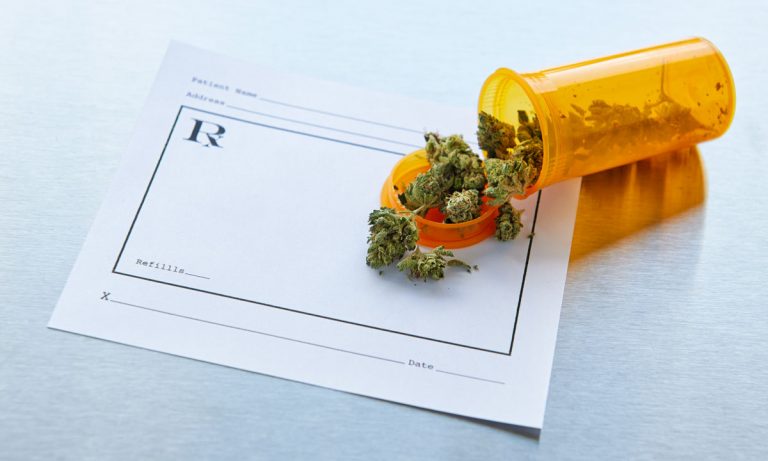
There is growing public interest in marijuana as a useful medicine for a number of physiologic conditions. It should be no surprise that more doctors are asking if the noble weed may hold some answer for those with traumatic brain injury that currently need better therapeutic solutions. One study shines a brighter light on this possibility.
Traumatic brain injury or TBI is just that: damage to the brain caused by an external force. Although much of the mention of this condition has been recently related to football players and veterans of war zones, it affects people of ages, from all walks of life. Although the brain is housed in our hard, protective skull, even one sudden blow can mean profound changes for an individual.
Over 2 million visits to the ER each year are related to TBI events like concussion from auto accidents, falls and assaults. Falls account in 50 percent of TBI in children under 14 years old and over 60 percent of seniors. It is the leading cause of disability and premature death in the world. The economic impact in the US alone has been estimated at $75 billion a year. The impact to people’s lives cannot be measured in dollars.
There have been over 30 failed clinical trials searching for better treatments for TBI, resulting in no significant effect worthy of becoming a pharmaceutical therapy. This has had a chilling effect on similar research.
These failed trials did all have one in thing in common; they didn’t involve cannabis. This is surprising considering that it has been shown that activating the innate cannabinoid receptors (CB1 and CB2) reduces brain swelling and neurological impairment.
Cannabinoid 2-AG is released in the brains of mice following brain injury, though not enough to protect the damaged brain. The fact that 2-AG is released naturally following a brain injury made the team question whether more would be better.
A single dose of plant derived 2-AG was administered to brain damaged mice. The mice who received treatment improved in cognitive function, motor function and every parameter they examined, even months later. The study was a fantastic success. Of course, in a lab setting the scientists had the advantage of being able to administer the dose of 2-AG shortly after brain injury, a key element in the success that could be harder to implement in a real life setting.
This study has serious clout. It was led by a top team from Hebrew University in Israel including the godfather of cannabis research, Dr. Raphael Mechoulam, who first identified THC.
Pharmaceutical companies may not enthused that outcomes showed that a single dose of the cannabinoid can have profound positive effects, but they cannot ignore this high profile and exceedingly successful outcome considering the years of other failed efforts.
Research like this means it is not fantastic to predict a world where paramedics and even athletic trainers on the sidelines of contact sports have access to cannabinoids. If doctors one day agree that a single dose applied right after a concussion or more serious accident can have a profound effect, it would be criminal to deny access.
Cannabidiol, or CBD, has become a household name. On many social media sites, people suggest “but have you tried CBD oil?” on posts pertaining to any health-related issue.
CBD, a minor constituent of marijuana, is widely touted as nature’s miracle by CBD enthusiasts. It does not get people high, unlike marijuana’s main constituent, delta-9-tetrahydrocannabinol (THC). However, given the recent surge in its popularity, you’d think the molecule is magic.
We are behavioral pharmacology scientists, and we study how drugs act on the body. Specifically, we have an interest in developing new drugs for the treatment of pain that possess lessened drug abuse potential, and therapeutic interventions for drug abuse. Although there is scientific interest in the use of CBD for both pain and drug addiction, as well as many other medical indications, there is a lot that we still do not know about CBD.
CBD and THC: How do they work?
Drugs affect the body by binding and acting at various protein molecules, usually on the surface of the cells in the body, called receptors. These receptors then send signals that can impact bodily functions.
Marijuana has an effect on the body because many animals have receptors termed “cannabinoid receptors.” There are two known cannabinoid receptors that are responsible for the effects of marijuana. Only one of them, the cannabinoid type 1 receptor (CB1R), is responsible for the high from marijuana. These cannabinoid receptors are predominately found on nerve cells located throughout the body, including the brain.
Studies indicate that CBD does, however, act on several other types of receptors. These include the serotonin 5-HT1A receptor, which can help regulate sleep, mood, anxiety and pain. CBD may also indirectly alter the body’s own cannabinoid receptor activity.
However, scientists do not yet understand the exact manner in which CBD acts on the body. Likewise, many health-related anecdotal claims pertaining to CBD are not founded on solid scientific evidence, and may be due to well-documented placebo effects.
There is strong evidence, however, that CBD has enduring health benefits in the treatment of intractable epilepsy.
Charlotte’s Web
It has been nearly six years since the story of the Charlotte’s Web strain of marijuana broke into national and international media. This strain of marijuana was named after Charlotte Figi, who struggled with intractable pediatric epilepsy until she was given oil extracted from the strain, which contains a higher CBD-to-THC content.
Charlotte’s father saw an online video of a child from California with seizures who was being treated successfully with marijuana. As it turns out, the active compound that was helping Charlotte was not THC but CBD.
Based upon clinical evidence, GW Pharmaceuticals developed and licensed its own CBD extract, a drug now called Epidiolex. Clinical trials with Epidiolex for the indications of Dravet syndrome and Lennox Gastaut syndrome, two forms of pediatric epilepsy, were resoundingly positive.
In June 2018, the Food and Drug Administration approved Epidiolex for treatment of these two forms of epilepsy in children that have not responded to other treatments.
Meanwhile, as the clinical trials for Epidiolex were underway, a landmark study from Indiana University demonstrated a possible mechanism for CBD’s astounding effects on Dravet and Lennox Gastaut syndromes. These two syndromes are associated with genetic mutations in two genes that are important in the regulation of sodium ions.
A specific understanding
Nerve cells regulate the way they send signals by how ions, or molecules with either an overall positive or negative electric charge, flow in and out of their cells. The most common ions that regulate nerve cell signaling are sodium, potassium, calcium and chloride. These ions move in and out of the cell via pores known as ion channels.
In many forms of epilepsy, however, the movement of ions is not properly controlled. This leads to aberrant firing of the brain’s nerve cells and seizure activity.
In both forms of the epilepsy for which CBD is effective, there are alterations in the channels that control the flow of sodium in and out of nerve cells, or what is called a “sodium channelopathy.”
The study from Indiana University found that CBD can directly inhibit the aberrant flow of sodium ions in nerve cells that have sodium channelopathies. Importantly, CBD does not seem to impact the flow of sodium in healthy nerve cells.
Although CBD has marked effects on these sodium channelopathies, this does not mean that CBD will produce meaningful benefits to other forms of epilepsy.
Other forms of epilepsy are linked to regulation problems related to the flow of potassium ions in cells. This type of pediatric epilepsy is resistant to all known therapeutics, including CBD.
A potential pain therapeutic?
There are also claims that CBD can be used to address pain. And indeed, mounting evidence in pre-clinical laboratory studies show that CBD may be of use for the treatment and prevention of neuropathic pain, or an amplified response that may be due to nerve cell damage. In a mouse model of this type of pain, CBD injections prevented and reversed the development of one hallmark sign of neuropathic pain, called mechanical allodynia. This is the sensation of pain due to a non-noxious stimulus, such as the feeling of clothing on an area of skin that has a sunburn. A new study from McGill University in Montreal, Canada, shows that oral administration of CBD produces these same effects in rats with a similar type of pain.
In both of these studies, the scientists discovered that these effects are likely due to actions at serotonin receptors. A study from scientists at the University of Kentucky suggested that CBD applied to the skin, or transdermal CBD, may reduce inflammation in a rat model of arthritis.
An important caveat to these findings is that not all compounds that produce effects in rodent pain studies will work in humans. Further, most of these studies examined the effects of injected CBD. So far, there is little evidence showing therapeutic effects of either edible or transmucosal, the administration of a drug across a mucous membrane, CBD for pain. There is only limited evidence for the use of transdermal CBD. Thus, until more scientific studies are conducted, the hype that CBD can successfully treat various forms of pain in humans is premature.
Still curious about all the hype? Before running to the local supermarket health food isle to purchase CBD to conduct your own at-home trial, there are a few more points to consider.
Most CBD products sold in grocery stores are touted as “hemp-derived.” That is, they come from a cannabis plant that has a purportedly extremely low amount of THC. Typically, hemp-derived products are made from the stalks and roots of the plant. This is in contrast to marijuana, which can contain varying amounts of THC and comes from the flowers of the cannabis plant. Recently, hemp-derived products were removed from the Controlled Substances Act.
However, it remains unclear if hemp-derived CBD works in the same exact manner as marijuana-derived CBD. Further, the FDA does not approve of CBD products as dietary supplements, or the marketing of any health-related claims. Also, the agency prohibits the addition of either THC or CBD to food products sold in interstate commerce for human or animal consumption.
As long as there are no associated medical claims, the FDA allows the use of hemp oil and seeds in cosmetics. However, the usefulness of hemp products in cosmetics also remains to be determined.
With every Super Bowl there’s a bunch of new commercials that will be remembered for all the wrong or right reasons. Although the commercials will be fully released during the duration of game, short ads of them have been released, letting us speculate on which ones will be the most memorable ones and which won’t be remembered in a week.
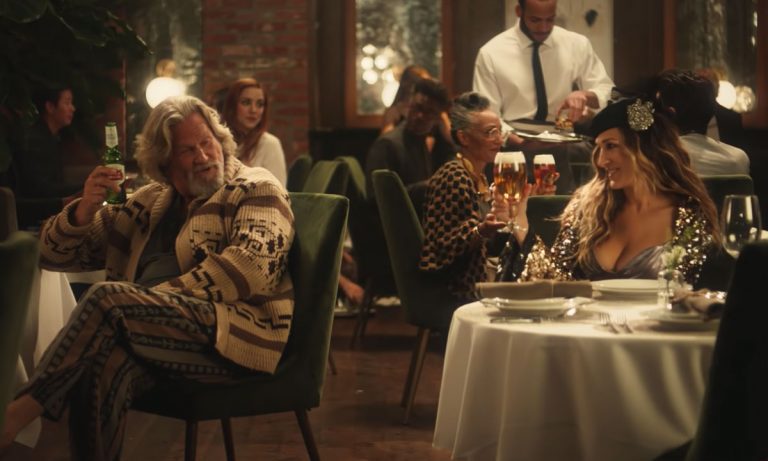
Uniting Carrie Bradshaw and the Dude is either genius or a capital sin depending on who you ask. But you have to give credit to Stella Artois for coming up with this idea in the first place. My biggest issue with this commercial is the fact that Carrie would never ever drink a beer in public. If it didn’t happen on six seasons of Sex and the City it’s not going to happen now.
Avocados From Mexico
Avocados From Mexico has specialized in crafting the weirdest and most random Super Bowl commercials and this year is no different. The ad shows us a dog pageant where the contestants are humans and where the host is Kristen Chenoweth. Does this make sense? No. Do we care? Also no.
Bubly
Despite the fact that the joke of Bubly vs. Buble was begging to be made, I still find this whole idea a little cheesy. Not my favorite commercial, but extra points for creativity.
Budweiser has been exploiting our emotions with their dog commercials for a while, so I appreciate the fact that this year’s commercial foregos the sadness and is simply adorable. You can never go wrong with a dalmatian and his ears flapping in the wind.
Amazon
Amazon always kills it with their Super Bowl commercials. This year they went all out featuring Harrison Ford, Ilana Glazer, Abbi Jacobson and Forrest Whitaker. In the ad, some Amazon employees talk about the many products that feature Alexa, with every example even more outrageous than the last. It’s a good joke. Or maybe it’s real, I really don’t know.
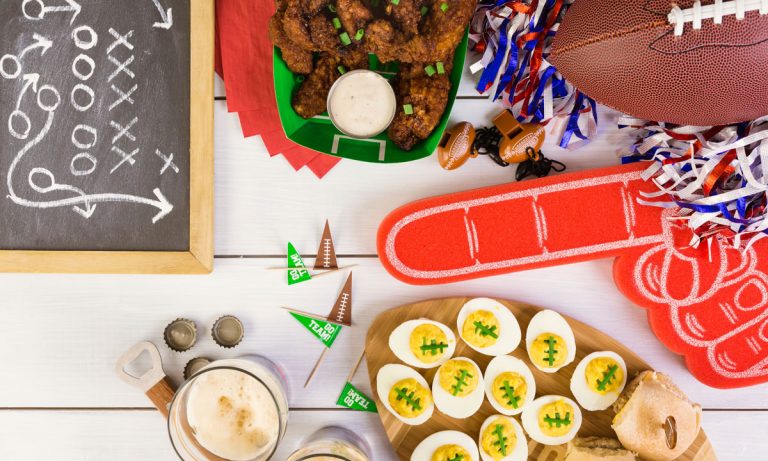
So many people go to Super Bowl parties for the food and booze, but this year the lack of interest in the actual event can blamed on more than one thing. As the NFL continues to get flamed, and with no imminent reform in sight, it’s gonna take more than the usual chips and salsa to get people to watch this Migos-less halftime. Busting out the good snacks is the duty of any host, but giving them something special to dip is taking it to the next level, and this year, you’re going to need it.
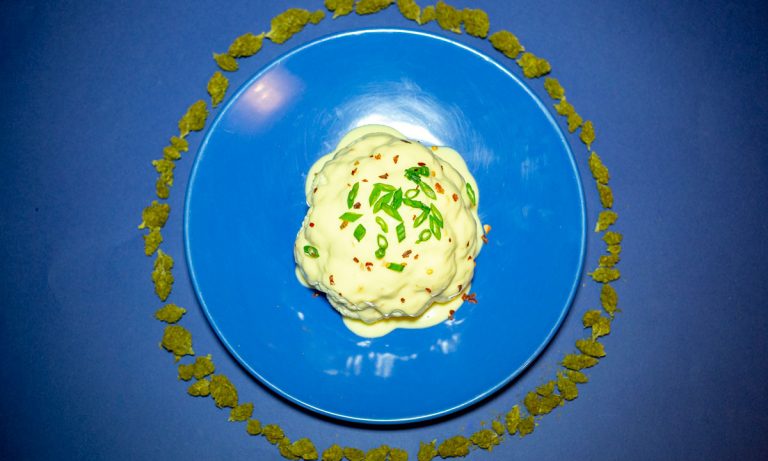
Infusing a cheese sauce with cannabis isn’t as hard as it sounds—using the basic French cooking technique of creating a roux to build your sauce enables a goopy goodness that no one will want to pass on. Dosing this cheesy dip will keep the party going, just as long as you don’t make it too strong. If you’re not careful you’ll end up with a house full of couchlocked people, so make sure everyone knows about the included THC and projected dosage.
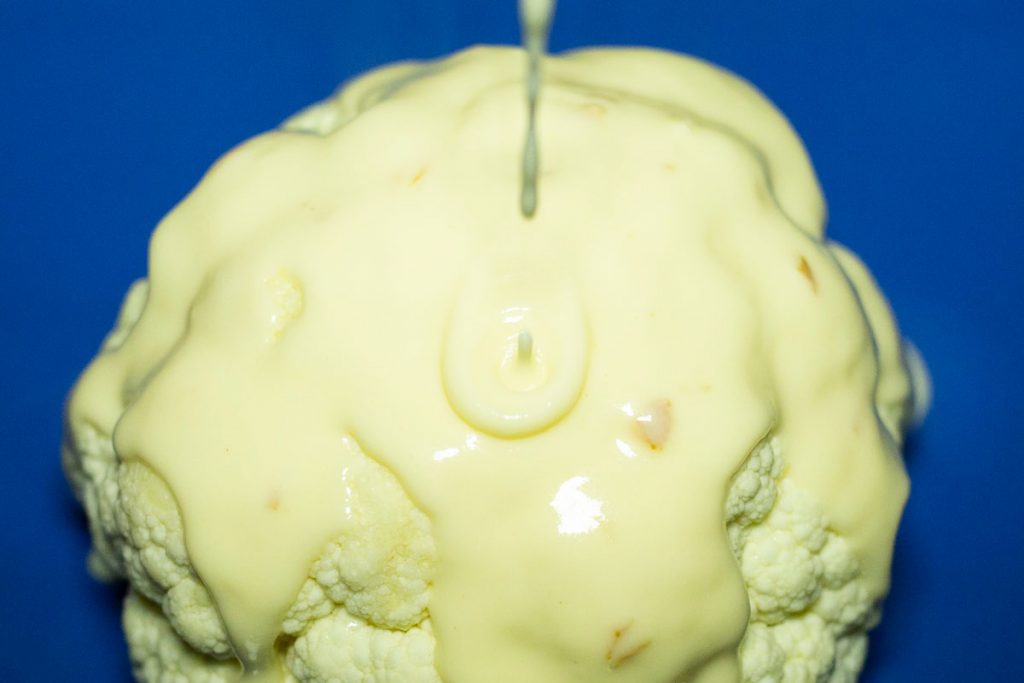
Cheese dips can be thick and stringy like fondue, or slightly more fluid like a bean dip. There’s even some that are the consistency of gravy, like cheese whiz sauce. This one is just right, runny enough for dipping veggies, thick enough to coat anything you want to cover it with. You can start this the day before, but it comes together pretty quickly if you need to make a fast party dip.
Photos by Maria Penaloza
Infused Smoked Gouda Cheese Sauce
Inspired by The Takeout’s A.E. Dwyer Estimated 150mg of THC per pot, 12-20mg per serving
Ingredients
2 cups shredded smoked gouda
1 cup milk
2 Tbs flour
3 Tbs cannabutter*
1 tsp mustard
Steps
Starting with a roux, gently melt the cannabutter on the lowest heat possible. Add the flour and cook very gently until it makes a thickened roux, don’t let it get any color, too much heat will compromise your butter.
Once you have a good roux texture, briefly turn off the heat and mix in the milk. Return to the heat source, and add the mustard, then the cheese, one handful at a time, allowing each to melt in completely.
The sauce will stay liquid for 15-20 minutes, you can keep in a mini slow cooker if you want to keep it warm for longer periods. It also reheats beautifully. A splash of milk is all that’s needed to help it stay the right texture if it’s seized up.
Decarboxylate 2 grams of finely ground cannabis or .25 gram of concentrate. Put material in lidded mason jar or vacuum sealed bag with cannabis and one stick of butter. Heat in water bath just under boiling for at least 1 hour. Strain and cool to use in recipes.
We used this delicious cheese to cover an entire cauliflower, and it was definitely a seaworthy party snack. Put out other tasty goodies to dip besides salty chips and you won’t be let down, like blistered shishitos—with gouda they make a great combo. Try mixing it up with other cheeses. Cheddar and jack work great and lend themselves to adding things like beans, ground beef, or a can of roasted tomatoes for some zip. No matter what you drizzle this cheese on, it will be a bigger hit than the commercials.
The Super Bowl would probably prefer to not have anything to do with cannabis, but the cannabis industry and football are destined to work together. Whether it’s the rejected Super Bowl ad from Acreage Holdings Inc. (ACRG.U) or dispensaries running Super Bowl promotions the two keep crossing paths. Plus, there is the issue of cannabis being used to treat former players who suffer from head injuries.
The NFL even found itself mentioned in the Pennsylvania Auditor General report saying, “ In 2018, the NFL rejected an unprecedented therapeutic-use exemption request from running back Mike James, a free agent who sought medical marijuana treatment to break a dependence on opioids. If players’ access to medical marijuana is going to be compromised, legalizing marijuana altogether would make it unnecessary to threaten Philadelphia Eagles and Pittsburgh Steelers players with suspension, fines, and banishment from the league over its use.”
The report went on to note that its cherished Philadelphia Eagles could be hurt by if players sought to live in states where cannabis is legal in order to treat themselves. “As marijuana is legalized in other states, it could incentivize athletes — who literally injure themselves for our entertainment — to seek to be traded to states where they can legally access pain management and do not have to wait for exemptions to stay off opioids.”
Brady Cobb is a medical cannabis pioneer and the CEO of SOL Global– which is currently in the middle of a five-year study at the University of Miami on how CBD can help treat concussions. He said, “The NFL is holding onto this long-held association between cannabis and Reefer Madness. It’s been only recently, with newly enacted legislation, that the public and companies are recognizing the difference between the non-psychoactive medical properties of CBD and the mind-altering effects of THC. With the Farm Bill’s passage, I think it’s only a matter of time that the NFL catches up to the NHL and other sports leagues that realize the real potential of the healing benefits of CBD.”
He noted that the players and the players’ association all support looking into and researching the effects of using cannabis and CBD in treatment. When asked about CBS rejecting the proposed ad which only showed patients discussing how medical marijuana helped them he said, “CBS’s position is clearly completely at odds with the public’s position. A recent Gallup poll shows that the public supports cannabis upwards of 66% to 67%. So six out of ten people watching the super bowl – if not more, considering the demographic – could ultimately be a consumer of the products.”
The issue of cannabis advertising during football only looks to be getting more attention versus dwindling away.
“With the increasing efforts to legalize cannabis products for both medical and recreational use, advertising standards and practices are coming rapidly into focus,” said Deb Gabor, CEO of Sol Marketing. “While CBS snubbed an ad for medical marijuana during the Superbowl — they did consider it. The mere fact that the network considered an ad for cannabis shows that we’ve turned a corner, and we’re going to see advertising and branding for these products come rapidly into the mainstream.”
Gabor is the author of the new book, releasing nationwide March 2019 titled, Irrational Loyalty: Building a Brand That Thrives in Turbulent Times. Gabor noted that the cannabis industry has been working hard to overcome stereotypes and change perceptions of the culture of marijuana usage.
“Advertising to large audiences like those watching the Super Bowl — and getting in on the PR value of Super Bowl advertising — is one tactic in kickstarting a perceptual change,” she said.
Even though CBS has refused the ad, the stadium doesn’t seem to have as big of a problem. A CBD-infused coffee ad will be allowed during the game at the stadium in Atlanta.
“While this is not technically a Super Bowl commercial, this is a sponsorship activation, which is designed to engage audiences in a more experiential fashion. While it’s unclear to me what CBS’ advertising policy says, and whether this would constitute a violation of that, I’m sure that CBS is concerned about this from the perspective of wanting to manage their OWN brand as a media company,” added Gabor.
While the experts debate the ability to run a medical marijuana ad, dispensaries have no problem capitalizing on the event for sales. Some companies are suggesting adding their CBD tinctures to recipes like salsa and others suggest drinking cannabis-infused beverages instead of alcohol.
“Cannabis sales leaped 40% last year on the Saturday before the big game and this year could rise even higher thanks to California’s recent legalization of recreational marijuana,” said cannabis software company Green Bits.
Though Arkansas voters passed Amendment 98 in 2016, which legalized medical cannabis in the state, Arkansas’s health department still hasn’t issued any official medical cannabis cards to struggling residents. Due to various legislative and regulatory delays, the state offered qualifying patients the option to attain a temporary medical cannabis license to use in Oklahoma.
1 of 3
Photo by Michael Sum via Unsplash
Photo by SEASTOCK/Getty Images
Photo via Flickr user Pedro Szekely
Why Oklahoma though? It turns out that Oklahoma’s medical cannabis program is moving at a much faster pace as compared to Arkansas’s, and they’re willing to kindly help the neighboring state out. So what’s the likelihood of Arkansas’s medical cannabis program operating this year, and will it actually make a difference?
Progress or Retrogression?
Drug overdoses fit under the top ten leading causes of death in Arkansas, which has motivated numerous residents to seek out alternative medicines like cannabis and/or Cannabidiol (CBD). As of December 28th, roughly 6,700 Arkansans were approved to purchase medical cannabis in Oklahoma. But according to Meg Mirivel, a state agency spokeswoman, it’s probable Arkansas won’t issue any official medical cannabis cards until February. This is because the state wants to ensure when cards are issued, residents can use them right away as opposed to receiving them but being unable to use them.
Law enforcement might worry about Arkansas patients attempting to purchase medical cannabis elsewhere to bypass various state delays. Fortunately, though, Oklahoma stepped up to help struggling Arkansans by offering them temporary medical cannabis licenses. Currently, Oklahoma offers temporary medical cannabis licenses that are valid for thirty days, but they can be renewed. The temporray cards permit individuals with medical cannabis cards from other states to legally purchase, consume, and cultivate cannabis in Oklahoma.
Unfortunately, though, qualifying Arkansas medical cannabis patients cannot attain a temporary out-of-state card to purchase, consume, and grow cannabis in Oklahoma if they don’t have their own state-licensed medical card with them. It’s safe to say this is a lose-lose situation for already approved Arkansas medical cannabis patients, as they haven’t received those all-important cards. Instead all Arkansas qualifying medical cannabis patients have received are state approval letters.
Next Steps
In the meantime, what can Arkansas medical cannabis patients do to get the medicine they need? They can take a risk by purchasing medical cannabis products from other U.S. states and transporting it across state lines back home to Arkansas. We do not recommend that option as those caught will face federal consequences. Another option is to buy CBD products online, which are medically and therapeutically beneficial.
Then, there’s always the option to get involved with Arkansas cannabis advocacy groups by using your voice to create effective change for medical cannabis patients. This can be in the form of creating petitions, participating in peaceful protests, attending community meetings or conferences and standing up for what’s right.
What Will Arkansas’s Program Arrive?
When comparing Arkansas and Oklahoma’s medical cannabis programs, Oklahoma is way ahead. Nonetheless, Arkansas is slowly making changes, even though many of them are quite restrictive. For starters, there can be no more than 32 dispensaries in the state, , according to Amendment 98, and Arkansas has yet to grant licenses to state dispensaries. The state commission is still deciding on which 32 locations will be able to legally sell medical cannabis. In addition, Arkansas has only granted five cultivation licenses, but no cultivators have started the growing process yet.
Recently, The Arkansas Department of Health expressed they’ll start issuing certifications to already approved medical cannabis patients next month. By doing this, existing medical cannabis patients won’t have to apply for temporary medical licenses in other states like Oklahoma. On a positive note, two Arkansas business that received state-approved cultivation licenses expect their first harvest in April. They also expect medical cannabis products to be available in dispensaries that same month.
Overall, Amendment 98 is much more restrictive than that of many U.S. states including Oklahoma. Although Arkansas is still working out different kinks, they at least have the medical cannabis ball rolling.
It’s a fluctuating time for the porn industry. Porn has never been more mainstream, yet its accessibility and the fact no one pays for it anymore has left actors, directors, and producers feeling disoriented.
The Adult Video News Awards (AVN) are sometimes called the Oscars of porn. With 35 years of history, the awards are held every year in Vegas with the goal of celebrating the best performances in the business. This year they broke the mold when they booked Cardi B as a performer. “I’m so excited for these awards . . . more than the Grammys,” she told the crowd the day of the event.
The AVN Awards have a similar structure to awards shows like the VMAs, who are inclusive of their fanbases. There’s 15 judge-based categories, 11 fan-voted categories, and the introduction of a porn star into the Hall of Fame, which is the highest honor of the night.
Winning an AVN award is certainly flattering, giving performers more notoriety within the industry and possibly facilitating job opportunities. Unlike award shows in the film industry though, what comes afterwards for adult actors is more complex than a career boost or a bigger paycheck.
Out reports that a large percentage of the porn industry functions like the Old Hollywood studio system, where actors are tied by contract to their studios who in turn pay them an annual salary. While winning an award might give some porn stars the chance to negotiate better deals, there’s no certainty that this will be the case.
“It won’t mean a model gets higher pay, and it likely won’t help a studio decide on hiring them,” says porn star Austin Wilde.
For an industry that’s directly influenced by the internet, a large social media presence can be extremely important for porn actors, much more than winning an AVN award. “We can tell a model is a bang or a bust based on how many followers they get after starting with us,” says Kyle Ross, a porn star from Helix Studios and recipient of a GayVN award. Other critics claim that the AVN Awards are outdated and built to reward studios, closing the door on independent actors who might find more value with the notoriety that comes with the recognition.
It’s hard not to see the porn industry as a parallel to Hollywood, another business that’s also struggling to understand and come to terms with digital content. The Internet has shaken up our understanding of these mediums, introducing audiences to new methods of consuming content and creators to other ways of crafting media. At some point, awards will have to find some sort of understanding with audiences and members of their industry. If not, they’ll become more and more irrelevant with every passing year.
For years, people employed with the legal cannabis businesses have complained about a variety of missteps by upper management ranging from sexual harassment to doling out compensation in the form of weed rather than money. These less than favorable working conditions have given labor organizations the ammunition to step in and unionize the trade in some parts of the United States.
Marijuana is expected to become an industry that rivals the alcohol trade – a sector that labor unions have had a part in for decades – so it stands to reason these groups would be interested in legal weed.
The United Food and Commercial Workers Union (UFCW) presently represents around 10,000 cannabis workers all over Northern America, according to its website, and is progressively moving into other markets. Just last year the UFCW signed the first-ever collective bargaining agreement with a recreational cannabis chain in Seattle, Washington. It is also making strides in Southern California.
The Teamsters is another labor organization getting into the cannabis industry. Last year, representatives of the brotherhood gathered at the Netroots Nation conference in New Orleans to discuss the future of the cannabis trade. They say it is about bringing legitimacy to a business once considered outlaw – providing workers with protections on health, safety and issues with law enforcement.
“This industry was an all underground industry until recently, and the Teamsters are the enemy of the underground economy,”said Barry Broad, the Teamsters’ chief lobbyist in California. “We want people to pay their taxes and get Social Security.”
The United Farm Workers of America (UFW) is also considering some involvement. The UFW does not yet represent any members of the cannabis industry, but it has been interested in making a connection since before legalization was official. Not only did the group endorse California’s Proposition 64, but it expressed interest in the trade soon after it passed. “If you’re a cannabis worker, the UFW wants to talk with you,” national Vice President Armando Elenes said in a 2017 interview with the Los Angeles Times.
In California, the UFCW has experienced an uptick in membership since 2018. It is presently working with various facets of the supply chain from manufacturing to delivery, amassing hundreds of cannabis union workers.
“Most of the jobs that we’re creating under the union are full-time jobs. Most of the jobs have medical benefits,” Rigo Valdez, vice president and director of organizing for UFCW 770 in Southern California, toldVice News. “That’s very different than what’s happening in other up-and-coming industries that are really based on robbing workers from the ability to make a living wage.”
There is a lot of strength in labor unions, yet it remains uncertain just how deep these organization will get into cannabis. Much of this depends on the overall response from those involved. Some cannabis industry members argue that labor groups are too capitalistic to have a real spot in cannabis. Yet that thought process seems naive. If legal cannabis proceeds in becoming the next mega industry, which it is set to do, there is little doubt that these organizations will play a role. This is especially true when the federal government finally legalizes the leaf nationwide.
Chris Hemsworth has put in a lot of hours to maintain his buff physique, but he’s feeling better than ever!
The 35-year-old actor, best known for his role as Thor in the Marvel Cinematic Universe, had a slew of ups and downs before landing the superhero gig that kick-started his career. Once obtaining the athletic role and bulking up, he’s been unstoppable. But does that time in the gym ever get tiresome?
“It comes hand in hand with the roles I play, but look, occasionally you’ll see paparazzi poking out of the bushes and you’re like, ‘How’s my rig look? Am I on point, or have I slacked off lately?’” Hemsworth, who appears on the March cover of Men’s Health (on stands Feb. 12), says in an interview published Wednesday. “I maintain my fitness because it makes me feel better.”
DRAMA … ALREADY! Gwyneth Paltrow JUST got married, but a new report says that parenting issues are causing BIG drama.
An insider says, “There’s a family feud brewing in their household … Their parenting styles are VERY different, so there were bound to be clashes … It’s made things VERY complicated.”
It happens to just about everybody who enjoys cannabis over a long period of time: The amount needed to feel the psychoactive effect grows and your marijuana tolerance level gets out of whack. No matter how hard you try, you just can’t get back to that old feeling you loved when you were a newbie.
No need to worry. Here are seven simple ways to adjust your cannabis intake to get back in the groove:
Duh. This is the most obvious — and the one many consumers simply don’t want to do.
Some of you may be patients suffering from chronic pain, PTSD or other ailments that require daily consumption. If this is your situation, there are other methods below.
And there are some out there (studies say it is anywhere between 8-11 percent) that have a physical dependence. If this is your situation, please address the issue. See a doctor. Talk to a healthcare professional. Do NOT simply continue what you are doing.
But if you are like most of us, a tolerance holiday (or T-break) should do the trick. If you have been using cannabis for a prolonged period of time, your system becomes desensitized. When you constantly put THC in your body, the receptors that bind to it become compromised. Give your receptors a chance to recuperate.
Commit to at least a two-week break from marijuana; a month is better. It may sound difficult for some of you. You may become irritable or moody. But it is certainly doable. Try it.
Believe it or not, physical activity can lower your tolerance level. Doing just a little cardiovascular exercise before consuming cannabis will allow you to use less and still feel the effects. In short, exercising will give you more bang for the buck.
And if you are running or hiking, consuming a small amount of cannabis beforehand will make the experience more enjoyable.
Let’s be honest, if you are sitting around listening to music or watching TV, you will be more prone to reach over and take a hit. If you are outside doing physical activity, you’re more likely to enjoy the experience.
Besides, we could all use a little more exercise in our life.
For some of you, the wake and bake routine is as common as drinking a cup of coffee. It’s just a habit you are accustomed to. Well, give it a rest.
If you refrain from consuming cannabis first thing in the morning, your body will slowly begin to adjust. Wait until the afternoon for your first toke of the day. After a few days, wait until the evening for your initial session.
You will enjoy the experience more and you’ll cut back on your tolerance level.
Another obvious suggestion, but it simply works. If you roll joints, go out and buy smaller papers. Or roll pinner joints for a month or two. If you are into blunts, move to joints.
If you dab, give it a break and move to a different form factor. If dabbing is the only method you do, then simply use smaller amounts of wax.
Often times, simply switching strains will help you adjust your tolerance. If you are buying a high-THC strain, try a lower-THC strain. If a heavy indica strain at night is your thing, go with a hybrid strain or something not as heavy. If sativas are your go-to strain, experiment with something a little more relaxing.
Give your system something new and it will help you cut back. Your receptors will adjust and you will need less cannabis.
Chillums (or one-hitters or dugouts) are an excellent way to reduce your intake. These devices are designed for on-the-go consumption and allow for only tiny amounts of ground herb.
These are individual tools not meant to be passed around. So you may be consuming by yourself a little more, but you might find you are using much less.
There are various kinds of cbillums (glass, metal, wood, etc.). Find one that fits your style and give it a go.
Yep. I’m going to throw this one in the mix. Practice mindfulness. Ask yourself a few questions each time you reach for the weed: Do I really need this now? What if I skip on this session and get in touch with what my body is telling me? Will meditating or taking a brisk walk help? Is my pain so severe or can I wait an hour?
If you truly listen to your body and follow what it is telling you, chances are you will use less. Sometimes a difficult situation you are experiencing can be resolved without consuming cannabis. Maybe being in the real world and not feeling euphoric is what is required at the moment.
I know some of you will dismiss this one out of hand. But if you practice mindfulness, you will find an inner peace that will allow you to eschew the piece.