Saturday, June 27, 2026
Home Blog Page 774

Things You Can Do Today To Help The Environment

It’s never to early to get in on the environmental wave. In fact, it might even be too late, but let’s try not to think about that too much.

Preventing the expansion of climate change and taking care of the world’s resources is a priority. Despite the fact that 2018 was one of the the hottest years on record and that most people believe in or have some sort of awareness of global warming, most of us don’t take the extra step and commit to producing less waste and toxic emissions.

The topic of world health is overwhelming and not easy to approach. While all the information is readily available, it’s hard to understand if you aren’t an expert, but there are manageable ways of doing your part for the planet. Aside from voting for politicians that provide solutions and believe in climate change, you can also do small everyday things that will take a load off the planet. Check out some of our favorites.

Buy a reusable water bottle

Millions of plastic bottles are sold on a day to day basis throughout the world, polluting the oceans, killing marine life and creating large amounts of waste. National Geographic reports that every hour there are over 2.5 million plastic bottles thrown away.

https://giphy.com/gifs/hulu-fox-the-mindy-project-26uf4uFMIilb8n6WQ

RELATED: Airplane Turbulence Is Going To Suck Thanks To Global Warming

By carrying around your own water bottle you’ll save money and reduce plastic waste. To take things further you can also avoid straws, only using them when necessary.

Be mindful of how you use water

Everything you can do helps, from spending less time in the shower, to closing the tap when you’re brushing your teeth. You can also buy an energy efficient shower head in an accessible price which helps manage your water.

Reduce the amount of paper you use

While it’s hard to completely stop using paper, there are dozens of things you can do to manage how much of it you use. Opt out of junk mail, go paperless on bank statements and keep track of the amount of paper towels and napkins you use.

https://giphy.com/gifs/paper-found-dispenser-7SW4InesxP7Rm

Avoid eating meat 

Industries that process lamb and beef produce greenhouse gas emissions in high amounts, so reducing the amount of meats you consume, at least once a week, can help the environment in one way or another. Dale Bryk, strategic advisor of the climate and clean energy program at the Natural Resources Defense Council, spoke with Mashable and explained that initiatives like Meatless Mondays are looking to create awareness in the food industry, hopefully making these businesses invest in options that don’t pollute the planet and that don’t contribute to climate change.

RELATED: The Temperature In The Pacific Ocean Is Changing The Weather In Southern California

Learn about composting

Instead of throwing away all of your food waste (which gets sent to a landfill and ends up producing tons of greenhouse gases) you can compost, which can be used as natural fertilizer. You can learn to make your own compost pile or you can purchase a compost bin. If you’d rather not have any food leftovers near your home, you can research drop off sites in your area or sign up for services that provide this service for you.

https://giphy.com/gifs/ifc-portlandia-watermelon-carrie-brownstein-l3fQijPPLmEpdEQIo

Explore different methods of transportation

Vehicles are a big problem for our air even if some of us don’t have easy access to public transportation or the luxury of being able to walk everywhere. If you live somewhere where you can walk, ride a bike or take the subway, take advantage of this. By using these options more regularly you’ll stay more active and contribute to a less polluted environment.

Get to know thrift stores and second hand clothing

According to Nature’s Path 1 kg of fabric generates 23 kg of greenhouse gases, so rapidly purchasing and discarding clothes only harms the environment. Consider taking better care of your clothes and think twice before you shop. When you have to get rid of clothes consider donating them instead of throwing them in the trash.

https://giphy.com/gifs/adam-levine-blake-shelton-maroon-5-hnl83xVQxpqJG

Why Dreaming About Death Is Likely A Good Thing

That feeling of waking up in a sweat because you just dreamed that you or someone you love died. We’ve all been there. The dread that washes over you in your waking state, wondering if that was a bad omen or just a reminder that you probably shouldn’t drink a bottle of wine before bed. Whatever it is, death dreams can’t be a good thing, right?

If you ask experts, they would say that death dreams can actually be beneficial, explaining that they’re simply our brain’s way of working through daily stressors.

RELATED: Here’s Why Cannabis Users Can’t Remember Their Dreams

Dream analyst and former scientist Jane Teresa Anderson tells News Corp that death dreams are common during the holidays because people have more time to sleep and, thus, dream. It’s also a time when people feel pressure to better themselves.

We all get to new year and we say “oh, my New Year’s resolution is to stop this … I’m going to put an end to this …” Sometimes our dreams can be our unconscious response to what we’ve decided to kill off or put an end to in our life.

For some, the holidays are also a time of conflict, grief, anxiety, relationship breakdowns or change, which can also lead to some wonky subconscious thoughts that manifest in our dreams.

When it comes to seeing your own self dead in a dream, Anderson said it’s usually symbolic of a positive major life change.

“Death dreams have a theme of what is ending, what’s changing in your life … This ending is the start of a new beginning,” she told News Corp.

 It’s really important to say that most deaths we might dream of are probably positive, in order to move onto new things we have to let go of old things.

Psychotherapist Jeffrey Sumber said that dreams are a “safe place” for us to deal with emotions and/or resolve anxieties. “Dreams also allow us to process information or events that may be painful or confusing in an environment that is at once emotionally real but physically unreal,” he said.

RELATED: Will Using Cannabis Before Bed Give You Nightmares?

But while you may have the urge to tell the person you saw die in a dream about your experience, it’s probably best to hold off. Anderson says it’s best to give them the “logical explanation” of your dream instead of the morbid details.

“Share it with friends and people who are skilled in understanding or share it with a dream therapist,” she said. “I wouldn’t go straight to the person as it does freak them out.”

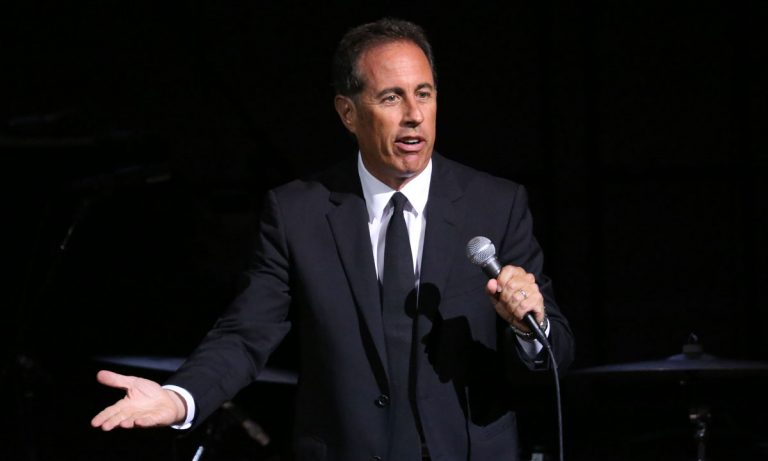
Kit Harington Says Everyone Was ‘Broken’ After Filming ‘Game of Thrones’ Finale; Why Does Jerry Seinfeld Hate Jimmy Kimmel?

Jerry Seinfeld Hates Jimmy Kimmel

“Nobody knows where the bad blood comes from, but Jerry just hates Jimmy,” a source told Radar, adding that friends believe the animosity stems from just plain jealousy. “People believe Jerry is envious of Jimmy.”

Despite Seinfeld’s enormous success from his self-titled NBC 90’s sitcom, Kimmel, 51, has had a far higher profile recently, with his late-night ABC chatfest and hosting gigs on the Oscars, Emmys and other awards shows.

“There’s no specific event anybody can point to, and it’s not coming from Kimmel’s side,” the source confessed. “He’s a huge Seinfeld fan and he’s always talking about what a great comic Jerry is.”

Kimmel has previously had Seinfeld, 64, on Jimmy Kimmel Live! and has even done his Seinfeld impression for him, but something has gone south in recent years, according to the source.

“You won’t see Jerry on Jimmy’s show again — ever,” the insider revealed.

Kit Harington Says Everyone Was “Broken” at the End of Filming Game of Thrones

It seems the last season of Game of Thrones was a tough one. Not only did it make Kit Harington cry more than once, but he said it “seemed to be designed to break us.”

RELATED: George R.R. Martin Wants More ‘Game Of Thrones’ Seasons, Too

“Everyone was broken at the end. I don’t know if we were crying because we were sad it was ending or if we were crying because it was so f–king tiring,” he told GQ Australia. “We were sleep deprived. It was like it was designed to make you think, ‘Right, I’m f–king sick of this.’ I remember everyone walking around towards the end going, ‘I’ve had enough now. I love this, it’s been the best thing in my life, I’ll miss it one day—but I’m done.’”

https://www.instagram.com/p/BqQTpe2hT45/

Jennifer Lopez Blames Herself for Multiple Failed Romances

The Second Act star has been dating Alex Rodriguez since early 2017, and she couldn’t be happier than she is right now. It took a while to get here, of course, as she admits in the February issue of Harper’s Bazaar: “For me, the relationship journey has been very up and down. But it didn’t have to do with anybody else but me—it was about me figuring out me.”

“Until you learn to love yourself, you can’t completely love [someone else] in a way that is pure and true. Once you do that, you can have relationships that are based on love and respect, that are supportive and nourishing. There’s an evolution there that had to happen for me,” says the multi-talented superstar, who’s been married three times. “I feel like I’m in a better place now.”

RELATED: Meme Of The Week: Proud Boyfriend Alex Rodriguez

Lopez, who’s endured high-profile break-ups from Ben Affleck, Marc Anthony, Sean “Diddy” Combs and Casper Smart, has never given up on love—or herself. “I’ve got two amazing kids and a great boyfriend. I don’t have everything figured out, and everything isn’t perfect,” she says. “But I feel very proud that with all the things I’ve gone through in my personal life, I’m still optimistic and hopeful.” At times, life in the limelight can be difficult. And although she has developed a thick skin over the years, she’d rather not see her name in the tabloids. “You’re trying to do your best and people are putting you down, or trying to make believe you’re not a nice person, or you’re a diva,” Lopez complains. “I’m always like, ‘Who are you talking about?’”

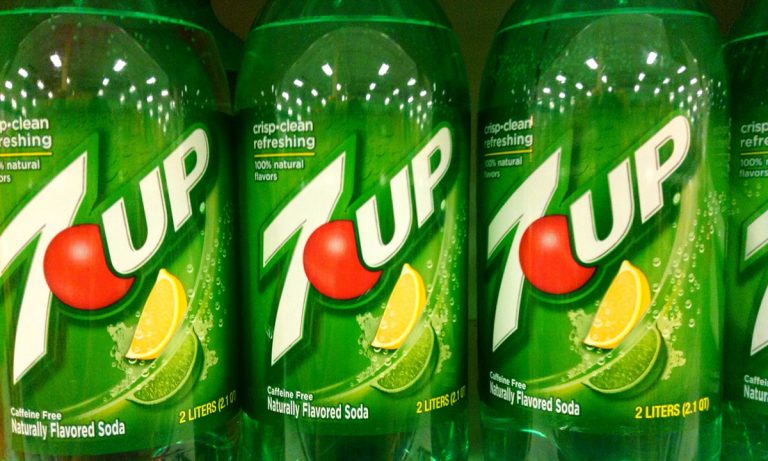
Can 7Up Cure The Common Cold?

7Up has been the go-to liquid for upset stomachs for ages. If you’re of a certain age, it’s likely your mom or grandma gave you a glass of the bubbly drink when you felt nauseous. But now, it’s been hailed as a cure for the common cold. Something smells fizzy.

The soft drink is certainly a tasty beverage, but it’s healing properties are questionable. FOX News has taken this home remedy out of the closet and given it a good dusting to share with others who may be searching for an easy cure during this time of year, when the cold and flu bugs seem to outnumber healthy humans. But, as they mention, don’t believe the hype, because — surprise! — drinking clear soda (of any kind) does not actually work. Sorry, kid.

https://giphy.com/gifs/dead-dying-im-tbsyS16NFRhwQ

What does work, however, according to actual doctors (sorry, mom) is hot liquids, like tea and broth, which will help clear up congestion.

RELATED: The Link Between Cannabis Use And The Common Cold

The trick when it comes to colds is to get plenty of sleep and stay hydrated. So if you really want that glass of 7Up, try infusing water with fruit for a few hours. Sure, it won’t have that fizzy quality, but it sure will make you feel a heckuva lot better than cola! Also, for the sake of your well-being, avoid caffeine and alcohol, too.

Colds are a buzzkill.

You’ll Definitely Want These 5 Cool Tech Items From CES 2019

The Consumers Electronics Show is one of the largest platforms for developers and those who work with consumer technology. The annual convention features interesting and useful tech items that could also end up making an important imprint in the tech industry.

This year’s convention in Las Vegas showed off an impressive amount of products that tech lovers will be excited to get their hands on. From smart shoes to cameras that follow you around, here are five of CES’s weirdest and most interesting items.

Smart shoes


View this post on Instagram


A post shared by E-vone (@e.vone.shoes) on

RELATED: Gen Z Teens Are Ditching Their Smartphones For Flip Phones

French company E-Vone is developing smart shoes that notifies the user whenever they’re about to fall. It sounds like a pretty dumb invention, but people nowadays want smart everything. E-Vone shoes are available via an annual subscription of $400 a year or $35 a month. Once enrolled, the company provides you with an extra pair of shoes every year.

Super smart cameras


View this post on Instagram


A post shared by pivo (@getpivo) on

Companies like Pivo are developing new cameras that track their subjects and that don’t need someone to operate the device; a good option for people who need innovation and competent cameras, like many YouTubers and bloggers.

Smart suitcase

Nothing smarter than developing smart luggage.  Ovis Suitcase is a company that builds bags designed to follow you around at six miles per hour, no matter if you’re on the street or at the airport. These suitcases, which activate just by holding them, assist when your hands are busy or when you simply don’t want to have to think about your carry-on bag.

Air bags for motorcyclists


View this post on Instagram


A post shared by Helite Moto USA (@helitemoto) on

RELATED: 5 Ways You Can Protect Your Eyes From Overexposure To Digital Screens

Helite is designing air bags for motorcyclists and equestrians, preventing injuries from happening. These air bags are included in vests that are meant to inflate when the driver or rider is in danger, and are not meant to be activated when there’s a jump or the bike goes over a speed bump.

Earpiece translator

WT2 Translator is an earpiece that connects to your smartphone, allowing you to communicate through your preferred language and then having the device translate and play your message through your phone’s mic. The earpiece is currently priced at $219 and it’ll be sold through Amazon.

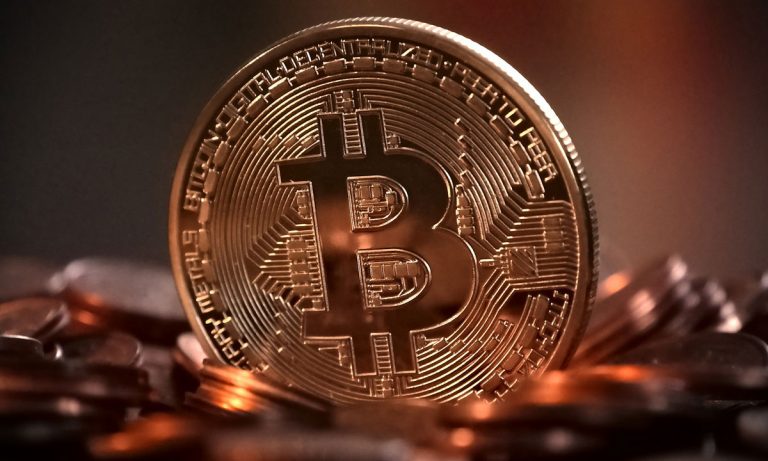
Are Cryptocurrencies The Future Of The Cannabis Industry?

The legal cannabis industry and the cryptocurrency industry appear to have a budding relationship if you’ll excuse the pun.

The two share a lot of common ground. Both operate in legally gray areas, particularly in the United States. They face many of the same challenges from financial, political, and regulatory standpoints. Their user bases could even be said to overlap, as both legal cannabis and cryptocurrency are most popular with younger demographics.

Their shared traits aside, cannabis and cryptocurrency have complementary business models that are likely to bolster one another as adoption – in both – becomes more widespread. Some companies on both sides of the aisle are already taking advantage of this natural synergy. We’re going to present a brief survey of the separate cannabis and crypto business landscapes and point out the important intersections developing between the two.

Crypto’s Challenges

The challenges facing cryptocurrency adoption are all too familiar. Despite operating in the public sphere for the better part of a decade, cryptocurrencies are still viewed as a fringe financial tool by the mainstream media, public, and financial institutions. Part of this is practical. Cryptocurrencies are relatively new if viewed from the thousand-year history of currency, and they do not yet enjoy day-to-day use anywhere outside of a few tech enclaves in Malta, Puerto Rico, and some major cities in the U.S. and Asia. They are, in a word, unfamiliar.

RELATED: Why Cryptocurrency Is Gaining Acceptance In Cannabis Industry

Few government regulatory agencies know exactly how to approach them, and even fewer businesses trust them as a secure store of value. This is partly due to their current volatility and partly due to their low adoption rate. It ends up being a bit of a vicious cycle. It’s difficult to get merchants to accept crypto because few individuals or financial institutions are willing to handle them. As a result, fewer merchants are willing to accept them and round and round the issue goes.

Then there are some very real legal issues. It’s not entirely clear whether some, all, or no cryptocurrencies qualify as securities. They are not traditional currencies, as such, and so are not treated or taxed in the same way. And they possess a technological component that sets them apart. They are stored and traded on blockchains, which offer fast, distributed, and transparent transaction chains. These advantages are a bit of a double-edged sword when it comes to regulation, however, as blockchains can transcend financial institutions, businesses, and even national borders.

The Cannabis Hurdle

Let’s just assume, for the moment, that we’re talking about portions of the world where cannabis is entirely legal. That lets us dispense, to use another pun, with all the areas where cannabis enjoys not-quite-official status – no-enforcement zones, decriminalized areas, and so on. So, we’re really talking about states, in particular, where marijuana dispensaries are all aboveboard, legal, and recognized by the U.S. government.

Even with all that official backing, cannabis dispensaries and farms face significant challenges. Few banks want to offer loans or credit to a marijuana-based enterprise due to the newness of the market and the sticky legal issues that arise when states’ rights come into play. Marijuana is still not legal on the federal level, and because banks are required by law to be federally insured, it’s not entirely clear whether they can play on an equal playing field in the marijuana industry.

This is important. It means that’s the billion-dollar, legal marijuana industry (and marijuana is now legal in two-thirds of U.S. states) must operate on a cash-only basis, much like its black-market cousin. This puts it in the same “unbanked” boat as much of the third world.

The Synergies

It’s this “unbanked” situation that really creates the potential for crypto and cannabis to come together. Cryptocurrencies have demonstrated, via their blockchain technology, that they present a viable alternative for folks unwilling or unable to secure traditional banking accounts. As originally spelled out by Bitcoin creator Satoshi Nakamoto in his landmark white paper, cryptocurrencies contain within their blockchains all the trust and information needed to bypass third-party intermediaries, like banks, entirely. Value can be stored in a distributed and open way across the blockchain, and it can be transferred without the involvement of a financial or government entity.

It’s been done before, though the comparison is likely to raise eyebrows. The first widespread adoption case for Bitcoin was actually the Silk Road black market, where drugs, guns, and other unsavory items could be bought anonymously and in an (at the time) untraceable fashion with Bitcoin.

RELATED: No, You Won’t Be Buying Marijuana With Bitcoin Anytime Soon

This association between cryptocurrencies and drugs might feel uncomfortable, at first, but they both lend each other an air of respectability in the long-run. Marijuana may be federally prescribed, but it is legal at the state level. Cryptocurrencies might get sideways glances from U.S. tax and regulatory officials, but there’s nothing inherently illegal about owning or using a Bitcoin.

Blockchain tech and cannabis seem to go hand in hand in this regard. Cannabis operators can rely on a blockchain tailored for their use as both a store of value and a transaction medium that’s more secure and easier to handle than cash. At the same time, the blockchain gets a ready-made group of adopters to display as a real-world test case. After all, if the blockchain works well for securely tracking and handling cannabis transactions, why wouldn’t it work just as seamlessly in auto, flight, or grocery transactions?

Both industries have a lot to prove, both to the public and to regulators. The blockchain is practically designed for transparent, easily accountable transactions. This gives cannabis operators some safety from government regulators looking to ensure that the product isn’t being moved into still-black markets, and it gives would-be cryptocurrencies some credibility in terms of handling large numbers of day-to-day transactions.

Early Adopters

There are several major projects currently working to wed the crypto and cannabis industries. Most of them popped into being during 2014. The five most prominent are PotCoin, CannabisCoin, DopeCoin, HempCoin, and CannaCoin. As of May 2018, none has yet achieved widespread adoption. At the moment, a new cannabis coin is being rolled out called the VapeCoin which will be accepted on one of the biggest cannabis and vape marketplaces. However, they all share the same basic use case – giving marijuana growers, distributors, and associated industries a common medium of exchange and verifiable store of value.

Tellingly, all but CannaCoin boast market caps in the millions of U.S. dollars. PotCoin, the oldest of the bunch, has a market cap of $31 million.

Growing Up Together

Both crypto and cannabis are brand-new industries. The infrastructure for both is almost nonexistent from every possible angle. In fact, neither enjoy completely legal status across the entire United States. Cannabis is currently only legal on a state-by-state basis, while the U.S. Securities and Exchange Commission has a hands-off policy with regards to cryptocurrency exchanges.

The two are likely to grow up together, so to speak. Their shared challenges create opportunities for complementary growth, particularly in the legal and regulatory arenas. Cryptocurrencies give transparency and accountability to marijuana operators. Marijuana operators create a valuable and stable customer base for cryptocurrencies, in addition to injected capital. Both are poised for growth as U.S. demographics lean increasingly left in terms of regulation. Overall, cannabis and crypto present a unique view of the future financial world.

This article originally appeared on Green Market Report.

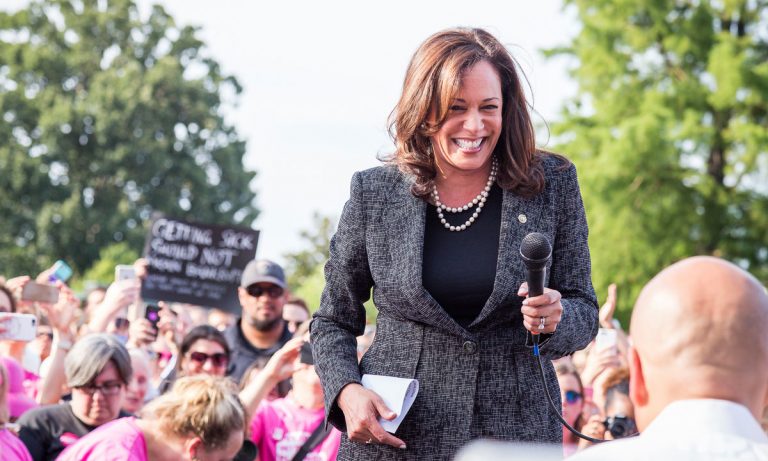
Kamala Harris Now Supports Marijuana Legalization And Ending War On Drugs

If there was ever a sign that Sen. Kamala Harris (D-CA) is considering throwing her hat into the ring for a 2020 presidency, her new memoir is it. In many ways, The Truths We Hold: An American Dream is a campaign book designed to clear the air and position her directly on the runway towards a presidential bid. Among other things, she  addresses past controversies, but she also discusses cannabis in a way she previously has not.

“Something else it’s past time we get done is dismantling the failed war on drugs—starting with legalizing marijuana,” Harris writes, according to Forbes.

But dismantling prohibition, she adds, must be accomplished “with eyes wide open, understanding that there is unfinished business when it comes to legalization.”

RELATED: What States Will Legalize Marijuana In 2019?

These opinions reflect a reversal from Harris, who just a few years back was chuckling at questions regarding cannabis. Back in 2014, Harris was battling GOP candidate Ron Gold in a race to be California’s Attorney General. Gold heavily favored legalizing adult-use marijuana, and integrated it into part of his platform.

When a local news reporter asked Harris her thoughts on Gold’s position, she replied that “he’s entitled to his opinion,” before bursting into laughter. Just two years ago, when Californians voted to legalize adult-use cannabis, she declined support for the ballot measure.

But as more members of the Democratic party use cannabis legalization as means of gaining favor with voters, Harris, too, has changed her tune.

“We need to legalize marijuana and regulate it,” Harris writes in the book, while also highlighting racial disparities in law enforcement upholding drug laws. “And we need to expunge nonviolent marijuana-related offenses from the records of millions of people who have been arrested and incarcerated so they can get on with their lives.”

RELATED: Why New York Will Be Pushed To Legalize Marijuana Sooner Rather Than Later

Last year, Harris also supported Sen. Cory Brooker (D-NJ) and his Marijuana Justice Act, a piece of legislation that would remove cannabis from the Controlled Substances Act.

THCV: Powerful Appetite-Suppressing Cannabinoid

Cannabis is not only a medically beneficial plant, but it’s also very complex and intricate. Thus far, it has been found that the cannabis plant contains over 400 chemical entities and more than 60 of them are known as cannabinoid compounds. One of those cannabinoid compounds is Tetrahydrocannabivarin or THCV for short. This cannabinoid contains various medicinal properties that users can benefit from, and as time goes on, more medicinal properties are being revealed. Although THCV sounds and looks like THC, these cannabinoids are quite different from one another, especially because of the effects they deliver to users regarding appetite. Read on to find out more about THCV, the impact it has on one’s appetite, and which cannabis strains are high in THCV.

About THCV And Its Link To THC

To many, THCV may seem very similar to THC based on how it sounds and how it looks. Although THC and THCV have some similarities, they are also very different, especially regarding the effects they deliver to cannabis users. How is THCV similar to THC though? For one, these cannabinoids are very similar in regards to their chemical structure. Whereas, the process of creating these two cannabinoids is quite different.

RELATED: How Marijuana’s THCV Can Positively Impact Your Life

In other words, THCV undergoes a process that results in it becoming a cannabigerovarin acid (CBGVA). Then, CBGVA breaks down into tetrahydrocannabivarin carboxylic acid (THCVA). From here, THCVA can undergo a decarboxylation process in which UV light or heat is used to create THCV.

In addition, both THC and THCV activate specific receptors within our body. These main receptors are known as CB1 and CB2. THC and THCV impact the same receptors, however, it’s important to know that this response works as an antagonist of both CB1 and CB2 receptors. Since THCV is an antagonist of the CB1 and CB2 receptors, this means that THCV blocks THC, which prevents cannabis users from getting the munchies.

THCV’s Appetite-Suppressing Properties

Furthermore, as many of you may already know, we all have an endocannabinoid system (ECS), and it’s a very complex system that regulates different functions within the body. One particular function that the ECS regulates is the body’s appetite. Research indicates that the munchies (the feeling cannabis users experience after their appetite is stimulated) is due to a response in the ECS. Over time, different research findings have pointed to THC’s ability to boost one’s appetite and act as an appetite stimulant.

Although THC is known to stimulate the appetite of users, THCV has the opposite effect. Rather than THCV stimulating users’ appetite, it suppresses one’s appetite. Since THCV is an antagonist of the CB1 and CB2 receptors, it blocks THC. Therefore, users don’t experience the munchies after consuming THCV. Other research findings point to THCV removing the satiating/pleasing feeling that sometimes occurs after eating something delicious.

With this being said, individuals who have been diagnosed with certain eating disorders and/or individuals who struggle with obesity and need to regulate their food intake better may be ideal candidates for THCV consumption.

Cannabis Strains High In THCV & THCV’s Effects

Aside from THCV’s appetite-suppressing properties, it possesses other medicinal benefits such as it acting as an effective anti-convulsive cannabinoid. Thus, THCV could potentially be used to raise the seizure threshold for individuals with epilepsy and seizure disorders. Also, it has recently been discovered that THCV contains a strong potential in assisting type 2 diabetics by helping control glycemic levels, according to one 2016 study.

The medicinal benefits don’t stop here though. THCV could even help manage body tremors while also improving motor control abilities. However, additional studies and clinical trials should be performed before individuals start consuming THCV to help manage body tremors.

RELATED: 6 Of The Most Helpful CBD Products

Moreover, after THCV consumption, this cannabinoid typically causes a fast onset of psychedelic-related effects that deliver clearheaded-ness to users, which wears off relatively quickly. If one wants to consume THCV, which strains are the best? Oftentimes, THCV is found in different sativa dominant cannabis strains. Some of the top cannabis strains that contain high levels of THCV include the following: Durban Poison, Girl Scout Cookies, Cherry Pie, Face off OG, Jack the Ripper, Doug’s Varin, and Pineapple Purps.

As time goes on, more of THCV’s medicinal properties are being revealed. However, the main medical benefit of THCV that has captured many people’s attention and continues to do so is its appetite-suppressing properties. Overall, there’s a significant potential for how THCV could positively impact people’s lives, especially for those who need help managing their appetite and food intake. Do you think the consumption of THCV will increase in the years to come? Stay tuned to find out how THCV progresses and evolves in this rapidly-changing industry.

No One Will Shut Up About The New Bachelor Being A Virgin

0

It’s a new year and a new bachelor, this time a 26-year-old hot guy who’s a virgin. After the show’s three hour season premiere last night, it’s obvious that the host and the 30 contestants can’t make their peace with this fact.

Since before the season’s release, ABC has been capitalizing on Colton Underwood’s virginity, mentioning this fact four times in the minute-and-a-half season trailer. It’s one of the season’s biggest plot points and producers are betting that it’ll be the biggest hook.

RELATED: Contestants From ‘The Bachelor: Vietnam’ Dump Bachelor For Each Other

While “The Bachelor” isn’t a show known for its nuance and awareness when it comes to gender politics, it’s still shocking to see the amount of energy that producers have spent on letting viewers know how weird it is that Colton is a virgin by choice. “I’m not waiting for a ring, I’m not waiting for marriage, I’m waiting to be in love, I’m waiting for it to feel right,” he explained on the season premiere.

The first three hours of the beloved reality TV show dove deep into the reasons behind Underwood’s virginity, with host Chris Harrison claiming that a man who’s a virgin isn’t really a man.

Harrison: “How much of the negativity and the ‘he’s not ready’ has to do with your virginity?”

Uderwood:  “That’s sort of the stigma around being a virgin. Oh, he’s not romantic. Oh, he’s not going to be a good bachelor—”

Harrison: “He’s not a man.”

RELATED: How Sex Is Manufactured On Shows Like ‘Bachelor in Paradise’

Although there have been other virgins featured in “The Bachelor” franchise, this is the first time the protagonist holds the coveted/much maligned role. Fans of the reality show should get ready and build up their tolerance for virgin jokes that were funny when they were in high school.

Sorry, But Malcolm Gladwell Is Plain Wrong About Marijuana

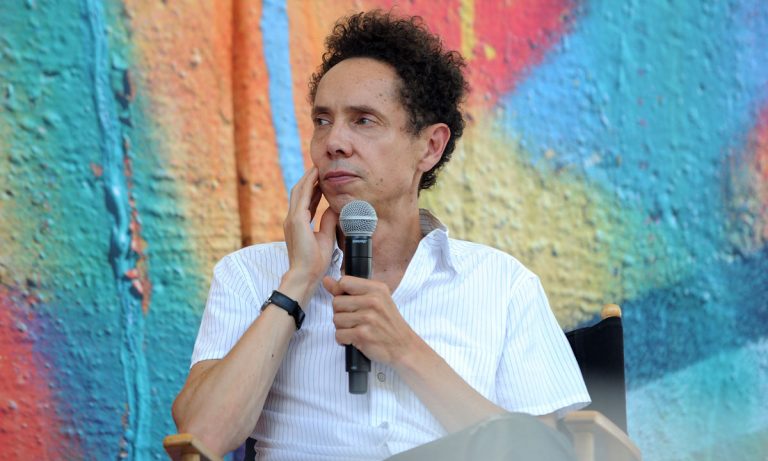
I met Malcolm Gladwell once. Working at one of the Austin coffee shops I frequent, I overheard that distinct voice of his—a reassuring, rigorous tone that his prose also embodies. Eventually I approached him, commenting how I enjoyed his work, but he seemed busy, not really looking to engage, as was his right. Polite, but not altogether genial, if I had to characterize the interaction.

Now, I only write that to clarify I don’t think he’s a bad guy. But he seems quite lost in the weeds when it comes to cannabis. In a recent New Yorker feature titled “Is Marijuana As Safe As We Think It Is?”, Gladwell posits significant concern over the public’s embrace of cannabis. He cites lack of research on marijuana’s myriad effects and compounds, while also worrying about the increasing potency of commercial cannabis, and how its usage could link to rises in schizophrenia and violence.

What has drawn the ire of cannabis activists and public health advocates across the internet is how Gladwell seemingly mistakes correlation for causation—or at least his winking suggestion of such conclusions—and how the scope of his story seems written with blinders on, altogether ignoring significant context or contrarian evidence to the research he highlights.

RELATED: Why Does Smart Guy Malcolm Gladwell Reject Marijuana Legalization?

Here at The Fresh Toast we’ve exposed both sides of the argument: that marijuana may work to trigger psychosis in some while also questioning the cause-and-effect relationship between cannabis and schizophrenia cases. “Researchers have to tread carefully in evaluating the evidence and avoiding scaremongering,” Musa Sami, Researcher and Academic Psychiatrist at King’s College London, wrote on this site.

You should also know that anyone within the cannabis industry worth their salt has expressed to me a need for more research on cannabis and a tempering of expectations that cannabis might be a miracle penicillin. Even the National Center for Complementary and Integrative Health has made open calls for more cannabis research. In other words, shouting the need for more cannabis research is not a revolutionary stance.

Gladwell, however, doesn’t tell you why more significant research on cannabis hasn’t occurred. Because the federal government classifies cannabis as a Schedule I drug, universities and institutions hoping to study cannabis in a clinical trial must first acquire approval from three different government agencies: the Drug Enforcement Agency, the Food and Drug Administration, and the National Institute on Drug Abuse. In addition, scientists studying cannabis have long battled an additional loophole their colleagues focused on other Schedule I drugs—like LSD or MDMA—do not face. For the past 50 years scientists could only use cannabis grown from NIDA at the University of Mississippi. The problem? The federal pot farm was delivering unusable moldy samples.

Thanks to a crusade from Rep. Matthew Gaetz (R-FL), that should soon change. Gaetz sponsored the Medical Cannabis Research Act, which forces the government to hand out more cultivation licenses for marijuana to be used in scientific research. This is an improvement, but the irony is a Colorado-based researcher cannot simply run to the store, buy some weed, and use it for research. They must jump through many hoops, like Arizona-based Dr. Sue Sisley did only to receive the moldy weed she did.

RELATED: Using Medical Marijuana For Anxiety Relief: The Dose Is Key

This is why some American researchers have demonstrated jealousy over their Canadian brethren. Because of all the limitations I’ve laid out, many Americans researchers conduct observational studies—meaning they follow subjects already using cannabis while asking them questions or to perform certain tasks, then develop findings from there. It’s not an exact science. Thanks to Canada legalizing cannabis, it’s opening a treasure trove of data for Canadian researchers to dig through and develop more conclusive findings. Seriously, Canadian scientists are downright giddy over their newfound opportunities to conduct the research they’ve long hoped to do.

“It’s super exciting,” Sean Myles, research chair in Dalhousie University’s Department of Plant, Food, and Environmental Sciences, told Motherboard. “Like, this never happens. All of a sudden, there’s an organism on the planet that’s worth a tremendous amount, that nobody knew anything about, and you’re allowed to investigate it with some pretty deep pockets behind it.”

Here is where it’s probably worth mentioning that Malcolm Gladwell is Canadian.

RELATED: You Have The Highest THC Strain — So What?

Much of Gladwell’s story revolves around a new anti-marijuana book from Alex Berenson, a former investigative reporter at the New York Times. It’s titled Tell Your Children: The Truth About Marijuana, Mental Illness, and Violence. Worth noting for you non-cannabis historians out there: Tell Your Children was the original title for the 1930s anti-cannabis propaganda film Reefer Madness. The book was released today and has enjoyed one hell of a press rollout.

In interviews, Berenson makes claims about medical marijuana users like “nearly all were recreational users before they became ‘patients’” and “medical legalization is simply a backdoor way to protect recreational users from arrest.” His book is quoted liberally, whether it’s being directly cited or not, in Gladwell’s piece, as one journalist pointed out.

https://twitter.com/davelevitan/status/1082680433689706498

https://twitter.com/davelevitan/status/1082690921395900416

This whole backlash has raised questions about Malcolm Gladwell being a “tobacco industry shill.” That label originated with  a 1990 Washington Post article Gladwell wrote titled “Not Smoking Could Be Hazardous to Pension System.” But the accusation gained momentum, however, when a S.H.A.M.E. article demonstrated Gladwell’s possible ties to Big Pharma and Big Tobacco. To his credit, Gladwell recently responded to the controversy.

“I have been staunchly anti-tobacco for as long as I’ve lived,” Gladwell wrote in an email to the Huffington Post. “I’ve never smoked. No one in my family smokes. I hate smoking. (I’m a runner, for goodness sake.) I am someone who is passionate about the dangers of smoking. It’s something I have cared about for years—and I’ve attempted to write about the issue with intelligence and insight. For these morons to come along and somehow maintain that I am sympathetic to big tobacco is beyond offensive.”

RELATED: 6 Essential Facts To Know About Marijuana Edibles Before Indulging

You’re free to draw your own conclusions there. Personally, I don’t consider Gladwell a shill or a hack by any means. However, it seems Gladwell has been taken in by Berenson’s book, because of, if for no other reason, its research underpinnings support Gladwell’s position on cannabis. While plenty of other research exists out there to showcase marijuana’s positive medical benefits and what scientists are saying about cannabis, it appears you won’t hear them from Gladwell.

Don't Miss Your Weekly Dose of The Fresh Toast.

Stay informed with exclusive news briefs delivered directly to your inbox every Friday.

We respect your privacy. Unsubscribe anytime.