The projected date of July 1, 2018 for Massachusetts to open cannabis retail stores for the recreational community is not happening. This puts a damper not only on potential imbibers, but also those who have been waiting to open up for business.
Independent testing laboratories to apply for licenses and for them to be approved by the Cannabis Control Commission is still mired in red tape. Any and all applications for such labs are being given priority, however, and though business licenses will be approved next week, no retail stores will be able allowed to open.
The Commission’s chairman Steven Hoffman says that he can and will not set forth any projections for a timeline as of yet. There are too many considerations and steps that have yet to be taken, not the least of which is getting city and town approvals for said facilities.
On Tuesday, Hoffman said, “I’m sorry that people have expectations that were not met, I am truly sorry about that. That being said, our objective is to satisfy the will of the voters of the state of Massachusetts to build a fair and safe and equitable industry. We are doing so. There is nothing in the law that says it has to be July 1.”
He raises a good point. It was the will of the voters that the law be voted in with the stipulation that all cannabis sold be tested at an approved and licensed independent testing laboratory. The lab will test the cannabis for THC and CBD percentages, but even more importantly, will also be testing for molds, mildew, pesticides and other chemicals to ensure the safety of the product.
It’s still a bitter pill to swallow for throngs of recreational cannabis enthusiasts, as the date has been set for some time, leading some to believe these potential problems should have been addressed months ago. Perhaps it was lack of a crystal ball, but as the french are wont to say, c’est la vie. In this case it is better to be safe than sorry.
The first license was approved last week, and the Commission says that they will be approving applications at their next meeting, though they’ve only committed to “a handful” until the next and then the next. Testing facility applications are prioritized and hopefully more of them will be approved and on the way to keeping the Massachusetts masses in mold-free marijuana sooner than later.
Recent estimates put the international cannabis market at $31.4 billion by the year 2021. Even more noteworthy, the medical marijuana market is expected to reach $55.8 billion in value by 2025, with a compound annual growth rate of 17 percent.
These numbers are catching the attention of startups, healthcare giants and investors alike. While many of the benefits of medical marijuana are already being put to good use, researchers are discovering new uses that have the potential to change medicine as we know it.
Today, medical marijuana is used in a variety of cases. In the midst of an ongoing opioid crisis, medical cannabis can offer a pain management alternative to those who are chronically suffering. Death rates from opioid overdoses in states with medical marijuana dispensaries decreased by about 25 percent upon legalization. The drug is also currently being prescribed by doctors and caretakers to help treat cancer-related symptoms or side effects of cancer treatment. Cannabis provides pain management and other benefits that are far less risky than other drugs on the market, and there are indications that it has the potential to offer even more.
Why Research Matters
There is broad consensus on the palliative benefits of medical marijuana, and recent studies have also uncovered potential antitumor effects of the drug. This comes at an important time, as cancer cases are projected to increase by 50 percent worldwide by the year 2030 compared to 2012 rates. There are risks and potential side effects associated with every type of drug therapy, but current options for cancer treatment are especially harsh. Chemotherapy and radiation can produce side effects ranging from fatigue, hair loss, nausea, infection and more.
We must conduct large-scale research studies on cannabinoids to provide the medical community with vital information to best serve their patients for palliative care and beyond. Over 100 types of cannabinoid compounds have been identified to date, yet the effects of each of these strains are not well-understood, and 9 out of 10 physicians still feel that they do not have enough information about medical marijuana to effectively prescribe the drug.
Cancer patients can seek relief from treatment effects with medical marijuana, but with cancer rates on the rise and major drawbacks to existing therapies, it’s worth investing more resources into better understanding the cancer fighting potential of cannabis.
Early Anti-Cancer Of Cannabinoids
Available data is still somewhat limited, but research shows that there is great promise around the antitumor effects of cannabinoids. As far back as 2009, a Spanish research group found that tetrahydrocannabinol (THC) induced the death of various brain cancer cell lines and primary cultured cells. The International Journal of Oncology published a study last year indicating that cannabinoids successfully kill cancer cells. We conducted an early preclinical study, and the data demonstrated that the two main active compounds in cannabis – THC and tetrahydrocannabinolic acid (THCA) – were successful in attacking cancer cells. These studies show the power cannabinoids may have in inhibiting tumor growth.
Anti-Cancer Research Should Be Prioritized
Fortunately, along with impressive market projections over the next 10 years, medical marijuana research efforts and investments are expanding worldwide. As one of the first countries to support research and to legalize the manufacturing of medical marijuana, Israel stands out as a leader in the space and will soon open a 1 million square foot cannabis growth, research and development facility – one of the largest in the world. Pharmacies in the country have also recently started dispensing medical marijuana, which was previously only available at select medical centers.
Medicinal marijuana use in Canada has been legal since 2001, and the country is another leader in research and major pharmaceutical investments. The Canadian subsidiary of Novartis, the world’s fourth-largest pharmaceutical company, recently signed the first-ever strategic partnership with a cannabis company to develop and distribute medical marijuana products.
In the United States, medical marijuana is legal in more than half of all states, but the federal government still classifies marijuana as a Schedule 1 drug—a category for substances with high potential for abuse and no accepted medical purpose. This categorization has slowed research in the country, with only one marijuana farm currently approved for the cultivation and procurement of research-grade cannabis. Even so, there are early indications that the United States is catching on to the potential of medical marijuana, as the Federal Drug Administration is imminently expected to approve the country’s first marijuana-derived drug.
It’s encouraging to see patient access to medical marijuana expand as more funding is invested in research and development across the globe. Governments, researchers, pharmaceutical companies and startups participating in the rapidly growing market would be wise to focus funding and research efforts on cannabis as a potential treatment option for cancer patients. Cancer rates will not begin to decline until we’re able to deploy new therapies that are effective and have fewer painful side effects than what is currently available. The medical marijuana market is exploding, and at the same time we’re searching high and low for a cancer treatment that is both effective and minimizes patient suffering. Cannabinoids just might be the answer we’re looking for.
Dr. Eyal Ballan, PhD, is co-founder and chief technology officer of Cannabics Pharmaceuticals. Dr. Ballan brings years of experience in anticancer drug research and development.
Break-ups are stressful and painful and since they’re so personal and intimate, there’s no one set way of getting over them. Some people get over break-ups quickly, while others struggle for months. One day, no matter the situation, you’ll feel much better and your ex won’t cross your mind for weeks at a time.
Even though there’s no way to hurry up the break-up process, there are habits that you can adopt that’ll make you feel more productive and healthy. Bustle compiled a list of healthy habits you can pick up once you break up with someone. Here are five of our favorites:
Work Out
https://giphy.com/gifs/44gu1V41ejJni
It’s a huge cliche, but it’s a cliche for a reason. While working out is annoying and sometimes you’d rather do anything else, it really does work. Exercising is a simple way of making you feel good about yourself and getting some much needed distraction. Just try thinking about your ex while doing burpees and squats.
According to Julie Williamson, a professional counselor, exercise releases endorphins and has positive effects on moods. You know all of this, so just trust the science. Break-ups are the perfect moment to turn your life around — at least, from a working out perspective.
Taking a shower, using lotions, shaving, and just taking care of yourself is really important to do when you’re going through a break-up. It allows you to feel a little bit more positive about the whole experience. Amica Graber, a relationship expert from TruthFinder, says that self-care is sacred. “Take the time to wash your hair, light a candle, and give yourself a break. Go and splurge on a new bubble bath or shower gel. Drink a glass of wine and have a bubble bath.”
Get A New Hobby
A new hobby will light up new pathways in your brain, keeping you busy and, most importantly, not triggering any reminders of your ex.
Break-ups, aside from all of the awful feelings they produce, are also a jolt to your system. Before the split, you presumably had a person with whom you spent most of your free time with. Now, you have to fill that void with something else. “Take the energy you spent on your ex and put it back into yourself… Find a new hobby. Whatever you do it, make it fulfilling and make it about you,” says Graber.
It sounds creepy, but this really helps to control your thoughts. By tracking each time you think about your ex, you’ll have visual evidence of your improvement. As time goes on, you’ll see a dramatic drop in your entries, and you’ll feel great over the fact that you’re getting over your ex.
While it’s easy to push people away in favor of wallowing in self pity, it’s best to hang out with people and to remember why you love them and why they’re your friends in the first place. “Try to focus on being present with your loved ones and try not to spend the entire event rehashing the last six months of your late relationship,” says Graber. “It’s natural to discuss it and vent out your feelings, but talking in circles won’t help you heal. Practice gratitude for the love that’s still abundant in your life.”
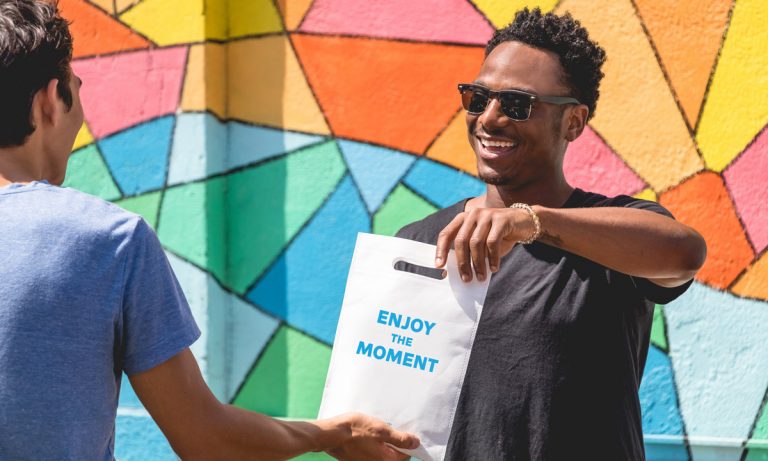
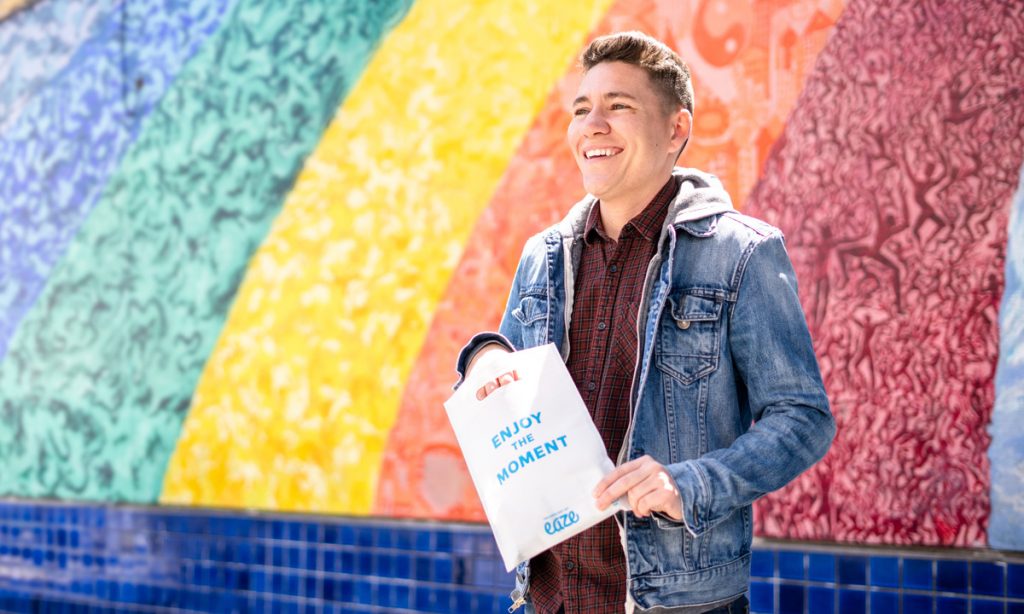
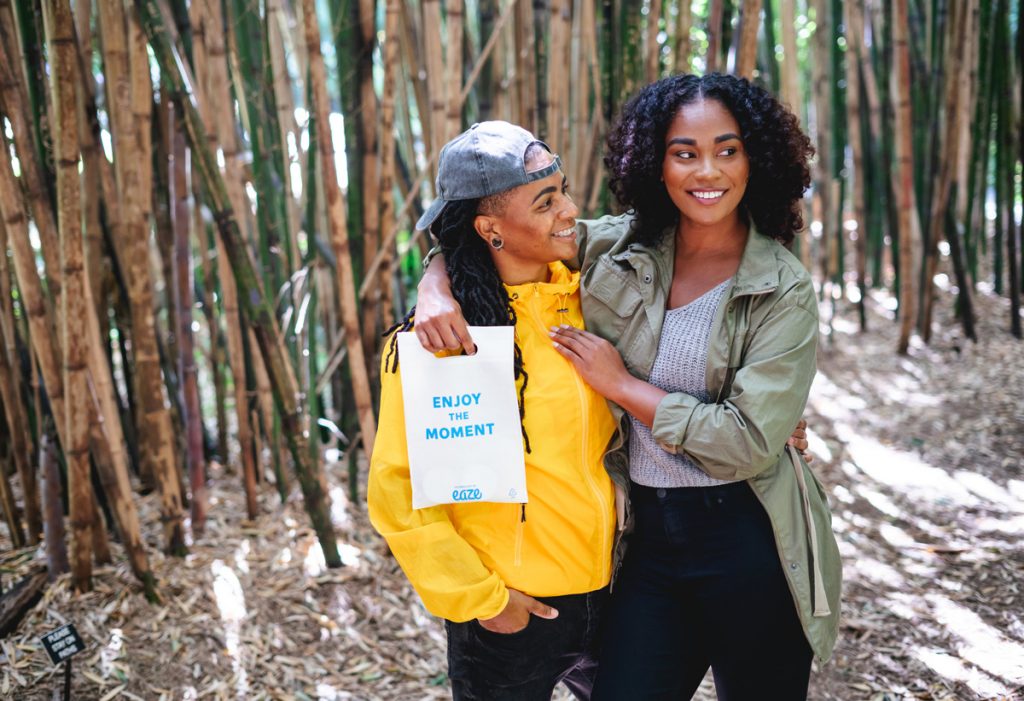
Pride is celebrated during the month of June in so many ways that recognize the struggles as well as the many contributions of those in the LGBTQ community. It’s a celebration of community itself, and from the best parades to raising awareness, the rainbow flag flies high. Eaze is a company in the cannabis sphere that doesn’t let the month go by unrecognized, and neither do the brands under their umbrella.
Photos courtesy of Eaze
Eaze partners with dispensaries to get deliveries fast tracked. Their technological platform allows dispensaries and cannabis consumers to gain the secure access they need. Eaze is also a company that is constantly giving back and celebrating diversity.
This June they’ve been donating 5 percent of all proceeds to the cause of LGBTQ workplace diversity. Sheena Shiravi, Director of Consumer Communications at Eaze, told The Fresh Toast, “Both the cannabis community and the LGBTQ movement stemmed out of very, very passionate communities and groups. I think the sense of community and the sense of giving back are the fabric of the cannabis industry.
Photos courtesy of Eaze
“I think we see Pride as a celebration of how far we’ve come,” Shiravi continued, “but also as a recommitment to the road ahead. And as a company in this industry, we really want to do our part to support and to really help the other brands raise awareness for these issues and get them involved as well.”
Some of their brand offerings include PLUS gummies and Jetty Extract’s Reckless Rainbow products so you can celebrate in color! So if any of these goodies sound appealing, get to their sites and support those who are supporting good causes before June wraps up.
Jetty Extracts is donating a portion of their sales to Mr. Friendly, which raises awareness about HIV. PLUS is donating a portion of sales to the Trevor Project and Dosist is donating 100 percent of their proceeds to California Pride activities. At the same time, Eaze is working with its brand partners and is making a pledge with Out & Equal as part of its commitment to creating workplaces that are welcoming and supportive of LGBTQ+ persons.
Photos courtesy of Eaze
“One thing I’ll say about the cannabis industry,” said Shiravi, “is that we are very passionate and understand the sense of community and equality. I think if you look at the number of woman executives at Eaze, as a budding industry we’re having conversations about equality, in every sense of the word… It’s kind of the nature of it that makes it the perfect time to make way for the cannabis industry to be building out in the right way from the very beginning… I think the passion and the ethos of giving back are what built this industry and I think that it’s something we do to continue to keep the spirit alive.”
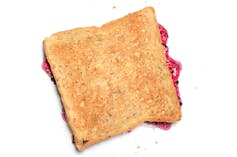
When you drop a piece of food on the floor, is it really okay to eat if you pick up within five seconds? This urban food myth contends that if food spends just a few seconds on the floor, dirt and germs won’t have much of a chance to contaminate it. Research in my lab has focused on how food and food contact surfaces become contaminated, and we’ve done some work on this particular piece of wisdom.
While the “five-second rule” might not seem like the most pressing issue for food scientists to get to the bottom of, it’s still worth investigating food myths like this one because they shape our beliefs about when food is safe to eat.
So is five seconds on the floor the critical threshold that separates an edible morsel from a case of food poisoning? It’s a bit a more complicated than that. It depends on just how much bacteria can make it from floor to food in a few seconds and just how dirty the floor is.
Where Did The Five-Second Rule Come From?
Wondering if food is still OK to eat after it’s been dropped on the floor (or anywhere else) is a pretty common experience. And it’s probably not a new one either.
A well-known, but inaccurate, story about Julia Child may have contributed to this food myth. Some viewers of her cooking show, The French Chef, insist they saw Child drop lamb (or a chicken or a turkey, depending on the version of the tale) on the floor and pick it up, with the advice that if they were alone in the kitchen, their guests would never know.
In fact it was a potato pancake, and it fell on the stovetop, not on the floor. Child put it back in the pan, saying “But you can always pick it up and if you are alone in the kitchen, who is going to see?” But the misremembered story persists.
It’s harder to pin down the origins of the oft-quoted five-second rule, but a 2003 study reported that 70 percent of women and 56 percent of men surveyed were familiar with the five-second rule and that women were more likely than men to eat food that had been dropped on the floor.
So what does science tell us about what a few moments on the floor means for the safety of your food?
Five Seconds Is All It Takes
The earliest research report on the five-second rule is attributed to Jillian Clarke, a high school student participating in a research apprenticeship at the University of Illinois. Clarke and her colleagues inoculated floor tiles with bacteria then placed food on the tiles for varying times.
They reported bacteria were transferred from the tile to gummy bears and cookies within five seconds, but didn’t report the specific amount of bacteria that made it from the tile to the food.
But How Much Bacteria Actually Transfers In Five Seconds?
In 2007, my lab at Clemson University published a study – the only peer-reviewed journal paper on this topic – in the Journal of Applied Microbiology. We wanted to know if the length of time food is in contact with a contaminated surface affected the rate of transfer of bacteria to the food.
To find out, we inoculated squares of tile, carpet or wood with Salmonella. Five minutes after that, we placed either bologna or bread on the surface for five, 30 or 60 seconds, and then measured the amount of bacteria transferred to the food. We repeated this exact protocol after the bacteria had been on the surface for two, four, eight and 24 hours.
We found that the amount of bacteria transferred to either kind of food didn’t depend much on how long the food was in contact with the contaminated surface – whether for a few seconds or for a whole minute. The overall amount of bacteria on the surface mattered more, and this decreased over time after the initial inoculation. It looks like what’s at issue is less how long your food languishes on the floor and much more how infested with bacteria that patch of floor happens to be.
We also found that the kind of surface made a difference as well. Carpets, for instance, seem to be slightly better places to drop your food than wood or tile. When carpet was inoculated with Salmonella, less than 1 percent of the bacteria were transferred. But when the food was in contact with tile or wood, 48 percent to 70 percent of bacteria transferred.
Last year, a study from from Aston University in the UK used nearly identical parameters to our study and found similar results testing contact times of three and 30 seconds on similar surfaces. They also reported that 87 percent of people asked either would eat or have eaten food dropped on the floor.
Should You Eat Food That’s Fallen On The Floor?
From a food safety standpoint, if you have millions or more cells on a surface, 0.1 percent is still enough to make you sick. Also, certain types of bacteria are extremely virulent, and it takes only a small amount to make you sick. For example, 10 cells or less of an especially virulent strain of E. coli can cause severe illness and death in people with compromised immune systems. But the chance of these bacteria being on most surfaces is very low.
And it’s not just dropping food on the floor that can lead to bacterial contamination. Bacteria are carried by various “media,” which can include raw food, moist surfaces where bacteria has been left, our hands or skin and from coughing or sneezing.
Hands, foods and utensils can carry individual bacterial cells, colonies of cells or cells living in communities contained within a protective film that provide protection. These microscopic layers of deposits containing bacteria are known as biofilms and they are found on most surfaces and objects.
Biofilm communities can harbor bacteria longer and are very difficult to clean. Bacteria in these communities also have an enhanced resistance to sanitizers and antibiotics compared to bacteria living on their own.
So the next time you consider eating dropped food, the odds are in your favor that you can eat that morsel and not get sick. But in the rare chance that there is a microorganism that can make you sick on the exact spot where the food dropped, you can be fairly sure the bug is on the food you are about to put in your mouth.
Research (and common sense) tell us that the best thing to do is to keep your hands, utensils and other surfaces clean.
A bed and breakfast is already a treat to weary travelers, a romantic getaway or even simply the choicest hotel to stay at during your travels. For cannabis lovers, the experience has been upped a notch and now lovely bud and breakfasts have sprung up in states that have recreational cannabis laws put in place. Here’s what to expect at our top picks.
Located in Denver, Colorado, this B&B is within walking distance of downtown. The boutique hotel boasts reportedly scrumptiously healthy breakfasts and fun 4:20 happy hours with primo wines. The structure itself is a large Victorian house with six rooms for guests who are passing through. Bathrooms are private and wi-fi is free. All’s that’s required of you really is to sit back with your bud and enjoy a lifted experience in this B&B.
If you really want to get away, MoonDance Inn Bed & Breakfast in Bellingham, Washington is the way to go. Smoking is allowed outside, and though they don’t label themselves as a bud and breakfast, they are cannabis friendly. BYOC and enjoy a lakeside retreat in gorgeous, lush green surroundings.
The Inn is the perfect place to stop and luxuriate on a roadtrip to Canada or is a destination in itself, within a hop, skip and a jump of Vancouver B.C., Mt. Baker recreation area and the San Juan Islands.
This cannabis boutique hotel is nestled in Auburn, Maine. You can relax in their indoor pool and jacuzzi and kick back in a safe place to enjoy your cannabis and yourselves. The rooms are spacious and comfortable and Greenyards’ cannabis cultivation area is open to guests. Any questions about growing are gladly answered, making this a unique cannabis immersion experience.
For the ultimate Oregon getaway, consider staying at Tender Bud Acres in the Willamette Valley. Located between Portland and Salem, this five acre working micro farm is surrounded by hazelnut orchards and mature trees.
Not to mention a dog, a few cats and some free range chickens. This is a true destination spot, as within a 45 minute drive in different directions you’ll find waterfalls, wineries, scenic walks and water sports. Did we mention that the cannabis is included?
West Hollywood is a popular Los Angeles, CA hotspot, and the addition of a Bud and Breakfast in the area was a brilliant one on the part of 420 Friendly Boutique Hotel. Each room is vaporizer and e-nail friendly, with a designated outdoor smoking area. Centrally located, the Walk of Fame, scrumptious restaurants and and the Sunset Strip are all within walking distance.
Smoke ‘em if you’ve got ‘em! The World War II U.S. military slang with live-and-let-live leanings, is an ironic statement this week as American veterans are denied medicinal cannabis treatment by government doctors and risk losing their benefits over their mental and physical therapy of choice.
As happens in military conflicts and political wars, lines of engagement change. That’s been the case with bills in Congress that would allow the Department of Veterans Affairs doctors to recommend that veterans can use medicinal cannabis as long as the botanical drug is legal in their home states.
Military veterans and Congressional forces alike have long urged the VA to recognize and embrace cannabis for its potential in treating physical and mental injuries of war, including post-traumatic stress disorder, anxiety, chronic pain and other conditions that are causing an average of 22 American veterans a day to commit suicide.
Both the House and Senate have previously adopted cannabis langue into bills, but nothing has never been enacted into law.
On June 3, the House Rules Committee blocked a floor vote on including cannabis in a VA funding bill.
On Monday, the Senate passed a provision that allows VA doctors to recommend medicinal cannabis and protect veterans from losing their government benefits if veterans’ cannabis use is legal under state law. Here’s a snippet of the language:
None of the funds appropriated or otherwise made available to the Department of Veterans Affairs in this Act may be used in a manner that would—
(1) interfere with the ability of a veteran to participate in a medicinal marijuana program approved by a State;
(2) deny any services from the Department to a veteran who is participating in such a program; or
(3) limit or interfere with the ability of a health care provider of the Department to make appropriate recommendations, fill out forms, or take steps to comply with such a program.”
The pro-cannabis provision is part of large-scale bill that includes funding the VA. A bicameral conference committee will now try to reconcile House and Senate versions of the bill before it’s sent to President Trump.
Of course, the line of engagement — of politics, actually — could change in the closed-door conference committee.
Veterans living in states that outlaw all forms of cannabis, including medicinal, would not be covered by the bill and the federal government’s Schedule 1 prohibition, and its possible penalties, would apply.
Like some veterans before them, some veterans today feel their leaders lack the political will to support the troops. Nick Etten, a graduate of the United States Naval Academy, a former Navy SEAL officer and the founder of Veterans Cannabis Project, wrote on The Hill:
As a Republican, I was pleased to see President Trump side with states in their untenable legal conflict with the federal Controlled Substances Act by voicing his support for the States Act within 24 hours of the bill’s introduction. But as a veteran, I remain deeply disappointed by the lack of political will and progress in Washington to make medical cannabis a legal treatment option for our former service members.
Veterans have been pleading with members of Congress and Trump administration officials to enact a law that will give them legal access. It’s time for Republican leaders to acknowledge that federal cannabis reform is inevitable and it’s time for comprehensive action. We are counting on President Trump and Congress to deliver a final cannabis reform deal that not only respects ‘state’s rights,’ but respects veterans as well.”
Having a cold beer with your meal after an intense workout sounds like the most amazing thing. The fact that you just exercised makes you feel like you can enjoy anything without feeling guilt. Sadly, alcohol is not good for your body, especially after working out.
Post workout recovery is one of the most important parts of exercising and improving your physical health. When you exercise and push your body, your muscles are torn and damaged, leading to the development of more muscles and an overall improvement of your fitness level. According to Popular Science, alcohol interrupts this process in several ways: it leads to dehydration, it hinders your body’s ability to use glucose and amino acids, and it also interrupts your hormonal pathways.
When your body is recovering from a workout, it needs electrolytes and fluids. Alcohol and the fact that you just sweated a lot act against this and slow down your recovery. Glucose and amino acids are also necessary for building muscle fibers and blood vessels, and alcohol decreases your ability to use these compounds. Lastly, by interrupting your hormonal pathways, alcohol makes testosterone less available to your muscles. As an athlete, you want more of this hormone, since it helps your muscles rebuild and develop.
While these results show some evidence against drinking alcohol after workouts, they’re not conclusive. Most studies have been conducted on small subject pools, making their results less reliable. Alcohol’s effect can vary from person, but in any case, an occasional drink after a work out won’t ruin all of your hard work.
Milk Makeup is back with another dope product — this time for eyebrows. A follow-up to their smash hit, Kush Mascara, Kush Fiber Brow Gel comes in Hydro clear, Haze for blondes, Dutch for brunettes, and Grind for deep brown to black brows.
The multi-generational brow trend has come full circle, thanks single-handedly to model and actress Cara Delevingne, whose legendary eyebrows deserve their own separate Instagram account.
If my grandmother were alive today, I am sure she would be delighted to swipe Dutch all over her Joan Crawford-esque brows, while repeatedly asking me to reassure her that cannabis-derived brow gel won’t make her feel high.
Unlike grand-mère Sylvia, and Cara, I am a redhead, and I am so pale that I am practically clear, which is why I went with Kush Hydro and Haze.
I usually apply castor oil on my lashes and brows before bedtime for nourishment, and am curious to see how this product compares. Unlike castor oil, which I smear on with a Q-tip or a generic mascara applicator, Kush steps it up a notch with a tapered tree brush. The brush has dense, firm bristles, which allow the gel to apply evenly, for instant definition. Since the Hydro gel is clear, you can layer it over brow pencil, to set it, and lock it in the look, all day.
Which color is right for me?
Haze definitely works to deepen and define my almost invisible, platinum-blonde, baby brow hairs. The tinted, heart-shaped fibers immediately made them appear thicker. Additionally, the tip can be used to draw precision, hair-like strokes in the sparse area where my eyebrow piercing used to be, while the tapered end traced and defined my brow shape. Obviously, this kills my Q-tip action.
When I saw my boyfriend at lunchtime, his response was amazing: “You have eyebrows! I can see them!”
What does CBD mean for eyebrows?
The Kush Clear claims it contains “CBD-infused cannabis oil.” Cannabis oil naturally contains cannabidiol, aka CBD, and about 79 other naturally occurring compounds that scientists are only beginning to understand. Therefore, putting CBD in Cannabis oil is not a separate process, such as infusing CBD in water. However, their description might mean they are adding CBD isolate to cannabis oil to “engineer” a higher proportion. Either way, hemp, or cannabis-derived CBD oil, is hydrating.
Any oil, from castor to cannabis, will nourish skin and hair. The trick is to balance oils with other compounds, so they aren’t too goopy. Kush’s versions have the added conditioning elements of aloe, cucumber and panthenol.
CBD To What Degree?
Because most makeup is meant to be seen, it’s designed to stay on top of the skin. If red lipstick, for example, absorbed right into the lips, then it wouldn’t be bright and long-lasting.
Will CBD disassociate from the rest of the makeup formulation and absorb into the skin to deliver some benefit? Has Milk treated the CBD in some manner to encourage it to separate and penetrate into the skin? Doubtful.
To whatever degree that wiping hemp oil on your skin is good for you, this brow gel probably qualifies. And since it is otherwise cool, affordable ($18), and doesn’t cost more than competitive brands of brow gel without CBD, there is no harm in trying it.
Keep in mind, the benefits of Milk Makeup’s new CBD brow gels are purely cosmetic. For the health and wellness factor of CBD, stick to a much higher concentration of sublingual tinctures and capsules.
One significant added benefit is that Kush Brow Gel is vegan, paraben and cruelty-free, which is always healthy and fashionable. Why harm the tragically disappearing bee population by using brow gels that contain beeswax — a common binding component in brow gel formulas — when you can give the little buzzers a break by using CBD-oil infused brow gel instead? (Ditch the beeswax for cannabis candles too.)
Top Takeaway
Kush clear brow gel feels like a hair mask specifically for your eyebrows. It will definitely make your eyebrows pop.
Apple’s much anticipated iOS 12 will be released in the coming months, but the beta version is available for testing for those who are eager to get their hands on it.
While beta versions are mostly filled with bugs, Apple tends to put out cleanish software. This version of the iOS 12 includes some of its most anticipated features, such as Memojis, the new and improved FaceTime, Siri Shortcuts, and an improved performance and stability for your device.
While the release of the beta is great news for Apple aficionados, it’s important to know that this software is released for testing and feedback, and some of the bugs could screw up your device’s core features. Be careful when downloading the software if you only have one Apple device, and be sure to do a back up of all your data.
With the installation of the beta you’ll also get a “Feedback” app, which you’ll use to report any bugs to Apple. This beta will likely be updated between now and the official release of the software’s final version.
To download the software, head over to Apple’s website and follow all the steps. If you’ve never downloaded a beta from Apple, you’ll have to sign up for it. The beta version of iOS 12 is available on most versions of the iPad, iPhone and iPod. You can check the full list of compatible devices here.






 Research (and common sense) tell us that the best thing to do is to keep your hands, utensils and other surfaces clean.