Monday, June 29, 2026
Home Blog Page 978

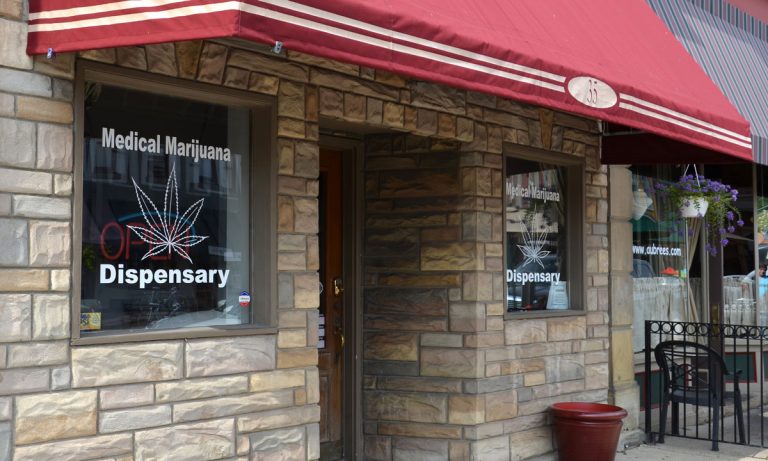
How Legal Marijuana Is Taking A Toll On Oakland’s City Officials

California has been at the forefront of marijuana for decades. In 1996, it became the first state to legalize medical marijuana. And throughout the years, Oakland has been one of the most cannabis-friendly cities in the Golden State.

Oakland’s pro-marijuana culture is so strong that the city is now suffering from the growing pains of legal recreational cannabis. According to a story from Darwin BondGraham in the East Bay Express:

The number of entrepreneurs trying to start a cannabis business in Oakland has overwhelmed the city staffers who are in charge of evaluating and doling out permits, according to a recent city report. To accommodate the industry’s dramatic growth, Oakland is now planning to spend an additional $307,000 to hire more staff members in order to process the flood of business applications.

The growing pains are good news for Oakland, which is hoping to remain a hub in California’s multibillion-dollar cannabis industry. One report prepared last year for the city by the Marijuana Policy Group found that statewide cannabis cultivation and manufacturing could turn into a $4.2 billion economic engine employing as many as 36,000 workers, not including retail workers selling pot. The same report estimated that Oakland’s share of the overall market could generate as much as $16 million in tax revenue annually and employ about 12,400 people in the city’s legalized dispensaries, grow warehouses, bakeries, delivery services, and testing labs.

According to the story, more than 800 companies have applied for permits to grow, manufacture, distribute, deliver, and test cannabis products in the city. And 116 businesses applied for eight marijuana dispensary permits the city granted earlier this year.

“Staff has been inundated with daily phone, email, and drop-in inquiries regarding the cannabis permit process and the equity permit program,” wrote Oakland Assistant City Administrator Gregory Minor in a report presented to the city council last week. Minor oversees Oakland’s cannabis permitting program.

There are only two city employees in charge of processing cannabis business applications for all of Oakland. They’ve been working overtime, and the city has been forced to hire a temporary clerical worker to keep up.

Approving cannabis permits is a complicated task, depending on the type of business. Some kinds of activities require not only city approval, but coordination with county officials. “For example, edible manufacturers need to be approved by county health, and cultivators need to be approved by county agriculture,” explained Minor in an email to the Express. “Similarly, it’s typically easier for the building department to approve a delivery service, which may consist of a simple open office space, than a cultivator that’s done numerous improvements to a building.”

Bros Love Vaping And Icing Each Other In Trump White House

You’ve probably heard of the drinking game called “icing,” but in case you don’t, here’s a quick recap. Often played at house parties or similar events, someone will usually hide a bottle of Smirnoff Ice. Whomever finds that Smirnoff Ice must immediately drop to one knee and chug the drink’s contents. Usually someone nearby, a friend of some sort, records the proceeding to post on social media and everyone has a good laugh.

According to the Washington Post, members of an obscure White House office are big fans of the game. The Presidential Personnel Office (PPO) is responsible for recruiting and vetting appointed officials in key positions across government. It isn’t well-known outside political circles, though the Post write it has “far-reaching influence as a gateway for the appointed officials who carry out the president’s policies and run federal agencies.”

To celebrate the 30th birthday of the PPO’s deputy directory, the staff decided to play the only reasonable game they knew—icing.

Via Washington Post:

PPO leaders hosted happy hours last year in their offices that included beer, wine and snacks for dozens of PPO employees and White House liaisons who work in federal agencies, White House officials confirmed. In January, they played a drinking game in the office called “Icing” to celebrate the deputy director’s 30th birthday. Icing involves hiding a bottle of Smirnoff Ice, a flavored malt liquor, and demanding that the person who discovers it, in this case the deputy director, guzzle it.

The White House confirmed that PPO officials played the Icing game but said it and the happy hours are not unique to the PPO and are a way to network and let off steam.

Don’t worry, things only get more bro-y from there. Since icing co-workers wasn’t enough, PPO officials also love vaping to deal with stress.

Even as the demands to fill government mounted, the PPO offices on the first floor of the Eisenhower Executive Office Building became something of a social hub, where young staffers from throughout the administration stopped by to hang out on couches and smoke electronic cigarettes, known as vaping, current and former White House officials said.

Reading this may lead you to ask: So the PPO office is basically Animal House? To which we say, not entirely. They’re still missing the togas.

Australian State Considers Legalizing Recreational Marijuana

Marijuana could soon be legalized for recreational purposes in part of Australia. There is now a push within the nation’s legislative channels to establish a taxed and regulated pot market that would allow the herb to be sold in retail outlets in a manner similar to tobacco and alcohol.

A Victorian parliamentary committee recently outlined the details of this proposal in a 600-page report. Inside, lawmakers revealed a desire to follow in the footsteps of legal pot states, like California and Colorado, in making cannabis a normal part of everyday commerce. The committee has since advised the assembly of a special investigative counsel to determine the best possible method for bringing this reform to fruition.

Pointing out that Uruguay, parts of the U.S. and Canada are now providing a blueprint for how to drag marijuana out of the underground, the study authors wrote, “The development and implementation of cannabis regulatory models for adult use is an area of drug law reform worthy of exploration.”

It seems than after the eight-member parliamentary committee paid a visit to a couple of legal states, allowing them to witness that a legitimate pot market is not the boogeyman that some folks have attempted to portray, it has become convinced the progressive concept of marijuana legalization is something that could work out famously in their neck of the woods.

“Historically, the approach to drugs both internationally and in Australia was based on prohibition of recreational drug use,” Geoff Howard, a state MP responsible for report, told The Daily Mail. “There is growing recognition that a dominant focus on law enforcement strategies has not eradicated the supply or demand for such substances, but has contributed to increased harms such as overdoses and black market crime.”

As it stands, marijuana is illegal across Australia. And although some jurisdictions have eliminated the criminal penalties associated with the possession of pot, the nation has yet to explore full-blown legalization. Medical marijuana is currently being explored to some degree, but it is still a long way from realizing its full potential.

In most parts of Australia, the only way for the average pot offender to be sent to jail is after several repeat offenses to which drug treatment options have failed. Legalization, however, would do away with all criminal charges for the cultivation, possession and use of cannabis. Not to mention provide a substantial economic benefit to the state.

The Victorian committee estimates that the state’s prohibitionary standard is causing it to lose in upwards of $6.1 billion in potential pot funds to criminal organizations.

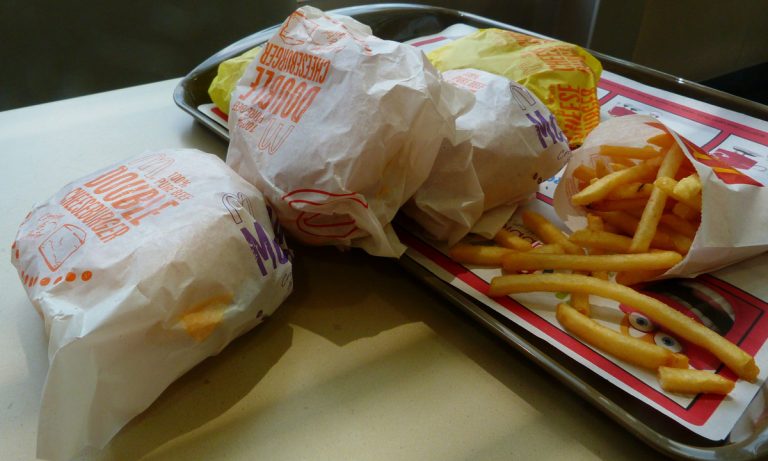
Sneaky Ways McDonald’s Tries To Get You To Order More Food

And you thought popping into McDonald’s meant grabbing a quick bite. With billions upon billions served, about one percent of the entire population of earth visits the golden arches every singe day, which translates to more than two billion customers every month. There must be a reason why so many people are hooked. But there is also some sneaky ways McDonald’s tries to get you to order more food.

Behavioral Economics took a close look at some of the subliminal tactics McDonald’s uses to lure customers into buying more food. Here are 5 of them that might (but shouldn’t) surprise you, because you’ve likely been the unknowing victim of at least one.

Visual Cues

McDonald’s uses animation on their menu, basically telling you where to look so they can upsell you on new items. Behavioral Economics explains the effect really well:

Our eyes detect colour, shape, texture, detail really well when we are directly gazing at something. The magno cells in our retina are weak at detecting these features in our periphery, in favour of a strong ability to detect motion (to helping us spot danger before it’s too late).

The animation on these screens take advantage of this fact to involuntarily capture our attention and activate a saccade (eye movement) towards the target (products that aren’t the traditional items). The result? We scan a wider variety of options when choosing and these naturally fall into our consideration set as a result — helping to fill the working memory ‘basket’ with new options we might not have considered before.

Here’s a video demonstrating that exact explanation.

There’s also the fact that the menus are specifically architected to get you to order higher-priced items. According to Behavioral Economics, approximately 30 percent of the digital screens are filled with the new Signature meals, while traditional options now take up just 10–15 percent of the total menu display space.

Cheap Food

Yep, this one is probably the most obvious way McDonald’s gets us to load up on more items: they price their food really low, so even if you don’t go for the high priced items, you’ll feel like you can afford it because of all the money you’ve saved!

Healthy By Association

McDonald’s does a good job of strategically placing photos of salads and water and other healthy items to make it feel like you’re eating healthy, when in reality you’re probably eating a full day’s calorie quota.

Behavioral Economics points out that “even with just a single healthy option shown on the menu…customers perceive the overall ‘health-index’ of the menu to be better, and therefore feel less guilt buying the items that best fulfill their desires.”

https://giphy.com/gifs/mcdonaldsczsk-food-mcdonalds-3ohs7X8kVAn1XH8Qmc

Signage Near Entrance

It’s been shown that the first image you see upon entering a restaurant will likely stick in your head, prompting you to want to order it. According to BE, “Studies have shown in the US that when people pick up food from a buffet station, 70% of the time they fill their plates with the first 3 items they come to. Why? All subsequent choices are compared to the initial reference point.”

No Cashiers 

Self-serve kiosk stations or mobile apps mean we’re likely to order more of everything we want without the worry of judgement.

Tech Developments Suggest Your Next iPhone Could Have More Than 3 Cameras

We recently discovered that “dual rear camera” was a smartphone feature, and that many devices have it. The iPhone X, the Samsung Galaxy S9 and the S9 Plus all boast about their photographic capabilities for a reason; they all have two cameras and are able to pull some magic tricks that the competition can’t.

Dual rear cameras are not new. According to The Verge, the technology was introduced in 2016 with Android devices, and later popularized with the iPhone 7 Plus. These two cameras in the rear take different pictures and compose a hybrid, which results in the final good looking photograph.

Because there always has to be more, Huawei decided to add a third camera to their 2018 smartphone, the P20 Pro. CNET reports that the device has three cameras with different abilities; one is a regular camera, the second is a monochromatic camera and the third is a telephoto camera which allows for optical zoom.

A post shared by pdtechtube (@pdtechtube) on

Surprisingly enough, the device doesn’t look like Frankenstein’s technological monster. The three cameras fit neatly, and don’t take up much space in the rear area of the phone. Critics agree that the cameras work amazingly well, having cool features that can rival Apple and Samsung’s most expensive smartphones, such as super slow motion and quality night shots.

You won’t be able to get your hands on Huawei’s P20 Pro within the US, but it’ll be interesting to see if other smartphone companies follow their lead. Three cameras sounds like a lot, but photography has become a very important feature on smartphones. Who’s to say when the amount of cameras will stop?  

You Need To See This 2009 Meghan Markle Tostitos Commercial

Nearly a decade go, before “Suits” and around the same time as her briefcase model stint for “Deal or No Deal”, and about eight years before she got engaged to royalty, Meghan Markle was in a Tostitos commercial.

The fine folks over at MarieClaire.com unearthed this video gold starring Markle as a woman picking up some snacks for a party in which she invited someone named Denise, who may or may not bring an unsavory character named Gary. “Ugh, Gary…with his short shorts” Markle thinks to herself while standing in the chip aisle— the voice over work clearly done by someone else—debating between Tostitos and a bag of chips that has a laundry list of ingredients.

Thirteen ingredients?” Markle says to herself. “That’s more people than I invited to the party.”

So many questions left unanswered, like: What’s the party for? What’s the deal with Gary? And why is there no alcohol in that cart? Does Gary get creepy if he drinks?

Watch the commercial for yourself. Also, Markle looks exactly the same, right?


The Problem With California’s Marijuana Delivery

When the California Bureau of Cannabis Control (BCC) first released its proposed medical cannabis regulations under the Medical Cannabis Regulation and Safety Act (MCRSA) last April, it created license types for laboratories, retailers, distributors, and transporters. Most people were surprised (and worried) when they found out that the MCRSA did not create a license type for cannabis delivery-only services. Under the MCRSA, only storefront medical retailers could deliver to a qualified patient or primary caregiver. Just like that, delivery services were about to be locked out of America’s biggest cannabis market.

As you can imagine, the BCC and state legislators were inundated with calls to their offices as well as comments at public hearings about the glaring omission of delivery licensure. Whether the BCC was going to rectify this mistake became moot upon the withdrawal of their emergency regulations. The regulations were withdrawn when the state legislature passed the Medical and Adult-Use Cannabis Regulation and Safety Act (MAUCRSA), which merged the MCRSA and the Adult-Use of Marijuana Act (AUMA) under one regulatory regime. We covered that here.

When the BCC issued their emergency regulations under MAUCRSA, it was clear that the Bureau learned its lesson: This time, the BCC included a license type for delivery-only services. For delivery services that were previously a part of a collective or cooperative, this inclusion in the new regulations was a much-needed lifeline. However, since the BCC started issuing temporary licenses in January it hasn’t exactly been a smooth road for delivery services. Delivery services have been facing the same major obstacle that all other cannabis businesses are dealing with: local jurisdictions.

In order to be eligible to receive a commercial cannabis license from the state, you must first obtain a cannabis permit from your local city or county. As readers of our California Cannabis Countdown series are well aware, each of the state’s 482 cities and 58 counties have their own regulations. For delivery services, this dual licensing structure can cause a number of impediments to both obtaining a license and then operating a successful cannabis business. First and foremost, a local jurisdiction can enact an outright ban on all commercial cannabis activities, including delivery. In other instances, local jurisdictions are either only authorizing storefront retailers to conduct deliveries or only allowing deliveries within their borders by local permit holders. All these obstacles, when combined, limit competition and choice and thereby ultimately harm the consumer. This is especially true of qualified patients that live in prohibitionist jurisdictions or aren’t able to drive themselves to the nearest dispensary.

It is under this backdrop that State Senator Ricardo Lara (Senate District 33) introduced Senate Bill 1302 (SB 1302). The goal of SB 1302 is pretty simple: make sure every Californian that wants access to cannabis does in fact have access to cannabis (for many Californians growing their own isn’t a feasible option). The pertinent provision of SB 1302 is found in Section 26090(e):

“A local jurisdiction shall not prevent delivery of cannabis or cannabis products on public roads, or to an address that is located within the jurisdictional boundaries of the local jurisdiction, by a licensee who is acting in compliance with this division and who is acting in compliance with a license, permit, or other authorization obtained from another local jurisdiction, pursuant to the authority granted by that other local jurisdiction under Section 26200.”

SB 1302 is off to a slow start as it has yet to pickup any co-sponsors and has currently been referred to the Senate Governance and Finance Committee. Now would be a good time to let the Committee members know that you support SB 1302 and that they should too: You can find the Committee members here. SB 1302 would ensure that a licensed delivery service can provide cannabis anywhere in the state to a qualified patient, primary caregiver, or adult aged twenty-one and over. Although this would seem like a given after a majority of Californians voted for the AUMA, in practice the delivery option is far from reality. In that respect all SB 1302 is seeking to accomplish is to bring the spirit of the AUMA into practical effect. Let’s hope (don’t forget to call your legislators!) it succeeds.

Habib Bentleb is an attorney at Harris Bricken, a law firm with lawyers in Seattle, Portland, Los Angeles, San Francisco, Barcelona, and Beijing. This story was originally published on the Canna Law Blog

New Studies: Opioid Use Lower In States That Eased Marijuana Laws

While Attorney General Jeff Sessions and many inside the Trump administration continue to wage a war on cannabis legalization, two recent reports reveal evidence that marijuana appears to have put a dent in the opioid abuse epidemic.

The National Academy of Sciences, Engineering and Medicine report that there’s solid evidence that cannabis is effective in treating pain. So W. David Bradford, a professor of public policy at the University of Georgia and three of his colleagues — including his scientist daughter — studied the severity of the opioid epidemic in states that allow medical marijuana.

“We do know that cannabis is much less risky than opiates, as far as likelihood of dependency,” Bradford said. “And certainly there’s no mortality risk” from cannabis itself, according to the report published in JAMA.

“Medical cannabis laws are associated with significant reductions in opioid prescribing in the Medicare Part D population,” according to a study conducted at the University of Georgia. “This finding was particularly strong in states that permit dispensaries, and for reductions in hydrocodone and morphine prescriptions.”

Potential Presidential Candidate Gillibrand Fights For Cannabis Law Reform

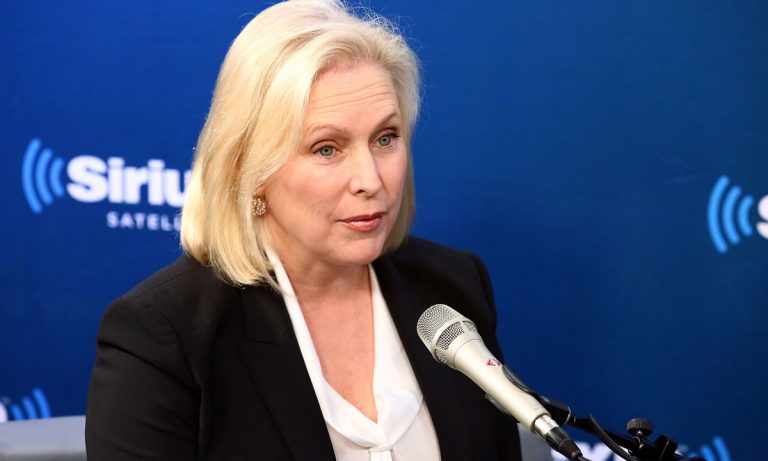
Sen. Kirsten Gillibrand (D-N.Y.), according to most political insiders, is pondering a run for the White House in 2020. And it appears one of her chief platform planks will be cannabis.

Earlier this week, Gillibrand announced the inclusion of a provision in the omnibus bill that will prohibit the use of federal funds by the Department of Justice to interfere with states’ medical marijuana laws. Even though 29 states and the District of Columbia have made medical marijuana legal, marijuana in any form is still prohibited at the federal level.

Said Gillibrand in a statement:

Parents should be able to give their sick children the medicine they need without having to fear that they will be prosecuted. Veterans should be able to come home from combat and use the medicine they need without having to fear that they will be prosecuted. I will continue to urge my colleagues to pass my bipartisan legislation, the CARERS Act, so that the children and families who desperately need this medicine can finally access it without fear.

This is not the first time that Gillibrand has taken a firm stand in favor of marijuana law reform. Last month, the New York Democrat teamed up Sen. Cory Booker (D-N.J.) to fight for legalizing marijuana under federal law. She is now co-sponsoring the Marijuana Justice Act, which Booker introduced last August

The Marijuana Justice Act, if passed, eliminates the Schedule 1 status under the Controlled Substance Act and requires federal courts to expunge the records of Americans who have prior marijuana convictions related to use or possession.

“Millions of Americans’ lives have been devastated because of our broken marijuana policies, especially in communities of color and low-income communities,” Gillibrand said. “Just one minor possession conviction could take away a lifetime of opportunities for jobs, education, and housing, tear families apart, and make people more vulnerable to serving time in jail or prison down the road.” 

For Gillibrand, marijuana reform is a social justice imperative. “Legalizing marijuana is a social justice issue and a moral issue that Congress needs to address, and I’m proud to work with Senator Booker on this legislation to help fix decades of injustice caused by our nation’s failed drug policies,” she said.

New Belgium Brewery Debuts New Hemp Beer, Advocates For Hemp Awareness

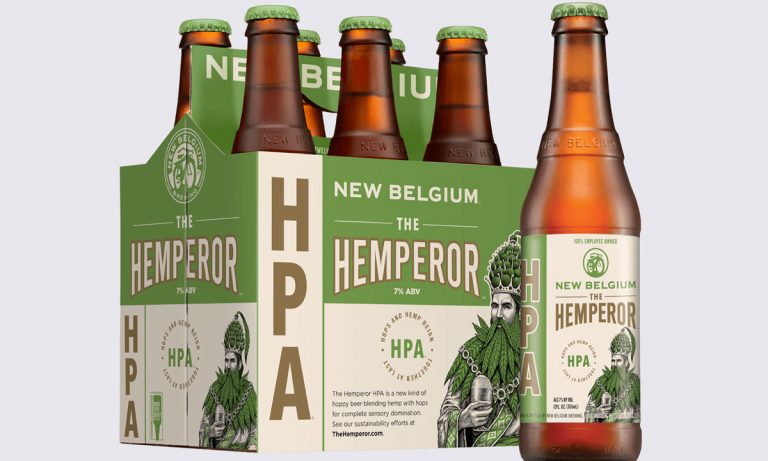
While hemp-based beers have been produced in small batches across Washington and Colorado, New Belgium Brewery’s newest hemp beer, the Hemperor HPA, showcases a serious new direction for the world of hoppy beer. Produced by the nation’s fourth-largest craft brewery, the new release will be offered year-round and introduce the marriage of hops and hemp into the mainstream.

“Let’s face it, brewers have been trying to get cannabis-like aromas from hops for years, but it’s always missing a certain something,” Ross Koenigs, New Belgium’s Research and Development Brewer, told CraftBeer.com. “The Hemperor HPA is possibly the first beer to deliver meaningful hemp flavors and aromas.”

Via CraftBeer.com:

The Hemperor HPA showcases the game-changing union of hops and hemp, plants genetically related that produce similar organic aromatic compounds known as terpenes. This ale is brewed with hemp hearts (the meat of the seed, minus the shell) and dry-hopped with Simcoe and experimental HBC 522 hops to create a dank, pungent hop aroma balanced by a sweet, mildly bitter finish. Federal law prohibits brewers from using hemp leaf and flower, so New Belgium brewers found a creative solution using other natural plant materials that perfectly emulate those hemp terpenes.

The beer has a 7 percent ABV and contains no THC or CBD. It will be sold in six packs and doesn’t intend to be a fad, but a movement. New Belgium is partnering with Willie Nelson’s GCH Inc. to raise awareness and support for industrial hemp. For every barrel of The Hemperor HPA sold, New Belgium will donate a dollar to Hemp 4 Victory.

“This beer has been over two years in the making, most of the time spent learning and reacting to laws that really suppress this crop’s usage,” Koenigs said. “Flavor-wise, this is the beer we wanted to make, but due to misinformed laws governing the use of industrial hemp, we had to take a creative and long-winding road to get to this point. We’re happy with where we landed, and we’ll be working to change federal regulation so that one day we can brew The Hemperor HPA with hemp flowers and leaves as we originally envisioned.”

The Hemperor HPA will debut on tap in select locations in time for the 420 holiday. Bottles and 6-packs of the beer are expected arrive across the country on May 21.

Don't Miss Your Weekly Dose of The Fresh Toast.

Stay informed with exclusive news briefs delivered directly to your inbox every Friday.

We respect your privacy. Unsubscribe anytime.