Monday, May 4, 2026
Home Blog Page 1269

Here’s How New Jersey Is Preparing For Recreational Marijuana

Despite the fact that New Jersey governor Chris Christie remains adamantly opposed to the concept of legal marijuana, state lawmakers are preparing to reveal a master plan for how they will establish a taxed and regulated pot market the second Christie’s veto power is no longer a problem.

On Monday, state Senator Nicholas Scutari, one of the leading legislative forces dedicated to marijuana reform in the Garden State, will formally announce the introduction of a bill to legalize a recreational cannabis industry. Although the details of the proposal have not yet been made public, previous attempts indicate that it will likely call for adults 21 and over to be given the freedom to purchase marijuana in a manner similar to beer.

“The national trend is toward legalization,” Scutari told NJ Advance Media. “It’s absolutely necessary to save our neighborhoods from drug dealers. And we can use the tax revenue. And people are smoking it anyway.”

The mission to end marijuana prohibition in New Jersey became a hot topic of discussion last week, with several reports indicating that lawmakers were simply holding out on plans to legalize weed until after Governor Christie, a man who believes marijuana is a “gateway” to the destruction of civil society, is forced down from his executive perch.

But lawmakers feel it is necessary to put the marijuana debate in the forefront in order to ensure easier passage in the State Legislature next year. If not, it is distinctly possible the issue could get jammed up in a flurry of negotiations and stall tactics.

“We got to get the ball rolling and educate the legislators,” Scutari said. “This is not something I can guarantee passage of right now. But we’ve got to work it so it will be ready for a new administration come January.”

However, there is still some concern over whether President Donald Trump’s administration will revert back to the era of Nixon and launch a blitzkrieg-style attack on states that have legalized the leaf. Although the Justice Department has not yet given any sort of confirmation on its plans for dealing with legal weed, it seems that every month a new comment or memo inches the nation further back to a time when total prohibition was the law of the land.

Yet, New Jersey has been prepping for a legal marijuana market for the past several years, so unless U.S. Attorney General Jeff Sessions and his cronies over at the DEA say otherwise, lawmakers are going to proceed with creating a system that allows the state to capitalize on the cultivation and sale of legal marijuana.


[gravityform id=”13″ title=”false” description=”true”]


Charlie Hunnam Grew Marijuana When Meaty Acting Jobs Ran Dry

Actor Charlie Hunnam is having a moment. The Sons of Anarchy lead and Guillermo del Toro muse is a bona fide star in back-to-back big production films released closely. The first is James Gray’s Lost City of Z, where Hunnam plays an Englishman obsessed with finding purpose through a hidden Amazonian civilization. He also acts as the titular role in Guy Ritchie’s upcoming King Arthur epic.

But times weren’t always so fruitful for Hunnam, according to a recent New York Times profile. He admits to being a rather picky actor, only assuming roles he felt personally attached to. He said his attitude and desire to build a proud body of work for himself led to some rather lean years for the actor.

So Charlie Hunnam grew marijuana.

Yes, Hunnam cultivated organic cannabis in his Los Angeles home to provide for himself when the acting jobs he wanted weren’t coming in. Later he would sell the crop to a medical dispensary to earn money.

“I can’t believe I’m being this candid,” Hunnam revealed to the NYTimes.

Hunnam said his weed-growing days are behind him. We can’t help but wonder, however, with his growing celebrity, if Hunnam wouldn’t be wise joining the ranks of the many celebrity cannabis brands filling the marketplace these days.

How Cable News Shapes Trump’s View On Marijuana

Donald Trump really hasn’t said much about marijuana as president-elect/president. His administration meanders from strong to modest opposition, depending on who’s talking. This is because cable news is in a nebulous area where media personalities, the president’s staff, channel advertisers, and occasionally everyday people brief Trump from the comfort of his TV.

Cannabis, like everything else, is hostage to the news cycle.

White House Press Secretary Sean Spicer first said the administration was looking at “greater enforcement.” Attorney General Jeff Sessions, and top Justice Department advisor, Steven Cook, have a dim view of all criminal justice reforms from the Obama years. They’ve had recent harsh words for legal cannabis, yet Colorado Gov. John Hickenlooper recently described a meeting with Sessions where the AG stressed the administration’s other priorities over enforcement against legal cannabis. “Well you haven’t seen us cracking down, have you?” Sessions reportedly told the governor.

Still, a Justice Department review of the non-legally-binding Cole memo, which outlined expectations of state legalization in 2013, is said to be underway. Trump’s early executive order on crime was mostly a call to review and enforce laws against drug trafficking and criminal organizations, with no new authority or money to fight marijuana.

As a candidate Trump said he was 100 percent supportive of medical cannabis, as president that support has shown itself to barely be barely 50 percent in maintaining a status quo with HHS Secretary Tom Price, formerly a not-totally-anti-medical-cannabis congressman from Georgia and the continuation of the Rohrabacher-Blumenauer budget amendment which blocks DEA spending on state-compliant medical cannabis laws until September. And Trump’s Alcohol, Tobacco, Firearms, and Explosives agency has expanded Form 4473 for gun sales to make clear that no legal marijuana consumers, medical or otherwise, has 2nd amendment rights.

Then, Trump’s White House proposed to gut the ONDCP, or drug czar’s office, budget by over 90 percent while establishing a special commission to examine the opioid epidemic headed by New Jersey Gov. Chris Christie, perhaps the most specifically anti-cannabis member of the Trump team, yet also the farthest from controlling that federal weed policy. What does all of this mean?

President Trump listens to these men, and others, on marijuana policy. However, their views on weed played little role in their ascendance in his government as opposed to their outright loyalty and deference to Trump himself. He doesn’t keep them around because he agrees with their extremist views on cannabis. But he listens to one advisor above all else: Cable news. As much as he may say he hates it, mainstream media is the central issue brief for America’s president, academics and political research filling in the rest (probably). Evidence abounds …

“As president, Trump has quite patently gathered his cues from cable shows, and the evidence surfaces in his Twitter account. Analysts have taken to tracing the substance of his tweets to programming moments on CNN or Fox News.”

“Some White House officials — who early on would appear on TV to emphasize points to their boss, who was likely to be watching just steps away in his residence — have started tuning into Fox News’ “Fox & Friends” because they know the president habitually clicks it on after waking near dawn.” – Erik Wemple/Ashley Parker The Washington Post

“White House staff have learned to cater to the president’s image obsession by presenting decisions in terms of how they’ll play in the press.” -Josh Dawsey, Politico

“MSNBC and Fox News are cashing in on Trump’s viewing habits, reportedly hiking up ad rates in February “as companies and outside groups try to influence Trump and his top lieutenants” through ads on his favorite networks.” -Elaine Godfrey, The Atlantic

Trump wants all his weed policies to be broadly popular and perceived as the strongest and best. That’s not news. What is news is that press briefings, media surrogates, and high ranking government officials used to be reliable attempts to describe an administration’s decided drug policy. Now, they’re active arguments to the president regarding an undecided one.

Used to be, federal marijuana statements were carefully orchestrated and approved soundbytes. Now, they’re often jockeying for future validation for putting on a popular show. It’s depressing, but cannabis is no third rail in getting this treatment, healthcare, taxes, immigration, civil rights, foreign affairs and been treated similarly.

So media around cannabis laws is more crucial than ever both for influencing the commander-in-chief, feeling out his staff’s arguments, and judging individual players overall influence. This ranges from dramatic reports of arrests and injury, to human interest pieces on patients in need or entrepreneurial green businesses. Cannabis law reformers talking to the press better behave, the president might be watching. For the public, this results in a type of “read between the lines” comprehension of news that reformers have long engaged in when judging media veracity, but is becoming a mainstream lenses for the public.

In last month’s budget debate, the White House did little to stop the Rohrabacher-Blumenauer amendment protecting state medical marijuana programs, with Trump later asserting his ability to enforce constitutional duties even with that amendment on the books in the law’s signing statement. Some news outlets immediately interpreted this as a warning shot to medical patients. In all likelihood, the president wants flexibility and firmness simultaneously, and his discretion on this and many other parts of the budget strongly keep his options and opinions amorphous. It’s disappointing because he had the opportunity to lead a conversation on individual rights, safety, and economic instead of perpetually reacting to it.

A lot of people know not to trust everything they hear on TV, and as an internet commentator, I’m not saying otherwise. But, knowing what and how marijuana is being talking about on MSNBC, CNN, and Fox is not a sign of being duped by “lamestream news” so much as trying to understand the drug’s portrayal to the president at any given moment. During the campaign, Trump promised to keep the country in suspense on whether or not he’d accept election results. On cannabis at least, that promise has been kept.

If President Trump was going to war with legal marijuana, he won’t hesitate to tweet it. You don’t have to like every CNN commentator or Fox & Friends to contact them and share your support for legal weed. Until then, follow cannabis in the news without obsessing over it. Our president has that covered.

Bailey Hirschburg wrote this story for MJ News Network


[gravityform id=”13″ title=”false” description=”true”]

How High Is The Medical Marijuana Market Expected to Soar?

According to a research report by New Frontier Data, in 2017 medical marijuana market sales are forecasted to grow to $5.3 billion, accounting for 67 percent of total cannabis sales.

By 2025, medical sales in current legal states are forecasted to grow to $13.2 billion, at which point medical sales will account for 55 percent. Comparatively, adult-use sales in 2017 are projected to reach $2.6 billion, rising to $10.9 billion by 2025.

In 2016 alone, adult-use consumers shopped once every 14 days and spent $49 per transaction; medical consumers, by contrast, shop once every 10 days and outspend the adult-use customer by more than three-to-one; spending $136 per transaction.

California by itself is expected to play a major role in the legal cannabis market.

California offers the perfect example of why it is so important to understand trends in consumer behavior. The state’s legal industry is forecast to grow from $2.8 billion in 2017 to $5.6 billion in 2020. That spending will be increasingly directed at products and retailers who understand and serve the market’s evolving tastes and preferences. The market is changing, and the most successful operators will be those who adapt most quickly to the change,” said New Frontier Data CEO Giadha Aguirre De Carcer.

For more cannabis business coverage, visit the MJ News Network


[gravityform id=”13″ title=”false” description=”true”]

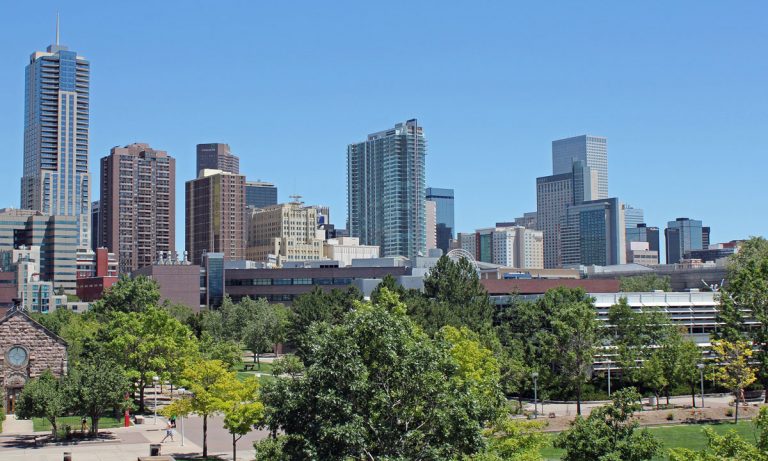
Smoking Marijuana In Denver Just Got More Social

After six months of negotiating and committee hearings, Denver on Thursday became the first city in the nation to allow social cannabis consumption.

Businesses in the Mile High City will be able to apply for annual permits allowing adult patrons to consume their own cannabis as part of a four-year pilot program. The social experiment gives Denver cannabis enthusiasts the ability to share cannabis socially without fear of arrest.

In November, Denver voters passed  Initiative 300, allowing for businesses to accommodate cannabis consumption among the public. But implementation of the program proved challenging. The Denver Department of Excise and Licenses spent half a year listening to all sides of the issue before unveiling the draft regulations.

And, as if with most compromise rules, neither side particularly happy with the ruling.

According to the Denver Post:

“Since the very beginning, we wanted this to be a discussion between neighborhood groups and businesses,” said Emmett Reistroffer from Denver Relief Consulting, who led the pro-300 campaign. “We think some of these rules kind of circumvent that intent.”

Meanwhile, opponents of I-300 have concerns of their own, including seeing too few restrictions to keep children at a business away from the new “designated consumption areas,” whether indoors or outside, and to protect nearby residents from any effects of marijuana use at a local business.

“There is absolutely no buffer zone in these rules for consistent marijuana use backing up to homes,” said Rachel O’Bryan, who managed the anti-Initiative 300 campaign.

Colorado became the first state to allow for recreational marijuana sales on January 1, 2013. But since then, tourists coming to Denver have struggled to find a place to consume it. The new provision hopes to provide places for tourists and residents alike.

“This is about personal responsibility and respecting adults who want to have a place to enjoy cannabis,” Reistroffer, said.

Here are some of the specifics of the new regulations:

  • Before a business acquires a permit, it is required to have a letter of “evidence of community support.”
  • Vaping, not smoking, is allowed. Edibles are permitted as well.
  • Businesses are required to have a ventilation system sufficient enough to control the smell of cannabis.
  • Businesses will not be allowed to serve alcohol if cannabis is being consumed on the premises.
  • Patrons must sign a waiver declaring that the venue is not responsible for their actions. Customers are not allowed to sell cannabis to others.

A public hearing on the rules has been scheduled for June 13.

Watch This Magician Make A Bag Of Marijuana Disappear In Front Of A Cop

We should state up front that it is never, ever wise to mess with the police. Especially when it involves a bag of marijuana. This disclaimer is said for obvious reasons, considering the high tensions of our times, but also relevant for the hilarious video below.

In it, a man approaches a police officer and displays a bag of weed. He then asks the officer if he’d like to buy the weed, which causes a severe reaction from the cop. But when the policeman reaches him, the man makes the bag disappear.

Even after patting him down the policeman can’t find the weed and must let him go.

Now we’re not sure of the validity of this video, as YouTube pranksters can be a fickle bunch. Who knows if the magician is even holding a real bag of weed? We’d like to believe it is, but we can’t be sure.

Regardless, this is one video we’d highly advise not trying at home.


[gravityform id=”13″ title=”false” description=”true”]

Get To Know These 4 Up-And-Coming Wine Regions

0

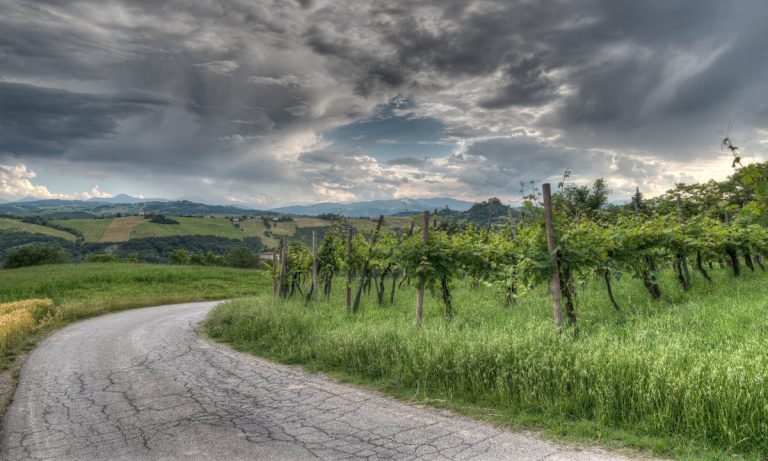
Trying to stay current in the wine world is hard. There’s seemingly an endless supply of new wines, and figuring out which ones are worth your time and money is hard…fortunately for you, it’s also my job, so all you have to do is read this column! Here are four regions I’m super excited about.

Maule Valley, Chile

It’s not exactly hard to find good Cabernet Sauvignon these days. The grape is grown the world over, and often to much success. Yet the Maule Valley is one of the few “new” sites (a misleading phrase, since there’s a long history of viticulture in the area) that I genuinely think can stand among the world’s best. They’re strikingly textural and engaging wines, yet not overwhelmingly fruity. It’s also one of the few remaining places you can find Carmenère, which serves as a more herbal and aromatic counterpoint to the Cabernet.

Friuli, Italy

Home to some of the most exciting white wines in the world, Friuli’s greatness comes in part from being a historical crossroads in Europe. A wide range of white grapes, from the familiar (Sauvignon Blanc) to the less so (Ribolla Gialla), create a broad palate for winemakers to work from, but there’s also an incredibly interesting range of winemaking styles as well. You might have heard something about orange wine (white wines made somewhat like red wines), and Friuli is one of the epicenters of this stylistic movement. Wines from just across the border in Slovenia are similar, and also fascinating.

Hawkes Bay, New Zealand

You’d be excused for thinking that Kiwi wine started and ended with Sauvignon Blanc, but recently the diversity of their wine industry is starting to show up on American shores. Hawkes Bay is perhaps the region best suited for red wines, and it shows in their Cabernet- and Merlot-based wines, as well as Syrah. Restrained, yet complex and elegant, they’re still quite affordable, if you can find them.

Basically All Of Spain That’s Not Rioja

That isn’t to say Rioja isn’t great: it is, but you’ve probably at least heard of it. The rest of Spain though…goddamn. Whether the dynamic whites from Rueda, or the Monastrell of Jumilla, or the Carignena of Catalonia, you can get fascinating wines made from old vines at a killer price.

Finding wines from these regions might require a bit of looking, but you should be able to uncover some gems at your local wine shop, or with a bit of online sleuthing. Good luck out there!


[gravityform id=”13″ title=”false” description=”true”]


Gossip: Conservative Site Reports Matthew McConaughey Just “Came Out Of The Closet”; No Nannies For Amal Clooney

This week, readers were no doubt left shook by a headline in right-wing publication Conservative Post reading “Matthew McConaughey just ‘came out of the closet,’ but will it hurt his career?”

The Conservative Post was evidently using a more generic interpretation of the term “out of the closet” in its headline, in this case referring to somebody who has revealed a personal secret. What was his secret? The web site heavily implied that McConaughey’s big reveal is that he identifies as a Christian.

The Conservative Post wrote:

Actor Matthew McConaughey speaks out in a recent interview with GQ discussing his views on marriage.

McConaughey is well known for his southern charm, remarkable acting skills, and his recent address at the Oscars where he thanked God and said that his blessings in his life have come from the Almighty.

Amal Clooney ‘Won’t Hire A Live-In Or Full-Time Nanny’ When The Twins Come

“E! News” has an update on the situation with the Clooney babies. Some details:

Amal is taking it easy, and she’ll give birth in London: Amal has been taking it easy as she continues to advocate on behalf of the Yazidis in Iraq—a cause near and dear to her heart. “Amal is trying not to overexert herself,” a source tells E! News exclusively, adding that she’ll give birth in London. “She’s been very sensible throughout this pregnancy.”

Amal’s maternity leave. “She plans to be back at work around six months after giving birth, but her schedule will be greatly different than before,” the source says. “A lot of time spent working at home. She has a great office set up at the Sonning house.” According to the source, Amal has no intention of quitting the career she’s worked so hard for.

The Clooneys will raise the twins in Britain: Ahead of the twins’ arrival, the source says the couple consulted with Ilse Crawford, a London-based interior designer who focuses on human needs and “has a somewhat holistic approach to design.” According to the source, Amal and George waited until she was six months pregnant before they had the twins’ nursery decorated, because “they didn’t want to rush or jinx things.” The Clooneys chose many of the items themselves. When they visited Paris in February, for example, they bought a few items at a boutique called Baudou and shipped them to the U.K.

No nanny? The couple has also decided that after the twins come home, they won’t hire a live-in or full-time nanny. Instead, they’ll have a night nurse to help set a sleeping schedule in the beginning. Amal’s mom, journalist Baria Alamuddin, has expressed that she would like to be involved, too.

Love the fresh dirt we bring over daily from Naughty Gossip? Let us know in the comments!


[gravityform id=”13″ title=”false” description=”true”]

A Heartwarming Love Story Between An Elderly Penguin And An Anime Character

0

An elderly penguin has fallen in love in a Japanese zoo. Their love, however, is forbidden. Grape, a 20-year-old penguin living at Tobu Zoo in Saitama, Japan, seems to be smitten with an anime character.

A cardboard cutout shows a character from the anime series Kemono Friends, a show about animals that turned into human-like creatures. It was added to the penguin enclosure as part of an advertising campaign for the show, and to raise money for a zoo impacted by an earthquake, but it soon drew the adoration of one penguin in particular.

According to Anime News Network:

Grape is considered elderly by penguin age standards, but he’s not too old for love. However, his fixation has gotten quite serious with staff saying he gazes upon his new paramour for long periods of time. Visitors and the internet began to worry about Grape’s health when a new picture that appeared online around Thursday showed that he was separated from his love by a net. Rumors began spreading that Grape was skipping meal time to stare at the character cutout, and that may be why the net was used.

Another photograph shows Grape standing in front of the cutout with his wings are raised his beak pointed upward, a pose that’s similar the standard courtship pose for penguins, known as the “bray call.”

There’s no word on how Grape will cope with the end of this ad campaign, when his beloved is taken away again. Maybe he should take notes from the last living male white rhino, and download Tinder.


[gravityform id=”13″ title=”false” description=”true”]

Did Sessions Just Escalate The War on Drugs?

Did Session just escalate the War on Drugs? Attorney General Jeff Sessions, pushing back on bipartisan momentum to reduce the amount of people behind bars, issued a memo to prosecutors, calling on them to push for the “most serious” charges against people, hoping to trigger mandatory minimum drug sentences.

The memo is a direct reversal of the policy of his predecessor, Attorney General Eric Holder,  who urged prosecutors to avoid draconian mandatory minimum sentences for nonviolent drug offenses.

“This is a disastrous move that will increase the prison population, exacerbate racial disparities in the criminal justice system, and do nothing to reduce drug use or increase public safety,” said Michael Collins, deputy director of national affairs for the Drug Policy Alliance. “Sessions is taking the country back to the 1980s by escalating the failed policies of the drug war.”

“The last thing our country needs to do is go back to the ‘lock ‘em up and throw away the key’ mentality that has made the United States the number one incarcerator of the world,” said Anthony Papa, manager of media relations at the Drug Policy Alliance, who served 12 years behind bars on a mandatory minimum sentence under New York’s draconian Rockefeller drug laws. “Jeff Sessions’ push for long mandatory minimums will destroy people, families and communities.”

This is the latest in a series of measures that demonstrate the intent of the Trump Administration to ramp up the drug war. Sessions has indicated that he will also reverse the Obama-era policy of allowing states to set their own marijuana policies, and head of Homeland Security John Kelly is using the war on drugs to persecute immigrants, pushing to deport individuals for simple marijuana possession.

“Congress has to act now and serve as a check on the egregious behavior of Sessions’ Justice Department,” said Collins. “Both parties and the public have expressed a desire in passing sentencing reform – we need to pass a bill on this now more than ever.”


[gravityform id=”13″ title=”false” description=”true”]

Don't Miss Your Weekly Dose of The Fresh Toast.

Stay informed with exclusive news briefs delivered directly to your inbox every Friday.

We respect your privacy. Unsubscribe anytime.