Wednesday, June 17, 2026
Home Blog Page 914

Oregon’s Cannabis Black Market Problem Getting Out Of Hand

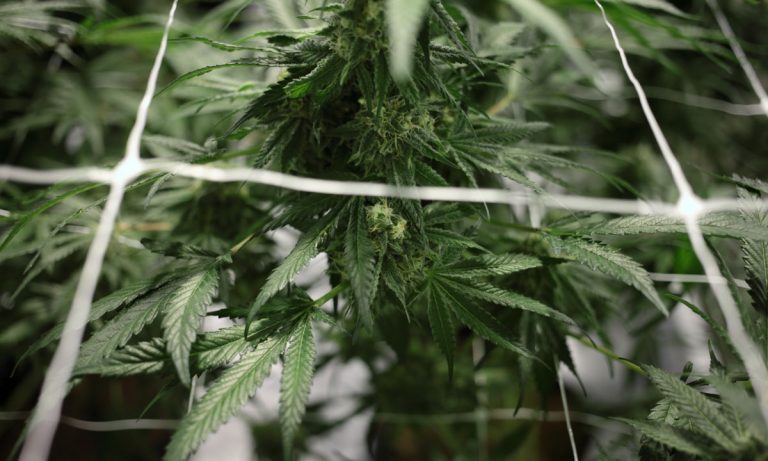
If you purchase cannabis illegally on the black market and live in a state near Oregon, you could still be buying marijuana from Oregon dispensaries. The feds are none too happy with Oregon, as an overwhelming surplus of cannabis product has instigated cannabis diversion across state lines. An Oregon State Police report targeted the state as one of the leading exporters in the black market for premium cannabis while an audit targeted the Oregon Liquor Control Commission as lacking “robust” monitoring and enforcement policies to regulate the $480 million market.

The Fresh Toast – Adding to their problems, Oregon’s cannabis black market problem is getting out of hand.

The problem’s become so bad that Billy Williams, the U.S. Attorney for Oregon, revealed in a memo that the feds will target the illicit black market and any outlaw grows and operations that “pose a substantial risk of violence.” In response to the oversupply and reports, Oregon marijuana regulators have hit pause on issuing any new licenses since June 15.

This is all prelude to federal authorities arresting the Corvallis Cannabis Club owners for running “bust-out” credit card fraud schemes and interstate cannabis diversion operations, reports the Corvallis Gazette-Times. The owners, Mariam Gevorkova and Yeghishe Nazaryan, used the credit fraud to fund their illegal marijuana grows and diversion.

RELATED: Legal Weed Is Coming Fast To Massachusetts, But What About Cafes

Never heard of a “bust-out” credit card scheme? It involves running up large credit card balances and paying them off using a co-conspirator’s bank account. Then the co-conspirator would contact their bank to challenge the charge and receiving a full refund before any financial institution could detect something was wrong.  Prosecutors have accused the defendants of defrauding financial institutions of more than $1 million.

Here’s where it gets crazier. Authorities weren’t even investigating the Corvallis Club owners for diversion, but a man waving a gun around and demanding money tipped them off.

Via the Corvallis Gazette-Times:

The complaint states a man told Corvallis police in June 2017 that several Corvallis residents were involved in large-scale fraud. The man, identified only as O.J. in the complaint, said he had agreed to be a part of the scheme and was promised money but was never paid. The man told this to police after officers responded June 6, 2017, to a home on Southwest Philomath Boulevard for a report of O.J. threatening people with a gun and demanding payment, according to the complaint. O.J. told Corvallis police officers that he wanted to talk to the FBI about the fraud, the complaint states. O.J. is not facing charges in the case.

Authorities were then able to make a connection to the Corvallis Club operation and a convenience store in Peoria, Illinois selling black market cannabis. This comes eight months after Richard Hawkins, the owner of a popular Oregon marijuana-extraction company, was arrested in Nebraska with a $1.1 million worth of marijuana products. Not a good luck for the industry.

In addition to halting issuing licenses, the OLCC also announced plans earlier this year to have spot inspections with cannabis businesses.  As another effort to curtail the black market, the OLCC will ask outdoor growers to inform them of each of their harvests ahead of time.

5 Things That’ll Help You Schedule Sex Without Killing Romance

0

Long-term relationships provide great things, such as the ability to share your life with someone and getting to know them intimately. Sadly, when you spend so much time together, it’s easy to take people for granted and to put your relationship in second place among life’s other responsibilities.

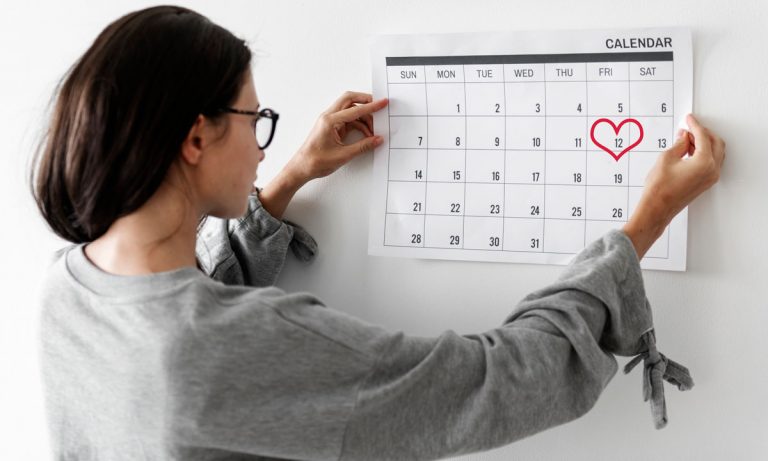
While scheduling sex sounds like something that’s deeply un-sexy, it shouldn’t be. Scheduling sex gives you the opportunity to actually have sex instead of falling asleep or watching something dumb on Netflix. Here are 5 things you can do to help you schedule sex and to have some fun while doing it:

Get Onboard With The Schedule

https://giphy.com/gifs/meryl-streep-the-devil-wears-prada-hBjV49n3wy60o

Stop thinking that having a schedule and being organized is dumb. While spontaneous sex is the dream and it’ll sometimes happen, it’s sadly not the norm when you live with someone and people develop routines. Scheduling sex allows you to have sex and it’s also a way to show your partner that you care about them and that you value the time you spend together.

Have A Conversation With Your Partner

Having this conversation can be awkward, so make sure to not phrase this as “we’re not having enough sex.” Have some tact and propose that you want sex to be important, and that both of you should make the appropriate time for it. According to GQ, when having this conversation and in doubt, blame yourself. Say that there’s a ton of stuff on your plate and that you want sex with your partner to be special and something to look forward to.

Treat It Like A Date

https://giphy.com/gifs/animation-dogs-walt-disney-XvZ8PJ4DSqzSM

Make the day feel special by making a plan and treating it like a date. Take this opportunity to go out for dinner or drinks and create some anticipation. Having a date will give both of you the opportunity to get dressed up and to look forward to something.

Try Out Different Things

Have some fun and forego predictability. Try out different sex positions or buy a sex game that’ll make things easier and more relaxed. There are a million things you can do to make sex special and to make you both feel better.

Leave Room For Nonsexual Activities Too

https://giphy.com/gifs/orange-is-the-new-black-oitnb-alex-and-piper-bAmQn1R4V3owE

While the time you schedule for sex should be pretty important, it shouldn’t be black and white. If you don’t feel like having sex then try something different with your partner, like cuddling or making the time to talk about whatever’s going on with your life.

Japanese Marijuana Users Surpass This For The First Time

If you need a startling example of marijuana’s taboo cultural standing in Japan, look no further. It is shocking to some parts of the world, but Japanese marijuana users surpass this for the first time.  It seems consume cannabis has become more popular than huffing paint.

That’s according to a survey by The National Center of Neurology and Psychiatry, first reported in the Japan Times. 

The Center surveyed 5,000 people between the ages of 15-64 during the fall of 2017. They drew nearly 3,000 respondents and extrapolated that number to an estimated 1,331,765 habitual and non-habitual cannabis users using population ratio and various factors. The estimated number represents an increase of about 380,000 compared to the previous survey, which has taken place every other year since 1995. Of the survey respondents, 1.4 percent admitted to trying marijuana, up 0.4 percent from earlier data.

RELATED: Science Says Medical Marijuana Improves Quality Of Life

Japan’s government has made a concerted effort to curtail usage of kiken drugs, or dangerous drugs, reports the Japan Times. Kiken drugs produce effects analogous to narcotics and stimulants. Because of government focus on kiken drugs, authorities believe that it’s raised marijuana usage.

Via Japan Times:

There are concerns that young people in particular are susceptible to using marijuana sheerly out of curiosity, with some believing it less harmful than other types of drugs.

According to the survey, 2.3 to 5.0 percent of teenagers and people in their 20s and 30s said using marijuana is fine if it is “just a small amount” and view it as a matter of “individual freedom,” far exceeding the ratio for those in their 40s to 60s who gave the same answers.

Also, more than 3 percent of respondents in their 20s and 30s said they had faced situations in which other people tempted them to use marijuana.

Earlier this month The Fresh Toast reported Japan had approved its first marijuana-related advertising. The train station billboard promoted Elixinol Hemp Oil, which contained pure CBD extract. Hemp isn’t so taboo in Japan and CBD isn’t illegal on the federal level.

RELATED: Yacht Rock Pairs Perfectly With Cocktails

But authorities also believe that cannabis legalization efforts internationally have affected locals. Canada just officially legalized recreational cannabis and sales will begin later this fall. More than half of the states in the U.S. have legalized some form of cannabis and residents in Uruguay can grow their own marijuana.

All-You-Can-Eat Restaurant Goes Bankrupt After People Ate Everything

All-you-can-eat restaurants are like doubled-edged swords. As a customer, you pay a price and leave in a food coma. As a restaurant owner, you mostly make good business, unless people take advantage and you end up in trouble.

This is exactly what happened to Jianmaner, a restaurant located in Chengdu, China, which now has a debt of $78,000. The owners of the place wanted to develop a large and loyal client base, so they decided to risk losing a bit of money in order to develop a long-term plan, offering monthly subscriptions of $19 for unlimited hot pot meals. It didn’t work, and the restaurant closed after two weeks of business.

Su Jie, one of the owners, said that managing the restaurant was stressful and time consuming, allowing him to only sleep for two or three hours a night. “The uncivilized behaviour of the diners was secondary — the main problem was our poor management,” he said.

While this strategy of losing a bit of money in order to develop a client base is nothing new — it’s how Netflix has taken over the world — it epically backfired in the culinary business. Customers took advantage of the promotion and began sharing their membership cards with family and friends, giving free food to everyone they could.

Mashable reports that the restaurant blew up in popularity in a matter of days, with customers lining up for food at 8 a.m. even though the restaurant opened at 11 a.m. Long lines of people surrounded the place amounting up to 500 guests on a regular day.

Within 10 days, over 1,700 people had signed up for the hot pot promotion. Sadly, it was just too much of a good deal to work in the real world.

Congress May Legalize Hemp-Derived CBD Soon

Cannabidiol is a non-psychoactive cannabinoid that can be derived from industrial hemp and the whole cannabis plant. Although cannabidiol is medically beneficial and non-psychoactive, courts sided with the Drug Enforcement Administration last month that CBD is considered a marijuana extract under federal law. Therefore, as a marijuana extract, CBD falls under the broad definition of cannabis in the Controlled Substances Act, which classified marijuana, and marijuana extracts like CBD, as a Schedule I federally illegal substance in the U.S.

Industrial hemp is a whole different story. Not only can CBD be derived from hemp, but hemp can make numerous products like rope, gasoline/fuel, clothing, and more. Hemp is also heralded as a fantastic rotational crop for farmers, as the plant rejuvenates soil and naturally deters weeds and insect problems.

Why is this important? It turns out that a bill has recently been circulating around Congress, and its intention is to legalize hemp and hemp-derived CBD. Read on to learn more about this bill, the likelihood that it’ll get passed, and the future of hemp-derived CBD.

Decoding The Agriculture Improvement Act of 2018 (Farm Bill)

The legislative bill that has been circulating around Congress includes a portion that would legalize hemp and hemp-derived CBD. Fortunately, this piece of legislation made substantial progress during the week of June 11th. Recently, the U.S. Senate Agriculture Committee agreed to endorse the Farm Bill, which is otherwise known as the ‘Agriculture Improvement Act of 2018’. On June 13th, the U.S. Senate Agriculture Committee voted 20 to 1, and although the proposed bill has several provisions, its intention is to legalize CBD that’s extracted from industrial hemp.

At this moment, growing industrial hemp is legal on a federal scale only for research purposes or if it’s under a pilot program in select states that have legalized it. According to Jonathan Miller, the general counsel for the U.S. Hemp Roundtable (a well-known industry group), the proposed Farm Bill includes the ‘Hemp Farming Act’. The Hemp Farming Act is sponsored by Mitch McConnell, the Senate Majority Leader of Kentucky, and 25 other senators endorsed this act. Although many political figures were all for the Farm Bill, there were opposing forces too.

Specifically, Iowa Senator Chuck Grassley had the only nonconforming vote from the Senate committee. Senator Grassley went further by filing an amendment, which would have stated that extracts, derivatives, and cannabinoids would remain Schedule I controlled substances just like heroin. However, a public outburst occurred after the filing, which led to the amendment never getting voted on.

Next Steps To Pass The 2018 Farm Bill

According to Senate leader Mitch McConnell, the Farm Bill is set to be voted on by the end of June. From there, the Farm Bill must travel to the U.S. House for further consideration. The following statement was issued by Jonathan Miller regarding this bill and the likelihood of it getting passed: “The House may not pass it, and it might not include hemp in their bill. But, if it passes with the current language, then, hemp-derived CBD would be legal from a federal perspective.”

However, this will only be the case if President Trump signs the bill into official law. In the past, President Trump hasn’t publicly expressed his views on hemp. Last week though, the President told various reporters that he supports ending the federal ban on marijuana. If President Trump stays true to his word, the move would be historic because it would result in removing the substance from its current Schedule I classification. Although the President has expressed his views to end the federal ban on marijuana, his attorney general, Jeff Sessions has quite the opposite view.

Regardless, if the Farm Bill passes through the necessary stages it needs to and if it’s signed into law before its expiration date in September, hemp could become an agricultural commodity. However, there will likely be limitations and regulations as to who can grow it and where they can legally do so.

Future Of Legal Hemp & Hemp-Derived CBD

If the 2018 Farm Bill is signed into law, hemp would likely become a huge cash crop for farmers including tobacco farmers. Not only is hemp durable, it’s also extremely versatile since it can make numerous products. In the future, hemp may replace plastic, which would be much more renewable and biodegradable than plastic on a worldwide scale.

Nowadays, more tobacco farmers are moving towards growing hemp since it’s medically beneficial, it helps people rather than hurts them, and it has more positives than negatives unlike tobacco. Overall, if the 2018 Farm Bill is approved, we’ll likely see many changes occur, which could positively impact individuals, society, and the economy, especially since CBD is expected to become an annual $1 billion market by 2020.

New York City Inches Closer To Full Marijuana Legalization

New York became the 23rd state to legalize medical marijuana in 2014, though the law’s rules are still considered some of the most stringent in the nation. Still, it was a step forward for cannabis in The Big Apple and now full legalization is in sight.

Starting September 1, New Yorkers will not have to fear incarceration for smoking, recreationally or medicinally, on the streets. Instead, they’ll be given a ticket that will likely cost about $100 in court. This is a massive move forward, especially considering the disparities in arrest rates between white and black and brown persons when it comes to cannabis.

So besides simply making it a nuisance to get caught with your pot out, New York State is considering the pros and cons of going full legal in a budget set forth by Gov. Cuomo. Not to mention that Cynthia Nixon is running against Cuomo in the upcoming primary and is a vocal supporter of full legalization.

Now there’s a few things to remember with the newfound leniency in New York. For one thing, though we know it’s coming, being able to smoke publically without fear of arrest doesn’t actually commence until September and even then it has its provisions. If the person stopped for public consumption has a warrant or is on probation, is caught while driving or is stopped without identification, they will likely take a ride to lockup.

It will be every breath of fresh air available the day that the U.S. legalizes weed across the board and is normalized to the point of having no more stigma. It would be like popping a large pimple in the prison system, and as gross an image that may be, people will be flooding out of jails and prisons if the law is made retroactive and the flow of nonviolent “offenders” would practically cease.

With all the hustle and bustle, not only in New York City, but across the United States, a little weed, ingested responsibly, is a big cure. Not only to what ails you, but to the simple doldrums, a racing mind, a bad mood or whatever little thing is nagging at a person. Plus, it is an enhancement drug, and if you’re having a terrific day it gets all the better.

As the primary unfolds and minds change about a complex plant that’s been prohibited far too long, New York is the state catching up to the forward thinking fashion this time. It’s better late to the table than never, but one can only hope that more and more New York politicians see the light of change and make it shine.

LeBron James Has New Weed Strain Named After Him

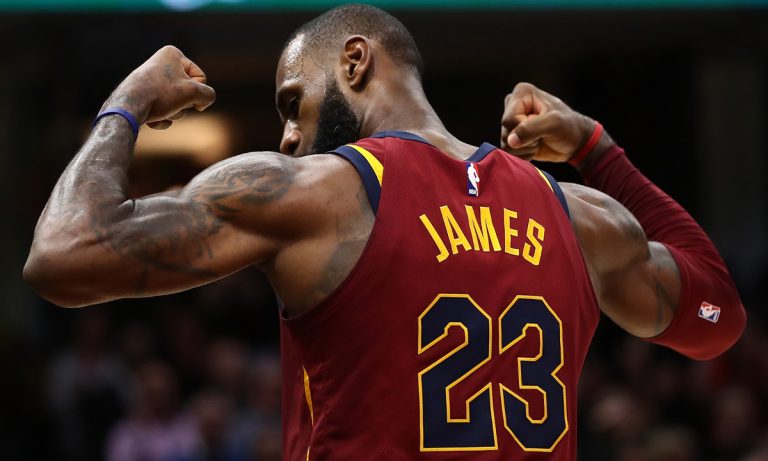
LeBron James and where he will play basketball next season is the biggest story in sports. Thousands of words and podcasts have analyzed every morsel of information that perhaps indicates where James might go. And the latest just so happens to involve the world of cannabis. It has been announced LeBron James has a new weed strain named after him by The Game.

Most commentators have narrowed LeBron’s likely landing spots between returning to Cleveland or moving on to Philadelphia or the Los Angeles Lakers. To convince LeBron to join him in L.A., The Game—the rapper and budding cannabis entrepreneur—decided a new cannabis strain named after him.

As TMZ Sports reports, The Game has unveiled “LA’ Bron James” created by the rappers Trees by Game cannabis brand.

https://twitter.com/ineedblunts/status/1007749125222252545

“[It’s] a strain inspired by my city & them trying to bring King James to the LAKESHOW,” The Game said.

The Game is a noted Laker fan and obviously wants The King of basketball to join him in his city. LeBron James has until June 29 to opt into the final year of his contract or enter unrestricted free agency. By the way, The Game tried his “LA’ Bron James” strain and he’s a fan.

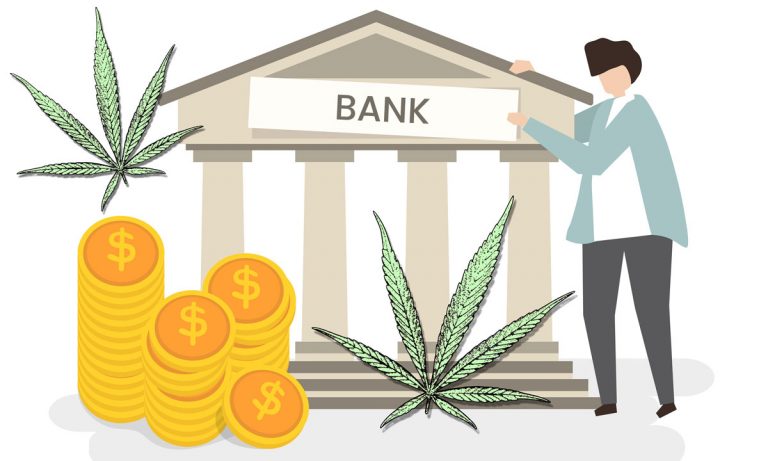
Breaking Cannabis Banking: Tips On Getting An Account

In my previous post, I wrote about avoiding the scammers that abound when it comes to cannabis banking. Because cannabis is federally illegal, getting a bank account has been very difficult for cannabis businesses even though the 2014 FinCEN guidelines (see here) allow financial institutions to provide banking services to cannabis businesses under certain circumstances—which guidelines are still alive despite Attorney General Jeff Sessions rescinding the Cole Memo. Ultimately, FinCEN makes clear in its guidelines that they “should enhance the availability of financial services for, and the financial transparency of, marijuana-related businesses.”

But what exactly should a cannabis business do to get a legitimate bank account with a real financial institution? Plain and simple, you make it as easy as possible for the bank or credit union to abide by the FinCEN guidelines. This means you do not lie about or omit anything regarding your cannabis business.

To even get to this point though, your cannabis business must be in a state with “robust regulations” that give its regulators the authority to tightly control and govern its cannabis industry. And not all states are created equal when it comes to this.

In states like Washington, Oregon, and Colorado, banking is made a little easier because those states have hardcore regulations ranging from financial and criminal background checking on all cannabis business owners to knowing every single dollar that comes into a given cannabis operation and its source. In medical cannabis states like New Mexico and Arizona, which are basically unregulated medical cannabis states, banking is non-existent.  And in California (where I am based), which still has relatively weak cannabis licensing rules (for example, there are no spousal vetting requirements for owners of cannabis businesses), it is still nearly impossible for a cannabis business to get a bank account. This is not likely to change until California tightens up on its licensing regime.

But if you’re in a state with robust cannabis regulations, here’s what you need to do and expect when pursuing a bank account under the FinCEN guidelines:

Cannabis Banking Made Simple

Banks that follow the FinCEN guidelines do so in open violation of the Bank Secrecy Act (BSA). Because cannabis remains federally illegal, they are directly engaging in money laundering. This is why virtually none of the really big banks (like Bank of America and Wells Fargo) will knowingly take on cannabis accounts. But for those banks that are willing to take on cannabis bank accounts, you need to be prepared to basically do whatever the bank tells you to do to secure that account. Because the bank will be the one to be held accountable to the federal government for violating the BSA.

You should expect your bank or credit union to conduct comprehensive due diligence on your cannabis business—nearly always at your expense. This due diligence usually will include the following:

(i) verifying with the appropriate state authorities whether your cannabis business is duly licensed and registered;

(ii) reviewing your cannabis license application and other documents your cannabis business submitted to obtain its state license to operate;

(iii) requesting information about your business and its related parties from state licensing and enforcement authorities;

(iv) developing an understanding of the normal and expected activity of your business, including the products to be sold and the type of customers to be served (e.g., medical versus recreational customers);

(v) ongoing monitoring of publicly available sources for adverse information about your business and its related parties;

(vi) ongoing monitoring for suspicious activity, including for any of the red flags described in the FinCen guidance; and

(vii) constantly updating the above information.

Don’t get frustrated with the bank or credit union over this mandatory due diligence. Your job is to fork over as much documentation as you can to demonstrate that you are licensed and in full compliance with state and local laws.

The Cole Memo, though rescinded, still matters to FinCEN. Specifically, the FinCen guidelines state that “[a]s part of its customer due diligence, a financial institution should consider whether a marijuana-related business implicates one of the Cole Memo priorities or violates state law.” This is a particularly important factor for a financial institution to consider when assessing the risk of providing financial services to a marijuana-related business. Considering this factor also enables the financial institution to provide information in BSA reports pertinent to law enforcement’s priorities. A financial institution that decides to provide financial services to a marijuana-related business would be required to file suspicious activity reports (“SARs”).” This means you should review the eight Cole Memo priorities and implement them in your business practices.

Your bank will regularly file SARs on your business. A financial institution is required to file a SAR if it knows, suspects, or has reason to suspect that a transaction conducted or attempted by, at, or through the financial institution: (i) involves funds derived from illegal activity or is an attempt to disguise funds derived from illegal activity; (ii) is designed to evade regulations promulgated under the BSA; or (iii) lacks a business or apparent lawful purpose. Because commercial cannabis activity is federally illegal, SARs are a must in the cannabis banking world.

The following SARs will likely apply to your cannabis business: (i) Marijuana limited SARs, which mean you are not violating state law or violating a Cole Memo priority; (ii) Marijuana priority SARs, which mean the bank believes you are violating state law or a Cole Memo priority; and (iii) Marijuana termination SARs, which mean the bank thinks you are a threat to its anti-money laundering systems under the BSA so it must end its relationship with you. All these SARs get sent to the federal government for possible investigation.

Your bank will constantly monitor the financial activity of your cannabis business because it must do so under the FinCEN guidelines. Your bank will monitor everything from your deposits to your social media accounts to your ability to keep your license in good standing to ensure that you are complying with state laws and rules. Again, if you want to keep your bank account, you need to assist your bank with this continued due diligence.

The FinCEN guidelines list various red flags banks must watch for. One of those red flags is using management companies or middlemen to secure your bank accounts. The FinCEN guidelines are clear that Cole Memo priorities may be violated if a “customer seeks to conceal or disguise involvement in marijuana-related business activity. For example, the customer may be using a business with a non-descript name (e.g., a “consulting,” “holding,” or “management” company) that purports to engage in commercial activity unrelated to marijuana, but is depositing cash that smells like marijuana.” Cash structuring, commingling of funds with an unrelated business, and “deposits by third parties with no apparent connection to the accountholder” are additional red flags. Pay attention to the FinCEN guidelines’ red flags list and strive to avoid them.

Securing a bank account will not be easy but it is possible if you are in the right state and you prepare and act accordingly. Though state public banking and cryptocurrency have been floated as ways to provide wider access to banking, the FinCEN guidelines are still the key for both cannabis operators and financial institutions. And that’s not likely going to change anytime soon.


American Toddlers Are Eating More Sugar Than The Adult Recommendation

New data from the American Society of Nutrition claims that American toddlers are consuming large amounts of sugar. In fact, these kids are eating more sugar than what’s recommended for healthy adults.

The study, conducted by the Center of Disease Control and Prevention, focused on added sugar consumption, which are the sugars that are added onto foods during preparation or processing. The research sampled more than 800 kids between the ages of 6 and 23 months old, with their parents’ participation in the study. These parents recorded everything that their children ate or drank during the day and then delivered that information to researchers, who calculated the kids’ mean sugar intake.

The results of the study were surprising, showing that sugar consumption increases with age and that it’s a problem for most of American families. On a daily basis, toddlers from 12 to 18 months old consumed 5.5 teaspoons of sugar, and toddlers from 19 to 23 months old consumed 7.1 teaspoons of sugar. If this doesn’t sound like a lot, then it helps to know that the recommended amount of sugar intake for adults is 6 teaspoons for women and 9 for men on a daily basis.

Quartz reports that consuming high amounts of sugar can affect us differently depending on our development and age. During pregnancy, sugar has been known to affect the cognition of the baby; on toddlers and children, it can depress their bodies’ immunity systems; in teens, it can lead to high blood pressure and obesity.

Another disheartening statistic that joins this study is the fact that the younger you are when you start eating sugar, the harder it is to quit the habit, so it’s very important for parents to stay informed and to try to keep their kids from eating sugar for as long as they possibly can.

Kristen Bell Says This CBD Lotion Is Magic

It looks like someone is joining the latest celebrity trend – Kristen Bells says this CBD lotion is magic. Specifically, she has admitted that Lord Jones CBD lotion has become her go-to routine post-workout, as she revealed to her followers in an Instagram post this week. (It also could’ve been a sponsored post the company paid the actress for, don’t forget that possibility.)

“I love my @thelordjones body lotion for my sore muscles after working out,” Bell posted after hitting the gym.

https://www.instagram.com/p/BkRHdonHNPy/?taken-by=thelordjones

The Lord Jones brand has become a trenchant hit with celebrities, as everyone from Meryl Streep and Olivia Wilde are openly praising its pain-relieving abilities. The popular New York Times best-selling author and screenwriter Kelly Oxford also shared her love for the CBD lotion in a recent Rolling Stone feature.

Related: Silicon Valley’s Latest Weed Venture: Marijuana Tupperware Parties

Here’s what she said about the Lord Jones products:

I really like the Lord Jones CBD [products]. Just because it totally relaxes in a way that you sort of feel relaxed after you do a strenuous workout, but you don’t have to do the strenuous workout, which is great. And they have these delicious CBD gummies with sugar all over them. I tend to go to those a lot. The ones with the THC are good too but sometimes I get a little too high from edibles. They are actually delicious candy—it’s kind of annoying how good they are because you would eat them all if you didn’t know they were going to do anything to you.

You can check out the Lord Jones line of products here.

Bell was born in Michigan in 1980 and studied musical theater at New York University, making her Broadway debut while still a student. In 2004 Bell landed her breakout role, the title character on the TV series Veronica Mars. This led to work in films like Forgetting Sarah Marshall, Couples Retreat and Get Him to the Greek, as well as a leading voice role in the Disney megahit Frozen. Bell later starred in the series House of Lies and The Good Place.

Don't Miss Your Weekly Dose of The Fresh Toast.

Stay informed with exclusive news briefs delivered directly to your inbox every Friday.

We respect your privacy. Unsubscribe anytime.