Wednesday, December 24, 2025
Home Blog Page 972

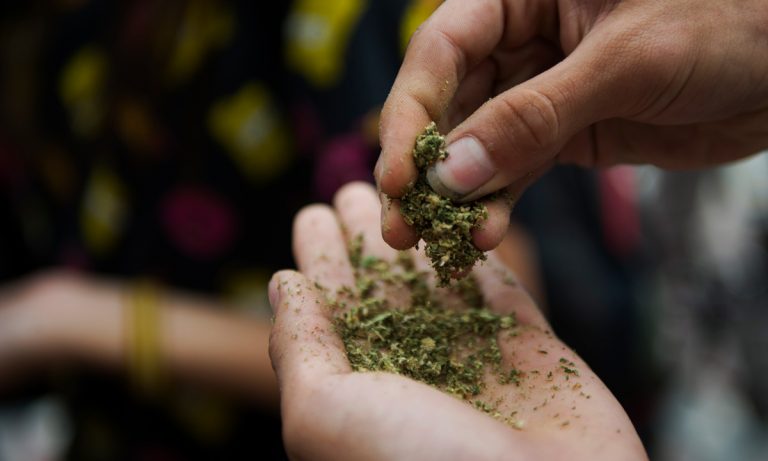
Young People Believe Alcohol Will Kill You Faster Than Marijuana

In our age of wellness and enrichment, people still like to have fun, but they want to monitor what they put into their bodies. A new Oregon study found that young people believe alcohol does more harm to their bodies that marijuana.

The study, led by researchers at RTI International, asked more than 1,900 Oregon adults prior to recreational marijuana legalization. Researchers found that more than half (52.5 percent) of participants believe alcohol is more potentially damaging to a person’s health than marijuana. Meanwhile only 7.5 percent consider cannabis the more harmful substance to a person’s health.

The shifting tides, as we’ve seen in similar previous studies, is occurring in younger demographics. Of those aged 18-34, a stunning 70.5 percent of them said alcohol was more harmful than marijuana. For people who have tried both marijuana and alcohol, 67.7 percent said alcohol was worse for your health.

“This study is the first to measure perceptions of the relative harmfulness of marijuana and alcohol,” said Jane Allen, the study’s author and RTI’s public health search analyst. “The findings surprised me somewhat, because there is widespread acceptance of alcohol for adult recreational use, and in contrast, marijuana is classified at the federal level as a Schedule I drug. There seems to be a disconnect between the social and legal status of the substances and people’s perceptions of harmfulness.”

Via RTI:

The RTI study notes that legalizing recreational marijuana will likely affect use of other substances, such as opioids and alcohol, and that perceptions of harmfulness may play a role. For example, research suggests that greater availability of marijuana may reduce reliance on opioids and other pain medications. The relationship between marijuana and alcohol appears to be more complex; marijuana functions as a substitute for alcohol in some contexts and as a complement in others. For this reason, it is unclear whether legalization of marijuana for recreational use will increase or decrease the significant social costs associated with alcohol.

For the past 40 years RTI has studied cannabinoids and the potentially positive and negative impacts the drug can have. You can learn more about RTI’s cannabis research here.

JK: Why Sarcasm Is So Difficult To Detect In Texts And Emails

This sentence begins the best article you will ever read.

Chances are you thought that last statement might be sarcasm. Sarcasm, as linguist Robert Gibbs noted, includes “words used to express something other than and especially the opposite of the literal meaning of a sentence.” A form of irony, it also tends to be directed toward a specific individual.

However, it’s not always easy to figure out if a writer is being sarcastic – particularly as we march ahead in a digital age that has transformed the way we communicate, with texting, emailing and online commentary replacing face-to-face chats or phone conversations.

In writing, the signal of sarcasm can be muddied. For example, say you’re texting with a friend about meeting at the movies:

Friend: I’m waiting at the front. Movie starts in 5.

You: I’m on my way now. Should be there in 10.

Friend: I’m glad you were watching the clock today.

https://giphy.com/gifs/fox-foxtv-newgirl-zN3IyVQag8smY

Was the friend being sarcastic or sincere? The later you are, the more upset they’ll likely be, and the higher the probability their response is a sarcastic jab. But if your friend knows you’re usually much later, they could be sincere.

So there’s one thing to look for: How well does the attitude the writer is conveying agree with the situation and the person?

Nonetheless, the struggle to interpret written sarcasm is real.

Studies have shown that people realize that they have a tough time interpreting sarcasm in writing. Studying the use of email, researchers found writers who think they’re being obviously sarcastic still confuse readers.

Sarcasm thrives in ambiguous situations – and that’s the main issue.

When delivered in person, sarcasm tends to assume a cutting, bitter tone. But written messages don’t always get that attitude across or give you much else to go on. We still need more information.

Signals That Go Missing In Texts

Studies have examined the use of sarcasm in a variety of everyday situations, whether it’s at work to give criticism or praise, or in situations where social norms get violated. (Be on time to movies, people!)

The problem is that a lot of previous studies of sarcasm have been done on spoken sarcasm, which tends to give listeners cues.

When you have a conversation with someone face-to-face (or FaceTime-to-FaceTime) and they say something sarcastic, you’ll see their facial expression, and they may look slightly bemused or tense. Equally or more helpful, the tone of their voice will likely change, too – they may sound more intense or draw out certain phrases.

You’ll also be firmly grounded in the real-time context of the situation, so when they say, “Man, nice job ironing your clothes,” you can look down – and see your wrinkled shirt.

All of these cues have been researched, and we know enough about them that we have the ability to artificially make a sincerely spoken statement sound sarcastic.

And yet when we text, a lot of that information goes missing.

https://giphy.com/gifs/ifc-sketch-comedy-baroness-von-3ohhwrB5qGefXxfYBy

There are no facial cues, no vocal tones and maybe even a delayed response if a person can’t text you back immediately. And if you don’t know the person all that well, there goes your last potential cue: history.

Emojis To The Rescue?

So after what you thought was an unexceptional first date – exactly how do you interpret the following flurry of texts?

Date: I had a great time. (12:03 a.m.)

Date: That was the most fun I’ve had in years. (12:05 a.m.)

Date: Really, it could not have gone better. (12:30 a.m.)

Was the date really that good? Did they really seem like they had that much fun? Or are they just a jerk lamenting the wasted time? All valid questions. And the recipient could come to a lot of conclusions.

Fear not. The digital age has developed some ways to mitigate some of the tortuous ambiguity. You can probably include an emoji to make it clearer to a reader something was meant sarcastically.

Date: I had a great time. (12:03 a.m.)

Date: That was the most fun I’ve had in years. ? (12:05 a.m.)

Date: It really, could not have gone better. ? (12:30 a.m.)

Ambiguity reduced, and facial expression taken care of. Probably not headed for date #2.

If we’re talking about email, we also have modifications that that can be made to text. We can italicize or bold words to change the way that a reader interprets the message.

Lastly, social media platforms like Twitter have given writers even more tools to allow people to communicate their intent. A study that included sarcastic tweets found that tweeters who include the hashtag #sarcasm tend to use more interjections (wow!) and positive wording for negative situations in their sarcastic tweets.

Algorithms have actually been built to determine the presence of sarcasm and rudeness in tweets, user reviews and online conversations. The formulas were able to identify language that’s outright rude pretty easily. But in order to correctly detect sarcasm, researchers found that algorithms need both linguistic (language) and semantic (meaning) information built in.

In other words, sarcasm’s subtlety means that the algorithms require more specification in their coding – unless you #sarcasm, of course.

The ConversationWith so many options to choose from, it’s time to make sure that text you send at 2:30 a.m. really gets your point across ?.

Sara Peters, Assistant Professor of Psychology, Newberry College

This article was originally published on The Conversation. 

Back Off Jeff Sessions: Congress Includes Marijuana Protections In Bill

If it sounds like you’ve heard this news before, it’s because you have. For the umpteenth time in the past several months, Congress has included the medical marijuana protections known as the Rohrabacher-Blumenauer amendment in its federal spending bill. This means US Attorney General Jeff Sessions and the Drug Enforcement Administration can’t touch marijuana businesses and patients associated with medical marijuana until at least September. It is yet another small victory.

First implemented in 2014, the Rohrabacher-Blumenauer amendment is the only document in place that legally prevents the federal government from conducting raids against and prosecuting members of the medical marijuana community. While only a temporary protection, the rider eliminates the possibility of the Justice Department spending tax dollars to harass patients who use medical marijuana and the businesses that serve them.

But Attorney General Sessions has been trying to persuade Congress to ditch the protections.

In 2017, he fired off a letter to House and Senate leaders asking them to vacate their support for the Rohrabacher-Blumenauer amendment. He told them that his request was to ensure the Justice Department has its full power when it comes to enforcing the nation’s drug laws.

“I believe it would be unwise for Congress to restrict the discretion of the Department to fund particular prosecutions, particularly amid an historic drug epidemic and potentially long-term uptick in violent crime,” Sessions wrote. “The Department must be able to use all laws available to combat the transnational drug organizations and dangerous drug traffickers who threaten American lives.”

Since the rider was approved once again, does this mean that Congress is dedicated to protecting the sanctity of medical marijuana states? That’s questionable. For the most part, the Rohrabacher-Blumenauer amendment has managed to slide by for the past few years because Congress has not developed a new budget since 2015.

However, the amendment has had its fair share of near misses. Last year, a snag brought on by House leadership forced a conference committee to decide whether the rider should be included in the final budget proposal. It has been going strong ever since. There is even some discussion on Capitol Hill about introducing a separate rider in the near future dedicated to protecting all legal marijuana states. Yet, Congress is still not too concerned about legal marijuana to pass more concrete reforms. When it comes to weed, everything is now either temporary or prohibited.

For now, the Rohrabacher-Blumenauer amendment is part of the $1.3 trillion spending bill that is set to go before President Donald Trump for a signature. It is not known whether the president will support the legislation in ink. There is speculation that the latest budget proposal does not contain enough allocations for the massive border wall Trump has been pushing for since he took over the White House. If he doesn’t sign, the federal government is likely headed for another brief shutdown.

Why KISS’ Gene Simmons Joined A Marijuana Company

The Demon is finally buying into the Demon Weed, but it’s strictly business.

Gene Simmons, a founding member of Rock and Roll Hall of Famers KISS and hard-core teetotaller, is joining Canadian cannabis enterprise Invictus the company announced this week.

As Chief Evangelist Officer, Simmons, 68, will be charged with working on “branding strategy for the recreational market that is anticipated to be legal in Canada in 2018,” the company said, adding, “His responsibilities will include providing marketing counsel, serving as a spokesperson in the media, public appearances and participation in the Company’s annual general meeting and investor meetings, among others.”

“Values and family are very important to me, and when I first connected with Dan (Kriznicat, Chairman and CEO at) Invictus, I understood immediately that we enjoyed a shared passion for these key life foundations,” Simmons said. “Instead of launching straight into business, we talked about the things that matter the most.”

Related: 10 Surprising Celebrities Who’ve Come Out—As Cannabis Fans

What has seemingly mattered most, marijuana-wise, throughout Simmons career, has been his repeated denunciation of drugs and alcohol.

“I’m not here to convince anyone of my lifestyle,” he said. “This is what I want for me,” he told the Los Angeles Times in 2016, adding he said he doesn’t understand why someone would choose to hamper their ability to succeed by drinking and doing drugs.

The lessons didn’t stick with son Nick, who wrote in a 2015 piece for Vice headlined “My Dad, Gene Simmons, Is Full of S*** and So Are You”:

My father prides himself (read: brags about it to anyone who asks) on never smoking, drinking, or getting high in his life—save for one incident when some “special” brownies were mistaken for… well, normal brownies … He is still, to this day, profoundly anti-drug.

… I knew people who smoked pot. Most people I knew drank. But I could not bring myself to conclude, as he did, that any negative health impacts of those choices were deserved. Life is risk, after all. I realized that I don’t believe marijuana and alcohol should be treated the same as heroin and cigarettes.

Part of the deal, according to the Invictus, includes acquiring “all the issued and outstanding shares of Gene-Etics Strains Co.” from Simmons.

Related: Which Celebrities Are Coming Out With Marijuana Products And What It Means To The Industry

KISS formed in 1973. The band, known almost as much for their wild theatrics and stage makeup as their pop-metal, was inducted into the Rock and Roll Hall of Fame in 2014. Simmons onstage persona, The Demon, breathes fire as part of the show. The band has sold over 75 million records worldwide.

He and his family were the subjects of the A&E reality show Gene Simmons Family Jewels from 2006 to 20012.

Medical Marijuana Helped This Man Get Off 19 Prescription Drugs

Born and raised in Boulder, Colorad0, 20-year-old Danny Sloat was experiencing chronic stomach pain and debilitating illness. After several extended hospitalizations, doctors were unable to provide a diagnosis and began treating him with opiate medications. It wasn’t long before his condition worsened and he found himself dealing with a multitude of issues including a non-cancerous brain tumor. By 2009 Danny was taking 19 different prescription drugs.

Refusing to live a life of dependency, Danny followed his father’s advice and began treating his symptoms with medical cannabis. It wasn’t long before he was able to wean himself off pain medication. After discovering the therapeutic quality of growing cannabis he started Alpinstash where he works alongside a team of talented women: his fiance Murr, sister Emily Sloat and family friend Sylvia Sylvia Anchondo.

We spoke with Danny and to get the scoop on his inspiration story and how cannabis changed his life.

Photo by Emerald Lens

The Fresh Toast: What are the benefits of using medical marijuana?
Danny Sloat: With prolonged opiate use, especially with chronic pain, the pain actually gets worse. The more sedentary you are, the more your body has issues. Medicating with cannabis has allowed me to find relief and cut back on pharmaceutical medications. It didn’t improve my conditions, as much as it improved my sense of pain. When you’re in a chronic pain and opiate therapy cycle, you take your medication but you don’t necessarily feel better. Sometimes you feel a little better in a little bit less pain, but it’s not like you take it and the pain disappears.

How is medicinal cannabis superior to prescription pills?
Pharmaceuticals takes the edge off or makes you not care as much. Or, you get so drugged out that you’re not present. Whereas, cannabis actually provides relief and allows me to focus on whatever I’m doing. It gives me the ability to forget the issues I’m having and pay attention to other areas of my life. Whether I’m watching a movie or exploring naturel, I’m able to find that emotional space away from the pain. Finding a holistic alternative to painkillers, something that makes me feel better physically and emotionally is huge.

What is the difference between conventional cannabis and craft cannabis?
If you’re lucky enough to live in an area with good soil and you’ve got some knowledge about how to grow, you can plant a seed in the ground and get a good result. It’s the same with home growers. It’s not hard to grow a good plant, but to get it to an A+ level and in that 90th percentile, you have to have all aspects covered. Really, the difference between conventional cannabis and craft cannabis can be distinguished by the quality of the product itself, how often you can get those results, and the quality of the cure. The cure quality is an important aspect that’s underlooked in most markets.

Your fiance has experience with chronic pain, which inspired her to get into the cannabis world. Would you like to share her story?
My fiance Murr grew up playing hockey. She’s been playing for 30 years. As a result, she has a chronic back injury. She uses cannabis for pain relief. In particular, Murr enjoys AlpinStash’s CBD strains like Sister Wife. Strains high in CBD take her pain from a seven or eight down to a two.

Photo by Emerald Lens

What makes AlpinStash unique?
We’re a small craft cannabis grow dedicated to quality. I have asthma and my lungs are sensitive. I started this whole operation to grow the cleanest and best product I could find. Everything we do, we put our heart and soul into. Our end product is going to be some of the smoothest and most flavorful flower you can find. We use Nectar for the Gods, which is a sustainable and natural nutrient system handcrafted in Oregon from reclaimed rainwater, free range organic cow bones, and high quality nutrients that help us produce a high quality and clean plant. We hand trim everything, and cure the buds in glass for a minimum of a month — often two or three months. I can’t say enough how important a really good glass cure is under the right conditions. It makes all the difference in the world in terms of quality. It produces a smoother smoke and better high, and a more flavorful experience. It’s  so underlooked and underutilized in the commercial market where many try to rush products out the door. We put all our efforts into making the cleanest product that we can, using sustainable gardening practices with a focus on having the smallest carbon footprint possible.

What long term goals do you see for Alpinstash?
We’re getting heavy into the breeding side of things, and one of my long term goals is offering CBD and THC genetics to the public. Here in Colorado at first, but as business moves nationally, I would love to offer our genetics across the country. We offer unique and novel genetics, including CBD heavy strains of varying ratios — from 1:1 all the way up to 30 or 40 to 1. We’re always innovating. We’re always trying new things.

AlpinStash will always be a small, handcrafted craft cannabis company. I would love to see the market move in the direction where people value quality. Also, I want to share the knowledge I have. I want to empower people to grow their own cannabis plants in an eco-friendly way: Why is it important to use organic based nutrients and incorporate sustainable gardening practices? Why is important to know what goes in and on your plants, and therefore in your body? I’m very accessible, so if anyone wants to reach out, send an email to Dan@AlpinStash.com or connect with me on our social media platforms.

Find out more about Alpinstash by checking out their YouTube, Twitter, Instagram and Facebook.

We’re Obsessed With Charlotte Rampling’s Blow Job Lessons In ‘Red Sparrow’

Red Sparrow is a lot to take in. The film stars Jennifer Lawrence and is directed by Francis Lawrence, the guy who directed The Hunger Games part 2, The Hunger Games part 3 and The Hunger Games part 3.2. The fourth collaboration of the Lawrences should make for a familiar formula, but Red Sparrow is anything but. It’s the complete opposite of a young adult romantic drama. Don’t take your kids.

Red Sparrow is like a a test of resistance. It’s slow-paced, extremely and realistically violent, and all sorts of campy (those Russian accents?). It’s a movie that while not for everyone, is much better, or at least more daring, than half of the movies that are being made in Hollywood today. That’s including The Hunger Games part 1,2,3 and 3.2.

One of the weirdest aspects of the movie— and there’s a lot of them— is the fact that Charlotte Rampling, a 72-year-old academy award nominated actress, is the Headmistress at a “whore school.” If you don’t know anything about Red Sparrow, the plot of the film revolves around Dominika Egorova, a prima ballerina who suffers an accident and is left unable to dance. She does something dumb afterwards and, with no other options left, joins Sparrow School, a secret evil agency where people are trained as sex spies. This all happens because it’s Russia, and that apparently makes sense.

In Sparrow School, aka Whore School, as Dominika lovingly refers to it, there’s the Matron. Portrayed fearlessly by Rampling, this lady is meant to turn Dominika into a weapon of sex, capable of extracting all sorts of information with the use of her sexuality. Sparrow School is a place where they train sex monkeys because there’s nothing sexier than a Russian girl, at least in the eyes of Hollywood.

Throughout the movie, Jennifer Lawrence proceeds to dance, train, get naked, get beat up, and get naked again until the film’s closing moments. It’s fun and good if you can tolerate the poor accents and the unending twists and turns, but the reason you should stick around is because of Charlotte Rampling’s sex-ed lessons which will make you question the meaning of life.

Why Are Connecticut Wineries Fighting Marijuana Legalization?

A Connecticut businessman has come up with a unique argument against cannabis legalization: Giving consumers choice is bad for his business.

George Motel, co-owner of Sunset Meadow Vineyards and President of the Connecticut Vineyard and Winery Association (CVWA), submitted testimony earlier this week to the Connecticut General Assembly regarding a bill that would legalize and regulate the retail sale of marijuana.

In the letter, Motel wrote that:

…alcohol sales have dropped 15% in states with medical marijuana laws. That’s a large percentage of revenue these wineries cannot make up for, and could drive good jobs and businesses out of Connecticut in a struggling economy.

Of course, Motel failed to omit that creating a new industry would more than make up for the jobs lost. His other arguments were even less logical.

The bill failed to advance out of the General Assembly’s General Law Committee on Tuesday, despite public testimony in favor of the legislation. The vote was 11-6 against the bill and all three committee co-chairs voted no.

H.B. 5458 was one of just five bills marijuana legalization measures currently in the legislature. One of those other bills could still make it the floor.

Tom Angell’s Marijuana Moment newsletter provided a link to the letter from George Motel to the lawmakers:

I am here in my capacity as the President of the CT Vineyard and Winery Association (CVWA) in opposition to HB 5458 An Act Concerning the Regulation of the Retail Sale of Marijuana.

From a business perspective, Connecticut small wine farms are deeply concerned with the liability that accompanies the regulation and retail sale of marijuana. Wineries are responsible for the well-being of their patrons. Since small wine farms already serve alcohol on premises, monitoring customers for yet another intoxicant such as marijuana puts a dangerous and costly burden on business owners. In the event of an accident, the winery bears the burden of defending themselves and paying the price. Furthermore, hiring and training staff to monitor and enforce a ‘no smoking’ policy on expansive vineyard property simply isn’t feasible – especially with the inconspicuous vaping technology surfacing in other states with similar marijuana laws.

In recent years, the Connecticut state legislature has passed a number of bills that have negatively impacted small farm wineries – Sunday sales, tastings in liquor stores, etc. HB 5458 has the potential to threaten sales beyond that of any recent legislation. Researchers from the University of Connecticut teamed up with top academics in January of this year to determine that alcohol sales have dropped 15% in states with medical marijuana laws. That’s a large percentage of revenue these wineries cannot make up for, and could drive good jobs and businesses out of Connecticut in a struggling economy.

HB 5458 has the potential to harm the local wine industry that has benefited Connecticut residents and tourists alike for decades and we urge your opposition. Thank you for reviewing our testimony.


Chinese Police Can Now Scan People’s Faces With Special Sunglasses

While we’re all paranoid about being spied on, going as far as covering up our computer cameras and distrusting social media ads, China is taking their “security” measures to the next level, arming their police officers with special glasses that can tell them all about you in seconds.

According to Reuters, these glasses were first seen in action around a month ago, when the police captured seven travelers that were using fake papers during a test at Zhengzou station. Now, the glasses are being used on the outsides of Beijing, to check car registration plates and passengers.

Paper Magazine claims these AI surveillance glasses are capable of snapping photos of people’s faces and cross checking them with the police’s database; revealing the person’s name, gender, age and ethnicity in one tenth of a second.

The main concern in all of this extreme surveillance is not the prevention of crimes but the monitoring of people that the government of China disagrees with, such as human rights activists, journalists and political dissidents of the country. This technology puts them all in danger, facilitating negative consequences over no criminal activity.

These smart glasses also give police officers the ability to do background check son any person that they think is “suspicious.” Let’s all hope that these glasses don’t become more important, and that the technology isn’t adopted by other countries.

Stupid Alert: People Are Now Getting High On Bug Killer

There is a frightening new trend erupting deep in the middle of the drug culture that stands to kill people dead. In the Midwest, drug addicts are reportedly getting high on a variety of substances doused in common household bug sprays, like RAID. It is a problem that has emergency officials both dazed and confused, as this bizarre new street drug comes with devastating effects. Convulsions, coma and cardiac arrest, have all been reported.

But there is one area of the country where this lunatic fashion is gaining the most traction.

In Indianapolis, Indiana, emergency responders have reportedly witnessed an increase in people overdosing in the streets from the bug drug. It was just last month that medics were called out to the vicinity of a local homeless shelter to clean up the aftermath when dozens of people high on insecticide-infused dope began experiencing seizures and other side effects.

Fortunately, emergency crews were able to get most of the people back on their feet without any issue. But at least one person was checked in to the ICU at a nearby hospital.

This dangerous concoction has become popular among downtrodden society because it provides the user with a cheap and intense high. Tobacco, marijuana, spice and even banana leaves have all been discovered laced with bug killer. Essentially, any smokeable substance can be turned into KD. So, for around $20 a bag, the user can visit a demission only known to a cockroach seconds before his death.

“Their movements are slow and lethargic, a lot of drooling and a loss of function. We find them with their clothes off, eating the grass, pulling dirt out of the ground and trying to put it in their mouth,” IFD Captain Chris Major told CBS-affiliate WTTV. “We find people passed out with it still in their hand. That is how fast it has an effect on them.”

The depravity of the situation only worsens when bug killer is used in conjunction with hard drugs. Last year, a Tennessee man terrorized a family and even cut his own throat after using a drug called WASP. This nasty stuff, which is sometimes called “Hotshot,” is created through a simple process of combining methamphetamine and bug spay. But rather than smoking it, users are injecting it directing into their veins.

Interestingly, this is the one situation involving a dangerous drug where police have limited power. It is not illegal to possess bug spray. It’s not even considered criminal to consume this harmful substance.

“If someone sprays a legal substance on something that is harmful to their health,” IMPD Sgt. Chris Wilburn told the Indianapolis Star, “that is not … in their scope to diagnose this person as being a criminal.”

Masseuse Bites Celebrity Butts For A Living

0

Her celebrity clientele began with the rock band Def Leopard, when she was 15 years old and wanted to attend their concert for free.

Is it becoming a thing? Meet the masseuse bites celebrity butts for a living.

That’s what celebrity massage therapist Dorothy Stein told The Mirror recently, anyways. Stein, who goes by the name Dr. Dot, has become infamous for her unique technique of administering deep bites into the backs and buttocks of her clients.

According to the Daily Mirror, Dr. Dot boastsan impressive roster of stars, including Kanye West, the late David Bowie, Rihanna, Keith Richards , Gwen Stefani , Eminem and Oasis – who were ‘massage virgins.’ ”

Her celebrity clientele began with the rock band Def Leopard, when she was 15 years old and wanted to attend their concert for free.

Via The Mirror:

It was a choice of either blow jobs or money or massage. So I chose massage.

She claims to have been to more than 3,000 concerts free of charge, thanks to her masseuse capabilities. The biting thing stemmed from her childhood, when she would give her mother massages at the age of five. Being a child, she couldn’t deliver the proper pressure and was instructed to bite her mother.

However, the technique has gained steam, according to Dr. Dot. She claims to have trained more than 1,000 “Dot Bots” (seriously, that’s what she called them) in bite massage therapy. So you might soon receive a nice bite on your bum during a massage; you’ll be just like the stars.

Don't Miss Your Weekly Dose of The Fresh Toast.

Stay informed with exclusive news briefs delivered directly to your inbox every Friday.

We respect your privacy. Unsubscribe anytime.