In 2018, about 48 percent of Americans 14 to 49 have or will contract herpes, making it one of the most common sexually transmitted diseases. The long-term effects include outbreaks of painful sores on the genitals and damage to the nervous system.
There are two types of herpes: genital and oral. The latter causes cold sores and is not considered dangerous. This article is about genital herpes. The disease is typically spread during direct genital contact during sex. Symptoms include small, painful blisters on the genitals and flu-like symptoms. Most who are infected don’t know they are and have mild or no symptoms.
There is no cure for herpes, although medicines that prevent or shorten outbreaks are effective for some with the disease, and can help prevent passing along the infection to sex partners. While protected sex is prevention, cannabis may help with treatment.
Possible Effects On The Virus
Research about cannabis’ effect on the herpes virus is limited. But as far back as 1980 scientists were able to demonstrate that the virus failed to replicate in cultures where human cells were exposed to a THC solution.
THC, one of the two main compounds in cannabis, produces the euphoria commonly associated with use. The study was replicated somewhat in 2004 and scientists concluded it may be valuable in treating the types of viruses that cause herpes.
Treating Outbreaks With Topicals.
CBD is the other major compound in marijuana. It doesn’t produce the euphoria THC does. It has shown to be effective in both pain relief and treating inflammation. Creams, oils and tinctures, while not stopping or lessening outbreaks, can treat the symptoms of outbreaks.
The idea of eating a cloud made of cheese sounds like a cannabis lover’s ultimate dream. Happily, there is in fact a recipe that makes this dream a reality: cannabis cheese puffs!
This simple recipe combines a little French culinary technique with plenty of cannabis goodness. A traditional gougère recipe (a type of cheesy savory French choux pastry) is augmented with cannabutter for positively cosmic results. These cheese puffs are out of this world flavor-wise, and will undoubtedly take you to stratospheric new levels of sensation.
1. Preheat the oven to 425 degrees F. Line a baking sheet with parchment paper or a silicone mat.
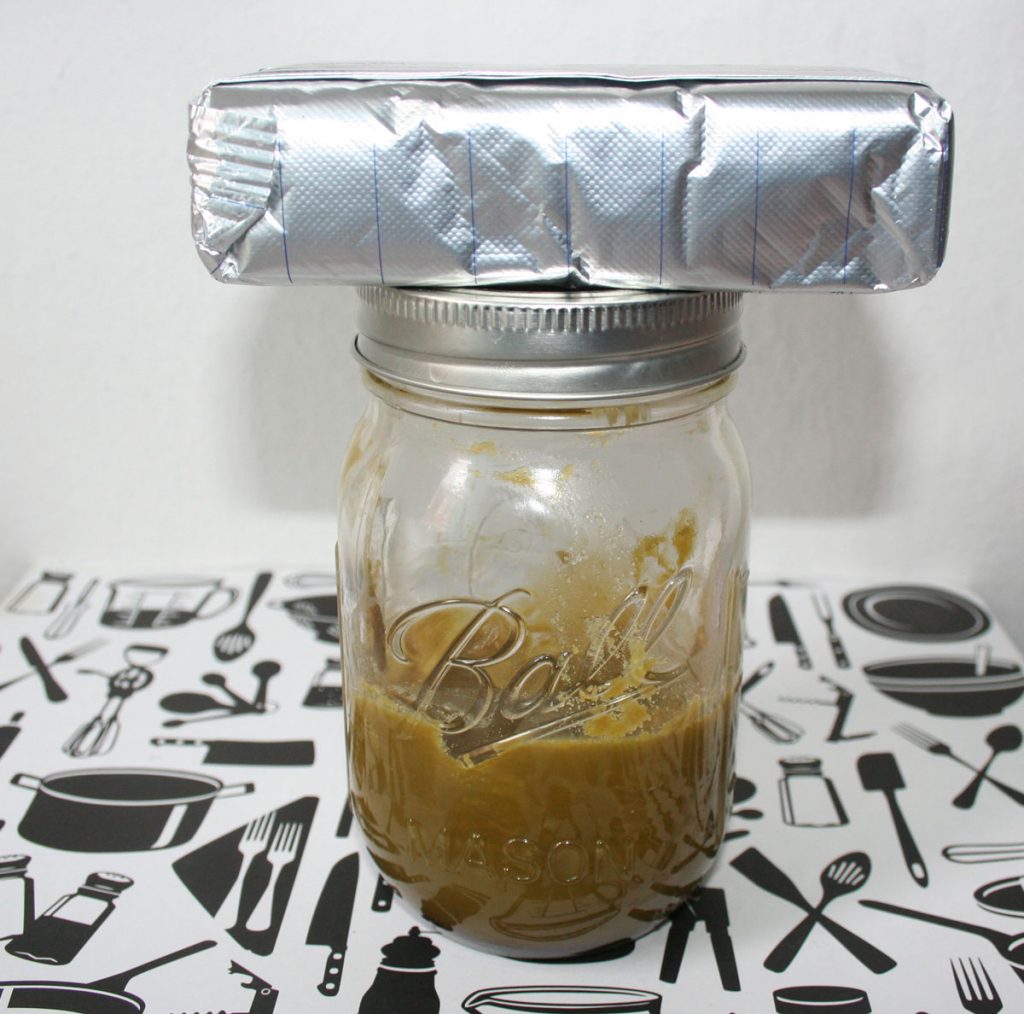
Photos by Jessie Moore
2. In a medium, heavy bottomed saucepan, combine the cannabutter, water, and salt. Bring to a boil over medium-high heat.
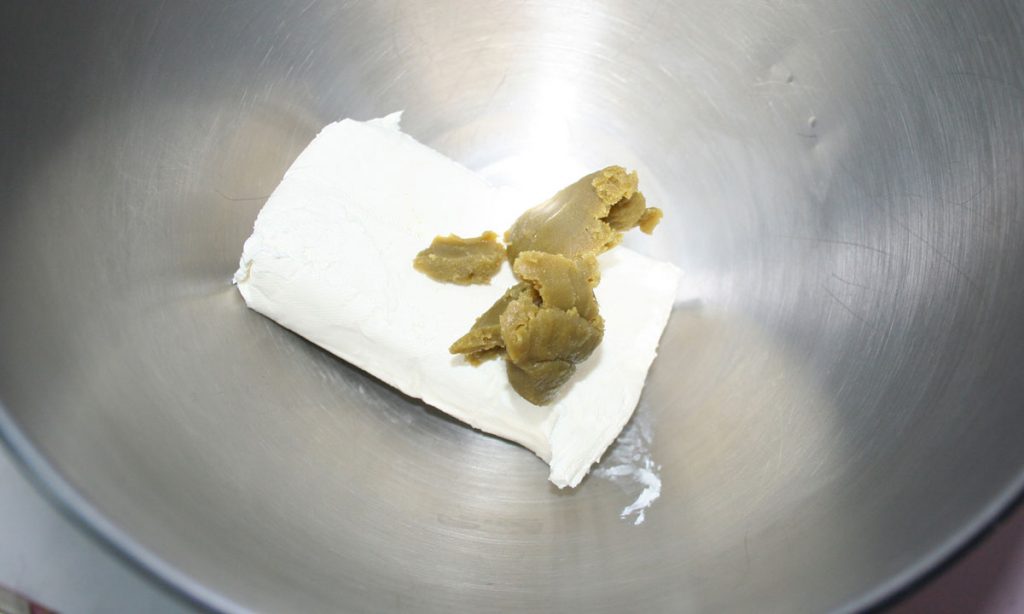
Photos by Jessie Moore
3. Remove from heat and add the flour all at once. Stir quickly (this incorporates it fast so that you don’t end up with lumpy bits). The mixture will begin to form a dough ball. If it doesn’t form an easy ball, put the pan back over low heat until it pulls away from the sides of the pan and does form a ball.
Photos by Jessie Moore
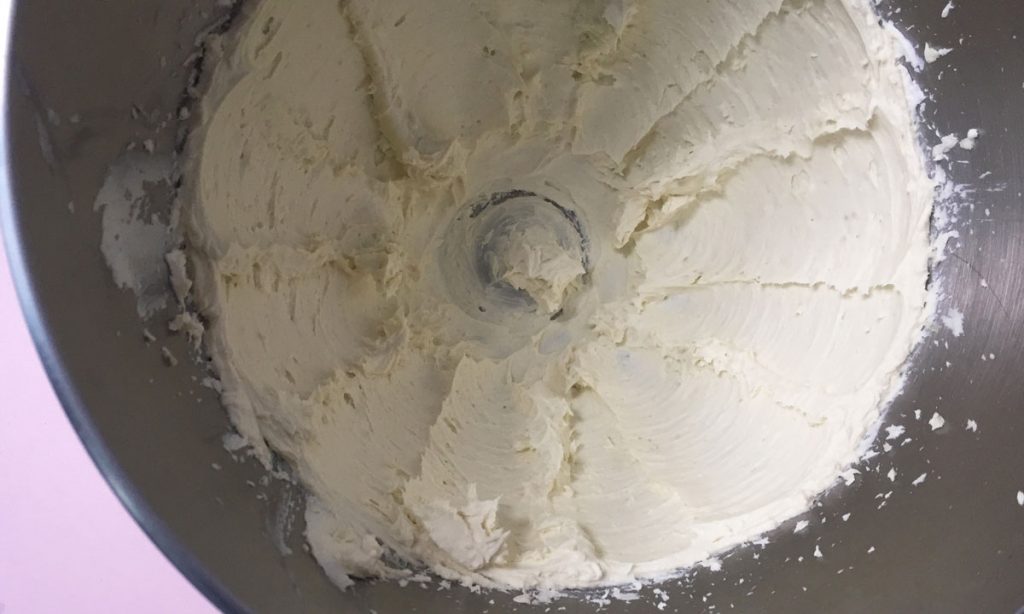
4. Let the mixture cool slightly, so that it is warm but not hot. This will keep the egg from cooking into the hot mixture. Add the egg, and stir vigorously to combine (I use a stand mixer with the paddle attachment because I am LAZY).
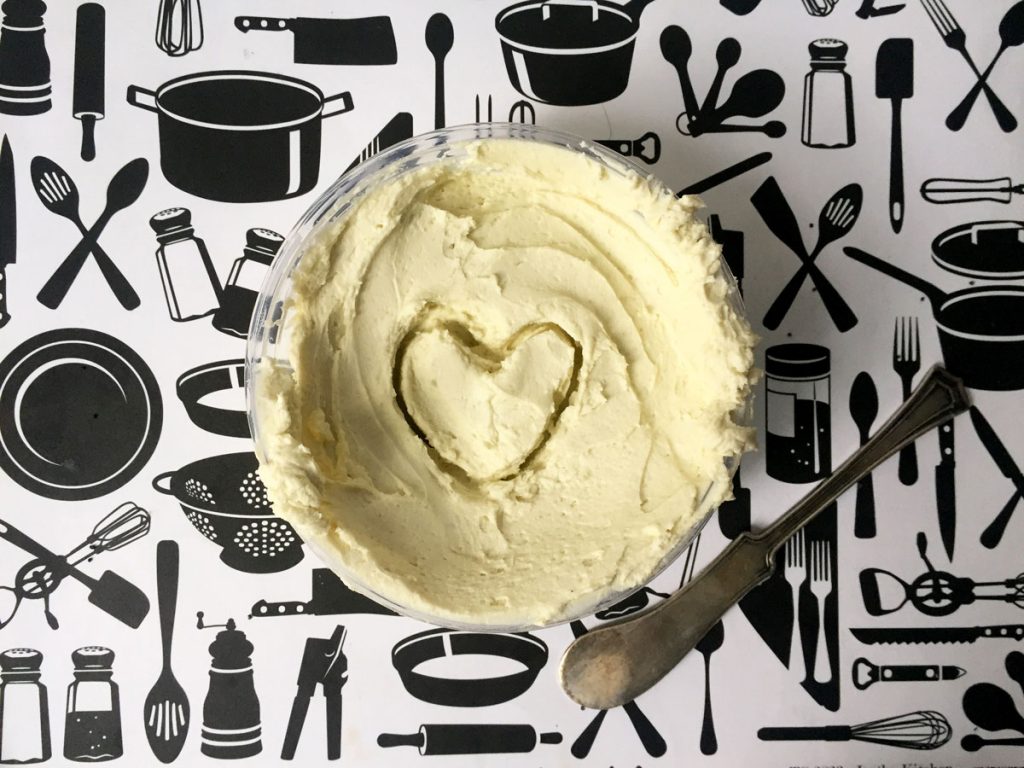
The dough will be creamy in appearance. Add the cheese, and any spices you might like.
Photos by Jessie Moore
5. Divide the dough into 6 equal portions; gently roll each one into a ball, and place on the lined baking sheet with plenty of space around each one (they’ll grow a bit as they bake).
Photos by Jessie Moore
6. Bake for 10 minutes at 425 degrees F, then lower the heat to 350 degrees F and cook for another 8-12 minutes, or until puffy and golden on the edges. Remove, let cool slightly on the rack, then transfer to a wire rack to cool completely. Enjoy warm.
Photos by Jessie Moore
A note on dosage
I “dosed” this recipe with 1 teaspoon of cannabutter per serving. The strength of your finished product will depend on many factors, including the type of marijuana you used and how you made your cannabutter.
Like many Gen Xers I remember my teenage days and the marijuana that occupied them fondly, but we had two real choices back then: Vancouver BC “Beasters” or Mexican weed. The Beasters were the prefered choice, but we had no problem picking through stems and seeds when Mexican was all to be had. It definitely got you lifted and because they were sativas, it was an elevated high.
Now, with legalization spreading across the US, Mexican marijuana is still around in prohibition states, but the tables have turned. People are smuggling California dank into Mexico, both for middle to upper class Mexicans and for American expats living in Tijuana. And it’s not just the pot that’s making its way across the border, cannabis activism is on the rise as well.
While people work toward changing the laws in Mexico, Mexican government officials have already loosened the nations overarching rules regarding pot.
Alex Scherer owns Southwest Patient Group, which is situated right over the border on the US side. Of the patients seen there, around 10 percent are Mexican. They are advised to consume their marijuana before crossing back over the border, but bringing dank into Mexico has been going on for the 20+ years since California legalized medical use.
“Beto” (not his real name) lives in Tijuana and told Voice of San Diego that he’s been bringing cannabis across the border for four to five years, first with a medical card and now simply via legalization. He says that it’s only for personal use and for a favor for a few friends.
Beto went on to say that cars crossing into Mexico are less likely to be searched and that the authorities were not looking for things like edibles or oils. “Everyone is still looking for the typical joint,” he said.
There is still more cannabis coming into the US than going out of it, but this is an interesting shift and the pot coming in has slowed down exponentially since state after state has legalized.
Unlike the US, changes to Mexican cannabis laws can only be made at the federal level, not state by state. And the efforts being made at the federal level aren’t moving very fast, but there are successes, like the father who won the right to bring cannabis oil into Mexico to treat his epileptic daughter. It’s likely to be an uphill battle, but it would be a giant leap in helping patients and putting a kibosh on the Drug War when and if it were to succeed.
On the surface, you’re tempted to say Phil Matarese and Mike Luciano’s HBO show Animals. isn’t doing anything different. The genre of talking animal cartoons has known Mickey Mouse and Looney Tunes and Ninja Turtles and recently Bojack Horseman. Animals. could be seen as another variation on that format, and it doesn’t help audiences can’t identify a main character to root for or be wowed by the drawing or things of that nature.
But Animals. is animation’s iceberg: all the weighty, interesting things happen underneath the surface. Attempting to describe the brilliance of the show to someone unfamiliar causes you to reach for phrases like “explores big existential ideas” and “delivers TV’s best dick jokes” and “bizarrely tender.” The show is all these things and features gender-confused pigeons and rats jilted on love. Combining a lo-fi aesthetic with a cocktail of internet-age humor, Animals. is unlike anything you’ve seen but also like everything you’ve seen.
None of it would work without Phil Matarese or Mike Luciano. Their voices and their wide-ranging narrative interests drive the show to recruiting Kim Gordon and discussing entropy, both facets of Animals.’s second season. I sat down with the two during South by Southwest to learn more about their process and the show’s genesis.
You created the first season of this show in a vacuum. Then your precious creation goes into the world and some are divisive on it. So when you were coming into this new season, was there any difference to your approach?
Phil: You know, I didn’t read any of the bad reviews. I couldn’t do it. I couldn’t bring myself to do it. It’s not because I’m a snowflake or anything like that—or at least I’d like to think so. But because…
Mike: What’s the point?
Phil: What’s the point? What am I getting out of this? I just want to argue the person and have my say. Comment, “Now here’s what you didn’t get about it, ma’am.” So I didn’t read anything really. And I don’t read the really positive reviews—I mean, I love that shit. Everyone loves to pat themselves on the back a little bit. I don’t really dive into the nitty-gritty and think, “That stuck out to that guy.”
Basically what I’m getting at we wanted to, for this show, keep that vacuum feeling and have it be this really honest-to-goodness, for better or for worse, this Phil-and-Mike thing that’s this certain type of comedy that we’ve fallen into. That’s lowbrow-highbrow, that’s us when we’re fifteen years old, everything we wanted to see is what we’re doing with this. Honestly we were writing season 2 when season 1 was airing. Even if we had three months or four months to sit on stuff, we would’ve no matter what came out with the same season.
If anything that was the takeaway from season 1: Let’s just lean into the animals, the world we’ve created a little bit more. Get it more weird, more insular. At the same token, just push away a broader audience as much as possible. Just really make it as niche as possible. About seven people retweeting and that’s it. That’s all I want.
You guys have this improv style and you bring in all these different actors for the show. Are there any rules or things you tell them when they’re coming in? Phil: There are no rules.
Mike: There are no rules. Pretty much no. Because we improvise off this outline that we write. Once we establish what that is and everyone knows the deal going in, we record it in bursts, beat by beat, scene by scene. It’s just a free-for-all improvise-wise.
If we cast them, we want those people’s voice who we cast to be the characters. It’s never anything with voice acting, or put on character voices.
Is there anything you say with regards to the animals? Like make sure you act like this animal? Phil: Not really and people ask us that a lot. They’ll come in and be like, “Okay I’m a fish. Give me some fish facts.” And we’re like, “None, that’s good.” It’s just that top-of-mind mindset that’s going to hit home the most with the most amount of people joke-wise. That’s important to us and there’s nothing less funny than getting scientific about shit. It’s just too many thoughts going into it.
Our show’s about relationships and serving a bigger story.
Mike: A lot of time you can just plug and play any fucking animal for what’s happening.
Was there any non-improv actor who came in and surprised you this season? Phil: Kesha was super funny. She was great. Who else really knocked it out?
Mike: Usher was amazing. We got a bunch of music people this season. Usher, we did just us and him. But we found that pairing those type of people with people who were stronger in improv brought out the best of both people. The improv person leaned into connecting with them more and they were just so much fun to make new characters.
That’s interesting because [Moonlight director] Barry Jenkins says the same thing. He said, he tries to bring in classically trained actors and people who are non-actors. And it does create a really interesting reaction. Mike: If I had to make a comparison for our show…
Phil: I would say our show is definitely…
Phil and Mike, together: Moonlight-esque.
Phil: It’s kind of like the Moonlight-lite, I would say. Like a Diet Moonlight.
When you guys are outlining the show—I’m very interested in the writing process—obviously you have different animals that you keep hitting with the pigeons and rats. But is there ever a moment where you think, “Okay let’s just do caterpillars this episode.” Phil: Yeah, given the nature of our show—nature, because of animals and all that—given the nature of our show, there’s a lot of different avenues that we can approach writing. Most of the times it’s a relationship, something we want to explore in that realm, or a bigger idea, like we want to do a disaster movie or something religious or something like that.
Or sometimes it’s like, me and Mike think it’d be fucking funny if we were two halves of the same worm. Straight up. And then we work our way up from there. That becomes an episode, too, and you just think broadly: We’re a worm, there should be a bird, then add something else, and before you know it, it’s one of the episodes this season. It’s a food chain-type episode. Sometimes we work from the animal-out, but most of the time we work from the story-in.
Mike: Sometimes, also, we like to have two really good people, just go at each other. This season, like Tim Heidecker and Jon Daly, we just wanted them screaming at each other. So let’s create a way for that to happen.
Phil: And then have Kim Gordon sing a song.
How, with being animals and focusing on that, does it open you guys up to these offbeat, very unique, and almost touching moments within the storytelling? Because you’re talking about adult, kind of serious topics with relationships and death, but then you’ll get hit with the funniest animal pun. How do you find the balancing act between it. Phil: The amount of how naïve these animals are, turning that up or down, whatever serves the story best, whatever makes that the funniest version. Our pilot episode is all these rats at a party making babies. On one level it’s this virginity story about this dude, and it sort of has American Pie outdated vibes to it, but it’s really about this dude who’s left out of something everyone is doing. Mike at the beginning of the episode has a baby, by the end of it, she’s fully grownup. It’s just this thing everyone’s doing. So really it’s about a guy being left out and a guy searching for someone to care about him.
That’s fun to play with where we can work those things on multiple levels.
I consider you guys part of this new wave of animation, like BoJack Horseman and Rick and Morty and your Starburn Industries brethren Anomalisa. Because it’s animation, and you’re viewing stories on this askance plane, you’re able to sneak in these almost profound moments of just life. Mike: We started this as a series of shorts. They were a minute long, we did a different animal each month. One of the first ones we did was rats, just me and Phil. Okay, so we’re rats now. What do rats talk about? So we set them down on the subway track.
It was basically the seed of that pilot episode. He’s going to a party and he says, “I ate a bunch of stuff over there.” And he’s like, “Oh that’s rat poison. You’re going to die.” It was that idea summed up in a minute-long thing and that became the DNA of what we wanted to do. Ride that line of, that was a really sad little story in a minute, but I laughed throughout it. And it’s really funny that’s he’s dying, somehow it led up in that way. The whole process of making this show has just been those little early nuggets, and Phil set the aesthetic of it and everything. Little by little growing it and how we want to push that. That’s how we eventually got to the half-hour format and that’s what we like and that’s how it’s always been.
Is there any reason you guy were interested in doing it that way? Sure, you stumbled upon it, but you wanted to continue it for some reason?
Phil: I think it’s just the tone of Mike and I. There’s been talking animals since the 1920s, so there’s many different ways you can skin it. It’s us putting our stamp on it and making it feel unique and warranted. And already we’re dealing with a set of animals other shows and movies have dealt with before. It all felt the natural way to go with it.
They’re in a really human, really sad environment already. It’s kind of hard and disingenuous to tell full-on happy stories because you can’t deny a rat’s or a pigeon’s life in New York City probably is fucking shitty. It’s probably really bad.
Maybe you won’t admit it in the moment, but sometimes do you think that’s a metaphor for just being alive? Phil [chuckles]: Yeah. I think so. This season, we’re dealing with this idea of entropy and the fact that everything’s chaos and nothing really matters. I think we really turn that up a little more. My day job is making animals talk and cartoons, so it’s kind of funny to also take a look at existence. It feels good to scratch that itch and I think it’s healthy to scratch that itch.
Even something like Inside Out was very existential and very adult-themed. Is there any reason, you think, within the past decade, there’s been this resurgence of an adult version of animation? Phil: I hate cutting into the whole business of it, but there’s more outlets. More stuff is getting made, so inherently we’re going to see a different array of stuff. There’s more places to put adult animation stuff. Anomalisa was a Kickstarter project, BoJack is a Netflix show. Technically if you think of the dawn of Adult Swim, I guess it’s that. It was a little silly and stuff.
But I think it’s a good time and it’s ripe for even more production of that. We can still explore it more and I thought Anomalisa was so exciting and the barriers of entry are lower and you can make an Anomalisa, outside of studios, with Charlie Kaufman, it’s like why not explore as many mediums as possible and make art in new and interesting ways?
There’s rumors swirling around that Meghan Markle’s father and brother might not be invited to the wedding, leaving future bro-in-law Prince William as the likely option for walking her down the aisle.
The royal wedding is set to take place on May 19 at Kensington Palace and, according to The Sun, Markle’s closest male relatives will not be present at the event. Thomas Markle Jr., Meghan’s half-brother, has been all over the news lately because last year he was accused of putting a gun to his girlfriend’s head. As for Meghan’s father, several sources report that she’s never been on the best of terms with him, and that for this reason he might not get an invite to the wedding.
Even though Markle has a tight relationship with her mother, sources claim that the most likely option to walk her down the aisle is Prince William. A woman walking the bride down the aisle might be pushing it too far for the outdated royal traditions.
Jesse Henry knows San Francisco. He also knows cannabis. “This city is built for tourists. We put a lot of work into giving them a San Francisco experience.”
Indeed. In a recent report from the Associated Press, Henry, the general manager of a cannabis lounge called The Barbary Coast, extolled the virtues of providing tourists a place to smoke legal marijuana.
“There’s nothing like this in Jersey,” Atlantic City resident Rick Thompson told the Associated Press as he was enjoying the herb with relatives in the City by the Bay.
In fact, there’s nothing like the Barbary Coast lounge almost anywhere in the United States, a conundrum confronting many marijuana enthusiasts who find it increasingly easy to buy pot but harder to find legal places to smoke it.
Only California permits marijuana smoking at marijuana retailers with specially designed lounges. But it also allows cities to ban those kinds of shops.
Unsurprisingly, San Francisco is the trailblazer. It’s the only city in the state to fully embrace Amsterdam-like coffee shops, the iconic tourist stops in the Netherlands where people can buy and smoke marijuana in the same shop.
Other California cities aren’t far behind, according to the story. Oakland and Alameda, two cities east of San Francisco, allow public consumption. Los Angeles, West Hollywood, South Lake Tahoe and Sacramento are among the locales which appear to be open to the idea.
Will The Idea Travel To Other States?
In Colorado, lawmakers failed to pass a law allowing social consumption. Bu Denver allows lounges where consumers can bring their own marijuana. Nevada will vote on it in 2019. Oregon and Alaska have rejected the notion.
Massachusetts has tabled the idea for now, but is expected to take a look at the concept.
“Those who wish to consume cannabis are going to do so whether social sites exist or not, and are going to make driving decisions regardless of where they consume,” Jim Borghesani, spokesman for the Massachusetts chapter of Marijuana Policy Project, told the AP. “Social sites will simply give cannabis users the same options available to alcohol users.”
Colorado lawmakers are considering a bill to allow school nurses to administer medical marijuana to students with a valid medical marijuana recommendation. Bill HB18-1286 was introduced in the Colorado House last week.
The bill is sponsored by Democratic Rep. Dylan Roberts, Democratic Sen. Irene Aguilar and Republican Sen. Vicki Marble.
According to Inquisitr, a minor can only qualify for medical marijuana if they have a certain he or she must have a medical condition, including cancer, glaucoma, and HIV or AIDS. Also, seizures, severe nausea, and severe pain are on the list.
Currently under Colorado law, only a child’s primary caregiver can administer medical marijuana (in a non-smokeable form), but if passed, the new bill will include a school nurse. As FOX Denver reports, after the medical marijuana is given, the nurse would have to remove it from school property.
This bill comes one month after the family of an 11-year-old sued the school district and the State of Illinois after she was denied access to medical marijuana to treat her seizures during school hours — it’s a lawsuit the family won.
For decades, anti-marijuana interests have touted the claim that use of the herb causes psychosis. But is it true? It could be easy to suspect that is simply part of the fog of prohibition propaganda. After all, what better way to frighten people than to threaten their mental health? While cannabis does not cause psychosis, the two seem to be linked for a small percentage of people.
Psychosis is a syndrome or a collection of symptoms. People experience a break with reality and may have hallucinations and/or delusions involving any of the six senses. Schizophrenia is a mental illness resulting in psychosis and other symptoms.
A recently published study from UK researchers at University of York suggests that risks between cannabis use and psychosis are indeed real, though the risk is substantially lower than once believed. For those people who were already diagnosed with onset of schizophrenia, cannabis use did make symptoms of the condition worse.
Only 1 in 20,000 marijuana users are believed to be at risk. Researchers noted that regulated marijuana could help reduce risks by helping users be more certain of the composition of the product, such as THC content. Some studies point to a higher THC content as being a contributing factor. Doubters suggest that the “psychotic symptoms” being described by some are simply evidence of being really high since symptoms often didn’t persist longer than other effects from marijuana.
Studies continue to attempt to nail down the reason some individuals face a higher risk. The percentage of people diagnosed with schizophrenia has remained at 1 percent of the population despite increase in the percentage of adults who consume marijuana.
The answer may be in our genetic makeup. Some research has pointed to a genetic connection. It suggests coding related to the AKT1 gene that affects the striatum, an area in the brain that floods with dopamine when activated. Researchers concluded that study results provides strong support that variations of the AKT1 gene “influences the risk of developing a psychotic disorder in cannabis users.” Daily cannabis users with this genetic variation were found to be seven times more likely to exhibit psychosis than light-users and non users.
The United Nations Office on Drugs and Crime (UNODC) has estimated that 3.9 percent of the world’s adults use marijuana, or about 180.6 million people. More people use marijuana than all other illicit substances combined.
While cannabis use cannot be proven to cause psychosis, its apparent ability to trigger the condition is noteworthy. That knowledge can make a world of difference, even if for a small percentage of people.
2018 has been a rough year for Apple, where the company has had to face the consequences of some of their actions and has also had to devise a plan for the future of the iPhone.
While Apple is still the best at marketing and coming up with technologies that every other smartphone company struggles to emulate, such as the Animojis and facial recognition software, the company still has a lot to prove with their upcoming iPhone models. If Apple doesn’t play its cards right, this might be the year where people decide that the quality of the product it’s not worth the outrageous prices.
Check out these 5 rumors that websites, experts and fans expect from the iPhone X Plus and the iPhone 11:
CNET reports that, even though Apple hasn’t announced a date, the new devices will be released during this year’s September. This has become a sort of tradition for Apple, ever since 2012 where they’ve released all of their smartphones and software during this month.
A Larger iPhone
Leaks from Macrumors suggest that the new models of the iPhone will feature bigger screens; a 6.5. inch OLED and a 6.1. inch LCD. Other rumors suggest that Apple will be dropping the current size of the iPhone X, which is 5.8 inches and is too small compared to other smartphones.
To make one of their devices cheaper, different sources suggest that the 6.1 inch iPhone model will drop the OLED screen, 3D Touch and the second rear camera, leaving the price of the device at 649 and 749 dollars depending on the device’s storage capabilities.
Face ID On All Their Devices
While facial recognition is only available on the iPhone X, the new versions of the smartphone could all feature Face ID, no matter their model or price. Initially, this feature was met with some concern from the public, but now its one of Apple’s biggest hits, embraced and imitated by other smartphone companies.
One of Apple’s biggest problem this year has been the amount of patches they’ve released for their iOS 11. Experts believe the company is now focusing on creating a more stable and complete software instead of one that has flashy and marketable features.
In all of the excitement of the evolution of the new cannabis industry, one group of patients is often left out of the conversation—pets. While many cannabis enthusiasts bemoan the need for more research, the same is doubly true for pets.
Rats are involved by the thousands in studies because their genetic profile is similar to humans. Research involving cannabis and dogs or cats is rare. Prohibition and interference from the federal government have interfered and approved only those topics deemed appropriate. When it is undertaken, it is often a study of toxicity and intoxication.
Of course, cannabis intoxication is a subject well worth our attention. The number of accidental pet ingestions each year has increased with the availability of the increasingly legal herb.
In the early 1900s, dozens of veterinary medicines contained “extract of cannabis sativa.” It was particularly popular to treat stomach issues in herd animals. It was a go-to choice to treat an intestinal condition called bloat that could be fatal if left untreated. It has been shown to be effective for a number of conditions in animals.
British, Irish and American scientists collaborated on a study that fits that pattern but may have begun to unravel an interesting and useful fact, a very important fact. Different species of animals have different levels of susceptibility to cannabis-induced convulsions.
Cannabis intoxication for animals can be a much more dramatic event than it is for humans. While some cats experience this, dogs are the ones who get into treats almost 90% of the time.
The side effects of cannabis on pets can be more extreme, not to mention that the animal likely didn’t choose to be intoxicated. So, in addition to the anxiety that the animal experiences, it may also experience rapid heartbeat, hypothermia, low blood pressure, irregular breathing, vomiting, urinary incontinence, diarrhea and vocalization or crying and moaning.
Convulsions and seizure-like behavior is a real thing and a frightening side effect of an animal that has consumed too much cannabis. It can be frightening for the pet and owner alike. Fortunately, only in severe cases have animals been reported as dying as a result. There is still some debate on that matter with detractors making the point that often it is the chocolate and other elements of infused treats that are consumed that can be more dangerous. Despite hearing thousands of pet poison calls, no cannabis deaths have been reported to the Pet Poison Helpline.
The existence of this study is a welcome data point in the ongoing search to rediscover the many benefits of cannabis as a veterinary medicine. Alone, it begins to answer a very small part of the many questions we have about cannabis for our animals. But small steps are important. It will help animal researchers begin to define the appropriate dose of cannabis medicines, help advise medical staff when treating for pet intoxication and even help product developers dial in their formula.
There is much more research news to come regarding cannabis and pets. That’s a pretty solid bet.