Wednesday, December 17, 2025
Home Blog Page 1163

Doh: Illegal FedEx Weed Delivery Happens During Marijuana Drug Bust

Dustin Drank was arrested for possession and suspicion of drug trafficking. He was charged for possessing around 76 pounds of marijuana and $19,000 worth of drug proceeds that were located in two houses located in an upscale neighborhood in Tulsa, Oklahoma.

Drank was well prepared for the police bust, having of body armor, guns, cash and a sophisticated surveillance system in the house as a way of not getting caught. The house has an estimated worth of 600,000 dollars.

The police arrived at the neighborhood and was conducting the bust when, out of nowhere, a FedEx truck tried to deliver several packages to one of these drug houses. FedEx people were surprised to discover that the packages they tried to deliver contained large amounts of marijuana.

“FedEx Ground does not tolerate the use of its network for illegal shipments. We are cooperating with authorities as they investigate this incident.”

Said a spokesman for FedEx. That’s unfortunate and also a very embarrassing. Dustin Drank was captured in the drug bust with a 30,000 dollar bond. If convicted, he faces many years behind bars.

Kittens Inherit $300,000 Fortune From Late Bronx Widow

The internet loves cats more than any other living entity, so perhaps this story won’t come as surprise to readers. But one well-off Bronx author decided to ensure her cats would be taken care of long after she’s gone.

According to WABC-TV, Ellen Frey-Wouter left $300,000 of her $3 million estate to cats Troy and Tiger so they would live a happy life. The cats should “never be caged” and always properly loved for.

Via the NY Post:

Tiger especially hit the jackpot. The former alley cat is now living the good life in sunny Ocala, Fla., dining on filet­mignon-flavored Fancy Feast and bedding down in a plush faux-fur bed with silk lining.

The cats now are now in care of Frey-Wouter’s former health aides, who also were bequeathed part of Frey-Wouter’s estate. Any grooming or vet visits the cats require are reimbursed properly by the trust fund.

This isn’t the first instance of an owner leaving their pet a considerable chuck of change. Back in 2007, Leona Halsey set the record. The infamous “Queen of Mean” left her dog “Trouble” $12 million.

Frey-Wouter’s husband was a Brooklyn College professor. He passed away in 1989, and the couple’s only child died in infancy. According to her former aide, “The cats were like her babies.”

5 Delicious New Ice Cream Trends To Try Before Summer Ends

Summer is on its last leg, which means cool treats are going to be way less enjoyable to eat once the chill sets in. Ice cream is to summer as Pumpkin Spice Lattes are to fall. To bid adieu, here are 5 new ice cream fads worth tasting before the sun season ends.

Funnel Cake Ice Cream Cone

Is there anything more Americana than melding a county fair to a sweet dairy treat? A new food truck in Orange County has figured out the winning combo. Foodbeast has the 411 on these California cones, which are made from funnel cakes, dusted with powdered sugar and stuffed with ice cream, fruit, and other toppings. Each cone is topped with whip, chocolate and/or sweetened condensed milk.


https://www.instagram.com/p/BX6VixlB37O

Churro Bowls

Nitrolado out of Garden Grove, CA is known for its “fog ice cream” made by mixing liquid nitrogen with gelato. More recently, their known for their churro pops and ice cream bowls, which are molded from the flipside of a muffin tin. Their newest bowl flavor? Ube, a torpical purple yam that provides that visually stunning hue.


PB&J Ice Cream Pie

Bon Appétit named this ice cream pie from Tartine Manufactory in San Francisco their dessert of the year for 2017. It’s fashioned after the classic ice cream pies owner Liz Prueitt ate as a child growing up in Brooklyn. Prueitt says the key to the perfect swirl is imperfect layers of soft-serve and sorbet that have been softened until they’re the consistency of “really thick mayonnaise.”

The magazine virtually drools all over the dessert, making readers want to jump into a slice immediately: “A hidden layer of summer-fruit pâte de fruit—grape, blueberry, raspberry, or strawberry—lines the cookie crust. And for the finishing touch? Candied roasted peanuts. The result is out of this world.”

https://www.instagram.com/p/BX313ILDeja

Ben & Jerry’s “Topped”

Okay, so it’s not available in the states..yet! But you wanted an excuse to visit the U.K. anyway, right? These pints of “topped” ice cream contain a layer of chocolate or white chocolate fondant, kind of like a new wave, more spoonable Magic Shell. So far, they come in three flavors: Salted Caramel Brownie, Strawberry Swirled, and Chocolate Caramel Cookie Dough.

https://www.instagram.com/p/BXqTq_VDj-k/

No-Melt Ice Cream

Popsicles that reportedly don’t melt are available in parts of Japan — the country that engineered the “no melt” recipe. The secret ingredient that helps the popsicles keep their shape is polyphenol liquid extracted from strawberries.

Tomihisa Ota, the guy who developed the popsicle, tells Quartz “Polyphenol liquid has properties to make it difficult for water and oil to separate so that a popsicle containing it will be able to retain the original shape of the cream for a longer time than usual and be hard to melt.” The popsicles were found to retain their shape for up to five minutes in 82-degree heat.

A Republican, Democrat, And Independent Smoke Weed Together

Can cannabis unite a politically divided nation? Probably not. But a video going viral this week suggests that it could bring diffuse the heat and provide a calmer conversation.

Cut, home of the Strange Buds video series which has featured hilarious viral video such as “Grandmas Smoking Weed for the First Time” and “A Rabbi, a Priest and an Atheist Smoke Weed Together,” is at it again. This time, the Seattle-based company has produced “A Republican, Democrat, and Independent Smoke Weed Together,” an eight-minute laughfest that actually unites three strangers over a toke session.  

The video features three unnamed subjects: an African-American woman who self-identifies as a Democrat who did not vote in the last election; a Mexican-American man who calls himself a political independent who voted for Bernie Sanders; and a white, single-mom who describes herself as a Christian Republican who also sat out the last election, but who supports Donald Trump.

The video, posted on YouTube on Tuesday, already has nearly 1,000,000 views as of this writing. More than 28 million people watched the “Grandmas” video, by far the company’s more popular video.

Aside from a few F-bombs, the video is fairly tame. After the set-up, the three tokers share their views on Trump’s impact on the America’s social fabric. After a few puffs, all agree that Trump is, well, not presidential. “I think he’s a shitty human being, though,” the Republican conceded.

Like most political conversations, not a whole lot was resolved in the hourlong session. The video concludes with the Republican woman offering her rendition of “The Star-Spangled Banner” which was only slightly better than Roseanne Barr’s 199o version.

After watching the video, it is clear that smoking marijuana won’t resolve our political differences. But it also demonstrates that is probably better than talking politics over booze. Watch and see for yourself:


Gossip: ‘RHONJ’ Star Blasts Co-Stars; Taylor Swift’s Music Video Sets Insane YouTube Record

Siggy Flicker may still be one of the newer stars of “The Real Housewives of New Jersey,” but she’s already made a few enemies out of her castmates. Though she’s always tried to act as the peaceful mediator for ladies like Teresa Giudice and Melissa Gorga, the 50-year-old matchmaker says she’s no longer playing nice with her fellow Bravo stars in the upcoming season.

The mom-of-two is putting New Jersey housewives on blast ahead of the show’s eighth season premiere, dishing the dirt on the “toxic” people in her life in a revealing tell-all interview. “This show has exposed me to the consequences of being around people who lack compassion, empathy and tolerance. These people are poison to your life,” she tells the Daily Mail.

“They forgot where they came from and some in my opinion have entitlement issues. When I counsel people who have been victimized, I highlight the need to get rid of toxic people in their lives,” she continues. “Unfortunately, some circumstances make it impossible to walk away, and in those situations I make sure they know to stand their ground and show that toxicity will never win.”

Though she previously said claimed she “loved” all her co-stars, Siggy says she changed her tune when some of them turned their backs on her during the filming of Season 8. According to her, she couldn’t bring herself to forgive and forget after the ultimate betrayal.

“There are a lot of sharks on this show and in life; people who circle around you as predators and are prepared to attack at any moment,” she spills. “I deal with these toxic sharks the same way I advise my clients on how to deal with bullies. You don’t back down. You don’t swim away.”

“The point I’m trying to make is that you must stand up for something or you will fall for anything,” the Cherry Hill native adds. “I practice what I preach, and I do not back down. I am a passionate person and I will not compromise my values.”

Taylor Swift’s Music Video Sets Insane YouTube Record

Kim Kardashian and Kanye West, two of the major targets of Taylor Swift’s “Look What You Made Me Do” song and video, may purposely be ignoring Swift’s new music, but the rest of the world isn’t—and have helped Swift make YouTube history. (As a source told People of Kimye, “they find it pathetic that she still tries to keep an old feud going. They are not going to give her or her new music any attention. They have more important things to focus on, like their family.”)

Swift now holds the record for the most viewed video in its first 24 hours ever on YouTube. She achieved 39 million views, as the video’s director Joseph Kahn excitedly shared on Twitter.

Love the fresh dirt we bring over daily from Naughty Gossip? Let us know in the comments!

11 Marijuana Dispensaries About To Open In Baltimore

Baltimore is prepping itself for the opening of 11 medical marijuana dispensaries, yet residents are saying that it’s more than difficult to find out where they’re opening and why and how those sites were chosen.

The Baltimore City Council is holding a meeting at 1pm today to get the skinny on the medical dispensaries, how they’ll affect local zoning and enforcements and, “their impact on community master plans in Baltimore City.”

Mary Clarke, a sitting city councilwoman called the hearing after she said that Baltimore residents in her district voiced worry about a dispensary opening on Keswick Road in Wyman Park.

As quoted in the Baltimore Sun, Clarke said, “Basically they’re concerned about reports and academic studies that indicate that in other locations throughout the nation crime increases in surrounding neighborhoods to these locations. This backs up to a residential neighborhood. Yes, it’s zoned commercial,” she conceded, “but there should be a process for community input for the location of these dispensaries.”

The Baltimore County Council set zoning rules, but Baltimore City officials chose to treat medical marijuana businesses like pharmacies under the zoning codes, which means a cannabis facility approved by the state doesn’t need to go to the city for zoning approval.

This lack of zoning approval has caused a small, nervous frenzy in some residents and city officials, who don’t know where a dispensary might pop up and if they’ll be near residential areas, parks, schools or even churches.

Alan Staple owns the proposed Wyman Park dispensary and says he’s spoken with Clarke and other residents. He’s now working on a memorandum of understanding for them.

“Although medical cannabis has been approved in many states, it’s new to Maryland and naturally people have many questions and some misconceptions,” he said in an email to the Baltimore Sun. “Dispensaries will be serving patients in need, who have been approved by their physicians, much like a pharmacy. There’s no reason to stigmatize patients that need medical cannabis. They are not criminals.”

Mayor Catherine Pugh says she wants patients with doctor recommendations to be able to access their medicine, but she also wants to address the concerns of the residents and make sure that the dispensaries aren’t opening in residential areas. She believes the dispensaries should be “equitably” spread throughout commercial areas of Baltimore.

“There are people in desperate need of this treatment,” she said, “I would not want people denied that kind of treatment.”

Maryland voted yes to medical cannabis in 2013, but it’s taken up until now for more than one dispensary to be opening. It’s high time more dispensaries could open in commercial areas and for patients to have access to the medicine they so very much need.

People Are Being Treated For Putting Sunscreen On Their Eyeballs During The Eclipse

Ophthalmologists from California were surprised to discover that several of their patients had one thing common; using sunscreen instead of sunglasses to protect their eyes from the sun.

“One of my colleagues at moonlight here stated yesterday that they had patients presenting at their clinic that put sunscreen on their eyeball, and presented that they were having pain and they were referred to an ophthalmologist”

Trish Patterson, a nurse from from Redding, California, explained that several patients were demonstrating these symptoms in the hospital where she worked. When asked why, these people explained that they used sunscreen as a way of protecting themselves from the solar eclipse that took place a couple of weeks ago. These patients tried to replace the protective solar eclipse glasses with some spray or lotion, which is honestly, not the brightest idea.

Patterson also explained that she didn’t tend to any other eclipse related injuries while working. For all the warnings regarding the dangers of looking at the eclipse directly without any protection, news outlets and experts forgot to warn people against being extremely dumb.

Poison control recommends washing your eyes the minute they get in contact with sunscreen or bug repellent for 15 – 20 minutes. After resting them for a little while, you’re supposed to call them or to visit the poison control website which will explain the steps you have to follow in order to take care of your symptoms. We hope you didn’t spray any sunscreen in your eyes because that’s just dumb and embarrassing.

The Pros And Cons Of Using Medical Marijuana To Treat Oral Cancer

The validity of medical marijuana as a legitimate medicine is a highly contested topic—this notion is explicit in oral cancer research. A root cause of these dichotomies in beliefs in both personal opinions as well as scientific findings has to do with how CBD and THC are consumed by users. To illustrate, in the case of oral cancer, the difference between smoking cannabis and applying it through a salve or oil can mean drastically different consequences for patients. This is largely because, there are a number of people in the medical community who feel that smoking marijuana can lead to similar manifestations of oral cancer as those seen with smoking cigarettes or using chewing tobacco. However, on the opposite side of the spectrum, there are oral cancer patients who have utilized CBD and THC oils for throat cancer with beneficial results.

Smoking Cannabis And Oral Cancer

The debate as to whether or not smoking marijuana can cause oral cancer is divided into two parties: pro-cannabis and anti-cannabis. As seen with a majority of debates surrounding the contemporary cannabis space, both of these parties back their beliefs with scientific and sociological “facts.” However, with an overall lack of legitimate medical research into cannabis usage (both medicinal and recreational) these “facts” are often times just beliefs wrapped up in easy to skew findings and figures. For example, the Mouth Cancer Foundation reports that smoking marijuana encourages the growth of the Human Papilloma Virus (HPV). Furthermore, they also report that those who have contracted HPV are 32 times more prone to oral cancer than those without—a number that puts marijuana users at far higher risk for cancer than both tobacco users and drinkers.

On the other side of the coin, NORML (a pro-legalization lobbying group) as well as a number of accomplished dentists, doctors, and scientists report no link between oral cancer and smoking marijuana. This notion coincides with the fact that there are zero known deaths that can be directly attributed to cannabis use. With all things considered, one should weigh the pros and cons of marijuana smoking before deciding to smoke it on a regular basis—whether it be for recreational or medical purposes.

Cannabis As Cancer Medicine And Topical Salves

A vast majority of legitimate cancer research into the benefits of medical marijuana has been done on laboratory animals. To this end, the scientific journal Nature Reviews Center reports the following laboratory findings of cannabis compound and cancer cell reactions:

  • Stopping cells from dividing
  • Preventing new blood vessels from growing into tumors
  • Reducing the chances of cancer cells spreading through the body, by stopping cells from moving or invading neighboring tissue

It goes without saying that these findings of medical marijuana in relation to cancer cells are intriguing, yet they warrant far more research. This is largely because, opposing factions of the scientific community are reporting completely opposite findings.

Intellectual and medical debates aside, perhaps the best source of information concerning the validity of cannabis as a treatment for cancer comes from the patients themselves. That being said, throat cancer patients report that the topical use of cannabis oil not only reduces the size of their tumors, it also helps with appetite and pain issues. Moreover, many of these patients would rather take their chances with cannabis oil than with either radiation or chemo.

Kent Gruetzmacher M.F.A. is a Colorado based freelance writer and the Director of Business Development at Mac & Fulton Talent Partners (www.mandfconsultants.com), a recruiting firm dedicated to the indoor gardening and cannabis space. He is interested in utilizing his M.A. in the Humanities to critically explore the many cultural and business facets of this youthful, emergent industry by way of his entrepreneurial projects.

Can Medical Marijuana Help Fight Osteoporosis And Make Bones Strong?

Our bones are are in a perpetual state of being dismantled and refurbished, like an aging European city. In a healthy adult, about 10 percent of bone mass is reabsorbed and replaced every year. Can cannabis help fight osteoporosis and keep bones strong?

A good diet, rich in calcium, promotes skeletal health by keeping bone reabsorption and replacement in balance. Aging, unfortunately, does not. Osteoporosis is an age-related condition in which bone replacement slows but reabsorption chugs along as normal. What’s less well known about osteoporosis is that, as our bone metabolism gets worse at making actual bone, it starts making more fat instead. So, yes, as we age, we do indeed get fatter everywhere.

The medical literature on the potential of cannabis to ward off osteoporosis dates back to the 1990s, but there’s not been any clinical trials. Several more recent studies suggest that this should change.

In a 2009 study, researchers at the University of Edinburgh presented their findings on mice that lacked the cannabinoid receptor CB1. These specimens grew thick bones but were much more susceptible to age-related bone loss. Moreover, their old and freakishly stout bones were full of holes that were full of fat, rather than marrow.

But fat in bones is not always a bad thing. A 2011 study in the British Journal of Pharmacology found that fatty acid amides (FAAs) may help protect our skeleton by inhibiting the creation of bone-absorbing cells. (Following so far?) In addition, they found that CB2 receptors protect FAAs by inhibiting the production of FAAH, an enzyme that is their mortal foe. (What a difference a single letter can make!) In other words, our cannabinoid system protects our skeleton by protecting FAAs which limit the body’s production of bone-eating maintenance cells.

How these two studies fit together is not clear. What is obvious, however, is that our cannabinoid receptors play an important role in the maintenance of healthy bones. Further study is warranted. But there is a logjam of good ideas in cannabis research, and approval at the federal level is slow and restrictive, so we might be waiting a long time.


Opioid Crisis Is Declared A National Emergency 8 Years Too Late

“It has been many long, hard, agonizing battles for the last few years and you fought like a warrior every step of the way. Addiction, however, won the war. To the person who doesn’t understand addiction, she is just another statistic who chose to make a bad decision.” Despite working nearly two decades as an addiction scientist, I cannot read Kelsey Grace Endicott’s mother’s eulogy without crying. The opioid crisis has turned those who lost their lives to addiction into statistics, while leaving their families in sorrow.

Overdose deaths in the U.S. have tripled since 2000, with 52,404 deaths in 2015 as the highest ever recorded. While the Centers for Disease Control and Prevention (CDC) has yet to release official statistics for 2016, early estimates put the number of deaths at as many as 65,000.

On August 10, President Trump declared the opioid epidemic a national emergency. Nearly a decade into this epidemic, this national emergency was declared at least eight years too late. Policymakers have missed opportunities to implement strategies scientifically demonstrated to reduce overdose deaths and help people recover.

Declaring a national emergency is important, but it’s not clear what steps the administration will take or how much funding will be committed to these strategies. We have proven prevention and treatment services that we need to significantly expand, and we need the money to do this.

The Right Treatments

Declaring the opioid epidemic a national emergency expands the availability of federal funding; frees up public health workers to address the issue; and makes it possible to remove regulatory barriers to lifesaving medications.

In a speech on May 11, Attorney General Jeff Sessions suggested that tools like “Just Say No” and Drug Abuse Resistance Education (DARE) can help fight the opioid epidemic.

However, addiction science has repeatedly proven that such drug prevention programs are ineffective. Some would argue that we are biologically wired to try new things, so education alone is not sufficient to prevent repeated drug use.

Prevention efforts are part of the solution, but we need more immediate solutions for people already ensnared by addiction. Naloxone, known by the brand name Narcan, is usually the only thing that can prevent death when someone has overdosed on opioids. Science has unequivocally demonstrated that naloxone can reverse an opioid overdose, if administered in time and in an adequate dose.

When patients with opioid use disorders are treated with FDA-approved medications like methadone and buprenorphine, they not only reduce their use of opioids but they are also less likely to overdose. When these drugs are used to treat addiction, they are referred to as medication-assisted treatment. Medication-assisted treatment helps many people, particularly early in recovery, when otherwise their brains seem to focus only on using more drugs. In fact, a National Institute on Drug Abuse study found that only about 7 percent of patients can stop using opioids without buprenorphine.

We need drugs like naloxone and buprenorphine to prevent deaths and help people recover from addiction. In the past few years, state governments have taken significant steps to remove regulatory barriers and expand community access to naloxone.

But policies are infrequently aligned with addiction science. In 2015, only 11 percent of people who needed addiction treatment received it. There are not enough medication-assisted treatment treatment slots available: A recent study estimated that the U.S. was short 1.3 million treatment slots for medication-assisted treatment in 2012. Demand has only increased since then.

There is an entrenched belief that people choose to use drugs and that this choice reflects a moral failing. Even the director of the U.S. Department of Health and Human Resources – which cites medication-assisted treatment as part of its strategy – has been quoted saying: “If we’re just substituting one opioid for another, we’re not moving the dial much.”

Moving Too Slowly

Early on, everyone believed that the epidemic was fueled by widely available prescription pain relievers. Books like “American Pain” by John Temple described “drug tourists” routinely traveling from states like Kentucky and West Virginia to Florida, where millions of prescription pills were dispensed at “pill mills.”

Such overprescribing and doctor-shopping did contribute to the current epidemic. States have been successful at dispensing fewer prescription opioids, but this doesn’t help the nearly 2.6 million Americans already addicted, or the 329,000 who report currently using heroin.

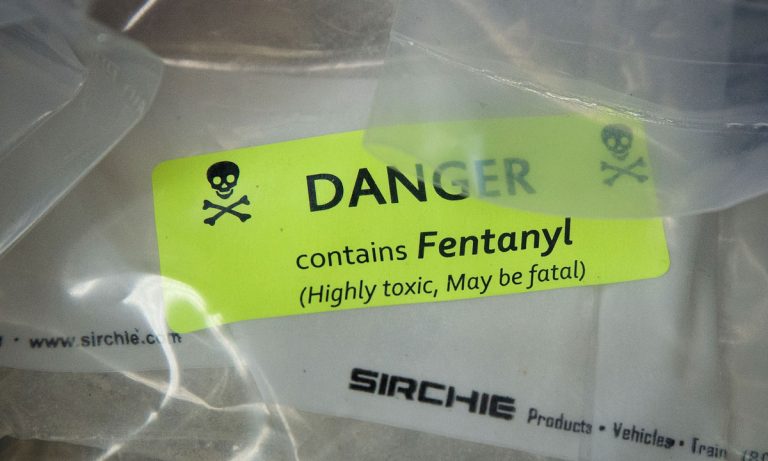
And, since 2014, it has become clear that the epidemic is no longer just about prescription opioids. In addition, heroin is frequently mixed or substituted with powerful synthetic opioids like fentanyl or carfentanil. They require far more of the overdose reversal drug naloxone than is routinely dispensed in communities.

Meanwhile, in poor and rural areas, community resources for public services are being exhausted by the costs of the epidemic.

Areas that have been disproportionately impacted by the epidemic, like West Virginia, have woefully inadequate access to harm-reduction services like syringe exchange programs and specialty addiction treatment. A clinic at our university that dispenses buprenorphine has more than 600 people on its waiting list. We will soon open a second clinic that will help reduce but not eliminate the waiting list.

A bill passed by President Obama, the 21st Century Cures Act, is making approximately US$1 billion in funding available to help states combat the opioid epidemic. But, as Dr. Keith Humphreys at Stanford University has said: This is not enough. We likely need 50 times that, as Ohio spent $1 billion in 2016 on the opioid epidemic.

Fighting Back

It can be hard to grasp the devastation of the opioid epidemic. As the President’s Commission on Combating Drug Addiction and the Opioid Crisis has described it, in the scale of deaths, it’s like the September 11 terrorist attacks happening every three weeks. A national emergency would have been declared 10 years ago if such a disaster occurred every three weeks. And it can be even harder to imagine the emotional turmoil and the depth of sorrow felt by the families who’ve lost their daughters, sons, brothers, sisters, mothers and fathers.

I think it’s fair to say that we all want a simple solution – something that we can wrap our arms around. Something that can be done in one legislative session. But that has not worked and it will not work, just as declaring a national emergency is not enough.

The ConversationAddiction scientists know what needs to be done to turn the tide. While we may not understand every aspect of the epidemic and certainly need more research to understand these deaths of despair, we are eager to collaborate with communities to find empirically informed solutions, such as medication-assisted treatment. The President’s Commission on Combating Drug Addiction and the Opioid Crisis consists of four politicians and one addiction scientist. It might help to start by asking an expert, rather than politicians, what should be done.

Erin Winstanley is an associate professor of pharmacy at West Virginia University

This article was originally published on The Conversation. Read the original article.

Don't Miss Your Weekly Dose of The Fresh Toast.

Stay informed with exclusive news briefs delivered directly to your inbox every Friday.

We respect your privacy. Unsubscribe anytime.